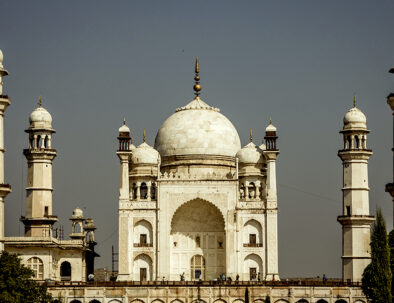
world heritage site
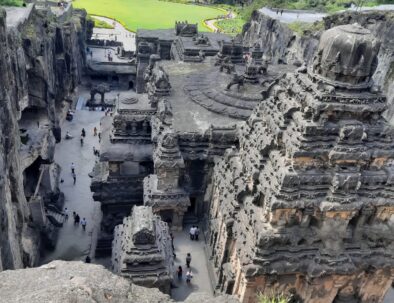
Ellora caves
Kailashnath Temple is the largest single monolithic excavation in the world. Remarkably, it has been carved from top at first and then excavated downward.
Paintings from 200 BC, lost for a thousand years, discovered by a tiger hunter
On the 28th of April 1819, a British army officer named John Smith was hunting tiger in the gorge of the Waghora river when he looked up and saw a carved facade in the cliff face above him. What he had stumbled upon was the entrance to Cave 10 at Ajanta, a complex of 30 Buddhist caves that had been carved into the basalt cliffs of a horseshoe gorge between the 2nd century BC and the 5th century AD, then abandoned, forgotten and swallowed by the jungle for over a thousand years. Inside were paintings executed in the tempera technique on mud plaster walls, depicting over 500 stories from the Jataka Tales, the lives of the Buddha in his previous incarnations, with a naturalism and emotional range that places them among the greatest works of art ever produced in the ancient world. Our private Ajanta Caves tour takes you through India's first UNESCO World Heritage Site with an expert guide who brings the art history, the Buddhist philosophy and the extraordinary story of rediscovery to life. 5 Senses Tours is recognised by the Department of Tourism, a winner of the Outlook Responsible Tourism Award and the Tripadvisor Travellers Choice Award.
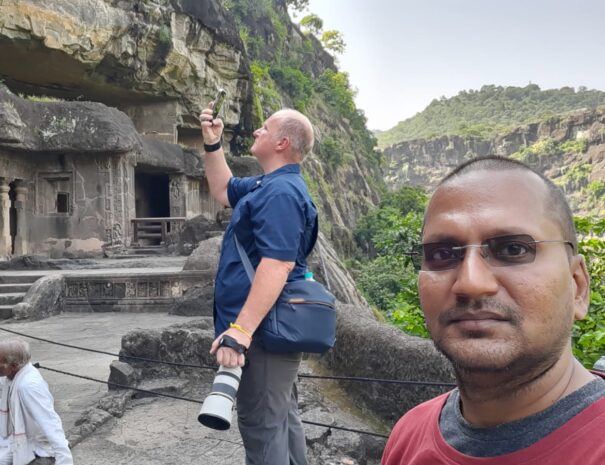
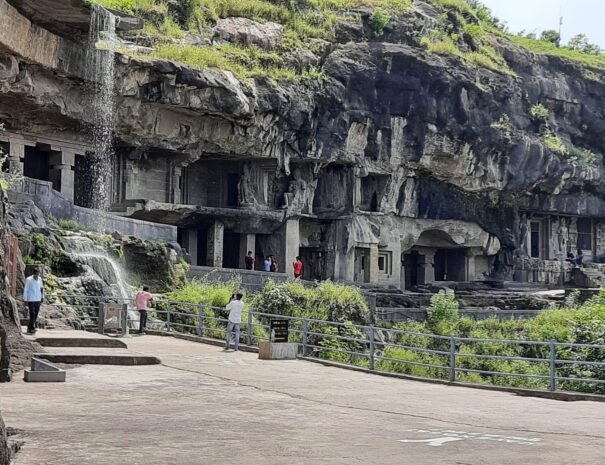
The Ajanta Caves tour begins with hotel pickup at 8 am in a private air conditioned vehicle from Aurangabad. The drive to the caves takes approximately two hours through the Maharashtra countryside.
The 30 caves at Ajanta divide into two distinct phases separated by several centuries. The first phase, dating from the 2nd century BC, was built during the Satavahana Empire under the older Hinayana tradition of Buddhism, in which the Buddha is not depicted in human form but represented symbolically through pillars, stupas and footprints. Caves 9 and 10 from this period are the oldest prayer halls at the site, their carved facades and interiors representing some of the earliest surviving examples of rock cut Buddhist architecture anywhere in the world.
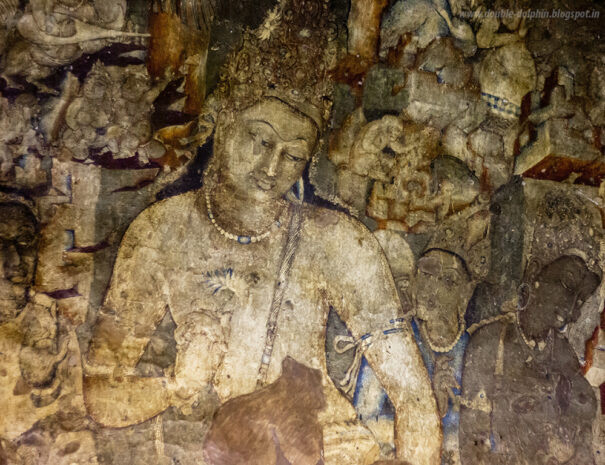
The second phase, dating from around 400 AD, was built under the patronage of Emperor Harishena of the Vakataka dynasty and reflects the Mahayana tradition, in which the Buddha takes human form and the bodhisattvas become subjects of intense devotional art. It is this second phase that produced the paintings for which Ajanta is famous. Cave 1 is the most celebrated, housing the two most iconic images at the entire site, the bodhisattvas Padmapani and Vajrapani on either side of the entrance to the shrine. Padmapani, the lotus bearer, is depicted with a melancholy tenderness that art historians consider one of the most psychologically sophisticated paintings from the ancient world. Your guide explains what a bodhisattva is, what these two figures represent in Mahayana theology, and why their presence at the entrance to the shrine is not decorative but deeply intentional.
Cave 2 continues the Mahayana programme with ceiling paintings of extraordinary intricacy, their colours still vivid after 1,500 years, depicting the Jataka Tales in continuous narrative panels that read like the pages of an illustrated manuscript. Cave 17 has the greatest concentration of complete narrative painting at the site, its walls covering episodes from the life of the Buddha with a storytelling fluency and compositional skill that influenced Buddhist art across Asia, from the cave paintings of Dunhuang in China to the temple murals of Java in Indonesia.
Cave 26 is the largest prayer hall at Ajanta and houses a colossal reclining Buddha in the moment of Mahaparinirvana, the final passing into enlightenment, surrounded by mourning figures whose grief is rendered with extraordinary naturalism. The carved facade of Cave 19 is one of the finest examples of Mahayana architectural decoration at the site, its horseshoe arch window and intricate surface carving representing the full maturity of the tradition.
Hotel drop in Aurangabad by 4 pm.
This private Ajanta Caves tour is fully inclusive. We take care of hotel pickup and drop in a private air conditioned vehicle, your expert guide throughout the tour, all entry fees and an Indian vegetarian lunch.
Ajanta caves were discovered by John Smith, a British army officer in 1819. It was the 28th of April in 1819 when Smith, accidentally discovered the entrance to Cave No. 10 while hunting for Tiger.
The theme of most of the Caves is excerpts from Jataka Tales. These relate to the life of Buddha before he was enlightened. Cave 1 has the two most famous images at Ajanta in the form of figures of the protective bodhisattvas Padmapani and Vajrapani on either side of the entrance to the Buddha shrine.
Ajanta Caves were carved by cutting into the side of a cliff that is on the side of a U-shaped gorge, beside the River Waghora. There are 30 caves in Ajanta of which 9, 10, 19, 26 and 29 are “Chaitya-Grihas” or Prayer Halls and the rest are Monasteries.
The paintings in most Caves were done in the tempera technique on the ground of mud plaster. More than 500 stories from Jataka Tales have been painted on the walls.
Ajanta Caves were built in 2 phases. The first phase was in 2nd century BC when the older form of Buddhism called Hinayana was prevalent. The Buddha is represented here in the form of pillars, stupas and footprints. The first caves were hewn from the bare rock at the time of The Sātavāhana Empire which started around 230BC.
The second lot was built around 400 AD according to tenets of Mahayana which gave Lord Buddha a human form. Emperor Harishena of the Vakataka dynasty was the patron for the second phase of Ajanta Caves. Even the architectural style shifted between the Hinayana and Mahayana periods, from “Vihara” halls for prayer and living in the shape of a rectangle with small square dormitory cells cut into the walls, to a sanctuary at the rear centered on a large statue of the Buddha.
Ajanta Caves tour is a guided tour where an expert guide will provide the cultural context during our visit to the caves. Our cultural evangelists unpack authentic India for better comprehension and appreciation of the cultural and heritage of the ancient Indian civilization.
A private tour ensures that we are able to focus all our attention on you and adjust the pace of the tour according to your interests. Pick and drop from your hotel in an airconditioned vehicle is included in the Ajanta Caves tour.
Our company is helping the local community by training & employing local guides. This initiative is to ensure travel dollars stay where they are spent.


Experience cultural immersion in the Ajanta Caves tour.
Choose from our comprehensive list of private guided tours that are immersive cultural experiences.
Join our immersive culture walks to discover authentic India. Led by a guide, experience culture, heritage & food across India.
Listen to Incredible India Travel, a podcast about the best places to visit and experiences in India.
Join our ride on Royal Enfield Motorcycles s we experience authentic India, led by an escort rider.