city experience
Bhubaneswar
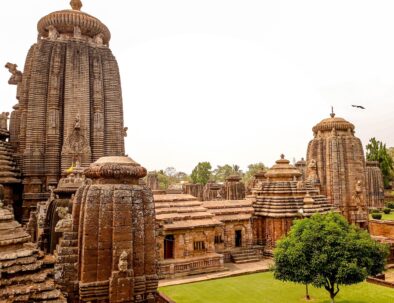
Temples of Lingaraj, Mukteshwar & Rajarani, Dhauli of Emperor Ashoka fame, Khandagiri & Udayagiri.
A chariot of stone, a king who chose peace and caves older than Christianity
In 260 BC the Mauryan emperor Ashoka won the bloodiest battle of his reign at a place called Dhauli on the banks of the Daya river, looked at the 100,000 dead and chose never to fight again. He converted to Buddhism, renounced war, and spent the rest of his reign spreading a philosophy of non-violence across an empire that stretched from Afghanistan to South India. His edicts, inscribed in the ancient Brahmi script directly onto the rock at Dhauli, are still there. Fifteen hundred years later, in the 13th century, the builders of the Konark Sun Temple carved a colossal chariot of stone on the same Odisha coastline — seven horses, twelve pairs of wheels, and a temple designed so that the first rays of the sun each morning strike the main deity through the eastern entrance. The 24 wheels of the chariot are precision sundials, each one accurate to the nearest minute. European sailors called it the Black Pagoda and used it as a navigation landmark. Our private Konark Sun Temple tour takes you to this UNESCO World Heritage Site and through the full sweep of Odisha's extraordinary ancient heritage in a single extraordinary day. 5 Senses Tours is recognised by the Department of Tourism, a winner of the Outlook Responsible Tourism Award and the Tripadvisor Travellers Choice Award.
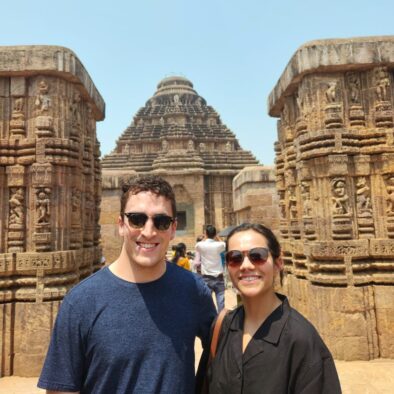
The Konark Sun Temple tour begins with hotel pickup at 8 am in a private air conditioned vehicle.
The first stop is Dhauli, the site of the Kalinga War of 260 BC in which Ashoka’s forces killed an estimated 100,000 people and enslaved 150,000 more. The rock edicts he inscribed here in the Brahmi script and Prakrit language immediately after the battle are among the oldest surviving examples of writing in India and among the most remarkable political documents in the ancient world — a king recording his own remorse in stone for all of posterity to read. The rock-cut elephant sculpture at the base of the hill is one of the oldest sculptures in India, and the Shanti Stupa or Peace Pagoda built above it in 1972 through an Indo-Japanese collaboration commands a view over the same plains where the battle was fought.
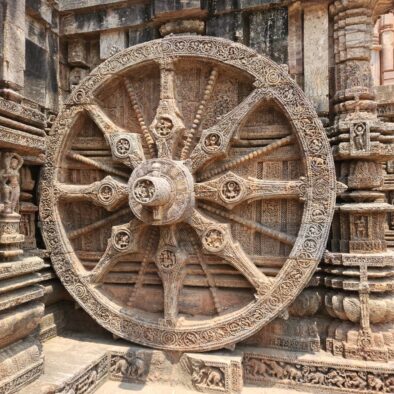
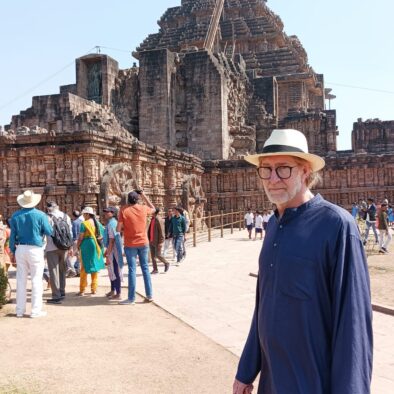
The Konark Sun Temple is the centrepiece of the tour, a UNESCO World Heritage Site built in 1250 AD by King Narasimhadeva I of the Eastern Ganga dynasty. The temple is designed as a colossal chariot of the sun god Surya — seven stone horses pull it forward, twelve pairs of intricately carved wheels support it, and the entire structure faces east so that the first light of every morning illuminates the deity within. The 24 wheels function as precise sundials, each divided into eight spokes that cast shadows indicating the time to within minutes. The Black Pagoda nickname given by Portuguese sailors comes from the dark khondalite stone that was used in the original construction, which appeared black from the sea and served as a reliable navigation landmark on the Odisha coast for centuries. Your guide explains the astronomical engineering, the iconographic programme of the carvings, and the extraordinary story of the temple’s decline, partial collapse and eventual UNESCO recognition.
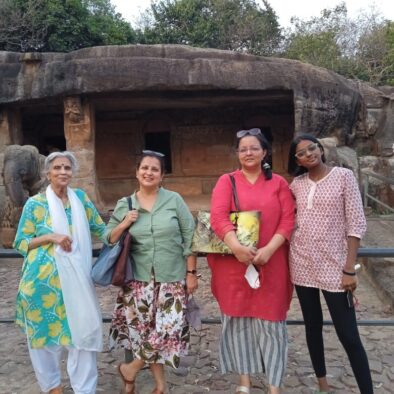
Khandagiri and Udayagiri caves follow, twin hills on the outskirts of Bhubaneswar riddled with rock cut cells and chambers carved in the 2nd century BC during the reign of King Kharavela of the Kalinga Kingdom. These were the dwelling retreats of Jain ascetics, some barely large enough to sit in, others elaborately carved with panels depicting royal court scenes, elephants and attendants. Jain tradition holds that Mahavira himself visited Khandagiri in the 6th century BC. An 18th century Jain temple at the top of the hill marks the continued sanctity of the site.
The Raja Rani Temple is the final stop, an 11th century temple built from the distinctive reddish and golden sandstone called Rajarani in the local dialect, which gave the temple its name. It is famous above all for its sculptures of women — figures carved in poses from Odissi dance, from everyday life, from mythology, rendered in the warm coloured stone with an ease and naturalism that makes them feel entirely alive.
Hotel drop by 6 pm.
This private Konark Sun Temple tour is fully inclusive. We take care of hotel pickup and drop in a private air conditioned vehicle, your English speaking cultural guide throughout the day, all entry fees and a local cuisine lunch.
Experience one of the greatest architectural masterpieces of India. Built in 13th century by King Narasimhadeva, the temple is designed in the shape of a colossal chariot with seven horses and twelve wheels, carrying the sun god, Surya, across heavens. The Sun temple was known as ‘The Black Pagoda’ among early European sailors to the East.
Raja Rani temple is a temple constructed in the 11th century from reddish and yellow sandstone. This material was called Rajarani in the local dialect and hence the temple got its name. The temple is famous for its unique sculptures of women. Women are in poses performing Odissi the traditional dance form as well as in every day life moments.
Our next destination in the Konark Sun temple tour is Dhauli. This is the venue of the ancient battle which was fought in 260 BC. Emperor Ashoka, the great Mauryan King won the battle but upon seeing the bloodbath had a change of heart. He became a propagator of peace and had a big role in the spread of Buddhism in India. We will get to see edicts of Ashoka embossed on rocks using the ancient Brahmi script and Prakrit language. The rock cut Elephant sculpture is one of the oldest in India.
Another highlight of Dhauli is the Shanti Stupa or Peace Pagoda. The current structure was built by an Indo-Japanese collaboration in 1972 by the Japan Buddha Sangh and the Kalinga Nippon Buddha Sangh.
Khandagiri caves are dwelling retreats or cells of ancient Jain ascetics. These were built in the second century BC during the reign of King Kharavela of the Kalinga Kingdom. It is believed that the founder of Jain faith, Mahavir had visited Khandagiri in the 6th Century B.C. At the top there is a 18th century Jain temple as well.
Konark Sun Temple Tour and Bhubaneswar is a guided tour where a cultural evangelist will provide the cultural context during our visit. Our cultural evangelists unpack authentic India for better comprehension and appreciation of the cultural and heritage of the ancient Indian civilization.
A private Konark Sun temple tour ensures that we are able to focus all our attention on you and adjust the pace of the Bhubaneswar & Konark tour according to your interests. Pick and drop from your hotel in an airconditioned vehicle is included in the Bhubaneswar city tour.
Our company is helping the local community by training & employing local guides. We give most of our business to local vendors and small businesses. This initiative is to ensure travel dollars stay where they are spent in the Konark Sun temple tour.




Konark Sun Temple Tour & Bhubaneswar
Choose from our comprehensive list of private guided tours that are immersive cultural experiences.
Join our immersive culture walks to discover authentic India. Led by a guide, experience culture, heritage & food across India.
Listen to Incredible India Travel, a podcast about the best places to visit and experiences in India.
Join our ride on Royal Enfield Motorcycles s we experience authentic India, led by an escort rider.