city tour
Mumbai experience
World’s biggest open air laundry, street markets, Chhatrapati Shivaji Terminus, Big Ben of Mumbai, Gateway of India, and Siddhi Vinayak temple.
Two centuries of extraordinary architecture in three hours on foot
In 1661 Bombay was a collection of seven swampy islands with a population of a few thousand fishermen. The Portuguese gave it to the British as part of a royal dowry when Catherine of Braganza married King Charles II and the British promptly leased it to the East India Company for ten pounds a year. What followed over the next two centuries was one of the most extraordinary urban transformations in history — a global trading metropolis rising from the tidal flats, its Victorian colonial masters commissioning Gothic Revival buildings of extraordinary ambition alongside the Art Deco apartments and cinemas that followed in the 20th century. The Victorian Gothic and Art Deco Ensembles of Mumbai are now a single UNESCO World Heritage Site, recognised as the finest concentration of Art Deco architecture outside Miami. Our private Mumbai walking tour takes you through the heart of this extraordinary streetscape in three hours, from the CST railway terminus — the busiest station in the world and one of the finest examples of Victorian Gothic architecture in Asia — to the Gateway of India, through which the last British troops marched on 28 February 1948, marking the formal end of the British Empire in India. 5 Senses Tours is recognised by the Department of Tourism, a winner of the Outlook Responsible Tourism Award and the Tripadvisor Travellers Choice Award.
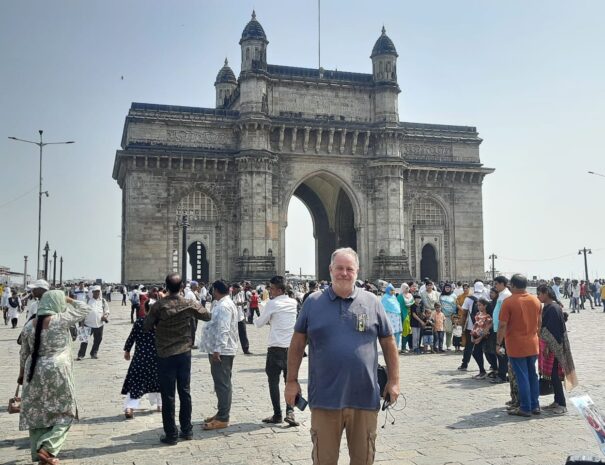
The Mumbai walking tour begins at 8 am & 4PM at the entrance of the McDonald’s opposite CST.
CST, the Chhatrapati Shivaji Maharaj Terminus and formerly Victoria Terminus, is the starting point — a UNESCO World Heritage building that is simultaneously one of the finest Victorian Gothic Revival structures in the world and one of the busiest railway stations on Earth, with over six million daily commuters passing through its ornate arches. Built between 1878 and 1888 by architect Frederick William Stevens, the building blends Gothic elements with Indian traditional architectural motifs in a synthesis that is completely unlike anything built in Britain — pointed arches alongside peacock medallions, gargoyles alongside Indian floral carving, a central dome topped by a figure of Progress rather than a Christian cross. Your guide explains the full story of how this extraordinary building was designed, what it was meant to represent about the relationship between British colonial power and Indian cultural tradition, and why it remains one of the most astonishing buildings in Asia.
Flora Fountain is the next stop on the Mumbai walking tour, a Portland stone sculpture of the Roman goddess Flora at the heart of what was once the commercial centre of colonial Bombay. The walk takes you past Sterling Cinema and Azad Maidan, the famous open ground where generations of Mumbai schoolchildren played cricket and where the independence movement held some of its most significant public gatherings.
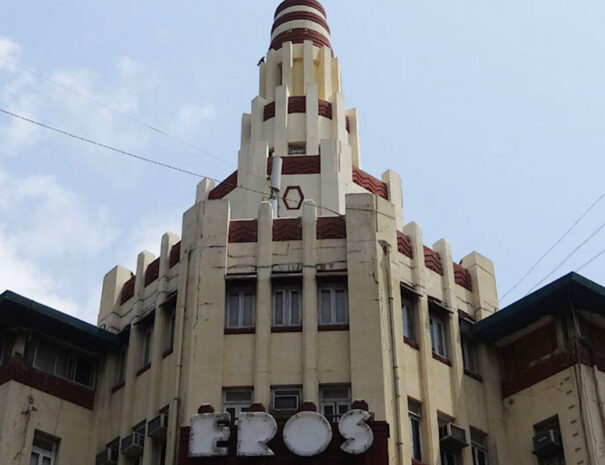
Eros Cinema is one of the finest Art Deco buildings in Mumbai, built in 1938 by architect Sorabji Keikhushru Bhedwar with internal decorations by Fritz von Dreiberg. Its wedding-cake profile rising in tiers to a semi-circular tower is the most distinctive Art Deco silhouette on Marine Drive and one of the buildings that earned Mumbai its UNESCO recognition alongside the Gothic structures.
The High Court, designed by Colonel J.A. Fuller, is a magnificent Gothic building with huge towers and broad staircases, its facade topped by statues of Justice and Mercy that have presided over the legal life of Bombay and Mumbai for over 150 years. Your guide explains how the British judicial system was physically embedded into the urban fabric of colonial Bombay through buildings designed to communicate authority and permanence.
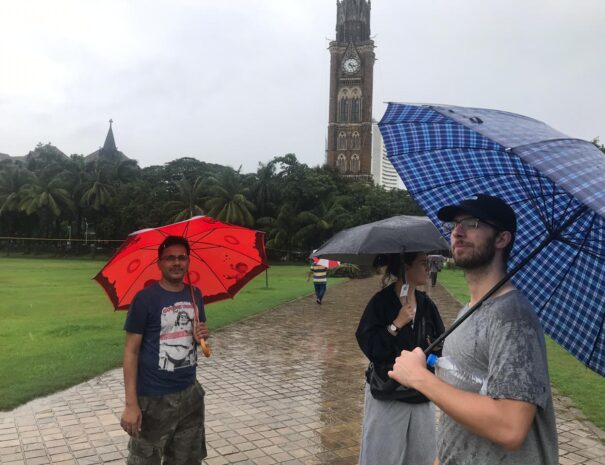
Rajabai Tower in the Mumbai University complex is called the Big Ben of Mumbai — a 125-year-old Gothic Revival clock tower that is a direct reference to the Houses of Parliament in London, deliberately placed next to the High Court and the University buildings to create a cluster of institutional authority at the heart of colonial Bombay. The tower, the university library and the adjacent Convocation Hall form one of the most complete examples of Victorian institutional Gothic architecture in Asia.
The David Sassoon Library, built in 1862 by the Jewish Baghdadi banker David Sassoon, is a magnificent Gothic reading room with a collection of 70,000 rare books. The Sassoon family were among the most influential merchant families in 19th century Bombay and their philanthropic buildings are scattered across the city. The library is one of the finest of them.
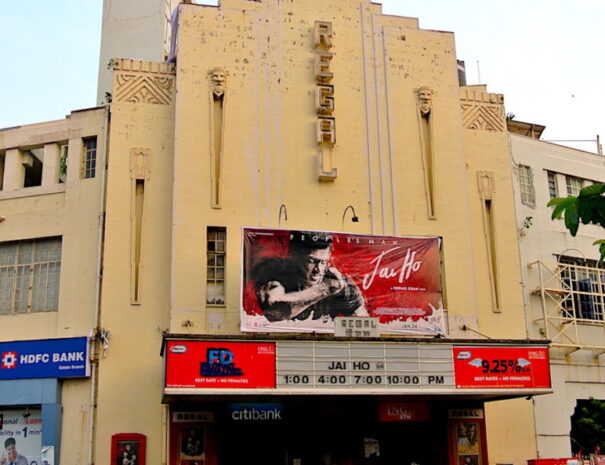
Elphinstone College and Regal Cinema are the final stops before the Gateway of India. Regal Cinema, another Art Deco masterpiece, opened in 1933 as the first cinema in India to have air conditioning — a detail that tells you something about the ambitions of the Bombay entertainment industry in the 1930s.
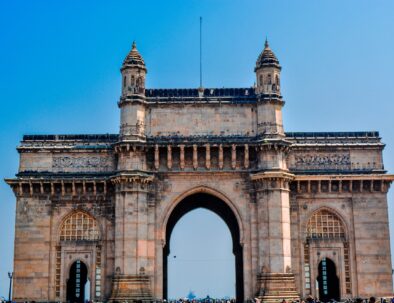
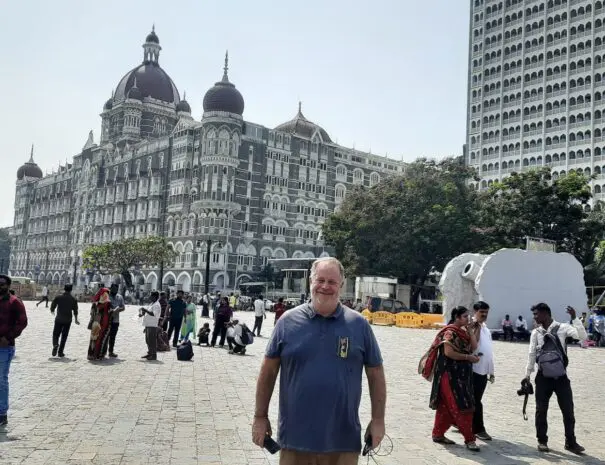
The Gateway of India is where the Mumbai walking tour ends — the triumphal arch built in Indo-Saracenic style to welcome King George V and Queen Mary in 1911, and through whose arch the last British troops marched on 28 February 1948 in the ceremony that formally ended British rule in India. The contrast between the ceremonial purpose for which it was built and the historical use to which it was ultimately put is one of the most poignant details in all of Mumbai’s extraordinary story.
End of walk at 11 am for the morning departure and 7pm for the evening departure.
Expert cultural guide throughout Guide charges Duration: 8 am to 11 am Note: CST interior and Gateway of India are entered. All other monuments are viewed from the outside.
Mumbai walking tour is a guided tour where our guide will explain the cultural context behind each architectural wonder. We unpack authentic India for better comprehension and appreciation of the cultural and heritage of the ancient Indian civilization.
Our company is helping the local community by training & employing local guides. This initiative is to ensure travel dollars stay where they are spent.




Mumbai walking tour
Choose from our comprehensive list of private guided tours that are immersive cultural experiences.
Join our immersive culture walks to discover authentic India. Led by a guide, experience culture, heritage & food across India.
Listen to Incredible India Travel, a podcast about the best places to visit and experiences in India.
Join our ride on Royal Enfield Motorcycles s we experience authentic India, led by an escort rider.