
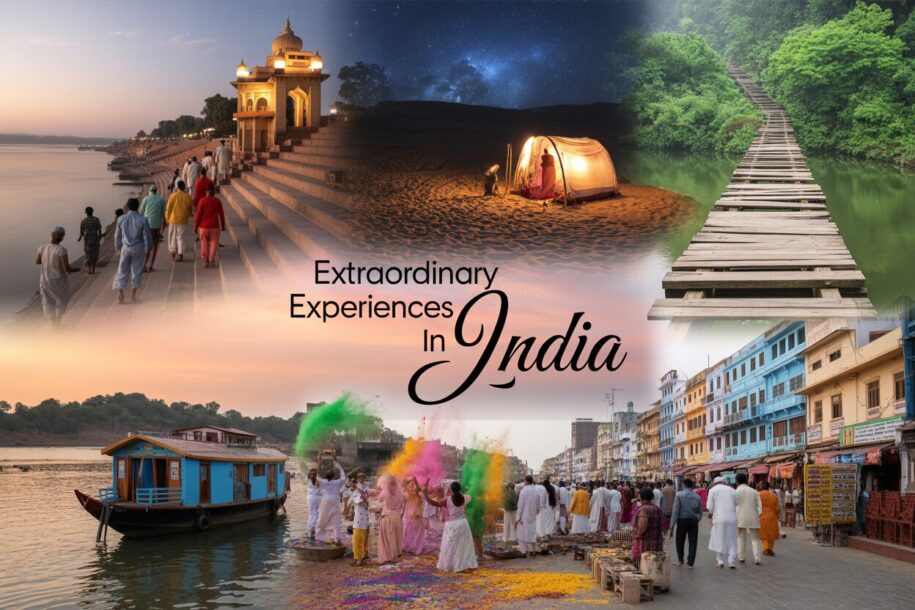
India offers travelers extraordinary experiences that simply don’t exist anywhere else on Earth. From floating down ancient rivers to sleeping under desert stars, this incredible country delivers moments that will reshape how you see the world.
This guide is for adventurous travelers who want to go beyond typical tourist attractions and dive deep into India’s most unique experiences. We’ll explore spiritual journeys that connect you to thousands of years of tradition, natural wonders you won’t find on any other continent, and cultural celebrations that involve entire cities.
You’ll discover how to witness the spiritual power of the Ganges River in Varanasi, where pilgrims have gathered for millennia to perform sacred rituals at sunrise. We’ll show you how to sleep under brilliant stars in the Thar Desert of Rajasthan, where camel treks lead to nights around crackling campfires. You’ll also learn about exploring living root bridges in Meghalaya’s rainforests – incredible structures grown by local tribes over decades that you literally can’t experience anywhere else on the planet.
These unique experiences in India go far beyond standard things to do in India lists. Each adventure offers something genuinely extraordinary that transforms a regular trip into unforgettable India travel experiences.
Witness the Spiritual Power of the Ganges River in Varanasi
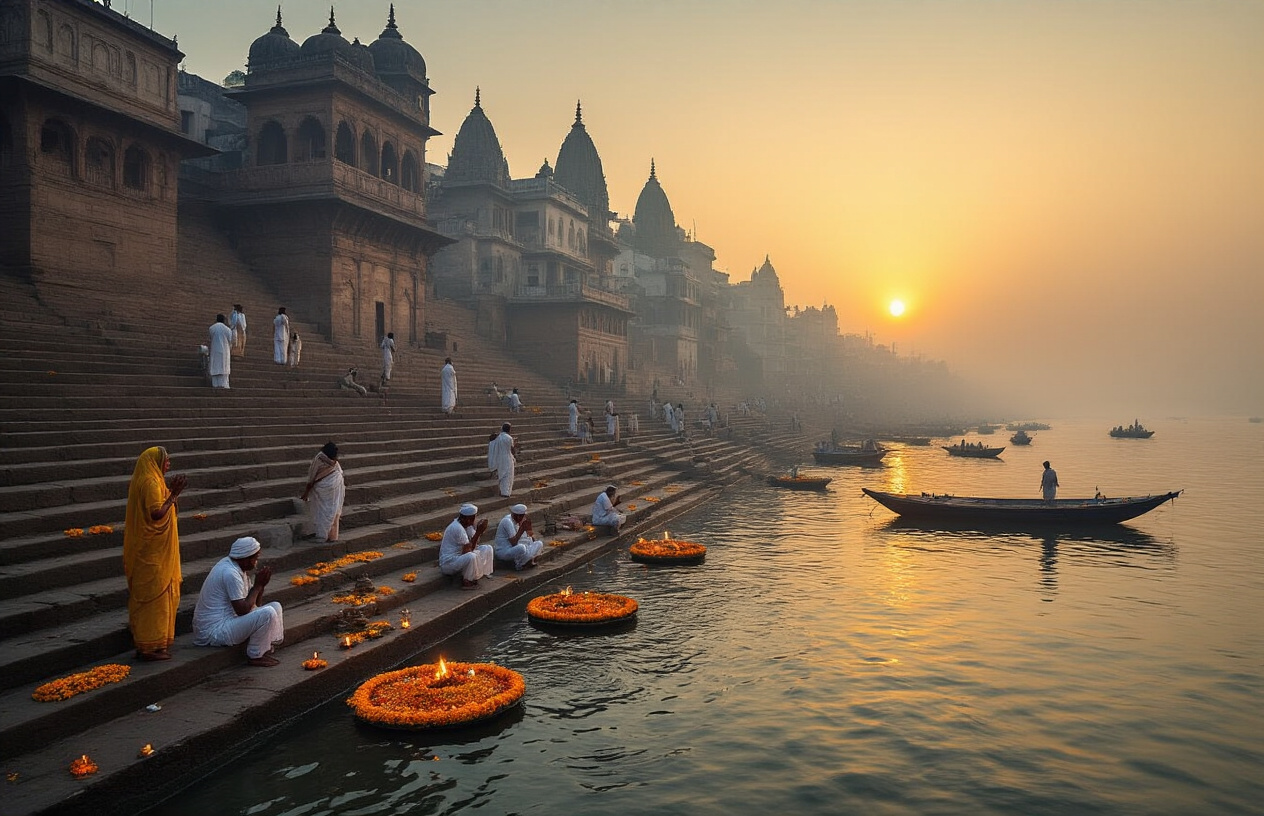
Experience dawn boat rides along the sacred ghats
The Ganges River transforms into pure magic during the early morning hours in Varanasi. As the sun rises over the ancient city, wooden boats glide silently through the sacred waters, carrying pilgrims and travelers alike past the magnificent stone steps that have welcomed seekers for millennia. These dawn boat rides offer an unparalleled perspective of one of the world’s holiest rivers, where life and death ceremonies unfold simultaneously along the weathered ghats.
Rowing through the gentle current, you’ll witness devotees performing their morning prayers, washing away sins in the sacred waters, and offering flowers to the river goddess Ganga. The atmosphere carries an otherworldly quality as temple bells echo across the water and incense smoke drifts from countless small shrines. Local boatmen, whose families have navigated these waters for generations, share stories about each ghat’s significance while pointing out architectural marvels carved into the riverbank.
Observe ancient fire ceremonies at sunset
The Ganga Aarti ceremony at Dashashwamedh Ghat represents one of India’s most spectacular spiritual experiences. Every evening, as darkness approaches, hundreds of people gather to witness this mesmerizing fire ritual that dates back thousands of years. Seven young priests, dressed in saffron robes, perform synchronized movements while holding massive brass lamps with multiple wicks.
The ceremony creates a hypnotic atmosphere as conch shells blow, bells chime, and devotional songs fill the air. Flames dance in perfect harmony while priests offer prayers to the river, creating reflections that shimmer across the water’s surface. Families release small boats carrying candles and marigold petals onto the Ganges, each one representing a personal prayer or wish. This daily ritual connects modern visitors with ancient traditions, making Varanasi one of the most extraordinary India destinations for spiritual seekers.
Participate in traditional purification rituals
Millions of Hindus believe the Ganges possesses the power to cleanse souls and wash away lifetimes of karma. Participating in these purification rituals offers profound insight into spiritual India travel experiences that cannot be replicated anywhere else in the world. Pilgrims travel from across the country to immerse themselves in the holy waters, following rituals passed down through countless generations.
Local priests guide visitors through proper purification techniques, explaining the significance of each step while ensuring cultural sensitivity. The experience involves more than simply entering the water – it requires understanding the prayers, offerings, and mindful intentions that transform a simple bath into a sacred act. Many participants describe feeling a genuine sense of renewal and peace, regardless of their personal religious beliefs.
Discover 3000-year-old spiritual traditions still alive today
Varanasi stands as living proof that ancient wisdom can thrive in the modern world. This sacred city maintains spiritual practices that predate most world religions, creating an unbroken chain of tradition spanning three millennia. Walking through narrow alleyways reveals temples where the same prayers have been chanted for generations, while traditional music schools continue teaching classical ragas that accompany religious ceremonies.
The city’s spiritual ecosystem includes thousands of sadhus (holy men), traditional healers, astrologers, and scholars who preserve knowledge systems that might otherwise disappear. Visitors can observe Sanskrit lessons being taught in ancient gurukulas, witness traditional art forms like silk weaving that carry religious significance, and experience meditation techniques developed in this very location centuries ago. These unique experiences in India demonstrate how Varanasi remains a living laboratory of human spirituality, where seekers continue finding answers to life’s deepest questions.
For a guided tour of Varanasi, please visit Visiting Varanasi.
Sleep Under the Stars in the Thar Desert of Rajasthan
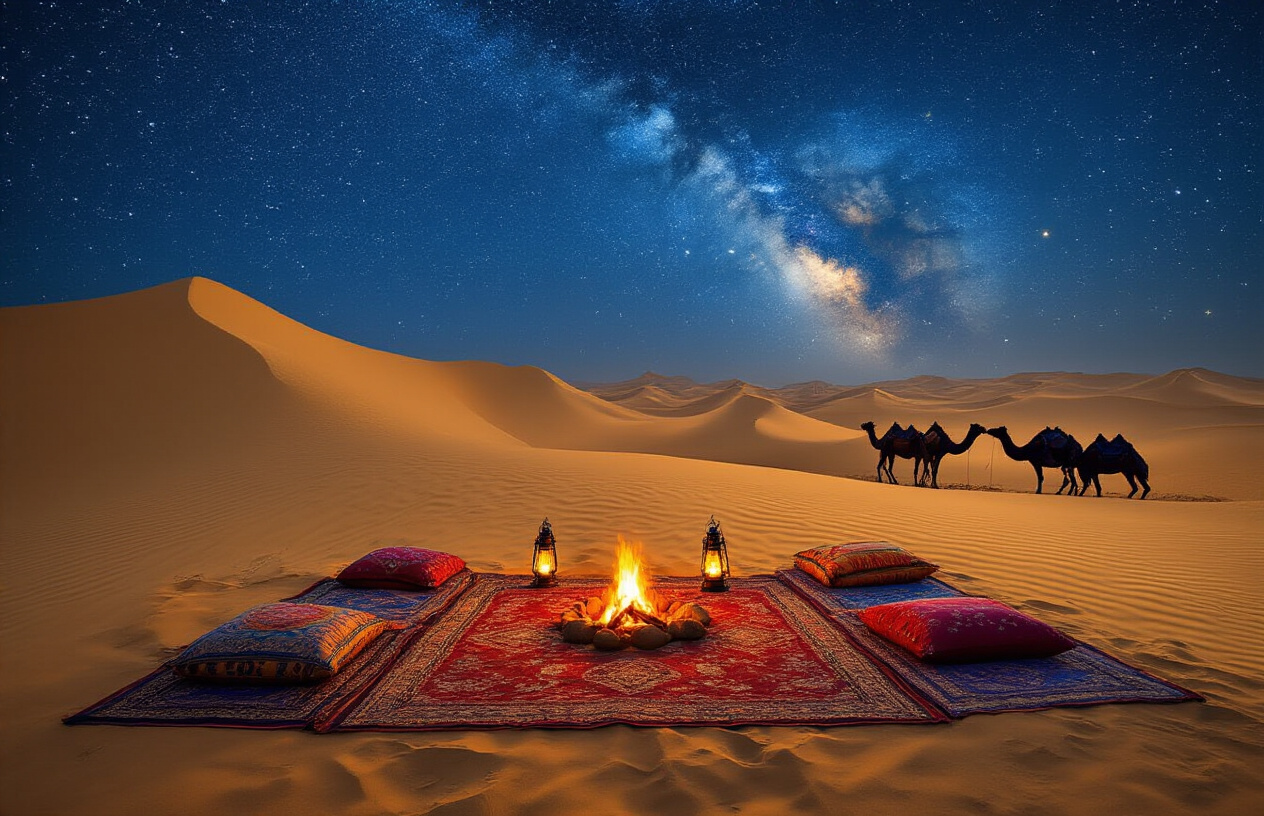
Enjoy luxury camping with authentic Rajasthani hospitality
The Thar Desert transforms the concept of camping into an extraordinary luxury experience that rivals five-star hotels. Premium desert camps feature spacious canvas tents equipped with comfortable beds, private bathrooms, and traditional Rajasthani décor that creates an authentic royal ambiance. Local hospitality shines through personalized service, where staff members anticipate your needs and share fascinating stories about desert life and local customs.
These camps offer a perfect blend of modern comfort and traditional charm, with many featuring air conditioning for daytime comfort and cozy campfires for cool desert evenings. The dining experience showcases authentic Rajasthani cuisine, from dal baati churma to ker sangri, prepared by skilled local chefs who transform simple ingredients into unforgettable meals.
Ride camels across endless golden sand dunes
Camel safaris provide the quintessential desert adventure, offering a gentle, rhythmic journey across the vast expanse of shifting sand dunes. These “ships of the desert” carry you through landscapes that change dramatically with the light, revealing hidden oases, abandoned villages, and stunning geological formations that have remained untouched for centuries.
The experience varies from short sunset rides to multi-day expeditions that venture deep into remote areas where silence is broken only by the soft padding of camel hooves on sand. Experienced guides, often from families who have traversed these routes for generations, share invaluable knowledge about desert survival, local wildlife, and the fascinating history of ancient trade routes that once connected India with Central Asia.
Experience traditional folk music and dance performances
Desert evenings come alive with captivating cultural performances that have been passed down through generations of Rajasthani artists. Musicians playing traditional instruments like the khartal, morchang, and algoza create hauntingly beautiful melodies that seem to emerge from the desert itself, while skilled dancers in colorful costumes perform the energetic kalbeliya and graceful ghoomar dances.
These performances aren’t staged tourist shows but authentic expressions of desert culture, often featuring local artists who view their craft as a sacred tradition. The combination of flickering campfire light, star-filled skies, and mesmerizing rhythms creates an atmosphere that connects you directly to the rich cultural heritage of Rajasthan’s desert communities.
Witness breathtaking sunrises over the desert landscape
Dawn in the Thar Desert offers one of nature’s most spectacular displays, as the first light transforms the landscape into a canvas of gold, orange, and deep purple hues. The silence of early morning, broken only by distant bird calls, creates a meditative atmosphere perfect for reflection and photography.
The best sunrise viewing spots are atop the highest dunes, where panoramic views reveal the desert’s true scale and beauty. As the sun climbs higher, shadows dance across the rippled sand patterns, creating an ever-changing masterpiece that photographers and nature lovers find endlessly captivating.
For a guided experience of Rajasthan, visit 5 Senses Tours.
Explore Living Root Bridges in Meghalaya’s Rainforests
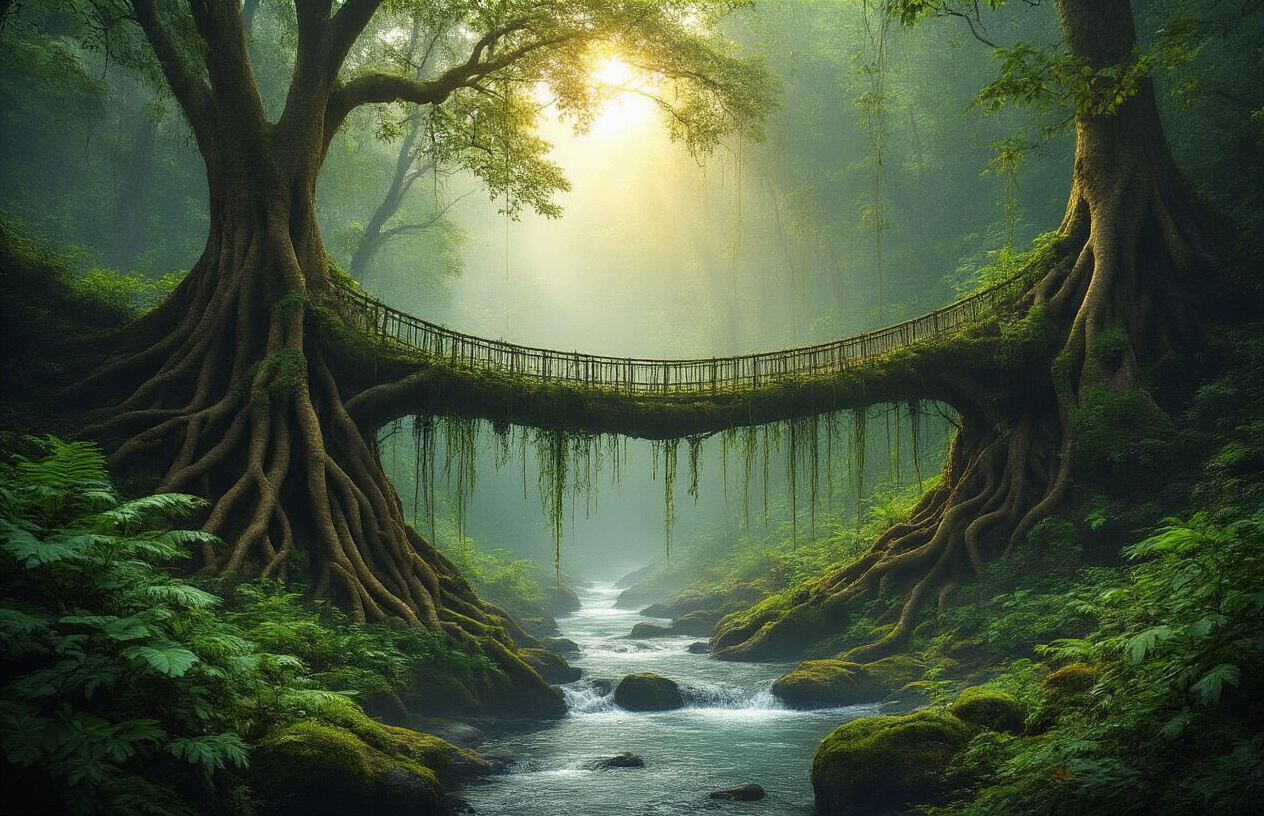
Trek through pristine cloud forests to reach these natural wonders
Deep in the hills of Meghalaya, where monsoon clouds kiss the earth and rainfall reaches legendary proportions, lies one of nature’s most incredible engineering marvels. The journey to see the living root bridges takes you through some of India’s most pristine cloud forests, where mist hangs thick between ancient trees and every step reveals something magical.
The trek to the famous double-decker root bridge in Nongriat village demands physical endurance but rewards you with breathtaking scenery. You’ll descend over 3,000 stone steps carved into the hillside, winding through dense jungle where orchids bloom on tree trunks and exotic birds call from the canopy. The air grows cooler and more humid as you venture deeper, and soon you’re walking through a living cathedral of green.
Local Khasi guides lead these expeditions, sharing stories passed down through generations about their ancestors who first began training rubber tree roots across rushing streams. The paths snake past crystal-clear waterfalls, through villages where bamboo houses blend seamlessly with the forest, and across smaller root bridges that serve as practice runs for the main event.
Weather conditions change rapidly in these mountains, so waterproof gear becomes essential. The monsoon season from June to September makes trekking treacherous but also showcases the forest at its most lush and vibrant.
Walk across bridges grown over centuries by local tribes
Standing before a living root bridge feels like discovering something from a fantasy novel. These aren’t constructed bridges in any traditional sense – they’re living, breathing organisms that the Khasi and Jaintia tribes have carefully guided and shaped over hundreds of years. The rubber fig trees’ aerial roots have been trained to grow across streams and rivers, creating natural suspension bridges that actually become stronger with age and weather.
The double-decker bridge in Nongriat stands as the crown jewel of this ancient bioengineering technique. Two levels of intertwined roots span the rushing waters below, supporting the weight of dozens of people simultaneously. Walking across feels both thrilling and surreal – the living surface gives slightly under your feet, reminding you that you’re traveling on a creature that continues growing and adapting.
Each bridge tells a different story. Some stretch just a few meters across babbling brooks, while others span major rivers up to 50 meters wide. The tribes begin training these roots when they’re young and flexible, using bamboo scaffolding and careful pruning to guide their growth. What starts as a precarious crossing of thin roots eventually develops into a robust bridge that can last for centuries.
The craftsmanship extends beyond mere functionality. Tribal communities have developed sophisticated techniques for strengthening weak spots, incorporating additional root systems, and even creating handrails from secondary root growth.
Discover unique ecosystems found nowhere else on earth
Meghalaya’s rainforests harbor biodiversity that scientists are still discovering and cataloging. This northeastern state receives some of the highest rainfall on the planet, creating conditions for endemic species that exist nowhere else. The same environment that allows the living root bridges to flourish supports an incredible array of plant and animal life.
Walking through these forests, you’ll encounter pitcher plants that trap insects in elaborate biological mechanisms, and rare orchids that bloom in spectacular colors against the green backdrop. The region hosts over 3,000 plant species, many found exclusively in these cloud forests. Birds like the Grey Peacock Pheasant and various hornbill species call these woods home, while mammals such as clouded leopards and Asian elephants roam the deeper wilderness areas.
The forest floor creates its own microclimate, with layers of decomposing vegetation feeding an intricate web of fungi, insects, and small mammals. Stream ecosystems support unique fish species adapted to the region’s fast-flowing waters and seasonal flooding patterns. Many of these creatures have evolved specifically to thrive in the high-humidity, low-light conditions created by the dense canopy overhead.
Research teams regularly discover new species in these forests, from colorful frogs smaller than coins to insects with fascinating survival adaptations. The living root bridges themselves support their own mini-ecosystems, with epiphytic plants growing on the bridge roots and creating habitats for various small creatures. This remarkable biodiversity makes every visit to the living root bridges an opportunity to witness evolution in action.
Immerse Yourself in Kerala’s Tranquil Backwater Villages
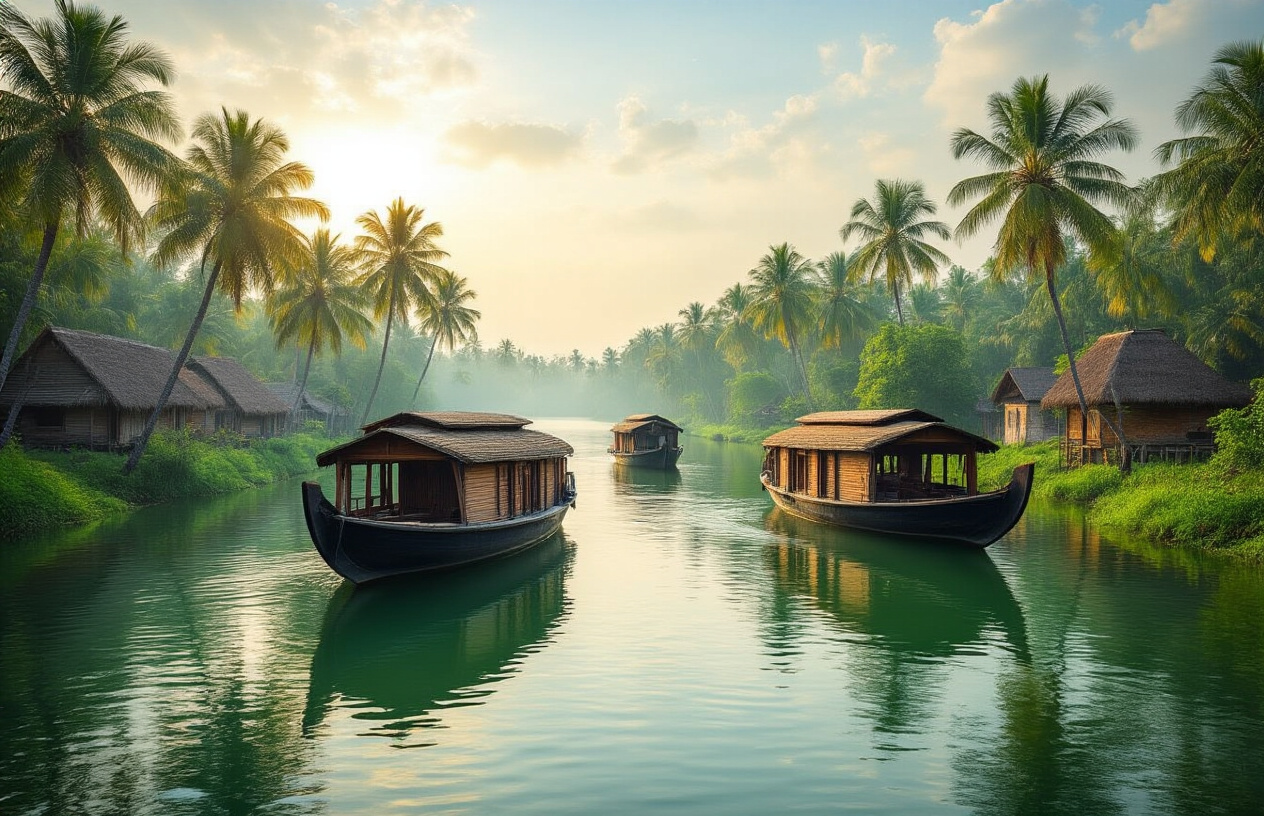
Cruise traditional houseboats through palm-fringed canals
Picture yourself gliding silently through Kerala backwaters on a traditional kettuvallam houseboat, watching coconut palms sway in the tropical breeze while kingfishers dart between emerald waterways. These converted rice barges, originally used for transporting goods across Kerala’s intricate canal network, now offer travelers an intimate way to explore one of India’s most serene landscapes.
The houseboats drift at a leisurely pace through narrow canals that weave between tiny islands and villages unchanged by time. As you cruise deeper into the backwater maze, the sounds of modern life fade away, replaced by gentle lapping water and the occasional splash of a fish jumping. Local boatmen navigate these waters with expert precision, their knowledge passed down through generations of families who’ve called these waterways home.
Experience authentic village life away from modern chaos
The backwater villages of Kerala operate on rhythms that modern cities have long forgotten. As your houseboat moors near small settlements, you’ll witness daily life unfolding at nature’s pace. Women wash clothes at the water’s edge while children play in the shallows, their laughter echoing across the peaceful canals.
These communities have thrived along the waterways for centuries, maintaining traditions that feel worlds away from India’s bustling cities. Village elders still gather under banyan trees to share stories and settle disputes, while craftsmen weave coconut fibers into ropes using techniques unchanged for generations. The absence of traffic noise and urban pollution creates a meditative atmosphere that allows visitors to truly disconnect and appreciate simpler pleasures.
Taste farm-to-table cuisine prepared by local families
Dining in Kerala’s backwater villages means experiencing farm-to-table cuisine in its purest form. Local families prepare meals using vegetables from their gardens, freshly caught fish from the canals, and coconuts plucked from trees in their yards. The Kerala backwaters region’s unique geography creates ideal growing conditions for spices, rice, and tropical fruits that form the foundation of authentic regional cuisine.
Village cooks prepare traditional dishes like karimeen fish curry, appam with coconut milk, and fragrant vegetable stews seasoned with cardamom and black pepper grown in nearby spice gardens. Meals are often served on banana leaves, adding an authentic touch that connects diners to local customs. The ingredients travel mere yards from source to plate, ensuring flavors remain vibrant and true to traditional recipes.
Witness traditional fishing techniques passed down generations
Dawn breaks over the backwaters with fishermen already at work, employing methods their ancestors perfected centuries ago. Chinese fishing nets, introduced by traders in the 14th century, still dot the shoreline as impressive wooden structures that require teams of men to operate. These massive contraptions, balanced by stones and operated through a system of ropes and pulleys, create a mesmerizing rhythm as they dip into the water and emerge with silver catches.
Local fishermen also use smaller traditional nets and bamboo traps designed specifically for the shallow, plant-rich environment of the backwaters. Watching these skilled practitioners read the water, predict fish movement, and coordinate their efforts provides insight into sustainable fishing practices that have maintained the ecosystem’s balance for generations. Their intimate knowledge of tides, seasons, and fish behavior represents a living library of environmental wisdom that continues to serve these unique experiences in India.
For a guided exploration of the backwaters of Kerala visit Gods own country trail.
Join Millions in Celebrating Holi Festival Across the Country
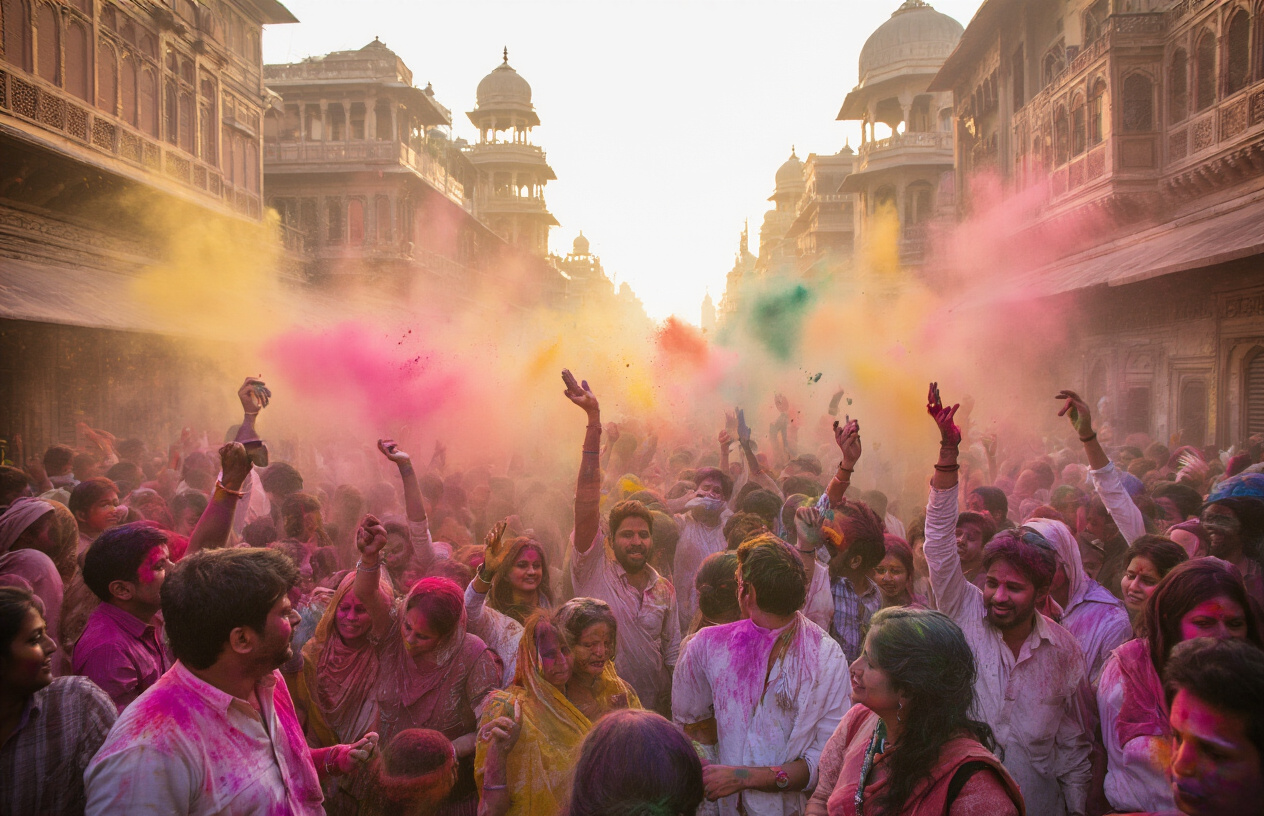
Participate in the world’s most colorful celebration
Holi festival India transforms the entire country into a vibrant canvas where millions of people come together to celebrate the triumph of good over evil and the arrival of spring. Picture streets flooded with clouds of colored powder, children chasing each other with water balloons, and complete strangers embracing while covered head to toe in brilliant hues of pink, yellow, green, and blue. This extraordinary spectacle happens nowhere else on Earth with such intensity and scale.
The festival begins at dawn with the lighting of massive bonfires called Holika Dahan, where people gather to sing traditional songs and share stories. As the sun rises, the real magic unfolds. Gulal powder fills the air like fairy dust, creating an almost dreamlike atmosphere where visibility drops to just a few feet. Water guns called pichkaris become weapons of joy, and even the most reserved individuals find themselves laughing uncontrollably as they’re doused in colored water.
Different regions add their own unique twist to the celebration. In Mathura and Vrindavan, the birthplace of Lord Krishna, festivities stretch for weeks with temple processions and traditional dances. Rajasthan’s royal palaces host elaborate celebrations where you can experience Holi like ancient maharajas. Meanwhile, in West Bengal, Holi transforms into Dol Jatra with cultural performances and traditional sweets.
Experience unity across all social and cultural boundaries
What makes Holi truly extraordinary among India travel experiences is how it dissolves every social barrier imaginable. Rich and poor, young and old, tourists and locals – everyone becomes equal participants in this colorful chaos. The usual hierarchies of Indian society temporarily disappear as CEOs find themselves playfully smearing colors on street vendors, and grandmothers chase giggling children with handfuls of powder.
Religious boundaries blur as Hindu temples welcome people from all faiths to join the celebrations. Muslims, Christians, Sikhs, and people of every background participate enthusiastically, creating a beautiful tapestry of unity. The phrase “Bura na mano, Holi hai” (Don’t mind, it’s Holi) becomes everyone’s excuse for the playful mischief that defines the day.
Even language barriers disappear when you’re laughing together while covered in rainbow colors. Hand gestures, smiles, and shared laughter become the universal language. Foreign travelers often describe Holi as the moment they felt most welcomed and included in Indian culture, with complete strangers treating them like beloved family members.
Create unforgettable memories with locals and travelers alike
The memories forged during Holi stay with you forever, painted not just in colors but in pure emotion. You’ll find yourself dancing to dhol beats in crowded streets, sharing traditional sweets like gujiya and thandai with families who invite you into their homes, and taking countless photos that capture pure, uninhibited joy.
Local families often adopt international visitors for the day, teaching them the proper way to apply colors, sharing homemade delicacies, and explaining the cultural significance behind each ritual. These spontaneous connections often bloom into lifelong friendships. Many travelers return year after year to celebrate with their adopted Indian families, creating traditions that span continents.
The festival creates stories you’ll tell for decades – like the time you accidentally wandered into a wedding celebration where the entire baraat (wedding procession) covered you in colors, or when a group of children followed you around all day, delighted to practice their English while teaching you Hindi color names. These aren’t just tourist experiences; they’re genuine cultural exchanges that happen organically during this magical celebration.
Discover Ancient Cave Temples Carved from Solid Rock
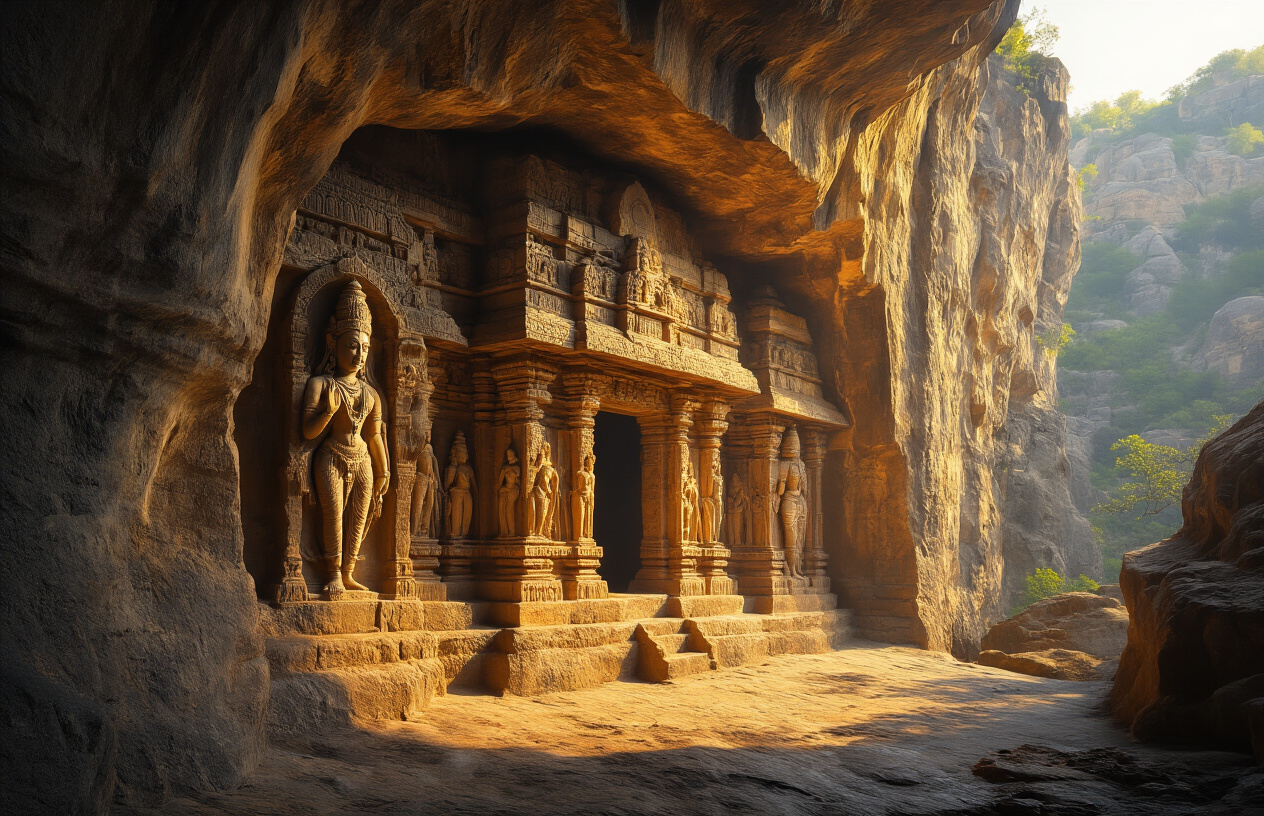
Marvel at intricate sculptures in Ajanta and Ellora caves
The ancient cave temples India showcases some of the most breathtaking rock-cut architecture you’ll find anywhere in the world. Ajanta and Ellora caves near Aurangabad represent the pinnacle of Indian craftsmanship, where artists spent centuries carving directly into solid basalt cliffs. At Ajanta, 29 caves reveal stunning Buddhist monasteries and prayer halls dating back to the 2nd century BCE. The intricate frescoes covering cave walls tell stories of Buddha’s life with such vivid detail that colors still shine after two millennia.
Ellora’s 34 caves showcase even more ambitious engineering, featuring the magnificent Kailasa temple in Cave 16 – carved top-down from a single rock formation. This architectural marvel required removing 400,000 tons of stone and represents Mount Kailash, Lord Shiva’s sacred abode.
Learn about Buddhist, Hindu, and Jain artistic traditions
These unique experiences in India offer rare insight into how different religions influenced artistic expression over centuries. Buddhist caves at Ajanta feature serene meditation halls called chaityas and residential viharas for monks. Hindu caves at Ellora display dynamic sculptures of dancing Shiva, fierce Durga, and other deities bursting with movement and emotion.
Jain caves showcase their philosophy through detailed carvings of Tirthankaras and intricate geometric patterns reflecting their belief in cosmic order. Each tradition brought distinct artistic styles – Buddhist art emphasizes peace and enlightenment, Hindu sculptures celebrate divine energy and cosmic drama, while Jain artistry focuses on spiritual liberation through detailed symbolic representations.
Explore 2000-year-old masterpieces of human creativity
Walking through these caves feels like stepping into an ancient artist’s workshop frozen in time. Master craftsmen worked for generations, passing techniques from father to son, creating sculptural narratives that cover every surface. Cave 1 at Ajanta houses the famous Bodhisattva Padmapani painting, considered among India’s finest artistic achievements. The figure’s compassionate expression and elegant posture demonstrate technical mastery that modern artists still study.
Ellora’s Kailasa temple showcases engineering prowess that seems impossible even today. Architects planned the entire structure before carving began, working with mathematical precision to create courtyards, halls, and towers from solid rock. Elephant sculptures at the base appear to support the entire temple, while intricate relief panels cover every pillar and wall.
For a guided tour of Ajanta & Ellora please visit 5 Senses Tours.
Experience spiritual energy in these sacred spaces
These caves weren’t just artistic projects – they served as active religious centers where monks meditated, pilgrims worshipped, and spiritual seekers found enlightenment. The acoustic design of chaitya halls creates perfect resonance for chanting, while dim lighting filtered through stone lattices creates an atmosphere of mystery and devotion.
Many visitors report feeling profound peace within these chambers, where countless generations have prayed and meditated. The caves’ remote locations, carved high into cliff faces, required dedication to reach – a pilgrimage in itself. Today, standing before these masterpieces connects you directly to India’s spiritual heritage and the unwavering human desire to create beauty that transcends time.
Journey Through Tea Plantations in the Western Ghats
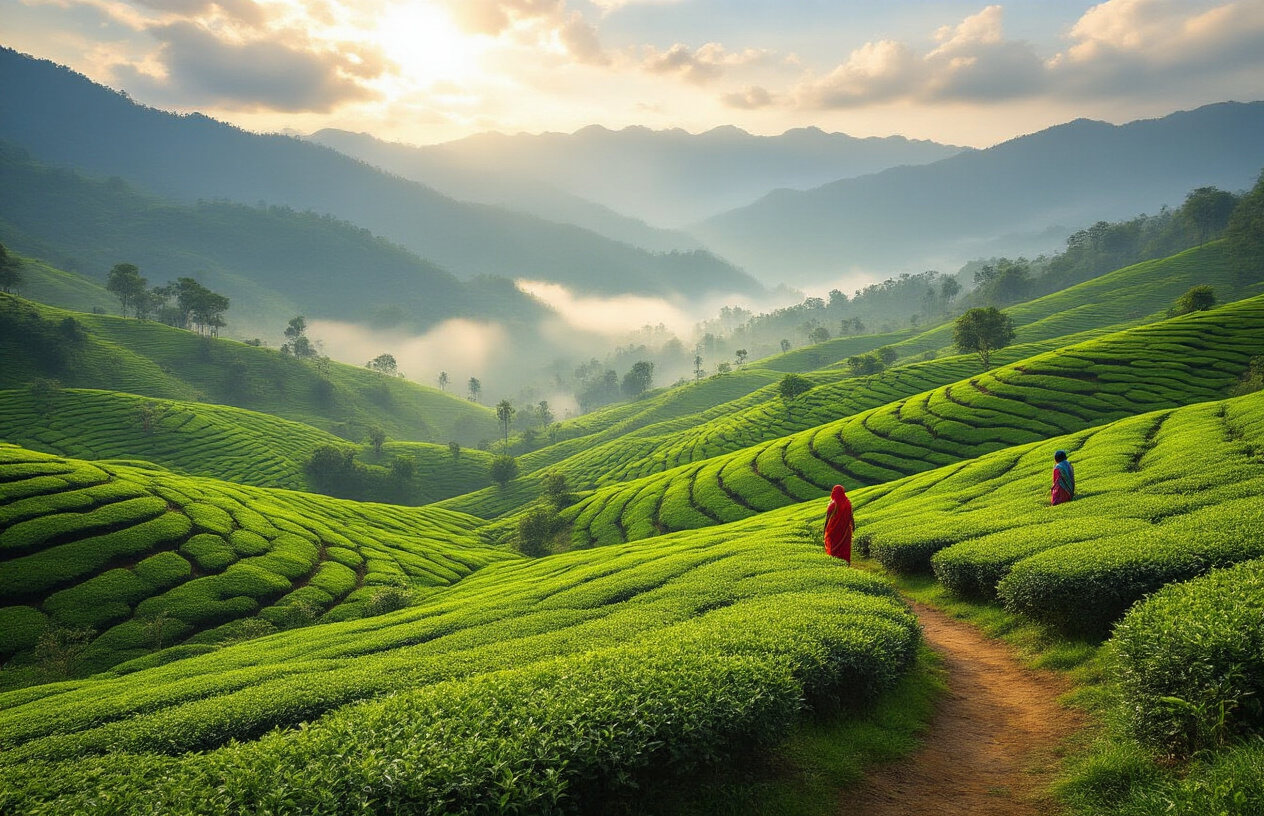
Walk through endless green carpets of tea bushes
The Western Ghats tea plantations stretch as far as the eye can see, creating a mesmerizing landscape of perfectly manicured green rows that follow the natural contours of rolling hills. Walking through these Western Ghats tea plantations feels like stepping into a living painting where every shade of green imaginable comes together in perfect harmony. The morning mist clings to the bushes, creating an almost magical atmosphere as workers in colorful saris move gracefully between the rows, their skilled hands picking only the finest two leaves and a bud.
These plantations, primarily located in hill stations like Munnar, Ooty, and Coonoor, offer visitors winding pathways that snake through thousands of acres of carefully cultivated tea bushes. The air carries the fresh, earthy scent of tea leaves mixed with the coolness of mountain breezes, creating an sensory experience that’s impossible to replicate anywhere else in the world.
Learn traditional tea processing from local experts
Tea processing in the Western Ghats follows time-honored traditions passed down through generations of local artisans who’ve perfected their craft over decades. Local experts eagerly share their knowledge about the intricate process that transforms freshly picked leaves into the aromatic beverage loved worldwide. The journey begins with withering, where leaves lose their moisture in carefully controlled conditions, followed by rolling to break down cell walls and release essential oils.
Visitors can observe the oxidation process, where leaves develop their characteristic flavor profiles, and witness the precise timing required for firing to halt oxidation at exactly the right moment. These master craftsmen explain how altitude, climate, and soil composition of the Western Ghats create unique flavor characteristics that distinguish Indian teas from those grown elsewhere. The hands-on experience includes sorting grades of tea, understanding the difference between orthodox and CTC (crush, tear, curl) methods, and learning why certain picking techniques produce premium quality leaves.
Stay in colonial-era bungalows with mountain views
Colonial-era bungalows scattered throughout the tea estates offer an authentic glimpse into India’s plantation history while providing modern comfort amid breathtaking mountain scenery. These heritage accommodations, originally built for British tea planters in the 19th and early 20th centuries, retain their old-world charm with wide verandas, high ceilings, and antique furnishings that transport guests back in time.
Waking up in these bungalows means stepping onto wraparound porches that overlook endless tea gardens stretching toward misty mountain peaks. The architecture reflects colonial influences adapted to local climate conditions, featuring steep roofs, large windows for cross-ventilation, and spacious rooms designed to combat the tropical heat. Many bungalows have been lovingly restored by tea estate owners who’ve preserved original features like wooden floors, period furniture, and vintage photographs documenting the plantation’s history.
Taste the freshest teas directly from the source
Nothing compares to sipping tea that was growing in the ground just hours earlier, and the Western Ghats plantations offer this unparalleled freshness that can’t be experienced anywhere else. Estate-fresh teas reveal complex flavor profiles and aromatic qualities that diminish during transportation and storage, making on-site tasting an extraordinary India destination experience for tea enthusiasts.
Plantation visits include curated tasting sessions where visitors sample different grades and varieties, from delicate white teas to robust black teas, each showcasing the unique terroir of its specific elevation and microclimate. Expert tea tasters guide guests through proper brewing techniques, optimal water temperatures, and steeping times that unlock each variety’s full potential. The experience often includes comparing the same tea variety processed using different methods, revealing how traditional techniques influence flavor, aroma, and color.
Fresh tea tastings frequently pair with locally grown spices and honey, creating flavor combinations that highlight the Western Ghats’ biodiversity and culinary heritage.
Experience Ayurvedic Healing in Its Birthplace
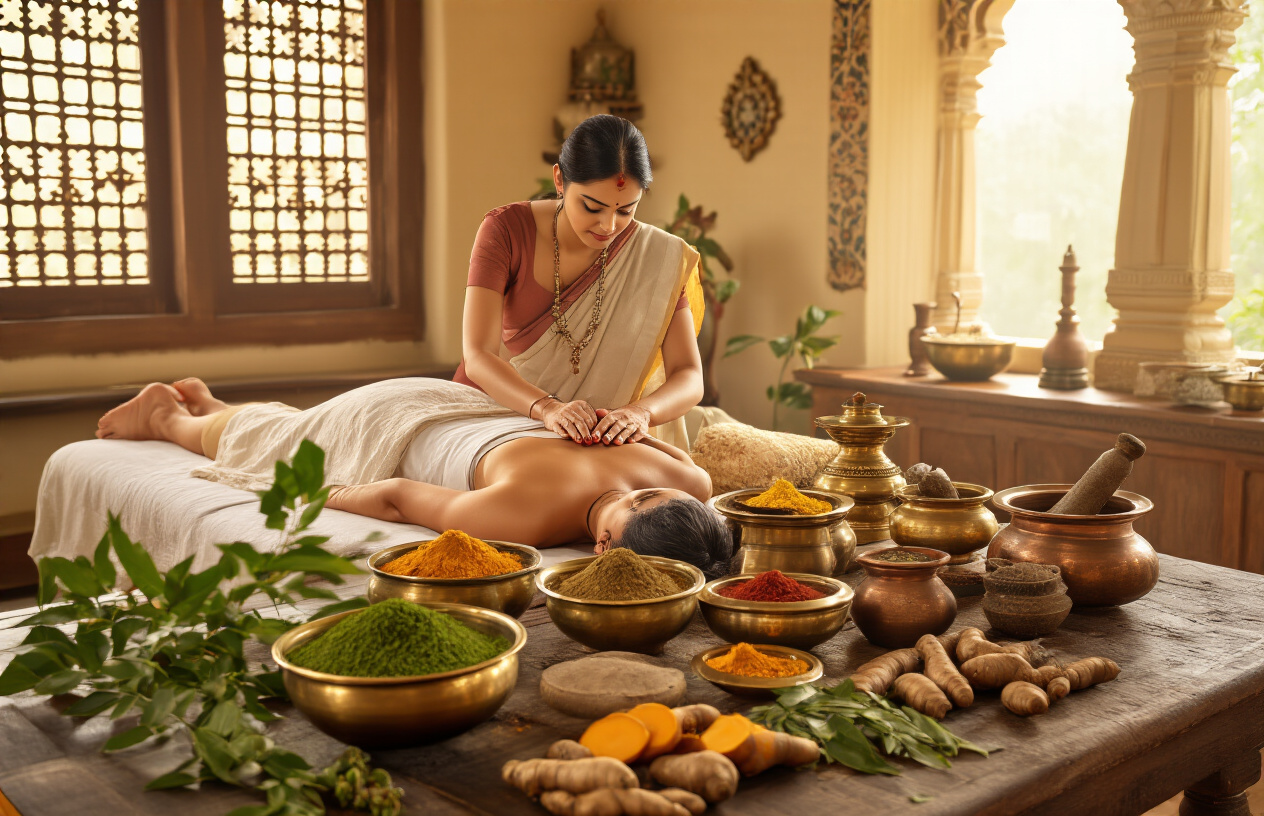
Receive Personalized Treatments Based on Ancient Wisdom
Stepping into an authentic Ayurvedic center in India feels like entering a world where healing wisdom spans over 5,000 years. Unlike the commercialized wellness retreats you’ll find elsewhere, genuine Ayurveda India experiences begin with a thorough consultation that goes far beyond asking about your symptoms. Experienced practitioners examine your pulse, tongue, eyes, and skin while asking detailed questions about your sleep patterns, digestion, emotional state, and lifestyle habits.
The magic happens when they determine your unique dosha composition – your individual blend of Vata (air and space), Pitta (fire and water), and Kapha (earth and water). This assessment shapes everything that follows, from the specific oils used in your massage to the herbs prescribed for your condition. You might receive Shirodhara, where warm oil flows continuously over your forehead, or Abhyanga, a synchronized full-body massage performed by two therapists using movements passed down through generations.
The personalized approach means no two people receive identical treatments, even if they share similar complaints. Someone with chronic stress might get cooling therapies to balance excess Pitta, while another person with the same issue could receive warming treatments to strengthen weak Vata. This precision sets authentic Indian Ayurveda apart from generic spa treatments found worldwide.
Learn About Natural Remedies Used for Thousands of Years
India’s forests, mountains, and plains serve as living pharmacies where traditional healers have harvested medicinal plants since ancient times. During your Ayurvedic journey, you’ll discover remedies that predate modern medicine by millennia. Turmeric, now celebrated globally for its anti-inflammatory properties, has been ground into healing pastes in Indian kitchens for countless generations. Ashwagandha, the stress-fighting adaptogen taking Western wellness by storm, grows wild across India’s countryside and has been prescribed by Ayurvedic doctors for centuries.
Visiting traditional herb gardens reveals treasures like Brahmi for mental clarity, Triphala for digestive health, and Neem for skin conditions. Many centers offer workshops where you can learn to prepare simple remedies yourself – mixing Tulsi tea for respiratory health, creating Amla chutneys rich in vitamin C, or preparing golden milk with carefully balanced spices.
What makes this experience extraordinary is witnessing how these natural remedies integrate into daily Indian life. Local families share recipes passed down through generations, and village elders demonstrate preparation methods unchanged for hundreds of years. You’ll understand why modern pharmaceuticals often attempt to isolate and replicate compounds found naturally in these time-tested plants.
Rejuvenate Your Body and Mind with Authentic Therapies
Authentic Ayurvedic therapies transform both physical and mental well-being through treatments you simply cannot experience anywhere else with the same authenticity. Panchakarma, the comprehensive detoxification process, unfolds over several weeks with daily treatments designed to eliminate deep-seated toxins while rebuilding your body’s natural balance. The experience includes specialized diets, herbal steam baths, and therapeutic massages that work in harmony to restore vitality.
Kerala, known as the birthplace of Ayurveda, offers particularly profound healing experiences. Here, you’ll find family-run treatment centers where knowledge passes from generation to generation. The tropical climate enhances the effectiveness of oil treatments, while the abundant medicinal plants ensure the freshest ingredients for your therapies.
Mental rejuvenation comes through practices like meditation in herb-scented gardens, yoga sessions aligned with your dosha type, and breathing exercises that balance your nervous system. The holistic approach addresses not just physical ailments but emotional imbalances, stress patterns, and spiritual disconnection that contribute to illness.
These spiritual India travel experiences offer something Western wellness retreats cannot replicate – the authentic cultural context where Ayurveda originated. You’ll sleep in ashrams or heritage properties, eat meals prepared according to Ayurvedic principles, and participate in daily rituals that support the healing process.
Witness Wildlife Conservation Success Stories in National Parks
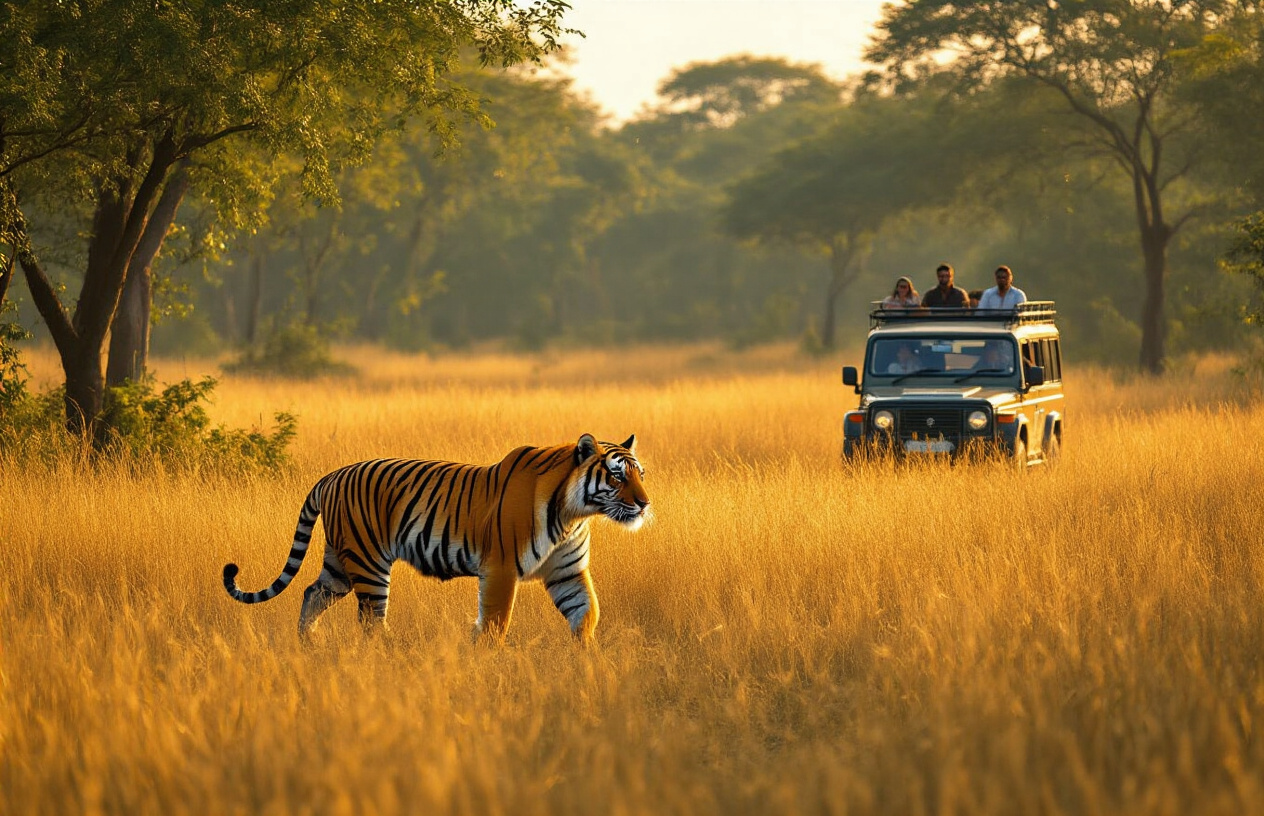
Spot Bengal tigers in their natural habitat
India’s national parks offer some of the world’s best opportunities to witness the magnificent Bengal tiger in its natural environment. Ranthambore National Park in Rajasthan stands as one of the most famous tiger reserves, where these apex predators roam freely across rugged terrain dotted with ancient ruins. The park’s unique landscape combines dense forests with open grasslands, creating perfect hunting grounds for tigers while offering visitors exceptional viewing opportunities.
Bandhavgarh National Park in Madhya Pradesh boasts one of India’s highest tiger densities, making wildlife sightings almost guaranteed. The park’s success story is remarkable – from near extinction in the 1970s with fewer than 1,800 tigers nationwide, India now hosts over 3,000 Bengal tigers thanks to dedicated conservation efforts. These India wildlife conservation programs have transformed protected areas into thriving ecosystems where tigers can breed and flourish without human interference.
Jim Corbett National Park, India’s oldest national park, pioneered tiger conservation and continues to be a model for other reserves. Early morning and evening safaris offer the best chances to spot these elusive cats, as they emerge to hunt or visit waterholes. The experience of watching a tiger mark its territory or interact with cubs provides unforgettable memories that showcase India’s commitment to preserving its most iconic species.
Observe one-horned rhinos in Kaziranga wetlands
Kaziranga National Park in Assam represents one of conservation’s greatest success stories. Home to two-thirds of the world’s one-horned rhinoceros population, this UNESCO World Heritage site has brought these prehistoric-looking giants back from the brink of extinction. The park’s wetlands, grasslands, and forests create an ideal habitat for over 2,400 rhinos to thrive.
The greater one-horned rhinoceros, found almost exclusively in this region, weighs up to 4,000 pounds and stands as tall as six feet. These magnificent creatures graze peacefully in Kaziranga’s tall elephant grass, often accompanied by cattle egrets that feed on insects disturbed by their movement. The sight of a rhino family – mother, father, and calf – wallowing in muddy pools or crossing rivers creates magical moments for visitors.
Elephant safaris provide the perfect vantage point for rhino watching, as these gentle giants can navigate the park’s marshy terrain better than jeeps. The early morning mist rising from the Brahmaputra River floodplains adds an ethereal quality to rhino encounters. Anti-poaching efforts have been crucial to this success, with park rangers working tirelessly to protect these valuable animals from illegal horn trade.
Experience diverse ecosystems from grasslands to forests
India’s national parks showcase incredible biodiversity across varied landscapes. The Western Ghats harbor endemic species in their misty mountain forests, while the Thar Desert’s Ranthambore combines arid conditions with seasonal water bodies that attract diverse wildlife. Each ecosystem supports unique flora and fauna adapted to specific environmental conditions.
Kanha National Park epitomizes the classic Indian jungle experience with its sal forests, bamboo groves, and expansive meadows called ‘maidans.’ This park inspired Rudyard Kipling’s “The Jungle Book” and continues to enchant visitors with its pristine beauty. The park’s management practices have restored degraded grasslands, creating perfect habitat for barasingha (swamp deer), which were once critically endangered.
Periyar National Park in Kerala offers a completely different experience, with boat safaris on the artificial lake providing glimpses of elephants, wild boar, and various bird species coming to drink. The park’s spice-scented forests demonstrate how conservation can coexist with local communities who have traditionally depended on forest resources.
Support local communities through responsible tourism
Wildlife tourism in India directly benefits rural communities living around national parks. Local guides, naturalists, and safari drivers earn sustainable incomes while sharing their intimate knowledge of animal behavior and forest ecology. These community members often become the strongest advocates for conservation, as they witness firsthand how protecting wildlife brings economic opportunities to their villages.
Many parks employ former poachers as guides and trackers, transforming potential threats into conservation allies. These individuals possess unmatched tracking skills and deep understanding of animal movements, making them invaluable for both tourism and research activities. Their transformation from hunters to protectors demonstrates the power of economic incentives in conservation efforts.
Homestays and eco-lodges near national parks provide additional income streams for local families while offering visitors authentic cultural experiences. Guests can learn traditional crafts, participate in organic farming, or join community-led conservation projects. This model ensures that tourism revenue stays within local communities rather than flowing to distant hotel chains, creating lasting positive impacts for both wildlife and people.
Navigate the Organized Chaos of Indian Street Markets
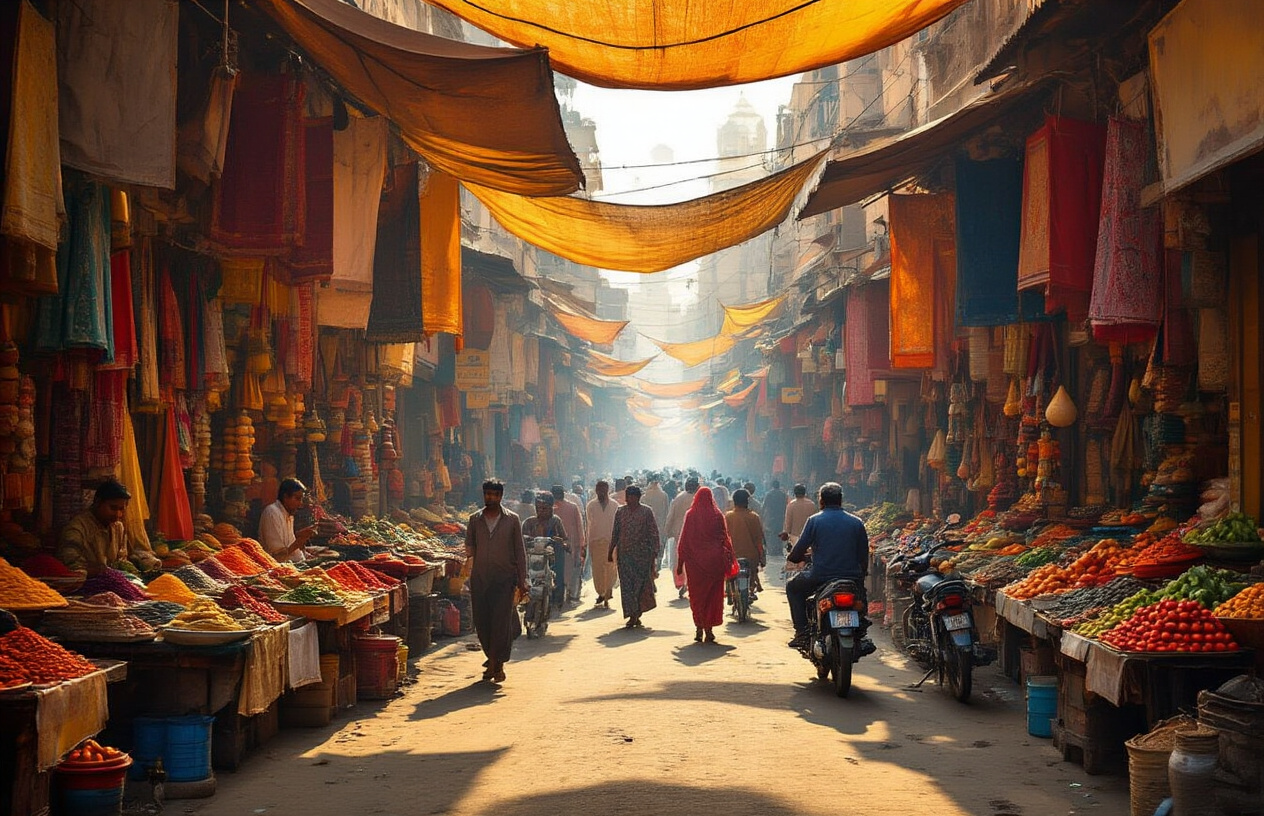
Bargain for treasures in centuries-old bazaars
The art of bargaining transforms shopping in Indian street markets from a simple transaction into an engaging cultural dance. Markets like Delhi’s Chandni Chowk, Jaipur’s Johari Bazaar, and Mumbai’s Crawford Market have thrived for centuries, with some dating back to the Mughal era. Here, the initial asking price serves merely as an opening gambit in negotiations that can last anywhere from five minutes to an hour.
Master negotiators know that successful bargaining requires patience, humor, and respect. Start by offering 30-40% of the quoted price, then gradually work toward a middle ground. Vendors appreciate customers who engage genuinely rather than aggressively, often sharing stories about their products’ origins while you negotiate. The key lies in walking away at least once – this demonstrates serious intent and often leads to the seller’s final offer.
These bazaars hide incredible treasures: antique brass artifacts, hand-woven textiles, precious gemstones, and vintage collectibles. Each narrow lane specializes in different goods, from Kinari Bazaar’s wedding supplies to Dariba Kalan’s silver jewellery. The thrill comes not just from securing a great deal, but from discovering one-of-a-kind pieces that carry generations of craftsmanship and history within their intricate details.
Taste authentic street food from regional cuisines
Indian street markets serve as open-air restaurants where regional cuisines converge in the most unexpected ways. Unlike restaurant versions designed for broader palates, market food stays true to traditional recipes passed down through families of vendors. Every city offers its signature specialties – Mumbai’s vada pav and bhel puri, Delhi’s chole bhature and aloo chaat, Kolkata’s puchka and kathi rolls, or Chennai’s dosa and filter coffee.
The magic happens in tiny stalls where vendors have perfected single dishes over decades. Watch as a dosa maker spreads batter paper-thin across a massive griddle, or observe the synchronized dance of chaat vendors combining multiple ingredients with lightning speed. These culinary artists work without recipes, relying on intuition developed through years of practice to balance flavors perfectly.
Safety-conscious travelers can follow simple guidelines: choose busy stalls with high turnover, watch food being prepared fresh, and trust your senses. Local crowds provide the best recommendations – if a stall draws long lines of locals during lunch rush, the food quality speaks for itself. Many vendors speak basic English and love explaining their preparations to curious foreigners, turning meals into informal cooking lessons.
Discover handcrafted items made by skilled artisans
Behind every colorful display in Indian street markets lies generations of artisanal expertise. These markets serve as direct connections between rural craftspeople and urban consumers, bypassing expensive retail chains. You’ll find block-printed textiles from Rajasthan where individual motifs require multiple stamps, intricate woodcarvings from Kashmir that take weeks to complete, and metalwork from Uttar Pradesh shaped using techniques unchanged for centuries.
Regional specialties reflect local cultural traditions and available materials. Gujarat’s markets showcase detailed mirror work and vibrant bandhani tie-dye, while Bengal offers delicate kantha embroidery and handwoven cotton sarees. South Indian markets feature bronze sculptures cast using the ancient lost-wax method, alongside aromatic spices ground fresh daily. Northern hill stations sell Tibetan-influenced handicrafts like singing bowls and prayer wheels.
Meeting artisans directly enriches the shopping experience immeasurably. Many travel from remote villages to sell their creations personally, sharing techniques learned from parents and grandparents. They explain the significance of patterns, demonstrate traditional methods, and customize pieces according to customer preferences. This human connection transforms purchases from mere souvenirs into meaningful cultural exchanges that support traditional livelihoods.
Experience the vibrant energy of daily Indian life
Indian street markets pulse with an energy that captures the essence of daily life across the subcontinent. These spaces function as community centers where people from all walks of life converge to shop, socialize, and conduct business. The sensory overload initially overwhelms visitors – vendors calling out prices, rickshaws honking through narrow passages, and the aromatic mixture of spices, incense, and street food creating an intoxicating atmosphere.
The markets reveal India’s remarkable diversity within compact spaces. Sari-clad grandmothers haggle alongside college students in jeans, while businesspeople grab quick lunches next to laborers taking chai breaks. Children weave through crowds selling flowers or newspapers, and elderly men gather around tea stalls discussing politics and cricket. This democratic mixing of social classes creates a uniquely Indian atmosphere rarely found in formal retail environments.
Time moves differently in these markets, following natural rhythms rather than clock schedules. Early mornings bring fresh produce deliveries and serious shoppers, midday sees families browsing leisurely, and evenings transform markets into festive gathering places. Street musicians, fortune tellers, and traveling performers add entertainment value, while holy men and temple bells remind visitors of spirituality’s place in everyday commerce. This organized chaos represents India’s ability to blend tradition with modernity seamlessly.
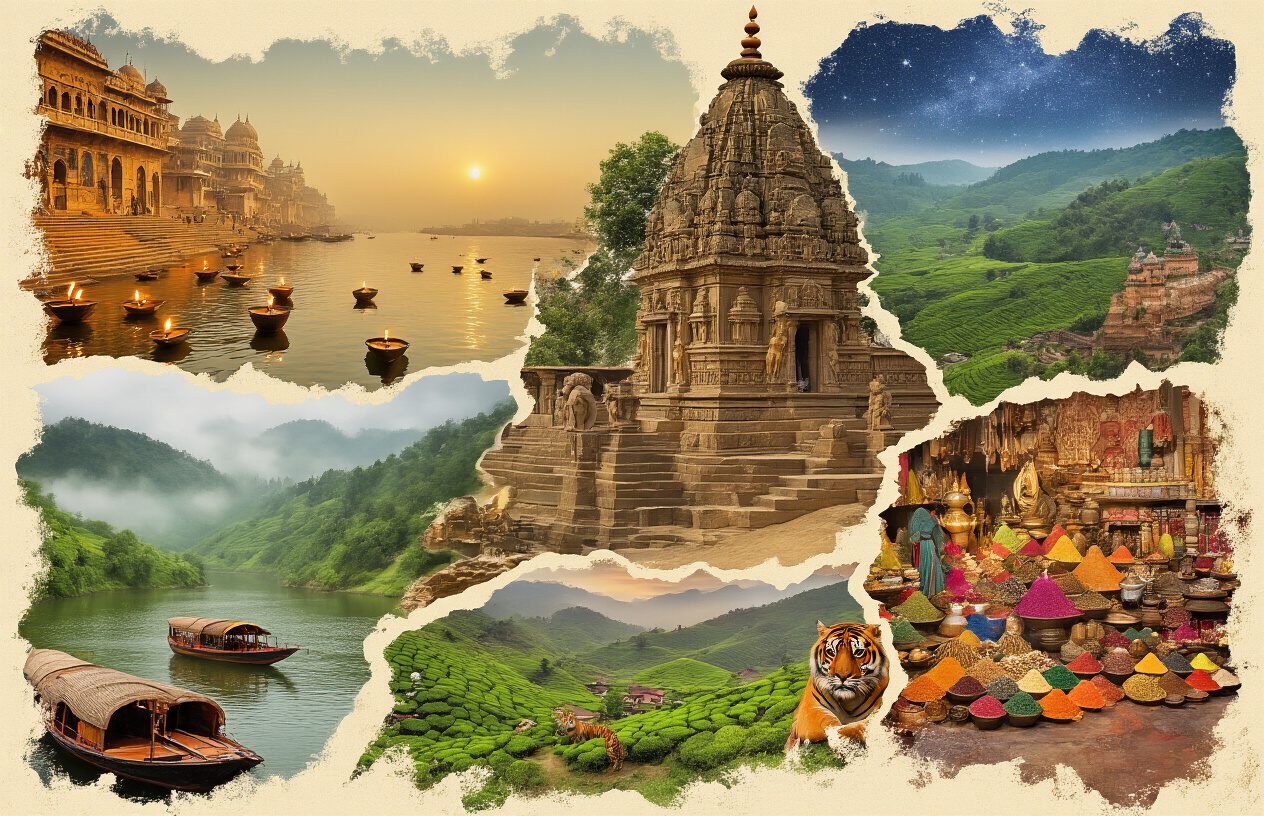
From the sacred ghats of Varanasi to the living bridges of Meghalaya, India offers experiences that simply don’t exist anywhere else on Earth. These aren’t just tourist attractions – they’re windows into a civilization that has been evolving for thousands of years. Whether you’re seeking spiritual awakening along the Ganges, adventure in the Thar Desert’s endless dunes, or healing through ancient Ayurvedic practices, India delivers moments that will change how you see the world.
The real magic happens when you realize these experiences aren’t museum pieces – they’re alive and thriving today. The tea gardens still flourish, the festivals still bring entire cities to a standstill, and the street markets still buzz with the same energy they’ve had for centuries. Pack your sense of wonder and prepare to be amazed. India is waiting to show you things you never knew were possible.
Leave a Reply