
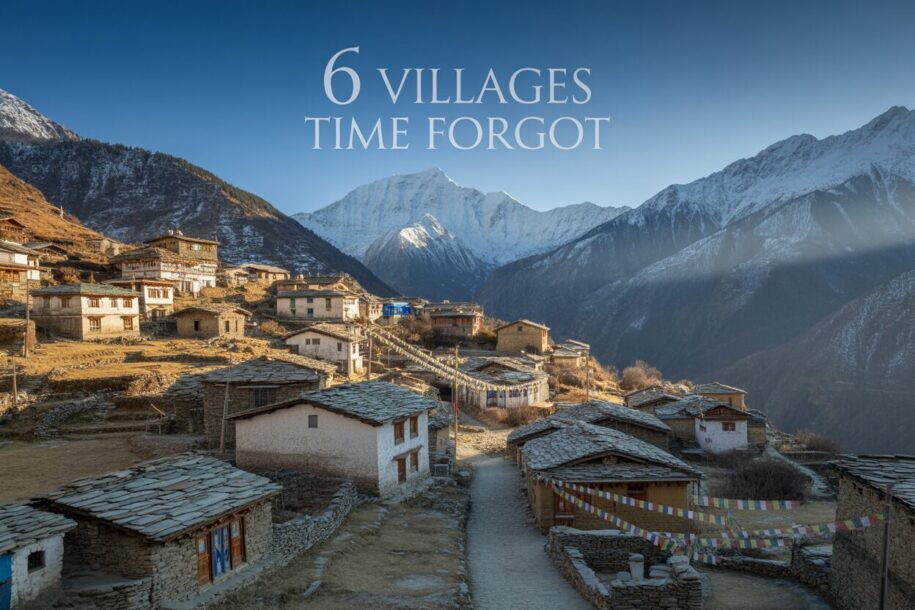
Deep in the Himalayas, six remote villages exist as living time capsules, untouched by modern chaos and preserving ancient ways of life that have vanished elsewhere. These Himalayan villages time completely forgot offer adventurous travelers and culture enthusiasts a rare glimpse into traditions, customs, and landscapes that feel frozen in centuries past.
This guide is perfect for off-the-beaten-path explorers, cultural photographers, and anyone seeking authentic mountain experiences beyond typical tourist destinations.
You’ll discover villages with fascinating governance systems like Malana’s ancient democracy that predates modern political structures. We’ll explore high-altitude settlements including Komic, the world’s highest motorable village, and remote border communities like Chitkul where India meets its final frontier. Plus, you’ll learn about mystical places such as Gue Village, home to naturally preserved 500-year-old mummies, and Nako’s stunning frozen lake that mirrors snow-capped peaks.
Each destination tells a unique story of survival, tradition, and the human spirit thriving in some of Earth’s most challenging environments.
Malana Village – The Ancient Democracy Hidden in Himachal Pradesh
Discover the world’s oldest surviving democratic system
Tucked away in the remote valleys of Himachal Pradesh, Malana operates under a democratic system that predates ancient Greece by centuries. The village council, known as the “Kanishta” and “Jeshta,” functions as a two-tier democracy where decisions are made through collective deliberation and consensus. This isn’t just folklore – it’s a living, breathing system that has governed the village for over 1,600 years.
The village parliament meets under an ancient temple dedicated to Jamlu Devta, their primary deity who they believe is the real ruler of Malana. Every major decision, from land disputes to marriage arrangements, passes through this democratic process. What makes this system remarkable is its complete independence from external governance structures, maintaining autonomy that has puzzled political scientists and historians alike.
Experience untouched local customs and taboos
Malana’s social fabric is woven with intricate customs that outsiders must respect. The most significant taboo involves physical contact – touching anything belonging to a Malanese person, including walls, doors, or personal items, is strictly forbidden. Visitors who accidentally make contact must pay a fine, and the “contaminated” item requires purification rituals.
The village operates on a strict caste-like system where different families hold hereditary roles. The Kanishta families handle external affairs, while Jeshta families manage internal governance. Photography restrictions are equally stringent – taking pictures of locals, especially women, can result in immediate expulsion from the village.
Traditional festivals showcase their unique customs, particularly during harvest season when the entire community participates in ancient rituals that have remained unchanged for generations. These ceremonies blend shamanic practices with their democratic traditions, creating a cultural experience found nowhere else on earth.
Marvel at traditional wooden architecture from centuries past
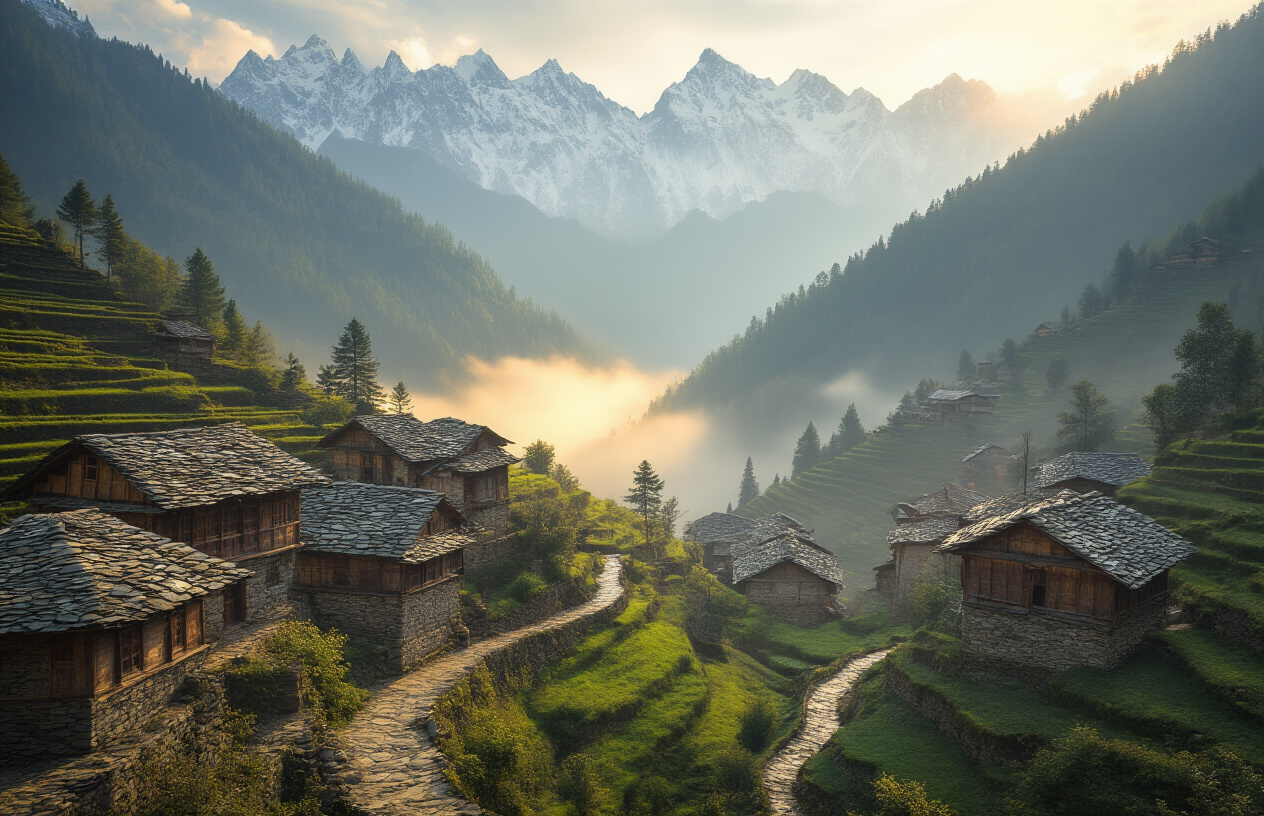
Malana’s architectural style reflects centuries of isolation and adaptation to harsh mountain conditions. The houses are constructed entirely from local materials – slate stone foundations topped with intricate wooden structures made from deodar and pine. These multi-story buildings feature distinctive slanted roofs designed to withstand heavy snowfall during brutal Himalayan winters.
The construction technique, passed down through generations, requires no nails or modern binding materials. Instead, craftsmen use traditional joinery methods where wooden beams interlock perfectly, creating earthquake-resistant structures that have stood for hundreds of years. The upper floors typically serve as granaries and living spaces, while livestock occupies the ground level during winter months.
The village temple architecture showcases the pinnacle of local craftsmanship. Ornate wooden carvings depicting mythological figures and geometric patterns adorn the temple walls, created using tools and techniques unchanged since medieval times. The precision of these carvings, achieved without modern equipment, demonstrates the extraordinary skill of Malanese artisans.
Learn about the unique Malanese language spoken nowhere else
The Kanashi language spoken in Malana belongs to the Tibeto-Burman family but has evolved in complete isolation, making it incomprehensible to speakers of neighboring dialects. Linguists classify it as critically endangered, with fewer than 1,500 speakers worldwide – all concentrated in this single village.
Kanashi contains unique phonetic structures and vocabulary that don’t exist in related languages. The language lacks a written script, relying entirely on oral tradition for preservation. Village elders serve as living libraries, maintaining ancient stories, legal codes, and historical accounts through memorized recitations passed down through bloodlines.
Recent linguistic studies have revealed Sanskrit influences mixed with Tibetan roots, suggesting complex historical interactions with various cultures. However, the language maintains distinct characteristics that make it a linguistic island. The younger generation increasingly uses Hindi for external communication, creating urgent concerns about Kanashi’s survival in the coming decades.
Tashigang Village – Tibet’s Living Heritage in Spiti Valley
Witness authentic Tibetan Buddhist monastery life
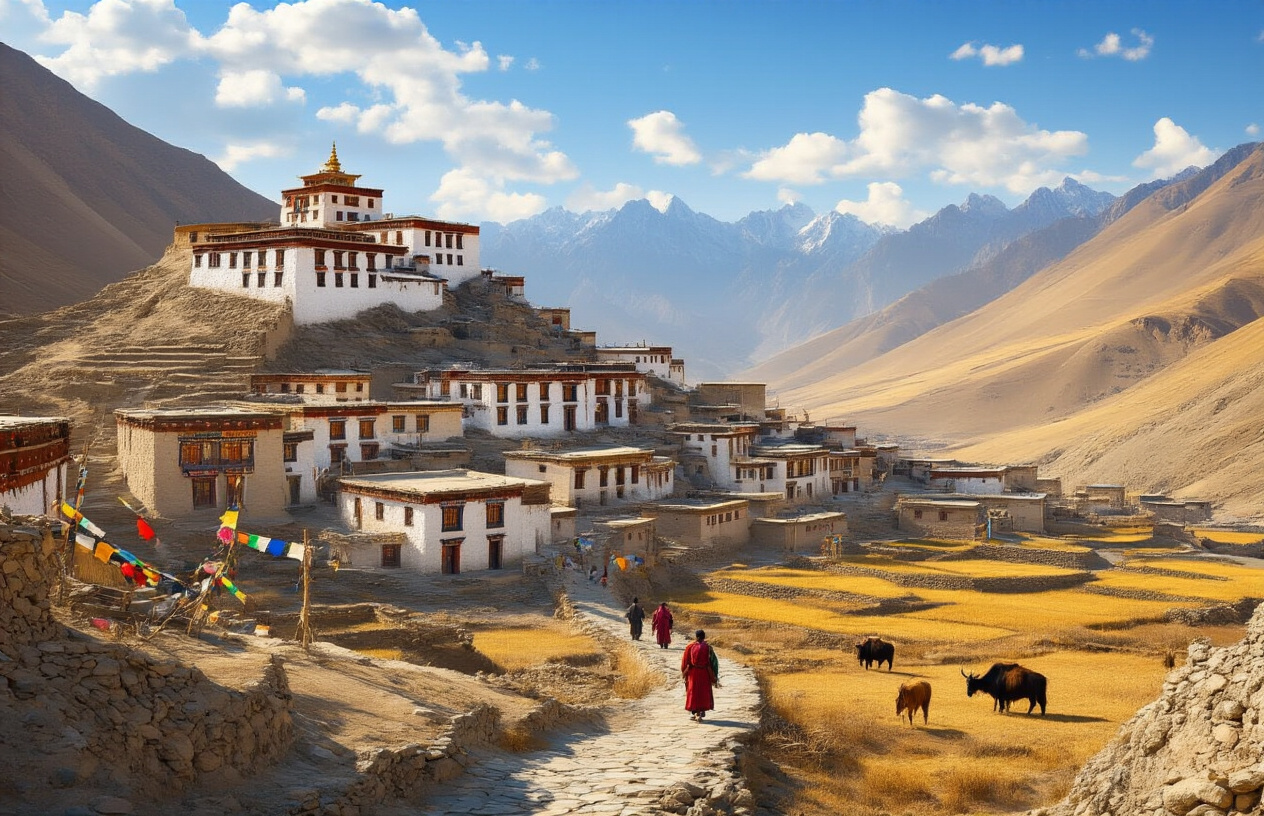
Tashigang Village sits like a jewel in Spiti Valley, preserving Tibetan Buddhist traditions that date back over a thousand years. The village’s gompa (monastery) serves as the spiritual heart of the community, where monks begin their daily prayers before dawn breaks over the Himalayan peaks. Visitors can join morning and evening prayer sessions, watching as saffron-robed monks chant ancient mantras while spinning prayer wheels and lighting butter lamps.
The monastery houses rare Buddhist manuscripts written on palm leaves and ancient thangka paintings that have survived centuries of harsh mountain weather. Local monks, many who speak fluent English, welcome curious travelers and share stories about their spiritual practices. During winter months, when heavy snowfall isolates the village, monks spend their time in deep meditation and studying Buddhist philosophy.
Explore ancient cave dwellings carved into cliffsides
The dramatic cliffs surrounding Tashigang hide dozens of man-made caves that once sheltered Buddhist hermits and meditation practitioners. These cave dwellings, carved directly into the soft sedimentary rock, showcase incredible engineering skills from centuries past. Some caves feature multiple chambers connected by narrow passages, complete with natural ventilation systems and small alcoves for oil lamps.
Climbing to these caves requires sturdy footwear and basic mountaineering skills, but the reward is extraordinary. Inside, you’ll find meditation seats carved from stone, ancient murals faded but still visible, and small stupas built into cave walls. Local guides share legends about famous lamas who spent years in solitary meditation within these rocky chambers, emerging only to share their spiritual insights with the village below.
Experience traditional yak herding practices
Yak herding remains the backbone of Tashigang’s economy, with families passing down herding techniques through generations. These massive, shaggy animals provide milk for making traditional yak cheese, wool for warm clothing, and dried dung used as fuel during harsh winters. Village herders wake before sunrise to lead their yak herds to high-altitude pastures, sometimes camping for days in stone shelters built at grazing grounds.
Travelers can join herding expeditions during summer months, learning to handle these gentle giants while experiencing the nomadic lifestyle that has sustained Spiti communities for centuries. Herders teach visitors how to milk yaks, process yak wool into yarn, and prepare traditional yak butter tea – a salty, energizing drink perfect for high-altitude living.
Observe centuries-old prayer wheel traditions
Prayer wheels in Tashigang aren’t just religious artifacts – they’re living symbols of the village’s deep spiritual connection. The main prayer wheel near the monastery stands six feet tall and contains thousands of written mantras. Villagers spin this wheel clockwise while walking around it, believing each rotation sends prayers skyward.
Smaller hand-held prayer wheels accompany villagers during daily activities. Shepherds carry them while tending flocks, elderly residents spin them during evening walks, and children learn the proper spinning technique from their grandparents. The constant clicking sound of prayer wheels creates a meditative soundtrack throughout the village, connecting past and present in an unbroken chain of devotion.
Chitkul Village – India’s Last Inhabited Border Settlement
Stand at the edge of civilization near China border
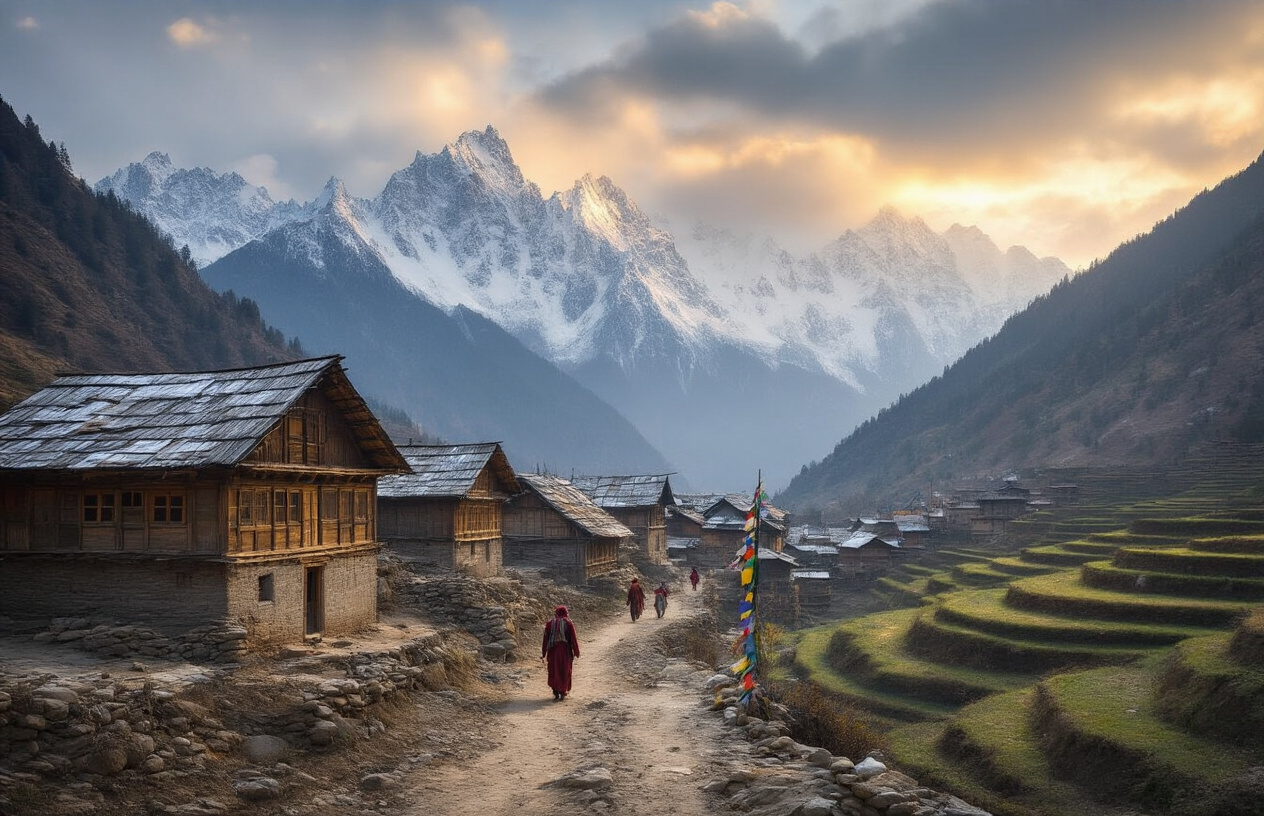
Perched at 3,450 meters above sea level in the Baspa Valley, Chitkul holds the remarkable distinction of being India’s last inhabited village before the Tibetan border. The Chinese frontier lies just 25 kilometers away, making this remote settlement a unique geographical and cultural landmark. Road signs dramatically announce “Last Dhaba of Hindustan” as you approach, creating an almost surreal sense of reaching civilization’s edge.
The village sits along the ancient Indo-Tibetan trade route, where merchants once carried goods between India and Tibet through treacherous mountain passes. Today, the Border Roads Organisation maintains the narrow mountain road leading here, though landslides and weather conditions frequently cut off access for months at a time. The stark landscape features barren mountains dotted with patches of green barley fields and apple orchards that somehow thrive in this harsh environment.
Walking through Chitkul feels like stepping into a forgotten chapter of India’s border history. The Baspa River flows nearby, its crystal-clear waters originating from glaciers high above. Local residents often point toward the mountains and casually mention, “China is just over there,” as if discussing the next village rather than an international border. Military checkpoints remind visitors of the strategic importance of this remote outpost.
Experience harsh winter isolation that preserves old ways
Winter transforms Chitkul into an island of isolation, completely cut off from the outside world for nearly six months. Heavy snowfall blocks all road access from October to April, forcing the entire population of around 600 people to relocate to lower valleys or hunker down with stored supplies. This annual cycle of isolation has become the village’s greatest protector, shielding traditional lifestyles from modern influence.
During these winter months, families rely on age-old preservation techniques passed down through generations. Dried vegetables, pickled turnips, and stored grains sustain the community through the harsh season. Traditional wood-burning stoves heat homes built with thick stone walls designed to withstand sub-zero temperatures. The absence of internet, television, and regular communication creates a time capsule where oral storytelling, traditional crafts, and ancient customs flourish undisturbed.
The isolation breeds remarkable self-reliance. Villagers maintain their own water systems, generate limited electricity through micro-hydroelectric projects, and practice subsistence farming during the brief growing season. Children attend a small village school when weather permits, but often receive education steeped in local folklore and practical mountain survival skills that textbooks can’t teach. This forced disconnection from the modern world has preserved social structures and cultural practices that disappeared elsewhere generations ago.
Discover traditional Kinnauri wooden temples
Chitkul’s architectural treasures reflect the unique Kinnauri style that blends Hindu and Buddhist influences. The village temples showcase intricate wooden craftsmanship using traditional techniques dating back centuries. Local artisans carved these structures without using a single nail, relying instead on interlocking wooden joints that flex with seismic activity and temperature changes.
The main temple, dedicated to Mathi, the local deity, features elaborate wooden panels depicting mythological scenes and geometric patterns. Each beam tells a story through carved symbols and motifs that local elders can still interpret. The pagoda-style roof, topped with brass ornaments, catches the first rays of mountain sunlight during daily prayers. Inside, ancient wooden idols receive offerings of barley flour and locally distilled alcohol called arak.
These temples serve as community centers where villagers gather for festivals and important decisions. The architecture reflects practical mountain construction – steep roofs shed heavy snow loads, while raised foundations prevent moisture damage. Skilled craftsmen from nearby villages once traveled here specifically to work on these sacred structures, passing down techniques through apprenticeships. Today, maintaining these temples requires specialized knowledge that only a few elderly artisans still possess, making each renovation a race against time to preserve these architectural gems.
Gue Village – Where Ancient Mummies Rest in Peace
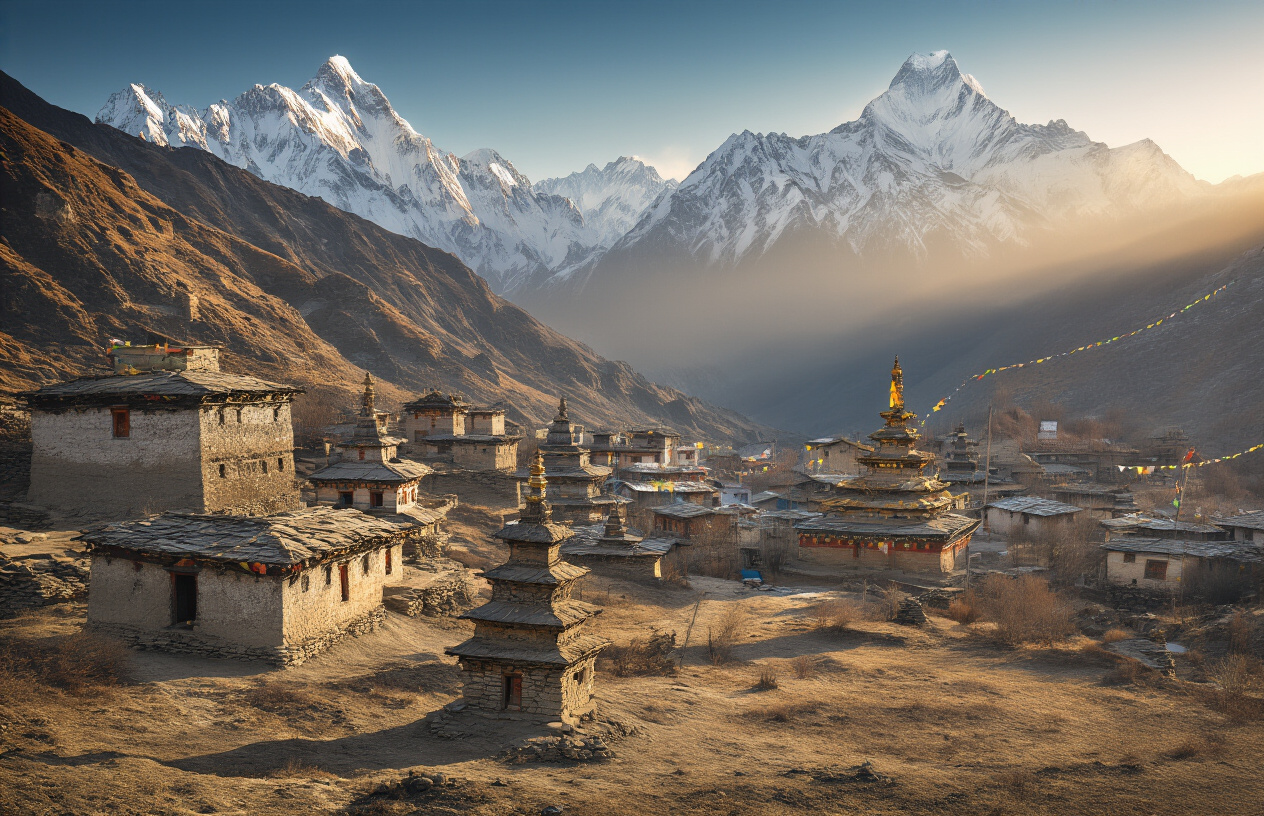
Visit the 500-year-old naturally preserved monk mummy
Deep inside Gue Village’s ancient Tashilhunpo Monastery sits one of the most remarkable archaeological discoveries in the Himalayan region. The naturally mummified remains of a Buddhist monk, believed to have died around 500 years ago during meditation, remain perfectly preserved in the dry, cold climate of Spiti Valley. Local villagers discovered the mummy in 1975 when an earthquake damaged the monastery walls, revealing the seated figure in lotus position.
The monk’s body shows extraordinary preservation – skin, hair, teeth, and even nails remain intact. What makes this discovery truly fascinating is that the mummification occurred naturally through the extreme climate conditions, not through any artificial preservation process. The monk was likely a respected lama who chose to meditate until death, a practice called “thukdam” in Tibetan Buddhism.
Visitors can view the mummy through protective glass in a specially constructed chamber within the monastery. The sight is both haunting and deeply spiritual, offering a direct connection to centuries of Buddhist tradition. Photography is strictly prohibited out of respect for the sacred nature of the remains.
Experience village life untouched by modern influence
Gue Village operates much like it did centuries ago, with only around 350 residents maintaining traditions passed down through generations. Electricity arrived just two decades ago, and many homes still rely on traditional heating methods using dried yak dung and wood. The village has no ATMs, limited mobile connectivity, and the nearest hospital remains hours away.
Daily life revolves around agricultural cycles and Buddhist practices. Villagers wake before dawn for prayers, tend to barley fields and pea crops, and gather for community decisions in the evening. Houses are built using traditional methods with thick stone walls, flat roofs for drying grain, and small windows to retain heat during harsh winters.
Women weave woolen clothes on hand looms, while men repair tools and tend livestock. Children often help with household chores from a young age, learning practical skills that have sustained the community for generations. The village gompa (monastery) serves as both spiritual and social center, where festivals and important announcements take place.
Trade still happens through barter systems, especially with neighboring Tibetan villages. Visitors can witness this authentic lifestyle by staying in family-run homestays where they participate in daily activities like milking yaks, preparing traditional meals, and joining evening prayer sessions.
Learn traditional barley cultivation methods
Barley cultivation in Gue Village represents one of the highest-altitude farming systems in the world, practiced at over 10,000 feet above sea level. The short growing season of just four months requires precise timing and traditional knowledge passed down through generations.
Farmers prepare fields in early May once snow melts, using wooden plows pulled by yaks and dzos (yak-cattle hybrids). The hardy barley variety grown here, called “nas” locally, can withstand extreme temperature fluctuations and requires minimal water. Seeds are broadcast by hand across terraced fields carved into mountainsides.
| Season | Activity | Traditional Methods |
|---|---|---|
| May | Field Preparation | Yak-drawn wooden plows |
| June | Sowing | Hand broadcasting of seeds |
| July-August | Weeding & Care | Manual weeding, prayer flags for protection |
| September | Harvesting | Sickles, community harvesting groups |
The cultivation process involves unique practices like planting prayer flags in fields for spiritual protection and organizing community work groups called “bes” where villagers help each other during planting and harvesting. Barley is processed using traditional methods – threshing with yaks trampling grain and winnowing using the mountain wind.
This barley forms the staple diet, ground into tsampa (roasted barley flour) and brewed into chang (barley beer) for festivals and special occasions.
Witness ancient funeral and preservation rituals
Gue Village maintains ancient Tibetan Buddhist funeral practices that vary dramatically from mainstream customs. The village’s remote location and harsh climate have preserved rituals dating back over a millennium, offering visitors rare glimpses into profound spiritual traditions.
Sky burial remains the primary funeral practice, where bodies are offered to vultures on designated mountaintop sites. This practice reflects Buddhist beliefs about the impermanence of physical form and the cycle of life. Family members and monks perform specific ceremonies for 49 days following death, believed to guide the deceased’s consciousness through the bardo (intermediate state) to rebirth.
The village also practices jhator, where bodies are dismembered in specific ritualistic ways before sky burial. Only trained specialists, often monks, perform this sacred duty. The process is accompanied by continuous chanting and burning of juniper incense.
For respected lamas or village leaders, alternative preservation methods may be chosen. Some bodies are placed in meditation positions in sealed chambers, allowing natural mummification through the extreme climate – the same process that preserved the famous monk mummy. Salt from nearby deposits is sometimes used to aid preservation.
During winter months when sky burial becomes impossible due to harsh weather, bodies are temporarily preserved in ice caves or specially constructed chambers until spring arrives. These practices demonstrate the community’s deep spiritual connection and practical adaptation to their challenging environment.
Nako Village – The Frozen Lake Paradise of Spiti
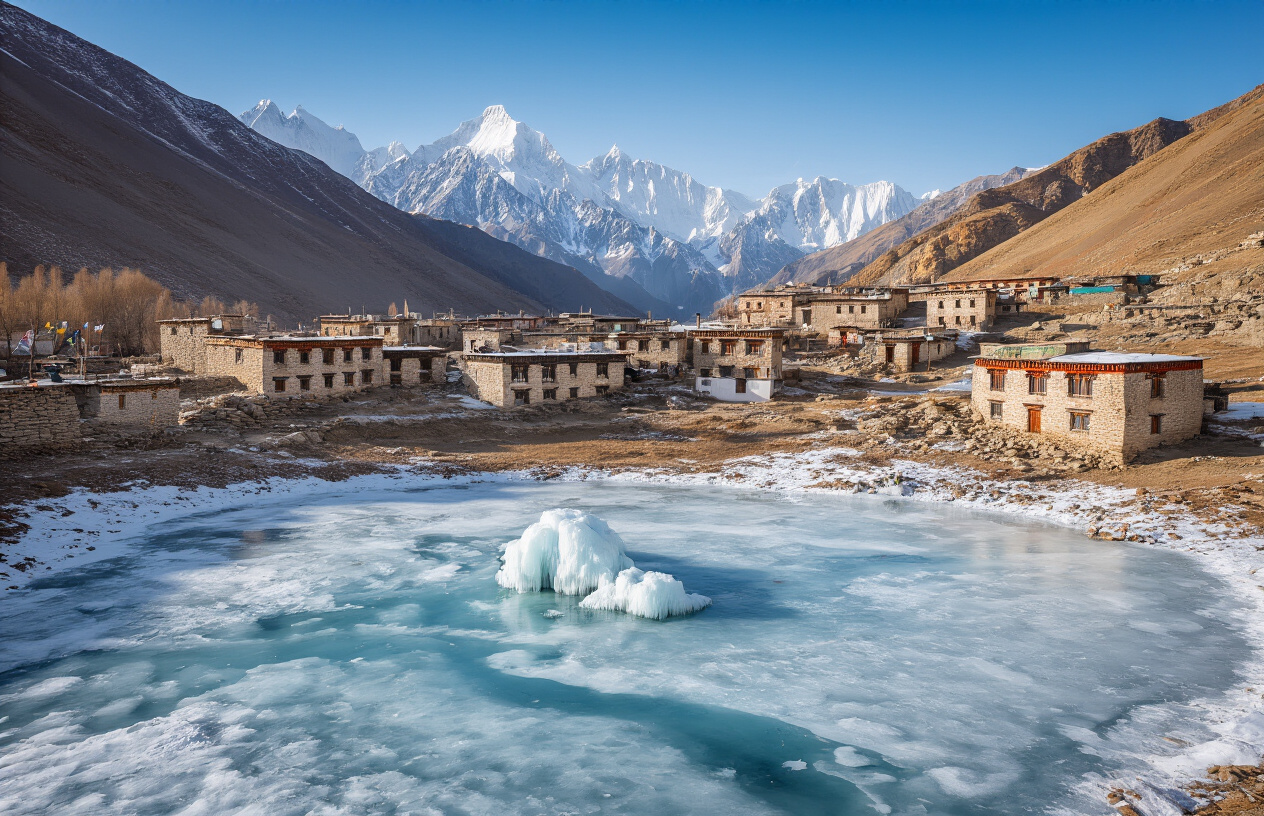
Explore the mysterious frozen lake legends
Nako Lake holds secrets that locals have whispered about for centuries. During winter months, this pristine high-altitude lake transforms into a solid sheet of ice, creating an otherworldly landscape that feels straight out of a fairy tale. The villagers tell stories of ancient spirits dwelling beneath the frozen surface, protecting the valley from evil forces. According to legend, the lake never fully freezes in certain spots where these guardian spirits reside, creating mysterious patterns in the ice that change with the seasons.
The most captivating tale speaks of a hidden monastery that supposedly lies submerged beneath the lake’s waters. Elderly villagers claim their ancestors could see the monastery’s golden spires on clear moonlit nights, reflecting through the ice. Some believe the lake serves as a portal between the earthly realm and the spiritual world, explaining why meditation sessions near its shores feel particularly powerful.
Visit ancient Buddhist monasteries with original frescoes
Nako Monastery stands as one of Spiti Valley’s most precious cultural treasures, dating back over a thousand years. The monastery houses remarkably preserved frescoes that showcase the artistic brilliance of ancient Buddhist craftsmen. These wall paintings depict intricate scenes from Buddhist mythology, featuring vibrant blues, deep reds, and gold leaf details that have survived harsh mountain conditions for centuries.
The main prayer hall contains some of the oldest surviving Tibetan Buddhist artwork in the region. Monks carefully maintain these masterpieces using traditional techniques passed down through generations. The monastery’s collection includes rare manuscripts written on palm leaves and ancient thangka paintings that scholars consider invaluable for understanding early Buddhist art in the trans-Himalayan region.
Visitors can witness daily prayer ceremonies where monks chant ancient mantras while surrounded by these stunning frescoes, creating an atmosphere that connects you directly to centuries of spiritual tradition.
Experience traditional high-altitude farming techniques
Nako villagers have mastered the art of cultivation in one of the world’s harshest farming environments. At over 12,000 feet above sea level, they grow barley, peas, and potatoes using ingenious terracing methods that maximize water retention and protect crops from fierce mountain winds. The village uses a fascinating crop rotation system that allows fields to rest and regenerate nutrients naturally.
Local farmers create windbreaks using stone walls and planted willow trees, forming microclimates that extend the growing season by several weeks. They’ve developed unique seed varieties adapted specifically to extreme cold and short summers. The irrigation system channels glacial meltwater through carefully constructed channels that distribute moisture evenly across terraced fields.
Women play crucial roles in seed selection and storage, maintaining genetic diversity by preserving multiple varieties of each crop. Their traditional storage methods involve clay pots sealed with yak butter, keeping seeds viable for years despite temperature fluctuations.
Discover prehistoric cave paintings and petroglyphs
Hidden caves around Nako contain some of the Himalayas’ most significant prehistoric art. These rock paintings and carvings date back thousands of years, depicting hunting scenes, ritual ceremonies, and daily life of ancient civilizations. The artwork shows remarkable sophistication, with figures drawn in natural pigments that have survived millennia of harsh weather conditions.
Archaeological evidence suggests these caves served as seasonal shelters for nomadic tribes traveling ancient trade routes between Tibet and India. The petroglyphs include symbols that appear in similar forms across Central Asian cultures, indicating widespread cultural connections existed long before recorded history.
Recent discoveries include handprint stencils, animal figures resembling extinct species, and geometric patterns that might represent early astronomical observations. Local guides, many of whom are descendants of the original inhabitants, share oral traditions that help interpret these ancient artworks.
Learn about unique water management systems
Nako’s survival depends on sophisticated water management techniques developed over centuries. The village operates an intricate network of channels called “kuls” that capture snowmelt and distribute it efficiently throughout the settlement. These channels follow contour lines carved into mountainsides, utilizing gravity to transport water across vast distances without pumps or modern machinery.
The system includes underground storage tanks built from local stone that collect water during peak flow periods and release it gradually during dry spells. Villagers maintain strict community protocols governing water usage, with traditional councils overseeing distribution schedules that ensure fair access for all families.
The most impressive feature is their cascade irrigation method, where water flows from one terrace to another, maximizing usage efficiency. This system loses minimal water to evaporation and creates multiple microclimates that support diverse crops at different elevations within the same village area.
Komic Village – The World’s Highest Motorable Village
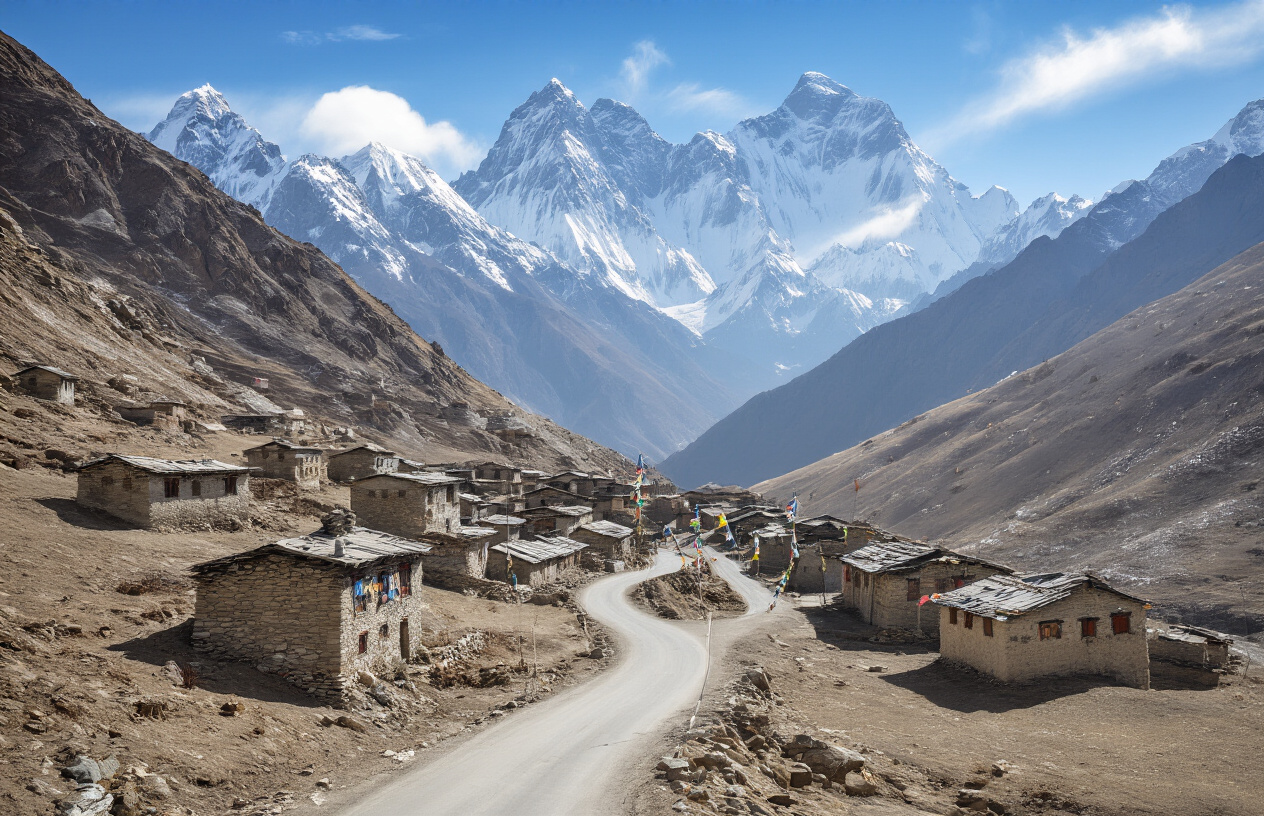
Experience life at 15,000 feet above sea level
Perched dramatically at 15,027 feet, Komic Village holds the extraordinary distinction of being the world’s highest motorable village. The air here is so thin that each breath becomes a conscious effort, and visitors often experience the surreal sensation of their hearts working overtime just to keep up with basic activities. The landscape surrounding Komic feels otherworldly – vast expanses of barren mountains stretch endlessly, painted in hues of brown, gold, and deep purple that shift with the sun’s movement across the sky.
Life at this altitude moves at its own rhythm. The 114 residents of Komic have adapted to extreme conditions where temperatures plummet to -40°C in winter and oxygen levels sit at roughly 50% of sea level. Houses are built low to the ground with thick stone walls and flat roofs designed to withstand fierce winds that can knock an unprepared person off their feet. Solar panels dot the rooftops – the only reliable source of electricity in this remote outpost where traditional power grids simply cannot reach.
The village operates on a seasonal schedule dictated by nature’s harsh calendar. During the eight-month winter isolation, when snow blocks the single road connecting Komic to the outside world, families rely entirely on stored barley, dried vegetables, and preserved yak meat. Children attend the world’s highest school, where lessons often pause when altitude sickness strikes or when blizzards make the short walk between buildings impossible.
Witness traditional yak cheese making processes
The yak herds of Komic represent more than livestock – they’re the backbone of survival at extreme altitude. These magnificent animals, perfectly adapted to thin air and freezing temperatures, provide everything from milk and meat to fuel and clothing. The cheese-making process here follows ancient Tibetan methods passed down through generations, creating products that can survive the harsh climate while providing essential nutrition during long winters.
Early morning milking happens in below-freezing temperatures, with herders working quickly before the milk freezes in their buckets. The women of Komic transform this precious milk into various forms of cheese using wooden churns and traditional fermentation techniques. The most prized product is churpi – a rock-hard cheese that can last for years without refrigeration. Watching the village women work these time-honored methods feels like stepping back centuries in time.
The entire process unfolds in the village’s communal dairy, where families take turns contributing milk and labor. Large copper vessels, blackened from years of use over yak-dung fires, bubble with fermenting milk. The aroma fills the thin air – a mixture of wood smoke, fermented dairy, and the distinct smell of high-altitude living. Fresh cheese gets pressed under heavy stones, while aged varieties hang in cloth bundles from wooden beams, slowly developing the intense flavors that make them perfect for surviving Spiti’s brutal winters.
Discover ancient trade route connections to Tibet
Komic sits strategically along one of the most challenging sections of the ancient Trans-Himalayan trade network that connected India with Tibet for over a millennium. This wasn’t just any trading post – it served as a crucial rest stop where merchants could acclimatize, repair equipment, and prepare for even more treacherous mountain passes ahead. The village’s location made it an essential link in the chain that moved everything from Kashmiri saffron to Tibetan wool across some of the world’s most unforgiving terrain.
Stone markers and ancient pathways still wind through the village, pointing toward mountain passes that traders once crossed with heavily laden yaks and horses. Local families maintain oral histories of their ancestors who served as guides, providing shelter and provisions to trading caravans. These stories reveal a complex network of relationships spanning hundreds of miles, where trust and mutual dependence meant the difference between life and death in the mountains.
The remains of old rest houses and storage facilities can still be spotted around Komic, their thick walls and strategic positioning telling the story of a time when this remote village buzzed with commercial activity. Prayer flags mark dangerous portions of ancient routes, while stone cairns guide the way through terrain where a wrong turn could mean falling thousands of feet into rocky gorges. Even today, locals occasionally discover ancient coins, prayer wheels, and trading goods buried in the permafrost – tangible reminders of Komic’s role in connecting distant civilizations across the roof of the world.
These six Himalayan villages stand as living testaments to a world that exists far beyond our digital screens and busy schedules. Each settlement tells its own incredible story – from Malana’s unique democratic traditions to Komic’s record-breaking altitude, and from Chitkul’s border location to Gue’s ancient mysteries. They remind us that some places still operate by their own rules, where time moves differently and traditions run deeper than mountain roots.
If you’re craving an adventure that goes beyond typical tourist spots, these forgotten villages offer something truly special. Pack your warmth, bring your sense of wonder, and prepare to step into communities where every face has a story and every tradition carries centuries of wisdom. Just remember to respect their customs and leave these magical places exactly as you found them – untouched and timeless for future travelers to discover.
Leave a Reply