
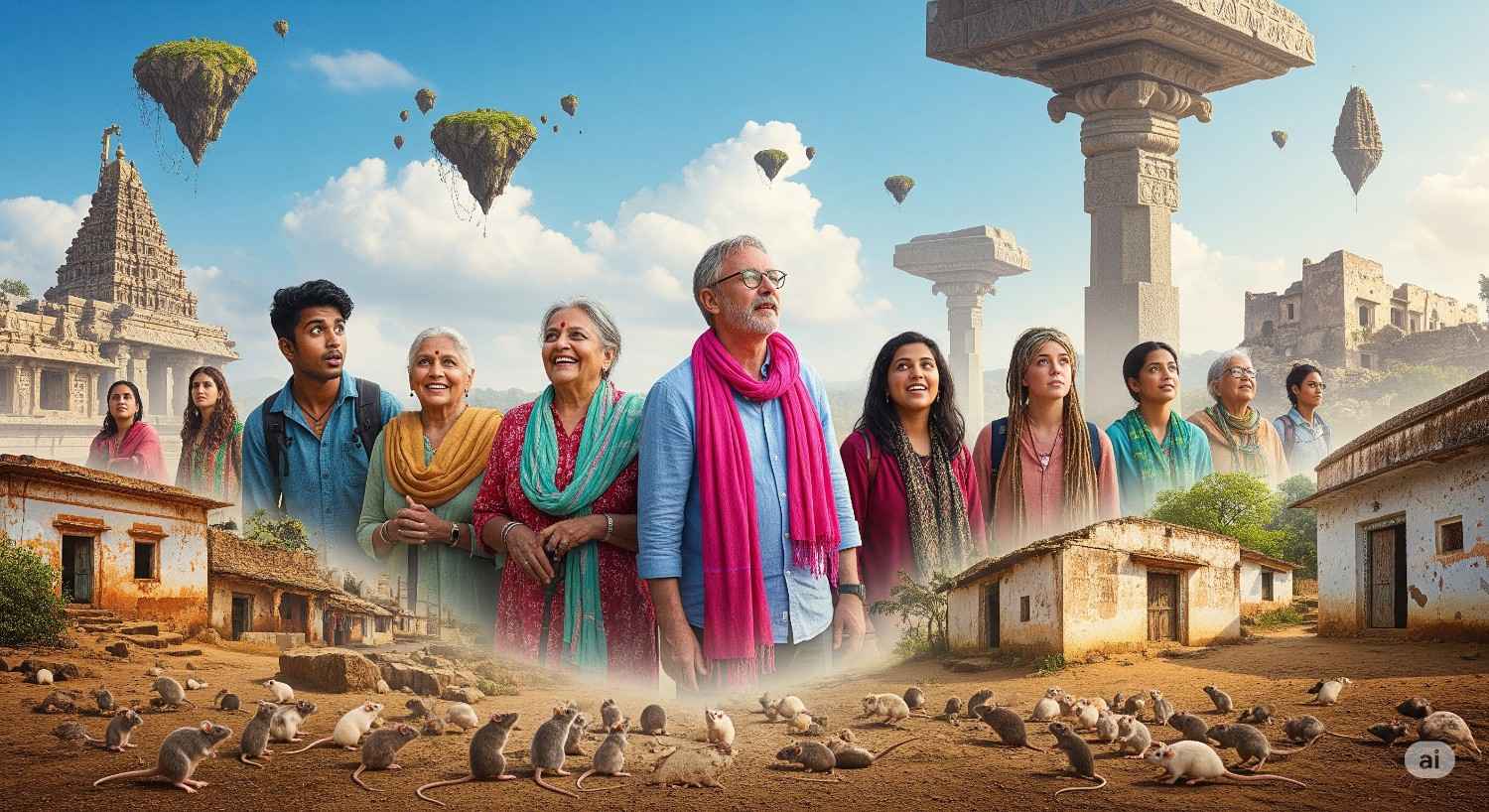
Introduction: The Quirky 6 welcome you to India!
Imagine a land where ancient legends breathe, where unwavering faith reshapes daily life, and where nature itself becomes an architect of the extraordinary. India is far more than just the iconic Taj Mahal or the bustling bazaars that grace countless travel guides. It is a vibrant kaleidoscope of the unexpected, a treasure trove of places so bizarre, so mystical, they defy conventional imagination. India’s most quirky destinations will peel back the layers of the ordinary to reveal six extraordinary destinations that promise not just a trip, but an adventure into the truly quirky heart of India. Prepare to have your curiosity piqued and your wanderlust ignited, because these are the stories that compel one to pack their bags.
The unique character of India, often perceived as “quirky,” is not merely a collection of random oddities; it is a profound reflection of deeply ingrained cultural values. The reverence for animals, the acceptance of life and death cycles, and unwavering faith are not isolated phenomena but manifestations of a worldview that often differs significantly from Western perspectives. This inherent cultural depth transforms what might initially appear strange into something profoundly intriguing. Furthermore, many of these unusual locales are steeped in rich legends, myths, and historical anecdotes. The narrative surrounding these sites is as compelling as the sites themselves. For any traveler, emphasizing these captivating stories becomes the primary draw, making the experience more compelling than a simple visual observation and directly encouraging exploration.
The Quirky 6: A Deep Dive into India’s Most Intriguing Destinations
1. Karni Mata Temple, Rajasthan: Where the Sacred Rats Reign Supreme
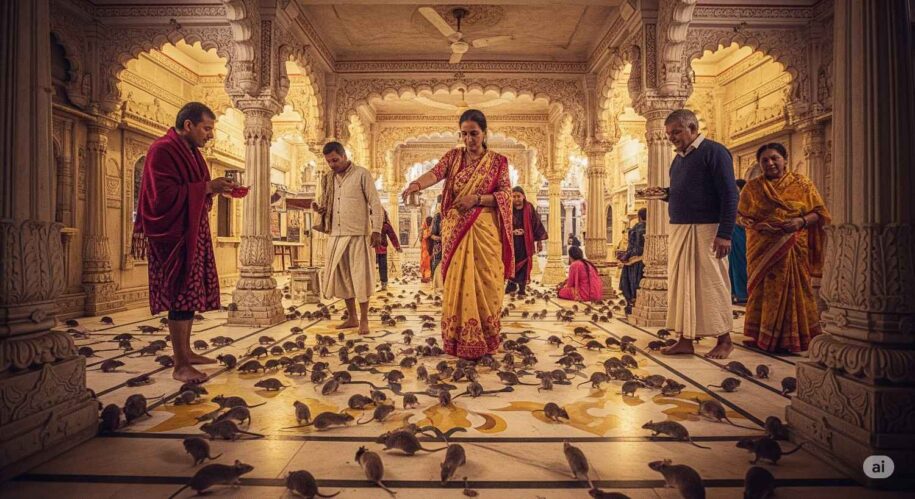
Imagine a temple where over 20,000 rats, affectionately known as “kabbas,” are not just tolerated but revered and worshipped. This is the Karni Mata Temple in Deshnoke, Rajasthan, a place that challenges every conventional notion of a sacred space. Visitors walk barefoot among these furry devotees, who scurry freely across marble floors, dart between worshippers, lap at bowls of milk, and are offered sweets by pilgrims. It’s an experience that ranges from the initially unsettling to profoundly fascinating.
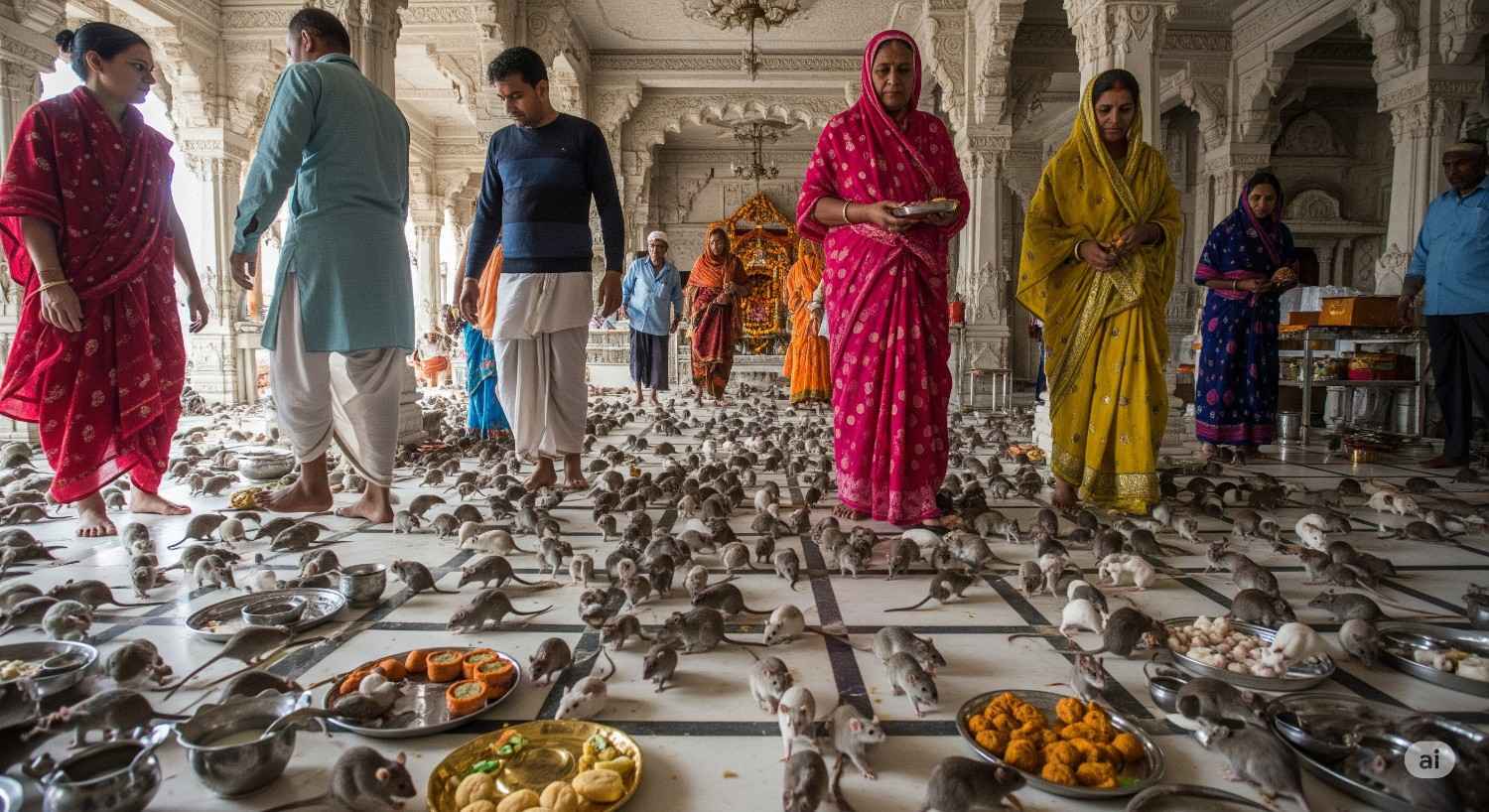
The temple, dating back to the 15th century, is dedicated to Karni Mata, an incarnation of the goddess Durga. According to a prominent legend, when Karni Mata’s stepson died, she implored Yama, the god of death, to restore his life. Upon his refusal, she reincarnated him and all her male descendants as rats, promising they would eventually be reborn as humans. This belief elevates the rats to a sacred status, making them revered ancestors. Spotting a rare white rat among the thousands is considered especially auspicious, believed to bring immense blessings and luck.
The atmosphere is a unique blend of devotion and the bizarre. Despite the sheer number of rodents, the temple is remarkably clean, meticulously maintained by the Deepavat family, who work in shifts based on the lunar cycle to care for the “kabbas”. Visitors are required to remove their shoes before entering, and it’s common for rats to run over feet – a sign of good fortune. This immersive, sensory experience is truly unforgettable. For many international visitors, the concept of a rat temple might initially evoke discomfort or even disgust. However, the deep reverence locals hold for these creatures, viewing them as reincarnated ancestors or holy beings, highlights a significant cultural difference where the sacred can manifest in forms unexpected to outsiders. This contrast transforms the initial “cringe” factor into an entry point for understanding a profound spiritual belief. Furthermore, unlike many historical sites that are static, Karni Mata Temple is a dynamic, living space where ancient traditions are actively practiced daily. The interaction with the rats, the offerings, and the belief in their blessings mean it is not just a place to observe, but to participate, even if only by walking among them. This offers a more authentic and immersive cultural experience than simply viewing artifacts behind glass.
2. Lucky Restaurant, Ahmedabad: A Culinary Date with the Departed
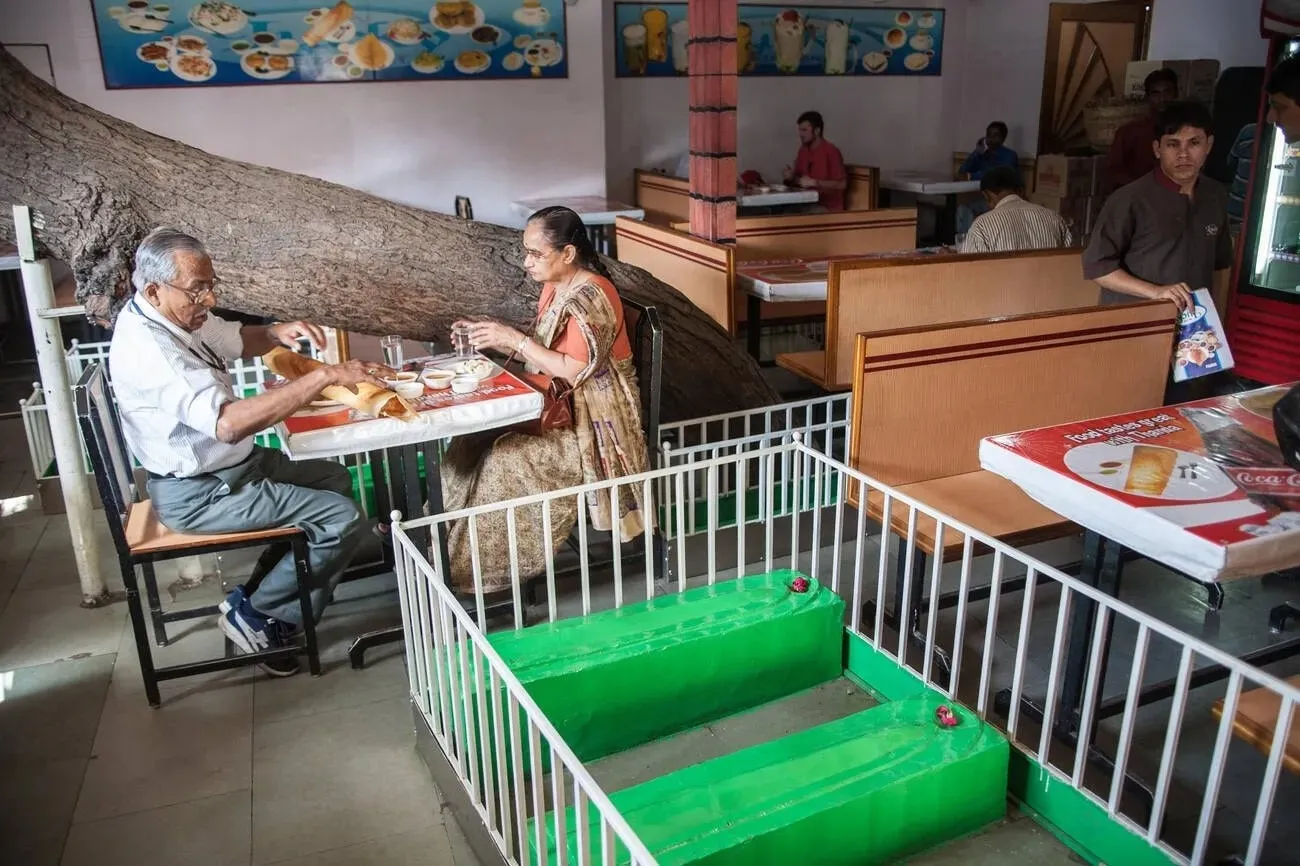
Imagine sitting down for a cup of chai or a meal, not just surrounded by fellow diners, but by actual graves. At Lucky Restaurant in Ahmedabad, this bizarre reality is its unique selling proposition. Built on the site of an old Muslim cemetery in the Lal Darwaza region, the owner, Mr. Krishnan Kutti, chose to integrate the graves into the dining space, installing iron bars around them and arranging seating areas in the available gaps.
Far from being a deterrent, the graves are believed to bring good fortune, a belief that the owner attributes to the restaurant’s growth from a tiny chai stall. Every morning, the staff meticulously cleans and adorns the graves with fresh flowers, a ritual that underscores the acceptance and respect for the departed. Dining here is an undeniably surreal and unforgettable experience, a testament to India’s ability to blend the mundane with the mystical. The concept of a restaurant built within a graveyard challenges the typical Western segregation of sacred or somber spaces from daily commercial life. In India, there is a fluid integration where the spiritual and the mundane often coexist and even intertwine. This approach is not about disrespect; it reflects a different cultural understanding of death and remembrance, where the deceased remain part of the living community, even influencing fortune. This offers a fascinating glimpse into a unique urban adaptation. The owner’s decision to turn a potential obstacle—a graveyard—into a unique selling proposition demonstrates a remarkable entrepreneurial spirit that thrives on unconventionality. Instead of clearing the graves, he embraced them, creating a truly distinct business model. This highlights how cultural beliefs and a willingness to defy norms can lead to unique and successful ventures, making the story of the restaurant itself a compelling reason to visit.
3. Shani Shingnapur, Maharashtra: The Village Where Doors Don’t Exist
Step into Shani Shingnapur, a remarkable village in Maharashtra where the concept of “home security” takes on an entirely different meaning. For over 350 years, houses, shops, and even banks in this hamlet have operated without doors or locks. This is not a sign of carelessness, but an unwavering, profound faith in Lord Shani, the deity of justice, who is believed to protect the village from all harm.
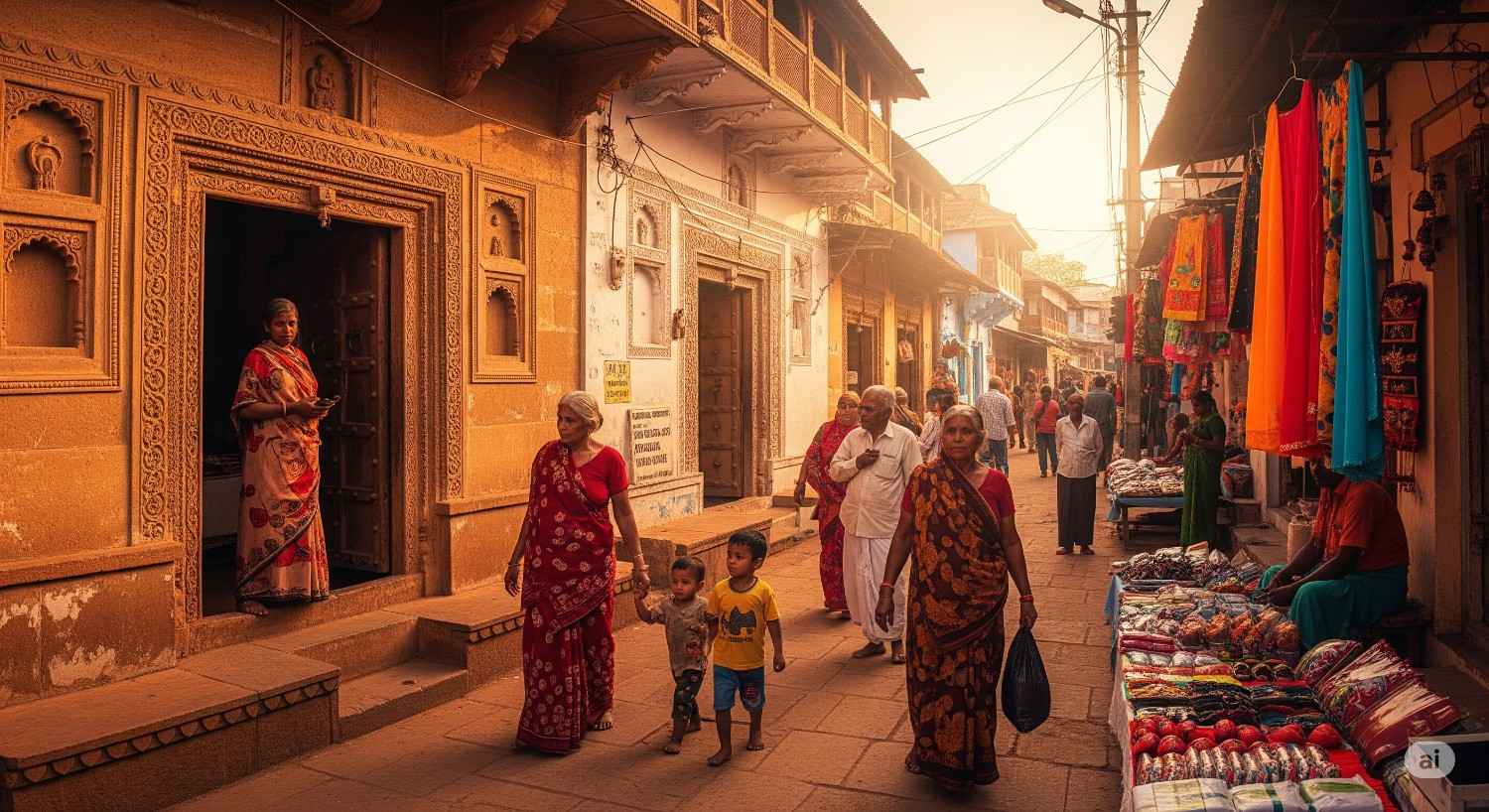
The legend traces back centuries to a mysterious black stone found floating in the Panasnala River after a heavy flood. When villagers touched it, it reportedly bled. That night, Lord Shani appeared in a villager’s dream, declaring the stone his divine form and instructing that he be worshipped under the open sky, without a roof or walls. Since then, the deity has been housed in an open-air shrine. Villagers believe Lord Shani himself protects them, ensuring that anyone who dares to commit a crime faces instant divine punishment.
Life here is a living testament to this belief. Homes have doorframes but no physical doors, and shopkeepers leave their stores unlocked overnight. While modern adaptations like bank lockers in nearby towns and some CCTV cameras are emerging for monitoring purposes, the core faith remains intact. Locals recount numerous anecdotes of attempted thefts going awry, with culprits facing mysterious misfortunes or getting caught red-handed. This creates a palpable sense of trust and community, contributing to a remarkably low crime rate, making it one of the quietest police stations in the region. Shani Shingnapur is not just about individual belief; it represents a collective social experiment where faith acts as the primary security system. The absence of doors is a visible manifestation of this shared trust, creating a unique social fabric. The remarkably low crime rate suggests a powerful psychological or communal deterrent, whether divine or societal, that ensures order. This challenges conventional notions of law enforcement and security, making it a sociological marvel. While the core tradition of doorless living has persisted for centuries, the gradual emergence of modern security measures indicates a subtle tension between unwavering faith and practical contemporary concerns. The village serves as a fascinating case study of how ancient beliefs adapt, or resist adaptation, in the face of modern societal norms.
4. Lepakshi Temple, Andhra Pradesh: The Enigma of the Hanging Pillar
The Veerabhadra Temple in Lepakshi, Andhra Pradesh, is a 16th-century architectural marvel from the Vijayanagara Empire, adorned with exquisite carvings and vibrant frescoes. But its most captivating secret lies within: a pillar that seemingly defies gravity, known as the “Hanging Pillar.” Among the 70 intricately carved stone pillars, one stands out, with a visible gap between its base and the ground, allowing a piece of cloth or paper to be passed underneath.
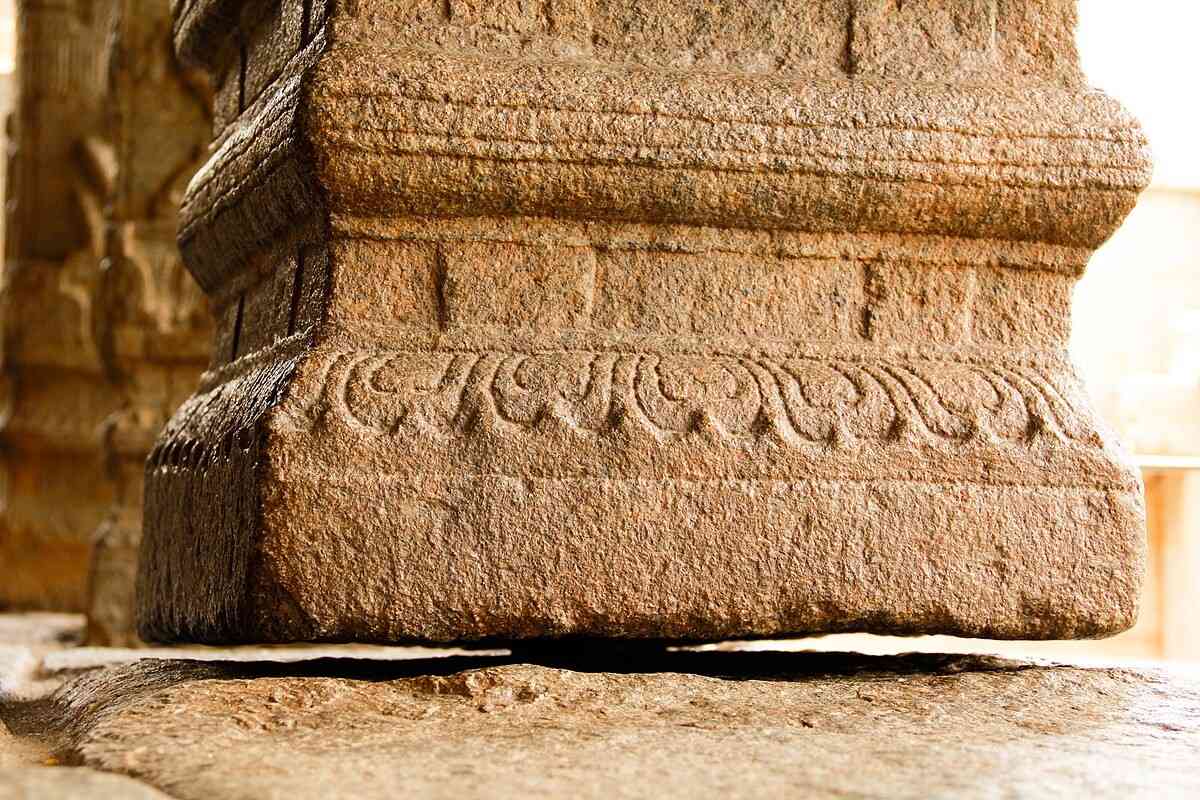
The construction of this hanging pillar remains an unsolved enigma, baffling engineers and historians alike. Legend has it that a British officer, attempting to unravel its secret, tried to move the pillar, only for the entire temple structure to begin shaking, forcing him to abandon his endeavor. This anecdote further solidifies its mysterious reputation. The hanging pillar is not just a curiosity; it stands as a testament to an advanced understanding of architecture and structural mechanics that predates modern techniques. The fact that its construction remains a mystery and that even a British officer could not unravel it elevates it beyond a mere historical artifact to a symbol of India’s ancient intellectual prowess. This highlights a sophisticated past that continues to impress and baffle, making it a compelling draw for those interested in history and engineering.
The temple complex is a treasure trove of ancient engineering. About 500 meters away stands a colossal monolithic Nandi, Lord Shiva’s bull vehicle, carved from a single granite boulder, measuring an astonishing 20 feet tall and 30 feet long. Another marvel is the monolithic Nagalinga, a 15-foot-tall coiled serpent with seven hoods, providing shelter over a Shivalinga. Legend claims this massive sculpture was created by workers in just one hour while awaiting lunch, highlighting the extraordinary skill and dedication of the artisans of that era. The temple is not just about its structural wonders; it is a canvas for rich mythological storytelling, with intricate carvings and frescoes depicting epics like the Ramayana and the Mahabharata. The legends surrounding the Nandi and Nagalinga’s rapid creation further blur the lines between historical fact and divine intervention. This suggests that for ancient Indian artisans, art was a medium for spiritual expression and narrative preservation, making the temple a holistic experience of beauty, belief, and history.
For a guide tour of Hanging pillars of Lepakshi, please visit Mystery of Lepakshi .
5. Kuldhara Village, Rajasthan: The Ghost Town Shrouded in a Curse
Seventeen kilometers west of Jaisalmer, in the arid Thar Desert, lies Kuldhara, a ghost village shrouded in an eerie silence and a chilling mystery. Once a prosperous town established by the Paliwal Brahmins in 1291, known for their ability to cultivate bumper crops in the desert, it stands today as a collection of crumbling ruins, abandoned overnight centuries ago.
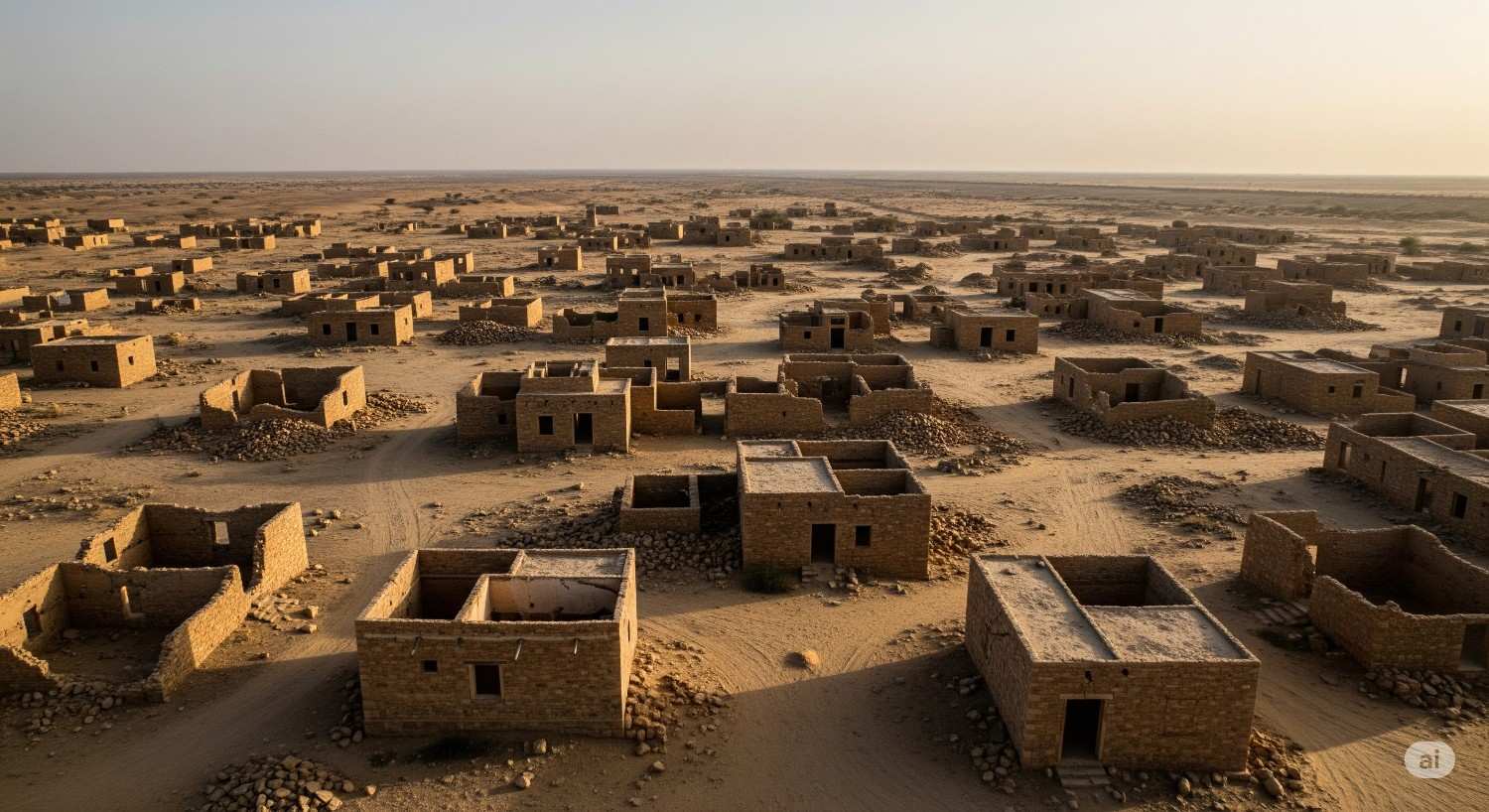
The most compelling aspect of Kuldhara is the dramatic tale of its abandonment. Legend has it that in 1825, Salim Singh, the evil prime minister, set his sights on the village head’s daughter, demanding her hand in marriage. Rather than submit to his tyrannical demands, the entire community of Kuldhara, along with 83 neighboring villages, vanished overnight, never to be seen again. Before their exodus, they laid a curse upon the land, vowing that no one would ever be able to settle there again. True to the curse, the village remains abandoned, with reports that “nobody has been able to spend even a night in the village”. This suggests a supernatural or unsettling presence that prevents people from remaining in the village after dark.
The ruins themselves, with their narrow lanes and dilapidated structures, whisper tales of a bygone era. Visitors often report a palpable sense of unease, hearing disembodied voices, footsteps echoing in the empty streets, or witnessing inexplicable shadows that seem to dance in the moonlight. The air is said to be thick with an otherworldly energy, as if the spirits of the past still wander their former homes. Kuldhara has become a magnet for paranormal enthusiasts, drawn by numerous documented reports of strange occurrences, flickering lights, and apparitions, making it one of India’s most fabled haunted sites. Kuldhara’s story is not just a historical event; it is a powerful narrative passed down through generations, shaping the village’s identity as a “ghost town”. The belief in the curse and the reported paranormal activities are deeply intertwined with local folklore, demonstrating how collective memory can imbue a physical space with profound psychological and supernatural significance. This transforms a ruin into a living legend, drawing visitors seeking not just history, but an encounter with the unexplained. Kuldhara’s primary appeal for tourists and photographers is not its beauty, but its eerie atmosphere and haunted reputation. This highlights a growing niche in tourism that seeks out the mysterious, the abandoned, and the potentially supernatural. The village serves as a prime example of how the “quirky” can extend to the chilling, offering a different kind of curiosity-driven travel experience.
For a guide tour of Kuldhara and other places of interest in Rajastham, please visit Best of Rajasthan experience.
6. Kodinhi, Kerala: The Village of Twins
In the serene district of Malappuram, nestled amidst the verdant beauty of Kerala, lies Kodinhi, a quaint village that holds an extraordinary secret: an unusually high number of twins. This enchanting hamlet has earned the well-deserved moniker, “The Village of Twins,” captivating the imagination of all who venture to this picturesque corner of India.
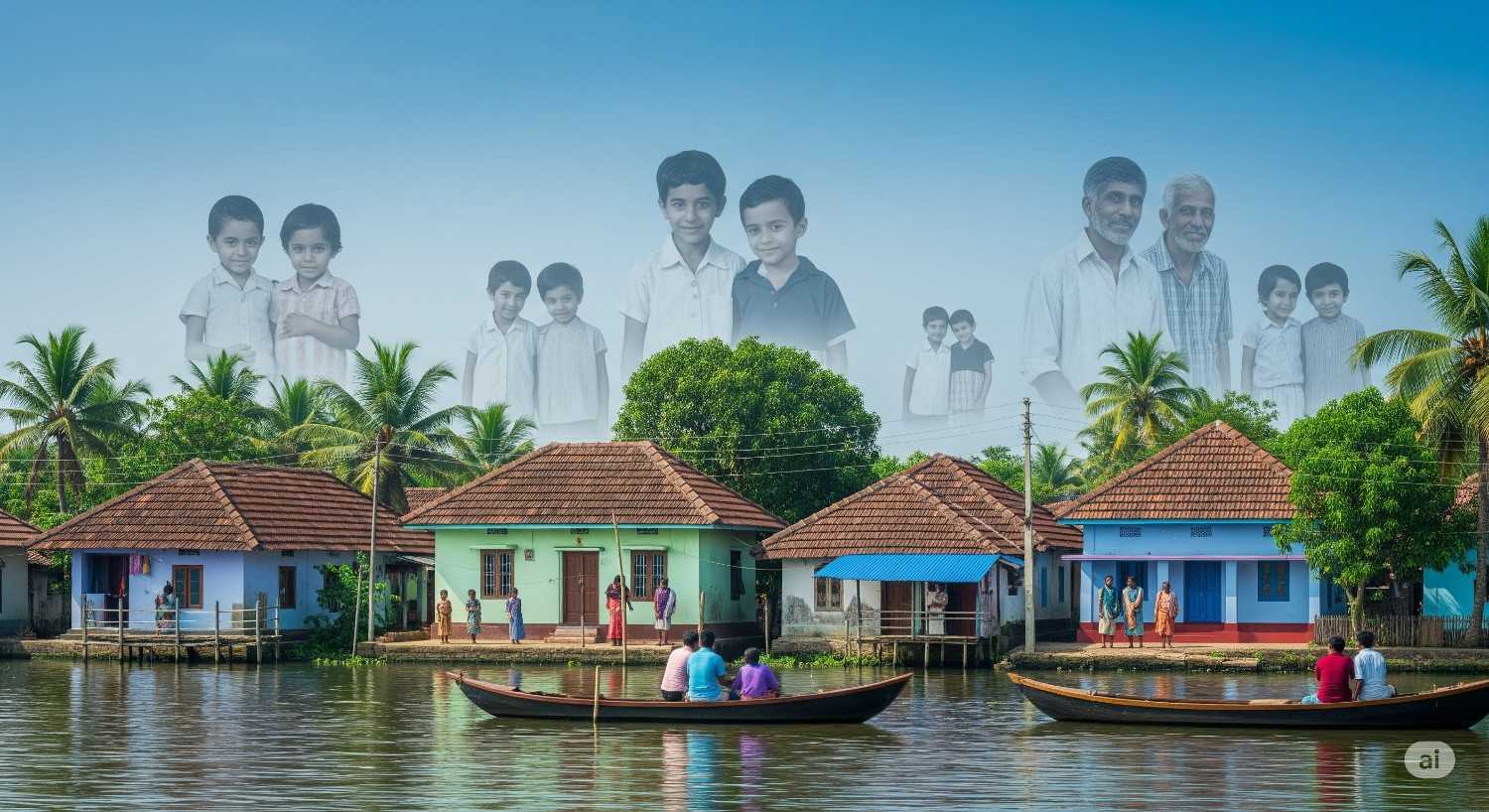
The phenomenon in Kodinhi is truly remarkable. The village is currently home to over 200 pairs of twins and even two sets of triplets. What makes this even more intriguing is that women from Kodinhi who marry outside the village also frequently end up having twins or triplets, suggesting a pervasive, yet unexplained, influence.
The mystery behind this extraordinary occurrence continues to baffle scientists. While no definitive explanation has been found, doctors believe that the reason for this strange phenomenon might lie in the chemicals present in the local water of the area. This theory adds another layer of intrigue to Kodinhi’s unique identity.
Kodinhi stands as a testament to the marvels that nature conceals in her embrace. As the sun sets over this charming village, leaving behind an aura of tranquility, one cannot help but be humbled by the extraordinary stories etched into the very fabric of this otherwise ordinary-looking place. It is a sanctuary of wonder that leaves an indelible mark on the hearts of all who wander its enchanting lanes, offering a peaceful and thought-provoking experience unlike any other.
For exploring India on a Royal Enfield Motorcycle, please visit 5 Senses Motorcycle Tours.
Beyond the Conventional Tourist Trail
These six destinations are more than just quirky; they are portals into the soul of India. They offer a deeper, more authentic, and truly unforgettable glimpse into a nation where history, folklore, unique traditions, and natural wonders intertwine in ways one would never expect. This is not about ticking off famous landmarks; it is about immersing oneself in stories that challenge perceptions and expand one’s understanding of the world. The desire for “real” and “personal” travel experiences, moving beyond the curated “Instagram feeds,” finds its fulfillment here. These quirky places, by their very nature, offer a less curated, more raw encounter with India’s culture and environment. This appeals to a growing trend of travelers seeking authenticity over mass tourism.
From the humbling experience of walking among sacred rats to the architectural marvels that defy logic, and from villages where faith replaces locks to a village teeming with twins, each place promises an adventure that goes beyond the typical tourist itinerary. It’s about embracing the unexpected, finding wonder in the bizarre, and discovering the incredible diversity that makes India so endlessly captivating. The profound differences in cultural practices, such as the reverence for rats, the absence of doors, or the integration of graves into daily life, are not merely curiosities; they actively challenge a traveler’s preconceived notions and expand their understanding of human belief systems and societal structures. This kind of travel offers personal growth and a broadened perspective, making the journey intellectually and emotionally enriching, far beyond mere sightseeing.
For a guide tour of Kerala, please visit Best of Kerala experience.
Planning Your Quirky India Adventure: Tips for the Curious Traveler
Embarking on an adventure to India’s quirky destinations requires a blend of an open mind and practical preparation.
-
- Embrace the Unexpected: India thrives on spontaneity. Be open to detours, local recommendations, and experiences that might be outside your comfort zone.
-
- Respect Local Customs: Many of these quirky places are deeply spiritual. Dress modestly, remove shoes where required, and observe local etiquette. A little respect goes a long way. Visiting places like Karni Mata Temple or Shani Shingnapur requires more than just a ticket; it demands cultural sensitivity. The advice to remove shoes, carry socks, and be respectful highlights that these are living, sacred spaces, not just tourist attractions. Emphasizing this prepares the traveler for a more meaningful and respectful interaction, enhancing their experience and benefiting local communities.
-
- Travel with an Open Mind: What might seem bizarre at first glance often has deep cultural or historical roots. Approach each experience with curiosity and a willingness to learn.
-
- Practical Considerations: Research specific opening hours, transportation options (taxis, local buses), and any entry or camera fees. Consider hiring local guides for deeper insights into the stories and traditions that breathe life into these places. While these places are quirky, they are still part of a developing tourism landscape. The mention of practical tips like hiring taxis and considering modern adaptations like bank lockers for valuables suggests that even offbeat travel requires a blend of adventurous spirit and practical planning. This prepares the reader for the realities of navigating less-trodden paths in India, making their travel more feasible and enjoyable.
-
- Stay Hydrated and Prepared: Especially in places like Rajasthan or during treks, ensure you have water, comfortable shoes (and perhaps extra socks for temples), and appropriate clothing.
- AI Image Prompt: A stylized travel infographic with icons representing key travel tips: an open suitcase, a pair of comfortable walking shoes, a water bottle, a map, and a symbol for cultural respect (e.g., folded hands), all against a subtle Indian pattern background.
India’s quirks are not just sights to behold; they are invitations to connect with a vibrant, ancient, and endlessly surprising culture. Step off the beaten path, trust your adventurous spirit, and prepare to discover a side of India that will forever change your travel narrative.
Conclusion: Your Indian Odyssey Awaits!
So, are you ready to trade the familiar for the fantastic? To swap crowded monuments for mystical temples, haunted villages, and a village teeming with twins? India’s quirky heart beats with stories waiting to be discovered, experiences ready to transform you. Pack your bags, open your mind, and embark on an Indian odyssey unlike any other. The curious, the bizarre, and the utterly unforgettable await!
For immersive culture walks in India, please visit 5 Senses Walks.
Leave a Reply