
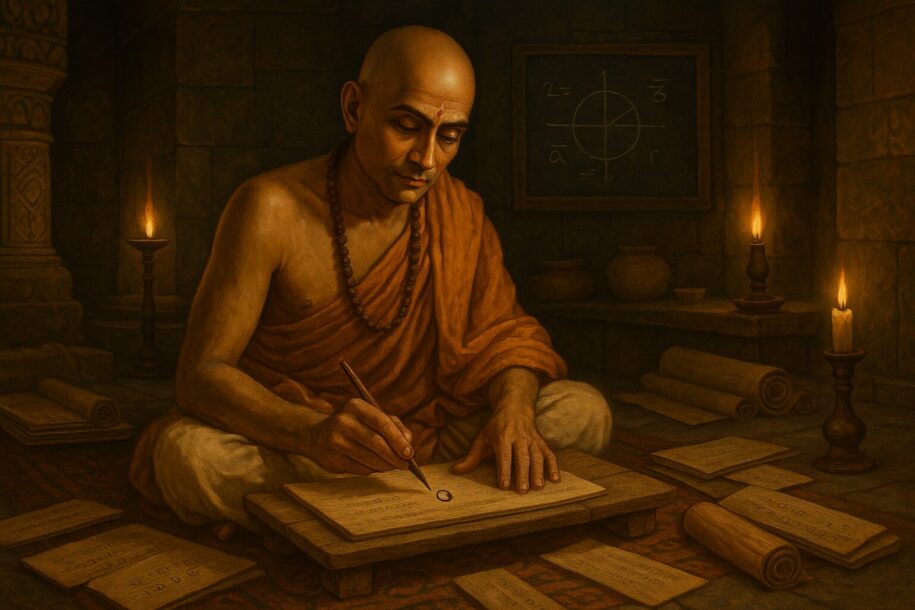
Did you ever consider that the button you just pushed to click on this article exists because of an Indian inventor? Most of us haven’t.
We obsess over Silicon Valley’s latest toys while completely overlooking Indian inventions that fundamentally changed the world. From mathematics to medicine, India’s contribution to global innovation extends far beyond what history books acknowledge.
In this deep dive into unsung Indian inventions, you’ll discover the fascinating stories behind everyday items and revolutionary concepts that originated from Indian soil. These aren’t just interesting historical footnotes – they’re innovations that shaped civilization as we know it.
And that zero you take for granted in your phone’s calculator? Wait until you learn how its invention transformed everything from rocket science to the smartphone in your pocket.
Ancient Mathematical Marvels from India
A. Zero: The Invention That Made Modern Mathematics Possible
Ever tried to multiply a number by nothing? You get zero. But how do you represent “nothing” mathematically?
Before ancient Indian mathematicians tackled this problem, people struggled with calculations. The concept of zero as both a placeholder and a number originated in India around the 5th century.
Brahmagupta, the brilliant 7th-century mathematician, was the first to formally define zero and establish rules for using it in arithmetic. He literally wrote the rules for adding, subtracting, multiplying, and dividing with zero.
Without zero, we wouldn’t have computers, digital technology, or even basic accounting systems. Imagine trying to write 1,000 without that placeholder zero! You’d need a thousand individual symbols.
What’s wild is how revolutionary this idea was. Other advanced civilizations like Rome with their numerals (I, V, X) had no concept of zero. They couldn’t perform calculations we now teach to elementary school kids.
B. The Decimal System: How India Revolutionized Counting
The decimal system wasn’t just a neat idea—it was a complete game-changer.
Indian mathematicians developed this ingenious place-value system where each position represents a power of ten. The system we all use today—with ones, tens, hundreds, and thousands positions—came from India.
By the 9th century, this system had spread to the Islamic world and eventually to Europe, where it replaced the clunky Roman numerals. Can you imagine doing algebra with Roman numerals? Talk about a nightmare!
The manuscript Bakhshali, discovered in present-day Pakistan, contains some of the earliest examples of decimal notation. These ancient pages show that Indian mathematicians were using decimal positions centuries before the rest of the world caught up.
What made the decimal system so powerful was its simplicity and versatility. With just ten symbols (0-9), you could represent any number—no matter how massive.
C. The Concept of Infinity: India’s Early Understanding

While Western mathematics struggled with the concept of infinity well into the modern era, Indian mathematicians were already exploring it thousands of years ago.
In the Yajur Veda, composed around 1400-1000 BCE, there’s a striking passage: “If you remove a part from infinity or add a part to infinity, still what remains is infinity.” This profound understanding predates similar Western concepts by centuries.
Jain mathematicians went even further, classifying different types of infinity. They distinguished between “countable” and “uncountable” infinities—a distinction that wouldn’t appear in Western mathematics until Georg Cantor’s work in the 19th century.
This wasn’t just abstract philosophy. These early explorations of infinity helped Indian mathematicians develop series expansions and work with irrational numbers long before their Western counterparts.
D. Trigonometry Foundations: From Indian Astronomy to Global Use
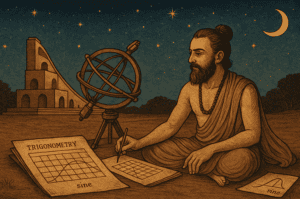
Indian astronomers needed precise calculations to track celestial bodies—and that need birthed early trigonometry.
The oldest surviving trigonometric tables come from India. In his Surya Siddhanta (4th-5th century CE), an unknown astronomer recorded detailed sine tables. Aryabhata later expanded these concepts in his famous work, the Aryabhatiya (499 CE).
What’s remarkable is the accuracy. Using just hand calculations, these ancient mathematicians computed sine values correct to four decimal places. They developed the equivalent of the sine, cosine, and versine functions centuries before European mathematicians formalized them.
Bhaskara II took things further in the 12th century with his masterpiece Siddhanta Shiromani, which contains trigonometric formulas that wouldn’t be “discovered” in Europe until 500 years later.
These trigonometric innovations weren’t just academic exercises—they powered India’s impressive astronomical observations and calendrical systems that were the most accurate in the world for their time.
For guided tours in India please visit 5 Senses Tours.
Medical Innovations That Transformed Healthcare
A. Ayurveda: The World’s First Holistic Medical System

Ever wonder why your grandma’s home remedies actually work? Turns out, she might be tapping into a 5,000-year-old medical tradition. Ayurveda isn’t just some ancient health fad—it’s the oldest continuously practiced medical system on the planet.
When Western medicine was still blaming diseases on evil spirits, Indian physicians were developing sophisticated theories about bodily humors (doshas), preventative care, and personalized treatment plans. They figured out that different body types need different approaches to health long before “personalized medicine” became a buzzword.
The coolest part? Ayurveda treats the whole person, not just symptoms. Food is medicine. Exercise is medicine. Your thoughts are medicine. This holistic approach was revolutionary when it began and remains relevant today when many feel like modern healthcare treats them like walking collections of symptoms rather than whole humans.
Many Ayurvedic herbs that were once dismissed by Western science—turmeric, ashwagandha, holy basil—are now being studied extensively. Pharmaceutical companies are quietly filing patents based on traditional Ayurvedic knowledge that Indians have known for millennia.
B. Plastic Surgery Techniques Pioneered in Ancient India
Think plastic surgery is a modern invention? Think again.
Around 600 BCE, an Indian physician named Sushruta was rebuilding noses, ears and lips while most civilizations were still figuring out basic hygiene. His techniques weren’t crude experiments either—they were sophisticated procedures documented in the Sushruta Samhita, his comprehensive medical text.
The nose job (rhinoplasty) has Indian origins most people never learn about. When punishment for certain crimes involved cutting off the nose, Sushruta developed a method to reconstruct it using skin grafts from the cheek or forehead. This “Indian method” of rhinoplasty traveled to Europe in the 1700s, shocking Western physicians with its effectiveness.
What’s mind-blowing is how advanced these techniques were. Sushruta described over 300 surgical procedures and 120 surgical instruments. He understood the importance of antiseptics, using wine to clean wounds when the germ theory of disease was still 2,000 years away.
These weren’t rough approximations of modern techniques—they were so effective that when British physicians encountered them in the 18th century, they immediately recognized their superiority to European methods.
C. Sushruta’s Surgical Instruments and Procedures
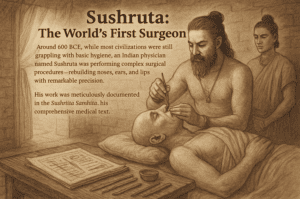
Ever had stitches? Thank Sushruta for that. This ancient Indian surgeon designed over 120 specialized surgical tools that look surprisingly similar to instruments used in modern operating rooms.
His innovations weren’t just limited to hardware. Sushruta performed cataract surgeries by carefully displacing the clouded lens using a specially designed needle—a technique called “couching” that restored sight to countless patients. This was happening around 600 BCE, while most civilizations were still attributing blindness to angry gods.
The detail in his writings is astonishing. He classified surgical procedures into eight categories:
- Excision (Chedya)
- Incision (Bhedya)
- Scarification (Lekhya)
- Puncturing (Vedhya)
- Exploration (Esya)
- Extraction (Aharya)
- Drainage (Visravya)
- Suturing (Sivya)
His suturing techniques were so advanced that he described different stitching methods for different body parts and tissues. He even performed intestinal surgeries, demonstrating knowledge of abdominal anatomy that wouldn’t be matched in Europe for centuries.
What’s truly remarkable is how Sushruta trained surgeons. Before touching a patient, students practiced incisions on vegetables and leather pouches, and learned suturing techniques by stitching cloth. This structured approach to medical education was unprecedented anywhere in the world.
D. Early Inoculation Methods Against Smallpox

Did you know India was practicing immunization centuries before Edward Jenner “discovered” vaccination in the West?
While Europeans were dying in droves from smallpox, ancient Indians developed a process called “tikah” (meaning “mark”)—a deliberate inoculation method that protected against the deadly disease. They would take material from mild smallpox cases and introduce it to healthy individuals through small scratches in the skin.
This wasn’t some random folk practice. It was a systematic public health intervention with impressive success rates. By the 1700s, when Lady Mary Wortley Montagu introduced inoculation to Britain (after observing it in Turkey), the practice had already been refined in India for generations.
What’s particularly fascinating is how the procedure was turned into a religious ritual performed by specialized Brahmin families. This clever cultural adaptation helped ensure widespread acceptance. These practitioners would collect scabs from recovering patients, dry and store them for up to a year, and then use them during annual inoculation festivals.
The mortality rate from this traditional Indian inoculation was remarkably low—around 1-2%, compared to the 20-30% death rate from natural smallpox infection. Yet another example of Indian medical knowledge that was centuries ahead of its time but rarely gets credit in modern textbooks.
E. Zinc-Based Medications and Treatments
India’s relationship with zinc goes way back—like 2,500 years back. While Europeans were still figuring out that zinc was a distinct element (they officially “discovered” it in 1746), Indian metallurgists and physicians had been isolating and using it medicinally for millennia.
Ancient Indian medical texts describe zinc compounds for treating eye infections, skin conditions, and wounds. They understood zinc’s antiseptic properties long before modern science confirmed them. The ancient text Rasaratna Samuccaya details methods for preparing therapeutic zinc compounds with remarkable precision.
India was the first to develop industrial-scale zinc production around the 12th century at Zawar in Rajasthan. These sophisticated smelting operations produced high-purity zinc used in both metallurgy and medicine. When European scientists finally “discovered” zinc extraction methods, they were essentially rediscovering techniques that Indian metallurgists had mastered centuries earlier.
What’s particularly impressive is how zinc-based medications were integrated into systematic treatment protocols. Zinc sulfate (known as “tuttha” in Ayurveda) was used for eye infections—a treatment modern ophthalmologists still prescribe today. Zinc oxide preparations treated skin conditions with the same effectiveness as modern over-the-counter creams.
The zinc-based medicines developed in ancient India weren’t just effective—they were produced with standardized methods that ensured consistent quality, showing a sophisticated understanding of pharmaceutical principles that wouldn’t become standard in Western medicine until the modern era.
Metallurgical Achievements That Stood the Test of Time
The Rust-Resistant Iron Pillar of Delhi
Ever stood in front of something 1,600 years old that looks like it was built last century? That’s the Iron Pillar of Delhi for you.
Standing tall at 24 feet in the Qutub Complex, this metallurgical marvel hasn’t rusted despite being exposed to Delhi’s harsh weather for over 16 centuries. Most iron would have crumbled to dust centuries ago.
The secret? A protective layer called misawite (iron hydrogen phosphate) that forms due to the high phosphorus content in the wrought iron. Ancient Indian metallurgists created this composition without modern technology—they just understood iron on a level we’re still trying to comprehend.
Scientists worldwide remain stunned by the pillar’s corrosion resistance. The manufacturing technique involved forge welding pieces of iron, with each hammer blow requiring precise temperature and timing. The pillar weighs over 6 tons and was made as a single piece—an incredible feat even by today’s standards.
Wootz Steel: The Original Damascus Steel
Damascus steel gets all the glory, but few realize it originated in India as wootz steel.
This legendary metal, produced in southern India since 300 BCE, became the stuff of legends. Kings fought wars for weapons made from it. European metallurgists spent centuries trying to replicate it. Why? Because wootz steel could slice through ordinary metal weapons while maintaining its edge.
The steel contained carbon nanotubes and nanowires—structures we only “discovered” with electron microscopes in the 20th century. Ancient Indian craftsmen created these nanostructures through carefully controlled heating and cooling cycles and by adding precise botanical ingredients to the molten metal.
The production secrets were eventually lost during British colonial rule, when traditional smelting communities were systematically disrupted. Modern scientists have only partially recreated authentic wootz steel despite our advanced technology.
Gold and Silver Purification Techniques
While Europe was still figuring out basic metallurgy, Indian craftsmen were purifying gold to 99.7% purity—a level that would make modern jewelers jealous.
The ancient texts of Rasaratna Samuccaya and Rasarnava described sophisticated processes for gold and silver purification dating back to at least 500 CE. These techniques included:
- Using specific plant extracts to separate gold from other metals
- Multi-stage heating processes that gradually removed impurities
- Chemical treatments using minerals that would selectively bind to contaminants
These methods weren’t just effective—they were environmentally safer than many modern techniques that use mercury and cyanide. Indian goldsmiths could identify gold purity by color, sound, and weight with remarkable accuracy without modern testing equipment.
Ancient Zinc Smelting Methods Discovered in Rajasthan
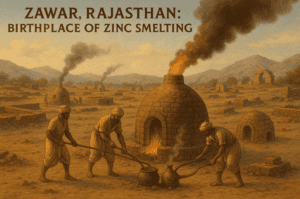
Most history books will tell you zinc distillation was invented in China or Europe. They’re wrong.
Archaeological excavations at Zawar in Rajasthan revealed the world’s first known zinc smelting furnaces, dating back to the 12th century—centuries before zinc production began anywhere else in the world.
The challenge with zinc is that it vaporizes at 907°C, below its melting point of 950°C. Indian metallurgists solved this through downward distillation using specially designed retorts that captured zinc vapor and condensed it into metal—a process so advanced that similar techniques weren’t developed in Europe until the 18th century.
The scale was industrial, with rows of furnaces capable of producing tons of 99.5% pure zinc. These facilities included sophisticated ventilation systems and standardized equipment, showing a level of engineering that wouldn’t be matched elsewhere for hundreds of years.
Textile and Fabric Innovations
Cotton Cultivation and Processing Technologies
Did you know India’s relationship with cotton spans over 5,000 years? While the West was still figuring out basic agriculture, ancient Indians had already mastered cotton cultivation techniques that would eventually clothe the world.
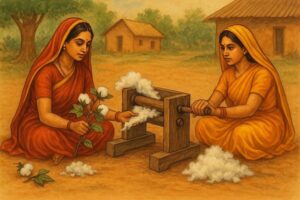
The early Indians developed specialized tools like the churka – a wooden cotton gin that separated cotton fibers from seeds centuries before Eli Whitney’s “invention.” Talk about being ahead of the curve!
What made Indian cotton processing truly revolutionary was the development of carding and combing techniques that produced threads of extraordinary fineness. The resulting fabrics were so delicate that legends claim entire garments could pass through a finger ring. This wasn’t just craftsmanship – it was technological innovation that European manufacturers couldn’t replicate until the Industrial Revolution.
The real game-changer? Indian farmers developed crop rotation systems specifically for cotton, maintaining soil fertility while maximizing yields. These sustainable farming practices were documented in ancient texts like the Krishi-Parashara, showing how environmental awareness wasn’t just a modern concept.
Natural Dyeing Techniques That Influenced Global Textiles
The vibrant blues of indigo? That’s an Indian innovation dating back to 2000 BCE. Indian dyers discovered that fermenting indigo plants created a dye that bonded permanently with fabric – creating those iconic blue hues that eventually inspired everything from royal garments to your favorite pair of jeans.
Indian textile artisans pioneered something remarkable – multi-step dyeing processes using only plant materials. They created complex patterns through ingenious resist-dyeing methods (like bandhani and kalamkari) that influenced textile traditions across Asia and eventually Europe.
The natural dye palette these artisans developed was astonishing:
- Deep reds from madder root
- Brilliant yellows from turmeric
- Rich browns from pomegranate rinds
- Vibrant blues from indigo
- Delicate pinks from safflower
These colors weren’t just beautiful – they were stable, colorfast, and achieved without any synthetic chemicals. European textile merchants were so impressed they established entire trading companies just to get their hands on Indian fabrics.
The Invention of Mordants for Color Fastness
The secret sauce behind India’s textile dominance? Mordants – those binding agents that make dyes stick permanently to fabric. Indian dyers weren’t just mixing colors; they were conducting sophisticated chemistry experiments.
They discovered that minerals like alum, iron, and copper sulfates could transform how dyes bonded with fabric. By applying different mordants to the same dye, they could create multiple colors from a single plant source. This technological breakthrough meant Indian textiles didn’t fade like others – they maintained their vibrancy for generations.
Beyond basic mordanting, Indian artisans developed complex multi-mordant techniques that allowed for intricate designs with color gradients. The famous Kalamkari fabrics used up to 17 different mordant applications for a single piece!
What’s truly remarkable is how these mordant formulas were perfected through observation and experimentation, without modern scientific instruments. The knowledge was passed down through generations of textile families, creating specialized guilds with closely guarded techniques that European manufacturers spent centuries trying to reverse-engineer.
Navigational and Astronomical Contributions
The Sidereal Calendar: Tracking Celestial Bodies with Precision
Ever wonder how ancient Indians knew exactly when to plant crops or celebrate festivals? They weren’t just guessing. They created the sidereal calendar—a mind-blowing system that tracks the stars with such accuracy it makes modern tech look like a kid’s toy.
Dating back to the 5th century CE, Indian astronomers divided the zodiac into 27 nakshatras (lunar mansions), each corresponding to specific star positions. This wasn’t just for show. Their calculations were so precise they could predict star positions thousands of years into the future.
The coolest part? While Western calendars constantly needed adjustment, the Indian sidereal calendar maintained accuracy over centuries because it was based on fixed stars rather than seasonal markers.
Maritime Navigation Instruments Developed by Indian Seafarers
Indian sailors weren’t just paddling around hoping for the best. They developed sophisticated navigation tools that powered maritime trade across the Indian Ocean centuries before GPS.
The kamal (wooden card with attached string) helped measure latitude by aligning celestial bodies with the horizon. Sailors would hold the string in their teeth while aligning the device—primitive but incredibly effective.
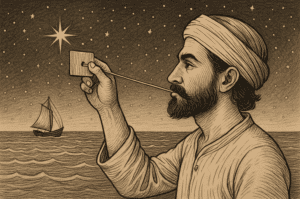
Indian seafarers also created early magnetic compasses and detailed star charts that guided ships to destinations with remarkable accuracy. These innovations enabled the extensive trade networks that connected India with Arabia, Africa, and Southeast Asia as early as the 1st century CE.
Early Astronomical Calculations That Predicted Eclipses
Indians didn’t just observe eclipses—they predicted them with stunning accuracy when most of the world thought they were divine omens.
In the 5th century, astronomer Aryabhata correctly identified that eclipses occur when shadows fall on celestial bodies—not when demons swallow the sun or moon. His calculations were so precise they could predict eclipses within minutes of their actual occurrence.
The Surya Siddhanta, composed around 400 CE, contains sophisticated mathematical formulas for planetary positions that rival modern calculations. Some of these formulas account for elliptical orbits—a concept Western astronomy wouldn’t grasp until Kepler in the 17th century.
Time-Measuring Instruments and Water Clocks
Time wasn’t abstract for ancient Indians—they measured it down to microseconds when Europeans were still using sundials.
The ghati yantra, an ingenious water clock, measured time regardless of daylight. Water dripped from a small hole in a copper vessel, filling another vessel that would sink after a specific period (24 minutes). Guards would strike a gong when this happened, maintaining precise time even at night.
Ancient Indian texts mention units of time as small as a truti—approximately 0.3 microseconds. This obsession with precise time measurement wasn’t just philosophical—it was practical for astronomical observations, religious ceremonies, and daily life organization.
Their concept of cyclical time—from brief moments to cosmic ages spanning billions of years—reflects an understanding of time scales that wouldn’t enter Western thought until the modern era.
Daily Life Inventions We Take for Granted
Chess: The Strategic Game That Conquered the World
Ever wonder why chess feels like it’s been around forever? That’s because it has – or at least since 6th century India. The game we know today began as “Chaturanga,” meaning “four divisions” of the military: infantry, cavalry, elephantry, and chariotry.
What’s mind-blowing is how little the core concept has changed in 1500 years. Those original pieces evolved into our pawns, knights, bishops, and rooks. When the game spread to Persia, then to the Arab world and finally Europe, each culture added their own tweaks, but the Indian DNA remained intact.
The queen wasn’t always the powerhouse she is today. In the original Indian version, that piece (called the “mantri” or minister) could only move one square diagonally. Talk about a promotion when Europeans transformed it into the most powerful piece on the board!
Chess isn’t just a game – it’s a cultural phenomenon that has outlasted empires. From the wooden sets carved in Indian villages to the AI-powered chess engines of today, this Indian invention continues to challenge millions of minds daily.
Next time you call “checkmate,” you’re actually saying “shah mat” – Persian for “the king is dead” – just one more reminder of how this Indian strategic masterpiece traveled the world while maintaining its essence.

Buttons and Buttonholes: Simple Yet Revolutionary
You’re probably wearing them right now, but have you ever stopped to think about buttons? These tiny clothing fasteners that we take completely for granted were actually pioneered in ancient India around 2000 BCE.
Archaeological digs in the Indus Valley have unearthed some of the earliest known buttons, crafted from seashells. Unlike modern buttons, these early versions were used more for ornamental purposes than fastening. But the innovation was clear – shaped shells with carefully drilled holes showed remarkable craftsmanship.
The real game-changer came when ancient Indians paired buttons with something even more ingenious: the buttonhole. This simple cut in fabric, reinforced with stitching, created a secure fastening system that revolutionized clothing forever.
What made this invention so powerful? Before buttons, people relied on pins, brooches, and ties to keep clothing in place. Buttons offered something different: security without sharp points, adjustability, and the ability to create more fitted garments.
The technology spread along trade routes, with each culture adapting the concept. Today’s fashion industry would be unrecognizable without this humble Indian invention. From high-end designer pieces to everyday workwear, buttons remain one of humanity’s most practical and enduring innovations.
For India travel tips, please visit Planning India Travel.
Shampoo: From Indian Head Massage to Global Hygiene Product
The word “shampoo” comes from the Hindi word “champo,” meaning to massage or knead. And that’s exactly what ancient Indians were doing thousands of years ago – but not with the bottle of liquid soap we know today.
Traditional Indian hair care involved massaging the scalp with herbs, plants, and natural cleansers. Reetha (soapnut), shikakai, and amla were the original hair care superstars, creating a natural lather that cleaned without stripping hair of its natural oils.
When colonial British visitors experienced these head massages in India during the 18th century, they were hooked. They brought the practice back to England, where the first commercial “shampooing” services appeared – initially as a therapeutic massage rather than just hair washing.
By the 1860s, the concept had evolved, with early commercial shampoos containing soap and herbs. But the liquid shampoo we squeeze from bottles today? That didn’t arrive until the 1920s, with Drene becoming the first synthetic shampoo.
The billion-dollar hair care industry now offers thousands of formulations for every hair type imaginable. Yet the fundamental concept remains unchanged from those ancient Indian head massages: cleansing the scalp and hair while providing a sensory, almost meditative experience.
Incense and Aromatic Compounds for Wellness
Walk into any wellness shop today and you’ll find incense sticks, essential oil diffusers, and aromatherapy products. These aren’t New Age inventions – they’re direct descendants of ancient Indian aromatic innovations dating back over 5,000 years.
India pioneered the use of aromatic compounds for both spiritual and medicinal purposes. Ancient texts like the Vedas mention specific blends of herbs, resins, and woods used in religious ceremonies. The word “perfume” itself comes from the Latin “per fumum” – meaning “through smoke” – a direct reference to the Indian practice of burning aromatic substances.
What made Indian incense unique was the perfect balance of ingredients: the base (bamboo), the binding agent (tree resins), and the aromatic compounds (sandalwood, jasmine, rose, etc.). This combination created slow-burning sticks that released consistent fragrance.
Beyond religious use, ancient Indians understood the medicinal properties of aromatics. Specific scents were prescribed for different ailments in Ayurvedic medicine. Sandalwood for cooling properties, frankincense for inflammation, and jasmine for depression – applications modern science is now confirming through research.
Today’s $10 billion global aromatherapy market stands on the shoulders of these ancient Indian innovations. From luxury spa treatments to everyday home diffusers, the wellness concepts developed in ancient India continue to enhance lives worldwide.
Early Plumbing and Sanitation Systems
Most people think advanced plumbing is a modern luxury or perhaps a Roman innovation. The truth? Ancient Indians were engineering sophisticated water management and sanitation systems while much of the world was still figuring out basic shelter.
What’s truly impressive is how they got the engineering details right. Drains were built with precisely calculated slopes to maintain water flow. Manholes were constructed for cleaning and maintenance. Even simple things like angled bricks in channels to control water speed showed remarkable foresight.
Water conservation was equally impressive. Massive public baths like the Great Bath at Mohenjo-daro featured waterproof floors made with carefully laid bricks sealed with gypsum and bitumen. Water storage systems collected rainwater and managed seasonal flooding.
These sophisticated systems disappeared for centuries after the Indus civilization declined. When modern plumbing emerged millennia later, it had to rediscover many of the same principles these ancient Indian engineers had already mastered. Today’s urban planners still grapple with the same challenges they solved over 4,000 years ago.
Agricultural Innovations That Fed Civilizations
Sophisticated Irrigation Systems of Ancient India
While the rest of the world was figuring out basic farming, ancient Indians had already mastered the art of water management. Those stepwells you see in Instagram travel photos? They weren’t built for aesthetics. They served as year-round water sources even during the harshest droughts.
The ingenious “tank irrigation system” dates back to 3000 BCE. These weren’t just holes in the ground—they were carefully engineered reservoirs with embankments and sluice gates that controlled water flow with remarkable precision.
Ever heard of the dhekli system? This simple yet brilliant pulley mechanism allowed farmers to draw water from deep wells using minimal effort. It’s basically the forerunner to modern irrigation pumps.
And talk about forward thinking—the Indus Valley folks built sophisticated underground drainage systems in cities like Mohenjo-daro around 2600 BCE. They understood hydrology before hydrology was even a word!
Crop Rotation Techniques for Sustainable Farming
Indian farmers weren’t just growing crops—they were playing chess with the soil. Traditional crop rotation systems preserved soil fertility centuries before chemical fertilizers existed.
The ancient texts mention a systematic approach called “Panchakavya Krishi,” which rotated five types of crops based on their nutritional requirements and effects on soil.
Rice-wheat rotation? That wasn’t a modern discovery. Sanskrit agricultural texts from 1000 BCE described the benefits of alternating cereal crops with legumes to maintain nitrogen levels in the soil.
What’s mind-blowing is how detailed these systems were. Farmers knew exactly which plants complemented each other and which depleted similar nutrients. They’d plant nitrogen-fixing legumes after nutrient-hungry grains—a practice we now celebrate as sustainable agriculture.
The Krishi-Parashara, written around 400 BCE, outlined complex rotation schedules based on seasonal changes, soil types, and rainfall patterns. It wasn’t just farming—it was ecological science.
Pest Control Methods Using Natural Compounds
When ancient Indian farmers had pest problems, they didn’t run to the store for chemicals. They went to their kitchen gardens.
Neem was the MVP of natural pesticides. Farmers extracted its compounds for pest management thousands of years before modern science confirmed its insecticidal properties. They’d grind neem seeds into paste and mix it with water to create a spray that repelled over 200 species of pests.
But the innovation didn’t stop there. Ancient texts mention using turmeric, garlic, and onion extracts as powerful pest deterrents. The Vrikshayurveda (the science of plant life) detailed formulations using these everyday ingredients that effectively controlled crop-damaging insects.
Farmers also practiced companion planting—growing marigolds alongside vegetables to repel nematodes, or planting basil near tomatoes to deter flies and mosquitoes.
Even smoke was weaponized against pests. Controlled burning of specific herbs created insect-repelling fumes that protected stored grains without harming humans.
Seed Storage and Preservation Technologies
The true genius of ancient Indian agriculture? They figured out how to preserve seeds long before refrigeration existed.
Clay pots weren’t just pottery—they were nature’s perfect seed storage containers. Porous enough to allow minimal air exchange but sealed enough to maintain steady humidity levels. Some archaeological findings suggest seeds stored this way remained viable for years.
Farmers treated seeds with natural preservatives like neem oil and ash to prevent fungal growth and insect infestation. They’d coat seeds in mixtures of cow dung, clay, and herbal extracts before storage—creating a natural protective layer.
Traditional wisdom dictated storing different seed varieties in separate containers based on their specific preservation needs. Rice seeds were stored differently than legume seeds, which were stored differently than vegetable seeds.
The timing of seed collection was precisely calculated. Seeds were harvested on specific days based on lunar cycles when moisture content was optimal for long-term storage—a practice that modern science has confirmed has merit.
These techniques weren’t just practical—they ensured food security and agricultural continuity through droughts, floods, and other calamities that would have otherwise destroyed food supplies.
From the ancient mathematical concepts like zero and decimal systems to revolutionary medical practices such as plastic surgery and inoculation, India’s contributions to global innovation are both profound and far-reaching. These unsung inventions—whether in metallurgy, textiles, astronomy, agriculture, or everyday items—have seamlessly integrated into our modern lives, often without proper acknowledgment of their Indian origins. The sophisticated wootz steel of ancient India, the versatile cotton fabrics, and the precise astronomical calculations that predated many Western discoveries all demonstrate India’s historical excellence in scientific thinking.
As we reflect on these remarkable achievements, it’s important to recognize how innovation transcends borders and time. These Indian inventions remind us that human ingenuity has always been global, collaborative, and built upon shared knowledge. The next time you use the number zero, wear cotton clothing, or benefit from modern surgical techniques, take a moment to appreciate the brilliant Indian minds who, centuries ago, shaped our world in ways we’re still benefiting from today.
For immersive culture walks in India please visit 5 Senses Walks.
Leave a Reply