
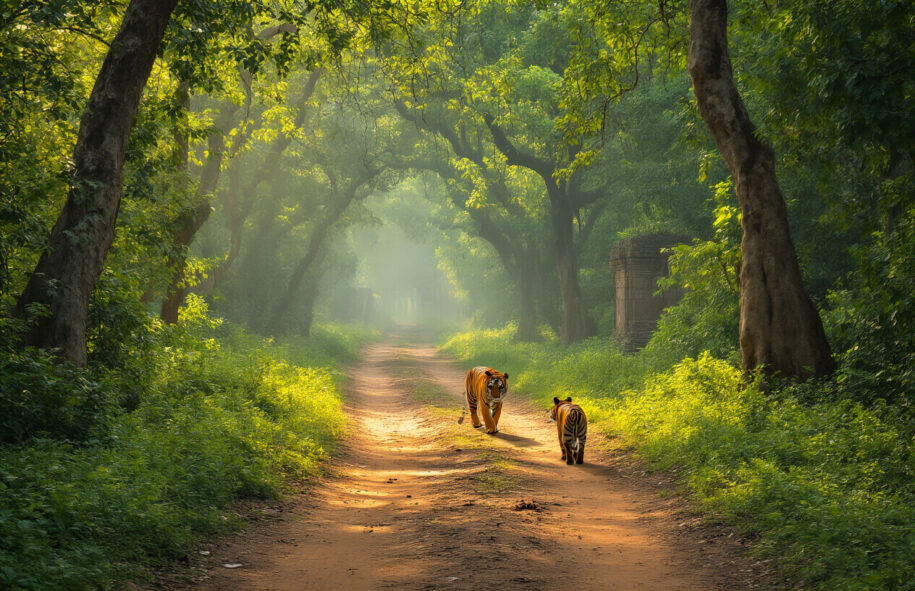
Ever wondered what it’s like to walk through the actual jungle that inspired “The Jungle Book”? Not some Disney-fied version, but the real deal where Rudyard Kipling’s Mowgli roamed with wolves and outsmarted Shere Khan.
The Kanha-Pench wildlife corridor isn’t just another nature destination—it’s literally the landscape that shaped one of literature’s most beloved stories. Here, tigers prowl through sal forests, jackals call in the distance, and if you listen carefully, the spirits of Baloo and Bagheera seem to whisper through the leaves.
In this guide, we’ll take you deep into exploring Kanha-Pench, showing you exactly how to experience this magical wilderness that connects two of India’s most spectacular tiger reserves. But first, let me tell you about the moment I locked eyes with a wild sloth bear that changed everything…
For a guided tour of Pench visit Pench National Park.
For a guided tour of Kanha, visit Kanha National Park.
The Real Jungle Book: Discovering Kanha-Pench’s Literary Heritage
Rudyard Kipling’s Inspiration: How Kanha-Pench Shaped “The Jungle Book”
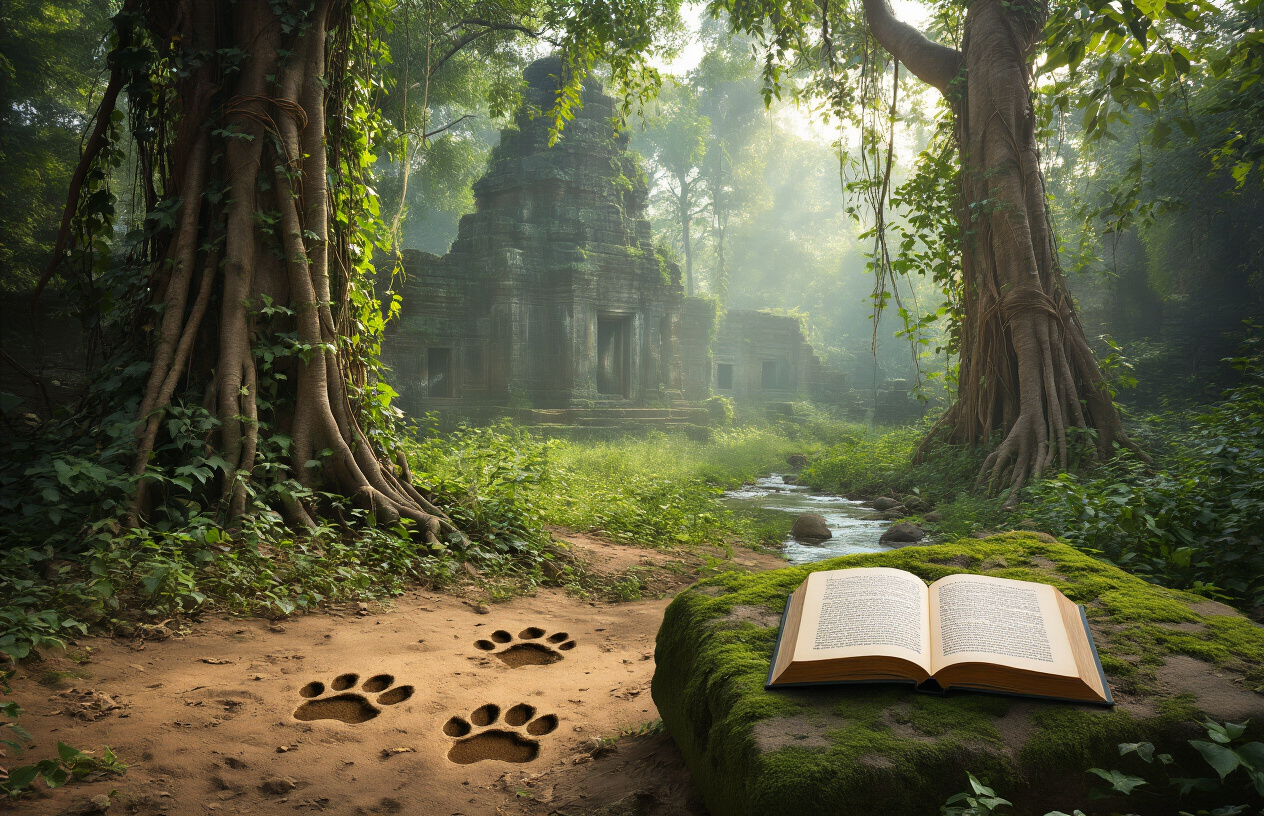
Ever wondered where Mowgli’s world really came from? The dense forests of Kanha-Pench didn’t just inspire Kipling’s imagination—they practically wrote half the book themselves.
Though Kipling never actually visited these specific forests (plot twist!), he grew up hearing stories about Central India’s wilderness from people who lived and worked there. The landscapes he describes—the dense sal forests, the meandering streams, the open meadows—they’re all here, virtually unchanged since the 1890s.
Walk through Kanha National Park, and you’ll instantly recognize the setting where Mowgli learned the Law of the Jungle. The bamboo thickets where he hid from Shere Khan? They’re still swaying in the breeze.
Tracking Mowgli’s Journey Through the Forest
Want to feel like you’re walking in Mowgli’s bare footsteps? You actually can.
The trail between Kanha and Pench—now formalized as a wildlife corridor—mirrors the young boy’s adventures perfectly. As you travel this route, you’ll cross grasslands where the wolf pack would have hunted and rocky outcrops where Bagheera the panther might have sunned himself.
The real magic happens at dawn or dusk. That’s when the forest comes alive with the calls of langurs—just like the Bandar-log who kidnapped Mowgli. If you’re super lucky (and very quiet), you might even spot a sloth bear ambling through the undergrowth—Baloo in the flesh!
Iconic Locations That Match the Book’s Descriptions
The Council Rock, where wolf packs met under the full moon? Many believe it was inspired by a distinctive plateau in the Pench area.
Remember the “Cold Lairs,” the abandoned city where the monkeys took Mowgli? Several ruins scattered throughout the Kanha-Pench landscape match this description perfectly, with crumbling stone structures reclaimed by vines and roots.
The most thrilling spot has to be the watering holes. Visit during summer months, and you’ll witness the real-life “Water Truce” that Kipling described—predator and prey drinking side by side, hostilities temporarily forgotten in the face of mutual need.
The silence, the sounds, the smells—this landscape doesn’t just match the book’s descriptions. It explains them. This isn’t just where The Jungle Book could have happened. It’s where it did happen, in Kipling’s mind.
Wildlife Encounters: Meeting the Real Characters of Mowgli’s World
A. Tiger Spotting: Finding Shere Khan in His Natural Habitat
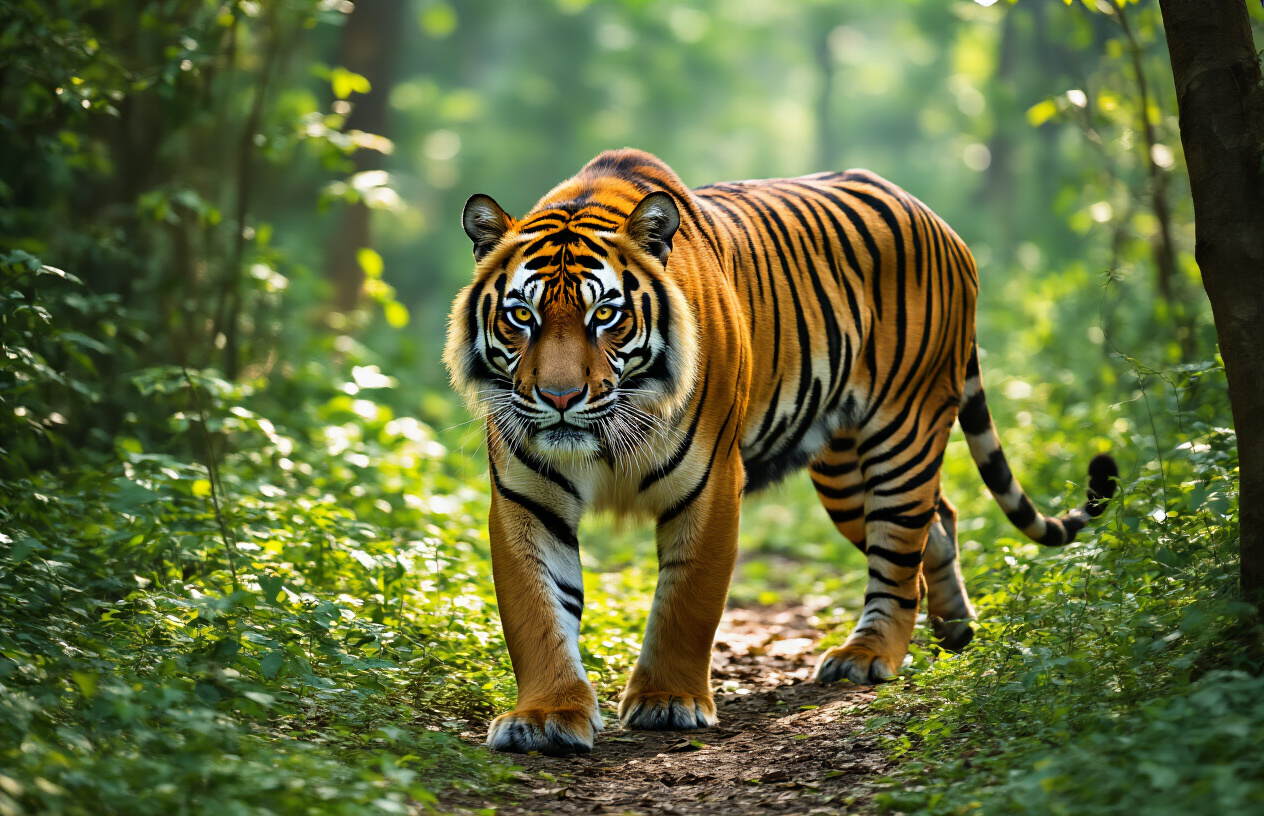
Nothing quite compares to that heart-stopping moment when you lock eyes with a wild tiger. Kanha-Pench corridor offers some of India’s best tiger sightings, with over 80 tigers roaming these forests.
Unlike Shere Khan from Kipling’s tales, real tigers aren’t vindictive villains—they’re magnificent apex predators perfectly evolved for their environment. Morning safaris give you the best chance to spot them, especially around water holes or along forest paths during the hot summer months.
The tigers here have distinct personalities that safari guides know intimately. Some are camera-friendly showstoppers while others remain mysteriously elusive. Each has a territory and unique marking patterns, allowing rangers to identify them individually.
B. The Elusive Sloth Bears: Baloo’s Modern Descendants
Baloo might’ve been a carefree mentor in the stories, but real sloth bears are anything but laid-back! These shaggy, myrmecophagous (ant-eating) creatures are surprisingly fierce when startled.
You’ll typically spot them digging for termites or climbing trees for honey. Their distinctive white V-shaped chest markings make them instantly recognizable when you’re lucky enough to encounter one. Dawn and dusk provide your best chances.
Unlike their fictional counterpart, sloth bears are solitary except during mating season or mothers with cubs. Their powerful claws—built for tearing into termite mounds—could give Baloo some serious foraging advantages that Kipling never imagined!
C. Wolf Packs of Kanha: The Family That Raised Mowgli
The Indian wolves of Kanha represent one of the most fascinating aspects of Kipling’s inspiration. Smaller than their European cousins but equally intelligent, these wolves move in tight-knit family units just like the pack that adopted Mowgli.
Spotting wolves requires patience and an experienced guide. They’re most active during early mornings and late evenings, communicating through a complex system of howls, barks and body language. Their hunting strategies showcase remarkable coordination—just imagine how they might organize to raise a human child!
Wolf populations face serious conservation challenges, making any sighting particularly special. The Kanha-Pench corridor represents one of their last strongholds in central India.
D. Spotting Bagheera: Leopards in the Shadows
If tigers are the forest’s bold royalty, leopards are its stealthy shadows. These spotted cats embody Bagheera’s essence—elegant, intelligent, and remarkably adaptable. They’re present throughout Kanha-Pench but considerably harder to spot than tigers.
Expert trackers look for telltale signs: pugmarks on dusty paths, scratch marks on trees, or the remains of prey hoisted into branches. Leopards frequently hunt at night but rest in trees during daylight hours. Scan the branches carefully—you might discover a spotted form draped across a limb.
Unlike Bagheera’s straightforward character, real leopards maintain a complex relationship with tigers, generally avoiding direct confrontation by hunting at different times and sometimes surrendering kills to their larger cousins.
E. Other Notable Wildlife That Enriches the Experience
Beyond the iconic characters from Jungle Book, Kanha-Pench teems with fascinating creatures that bring the ecosystem to life:
The barasingha (swamp deer) represents a conservation success story, pulled back from near-extinction through dedicated protection. Their twelve-tined antlers create magnificent silhouettes against morning mists.
Wild dogs (dholes) hunt in coordinated packs, taking down prey many times their size through teamwork rather than brute strength. Watching them operate is like witnessing military precision in action.
Jackals, langurs, and gaur (Indian bison) round out the cast, each playing crucial ecological roles. Even the smallest residents—the vibrant butterflies, birds, and reptiles—contribute to this living tapestry that inspired Kipling’s timeless tales.
Safari Adventures: Best Ways to Explore the Twin Reserves
Jeep Safaris: Covering More Ground
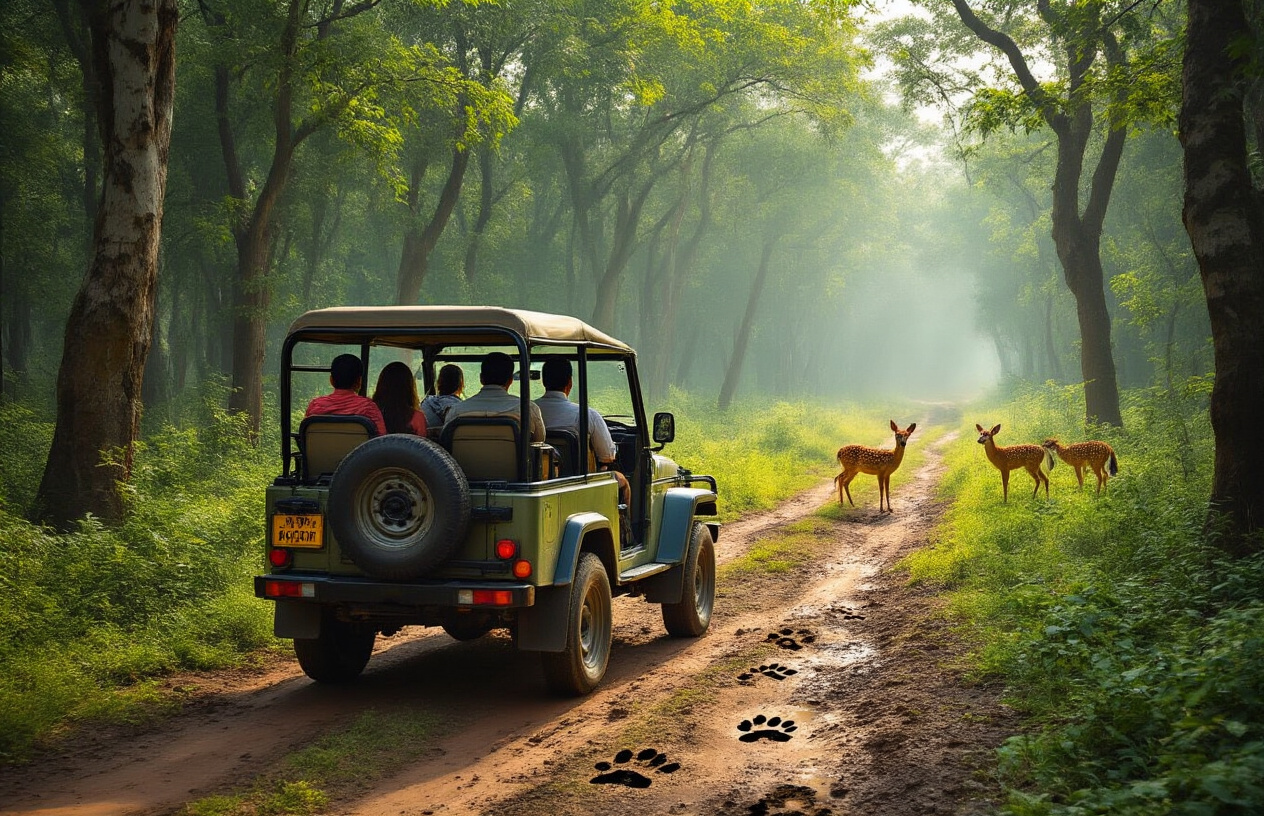
Nothing beats a jeep safari when you want to see the most wildlife in a single outing. These open-topped vehicles give you incredible 360-degree views while covering large distances through varied habitats.
The drivers? They’re practically wildlife whisperers. They know exactly where that elusive tiger was spotted at dawn, or which watering hole the gaur herd visits. Most jeeps accommodate 6 passengers, so grab your friends and split the cost.
Morning safaris start around 6 AM when animals are most active. Afternoon drives begin at 3 PM and continue until sunset. Book well in advance – these babies fill up fast, especially during peak season (October-March).
Walking Tours: Immersive Forest Experiences
Want to feel the forest floor beneath your feet? Walking tours are your ticket to true immersion.
You’ll notice things you’d zoom past in a vehicle – tiger pug marks still fresh in the mud, the subtle scratch marks of a sloth bear on a tree trunk, or medicinal plants the locals have used for centuries.
These tours are always led by expert naturalists who know exactly how to keep you safe while bringing you closer to nature. They’ll teach you to identify bird calls and animal sounds that most tourists miss completely.
Walks typically last 2-3 hours and are best done early morning when the forest is waking up. Wear neutral colors and comfortable shoes.
Elephant Safaris: A Traditional Perspective
There’s something magical about exploring the jungle atop an elephant. These gentle giants move silently through dense undergrowth where vehicles can’t go, bringing you surprisingly close to wildlife.
The height advantage is unbeatable – you’ll spot deer, wild boar, and maybe even predators from a safe vantage point. Animals are less threatened by elephants than vehicles, sometimes allowing for closer encounters.
However, these safaris are becoming less common as conservation ethics evolve. If you choose this option, research operations that prioritize elephant welfare with proper care and limited working hours.
Night Safaris: Experiencing the Jungle After Dark
The forest transforms completely after sunset. Night safaris reveal a whole different cast of characters – civets, porcupines, owls, and maybe even elusive leopards.
Most night drives stick to buffer zones rather than core areas to minimize disturbance. Your guide will use spotlighting techniques to catch the reflection of animal eyes in the darkness.
The sounds alone are worth it – the eerie call of nightjars, the distant alarm call of a deer that might signal a predator on the move. Bundle up (nights get surprisingly cold) and bring a good camera with low-light capabilities.
Cultural Immersion: The Human Side of Mowgli’s Land

Visiting Local Villages: Meeting the Baiga and Gond Tribes
Ever wondered who actually lives in Mowgli’s jungle? The real-life characters behind Kipling’s tales are right here waiting to meet you.
The Baiga and Gond tribes have called these forests home for centuries before any national park boundaries existed. Walking into a Baiga village feels like stepping back in time – their distinctive mud homes decorated with vibrant tribal art tell stories older than the oldest trees in Kanha.
I spent an afternoon with a Baiga family who showed me their traditional tattoos (godna) – not just body art but their cultural identity. The elder explained how each marking connects them to their ancestors and the forest spirits.
What struck me most? These folks know more about Kanha’s wildlife than any guidebook. A Gond tracker pointed out tiger pug marks I would’ve walked right past and identified dozens of medicinal plants within yards of the village boundary.
Traditional Cuisines That Reflect the Forest’s Bounty
The food here isn’t what you’ll find on restaurant menus. It’s something else entirely.
Tribal kitchens serve up dishes made from ingredients gathered straight from the forest. I tried mahua – a sweet flower that’s transformed into everything from curry to a potent local brew. The bitter-sweet taste lingered long after the meal ended.
Don’t miss these forest specialties:
- Bamboo shoot curry with foraged mushrooms
- Tendu leaf wraps filled with spiced rice
- Charoli seed chutney that puts store-bought condiments to shame
A local grandmother showed me how they grind grain using traditional stone tools, laughing at my clumsy attempts to help. “The forest gives us everything we need,” she told me, stirring a pot of fragrant curry over an open flame.
Cultural Performances and Storytelling Traditions
As night falls, villages come alive with the beat of mandar drums and the tinkling of ghungroo bells.
The Karma dance performed by young Gond men and women isn’t just entertainment – it’s their spiritual connection to the forest. Circular formations mimic the cycles of nature, while their foot movements tell stories of animals they share their home with.
But the real magic happens around the community fire when elders begin their tales. These aren’t rehearsed performances for tourists – they’re living traditions passed down through generations. Stories of tiger gods, clever jackals, and forest spirits blend seamlessly with practical knowledge about survival in the jungle.
One evening, a wizened storyteller recounted how Baiga tribes once communicated with tigers. “We still speak their language,” he whispered, “but nowadays they rarely answer.”
Planning Your Kanha-Pench Adventure
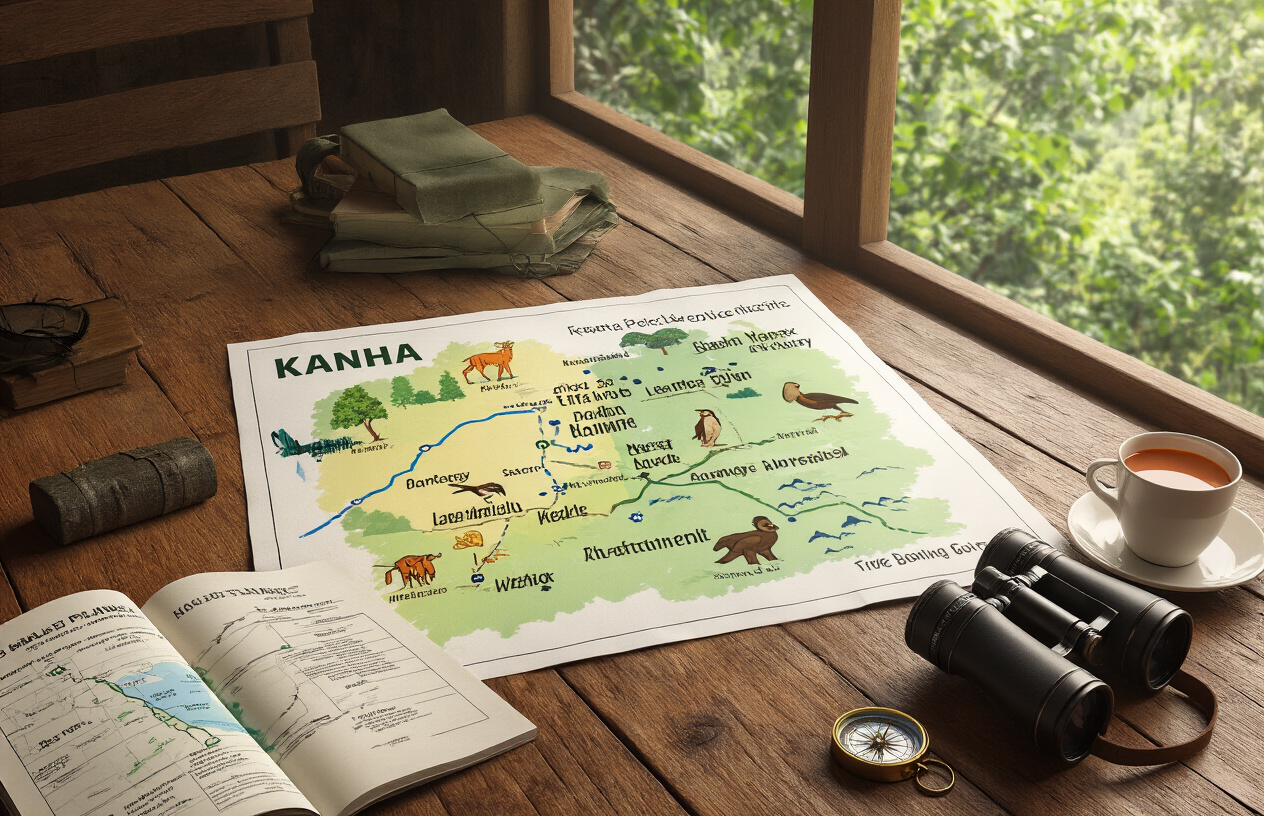
Best Times to Visit for Wildlife Sightings
The magic of Kanha-Pench happens October through June. Skip the July-September monsoon season when parks often close and trails turn muddy.
Want tigers? March to May is your golden ticket. The scorching heat drives animals to water sources, making spotting that elusive striped beauty way more likely. Just pack light clothes and lots of water – it gets seriously hot.
For pleasant weather and decent sightings, aim for October-February. Mornings are misty and magical, perfect for those National Geographic-worthy shots. The forests look straight out of The Jungle Book with lush greenery everywhere.
Early mornings and late afternoons always win the wildlife lottery, regardless of season. That’s when animals are most active.
Accommodation Options: From Luxury to Eco-Friendly
Staying near Kanha-Pench isn’t about roughing it anymore. Your options:
Luxury Resorts: Think Taj Safaris’ Baghvan and Banjaar Tola. Private plunge pools, spa treatments, and gourmet meals between game drives.
Mid-range Lodges: Places like Kanha Earth Lodge and Pench Tree Lodge offer comfort without breaking the bank. They’ve got good guides and solid food.
Eco-stays: Chitvan Jungle Lodge and Kipling Camp use solar power, harvest rainwater, and serve organic food. Your conscience stays as clean as their carbon footprint.
Homestays: Live with local families for authentic cultural immersion. Nothing beats homemade village meals and stories from locals who’ve lived alongside wildlife for generations.
Book at least 3-4 months ahead, especially during peak tiger season.
Conservation Efforts and How Tourists Can Contribute
The Kanha-Pench corridor isn’t just a tourist spot – it’s a conservation battlefield worth supporting.
The Wildlife Conservation Trust has established crucial wildlife corridors connecting these reserves. These green highways let tigers and other animals move safely between protected areas, boosting genetic diversity.
You can help by:
- Choosing eco-certified accommodations that fund local conservation
- Hiring local guides (they need the income and know the forest better than anyone)
- Following park rules religiously – they exist for a reason
- Supporting handicrafts from villages around the parks
- Reporting wildlife crimes to forest officials
- Joining conservation programs like WWF-India’s adoption initiatives
Some lodges run specific conservation programs you can participate in, from camera trap monitoring to village education initiatives.
Photography Tips for Capturing the Magic of Mowgli’s Land
Shooting in Kanha-Pench challenges even pro photographers. Some game-changers:
- Bring a telephoto lens (at least 300mm) for wildlife, but don’t forget a wide-angle for those sweeping forest landscapes
- Shoot in burst mode – animals move fast and unpredictably
- Crank up your ISO in dense forest areas, especially mornings
- Use your vehicle as a stabilizer – formal tripods are tough to position in jeeps
- Focus on eyes when capturing animals
- Be patient – the best shots come after hours of waiting
Beyond equipment, develop “jungle eyes.” Train yourself to spot subtle movements and listen for alarm calls. That barking deer might be telling you a tiger’s nearby before your guide notices.
Don’t just chase tigers. Some of the most magical shots come from watching a jackal family at play or capturing dappled light through sal trees at dawn.
Walking through Kanha-Pench is truly like stepping into the pages of Rudyard Kipling’s beloved tale. From encountering the real-life inspirations for Shere Khan and Baloo to experiencing the vibrant local cultures that shaped Mowgli’s world, these twin reserves offer an adventure that combines literary heritage with natural wonder. The diverse safari options ensure every traveler can find their perfect way to explore this magnificent landscape.
As you plan your journey to this magical corner of India, remember that you’re not just visiting a wildlife sanctuary – you’re entering a living storybook where literature and reality beautifully intertwine. Pack your sense of wonder alongside your camera, and prepare to create your own unforgettable chapter in the continuing story of the jungle. The forests of Kanha-Pench await, ready to welcome you into their timeless embrace.
For a guided tour of Pench visit Pench National Park.
For a guided tour of Kanha, visit Kanha National Park.
Leave a Reply