

Ever wonder what happens when an East India Company resident falls for an Indian noble’s granddaughter in 18th century Hyderabad? James Achilles Kirkpatrick and Khair un-Nissa’s forbidden romance wasn’t just scandalous—it shattered every colonial rule of the time.
Their love story, hidden beneath layers of historical erasure, reveals more than just passion across cultural divides. It exposes the complex interracial relationships during British colonial rule in India that most history books conveniently skip.
I stumbled upon this remarkable tale while researching forgotten colonial love stories, and what I found left me speechless. Kirkpatrick didn’t just marry Khair—he converted to Islam, adopted local customs, and faced career suicide for love.
But here’s what keeps me up at night: why did the British establishment work so hard to bury this story? And what happened to their children after both parents met tragic early deaths?
For a tour from Hyderabad which replays this love story, please visit White Mughals Story.
Historical Context: British Colonial India
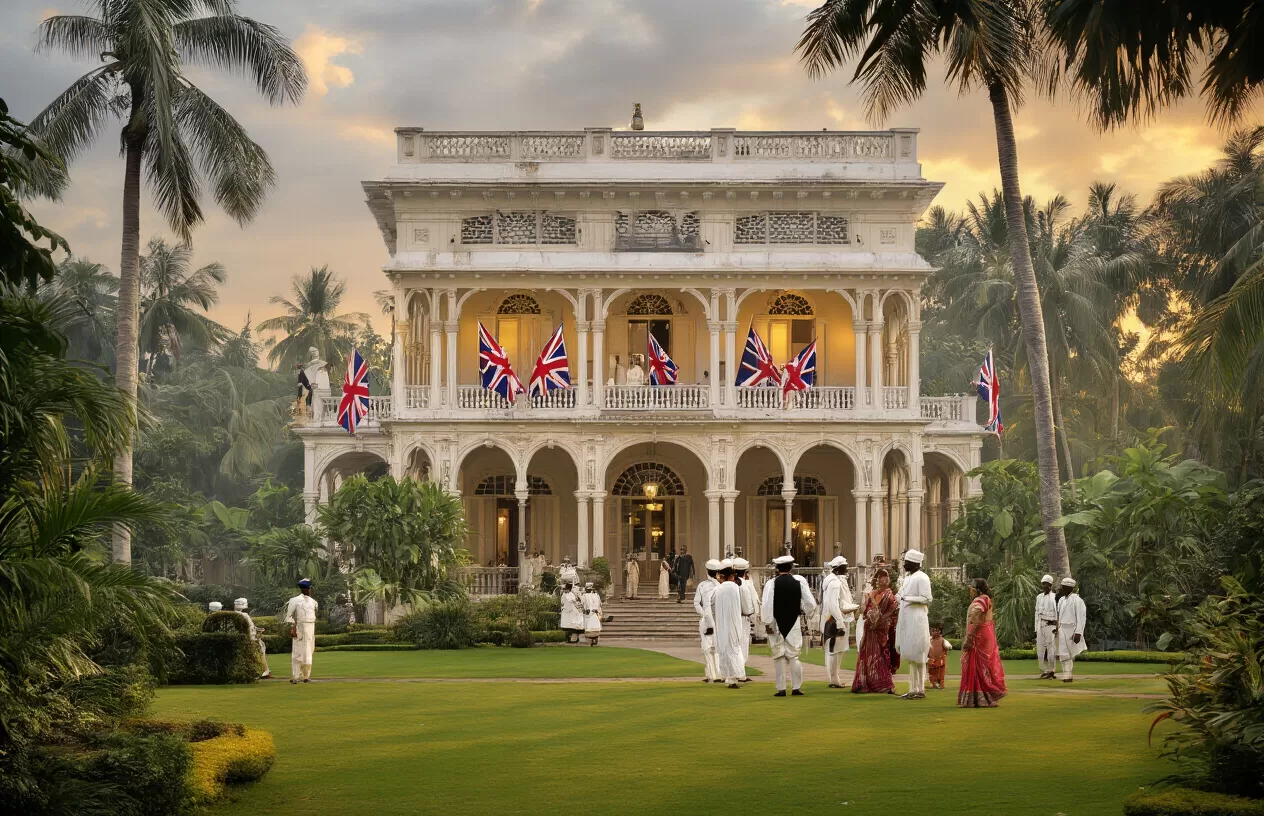
A. Early 19th century Hyderabad: A cultural melting pot
Picture Hyderabad in the early 1800s. This wasn’t just any Indian city – it was a vibrant fusion of cultures that few places on earth could match.
The Nizams ruled here, maintaining a level of independence that made Hyderabad unique in British-controlled India. While the British Empire expanded across the subcontinent, Hyderabad kept its distinctive Persian-influenced Deccani culture alive and thriving.
Streets buzzed with multiple languages – Telugu, Urdu, Persian, Arabic, and increasingly, English. The architecture told its own story: magnificent Islamic structures standing alongside Hindu temples and newly constructed European-style buildings.
The bazaars? Absolutely magical. Merchants from Central Asia, Arabia, and Europe haggled alongside locals, trading everything from precious gems to spices and textiles. Hyderabad’s famed pearls and diamonds attracted fortune-seekers from across continents.
This wasn’t just a meeting place of trade, but of ideas. Poetry gatherings featured works in Persian, Urdu, and Telugu. Music blended Carnatic traditions with Hindustani influences, creating something distinctly Hyderabadi.
B. James Achilles Kirkpatrick: British Resident in Hyderabad
James Kirkpatrick wasn’t your typical British official. Appointed as the Resident (essentially an ambassador) to Hyderabad in 1798, he brought youthful energy at just 34 years old.
Unlike many of his countrymen, Kirkpatrick didn’t see India as merely a career stepping stone. He embraced local customs with genuine curiosity. This guy learned Persian and Urdu, dressed in Indian clothes when appropriate, and actually bothered to understand Hyderabadi court etiquette.
His official residence, today’s Koti Residency, became a symbol of his approach. The building itself mixed European and Indian architectural styles – just like the man who lived in it.
The East India Company sent him to protect British interests, especially against French influence during the Napoleonic Wars. But Kirkpatrick developed a reputation for fairness. He respected the Nizam’s sovereignty while fulfilling his diplomatic duties.
His approach worked. The Nizam trusted him more than previous Residents, and Hyderabadi nobility welcomed him into their homes and lives. This openness to cross-cultural exchange set the stage for a meeting that would change his life forever.
C. The aristocratic Khair un-Nissa: Background and family lineage
Born into Hyderabad’s elite, Khair un-Nissa wasn’t just any aristocrat. Her grandfather was the Nizam’s prime minister, placing her family at the absolute center of power.
Her name itself – meaning “most excellent among women” – reflected the high expectations placed on her from birth. Raised in the zenana (women’s quarters), she received the finest education available to women of her standing: Persian poetry, music, and religious instruction.
By age 14, she was already betrothed to a nobleman, following custom for girls of her status. But Khair un-Nissa had qualities that set her apart – intelligence, curiosity, and according to contemporary accounts, extraordinary beauty.
Her maternal grandfather, Bahauddin Khan, served as a key advisor to the Nizam and maintained close diplomatic ties with the British Residency. This connection brought the young Khair un-Nissa into the orbit of European visitors – a rare experience for women in purdah.
Her family combined Arab lineage with deep roots in Deccan nobility, creating a heritage that bridged multiple Islamic traditions. This cosmopolitan background perhaps prepared her, however slightly, for the unprecedented path her life would take.
D. Social barriers between East and West during colonial rule
The invisible walls between British and Indian societies in the early 1800s weren’t just high – they were practically fortified.
British officials lived in isolated cantonments and civil lines, socializing almost exclusively with other Europeans. Most viewed Indian customs with a mixture of fascination and disdain, considering Western ways inherently superior. The few who “went native” faced harsh judgment from their countrymen.
For Indians, especially Muslims of high rank, contact with Europeans risked both social standing and religious purity. Elite Muslim women observed strict purdah, remaining unseen by men outside their immediate family. The idea of romantic relationships across this divide wasn’t just discouraged – it was nearly unthinkable.
Religious differences created perhaps the tallest barrier. Conversion either way carried enormous consequences. For a Muslim woman, abandoning Islam meant family rejection and social death. For a British man, converting to Islam could end his career and connection to home.
Class complicated things further. The British hierarchy respected Indian royalty but placed even educated commoners below European servants in social standing. Meanwhile, Indian society had its own complex caste and class systems that didn’t align with European notions of status.
Against this backdrop of seemingly impenetrable social divisions, the story of Kirkpatrick and Khair un-Nissa becomes even more remarkable.
Their Fateful First Meeting
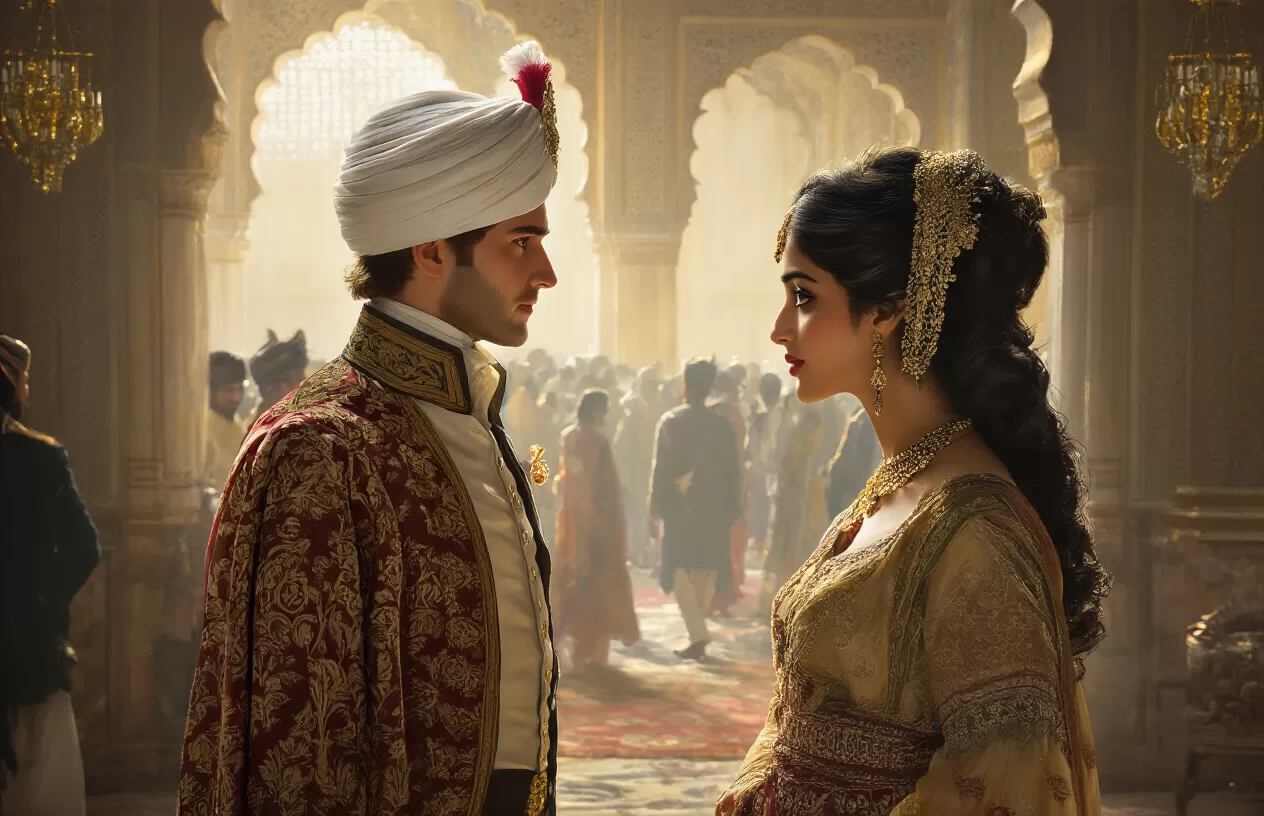
A. The royal court encounter that changed their lives
Imagine the grandeur of the Hyderabad royal court in 1798 – a kaleidoscope of silks, jewels, and protocol. James Achilles Kirkpatrick, the newly appointed British Resident, stood tall among the courtiers, his military uniform stark against the colorful ensemble of the Nizam’s court.
It was here that he first glimpsed her.
Khair un-Nissa, whose name literally meant “excellent among women,” was only 14 or 15 at the time. Despite her youth, she possessed a grace that commanded attention. She was accompanying her grandfather, Mir Alam, a prominent nobleman in the Nizam’s court.
Their eyes met across the crowded durbar hall. That fleeting moment would alter the course of two empires.
Kirkpatrick, at 32, was no naive youth. He’d been sent to strengthen British control, not fall in love. Yet something about the young noblewoman’s poise stirred him in ways he couldn’t articulate.
For Khair un-Nissa, the tall Englishman with his strange clothes and confident demeanor represented a world beyond the zenana walls – fascinating and forbidden all at once.
B. Initial cultural and language barriers
Neither spoke the other’s language fluently at first. Their early interactions relied on translators and the universal language of glances and gestures.
Kirkpatrick had picked up some Urdu and Persian, but court etiquette was another matter entirely. Every move in the Nizam’s court was choreographed by centuries of tradition.
For Khair un-Nissa, the Englishman’s ways seemed equally strange. His directness, his different religious practices, even the food he ate marked him as an outsider.
The physical barriers were even more challenging. As a Muslim noblewoman, Khair lived in purdah – secluded from men outside her immediate family. Their meetings were rare, brief, and always chaperoned.
These obstacles that would have deterred most instead became the framework for something extraordinary.
C. Growing fascination despite societal restrictions
What began as curiosity quickly deepened into something neither could dismiss. Kirkpatrick found excuses to visit Mir Alam’s residence. Khair un-Nissa discovered reasons to be present – always properly veiled, always appropriately distant.
Their romance blossomed in the margins – in exchanged notes, in gifts with hidden meanings, in conversations conducted through trusted intermediaries.
The British East India Company expected its representatives to maintain professional distance from “natives.” The aristocratic Muslim families of Hyderabad expected their daughters to marry suitable men of their own faith and culture.
Both were risking everything.
Yet the more society insisted they remain apart, the stronger their connection grew. Kirkpatrick began studying Islamic texts and customs. Khair un-Nissa learned about English ways.
In a world where everything conspired to keep them separate, their determination to bridge those divides became the foundation of a love story that would scandalize two continents and challenge the rigid boundaries of empire.
Forbidden Romance Blossoms
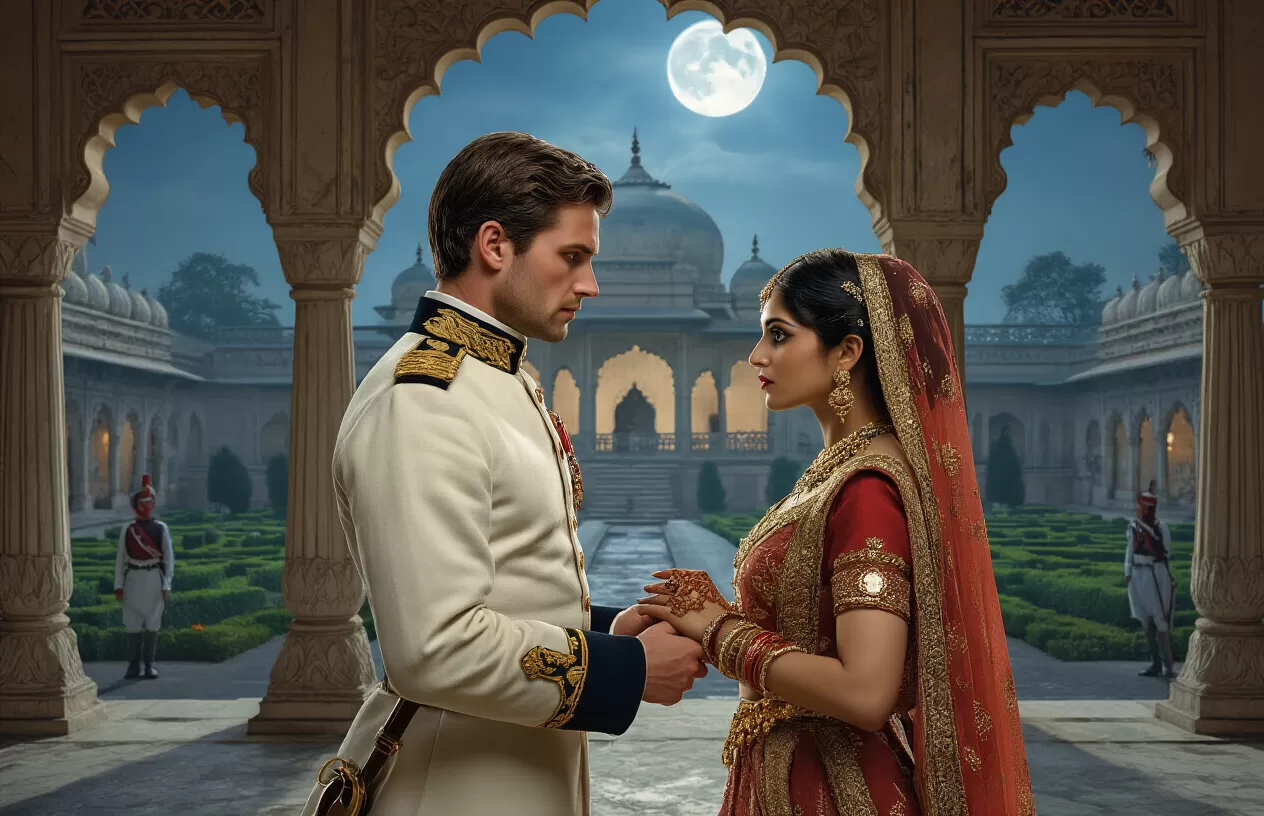
Secret meetings and correspondence
Behind the walls of British residency in Hyderabad, James Kirkpatrick and Khair un-Nissa wrote a love story that defied every social boundary of their time.
Their romance began with stolen glances through latticed windows, where Khair would catch glimpses of the handsome British Resident. Their first meetings were arranged through trusted servants who carried coded messages between them – risky business that could have destroyed both their reputations.
“I count the hours until moonrise,” Kirkpatrick wrote in one smuggled note, using Persian phrases he’d learned just for her.
As their connection deepened, they developed their own secret language – a mix of English, Persian, and Urdu that only they understood. Kirkpatrick bribed household staff and arranged clandestine meetings in hidden gardens where they could speak freely, if only for moments.
Opposition from both British and Indian communities
The scandal erupted like wildfire when rumors of their relationship leaked. On the British side, Kirkpatrick’s superiors saw his infatuation as dangerous fraternization. His fellow officers stopped inviting him to social gatherings. In their eyes, he’d gone “native” – the ultimate betrayal.
Meanwhile, Khair’s family faced intense pressure from conservative Muslim circles who viewed her attraction to a foreigner as shameful. Her grandfather threatened to disown her completely. Neighbors whispered. Former friends turned away.
“They treat me like I’ve caught some disease they might catch,” Kirkpatrick confided to his brother in a letter.
Kirkpatrick’s growing appreciation for Mughal culture
Few noticed how dramatically Kirkpatrick changed as his love deepened. The once-typical colonial officer began studying Persian poetry, appreciating Mughal art, and even commissioning traditional paintings.
He switched his wardrobe, sometimes appearing in flowing Mughal coats and turbans that shocked his British colleagues. His residency took on distinctly Indian architectural elements – arched doorways, intricate latticework, and a private hammam bath.
Most significantly, Kirkpatrick began questioning British colonial policies in private correspondence, showing a growing sympathy for local perspectives that worried his superiors in Calcutta.
“I find more wisdom in one afternoon of Hyderabadi poetry than in all the dispatches from London,” he wrote to a trusted friend.
Khair un-Nissa’s courage in defying conventions
Khair wasn’t just a passive character in their romance. She actively chose this difficult path, knowing the consequences.
Born into nobility with strict purdah traditions, she risked everything – family standing, reputation, and personal safety. When her relatives threatened to marry her off to someone else, she boldly declared her love for Kirkpatrick, something unheard of for women of her position.
She faced brutal criticism, especially from other women in her community who saw her as betraying both religion and tradition. Yet she never wavered.
“A cage remains a cage, even when gilded with gold,” she reportedly told her mother when urged to forget Kirkpatrick.
The personal cost of cross-cultural love
Their love exacted a heavy toll. Kirkpatrick’s career advancement stalled permanently. Many of his reports to superiors were now viewed with suspicion. His social circle shrank to a handful of more open-minded Europeans.
For Khair, the isolation cut deeper. Separated from family traditions and community support, she created a hybrid existence – neither fully accepted in British circles nor able to return to her former life.
Together they built a unique household that belonged to neither world entirely. Their children would inherit this complex legacy – too Indian for England, too English for India.
“We have created our own small kingdom,” Kirkpatrick wrote, “where only our rules apply.”
Overcoming Impossible Odds
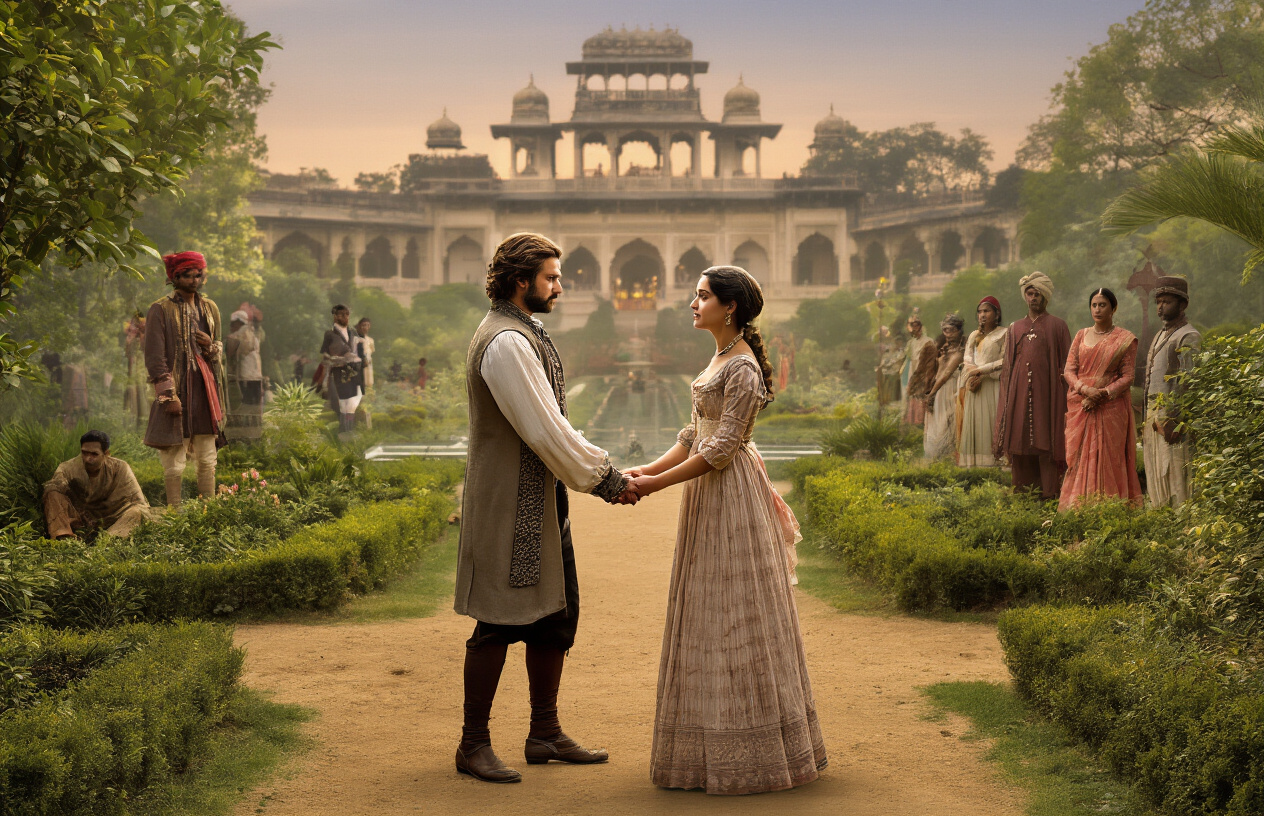
A. Kirkpatrick’s controversial conversion to Islam
Love makes us do wild things. James Kirkpatrick knew this better than most when he took the most shocking step imaginable for a British official in colonial India—he converted to Islam.
This wasn’t just a casual decision. As the British Resident in Hyderabad, Kirkpatrick represented the East India Company’s interests. His conversion wasn’t merely personal; it was practically treason in the eyes of many Europeans.
The transformation happened gradually. First came his interest in Persian poetry and Hyderabadi culture. Then his clothing choices shifted—adopting local dress, growing a beard, and even reportedly using henna. But his formal conversion? That shook colonial society to its core.
Most fascinating is that Kirkpatrick didn’t convert purely for show. Historical records suggest he genuinely embraced Islamic practices, prayed regularly, and respected the traditions. For Khair, this wasn’t just romantic—it was revolutionary.
B. Their marriage ceremony and legitimization
The wedding itself blended two worlds in spectacular fashion. They married twice, actually—first in a Muslim ceremony where Kirkpatrick took the name Hashmat Jung, and later in a more private ceremony that satisfied British legal requirements.
Their marriage documents still exist—carefully worded to legitimize their union in both cultures. Clever Kirkpatrick even secured approval from religious authorities in Hyderabad, making it impossible for either society to deny their bond’s legitimacy.
The bride wore traditional Hyderabadi wedding attire, draped in gold and precious stones, while Kirkpatrick wore a blend of British and Mughal styles—a visual representation of their unique union.
C. Reactions from the East India Company
The Company’s response? Pure panic.
Governor-General Wellesley (who already disliked Kirkpatrick) was furious. Company officials saw the marriage as dangerous precedent—what if other officers followed suit? Their carefully constructed racial hierarchy would crumble.
Formal reprimands flew. Kirkpatrick’s loyalty was questioned in official correspondence. His career advancement halted. Some directors even demanded his immediate recall to London.
The Company’s paranoia wasn’t entirely unfounded. Kirkpatrick now had family connections to Hyderabad’s nobility—exactly the kind of divided loyalty they feared. His personal letters reveal the strain of walking this tightrope, defending his choices while trying to preserve his position.
D. Support from unexpected allies
Not everyone turned against the couple. Kirkpatrick’s brother William became their fiercest defender, using his own Company connections to shield them from the worst consequences.
More surprising were the Indian nobles who supported them. Despite the scandal, several prominent Hyderabadi families maintained their friendship with Kirkpatrick, seeing his marriage as evidence of genuine respect for their culture.
Even a handful of progressive British officials quietly supported them. One Company director wrote privately that Kirkpatrick’s cultural integration made him “more effective, not less” as a diplomatic representative.
The most powerful ally? Time itself. As months passed without the feared “native uprising” or collapse of Company authority, the intensity of opposition gradually faded. Their love story became less scandalous and more simply unusual—a small but meaningful victory against impossible odds.
Life Together: Bridging Two Worlds
A. Their residence: Blending European and Indian architecture
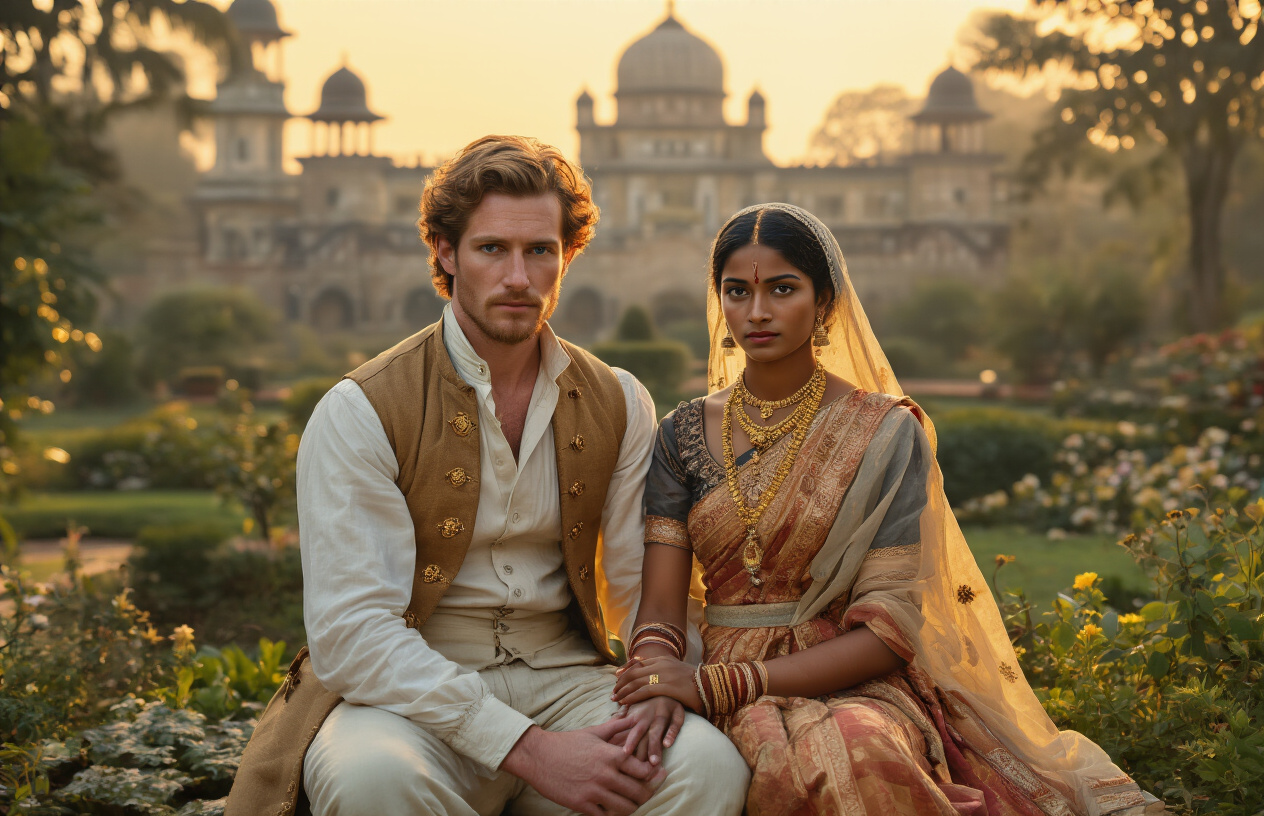
The home Kirkpatrick and Khair un-Nissa built together stood as a physical manifestation of their cross-cultural union. Nestled in the heart of Hyderabad, their residence—affectionately called “Rang Mahal” (Palace of Colors)—broke architectural norms of the time.
The exterior maintained British colonial sensibilities with symmetrical façades and Georgian proportions that would have made Kirkpatrick’s superiors comfortable during official visits. But step inside, and you’d find yourself transported to a Mughal wonderland.
Intricate jali screens filtered sunlight into geometric patterns across marble floors. Traditional Persian carpets adorned rooms featuring English furniture. The central courtyard—a distinctly Indian architectural element—featured a fountain surrounded by fragrant jasmine and roses, creating a private paradise where the couple could escape judgmental eyes.
Kirkpatrick commissioned local artisans to craft stunning ceiling murals that told stories from both Western and Eastern traditions. Their bedroom combined a British four-poster bed with delicate hand-painted Mughal-style floral motifs on the walls.
B. Cultural compromises and new traditions
Marriage between a British Resident and a Hyderabadi noblewoman wasn’t exactly in anyone’s rulebook. They had to write their own.
Kirkpatrick, once devoted to his English habits, embraced many aspects of Hyderabadi culture. He learned to speak fluent Urdu, adopted local dress within their home, and even participated in Muslim festivals alongside his wife.
Khair un-Nissa introduced him to the nuances of paan, the art of Urdu poetry, and the pleasure of traditional Hyderabadi cuisine. Their dinner table became a fusion experiment—English roasts served alongside biryani and kebabs.
Religious practices required the most delicate navigation. Kirkpatrick, though remaining Christian in official records, privately adopted many Islamic customs out of respect for his wife. Khair un-Nissa maintained her Muslim faith while accommodating aspects of European social etiquette necessary for her husband’s position.
They created unique family rituals combining elements from both worlds—celebrating Christmas with traditional Hyderabadi sweets and marking Eid with English tea ceremonies. Their home became a space where cultural boundaries dissolved.
C. The birth of their children and family life
The arrival of their children—a son, Sahib Allum, and a daughter, Sahib Begum—cemented their family’s unique identity. The children embodied the bridge between worlds their parents had built.
Both children received a remarkably progressive education for the time. They learned English, Persian, and Urdu. Their lessons included Western science alongside Islamic philosophy. Kirkpatrick insisted they understand both their British and Indian heritage.
Family life centered around the inner courtyard of their home, where Kirkpatrick would read stories from both European fairy tales and Persian legends. Khair un-Nissa taught the children traditional Hyderabadi etiquette while Kirkpatrick ensured they understood British customs they would eventually need in society.
The children’s clothing reflected their dual heritage—European styles made from Indian fabrics, adorned with traditional embroidery. Their names themselves captured this duality: British legal documents recorded them as William and Katherine, while in Hyderabad, they were known by their Indian names.
D. Kirkpatrick’s professional challenges after the marriage
Professionally, Kirkpatrick walked a tightrope after marrying Khair un-Nissa. His superiors at the East India Company viewed his “going native” with suspicion. Letters from London questioned his loyalty, wondering if his judgment had been compromised by his personal connections to Hyderabad’s nobility.
Some British officials refused to attend functions at the Residency if Khair un-Nissa would be present. Kirkpatrick fought these slights quietly but firmly, gradually earning respect by demonstrating his continued diplomatic effectiveness.
The political landscape complicated matters further. As tensions between the Nizam of Hyderabad and the British East India Company fluctuated, Kirkpatrick sometimes found himself caught between his duty to British interests and his genuine affection for his adopted homeland.
His detailed reports to the Company became increasingly nuanced, offering insights into Hyderabadi politics that no outsider could have acquired. This unique perspective made him invaluable diplomatically, even as some questioned his personal choices.
Despite these challenges, Kirkpatrick maintained his position through political skill and the support of those who recognized that his cross-cultural marriage actually enhanced his effectiveness as a bridge between two worlds.
Tragic Ending and Lasting Legacy
A. Kirkpatrick’s untimely death
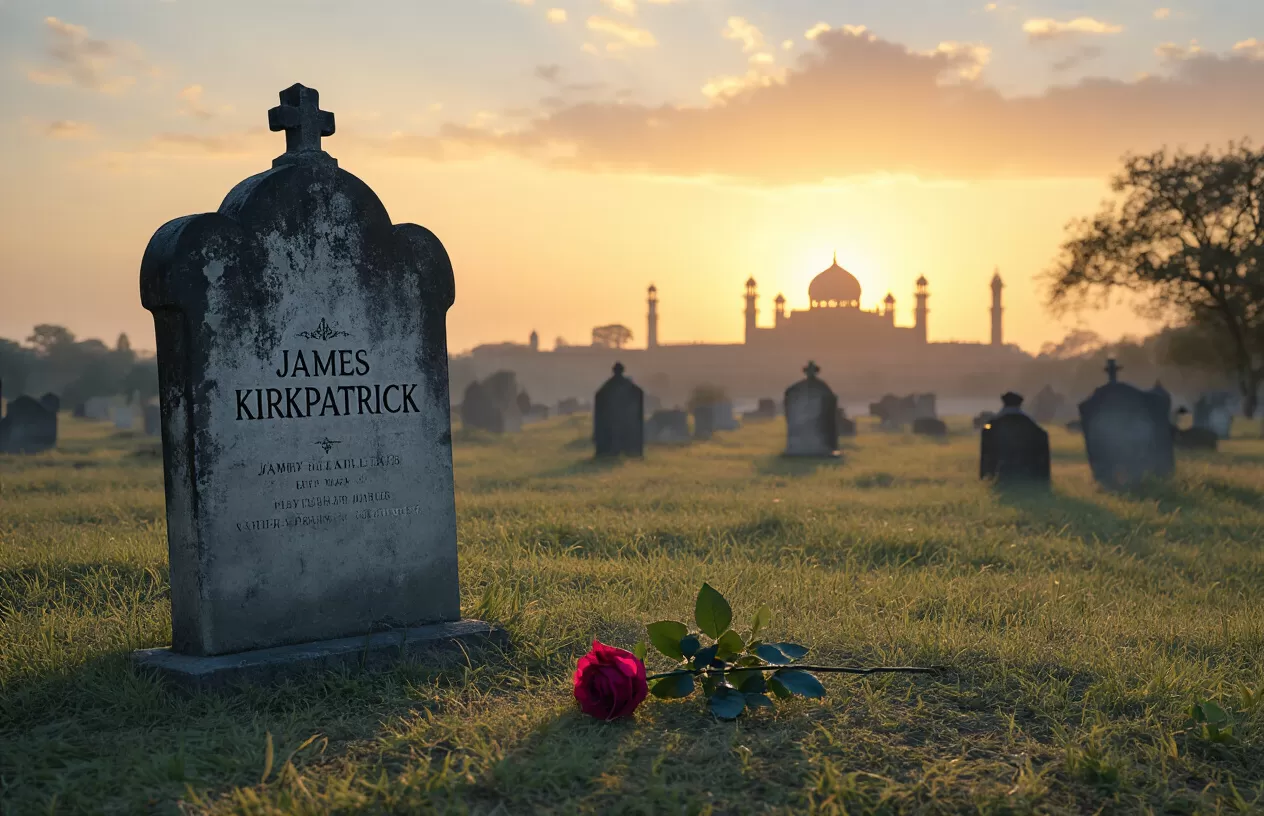
James Kirkpatrick’s life was cut tragically short in 1805 when he was just 41 years old. After battling a mysterious illness for months, he died in Calcutta while seeking medical treatment. His final days were spent far from his beloved wife and children, writing desperate letters home that spoke of his longing to return to them.
The timing couldn’t have been worse. Political winds were shifting within the East India Company, and Kirkpatrick’s sympathetic stance toward Indian culture had already raised eyebrows among his British superiors. His death left Khair un-Nissa vulnerable in a world where neither British nor Indian society fully accepted her.
B. Khair un-Nissa’s struggle as a widow
After James died, Khair un-Nissa’s world collapsed. Just 19 years old and widowed, she found herself in an impossible position. The protection Kirkpatrick had provided vanished overnight.
Her mother-in-law tried to seize control of the couple’s property and finances. The British authorities, once forced to acknowledge her status while Kirkpatrick lived, now conveniently “forgot” her position. Her own family, who had once disowned her for the relationship, offered little support.
She eventually remarried an officer named Captain Ure, but this relationship brought her more misery than comfort. Reports suggest she was mistreated, and her new husband squandered what little inheritance she had managed to retain.
C. Separation from her children
The cruelest blow came when Khair un-Nissa’s children—Sahib Allum (William) and Sahib Begum (Katherine)—were taken from her and sent to England. Their paternal grandfather, Colonel James Kirkpatrick, claimed them as his own, determined they should be raised as proper British children.
Imagine the heartbreak of watching your children sail away, knowing you might never see them again. That’s exactly what happened to Khair un-Nissa. Her children were raised by their aunt in England, taught to forget their Indian heritage, their mother’s language, and eventually, their mother herself.
Neither child would ever see their mother again. They grew up thoroughly Anglicized, with Katherine marrying into British nobility and William joining the East India Company himself.
D. How their story influenced British-Indian relations
The Kirkpatrick-Khair un-Nissa romance represents a road not taken in British-Indian relations. Their marriage occurred during a brief window when cultural exchange and integration seemed possible—before hardening imperial attitudes closed such doors.
Their story became a cautionary tale for other British men in India. After Kirkpatrick’s death, the East India Company tightened policies against intermarriage, explicitly discouraging its officers from “going native.” The British Raj would eventually enforce strict social separation between colonizers and Indians.
Yet their legacy also preserves a moment when two cultures came together through love rather than conquest—a powerful counter-narrative to the typical colonial story.
E. Literary and historical representations of their romance
Their extraordinary love story has inspired countless retellings. William Dalrymple’s bestselling “White Mughals” brought their tale to modern audiences, meticulously researching their relationship through letters and Company records.
The BBC adapted their story for radio, while Indian historians have increasingly recognized Khair un-Nissa as a figure caught between worlds during a pivotal historical moment.
Their romance has become a powerful symbol of cross-cultural possibility—and its tragic ending a reminder of the human cost of empire. In films, novels, and historical accounts, they represent both the promise of cultural understanding and the devastating consequences when power imbalances corrupt even the most sincere connections.
Today, their descendants live on both in India and Britain—a living legacy of a love that defied boundaries, even if it couldn’t ultimately overcome them.
For a tour from Hyderabad which replays this love story, please visit White Mughals Story.
The extraordinary tale of Kirkpatrick and Khair un-Nissa stands as a powerful testament to love’s ability to transcend cultural boundaries, religious differences, and societal expectations. Their romance, blooming against the backdrop of colonial India, challenged the rigid social structures of both British and Indian societies. Despite facing seemingly insurmountable obstacles, their devotion to each other created a unique bridge between two vastly different worlds, forever altering both their lives and leaving an indelible mark on history.
Their story reminds us that even in times of great division, genuine human connection can flourish. Though their tale ended in tragedy, the legacy of Kirkpatrick and Khair un-Nissa lives on as a profound symbol of courage, sacrifice, and the transformative power of love. Their relationship, once hidden and forbidden, now serves as a fascinating window into a complex historical period and stands as an enduring reminder that the heart often recognizes no boundaries.
For immersive culture walks in India, please visit 5 Senses Walks.
Leave a Reply