

Ever wonder how a 5,000-year-old civilization had plumbing better than some modern cities? While we’re struggling with WiFi dead spots, the Indus Valley people built perfect grid-pattern cities with sophisticated drainage systems that wouldn’t look out of place today.
Most history books barely scratch the surface of Indus Valley technology. But the archaeological evidence tells a different story – one of mathematical precision, engineering brilliance, and ancient innovations that challenge our understanding of human advancement.
The secrets of Indus Valley’s advanced technology reveal a civilization that was thousands of years ahead of its time. From their mysteriously standardized weights and measures to metallurgical techniques we’re still trying to understand.
What’s even more mind-blowing? The most revolutionary discoveries aren’t even in museum displays yet…
For a guided tour of a key Indus Valley port, visit Lothal.
Urban Planning Mastery: How Indus Valley Created Perfect Cities

Grid-Pattern Streets: Engineering Before Its Time
Picture this – 4,500 years ago, while most civilizations were figuring out basic shelter, Indus Valley engineers were designing cities that would make modern urban planners jealous.
Their streets weren’t just random paths. They meticulously arranged them in perfect north-south and east-west grids. Streets were precisely measured, with main avenues 30 feet wide and side streets 9 feet wide. This wasn’t accidental – it was deliberate engineering.
What’s mind-blowing is that they did this without modern surveying equipment. They somehow maintained perfect right angles across entire cities spanning hundreds of acres. Even ancient Rome, which came 2,000 years later, couldn’t match this precision.
Advanced Drainage Systems That Outpaced Later Civilizations
The drainage systems in Mohenjo-daro and Harappa weren’t just good – they were centuries ahead of their time.
Every single house connected to a covered sewer system running beneath those grid-pattern streets. Houses had private bathrooms with vertical chutes that carried waste to these underground channels. The main drainage channels were an impressive 2 feet deep and 3 feet wide, lined with waterproof brick.
Here’s the kicker – European cities didn’t achieve this level of sanitation until the 19th century. For comparison:
| Civilization | Time Period | Drainage System |
|---|---|---|
| Indus Valley | 2600-1900 BCE | Covered sewers, household connections |
| Ancient Rome | 800 BCE-500 CE | Partial covered systems |
| Medieval Europe | 500-1500 CE | Open gutters, no treatment |
| Victorian London | 1800s | Finally matched Indus standards |
Public Bath Architecture and Water Management
The Great Bath at Mohenjo-daro shows just how sophisticated their water engineering really was.
This massive structure measured 39 feet by 23 feet with a depth of 8 feet – requiring 21,600 gallons of water. They waterproofed it using a special bitumen layer sandwiched between brick layers. Water came from a massive well nearby and drained through a complex outlet system.
But it wasn’t just about the bath itself. They built an entire water management ecosystem around it:
- Step wells for easy water collection during different seasons
- Rainwater harvesting systems feeding underground reservoirs
- Precisely angled streets that directed rainfall to collection points
The water pressure management alone required advanced hydraulic knowledge. They created enough pressure to move water uphill in certain areas without any mechanical pumps!
What’s remarkable is that these systems worked flawlessly for 700+ years without modern maintenance equipment or materials.
Metallurgical Innovations That Shaped an Empire
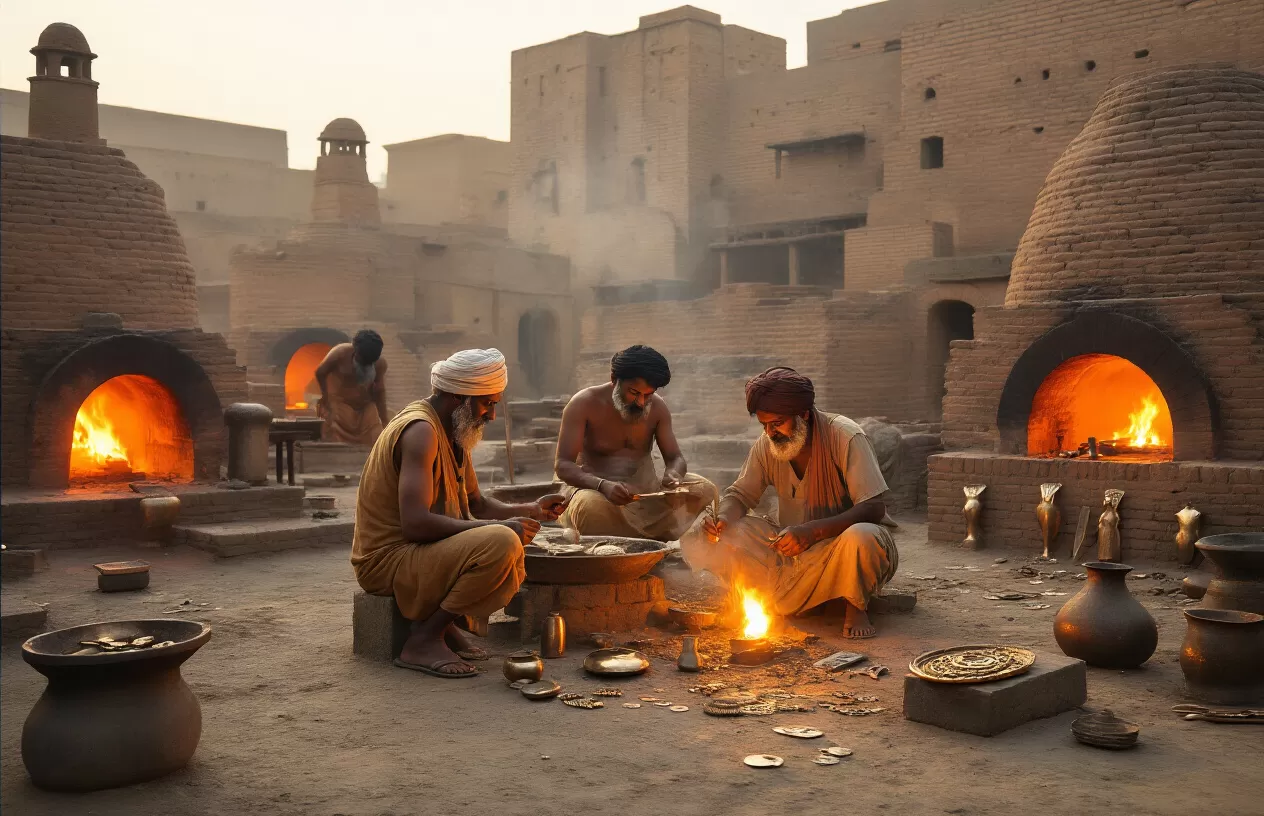
Bronze Working Techniques Unlike Any Contemporary Civilization
The metalworkers of the Indus Valley weren’t just skilled – they were centuries ahead of their time. They mastered bronze-making with a purity that stumps experts today. While Mesopotamians struggled with basic alloys, Harappans were creating bronze with precisely 11% tin content – the sweet spot for durability and workability.
Ever seen those perfectly cast Harappan figurines? The craftspeople used a lost-wax method so advanced it created seamless objects without visible joining marks. They weren’t working in rudimentary workshops either. Archaeological digs have uncovered specialized metal-working zones with temperature-controlled furnaces that could hit 1100°C – an engineering feat in 2500 BCE!
Gold Alloy Secrets for Jewelry That Doesn’t Tarnish
The gold necklaces and headpieces excavated from Mohenjo-daro still gleam after 4,000 years. How? The Indus people created gold alloys with copper and silver in proportions that prevent oxidation.
Modern jewelers are shocked by the minimal corrosion on these ancient pieces. Analysis shows the Harappans added trace amounts of cadmium – a technique not “rediscovered” until the 20th century. Their understanding of elemental properties went beyond trial and error.
Evidence of Iron Knowledge Before the Iron Age
Here’s where history books need updating. Small iron artifacts dating to 2900 BCE have been found in Indus sites – nearly a thousand years before the supposed start of the Iron Age!
These weren’t accidental discoveries. The iron pieces show deliberate smelting and working techniques. Some scholars believe the Indus people intentionally limited iron production, preferring their superior bronze technologies for most applications. Still, they understood iron’s properties centuries before their neighbors.
Metal Tool Precision That Mystifies Modern Engineers
The surgical precision of Indus metal tools defies explanation. Their perfectly balanced copper axes have cutting edges created through cold-hammering techniques that increase hardness by realigning the metal’s molecular structure.
When metallurgists tried reproducing their copper drills using ancient methods, they couldn’t match the hardness. The mystery deepened when microanalysis revealed the Harappans developed a method to reduce impurities in copper to less than 0.1% – a level of purity not achieved in Europe until the Renaissance.
Their measuring tools were even more mind-boggling. Bronze rulers from Lothal show incremental markings accurate to 1/16th of an inch – standardization that enabled architectural precision throughout their vast civilization.
Hydraulic Engineering: Controlling Water in Harsh Environments

A. Reservoir Systems That Predicted Seasonal Changes
The ancient Indus folks didn’t just hope for rain – they built massive reservoirs that worked with seasonal patterns. Uncovered at Dholavira, these systems weren’t simple holes in the ground. They connected sixteen reservoirs through a network of channels that could redirect water based on rainfall predictions.
Pretty smart, right? They used astronomical observations to track monsoon patterns. When signs pointed to heavy rains, they’d prepare the eastern reservoirs. During droughts, western reservoirs took priority.
The real kicker? These systems used natural filtration through layers of sand, gravel, and charcoal – a technique we “rediscovered” in the 19th century!
B. Dockyard Construction Techniques for Maritime Trade
The docks at Lothal blow modern engineers’ minds. Built around 2400 BCE, they include a massive basin 37 meters long with a sophisticated lock-gate system.
How did they make these structures watertight? They mixed calcium oxide with burned shells and plant sugars to create a waterproof mortar that’s still holding strong today. We’ve tested samples – this stuff bonds better than some modern concrete!
Their loading platforms featured subtle sloping designs that used tidal forces to help load and unload ships. And check this out – they built breakwaters at precise angles to prevent silt buildup, a problem that still plagues modern ports.
For a guided tour of a key Indus Valley port, visit Lothal.
C. Flood Control Mechanisms That Protected Entire Cities
Mohenjo-daro and Harappa didn’t just survive floods – they thrived because of how they managed them.
The cities sat on massive artificial platforms raised 20 feet above the flood plain. But the genius part? They built diversion channels around city perimeters with switchable gates. During normal times, these channels irrigated fields. During floods, they redirected water away from populated areas.
They even created early warning systems! Discovered marker posts along riverbanks show calibrated height measurements that would have given citizens days to prepare for rising waters.
The platforms themselves contained built-in drainage systems that prevented water from pooling during heavy rains – a feature missing from many modern cities that still struggle with urban flooding.
Measurement Systems and Mathematical Precision
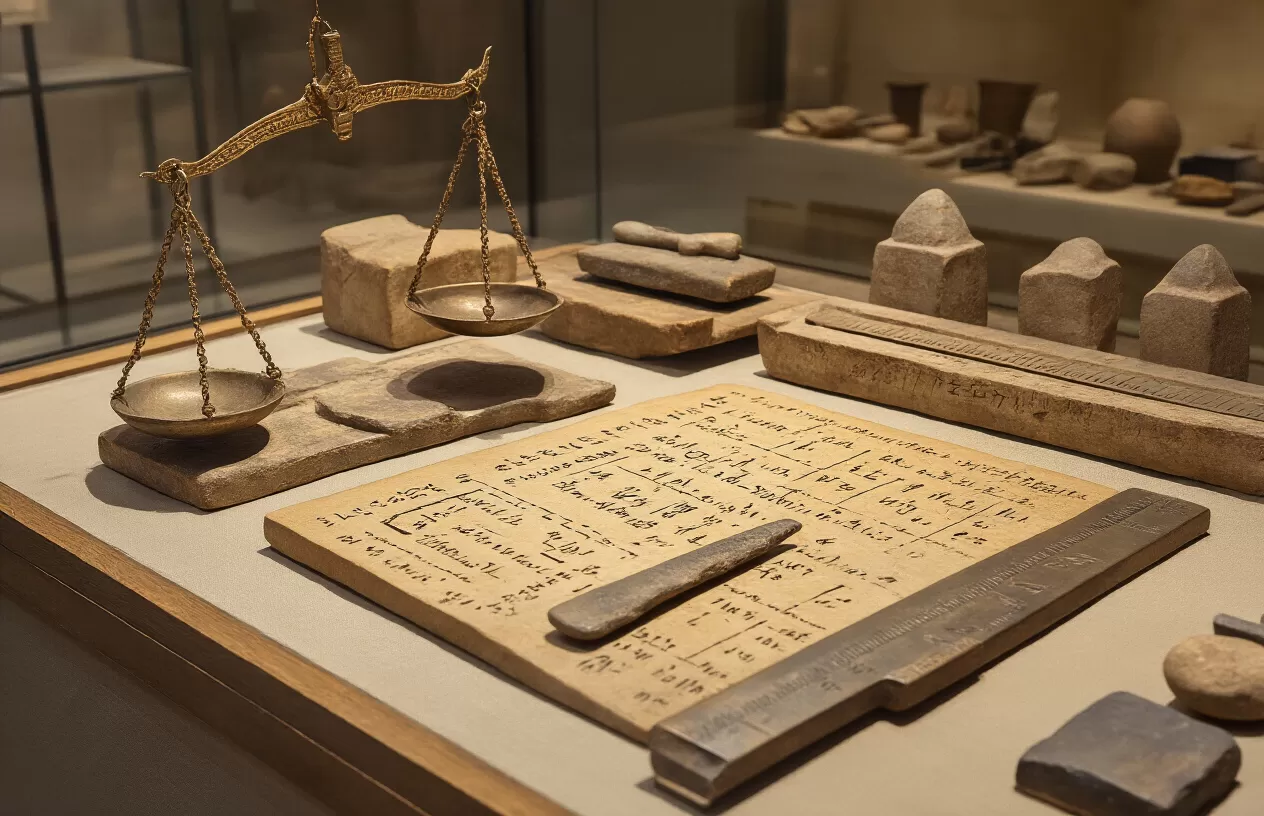
A. Standardized Weights and Measures Across Vast Territories
The Indus people weren’t playing around when it came to measurement systems. Archaeological digs have uncovered thousands of perfectly standardized weights in a binary system – think 1, 2, 4, 8, 16, and so on. These weren’t just similar – they were practically identical across sites separated by hundreds of miles.
Picture this: a trader in Mohenjo-daro could weigh their goods, travel 400 miles to Harappa, and find the exact same weight standards being used. That’s like having a universal measuring system thousands of years before the metric system was even dreamed up!
These weights, typically made from chert or limestone, show wear patterns that tell us they were constantly in use. The smallest measured just 0.856 grams, while the largest hit around 10.9 kilograms. Talk about precision!
B. Astronomical Calculations Embedded in Architecture
Look up at the night sky, then down at an Indus Valley building layout. See any connections? Archaeologists certainly do.
Many structures align perfectly with cardinal directions and astronomical events. The Great Bath at Mohenjo-daro sits on a perfect north-south axis. Coincidence? Not likely.
Several buildings feature openings positioned to capture sunlight during solstices and equinoxes. These weren’t random design choices but calculated astronomical markers.
C. The Decimal System Before Modern Mathematics
While Europeans struggled with Roman numerals, the Indus folks were already working with a decimal system nearly 4,000 years ago.
Analysis of their measurement systems reveals they used base-10 calculations, dividing units into tenths for more precise measurements. This mathematical thinking predates many other advanced numerical systems.
Their measuring sticks (found at multiple sites) show clear decimal markings, with divisions of 1/10th and even 1/100th of their standard units.
D. Evidence of Geometric Understanding in City Planning
The grid layout of Indus cities wasn’t just aesthetically pleasing – it demonstrated advanced geometric principles.
Streets intersect at perfect right angles, creating city blocks of standardized sizes. In Mohenjo-daro, the main streets run precisely 9 degrees east of true north – a deliberate choice, not a random alignment.
Building dimensions often follow specific ratios that suggest knowledge of geometric principles we’d recognize today. The precise 1:2:4 relationship between certain structures points to mathematical planning rather than haphazard development.
The drainage systems? They incorporated precise slopes of 1:40 to ensure proper water flow – engineering that would impress modern civil engineers.
Agricultural Technologies That Prevented Famine
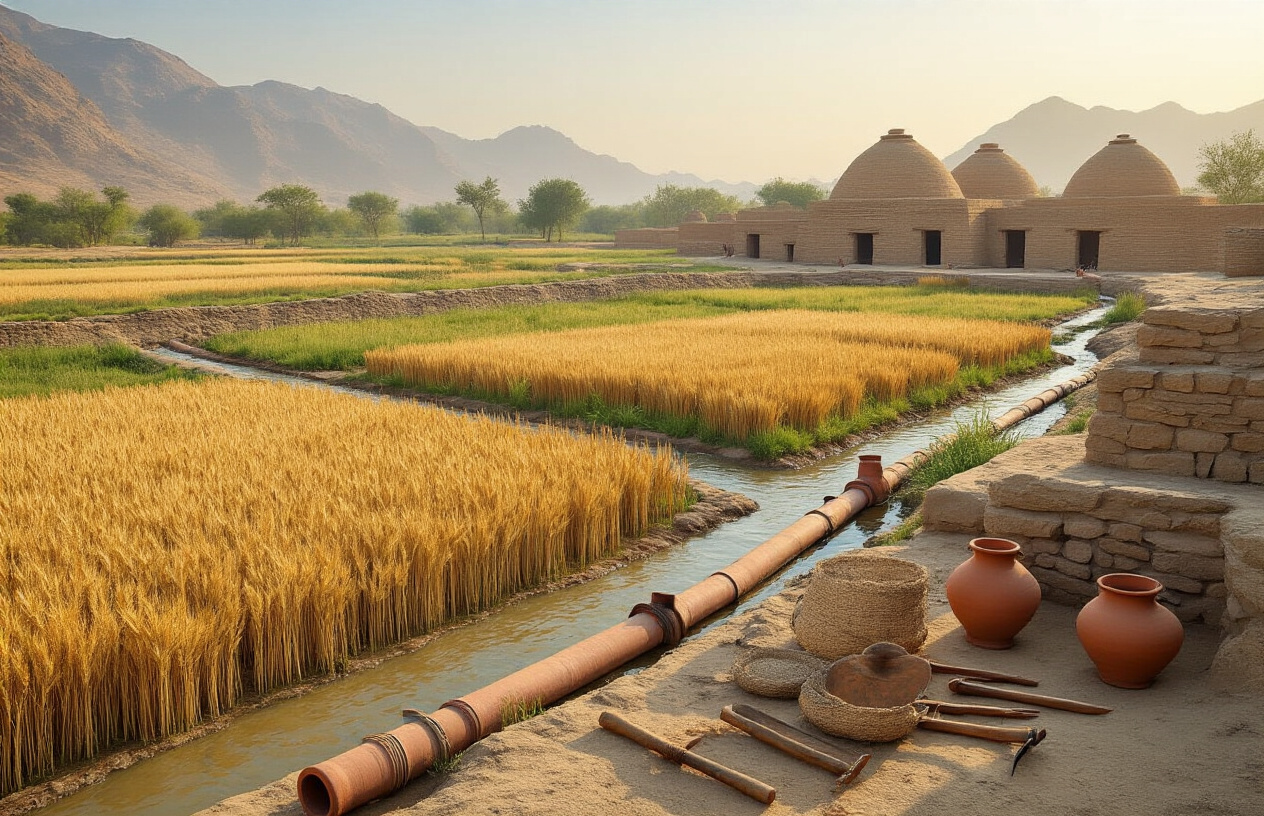
Crop Rotation Methods Discovered Millennia Before Modern Practice
Think the three-field system was a Medieval European invention? Think again. The Indus Valley folks were rotating crops a good 4,500 years earlier.
Archaeological evidence from Harappa shows they alternated legumes with cereal crops in the same fields. Pretty smart move. The legumes fixed nitrogen in the soil, while the cereals used it up. This natural balancing act kept their farmland productive for centuries without chemical fertilizers.
They didn’t just randomly switch crops either. Excavated farming tools suggest they had seasonal planting schedules based on the monsoon cycles. Clay tablets found at Mohenjo-daro even indicate they tracked crop performance across multiple seasons.
Irrigation Techniques That Transformed Desert Regions
The Indus engineers were water management wizards, full stop.
They built reservoirs that captured monsoon rainfall and channeled it through brick-lined canals to fields miles away. At Dholavira, archaeologists uncovered a network of dams, channels, and underground drains that could move water around the entire city and surrounding farmland.
What’s mind-blowing is how they controlled water flow. They used precisely calculated gradients in their channels – roughly a 1:10,000 slope in some areas. This gentle decline prevented erosion while ensuring water reached its destination.
Seed Storage Systems That Preserved Genetic Diversity
The granaries of Harappa weren’t just big barns. They were sophisticated seed banks.
These structures featured raised floors with air channels beneath them to control humidity and temperature. Some had special ventilation shafts that created natural air circulation to prevent mold and pests.
Clay pots found inside these granaries contained diverse seed varieties, suggesting they understood the importance of genetic diversity long before modern science. They separated different grain types, keeping wheat, barley, and millet in specific sections.
Most impressive were their seed treatment techniques. Seeds were coated with specific plant oils and minerals that acted as natural pesticides, preserving them for years. Some excavated seed caches were still viable when tested!
Ceramic and Pottery Innovations
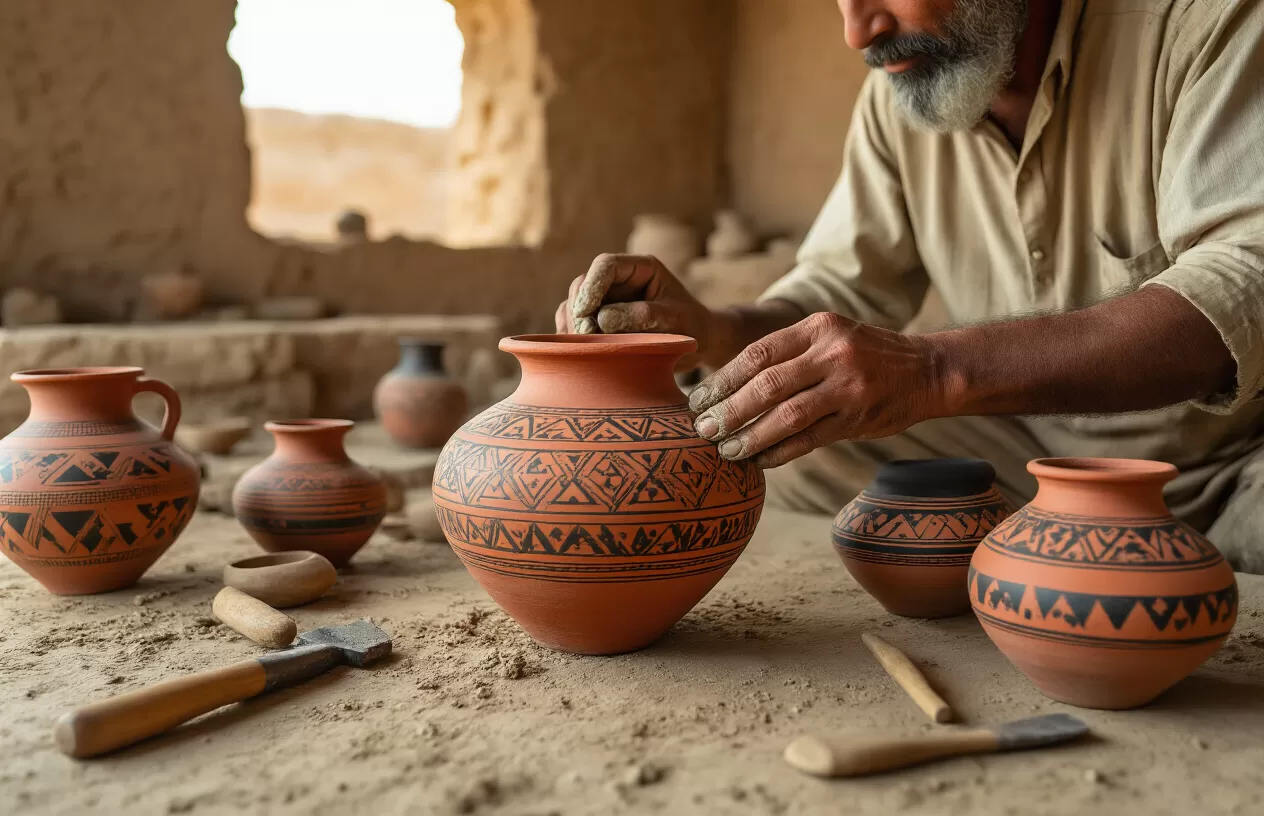
A. Waterproof Glazing Techniques Lost to History
The Indus Valley potters mastered waterproofing methods we still can’t fully replicate today. They created vessels so impermeable that archaeologists have found 4,500-year-old containers that could still hold water when discovered! The secret lies in their unique mineral glazes – a mixture of silica, alkaline compounds, and mystery ingredients that produced glass-like surfaces without modern kilns.
What’s mind-blowing is how they achieved this without digital thermometers or modern chemistry. Recent analysis shows traces of copper, manganese, and specific local clays combined in proportions that modern ceramicists have tried and failed to reproduce perfectly.
B. Mass Production Methods for Standardized Vessels
Ever seen those perfectly identical ancient cups? The Indus people were manufacturing standardized pottery on a scale that wouldn’t be matched until the Industrial Revolution.
They didn’t just make similar pots – they made identical ones. Thousands of vessels with exactly the same dimensions, wall thickness, and volume have been unearthed across sites hundreds of miles apart. How did they do this without modern measuring tools?
Evidence points to the use of rotating molds and templates. They invented a proto-assembly line where specialized craftspeople handled different production stages. Some workers prepared clay, others shaped vessels, and dedicated specialists applied decorations.
C. Symbolic Writing Systems on Pottery That Remain Undeciphered
The mysterious symbols decorating Indus pottery might be more than just pretty designs. Many archaeologists now believe they’re looking at an early writing system – one we still can’t crack.
Over 400 distinct symbols appear on pottery throughout the civilization, often in specific sequences that suggest meaning beyond decoration. The symbols show up too consistently across vast distances to be random.
Some pottery bears marks that look suspiciously like inventory tags – possibly indicating contents, quantities, or ownership. Others show complex narrative scenes that might tell stories or convey religious concepts.
The real kicker? Some symbol sequences appear repeatedly across generations of pottery, suggesting a stable writing tradition that lasted centuries.
D. Kiln Designs That Achieved Perfect Temperature Control
The pottery kilns of the Indus Valley weren’t just holes in the ground with fire. They were sophisticated temperature-control systems that could maintain precise heat zones between 800-1000°C.
Their two-chamber design separated the firing chamber from the fuel source, preventing ash contamination while allowing precise heat regulation. Excavated kilns show complex ventilation systems with adjustable airways that controlled oxygen flow – a technique European potters wouldn’t master for another 3,000 years.
Most impressive were their “stepped” kilns that created different temperature zones within a single firing. This allowed potters to produce various types of ceramics simultaneously, from low-fired earthenware to high-fired stoneware.
Trade Network Technologies and Systems
A. Standardized Currency and Exchange Methods
Ever wondered how ancient civilizations shopped without dollar bills? The Indus Valley people were light-years ahead with their ingenious currency system.
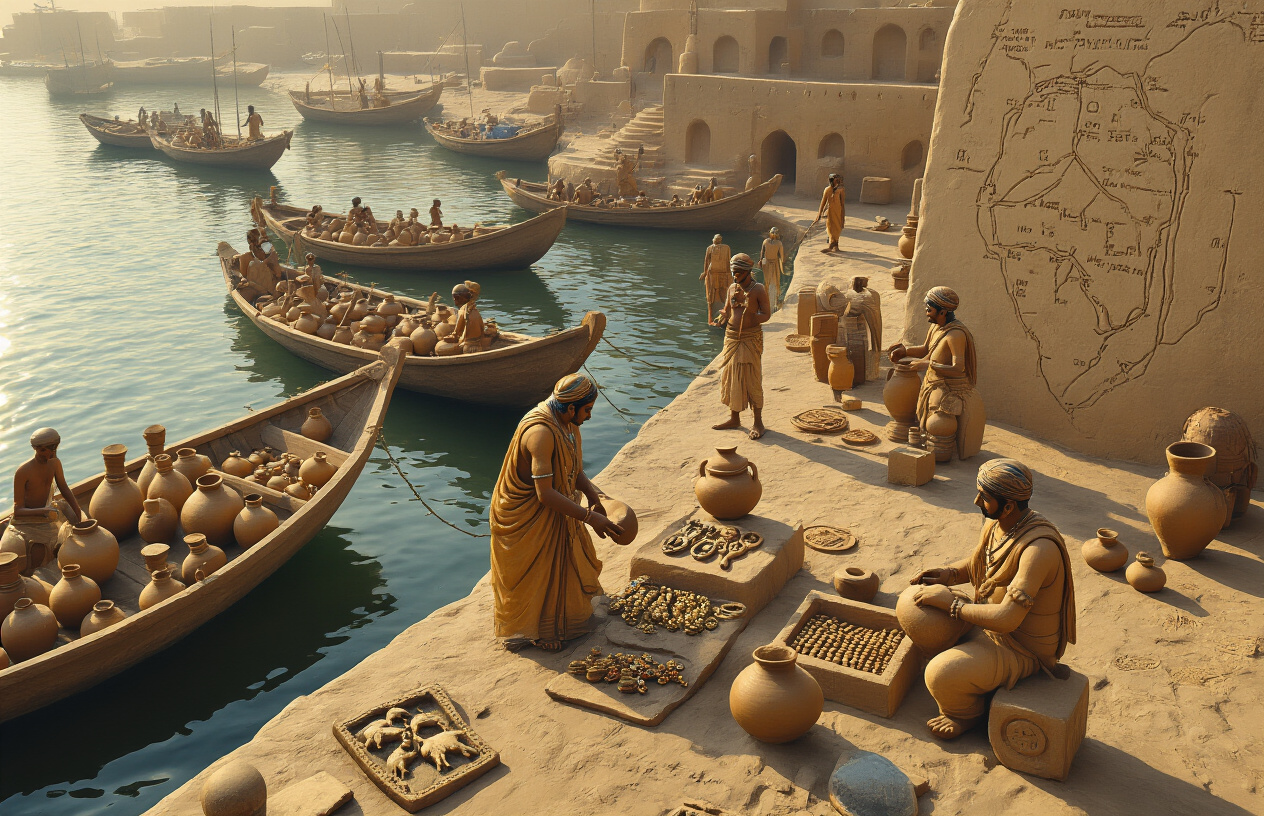
They used standardized weights and measures carved from chert – small cubes that followed a remarkably precise 1:2:4:8:16 ratio. These weren’t random rocks; they were meticulously crafted trading tools found across thousands of miles, proving they had established a unified economic system.
But here’s the kicker – they also used seals as a form of monetary control. These tiny steatite squares, engraved with animals and mysterious script, functioned similar to today’s credit cards. Merchants would press them into clay to mark ownership and authenticate transactions.
What’s truly mind-blowing? This standardization existed across over 1,000 settlements. Imagine maintaining the same economic system across an area larger than ancient Egypt without phones or computers!
B. Shipping Vessel Designs That Revolutionized Maritime Trade
The Indus people weren’t just building boats – they were engineering maritime marvels that would make modern naval architects nod in respect.
Their vessels featured a unique keel-less design with flat bottoms perfect for navigating shallow river waters but sturdy enough for sea voyages. Archaeological evidence shows they used a special waterproofing technique mixing plant resins with bitumen that kept their ships watertight for months.
Dock remains at Lothal reveal something incredible – they constructed what might be the world’s oldest tidal dock, complete with a sophisticated lock system. This engineering feat allowed ships to load and unload regardless of tide conditions, dramatically increasing trading efficiency.
The clincher? These ships could carry up to 60 tons of cargo – massive capacity for 4,500 years ago!
C. Preservation Techniques for Long-Distance Food Transport
The Indus Valley civilizations would have put your refrigerator to shame with their food preservation methods.
They pioneered salt-drying techniques for fish and meat that remained edible for months. Excavations have uncovered specialized ceramic containers with microscopic traces of spices like turmeric and neem – natural preservatives and antibacterials still used today.
For grain transport, they designed brilliant double-walled storage containers with ventilation channels that regulated humidity and deterred pests. Some containers even had sealed compartments with traces of aromatic herbs – natural insect repellents.
Most fascinating? They developed a fruit preservation method using honey and specific clay vessels that created a modified atmosphere inside – basically ancient vacuum sealing. This allowed delicate fruits to travel from coastal regions to inland cities, a journey of weeks.
These weren’t just random techniques. They were systematically implemented across their entire trade network, creating what was essentially the world’s first standardized food safety system.
Medical and Hygienic Breakthroughs
Surgical Tool Evidence That Suggests Advanced Procedures
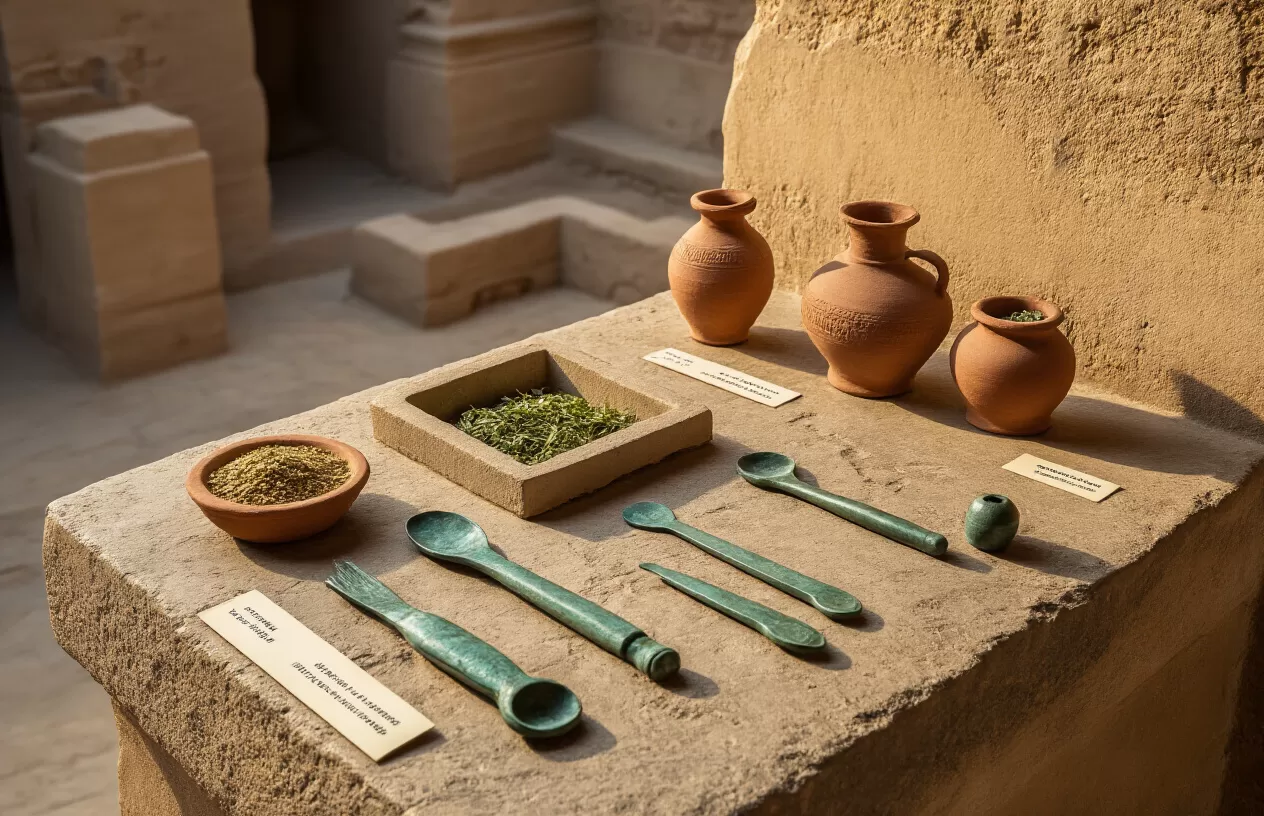
The Indus Valley folks weren’t just building fancy cities—they were performing surgeries that would make modern doctors raise their eyebrows. Archaeological digs at Harappa and Mohenjo-daro uncovered bronze and copper instruments remarkably similar to modern surgical tools.
Think about this: these people were drilling teeth and possibly even trepanning skulls over 4,000 years ago! Several skulls found in the region show precise circular holes with evidence of healing, suggesting patients survived these brain surgeries.
The precision of these tools is mind-blowing. They had needles fine enough for suturing wounds and small blades that could make delicate incisions. And they didn’t stop there—researchers found evidence of bone-setting techniques and possibly even plastic surgery methods.
Dental Practices That Predate Modern Dentistry
Ever had a root canal? Well, so did some Indus Valley residents.
Analysis of teeth from burial sites reveals something shocking—they were drilling teeth to treat dental problems as far back as 7000 BCE. Microscopic studies show remarkably clean, precise holes in molars that could only have been made deliberately with specialized micro-drills.
These weren’t just crude attempts either. Many teeth show evidence of careful work around the pulp cavity and even signs of filling material made from plant fibers and bitumen. Some skulls show teeth with perfect drill holes but no decay, suggesting they might have been drilling for decorative purposes too.
Public Sanitation Systems That Prevented Disease
The Indus people were clean freaks, plain and simple. Their cities had public bath facilities, toilets, and sewage systems when most other civilizations were still tossing waste out windows.
Every house—yes, even modest homes—had a bathroom connected to a sophisticated drainage network. These weren’t just holes in the ground; they were carefully designed spaces with sloped floors, water-tight brickwork, and proper ventilation.
The Great Bath at Mohenjo-daro wasn’t just for relaxation. Evidence suggests it likely served ritual purification purposes, with a complex filtration system that kept the water clean. The cities had covered drains running alongside streets, carrying wastewater away from living areas.
This obsession with cleanliness and sanitation likely prevented countless epidemics and contributed to their society’s stability for over 700 years.
Medicinal Plant Processing Revealed in Archaeological Findings
The medicine cabinets of Indus Valley homes would put some modern pharmacies to shame. Grinding stones and specialized pottery unearthed at various sites contain residues of medicinal plants still used today.
Archaeobotanical studies identified traces of turmeric, ginger, and neem—all powerful medicinal plants with antibacterial and anti-inflammatory properties. They weren’t just throwing herbs together either. The processing equipment shows a sophisticated understanding of extraction methods.
Clay pots with specialized filtering mechanisms suggest they were creating concentrated plant extracts. Some vessels show evidence of controlled heating—likely for creating medicinal oils and tinctures.
What’s really fascinating is their apparent knowledge of dosage. Small, precisely-marked containers indicate they understood the importance of measurement in medicine, potentially preventing overdoses thousands of years before modern pharmacy.
Textile Production and Dyeing Methods
Cotton Processing Techniques Unknown to Other Ancient Cultures
While other civilizations were just discovering the basics of textile making, the Indus Valley people were absolute masters of cotton. They didn’t just grow it—they transformed it using techniques that wouldn’t be seen elsewhere for thousands of years.
Their cotton processing was mind-blowing. Archaeological findings reveal they used specialized tools for removing seeds that worked similar to modern cotton gins—but 4,000 years earlier! The precision of their spindle whorls allowed them to create threads so fine you’d think they were machine-made.
What’s crazy? They developed a multi-stage washing process using specific plant-based soaps that actually strengthened the cotton fibers instead of weakening them. This wasn’t just cleaning—it was engineering at the fiber level.
Fabric Preservation Methods That Lasted Millennia
Ever wonder how fabrics discovered at Mohenjo-daro sites survived thousands of years? The secret wasn’t luck—it was science.
The Indus people created preservation methods using a mixture of mineral salts and natural resins that essentially “locked” the fabric structure in place. They weren’t just making clothes; they were making clothes that would outlast empires.
They also developed a technique where they would treat fabrics with copper-infused solutions—creating an antibacterial barrier that prevented decomposition. Modern tests on preserved samples show traces of these treatments still present and effective.
Dye Formulas That Have Never Faded
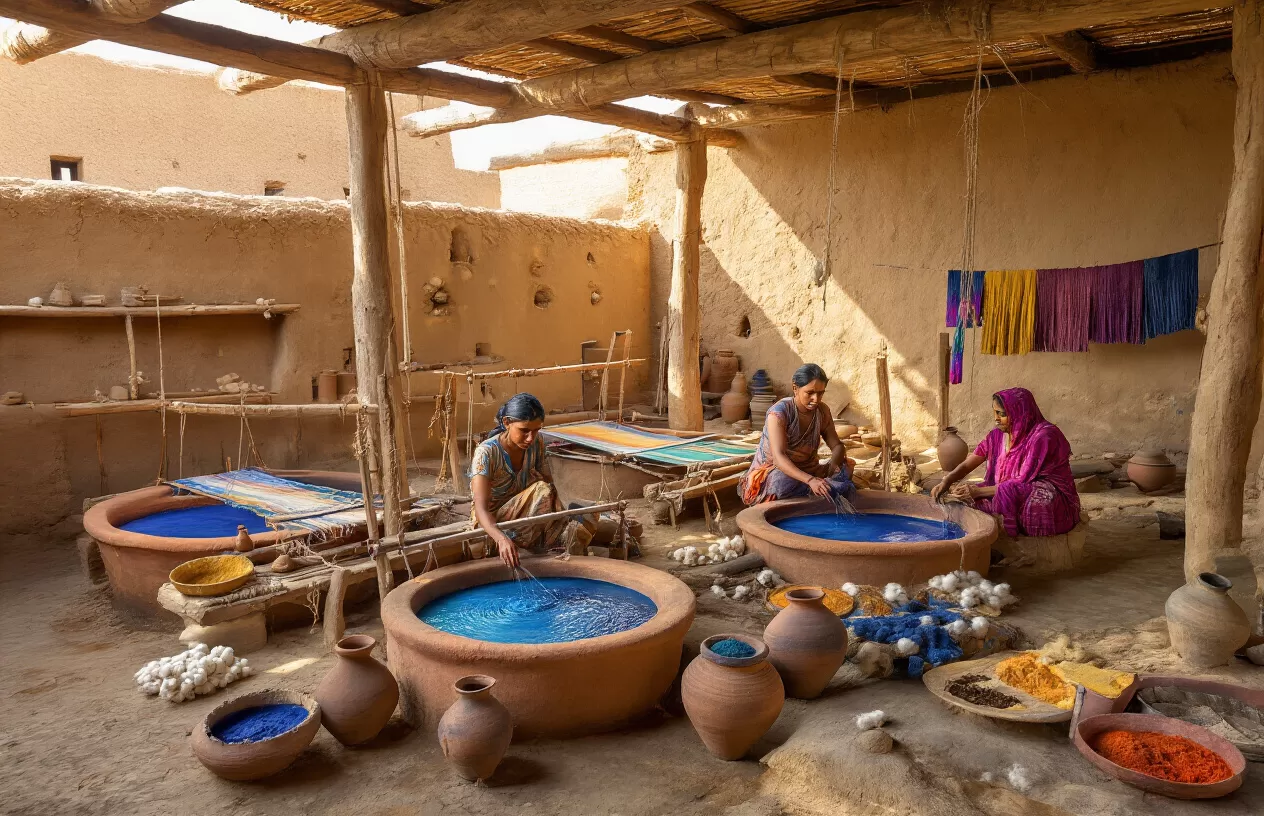
The vibrant colors found on Indus textiles make modern dyes look amateur. Their indigo blues remain as rich today as they were 4,000 years ago. How?
Their dye masters created color-fixing mordants from mineral combinations that chemically bonded dyes to fibers at the molecular level. The madder root reds they produced required a 14-step process that modern chemists have struggled to replicate.
What’s truly incredible is their understanding of dye layering. They would apply up to seven different plant extracts in precise sequences to create colors that didn’t just sit on the fabric—they became part of it. Some of their blue-purple hues used materials so rare they must have been traded across thousands of miles.
Astronomical Observations and Calendrical Systems

A. Solar and Lunar Tracking Devices Found in Ruins
The Indus Valley folks weren’t just building cities – they were stargazing with serious purpose. Recent excavations at Dholavira and Kalibangan have uncovered circular stone structures with precisely aligned notches that tracked the movement of the sun throughout the year. Think of them as prehistoric observatories.
What’s truly mind-blowing? These people created devices with shadow-casting gnomon stones that marked solstices and equinoxes with accuracy that would make modern astronomers nod in respect. They weren’t just watching the sky – they were measuring it.
At Mohenjo-daro, archaeologists discovered small clay discs with peculiar markings that many now believe were lunar phase trackers. The 28-30 markings around their edges? Not random decoration – they’re mathematical representations of the lunar cycle.
B. Seasonal Prediction Methods That Guided Agricultural Timing
The agricultural success of the Indus Valley didn’t happen by chance. Clay tablets from Harappa show calendar notations that perfectly aligned sowing seasons with river flooding cycles.
These weren’t simple farmers hoping for the best. They were scientific planners who created detailed almanacs. Their prediction methods were so accurate that planting could be timed to the day.
One fascinating artifact from Lothal features a grid pattern with markings that correspond exactly to the monsoon arrival dates. This wasn’t guesswork – it was meteorological science developed 4,500 years ago!
C. Evidence of Star Mapping in Architectural Alignments
Walk into what remains of Mohenjo-daro’s citadel, and you’re literally stepping into an ancient star map. The main streets align perfectly with cardinal directions, but it goes deeper than that.
The Great Bath? Its corners point to significant stellar positions during key seasonal moments. This wasn’t accidental. The placement of major buildings throughout Harappan cities shows deliberate alignment with celestial bodies like Aldebaran and the Pleiades.
Pottery fragments from Rakhigarhi show recurring star patterns that match exactly what the night sky looked like 4,500 years ago. These weren’t just decorative – they were educational tools teaching people about the cosmos.
D. Time-Keeping Devices That Divided Days with Precision
The Indus people didn’t just track years and seasons – they mastered daily time. Water clocks found at Lothal divided the day into smaller units with remarkable precision. These weren’t crude instruments but calibrated devices that accounted for seasonal changes in daylight hours.
Even more impressive were the shadow clocks excavated at Dholavira. These used precisely angled stones to track the sun’s movement across the sky, effectively creating the world’s first standardized hourly system.
A pottery fragment from Kalibangan shows what appears to be time divisions marked in sets of twelve – suggesting they may have originated the 24-hour day concept we still use today.
E. Ritual Spaces Designed Around Celestial Events
The Indus people didn’t separate science from spirituality – they merged them brilliantly. At Banawali, archaeologists discovered a ritual platform where the rising sun on summer solstice aligns perfectly with a narrow opening, bathing a central altar in light for just a few moments.
Similar patterns appear at Dholavira, where processional pathways align with the rising of specific stars associated with harvest times. These weren’t just pretty architectural features – they were functioning ritual calendars.
Most revealing is the “Unicorn Seal” from Mohenjo-daro, which many scholars now believe depicts a star chart used for both timekeeping and ritual purposes. The Indus people didn’t just observe the sky – they built their entire religious world around celestial precision that we’re only now beginning to fully appreciate.
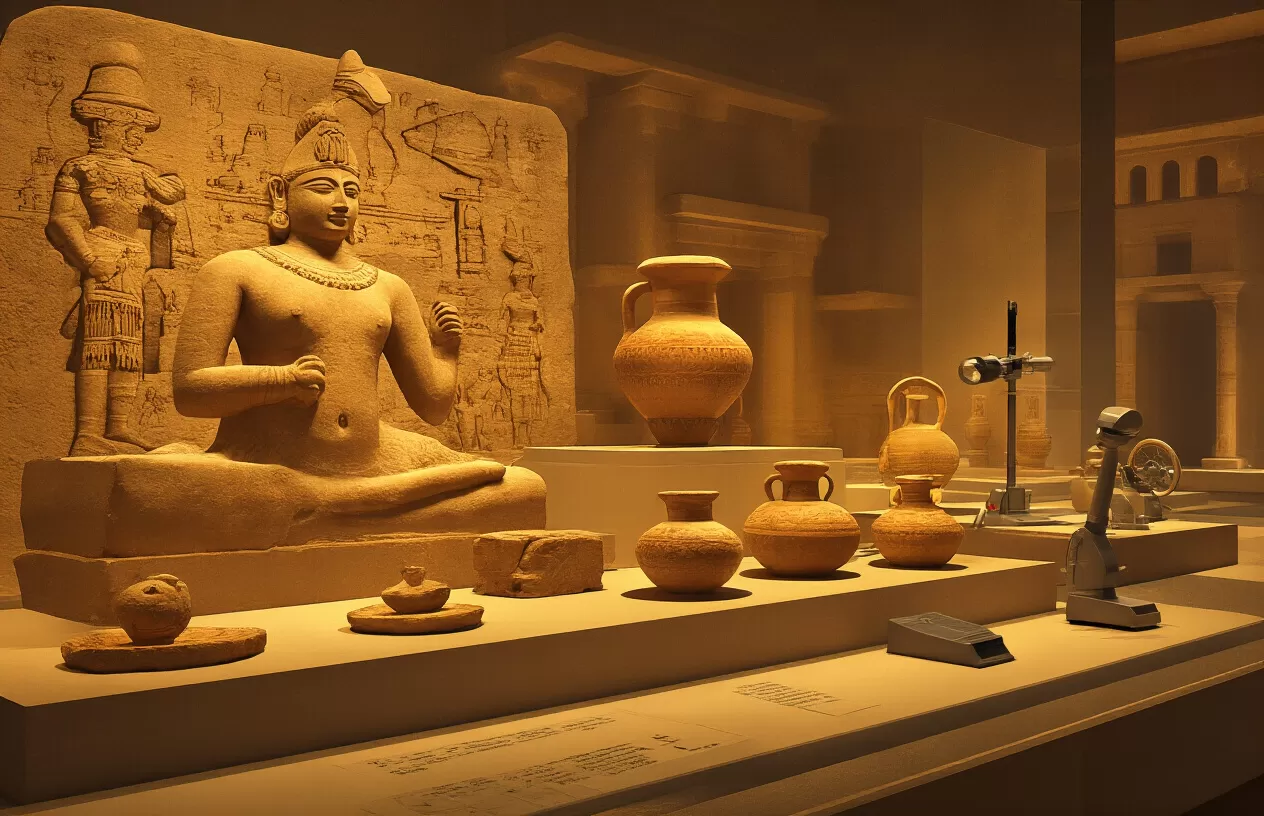
The technological brilliance of the Indus Valley Civilization continues to astound archaeologists and historians alike. From their meticulously planned urban centers with advanced drainage systems to sophisticated metallurgy and precise measurement standards, these ancient people demonstrated remarkable innovation. Their mastery of hydraulic engineering, agricultural techniques, and medical practices reveals a society that prioritized sustainability, public health, and efficiency thousands of years before our modern era.
As we uncover more secrets of this enigmatic civilization, we gain valuable insights into sustainable urban planning, resource management, and technological innovation that remain relevant today. The Indus Valley’s achievements remind us that human ingenuity has deep historical roots, and that studying these ancient technological systems can inspire modern solutions to contemporary challenges. Perhaps the greatest revelation is not just what they built, but how their holistic approach to technology served their society’s needs while maintaining balance with the natural world.
For a guided tour of a key Indus Valley port, visit Lothal.
For immersive culture walks in India, visit 5 Senses Walks.
Leave a Reply