
There are places where time stands still, and places where every stone pulses with legend. In Chettinad, deep in the heart of Tamil Nadu, both happen at once—a kingdom sculpted by ambition, wandered by fortune-seekers, and made magnificent by the Chettiars, whose history outshone even that of ancient kings.
Stepping into Living Heritage
The brisk dawn found me winding through dusty boulevards lined with sprawling mango trees. As the sleepy town of Karaikudi stirred, its stately mansions seemed to gaze back—watchful, silent, yet brimming with stories. My guide, Ramu, narrated the tale: “Every brick here, every arch and pillar, sings of the Chettiar merchants—once among the most powerful and wealthy in all of Asia, their legacy still echoing through these grand halls.”
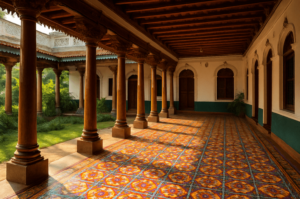
With nervous excitement, I arrived at one of Chettinad’s legendary homes. The teak door opened onto a vast central courtyard, flooded with morning light and peopled by silent ancestors in fading oil portraits. My fingers traced Burma teak pillars that journeyed farther than most sailors dared. This was not just a house—it was a statement, built by merchant princes whose reach once spanned continents.
The Children of the Ocean
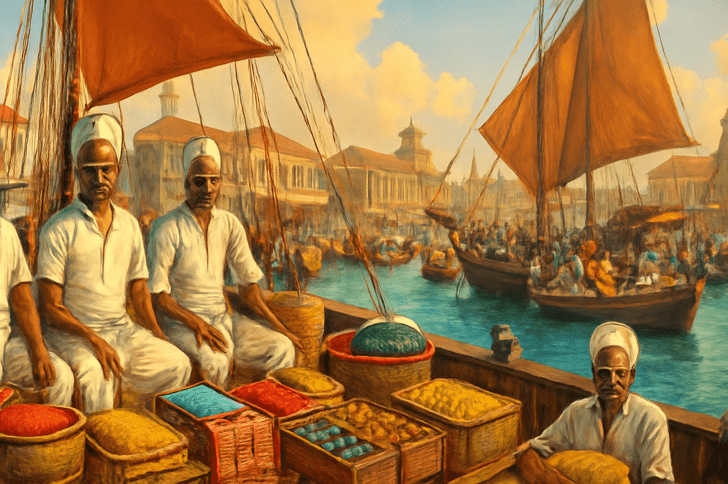
To understand these palatial homes, travel back to when the Chettiars were seafaring traders, their fleets venturing from Coromandel’s harbors to the teeming ports of Ceylon, Burma, Vietnam, and Malaya. In a world ruled by caste, they became the financiers and bankers across British Asia, the “Nattukottai” Chettiars—lords not of fields, but of fortune, their networks binding half the Indian Ocean world.
How did this happen? Oral tradition traces their journey to a tsunami that drowned their original coastal towns centuries ago. Forced inland, the Chettiars rebuilt, investing their prodigious skill in trade, gems, and—above all—in moneylending. When the British Empire swept across Asia, its officials often found themselves relying on these disciplined Tamil merchants, who deftly bridged cultures, languages, and currencies from Rangoon to Malacca, Penang to Mauritius.
Within a few generations, Chettiar families commanded immense wealth, shaping trade routes, financing plantations, even funding governments. In Singapore, Malaya, and Burma, their presence underwrote new economies. Stories abound: a Chettiar draft could launch a new rice crop, or—just as easily—restore a bankrupt colonial officer to solvency.
The Power Behind Every Wall
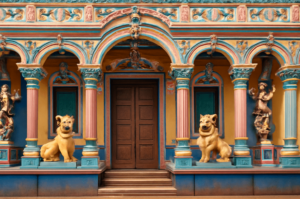
It was this tidal wave of prosperity that built Chettinad’s famous mansions. Strolling through another home—a labyrinth of sunlit courtyards, translucent Belgian glass, and Italian marble floors—I marveled at the Chettiar appetite for global craftsmanship. No two homes are alike; each is a museum, every hallway a gallery of ambition. One roof is adorned with stained-glass peacocks, another with mythic dragons, each design a memory of distant ports and old bargains.
Their social order was just as intricate as their architecture. Nine great temple-clans governed marriage, business alliances, and rituals—each home a node in vast networks of kin and commerce.
It was here, in echoing halls, that decisions of faraway consequence were taken—where fortunes were wagered on fragile monsoons and distant markets, where the fates of local laborers and foreign oligarchs were, for a moment, the same. Children grew up listening to tales of golden pagodas and rubber forests, learning to calculate interest in multiple currencies before they could ride a bicycle.
My host, Mrs. Valliappa, poured fragrant coffee into silver tumblers as she recalled her own grandfather: “He sailed to Rangoon with nothing but a ledger and came home with a shipload of teak and a suitcase of pearls. But what he cherished most was the trust of his word—his honor traveled farther than the ships.” It was easy to believe in such stories here, surrounded by dazzling family crests and the musical tinkle of Athangudi tiles underfoot.
Drama, Decline, and Enduring Spirit
Of course, power breeds both allies and envy. Chettiar fortunes rose with the colonial tide, but the Second World War changed everything—foreign assets seized or lost, new nations stiffened against “foreign moneylenders.” As independent India’s banks rose, Chettiar businesses found themselves outpaced by changing times. Many mansions fell silent, their grandeur fading but never vanishing.
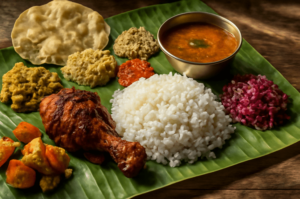
Yet, like all powerful stories, the spirit endures. Today, many great houses live anew—as elegant boutique hotels, living history museums, and welcoming homestays. Travelers like me find themselves swept into weddings in shaded courtyards, feasting on fiery Chettinad cuisine at tables bright with silver, and learning the tales of both glory and loss that lace every brick and beam.
Wonders for Today’s Traveler
But Chettinad is not a remnant—it’s a living legend, and each visitor is invited to join the tale:
-
- Walk through the “palace streets” of Karaikudi and Kanadukathan, where one can almost hear the clip-clop of horse-drawn carriages and the whispers of deals struck at dawn.
-
- Marvel at Athangudi tile artistry. Each uniquely patterned, sun-dried masterpiece was once a mark of the family’s style and sophistication.
-
- Visit clan temples where history, power and piety intertwine—spaces that were the nerve centers of community decisions and business rituals alike.
-
- Explore antique shops overflowing with treasures from a far-flung empire: iron safes, brass-studded chests, jade-inlaid cutlery, and Chettinad’s trademark jewelry, as heavy with memory as with gold.
-
- Join a traditional Chettiar feast, where recipes are lovingly guarded and each bite tells the story of sea-borne spice.
In Every Step, a Story
Outside, as dusk gentled the sky, strings of jasmine glowed in doorways. Lamps flickered in the sanctum, and the smell of pepper and ghee drifted from wood-fired kitchens. For a fleeting moment, it was impossible to say if this was 1925 or 2025—so timeless is the allure of this land.
Travelers are still received as honored guests. In the thinnai, over filter coffee or fiery rasam, elders recount legends—of Ceylon rubies, of fortunes made and lost, of gods who blessed their prosperity and rivals who tried, always in vain, to outwit them.
Here, every crumbling wall is held together not by lime and egg-white but by drama, ambition, and memory. In Chettinad, to visit is to become part of the living tapestry, to lose oneself in an India both vanished and vibrantly alive.
Why Chettinad Now?
Chettinad isn’t just a destination; it’s a triumphant reminder that even as the world changes, heritage can still astonish, inspire, and welcome. For explorers longing for tales beyond palaces and spice, for travelers yearning to walk the corridors of both history and heart, Chettinad waits—grand, hospitable, mysterious, wondrous.
Come. Let the merchant kings, now gentle hosts, draw you into the lost world they conjured from ambition, faith, and the diamonds of the sea. In every meal, song, smile and silhouette, Chettinad is ready to write the next chapter—with you in it.
Leave a Reply