
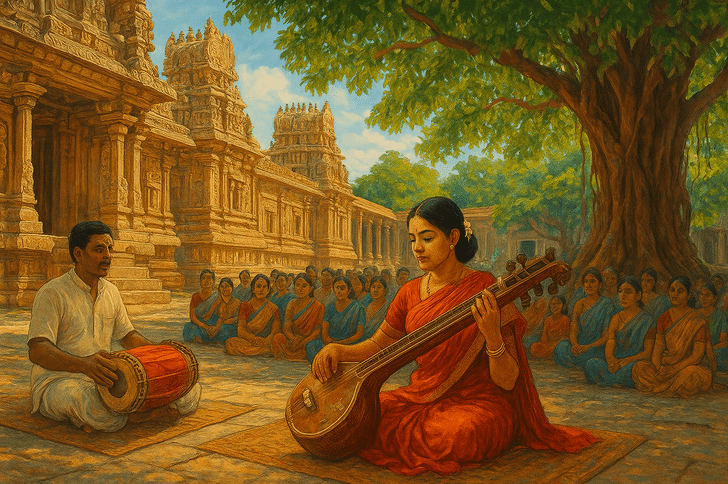
Picture this: The sun dips below the horizon in the bustling streets of Delhi, and in a dimly lit hall, a sitar maestro plucks strings that seem to weave the very fabric of the universe. The notes rise and fall like a storyteller’s voice, pulling you into a trance where time dissolves. Now, fast-forward to the balmy shores of Chennai, where a veena’s resonant hum fills a temple courtyard, accompanied by rhythmic mridangam beats that pulse like the heartbeat of ancient gods. This is the magic of Indian classical music—two traditions, Hindustani from the north and Carnatic from the south, each a symphony of soul-stirring melodies that have enchanted sages, emperors, and curious travelers for centuries. As a culture tour operator specializing in immersive Indian experiences, we invite you to dive into this living heritage. But why read about it when you can live it? Join us on a narrative journey through these musical worlds, and discover why India beckons you to its stages—for an adventure that harmonizes history, spirituality, and sheer auditory bliss.
Let’s unravel the enigma starting with Hindustani music, the northern gem that echoes the grandeur of Mughal courts and Himalayan mystics. Born from a fusion of ancient Vedic chants and Persian influences during the medieval era, Hindustani classical music thrives on improvisation and emotional depth. At its core are ragas—melodic frameworks evoking specific moods, seasons, or times of day. Imagine Raga Yaman for a serene evening, its ascending notes mirroring a sunset’s glow, or Raga Bhairav for dawn’s awakening energy. The tala provides the rhythmic cycle, often intricate and layered, played on instruments like the tabla (a pair of hand drums) or sarangi (a bowed string instrument that mimics the human voice).
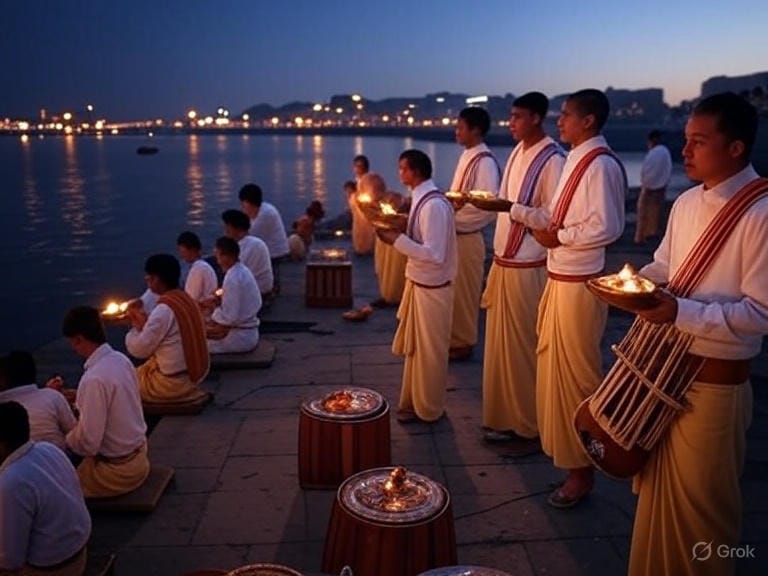
What makes Hindustani so captivating? It’s the freedom—the artist’s ability to explore a raga for hours, building from a slow alap (introduction) to a frenzied jhala (climax), much like a narrative unfolding. Legends like Pandit Ravi Shankar, who introduced sitar to global stages, and Ustad Zakir Hussain, whose tabla rhythms have graced international concerts, have elevated its reach. Ustad Bismillah Khan’s shehnai wails, evoking royal processions, even earned him India’s highest civilian award. Envision attending a baithak (intimate gathering) in Varanasi, the Ganges reflecting lantern lights as a maestro unfolds a raga. Our culture tours offer private sessions with gurus, where you can learn basic ragas on a rented sitar, feeling the strings vibrate under your fingers.
It’s not just listening; it’s participating in a heritage predating many classical traditions, offering a path to inner peace amid life’s chaos.
Now, shift southward to Carnatic music, the devotional powerhouse of Tamil Nadu, Kerala, Andhra Pradesh, and Karnataka. Emerging from the Bhakti movement around the 15th-16th centuries, Carnatic is more structured, composition-driven, and deeply tied to Hindu mythology. Compositions by saints like Thyagaraja, Muthuswami Dikshitar, and Syama Sastri—known as the Trinity—form its backbone, sung in Telugu, Sanskrit, or Tamil. Ragas here are precise, with 72 melakarta (parent scales) spawning thousands of variations, and talas are mathematically complex, like the 7-beat Mishra Chapu that challenges even seasoned percussionists.
Carnatic’s allure lies in its gamakas—those graceful, oscillating ornaments that make notes “dance.” Instruments shine too: the veena (a plucked lute evoking goddess Saraswati), violin (adapted brilliantly by maestros), and mridangam (a barrel-shaped drum). Icons include M.S. Subbulakshmi, whose UN performance of “Maithrim Bhajata” promoted world peace, and Semmangudi Srinivasa Iyer’s impeccable renditions. Imagine yourself in a Chennai sabha (concert hall) during the Margazhi season, as a vocalist unleashes a kriti that builds to a crescendo of applause. Our tours make this accessible: Guided visits to Thyagaraja Aradhana in Thiruvaiyaru, where thousands sing in unison by the Cauvery River, or intimate kutcheris (concerts) in heritage homes. You’ll taste filter coffee between sets, chat with artists, and perhaps join a beginner’s vocal workshop—a sensory journey of jasmine garlands and unexpected niraval (improvisations).
But what truly binds Hindustani and Carnatic, making them irresistible? Their shared essence: a quest for the divine through sound. Both draw from the Natya Shastra, an ancient treatise on performing arts, and emphasize guru-shishya parampara (teacher-disciple tradition). Differences add spice—Hindustani’s fluid, exploratory style versus Carnatic’s composed precision; northern influences from Sufi qawwalis blending with ghazals, while southern forms incorporate temple rituals. Fusions abound: Artists like T.M. Krishna (Carnatic) and Shubha Mudgal (Hindustani) experiment, creating crossovers that echo ambient or minimalist genres.
The real magic unfolds in live performances, where the audience’s “wah wah” (appreciative murmurs) becomes part of the symphony. In informal settings—under banyan trees or ornate auditoriums—music becomes meditation, with ragas aligned with chakras promoting healing. Science supports this: Studies show Indian classical music reduces stress, akin to mindfulness practices.
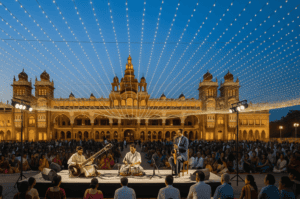
To experience this firsthand, head to India’s festivals. For Hindustani, the Sawai Gandharva Bhimsen Festival in Pune (December) features marathon sessions under starry skies, with legends sharing stages. The Saptak Festival in Ahmedabad (January) spans 13 days, blending vocals and instrumentals. Carnatic shines at Chennai’s Music Season (December-January), the world’s largest cultural event with over 3,000 free concerts—our tours include VIP access and artist meet-and-greets. The Thyagaraja Festival in Thiruvaiyaru offers a riverbank spectacle, while the Dover Lane Conference in Kolkata mixes both styles, drawing diverse crowds.
As a culture tour operator, we craft bespoke journeys: A 10-day “Melody Trail” from Delhi’s India Habitat Centre to Chennai’s Kalakshetra Academy, with stops in Varanasi for Ganga aartis synced to music, and Mysore for palace concerts.
Why now? In a world of digital noise, Indian classical music offers analog soul. Icons like Philip Glass and Sting have drawn inspiration here—your turn to unplug, immerse, and return renewed. India isn’t just a destination; it’s a vibration that lingers. Book your cultural odyssey today—let Hindustani and Carnatic serenade your spirit. Namaste, and see you on the subcontinent!
Leave a Reply