
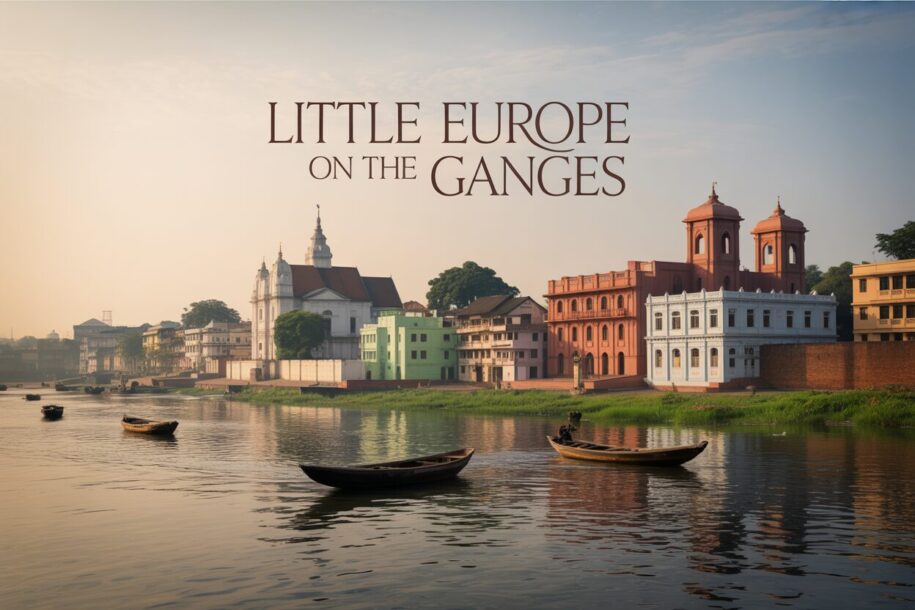
The banks of the Ganges River hold a fascinating secret: three small Bengali towns that became miniature versions of European capitals. Chandannagar, Bandel, and Serampore transformed from quiet riverside settlements into bustling colonial outposts where French, Portuguese, and Danish cultures took root alongside Bengali traditions.
This exploration is perfect for history buffs, architecture enthusiasts, and anyone curious about Bengal’s colonial past and its lasting impact on modern India.
We’ll dive into how European powers established their strategic footholds along the Ganges, creating trade networks that connected these Bengali towns directly to European markets. You’ll discover the remarkable architectural legacy these colonizers left behind – from Portuguese churches in Bandel to Danish mansions in Serampore – and how these building styles blended with local Bengali designs. Finally, we’ll examine how European educational systems and cultural practices merged with traditional Bengali life, creating a unique fusion that continues to shape these communities today.
Colonial Footprints on the Ganges
French Trading Ambitions That Led to Chandannagar’s Foundation
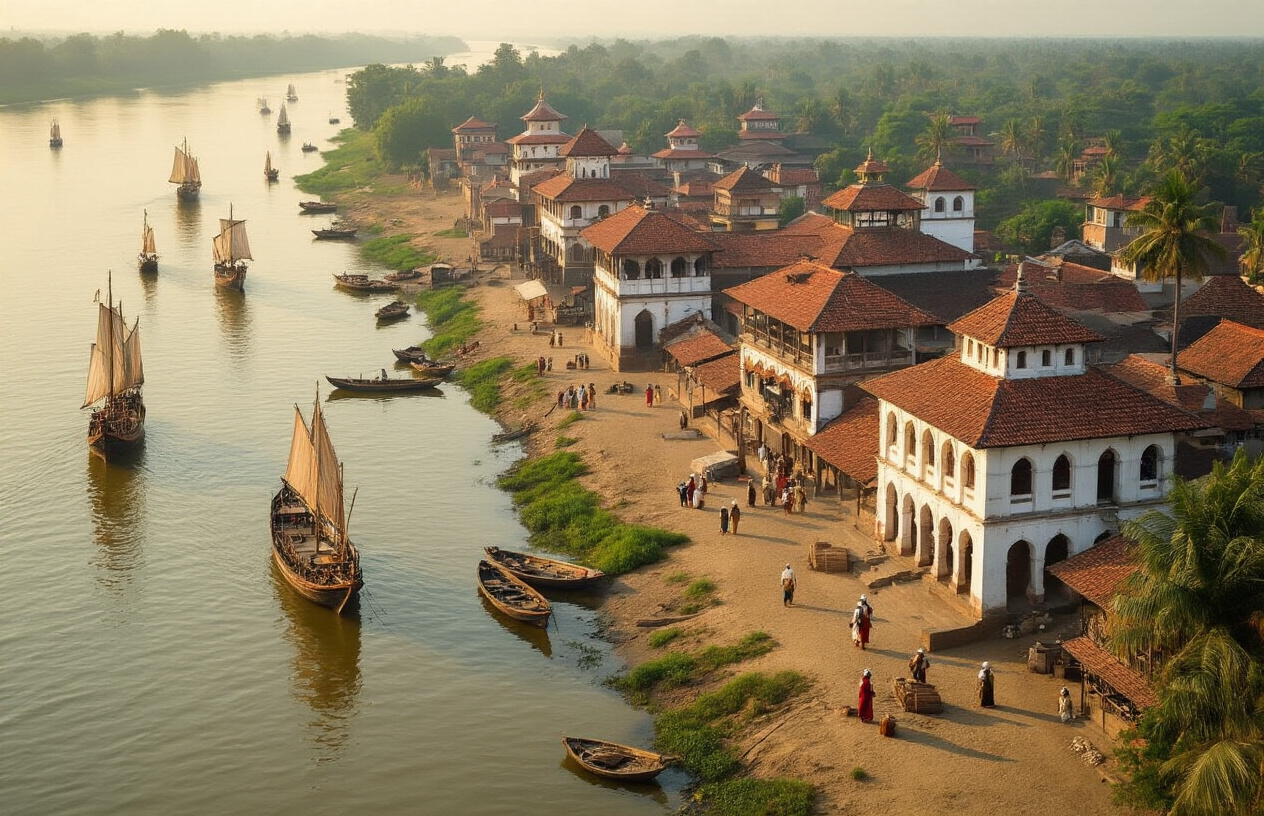
The French East India Company established Chandannagar in 1673 with grand commercial dreams that extended far beyond simple trade. Pierre Deslandes, the company’s ambitious director, recognized the Hooghly River’s strategic importance as a gateway to Bengal’s wealth. The French weren’t just looking for another trading post – they wanted to create a thriving commercial hub that could rival the British and Dutch settlements.
French colonial strategy focused on building strong relationships with local rulers, particularly the Mughal governors. This diplomatic approach paid off when they secured favorable trading privileges from the Nawab of Bengal. The French settlement grew rapidly, attracting Armenian merchants, Portuguese traders, and local Bengali artisans who saw opportunities in this multicultural trading environment.
The town’s layout reflected French urban planning principles, with wide streets, planned squares, and elegant buildings that showcased European architectural sensibilities. French administrators encouraged local industries, particularly textile production and indigo cultivation, creating an economic ecosystem that benefited both European investors and Bengali craftsmen.
Portuguese Maritime Strategy Behind Bandel’s Strategic Location
Portuguese presence along the Ganges began much earlier, with Bandel emerging as a crucial Catholic missionary center in the 16th century. The Portuguese chose this location for its defensive advantages – the river bend provided natural protection while offering easy access to both Calcutta and the interior regions of Bengal.
Bandel’s development centered around the famous Bandel Church, built in 1660, which became the spiritual heart of Portuguese colonial life. The Portuguese strategy differed significantly from other European powers; they focused on religious conversion and cultural assimilation rather than pure commercial exploitation. This approach created a unique community where Portuguese settlers married local women, establishing Eurasian families that bridged two cultures.
The town served as a vital link in Portugal’s Asian trade network, connecting Goa with Macau through Bengal’s river systems. Portuguese sailors and merchants used Bandel as a safe harbor during monsoon seasons, making it an essential stopover point for ships traveling between Portuguese colonies.
Danish Commercial Interests That Shaped Serampore’s Development
The Danish East India Company established Serampore in 1755, bringing a distinctly different colonial approach to the region. Danish traders focused on smaller-scale, sustainable commerce rather than the aggressive expansion strategies employed by other European powers. They recognized Serampore’s potential as a printing and educational center, which would later become its defining characteristic.
Danish colonial policy emphasized peaceful coexistence with local populations. They hired Bengali administrators, promoted local languages, and invested in infrastructure that benefited the entire community. The Danish approach created a more collaborative colonial environment where European knowledge systems merged organically with traditional Bengali practices.
Serampore became famous for its printing press, established by Baptist missionaries who worked under Danish protection. This printing revolution transformed Bengal’s intellectual landscape, producing books in Bengali, Sanskrit, and European languages that spread new ideas throughout the region.
British East India Company’s Influence on Regional Power Dynamics
The British East India Company’s growing dominance dramatically altered the balance of power among European settlements along the Ganges. After their victory at Plassey in 1757, British influence expanded rapidly, affecting the autonomy and commercial activities of French, Portuguese, and Danish settlements.
British policy toward these smaller European enclaves shifted between cooperation and competition depending on broader geopolitical circumstances. During peacetime, British authorities often allowed these settlements to maintain their distinct identities and trading privileges. However, during conflicts with France or other European powers, British forces would occupy or blockade these towns.
The Company’s administrative efficiency and military superiority gradually marginalized other European powers. French Chandannagar faced repeated British occupations during European wars, while Portuguese Bandel and Danish Serampore had to navigate carefully between maintaining their independence and acknowledging British supremacy in Bengal.
Architectural Legacy: European Building Styles That Transformed Bengali Towns
French Colonial Architecture’s Distinctive Features in Chandannagar
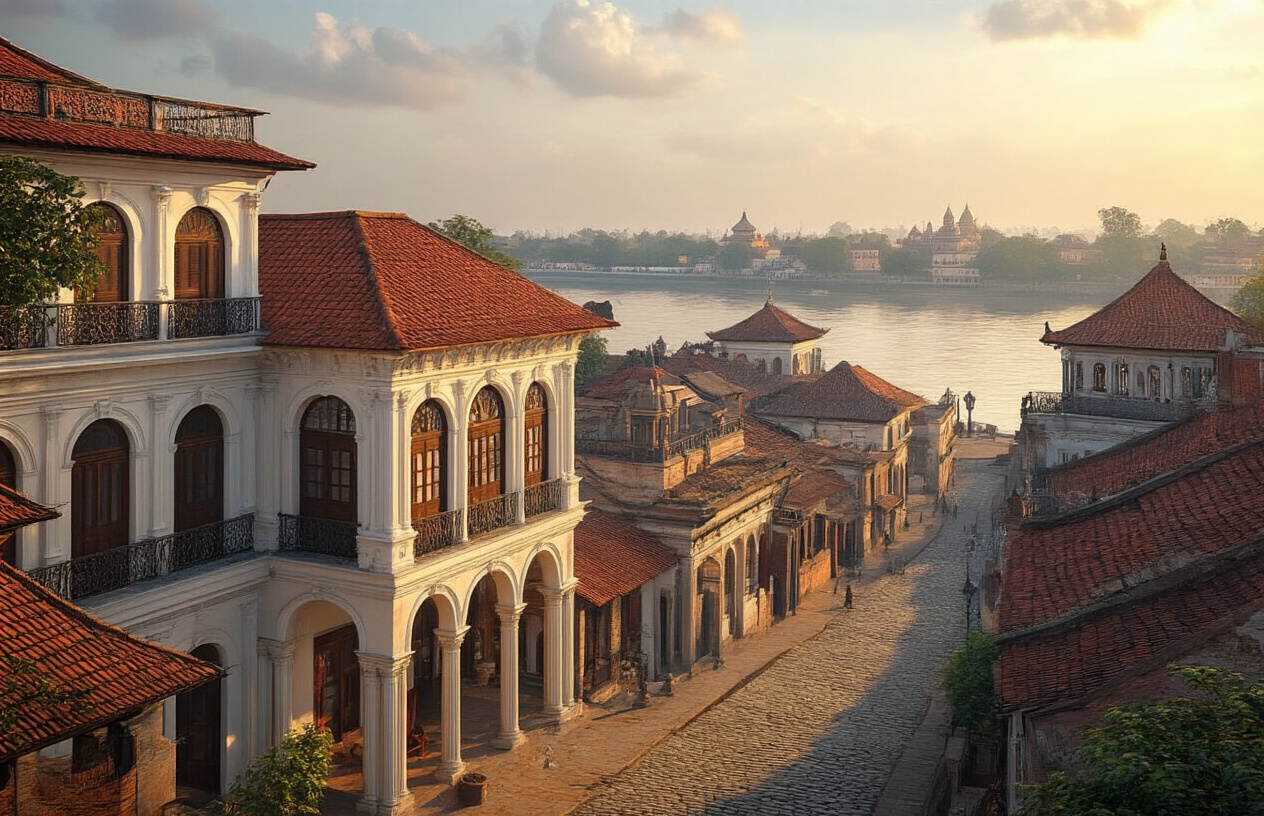
The French left behind some stunning architectural gems in Chandannagar that you can still admire today. Walking through the old quarters, you’ll spot buildings with characteristic French colonial features – high-pitched roofs with red clay tiles, long verandas supported by elegant columns, and tall windows with wooden shutters painted in soft pastels.
The Sacred Heart Church stands as perhaps the most impressive example of French ecclesiastical architecture in the region. Built in the early 18th century, it showcases the typical French colonial church design with its simple yet elegant facade, arched doorways, and symmetrical layout. The building materials blend European techniques with local resources – notice how French architectural concepts merge with Bengali craftsmanship in the intricate woodwork and decorative elements.
French residential buildings in Chandannagar feature distinctive courtyards enclosed by covered galleries, perfect for the Bengali climate. These houses often include high ceilings for better air circulation, ornate wrought-iron work on balconies, and decorative cornices that show clear French influence. The Institut de Chandannagar building exemplifies this fusion, combining French symmetry and proportion with practical adaptations for tropical weather.
| Architectural Element | French Influence | Local Adaptation |
|---|---|---|
| Roofing | Clay tiles, steep pitch | Modified angles for monsoon drainage |
| Windows | Casement style, shutters | Larger sizes for ventilation |
| Verandas | Classical proportions | Extended coverage for sun protection |
| Materials | European techniques | Local brick and timber integration |
Portuguese Church Construction and Religious Buildings in Bandel
Bandel’s religious architecture tells the story of Portugal’s deep Catholic roots in Bengal. The Bandel Church, formally known as the Basilica of the Holy Rosary, represents one of the oldest Christian structures in eastern India, dating back to 1599. Portuguese builders created a unique architectural style here that blends European baroque elements with local building traditions.
The church’s thick walls, built from local brick and lime mortar, demonstrate Portuguese engineering adapted for Bengal’s challenging climate. The builders incorporated massive buttresses to support the structure during monsoon seasons and earthquakes. Inside, you’ll find beautiful Portuguese-style altars, intricate woodwork, and religious paintings that showcase European artistic traditions transported thousands of miles from Lisbon.
Portuguese residential architecture in Bandel features distinctive elements like internal courtyards surrounded by arcaded galleries, reminiscent of Portuguese homes but modified for tropical living. These buildings typically include ground-floor shops or storage areas with living quarters above, a practical design that Portuguese traders brought from their homeland ports.
The Hangseshwari Temple, while dedicated to a Hindu goddess, shows interesting Portuguese architectural influences in its construction techniques. This cross-cultural architectural exchange demonstrates how Portuguese builders and local craftsmen learned from each other, creating structures that honor both traditions.
Danish Urban Planning Principles
Danish colonizers brought systematic urban planning concepts to Serampore that you can still observe in the town’s layout today. The Danes approached city planning with characteristic Scandinavian orderliness, creating wide, straight roads that intersect at right angles – quite different from the organic growth patterns typical in many Bengali settlements.
Serampore’s main thoroughfares follow Danish planning principles with designated areas for different functions. The commercial district near the riverfront, residential quarters set back from the water, and institutional buildings positioned strategically throughout the town reflect Danish organizational thinking. This methodical approach created a more structured urban environment than many contemporary Indian towns.
The Danish established building codes that influenced Serampore’s architectural character. Houses were required to maintain certain setbacks from roads, creating uniform streetscapes with consistent spacing. Danish builders introduced the concept of shared public spaces – small parks and gathering areas distributed throughout residential neighborhoods.
Water management represents another Danish contribution to Serampore’s urban fabric. The drainage systems, road gradients, and positioning of wells show Danish engineering expertise adapted for Bengal’s monsoon cycles. Danish planners also designated specific areas for markets, workshops, and storage facilities, creating functional zones that reduced conflicts between different urban activities.
The Serampore College campus exemplifies Danish institutional planning, with buildings arranged around courtyards and connected by covered walkways – practical design elements that acknowledge both European educational traditions and Bengali climate requirements.
Cultural Fusion: How European Customs Blended with Local Bengali Traditions
French Language and Education Systems in Chandannagar Society
Chandannagar became a remarkable linguistic melting pot where French flourished alongside Bengali for over two centuries. The colonial administration established French as the official language, creating a unique bilingual community that persisted long after Indian independence. Local families embraced French education, sending their children to schools modeled after the French system, complete with curricula that emphasized literature, philosophy, and arts in the European tradition.
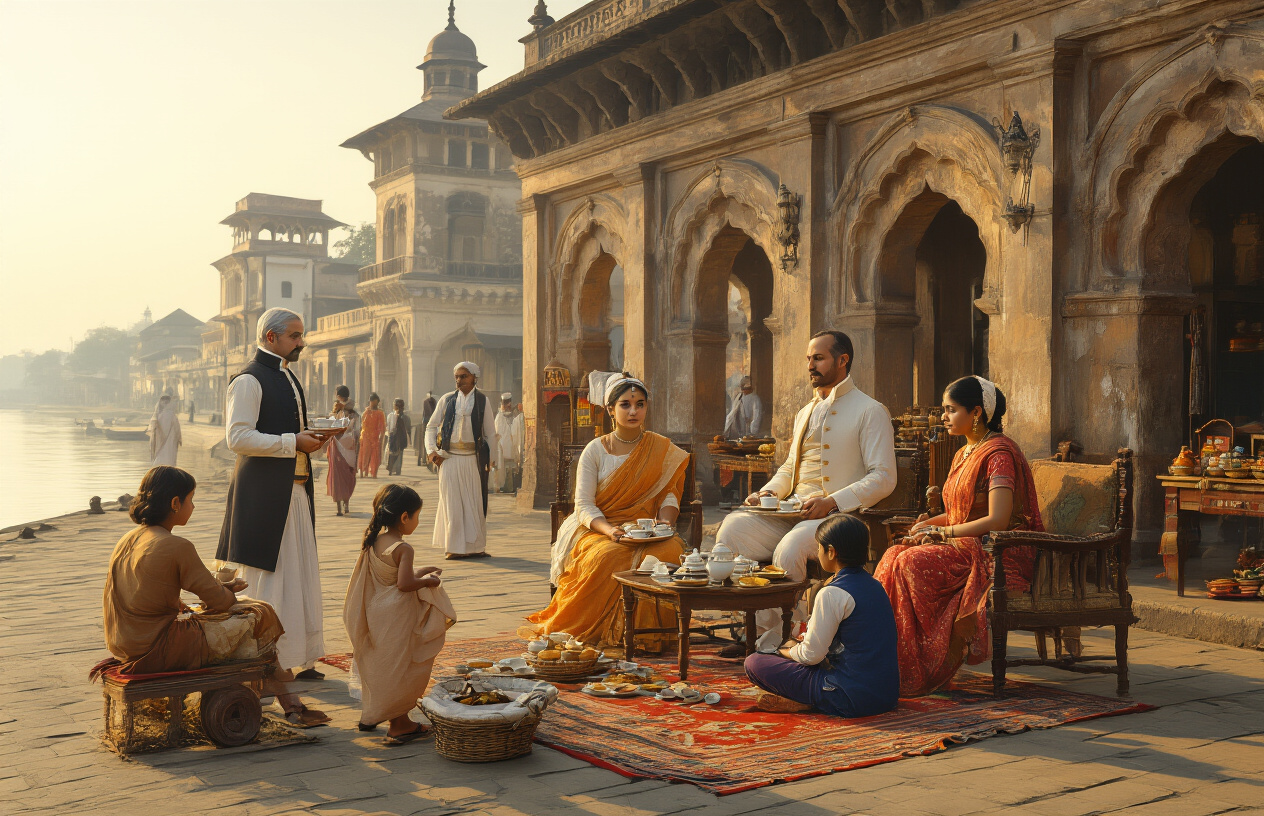
The French influence ran deeper than mere language instruction. Bengali families adopted French naming conventions, often giving their children French first names while maintaining traditional surnames. Social gatherings incorporated French etiquette, and local newspapers published articles in both languages. The Alliance Française became a cultural hub where Bengali intellectuals engaged with French philosophy, literature, and political thought.
Educational institutions blended French pedagogical methods with local knowledge systems. Students learned geometry from Euclidean principles while studying Bengali poetry, creating graduates who moved effortlessly between both intellectual traditions. This educational fusion produced a generation of Bengali scholars who translated French works into Bengali and introduced European scientific concepts to local audiences.
Portuguese Catholic Influence on Local Religious Practices in Bandel
The Portuguese brought Catholicism to Bandel in the 16th century, creating one of India’s oldest Catholic communities. Local Bengali converts didn’t abandon their cultural identity but instead created a fascinating synthesis of Christian and Bengali traditions. The famous Bandel Church became a pilgrimage site where Hindu devotees also came to pray, particularly during times of crisis or celebration.
Catholic festivals took on distinctly Bengali characteristics. Christmas celebrations included traditional Bengali sweets alongside European customs, while local artisans crafted nativity scenes featuring characters dressed in Bengali attire. The annual feast of Our Lady of Happy Voyage attracted people from all religious backgrounds, demonstrating how Catholic traditions adapted to local spiritual needs.
Marriage ceremonies showcased this cultural blending most vividly. Bengali Catholic weddings incorporated Portuguese rituals with traditional Bengali customs, creating ceremonies that honored both heritages. Families served European dishes alongside Bengali cuisine, and wedding attire combined Western styles with traditional Bengali elements.
Portuguese influence extended beyond religion into daily life. Local architecture featured Portuguese balconies and courtyards adapted to Bengali climate needs. Families adopted Portuguese surnames while maintaining Bengali cultural practices, creating identities that honored both their ancestral and adopted traditions.
Danish Protestant Missionary Work and Social Reform in Serampore
The Danish missionaries in Serampore launched ambitious social reform programs that transformed local society in unexpected ways. William Carey and his colleagues didn’t simply preach Christianity but engaged deeply with Bengali culture, learning the language fluently and translating religious texts with remarkable cultural sensitivity.
Their printing press became a revolutionary force, publishing books in Bengali, Sanskrit, and other Indian languages. This technological innovation empowered local scholars to preserve and share traditional knowledge while also accessing European ideas. The press produced the first Bengali newspaper, creating a new medium for public discourse and social commentary.
Educational reforms introduced by Danish missionaries emphasized practical skills alongside religious instruction. They established schools that taught both boys and girls, challenging traditional gender roles while respecting local customs. These institutions became models for modern education throughout Bengal, influencing teaching methods that persisted well into the 20th century.
The Danish approach to social reform proved remarkably effective because it worked with existing Bengali institutions rather than against them. Missionaries collaborated with local leaders to address issues like child marriage and caste discrimination, creating sustainable change that grew from within the community rather than being imposed from outside.
European Culinary Traditions That Enriched Local Food Culture
European colonial presence introduced new ingredients, cooking techniques, and dining customs that Bengali cooks enthusiastically adopted and transformed. Portuguese traders brought tomatoes, potatoes, and chilies from the Americas, ingredients that became so integral to Bengali cuisine that many people assume they were always native to the region.
French culinary techniques influenced Bengali cooking in subtle but significant ways. The art of making refined sauces, careful seasoning, and elegant presentation found their way into Bengali kitchens through domestic staff who worked in European households. Local cooks adapted these methods to traditional recipes, creating dishes that maintained Bengali flavors while incorporating European sophistication.
Baking traditions took root in all three towns, with local bakers learning European bread-making techniques and adapting them using local ingredients. Portuguese-style breads, French pastries, and Danish cookies became part of daily life, though often modified with Bengali spices and sweeteners to suit local tastes.
| European Contribution | Bengali Adaptation | Modern Legacy |
|---|---|---|
| Bread baking | Rice flour incorporation | Local bakeries still use hybrid recipes |
| Sauce techniques | Spice-based gravies | Complex Bengali curries |
| Preservation methods | Pickle-making innovations | Extended shelf life for seasonal foods |
| Dairy processing | Cottage cheese varieties | Multiple cheese types in Bengali sweets |
Tea culture represents perhaps the most successful culinary fusion. While tea came from China, European brewing methods combined with Bengali hospitality created the elaborate tea service that remains central to Bengali social life. Local families adopted European-style tea sets and serving rituals while maintaining the Bengali tradition of treating guests with elaborate refreshments.
Economic Transformation: Trade Networks That Connected Bengal to Europe
Textile Production and Export Systems Established by European Powers
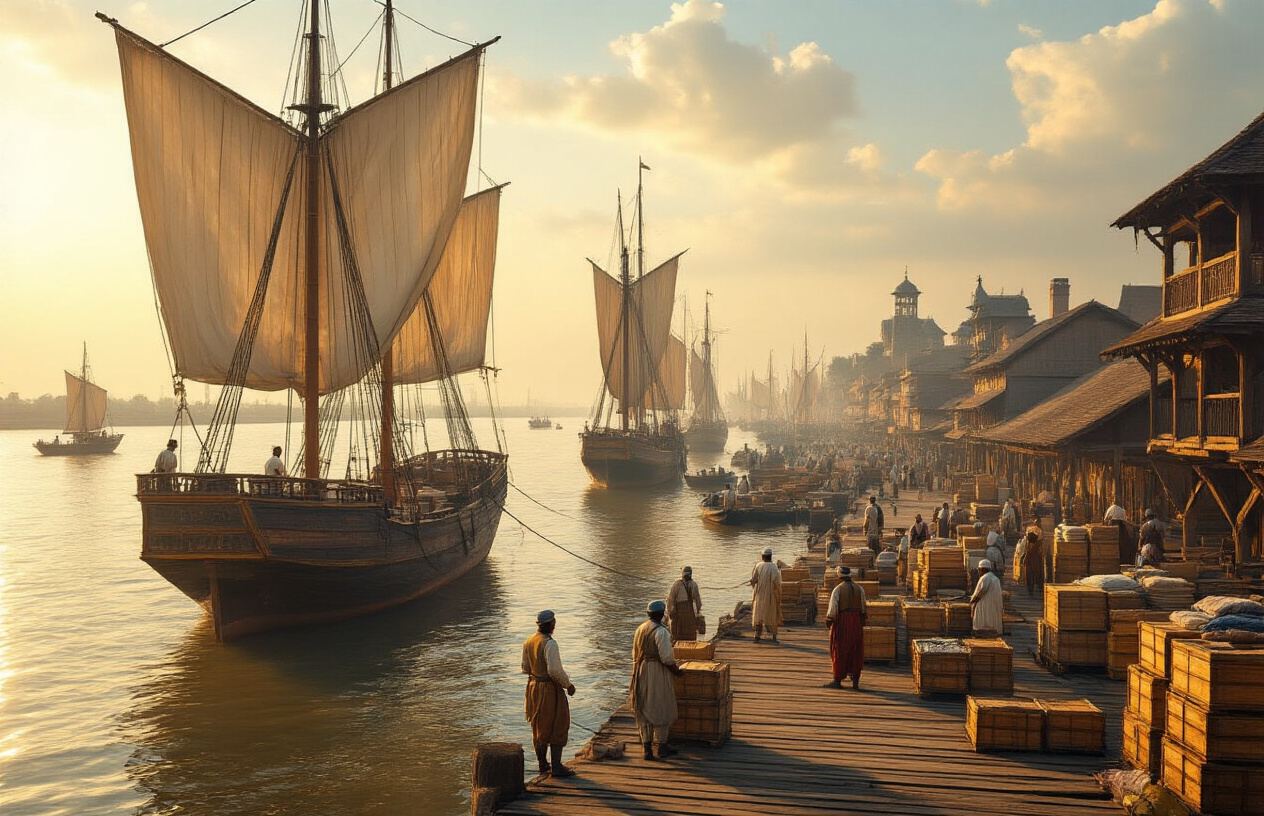
The European trading companies transformed Bengal into the world’s textile powerhouse during the 17th and 18th centuries. French, Danish, and Dutch merchants established sophisticated production networks that stretched from rural weaving villages to global markets. In Chandannagar, French traders created specialized workshops where Bengali artisans produced muslins, silk fabrics, and cotton textiles that became luxury items in European courts.
The Dutch East India Company revolutionized textile production in Serampore by introducing quality control systems and standardized measurements. They set up inspection houses where every piece of fabric was examined before export. Danish merchants in Serampore focused on indigo-dyed textiles, creating a unique blue fabric trade that connected Bengal directly to Scandinavian markets.
European powers established advance payment systems that guaranteed steady work for thousands of weavers. French merchants in Chandannagar would provide raw materials and cash advances to artisan families, creating economic dependencies that lasted generations. This system allowed European companies to control production quality while ensuring consistent supply for their global trade networks.
River Transport Routes That Facilitated International Commerce
The Hooghly River became Europe’s gateway to Bengal’s riches, with each colonial settlement serving as a strategic port along this vital waterway. European powers developed sophisticated river transport systems that connected their trading posts to Calcutta and the open sea. French barges regularly traveled between Chandannagar and the main port, carrying textiles, spices, and precious goods.
Danish merchants established a efficient river fleet that transported goods between Serampore and other European settlements. Their shallow-draft vessels could navigate the river during different seasons, ensuring year-round commerce. The Danes built specialized warehouses along the riverbank where goods could be stored safely during monsoons.
Dutch traders created the most extensive river network, connecting Bandel to trading posts throughout Bengal. They developed a relay system where smaller boats collected goods from interior markets and transferred them to larger vessels at Bandel for the journey to Calcutta. This network allowed European merchants to tap into Bengal’s vast agricultural and manufacturing resources far beyond the riverbank settlements.
Banking and Financial Institutions That Supported Colonial Trade
European settlements developed sophisticated financial systems that supported international commerce long before modern banking reached Bengal. French merchants in Chandannagar created credit networks that allowed local traders to finance large transactions without carrying physical currency. They established money-changing houses that handled multiple currencies – French livres, Dutch guilders, Danish kroner, and local rupees.
The Danish settlement in Serampore pioneered marine insurance systems that protected cargo during the dangerous sea voyage to Europe. Danish merchants created mutual insurance pools where multiple traders shared the risks of individual voyages. This innovation allowed smaller Bengali merchants to participate in international trade without risking their entire wealth on a single shipment.
Dutch financiers in Bandel established the region’s first commercial banks that offered loans secured by future textile production. They created promissory note systems that allowed Bengali artisans to receive payment months before their goods reached European markets. These financial innovations connected local producers directly to global demand, creating economic relationships that persisted long after colonial rule ended.
Agricultural Changes Driven by European Market Demands
European demand transformed Bengal’s agricultural landscape as farmers shifted from subsistence crops to export-oriented production. French traders encouraged indigo cultivation around Chandannagar, introducing new processing techniques that created deeper, more stable dyes valued in European textile industries. Local farmers learned French methods for extracting indigo paste, creating a cash crop economy that replaced traditional rice farming in many areas.
Danish merchants promoted sugar cane cultivation near Serampore, establishing processing mills that produced refined sugar for European markets. They introduced new varieties of sugar cane from their Caribbean colonies and taught Bengali farmers advanced cultivation techniques. This agricultural transformation created new economic opportunities but also made local food security dependent on international market prices.
Dutch influence led to expanded silk production in areas around Bandel. They encouraged mulberry cultivation and introduced improved silkworm breeding techniques that increased silk quality. Dutch merchants provided technical knowledge and guaranteed purchase contracts that convinced Bengali farmers to dedicate more land to silk production, fundamentally changing local agricultural patterns and creating specialized farming communities.
Educational Revolution:

French Educational Institutions and Intellectual Exchange in Chandannagar
The French brought their Enlightenment ideals and academic traditions to Chandannagar, creating a unique educational ecosystem that blended European pedagogical methods with local Bengali learning traditions. The French colonial administration established several schools that taught both French and Bengali languages, recognizing the importance of bilingual education for effective governance and trade relations.
French missionaries and administrators set up institutions that offered instruction in mathematics, natural sciences, geography, and literature alongside traditional Bengali subjects. These schools became centers of intellectual exchange where French rationalism met Bengali philosophical thought. Local Bengali intellectuals engaged with French texts on philosophy, science, and political theory, leading to fascinating cultural synthesis.
The French also established libraries stocked with European books and periodicals, making contemporary French intellectual movements accessible to Bengali scholars. This exposure influenced local literary and philosophical traditions, with many Bengali writers incorporating French literary techniques and philosophical concepts into their works. The educational institutions fostered a generation of bilingual Bengali intellectuals who served as cultural bridges between European and Indian knowledge systems.
French educational methods emphasized critical thinking and scientific observation, which complemented existing Bengali traditions of debate and scholarly discourse. This combination produced a distinctive intellectual culture in Chandannagar that valued both empirical investigation and traditional wisdom.
Portuguese Seminary Schools and Religious Education in Bandel
Portuguese religious orders transformed Bandel into a significant center of Christian education in Bengal, establishing seminary schools that trained both European missionaries and local converts in religious studies, Latin, and Portuguese language. The famous Bandel Church became the focal point of an extensive educational network that extended Portuguese cultural and religious influence throughout the region.
The Augustinian and later Jesuit missions created schools that taught theology, philosophy, and classical languages while also incorporating practical subjects like agriculture, medicine, and basic crafts. These institutions served dual purposes: preparing clergy for missionary work and providing general education to local communities. The Portuguese educators developed innovative teaching methods that used local languages to explain Christian concepts, creating a unique form of cultural translation.
Portuguese educational institutions in Bandel also became centers of printing and publishing, producing religious texts in Bengali script and Portuguese language materials for the local Catholic community. The schools maintained extensive libraries containing theological works, Portuguese literature, and scientific texts from European universities.
Local Bengali students at these seminaries learned European academic traditions, including structured debate, systematic theology, and scholastic philosophy. Many graduates became influential intermediaries between Portuguese colonial authorities and Bengali society, serving as translators, administrators, and cultural interpreters. The Portuguese educational model influenced later missionary schools throughout Bengal, establishing pedagogical practices that combined European academic rigor with sensitivity to local cultural contexts.
Danish Mission Schools and Technical Training Programs in Serampore
The Danish missionaries at Serampore revolutionized technical and practical education in Bengal, establishing institutions that taught printing, paper-making, bookbinding, and other industrial arts alongside traditional academic subjects. William Carey and his Danish colleagues created the famous Serampore College, which became a pioneering center for both liberal arts education and practical technical training.
Danish educational institutions introduced modern printing technology to Bengal, teaching local students to operate printing presses, set type, and produce books in multiple languages including Bengali, Sanskrit, and English. This technical training had profound implications for Bengali literature and intellectual life, as it democratized access to printed materials and enabled the rapid spread of new ideas.
The Danes also established workshops where students learned carpentry, metalworking, and textile production using European tools and techniques. These technical schools produced skilled craftsmen who combined traditional Bengali artisan knowledge with European industrial methods, creating hybrid technologies adapted to local conditions and materials.
Serampore’s educational institutions pioneered the use of vernacular languages in higher education, translating European scientific and philosophical texts into Bengali while also teaching students to read European languages. The Danish approach emphasized practical application of knowledge, encouraging students to experiment with new agricultural techniques, medical practices, and mechanical innovations.
The Serampore model influenced educational policy throughout British India, demonstrating how European technical knowledge could be effectively integrated with local learning traditions. Many graduates of Danish schools became teachers, translators, and technical experts who spread modern educational methods to other parts of Bengal and beyond.
Modern Legacy of European Colonial Influence
Preserved Colonial Buildings That Attract Heritage Tourism
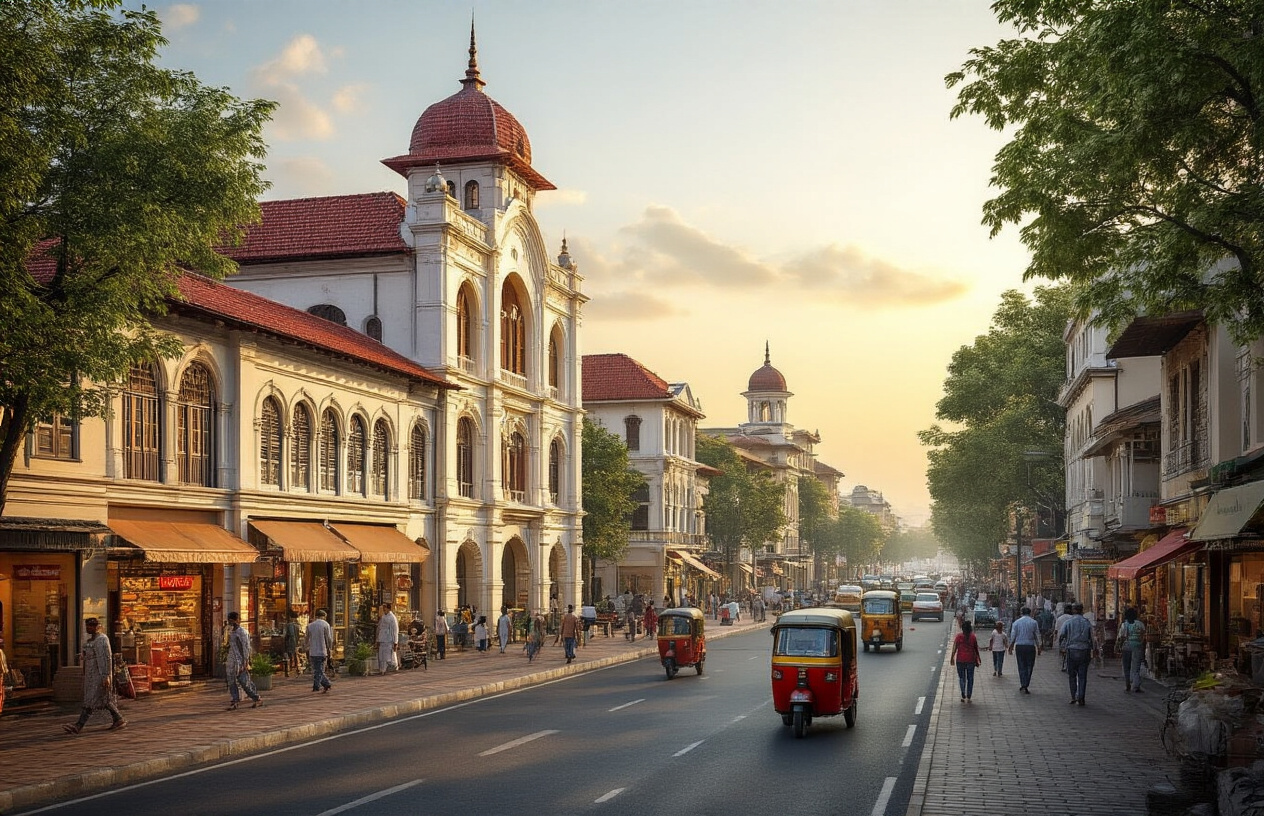
The architectural fingerprints of French, Danish, and Portuguese rule remain etched in stone and mortar across these Ganges-side towns. Chandannagar’s French colonial buildings stand as silent witnesses to centuries of European occupation, with the Dupleix Museum housed in the former governor’s residence showcasing Indo-French architectural fusion. The building’s distinctive blend of European neoclassical elements with local Bengali craftsmanship draws thousands of visitors annually.
Bandel’s Portuguese legacy lives on through the Basilica of the Holy Rosary, built in 1599 and reconstructed multiple times. This sacred site continues to attract both religious pilgrims and architecture enthusiasts who come to marvel at its unique blend of European Gothic elements adapted for the Bengal climate. The thick walls, high ceilings, and strategic ventilation showcase how Portuguese builders adapted European designs for tropical conditions.
Serampore’s Danish heritage buildings, including the former Government House and several merchant residences, tell stories of Scandinavian colonial ambition. These structures feature characteristic red-tiled roofs and whitewashed walls that reflect Danish architectural sensibilities. Heritage walks through these towns have become increasingly popular, with local guides sharing stories of European merchants, missionaries, and administrators who once walked these same streets.
The West Bengal government has recognized the tourism potential of this colonial heritage, investing in restoration projects and developing heritage circuits that connect all three towns. Hotels and restaurants have emerged around these historic sites, creating a small but thriving heritage tourism industry.
Continuing Cultural Festivals and Traditions with European Origins
Christmas celebrations in Bandel remain deeply rooted in Portuguese Catholic traditions, but they’ve evolved into uniquely Bengali-Portuguese festivals. The midnight mass at the Basilica attracts thousands of devotees, both Christian and Hindu, who participate in processions featuring Portuguese hymns sung in Bengali. Local sweets shops prepare special Christmas treats that blend European recipes with Bengali ingredients, creating fusion desserts like date palm jaggery Christmas cake.
Chandannagar’s Jagaddhatri Puja incorporates French colonial influences in unexpected ways. The pandal decorations often feature French architectural motifs, and some community celebrations include French folk dance performances alongside traditional Bengali cultural programs. The town’s Bastille Day celebrations, though modest, keep alive the memory of French revolutionary ideals that once inspired Bengali intellectuals.
Danish influence persists in Serampore through educational traditions established by missionary schools. The emphasis on community singing, organized sports, and structured academic calendars reflects Danish pedagogical approaches that continue today. Local schools still organize annual cultural programs that blend Danish folk traditions with Bengali performing arts.
Wedding photography in all three towns frequently incorporates colonial buildings as backdrops, with couples posing against French colonial facades or Danish-era churches. This practice shows how European architectural heritage has become part of contemporary Bengali cultural expression, creating new traditions that honor historical connections.
Economic Activities That Still Reflect Historical Trade Connections
The jute processing industry in these riverside towns maintains connections to historical European trading patterns. Small-scale jute mills in Chandannagar and Serampore continue exporting finished goods to European markets, following trade routes established centuries ago. Local entrepreneurs have modernized these operations but maintain business relationships with European textile companies that trace back to colonial-era partnerships.
Handicraft production reflects the enduring influence of European artistic traditions. Chandannagar’s pottery workshops produce ceramics that blend French decorative styles with traditional Bengali terracotta techniques. Artisans create pieces for both domestic and international markets, with European collectors particularly interested in these fusion pieces that represent cultural synthesis.
The publishing industry in Serampore carries forward the printing tradition established by Danish missionaries. Local printing presses still operate using techniques and organizational methods introduced by European missionaries, though they’ve adopted modern technology. Some presses specialize in reproducing historical texts and maps that document the European colonial period.
River transport and logistics companies operating from these towns maintain trade connections with European ports. While modern container shipping has transformed the industry, family-owned businesses continue moving goods along routes their ancestors established during the colonial period. These companies often serve as intermediaries for Bengali exporters seeking European markets, drawing on generations of cross-cultural business experience.
Agricultural export businesses, particularly those dealing in spices and handloom textiles, continue serving European markets through networks established during colonial times. Local merchants maintain direct relationships with European importers, bypassing modern supply chain intermediaries through personal connections built over decades.
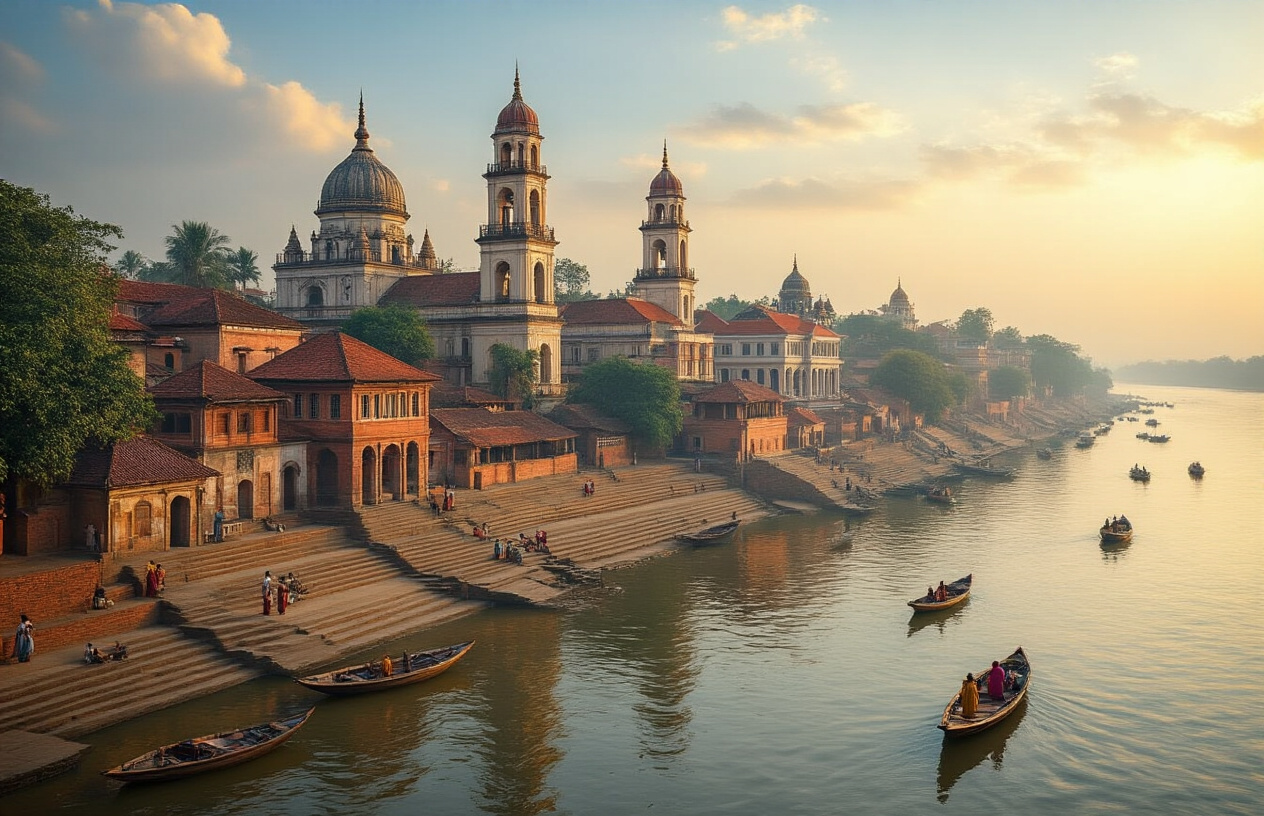
The three towns along the Ganges – Chandannagar, Bandel, and Serampore – tell a fascinating story of how European powers left their mark on Bengali soil. From the Portuguese traders who first arrived in Bandel to the French administrators in Chandannagar and Danish missionaries in Serampore, each colonial presence created a unique blend of European and Bengali culture. The architectural marvels, educational institutions, and trade networks they established didn’t just change the physical landscape – they transformed entire ways of life, creating communities where European customs mixed naturally with local traditions.
These towns remain living examples of colonial history, where centuries-old churches stand alongside traditional Bengali homes and European-style schools continue to educate new generations. The economic systems, educational approaches, and cultural practices introduced by European colonizers have evolved and adapted, becoming part of the fabric of modern Bengali life. Today, visitors can walk through these historic streets and witness how global connections were forged centuries ago, creating a legacy that continues to influence how these communities see themselves and their place in the world.
Leave a Reply