
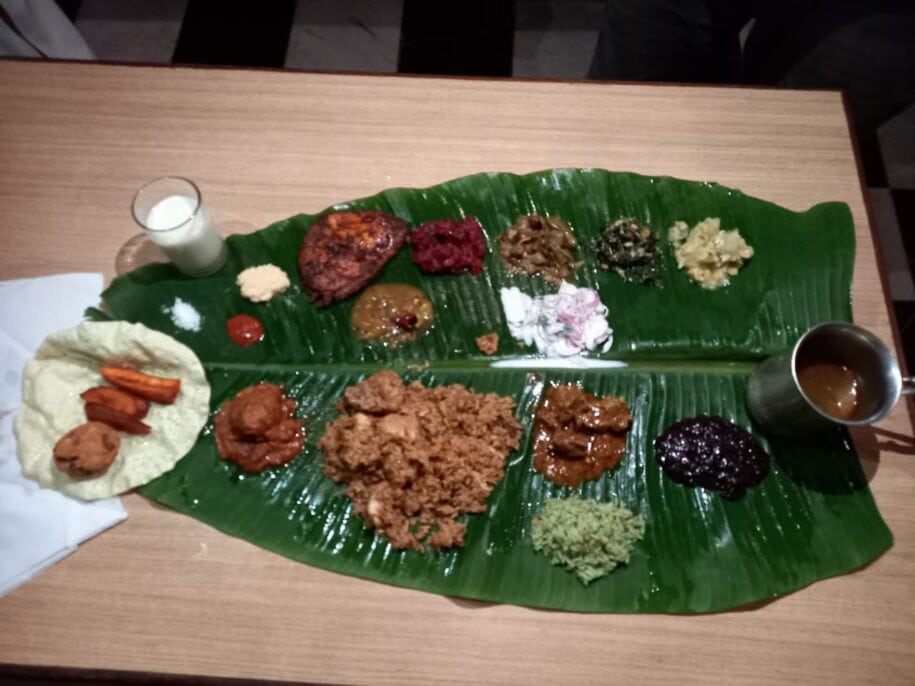
India is a country that can be tasted long before it is understood. Every region, every faith, and every season leaves its signature on the plate. To travel through India is to walk through a living museum of flavours — each spice box a chronicle of conquests, climates, and conversations. From the snow-draped north to the tropical south, Indian cuisine tells the story of its people far more vividly than any monument can.
North India – The Land of Fire and Feast
In the north, food is a celebration of generosity. The tandoor’s smoky breath perfumes the air of Punjab, where butter-laden parathas and velvety dal makhani are eaten with the kind of joy that fills both stomach and soul. The Mughal emperors left behind their culinary legacy — rich gravies thick with cream and spices, kebabs grilled to perfection, and fragrant biryanis layered like royal tapestries.
Venture further into the Himalayan valleys, and you’ll find Kashmiri wazwan — a 36-course meal that reflects Persian finesse and mountain abundance. Saffron, once traded like gold, glows in every dish. Even Delhi’s streets tell stories — of Mughal emperors and partition refugees who turned food into identity.
Experience it: Join a food walk through Old Delhi’s bustling Chandni Chowk, or sit for a langar (community meal) at the Golden Temple in Amritsar — a lesson in both humility and harmony.
West India – Spice, Spirit, and the Sea
West India offers the most surprising contrasts. In Rajasthan, where the desert dictates life, the cuisine is ingenious — dry, spicy, and lasting. Ker Sangri, made from desert beans and berries, captures survival itself. Gujarat answers with sweetness — undhiyu, dhokla, and shrikhanda — food shaped by Jain and Vaishnav traditions that prize balance and non-violence.
Further south, Goa is a carnival of coastal abundance. Centuries of Portuguese influence brought vinegar, pork, and a new world of flavours. The fiery vindaloo and the delicate bebinca are both legacies of that encounter. Meanwhile, Mumbai, the city of migrants, serves everything — Parsi berry pulao, Konkani seafood, Maharashtrian vada pav — a true edible democracy.
Experience it: Sip a glass of cashew feni on a Goan beach, or taste the sea in a plate of prawn curry while watching the sun melt into the Arabian horizon.
South India – Ancient Flavours, Eternal Harmony
If food is philosophy, South India is its scripture. Here, every dish is designed around balance — heat, sourness, salt, crunch, and calm. Tamil Nadu’s temple kitchens perfected this science centuries ago, guided by Ayurvedic principles that align food with wellness. Fermented batters like dosa and idli support gut health, while tamarind and curry leaves keep digestion and circulation in harmony — a fact now supported by modern nutrition research.
Kerala’s cuisine is a love song to the monsoon: coconut, rice, and spice in perfect conversation. Syrian Christian fish molee, Nair avial, and Malabar biryani show how trade and faith intertwined along the spice coast.
Experience it: Take a banana-leaf meal in Chennai, visit the spice plantations of Thekkady, or learn the art of making sambhar from a grandmother in Madurai.
East India – Rivers, Rice, and Rituals
The east flows at a gentler rhythm. Bengali cuisine, romantic and refined, dances between mustard oil’s pungency and jaggery’s sweetness. Fish and rice form its heart — not merely as food but as faith. From shorshe ilish (hilsa fish in mustard) to mishti doi (sweet yogurt), each dish speaks of devotion and artistry. Rabindranath Tagore once called Bengali food “the music of memory,” and it’s easy to see why.
Odisha, its quiet neighbor, has temple kitchens that feed thousands daily — the Mahaprasad of Jagannath Temple in Puri is prepared without tasting, yet seasoned perfectly through intuition passed across generations.
Experience it: Stroll through Kolkata’s mishti (sweet) shops or join a traditional Odia home-cooked meal to experience hospitality at its most sacred.
Northeast India – The Forgotten Frontier of Flavours
This region remains India’s culinary frontier — mysterious, earthy, and untouched by mainstream influence. In Nagaland, pork is smoked for days over wood fires; in Meghalaya, red rice and bamboo shoot curries echo ancient tribal roots. Fermentation, a universal human art, thrives here in its purest form — enhancing nutrition and adding layers of tang.
Experience it: Visit Nagaland’s Hornbill Festival or take a guided food trail in Shillong’s hidden kitchens — each bite connecting you to an age-old rhythm of forest and community.
The Science and Soul of Indian Food
Modern science is only beginning to understand what India’s grandmothers have practiced for millennia. Turmeric contains curcumin, a potent anti-inflammatory compound. Cumin and coriander aid digestion and metabolism. Fermentation — central to South Indian, Northeastern, and Himalayan cuisines — boosts probiotics, essential for gut health (documented in The Journal of Ethnic Foods, 2017). The traditional thali, with its careful balance of taste, color, and texture, mirrors the Ayurvedic idea of harmony between body and nature.
Food here is both chemistry and culture — a living testament to the country’s genius for adaptation.
Closing Reflections
To taste India is to taste its diversity — an edible epic spanning 5,000 years. Whether shared in royal banquets or roadside stalls, Indian food binds strangers into conversation. It carries the scent of monsoon rain, the warmth of family kitchens, and the wisdom of countless generations. For travelers, every meal is not just nourishment — it’s discovery.
So, come hungry. In India, every bite is a story waiting to be told.
Leave a Reply