

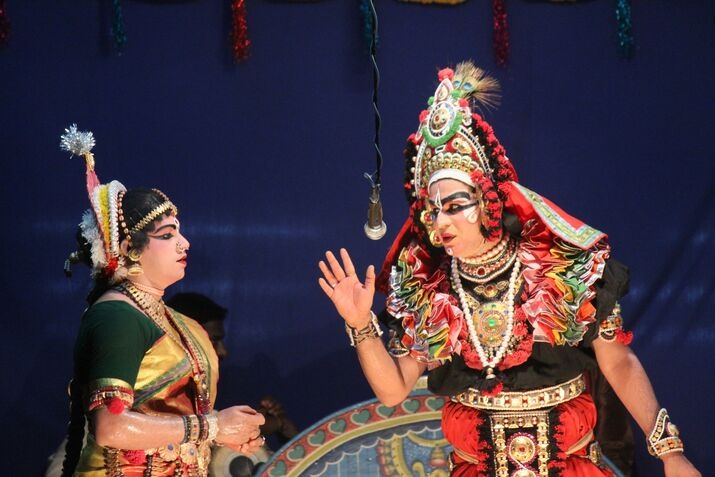
On India’s western edge, where the Arabian Sea breathes salt into the land and monsoon clouds roll in like epic prologues, coastal Karnataka tells its stories out loud. Not in museums. Not behind velvet ropes. But under open skies, in village squares, temple courtyards, and muddy fields lit by oil lamps and moonlight. This is a coast where art is not decoration — it is memory, belief, and identity performed in real time.
For travelers who crave more than scenery, coastal Karnataka offers something increasingly rare in the modern world: living traditions that have not been frozen into performances for tourists, but continue to evolve within the communities that created them. At the heart of this cultural ecosystem stands Yakshagana, a night-long dance-drama that is equal parts theatre, music, mythology, and ritual.
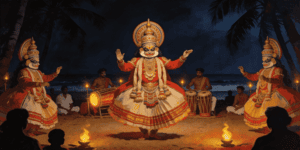
Yakshagana: Theatre That Breathes Through the Night
Yakshagana is not watched so much as entered. Traditionally performed from dusk until dawn, this art form blends dance, dialogue, elaborate costumes, live music, and improvised storytelling drawn from ancient Indian epics such as the Ramayana, Mahabharata, and regional Puranic legends. Scholars trace Yakshagana’s development to at least the 16th century, though its roots likely stretch further back into oral performance traditions that predate written texts.
What makes Yakshagana extraordinary is its structure. There is no rigid script. A lead singer-narrator, known as the Bhagavatha, guides the story through song, while drummers set a relentless rhythmic pulse that keeps performers and audience awake through the night. Characters — gods, demons, warriors, sages — debate, boast, joke, philosophize, and clash, often responding spontaneously to the audience and the moment.
Anthropologists have long noted that Yakshagana functions as both entertainment and education. Through mythological narratives, communities explore ideas of justice, duty (dharma), ego, devotion, and moral consequence. The exaggerated costumes — towering headgear, painted faces, and intricate ornaments — are not mere spectacle. They visually encode character traits, social hierarchies, and cosmic roles, making the performance intelligible even to first-time viewers.
To witness Yakshagana in a village setting is to feel time loosen its grip. Children fall asleep on mats. Elders debate plot points. The sea breeze carries drumbeats across paddy fields. This is not a show that ends neatly. It seeps into memory.
Pilivesha: When Tigers Dance Through the Streets
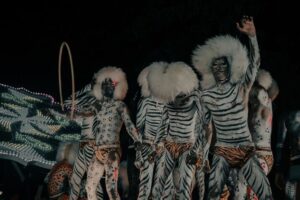
If Yakshagana belongs to the night, Pilivesha belongs to the festival day. During celebrations such as Krishna Janmashtami and Dasara, young men transform themselves into tigers using natural pigments and mirrors, their bodies becoming moving canvases of muscle and myth.
Pilivesha is rooted in folk symbolism, where the tiger represents strength, fertility, and divine protection. Ethnographic studies of South Indian folk dances show that animal impersonation rituals like Pilivesha often emerge from agrarian societies, where human survival is intimately tied to nature’s power. The dance is playful, athletic, and communal, turning streets into stages and spectators into participants.
For travelers, Pilivesha offers something spontaneous and joyous — a reminder that culture here is not scheduled, but lived.
Būta Kōlā: When the Sacred Crosses Into the Human World
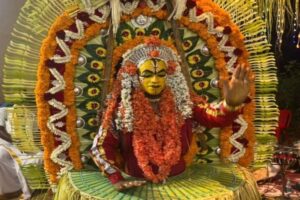
Perhaps the most haunting and misunderstood tradition of coastal Karnataka is Būta Kōlā, a ritual performance practiced among Tulu-speaking communities. Part dance, part trance, part oral history, Būta Kōlā centers on the worship of local guardian spirits, or bhootas, believed to protect villages, families, and lands.
During the ritual, performers adorned in elaborate makeup and costumes enter altered states of consciousness, embodying the spirit itself. Anthropological research suggests that Būta Kōlā serves a vital social function: it becomes a space where grievances are aired, justice is symbolically restored, and communal memory is reaffirmed. Unlike classical theatre, there is no separation between performer and divinity — the performer is the spirit for the duration of the ritual.
For visitors, witnessing Būta Kōlā is not about entertainment. It is about humility — understanding that some traditions are experienced quietly, respectfully, and without cameras, as living expressions of belief.
Nagaradhane and the Sacred Ecology of the Coast
Coastal Karnataka’s art forms are inseparable from its landscape. Nagaradhane, the worship of serpent spirits, reflects an ancient ecological consciousness embedded in ritual practice. Sacred groves, known as sarpa kavu, are preserved as the dwelling places of serpent deities, protecting biodiversity long before conservation became a modern concept.
Ritual dances, intricate floor designs, and ceremonial offerings honor the serpent not as something to be feared, but as a guardian of water, fertility, and balance. Literary studies of South Indian folklore often cite Nagaradhane as evidence of early environmental ethics encoded through ritual and symbolism.
Kambala: Speed, Mud, and Collective Memory
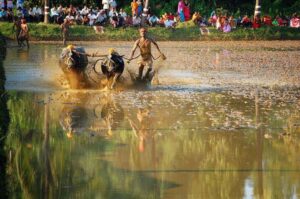
Then there is Kambala, the buffalo race that transforms water-filled paddy fields into roaring arenas of speed and skill. Though competitive, Kambala is deeply ritualistic, traditionally linked to agricultural cycles and thanksgiving to local deities.
Historians note that such agrarian sports function as both celebration and preparation — reinforcing community bonds, physical endurance, and shared identity. For travelers, Kambala is visceral and unforgettable: the thunder of hooves, the spray of mud, the roar of the crowd echoing across fields.
Why Coastal Karnataka Must Be Experienced, Not Sampled
What unites all these traditions is continuity. They are not reconstructed for visitors; they exist because communities sustain them. To truly understand them requires time, context, and sensitive guidance — knowing where to stand, when to watch, and when simply to listen.
This is where 5 Senses Tours becomes essential.
Experience Coastal Karnataka With 5 Senses Tours
At 5 Senses Tours, we believe cultural travel should engage sight, sound, taste, touch, and emotion — without disrupting the life of the places we visit. Our coastal Karnataka journeys are carefully designed to align with festival calendars, local communities, and authentic performance settings.
We take you beyond brochure highlights to:
- Attend Yakshagana performances in village and temple contexts
- Witness folk traditions like Pilivesha and seasonal Kambala races
- Learn the stories behind Būta Kōlā and Nagaradhane with local insight
- Meet artisans, musicians, and cultural custodians who keep these traditions alive
These experiences are not rushed. They unfold at the pace of the coast itself.
Coastal Karnataka is not a destination you simply see. It is one you listen to, wait for, and slowly understand.
Explore our curated cultural tours here:
👉 5 Days Coastal Karnataka Experience from Mangalore
Come with curiosity. Leave with stories that stay long after the drums fade.

Leave a Reply