
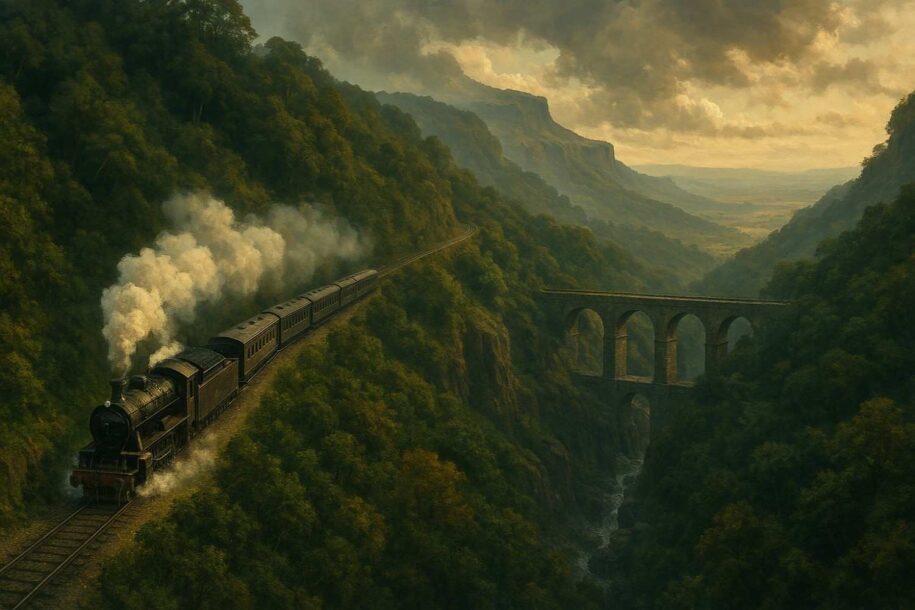
Every time a train leaves Mumbai and climbs through the Western Ghats toward Pune, it is using a railway line built between 1856 and 1863 by 42,000 workers on one of the most audacious civil engineering projects of the 19th century.
The passengers eating their vada pav and scrolling their phones as the Western Ghats appear outside the window have no idea what it cost to put those rails there.
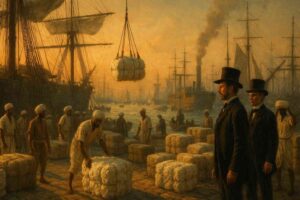
The British East India Company needed cotton. Vast quantities of cotton from the Deccan Plateau, the rich agricultural heartland of Maharashtra that lay beyond the Western Ghats. And between the cotton and the port of Bombay stood the Sahyadri Hills, rising over 1800 feet in the space of sixteen miles in a gradient so severe that the engineers who first surveyed the route looked at it and said it was impossible.
More precious than its yellow equivalent at the time, cotton or white gold was coveted by the British perhaps more than any other single commodity in the mid-19th century. But there was just one thing that stood between the Company and this valuable resource, a short but treacherous stretch of the Sahyadri hills between Bombay and Poona called the Bhor Ghat. It was too steep for the railway to attempt.
They attempted it anyway.
What followed across seven years of construction between 1856 and 1863 was an engineering achievement that the Times of London called one of the greatest triumphs of 19th century civil engineering in the world. Twenty-five tunnels blasted through solid basalt rock. Eight masonry viaducts rising up to 160 feet above the valley floor. Fifty-four million cubic feet of hard rock excavated by hand, by explosives and by the sheer physical effort of tens of thousands of workers recruited from across Maharashtra.
The number of staff during construction increased from 10,000 in 1856, over 20,000 in 1857 to a peak of 42,000 in January 1861.
Forty-two thousand people. On a sixteen-mile stretch of hillside. In conditions so dangerous that several thousand of them never came home.
An article in Engineering Magazine in 1899 described the building of the Bhor Ghat railway line as a more certain and enduring form of attack than military power, framing the railway, along with canals and harbors, as the real instruments of colonial domination.
That railway line is still in use today. Every Mumbai to Pune train uses it. The tunnels are the same tunnels. The gradients are the same gradients. And the reversing station at Khandala, a piece of Victorian railway engineering so unusual that it has no equivalent anywhere else in India, is still standing, largely abandoned, in the hills above Lonavala.
This is the story behind the Mumbai Pune heritage tour. And it is one of the most extraordinary and most completely forgotten chapters in the history of the country that railway line helped to transform.
Mumbai Pune Heritage Tour: The Story of the Bhor Ghat Railway and Why It Changed India Forever
The Cotton That Started Everything: Why the British Needed to Conquer the Western Ghats
To understand the Bhor Ghat railway you need to understand cotton.
In the 1850s the British textile industry in Lancashire and Yorkshire was the most productive manufacturing operation in the world. Its mills produced cloth for a global empire. And those mills ran on cotton, enormous quantities of cotton, sourced from wherever in the world it could be grown in sufficient quantity and quality.
The American South was the primary source. But in the mid-19th century the American Civil War was approaching, threatening to cut off the Lancashire mills from their primary supply. The British East India Company needed an alternative. And the Deccan Plateau behind the Western Ghats was growing cotton of extraordinary quality in quantities that could sustain the Lancashire mills through any American supply disruption.
The problem was geography. There was just one thing that stood between the Company and this valuable resource, a short but treacherous stretch of the Sahyadri hills between Bombay and Poona called the Bhor Ghat.
The Bhor Ghat, which translates roughly as the big mountain pass, was the ancient crossing point between the Konkan coastal plain and the Deccan Plateau. It had been used as a trade route since the Satavahana dynasty more than two thousand years ago. Armies had crossed it. Merchants had crossed it. The Maratha warrior-king Shivaji had used it for his military campaigns. But nobody had ever attempted to put a railway through it.
The pass rises to approximately 2027 feet above sea level and has served as a strategic trade and military route since ancient times.
The gradient of the Bhor Ghat, rising over 1800 feet in sixteen miles, was the central engineering challenge. On a conventional adhesion railway, where the locomotive simply pushes its drive wheels against the rail surface, the maximum workable gradient is approximately one in seventy-five. The Bhor Ghat required gradients of one in forty and in some sections one in thirty-seven. A conventional locomotive would simply have slid back down.
The solution that the engineers of the Great Indian Peninsula Railway developed was the reversing station, a uniquely ingenious piece of railway engineering that allowed trains to climb a gradient far steeper than any conventional locomotive could manage by reversing direction at key points, switching from one track to another set at a different angle, and continuing the climb in a zigzag pattern that traded distance for gradient.
The Men Who Built It: The Human Cost of the Bhor Ghat Railway
The engineering achievement of the Bhor Ghat railway is extraordinary by any measure. The human cost of that achievement is the part of the story that the Victorian engineers and their colonial administrators preferred not to dwell on.
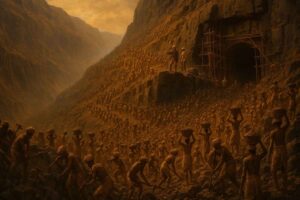
It was initially thought that British contractors would carry out all the work, but it was soon realised that an enormous amount of local labour was needed. Tens of thousands of Indian labourers worked on this incredibly dangerous project between 1856 and completion in 1863 and several thousand never came home.
The workers who built the Bhor Ghat railway were recruited from across Maharashtra and beyond. They lived in tent cities on the hillside, exposed to the monsoon rains that turned the construction sites into rivers of mud, the summer heat that baked the basalt rock until it was too hot to touch and the cholera and malaria that swept through the crowded camps with predictable and devastating regularity.
The Times reported on its completion in 1863 that as many as 45,000 men had been regularly employed on it. Many died during such hard construction work as diseases swept through the tent-cities of the huddled masses.
The work itself was extraordinarily dangerous. Blasting tunnels through solid basalt with gunpowder required workers to drill the blast holes by hand, insert the charges and retreat before the explosion, then return through the dust and debris to assess the damage and begin again. Accidents were frequent. The scaffolding on the high viaducts, constructed of bamboo and timber above drops of up to 160 feet, was routinely inadequate by any modern safety standard.
Construction entailed significant human cost due to harsh terrain, disease and accidents. Labor demands were immense, employing over 30,000 workers, many recruited from local and regional populations under hazardous conditions that included dynamite handling and precarious scaffolding.
Alice Tredwell: The Victorian Woman Who Managed the Most Complex Engineering Project in Asia From England
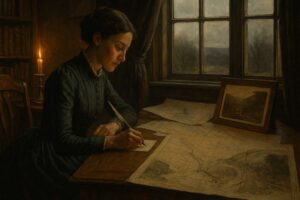 Here is the detail about the Bhor Ghat railway that stops every listener in their tracks.
The person who actually completed the construction of the most celebrated civil engineering achievement of 19th century India was not one of the celebrated English engineers whose names appear in the official histories.
It was a 36-year-old woman from Leek in Staffordshire who managed the project by correspondence from England while never setting foot on the construction site after the first few weeks.
Alice Tredwell née Pickering was born in Leek Staffordshire in 1823. She married Solomon Tredwell a railway contractor in Leeds in 1846. Awarded the construction of the Bhor Ghat section of the Great Indian Peninsular Railway Alice and Solomon arrived in India in 1859. Solomon died of dysentery or cholera within a month.
Within a month.
They had barely arrived. The scale of what awaited them on the Bhor Ghat hillside, the tunnels to blast, the viaducts to build, the 30,000 workers to manage in conditions of extraordinary danger, was entirely unaddressed. The contract was enormous in both scope and financial commitment. And the man who had won it was dead before he had seen a single day of the actual construction.
Alice Tredwell assumed the contract and appointed Messrs Adamson and Clowser to manage the contract for her in her absence as Mrs Tredwell returned to England. This arrangement was to last seven years.
Seven years. From England. Managing by correspondence, by contractual authority and by the financial resources she had inherited from her husband, Alice had inherited £70,000 from her husband. A sum of extraordinary magnitude in 1860, enough to have simply walked away from the contract, paid whatever penalties were due and returned to a comfortable life in Staffordshire.
She chose not to.
Alice Tredwell took up the contract with a remarkable degree of spirit and judgment. That description comes from a Victorian engineer writing in the 1860s. In the professional language of Victorian civil engineering, a world in which women were not expected to hold contracts, manage workforces or make engineering decisions of any kind, being described with a remarkable degree of spirit and judgment is not a polite compliment. It is genuine and barely concealed astonishment at a level of professional competence that the men around her had not anticipated and could not ignore.
But the contractual management is not the most extraordinary thing Alice Tredwell did on the Bhor Ghat project.
During the process she also meticulously photographed the construction of the line.
Alice Tredwell was a photographer. The surviving photographs of the Bhor Ghat construction, which are among the earliest documentary photographs of a major civil engineering project anywhere in the world, are attributed to her. The photographs in the archives of the Institution of Mechanical Engineers in London, showing the construction in progress, the tunnels being blasted, the viaduct scaffolding and the reversing station at Khandala, were taken by the woman who held the contract.
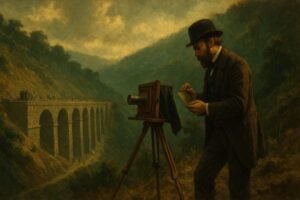
Think about what this means in the context of 1859 to 1863. Photography was barely twenty years old as a technology. The equipment required to take photographs in this period was heavy, fragile and technically demanding. The idea of a woman in Victorian England becoming a competent photographer was itself unusual. The idea of that same woman also holding the largest civil engineering contract in Asia simultaneously is almost impossible to process within the social constraints of the era in which it happened.
The opening ceremony on April 21 1863 at Khandala celebrated the English engineers. The Governor of Bombay’s speech praised the English engineers. The contemporary accounts focused on the English engineers.
Alice Tredwell, who held the contract that made the entire project possible after the death of the man who won it, who managed it for seven years from Staffordshire, who documented it with her own camera, who completed it when every rational Victorian calculation would have suggested she should simply walk away, was not mentioned in the Governor’s speech.
She died four years later in 1867. She was 44 years old.
The reversing station at Khandala that she contracted to build is still standing. The tunnels she contracted to blast through solid basalt are still carrying trains through the Western Ghats today. The photographs she took of their construction are in the archives of the Institution of Mechanical Engineers in London.
Her name is almost entirely absent from every account of the Bhor Ghat railway that the average educated person is likely to encounter.
Until now.
The Opening Ceremony and the Speech Nobody Remembers Honestly
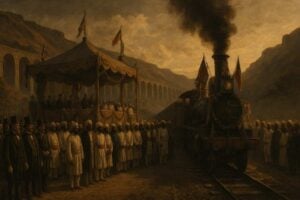
The grand opening of the railway line on April 21 1863 was a spectacular event attended by a large number of visitors including the Governor of Bombay Sir Bartle Frere. In his speech he declared that India had entered the railway age.
The opening ceremony at Khandala on April 21 1863 was designed as a celebration of British engineering genius and colonial benevolence. The Governor of Bombay’s speech praised the English engineers. He compared the Bhor Ghat railway to the great cave temples of western India, suggesting that future ages would look upon the railway as a superhuman achievement equivalent to the ancient sacred architecture of the Deccan.
However the words that followed were those of an imperialist talking about how positively British rule had impacted India, transforming it from a society of bullock carts to steam locomotives, conveniently skirting the massive loss of lives, working conditions and difficulties faced by the workforce that had toiled on the Bhor Ghat project. He lauded the work of the English engineers while almost forgetting that the railway line had been built quite literally with blood and sweat of Indian labourers.
The speech and the ceremony that surrounded it encapsulate the complete moral complexity of the Bhor Ghat railway story. It was a genuine engineering achievement of extraordinary ambition and technical sophistication. It transformed the economic geography of western India. It connected the Deccan Plateau to the port of Bombay in ways that reshaped commerce, agriculture and urbanisation across Maharashtra for generations.
It was also built by tens of thousands of Indian workers in conditions of desperate hardship, for the primary benefit of a cotton trade that served British industrial interests. The workers who died building it were not celebrated at the opening ceremony. Their families received no compensation. Their names are largely unrecorded.
Standing at the Bhor Ghat reversing station today, looking at the tunnels and the viaducts and the dramatic mountain landscape through which the railway climbs, is standing in a place where these two truths, the engineering achievement and the human cost, are both completely present and completely inseparable.
The Bhor Ghat Railway Today: What You Can See and Experience
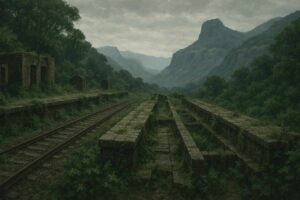
The Reversing Station at Khandala: The Most Unusual Piece of Victorian Railway Engineering in India
The Bhor Ghat Railway incline constructed 1856-63 carried the south-eastern line of the Great Indian Peninsula Railway through the Western Ghats. The incline was sixteen miles long rising over 1800 vertical feet in that distance. The gradient was 1 in 40 with 2 miles of 1 in 37. No fewer than ten and a half miles were curved and there were twenty-five tunnels with a total length of two and a half miles also eight lofty viaducts varying in height up to 160 feet.
The reversing station at Khandala is the most extraordinary surviving piece of the original Bhor Ghat railway engineering and the element of the heritage experience that most rewards the visitor who knows what they are looking at.
The reversing station was required because the gradient of the Bhor Ghat was too steep for even a stationary engine hauling system to manage in a single straight climb. The trains ascending the ghat had to stop at the reversing station, the locomotive would move to the other end of the train, and the train would then ascend the next section in reverse, allowing a zigzag climbing pattern that managed the gradient in sections.
Except for a realignment to eliminate the reversing station which somewhat lengthened the route this incline remains today very much as it was then constructed.
The reversing station today is a haunting heritage site. The stone platforms. The overgrown track beds of the original switching arrangement. The views across the Sahyadri Hills that the Victorian engineers who built this structure would have seen from the same vantage point in the 1860s. And the knowledge that every train that passes through the Bhor Ghat today is using the same tunnels and the same basic route that those 42,000 workers carved out of the basalt hillside between 1856 and 1863.
The Tunnels and Viaducts: Engineering You Can Still See
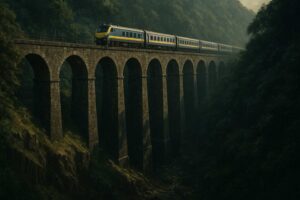
The twenty-five tunnels of the Bhor Ghat railway, blasted through solid basalt rock by workers with hand drills and gunpowder, are still in use on the Mumbai Pune railway line today. Passengers in the sleeper coaches of the Mumbai-Pune express pass through them in the dark, the tunnel walls just feet from the carriage windows, without knowing that what is rushing past them in the darkness was blasted out of the rock by hand tools more than 160 years ago.
The eight masonry viaducts, their stone arches rising up to 160 feet above the valley floor, are among the most visually dramatic pieces of Victorian engineering surviving anywhere in India. Seen from the road below or from the viewpoints above Khandala and Lonavala, the combination of the stone viaducts, the dramatic Western Ghats landscape and the railway line threading through the tunnels between them creates one of the most extraordinary heritage landscapes available anywhere in Maharashtra.
The now abandoned reversing station are heritage sites. Khandala holds a piece of history for it connects the ancient Bhor Ghat railway line that was built to connect the cities of Mumbai to Pune, Calcutta, Madras and Delhi. Considered one of the biggest engineering victories of the 19th century.
The Karla and Bhaja Caves: The 2000-Year-Old Trade Route That Preceded the Railway
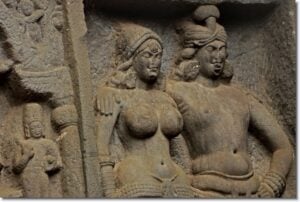
The Bhor Ghat was not just a Victorian engineering project. It was an ancient trade route.
Two thousand years before the Great Indian Peninsula Railway blasted its tunnels through the basalt rock of the Western Ghats, Buddhist merchants and monks were using the Bhor Ghat crossing to move between the Konkan coast and the Deccan Plateau. And they left behind two of the most extraordinary surviving examples of ancient rock-cut architecture in India.
The Karla and Bhaja caves, carved directly into the basalt cliff faces of the Western Ghats near Lonavala, are Buddhist chaityas and viharas dating from the 2nd century BCE to the 2nd century CE. The Karla cave contains the largest and best-preserved rock-cut chaitya hall in India, its interior carved from solid basalt with a precision and an artistic ambition that remains astonishing even by the standards of the most sophisticated ancient architecture anywhere in the world.
The same mountain pass that the Victorian engineers found impassable, the same Bhor Ghat that required seven years and forty-two thousand workers to conquer with steel rails, was being used by Buddhist traders and pilgrims two thousand years earlier on foot. The caves they funded and patronised with their trade profits are the most tangible surviving evidence of how ancient the commercial geography of this mountain crossing actually is.
Our Karla Bhaja caves tour from Pune takes you inside this extraordinary 2000-year-old Buddhist heritage alongside the Victorian railway story, connecting the ancient trade route and the colonial engineering achievement in a single extraordinary day of heritage exploration.
Frequently Asked Questions
What is the Bhor Ghat railway and why is it historically significant?
The Bhor Ghat railway is the section of the Great Indian Peninsula Railway built between 1856 and 1863 through the Western Ghats between Mumbai and Pune. It is historically significant because it was one of the most ambitious civil engineering projects of the 19th century, requiring 42,000 workers at its peak, 25 tunnels blasted through solid basalt and 8 stone viaducts rising up to 160 feet above the valley floor to conquer gradients that every Victorian engineer had previously declared impossible. The Times of London described it as one of the greatest triumphs of 19th-century civil engineering in the world. The tunnels and viaducts are still carrying Mumbai to Pune railway traffic over 160 years later.
Who was Alice Tredwell and what was her connection to the Bhor Ghat railway?
Alice Tredwell, born in Leek Staffordshire in 1823, was the Victorian woman who completed the construction contract for the most difficult section of the Bhor Ghat railway. Her husband Solomon Tredwell had won the contract but died within a month of arriving in India. Alice assumed the contract, returned to England and managed the most complex engineering project in Asia from Staffordshire for seven years through two appointed engineers. She inherited £70,000 and chose to honour the contract rather than walk away. She also photographed the construction and her photographs are preserved in the archives of the Institution of Mechanical Engineers in London. She completed the project successfully in 1863 and died four years later aged 44. She was not mentioned in the Governor’s opening ceremony speech.
Why was the Bhor Ghat railway so difficult to build?
The Bhor Ghat railway was so difficult to build because the Western Ghats rise over 1800 feet in sixteen miles between the Konkan coastal plain and the Deccan Plateau. The gradients required, reaching one in forty and in some sections one in thirty-seven, were far beyond the capability of any conventional adhesion railway where the locomotive pushes its drive wheels against the rail surface. The solution was the reversing station at Khandala, an ingenious engineering device that allowed trains to climb in a zigzag pattern by switching direction at key points, but building this system required blasting 25 tunnels through solid basalt, constructing 8 massive stone viaducts and excavating 54 million cubic feet of hard rock over seven years.
Can you still see the Bhor Ghat railway engineering today?
Yes. The 25 tunnels and 8 stone viaducts of the Bhor Ghat railway are still standing and still in active use on the Mumbai to Pune railway line today. Every train that travels between Mumbai and Pune passes through the same tunnels that 42,000 workers blasted through solid basalt between 1856 and 1863. The largely abandoned reversing station at Khandala, with its overgrown stone platforms and original track bed layout, is accessible in the hills above Lonavala and is the most atmospheric surviving evidence of the original Victorian engineering solution. The Karla and Bhaja Buddhist cave temples near Lonavala, carved from the same basalt cliffs two thousand years before the railway arrived, complete the heritage landscape of the Bhor Ghat mountain pass.
What is the connection between the Bhor Ghat railway and the Karla Bhaja caves?
The Karla and Bhaja Buddhist cave temples near Lonavala were carved from the basalt cliffs of the Western Ghats between the 2nd century BCE and the 2nd century CE by Buddhist merchants and monks who used the Bhor Ghat mountain pass as their trade route between the Konkan coast and the Deccan Plateau. The same mountain crossing that Buddhist traders used two thousand years ago was the crossing that the Victorian engineers of the Great Indian Peninsula Railway conquered with steel rails between 1856 and 1863. The Karla cave contains the largest and best-preserved rock-cut chaitya hall in India and is one of the most extraordinary examples of ancient Indian Buddhist architecture accessible from the Mumbai Pune heritage circuit.
Which tours does 5 Senses Tours offer connected to the Bhor Ghat railway heritage?
5 Senses Tours offers expert guided heritage experiences across the complete Mumbai to Pune and Deccan heritage circuit connected to the Bhor Ghat railway story. Our Mumbai tours cover the complete Victorian heritage of Mumbai including the Chhatrapati Shivaji Maharaj Terminus UNESCO World Heritage building. Our Pune city tour covers Shaniwarwada and the complete Pune heritage. Our Pune tours hub includes the Karla Bhaja caves day trip. And our Aurangabad tours cover the complete Deccan heritage circuit including the UNESCO World Heritage Ajanta and Ellora caves. All tours are private, expert-guided and completely customised for your group.
Plan Your Mumbai Pune Heritage Tour With 5 Senses Tours
The Complete Mumbai Heritage Experience
The Bhor Ghat railway story begins in Mumbai. The cotton that drove the construction was exported from the port of Bombay. The company that built the railway, the Great Indian Peninsula Railway, had its headquarters in Bombay. And the city that emerged from the transformation wrought by that railway, one of the most extraordinary and most complex urban landscapes in Asia, is the starting point for the complete Mumbai Pune heritage tour.
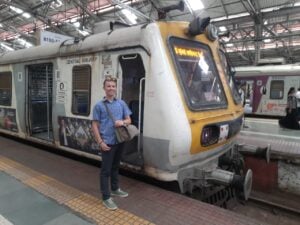
Our Mumbai tours cover the complete heritage of one of the world’s most extraordinary cities. The Chhatrapati Shivaji Maharaj Terminus, the UNESCO World Heritage building that houses the successor railway to the Great Indian Peninsula Railway, is the most direct physical connection between the Bhor Ghat story and the living city of Mumbai. The building’s extraordinary Victorian Gothic architecture, its cast iron roof, its gargoyles and its turrets, was designed in the same era that the Bhor Ghat railway was being built and by engineers and architects working within the same cultural and professional world.
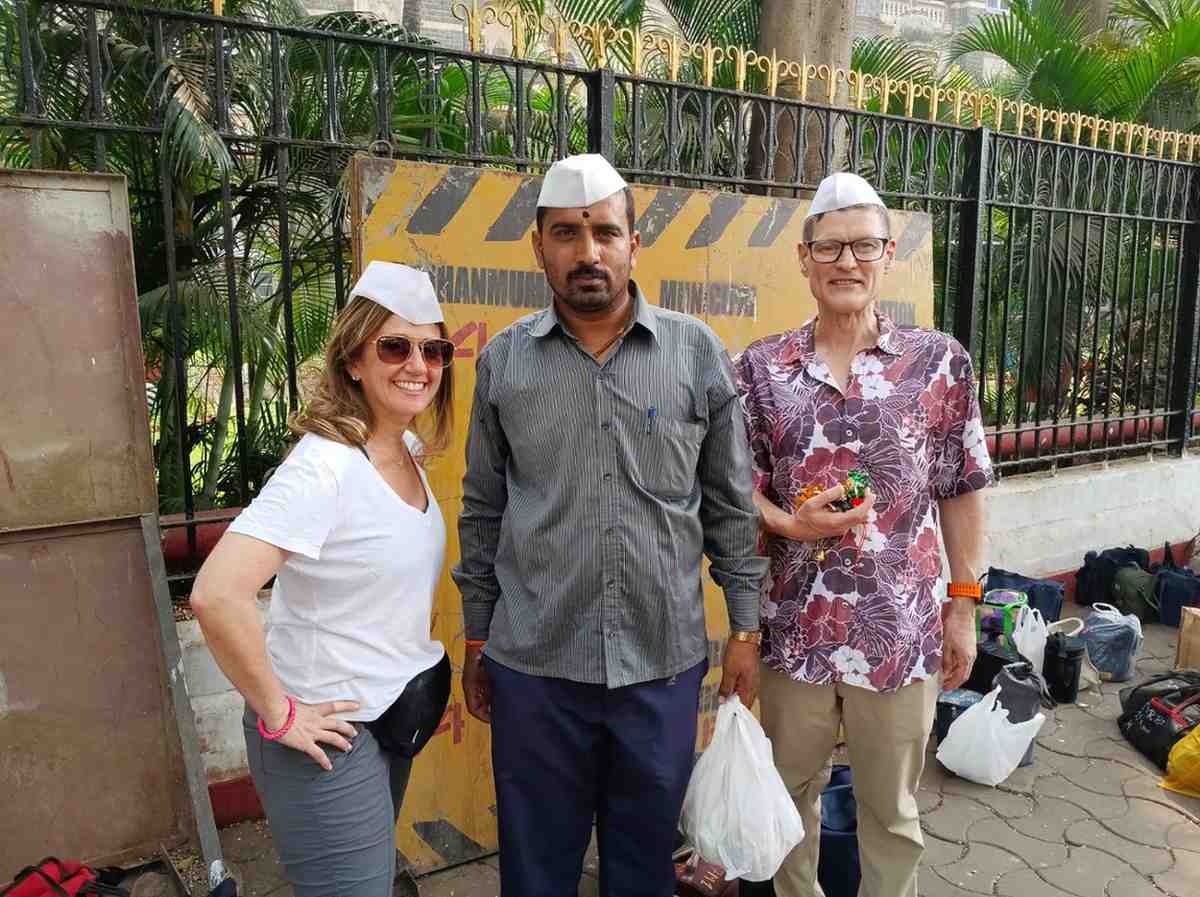
Our Dabbawala tour Mumbai connects the railway heritage of Mumbai to its most extraordinary living tradition. The dabbawala network, which delivers approximately 200,000 home-cooked lunches from the suburbs to offices across Mumbai every single day using the same railway network that the Bhor Ghat incline made possible, is one of the most remarkable logistics operations in the world and a direct descendant of the commercial transformation that the Victorian railway brought to the city.
The Pune Heritage Connection
The other end of the Bhor Ghat railway story is Pune, the Queen of the Deccan, whose transformation from a primarily military and administrative city into the cultural and commercial capital of Maharashtra was driven in large part by the railway connection that the Bhor Ghat incline provided.
Our Pune city tour covers the complete heritage of one of India’s most historically rich cities. Shaniwarwada, the seat of the Peshwa rulers of the Maratha Empire who controlled the Deccan Plateau before the British arrived, stands as the most powerful reminder of what the British railway was designed to commercially subordinate. The Aga Khan Palace, where Mahatma Gandhi was imprisoned during the Quit India Movement, connects the railway era to the independence movement that the commercial exploitation enabled by the Bhor Ghat railway ultimately helped to generate.
Our Karla Bhaja caves tour from Pune covers the extraordinary 2000-year-old Buddhist rock-cut architecture of the same mountain pass that the Victorian engineers conquered with their railway, connecting the ancient trade route heritage to the colonial engineering achievement in a single extraordinary day.
For the complete Pune cultural experience our Pune tours hub covers the full range of heritage walks, city tours and day trips available from the Queen of the Deccan.
The Aurangabad Extension: Where the Railway Story Connects to the Greatest Caves on Earth
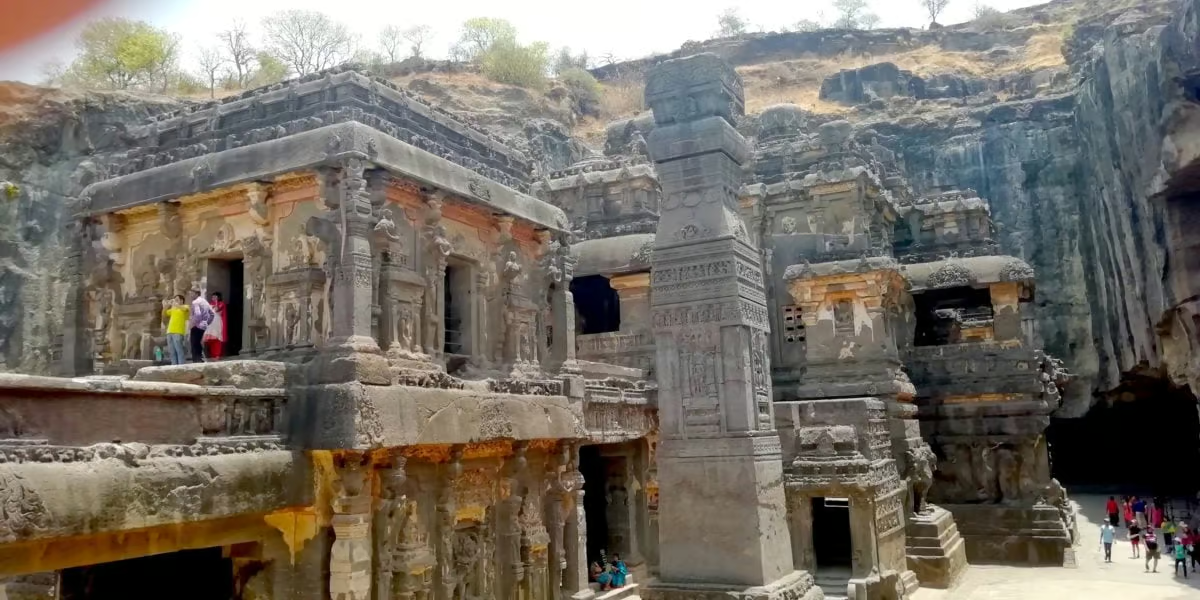
The railway line that the Bhor Ghat incline made possible continued beyond Pune into the Deccan Plateau, eventually reaching Aurangabad, the gateway to Ajanta and Ellora.
The Ajanta Caves, whose extraordinary Buddhist frescoes painted between the 2nd century BCE and the 6th century CE represent the most important surviving body of ancient Indian painting in existence, and the Ellora Caves, whose Kailashnath Temple carved from a single cliff face remains one of the most audacious architectural achievements in human history, both became significantly more accessible to both colonial administrators and the wider world because of the railway network that the Bhor Ghat incline initiated.
Our Aurangabad tours cover the complete Ajanta and Ellora heritage alongside the extraordinary Deccan sultanate architecture of Bibi Ka Maqbara and the Daulatabad Fort, creating a complete encounter with one of the most historically layered landscapes in India.
The connection between the Bhor Ghat railway story and the Aurangabad heritage is more than geographical. It is the connection between the Victorian commercial project that opened the Deccan to modern commerce and the ancient sacred traditions that the Deccan had nurtured for two thousand years before any British engineer looked at the Western Ghats and decided to conquer them.
Book your Mumbai Pune heritage tour with 5 Senses Tours today
Leave a Reply