city tour
Mumbai experience
World’s biggest open air laundry, street markets, Chhatrapati Shivaji Terminus, Big Ben of Mumbai, Gateway of India, and Siddhi Vinayak temple.
Ferry from Gateway of India to experience the legendary 3 faced Shiva
No inscription survives at Elephanta to say who carved it, or exactly when. The Portuguese found a large stone inscription on the island in the 16th century, and it has since been lost. Scholars still argue about the date, somewhere between the mid 5th and the 8th centuries, and about the patron.
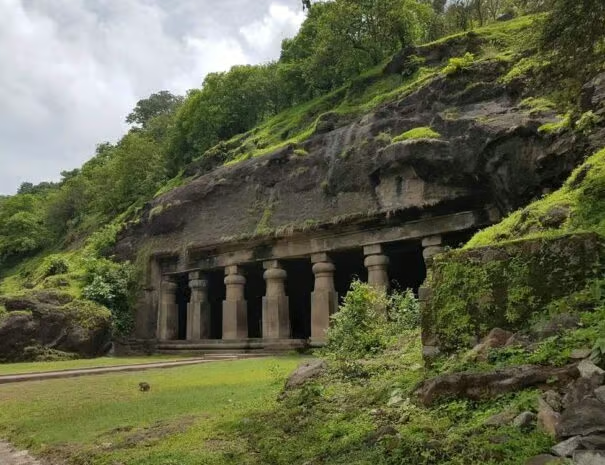
What nobody argues about is the carving. Inside a hill in Mumbai harbour, a temple has been cut from solid rock, its pillars, halls and gods all left standing as the stone was taken away around them. You reach it by ferry from the foot of one of India’s most famous monuments, and it is every bit as extraordinary as the journey suggests.

This is a day of two thresholds. The first is the Gateway of India, built to mark an arrival, which ended up marking a departure. The second is the entrance to the Great Cave of Elephanta, a UNESCO World Heritage Site since 1987, where a single hall of pillars opens onto one of the masterpieces of Indian sculpture. Between them is an hour on the water. The island was known as Gharapuri, the city of caves, long before the Portuguese renamed it in 1534 after a stone elephant they found near the landing. Your private guide connects the arch, the harbour and the caves into one story of how this coast has welcomed, and lost, so many worlds.
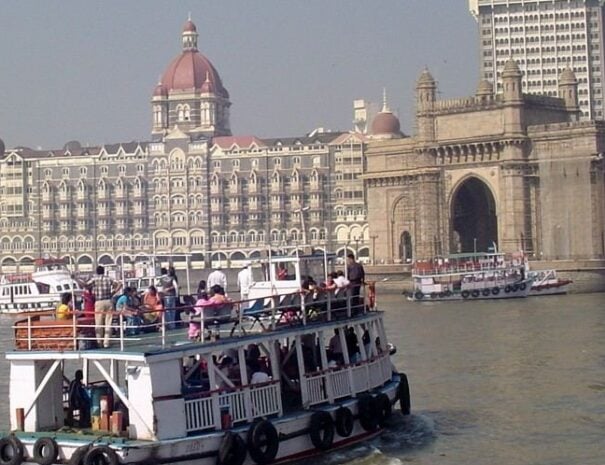
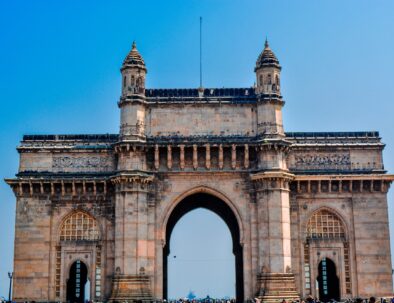
King George V and Queen Mary landed at Apollo Bunder on 2 December 1911, on their way to the Delhi Durbar. The arch built to commemorate the landing was not finished for another thirteen years. It is said the royal couple saw only a cardboard model. George Wittet’s design was sanctioned in 1914, and the arch was completed in 1924. It is a 26 metre basalt triumphal arch in the Indo Saracenic style, with Islamic elements woven into its design.
Its real story came later. On 28 February 1948, the last British troops to leave India, the First Battalion of the Somerset Light Infantry, marched out through the same arch in a ceremony that signalled the end of British rule. A gateway built for arrival became the gateway of departure.
The ferry crosses the harbour in about an hour, about 10 kilometres to the island. The city thins into a skyline as you go. A train takes you from the pier to the base. There are about 120 steps up to the caves. The pace is yours, and your guide tells the island’s story as you climb.
Note the Ferry is a public transport vehicle and is not private.
The Great Cave, Cave 1, is about 39 metres from the front entrance to the back. It is a temple cut by removing rock: the columns, the inner spaces and the images were all created by taking stone away, so the whole temple is a vast sculpture that you walk through.
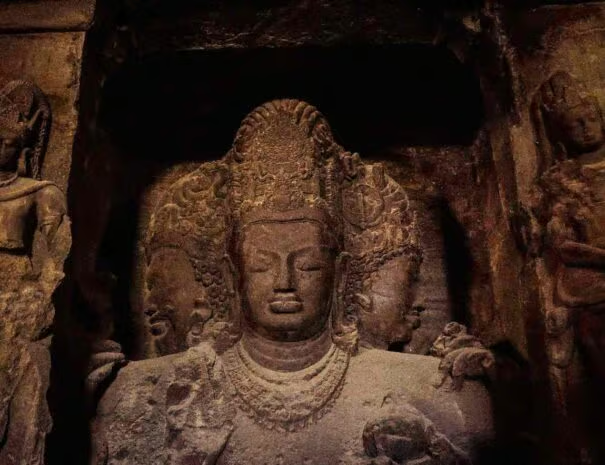
Opposite the entrance stands the Sadashiva, the three faced Shiva also called the Maheshamurti, more than 20 feet tall. The three faces show Shiva as creator, preserver and destroyer. UNESCO cited it as the masterpiece that anchors the whole cave. Around it your guide reads the panels: Shiva as half man and half woman in Ardhanarishvara, Shiva bringing the Ganga down to earth in the Gangadhara, Ravana shaking Mount Kailasa, and the marriage of Shiva and Parvati.
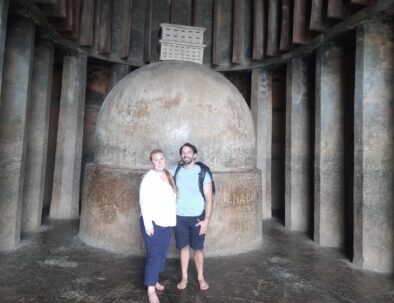
Elephanta has seven caves in two groups. Five Shaiva caves stand on Cannon Hill, and two Buddhist caves with brick stupas as old as the 2nd century BCE stand on Stupa Hill. One of the caves was later used as a Catholic church during Portuguese rule. The stone elephant that gave the island its name now stands at the Dr Bhau Daji Lad Museum in Mumbai.
Elephanta’s sculpture is a library of stories from the Shiva tradition, and without someone to read it, the panels become beautiful but silent shapes. A 5 Senses Tour guide explains what each scene shows, why the Great Cave is laid out as it is, and where the scholarly arguments about date and patron stand today. The guide also shows you the damage that time and the Portuguese era left behind, so you see the cave as it truly is.
The caves are open Tuesday to Sunday, from about 9:30 AM to 5:30 PM, and closed on Mondays. Ferries run roughly every 30 minutes, the first at 9:00 AM, the last to the island at about 2:00 PM and the last return at about 5:30 PM, though timings depend on the weather. Ferries do not run in the monsoon, from about June to September, and November to February is the most comfortable season. Wear sturdy shoes and a hat for the climb.
✅ Expert cultural guide
✅ Ferry tickets to Elephanta and back
✅ Entry fee
✅ Toy train from the pier
✅ Visit to the Gateway of India
Elephanta Caves Tour from Mumbai
No. The caves are closed every Monday, and ferries do not run for sightseeing that day. They are open Tuesday to Sunday, so book your private day trip for any other day of the week.
The ferry takes about one hour from the Gateway of India, about 10 kilometres across the harbour. From the pier a toy train carries you to the foot of the climb, and there are about 120 steps up to the caves.
UNESCO places the rock cut caves in the mid 5th to 6th centuries CE, the Archaeological Survey of India says about the 6th to 7th century, and other scholars range up to the 8th. No inscription survives, so the patron is debated, with the early Kalachuri king Krishnaraja often proposed on the evidence of coins.
It is the Sadashiva or Maheshamurti, a colossal sculpture in Cave 1, more than 20 feet tall. Its three faces show Shiva as creator, preserver and destroyer, and UNESCO cited it as the masterpiece of the site.
It includes an expert guide, ferry tickets, the Elephanta entry fee, and a visit to the Gateway of India
Choose from our comprehensive list of private guided tours that are immersive cultural experiences.
Join our immersive culture walks to discover authentic India. Led by a guide, experience culture, heritage & food across India.
Listen to Incredible India Travel, a podcast about the best places to visit and experiences in India.
Join our ride on Royal Enfield Motorcycles s we experience authentic India, led by an escort rider.