
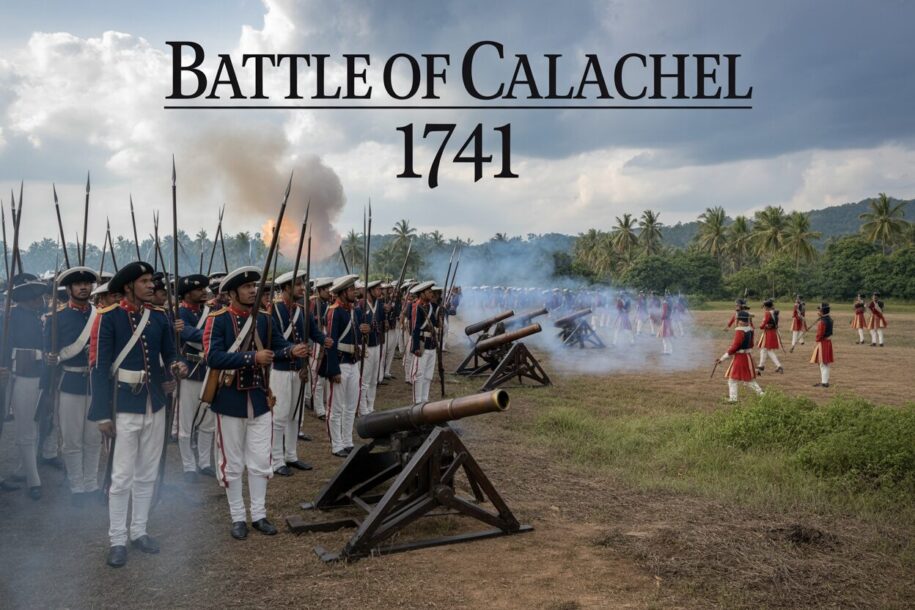
The Forgotten Victory That Changed Colonial India Forever
Most history buffs know about major colonial battles like Plassey, but the Battle of Calachel 1741 remains one of India’s most overlooked military triumphs. This decisive clash saw the Kingdom of Travancore deliver a crushing defeat to the mighty Dutch East India Company, marking a rare moment when a regional Indian power outmaneuvered European colonizers at the height of their expansion.
This deep dive into Travancore vs Dutch warfare is perfect for history enthusiasts, students of Indian colonial history, and anyone curious about forgotten Indian battles that shaped the subcontinent’s future. You’ll discover how Marthanda Varma’s brilliant military strategies and modern weaponry caught the Dutch completely off guard in this pivotal Kerala historical battle.
We’ll explore the complex political tensions that sparked this Travancore Dutch conflict, examine the key military leaders and tactical decisions that determined the outcome, and uncover how this stunning victory transformed Travancore military history while dealing a significant blow to Dutch colonial ambitions in South India.
Historical Context Setting the Stage for Conflict

Dutch Colonial Expansion in 17th Century India
The Dutch East India Company (VOC) arrived in India with ambitious plans to dominate the lucrative spice trade that had made European merchants incredibly wealthy. By the early 1700s, they had established a strong presence along India’s western and eastern coasts, with major settlements in places like Cochin, Nagapattinam, and Pulicat. The company operated differently from other European powers – they focused heavily on trade monopolies and weren’t initially interested in territorial conquest.
The Dutch strategy in Kerala was particularly aggressive. They systematically worked to control the pepper and cardamom trade, which were among the most valuable commodities in global markets. Their approach involved making exclusive trade agreements with local rulers, often backing these deals with military pressure. The VOC maintained a powerful fleet and well-trained armies that could quickly respond to any threats to their commercial interests.
By 1741, the Dutch had been operating in Kerala for over a century. They controlled several key ports and had built an extensive network of trading posts, warehouses, and fortifications. Their influence extended deep into the interior through alliances with local chieftains and merchants who depended on Dutch trade routes for their prosperity.
Travancore’s Strategic Position in South India
Travancore occupied one of the most strategically important positions in South India. The kingdom controlled crucial mountain passes, fertile plains, and a significant stretch of the Malabar Coast. Under Marthanda Varma’s leadership, Travancore had been rapidly expanding its territory and consolidating power since the 1730s.
The kingdom’s location gave it natural advantages that made it nearly impossible to ignore. Travancore controlled access to some of the richest spice-growing regions in Kerala, including areas that produced the highest quality black pepper and cardamom. The Western Ghats provided natural fortifications, while the coastline offered multiple ports that could serve as alternatives to Dutch-controlled harbors.
Marthanda Varma had spent years modernizing his military and administrative systems. He recruited European officers to train his troops in contemporary warfare tactics and invested heavily in artillery and firearms. This military modernization program made Travancore one of the most formidable regional powers in South India, capable of challenging even established European colonial forces.
Economic Interests
The Battle of Calachel 1741 wasn’t fought over abstract political principles – it was fundamentally about money and trade control. The Dutch had grown accustomed to dictating terms in Kerala’s spice markets, and they saw Travancore’s rising power as a direct threat to their profit margins.
Pepper prices in European markets could make or break trading companies. The Dutch had built their entire Kerala operation around maintaining artificially low purchase prices from local producers while selling at premium rates in Amsterdam and other European cities. Travancore’s growing influence threatened this system because Marthanda Varma was offering better prices to farmers and merchants, encouraging them to break their exclusive agreements with the Dutch.
The economic stakes were enormous. Kerala’s spice trade generated revenues that funded Dutch operations across Asia. Losing control of this market would have severely damaged the VOC’s ability to compete with English and French trading companies that were also expanding their presence in India.
Local merchants and farmers found themselves caught between competing powers. Many secretly preferred dealing with Travancore because the kingdom offered more favorable terms and didn’t impose the same restrictive monopoly conditions that the Dutch demanded. This shift in economic loyalty created the underlying tension that would eventually explode into open warfare.
Political Climate Leading to Military Tensions
The political situation in Kerala during the early 1740s was incredibly complex and volatile. Multiple small kingdoms, principalities, and trading companies were constantly maneuvering for advantage. The Dutch had traditionally maintained their position through a combination of superior firepower and carefully managed alliances with local rulers.
Marthanda Varma’s aggressive expansion policy had already alarmed several established powers in the region. He had successfully conquered or absorbed numerous smaller kingdoms, and his military campaigns showed no signs of slowing down. The Dutch East India Company found itself in the unfamiliar position of being challenged by an Indian ruler who possessed both the military capability and political will to resist European dominance.
The immediate trigger for conflict came from disputes over territorial boundaries and trading rights. Travancore’s expansion had brought its borders dangerously close to Dutch-controlled territories, and both sides had different interpretations of existing treaty obligations. Small incidents – raids on trading posts, disputes over tax collection, conflicts between local officials – kept escalating until diplomatic solutions became impossible.
European colonial powers had grown comfortable with the idea that Indian rulers would eventually submit to their superior military technology and organizational systems. Marthanda Varma represented a new type of Indian leader who had learned European military techniques while maintaining the advantages of local knowledge, popular support, and familiarity with the terrain. This combination would prove decisive in the forgotten Indian battles that were about to unfold.
Key Players
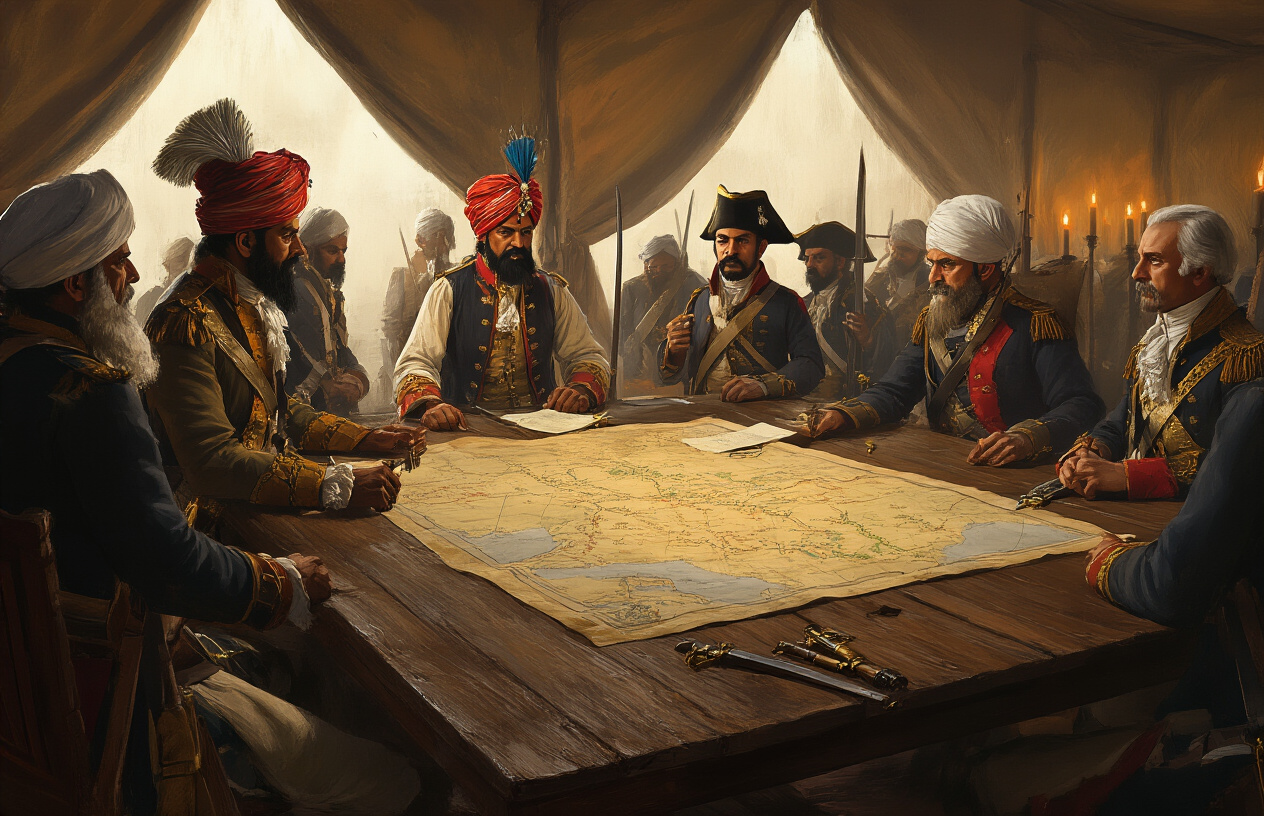
Maharaja Marthanda Varma’s Leadership and Vision
Marthanda Varma stands as one of the most formidable rulers in Kerala’s history, transforming Travancore from a small princely state into a military powerhouse. His strategic brilliance during the Calachel Battle in 1741 showcased his deep understanding of both European military tactics and local warfare traditions.
The Maharaja’s military reforms began years before the actual confrontation with the Dutch East India Company. He modernized Travancore’s army by recruiting European military advisors, particularly Captain Eustachius De Lannoy, a former Dutch officer who became instrumental in training local forces. Marthanda Varma recognized that defeating European colonial powers required adopting their military innovations while leveraging local geographical advantages.
His vision extended beyond mere military conquest. The ruler understood that controlling spice trade routes would determine regional supremacy. By challenging Dutch monopolistic practices, he positioned Travancore as a champion of local merchant interests against foreign exploitation.
Marthanda Varma’s diplomatic skills proved equally important. He forged strategic alliances with neighboring kingdoms and local chieftains who resented Dutch interference in traditional trade networks. His ability to unite diverse groups under a common cause against Dutch dominance demonstrated exceptional political acumen.
The Maharaja’s personal involvement in battle planning and his willingness to fight alongside his soldiers inspired fierce loyalty among his troops. This leadership style contrasted sharply with European colonial administrators who typically remained distant from actual combat zones.
Dutch East India Company’s Military Command Structure
The Dutch East India Company’s military organization in Kerala reflected typical colonial hierarchies that ultimately contributed to their defeat at Calachel. The company’s local command structure relied heavily on European officers with limited understanding of regional warfare dynamics and local political complexities.
Colonel Gelder led the Dutch forces, supported by a mixed army of European soldiers, local sepoys, and allied troops from various regional rulers who had previously submitted to Dutch authority. The company’s military doctrine emphasized conventional European battle formations and artillery superiority, which had proven successful in other colonial territories.
Dutch military planning suffered from overconfidence rooted in previous victories against local rulers. Company officials underestimated Travancore’s military capabilities and Marthanda Varma’s strategic innovations. Their intelligence networks failed to accurately assess the extent of local opposition or the quality of Travancore’s modernized forces.
The company’s divided attention across multiple territorial conflicts weakened their focus on the Travancore threat. Dutch resources were spread across various fronts in Ceylon, Java, and other Indian coastal regions, limiting their ability to concentrate sufficient forces against Marthanda Varma’s challenge.
Communication delays between local commanders and company headquarters in Batavia created additional strategic disadvantages. Critical decisions often required approval from distant administrators who lacked immediate knowledge of rapidly changing battlefield conditions.
Local Allies and Their Strategic Importance
The Battle of Calachel demonstrated how local alliances could decisively shift colonial power dynamics. Travancore’s success depended heavily on support from various regional groups who shared common interests in resisting Dutch commercial monopolies.
Local merchants played a crucial role by providing intelligence about Dutch military movements and supply lines. These traders had intimate knowledge of coastal geography and traditional trade routes that proved invaluable for strategic planning. Their support also ensured steady supplies for Travancore forces during extended campaign periods.
Several smaller kingdoms and chieftains joined Travancore’s cause, motivated by Dutch interference in their traditional authority structures. The Dutch East India Company’s policies of imposing direct control over local rulers had created widespread resentment that Marthanda Varma skillfully exploited.
Fishermen communities along the coast provided essential logistical support and served as informal intelligence networks. Their boats facilitated rapid movement of troops and supplies while their knowledge of tidal patterns and coastal conditions offered tactical advantages during amphibious operations.
Religious leaders also influenced local sentiment against Dutch rule. The company’s Protestant background and occasional interference with local religious practices created additional motivation for resistance among Hindu and Christian communities in the region.
The coordination between these diverse groups required exceptional diplomatic skills from Travancore’s leadership. Managing competing interests while maintaining unified opposition to Dutch forces tested Marthanda Varma’s political abilities as much as his military expertise.
Military Preparations and Strategic Planning
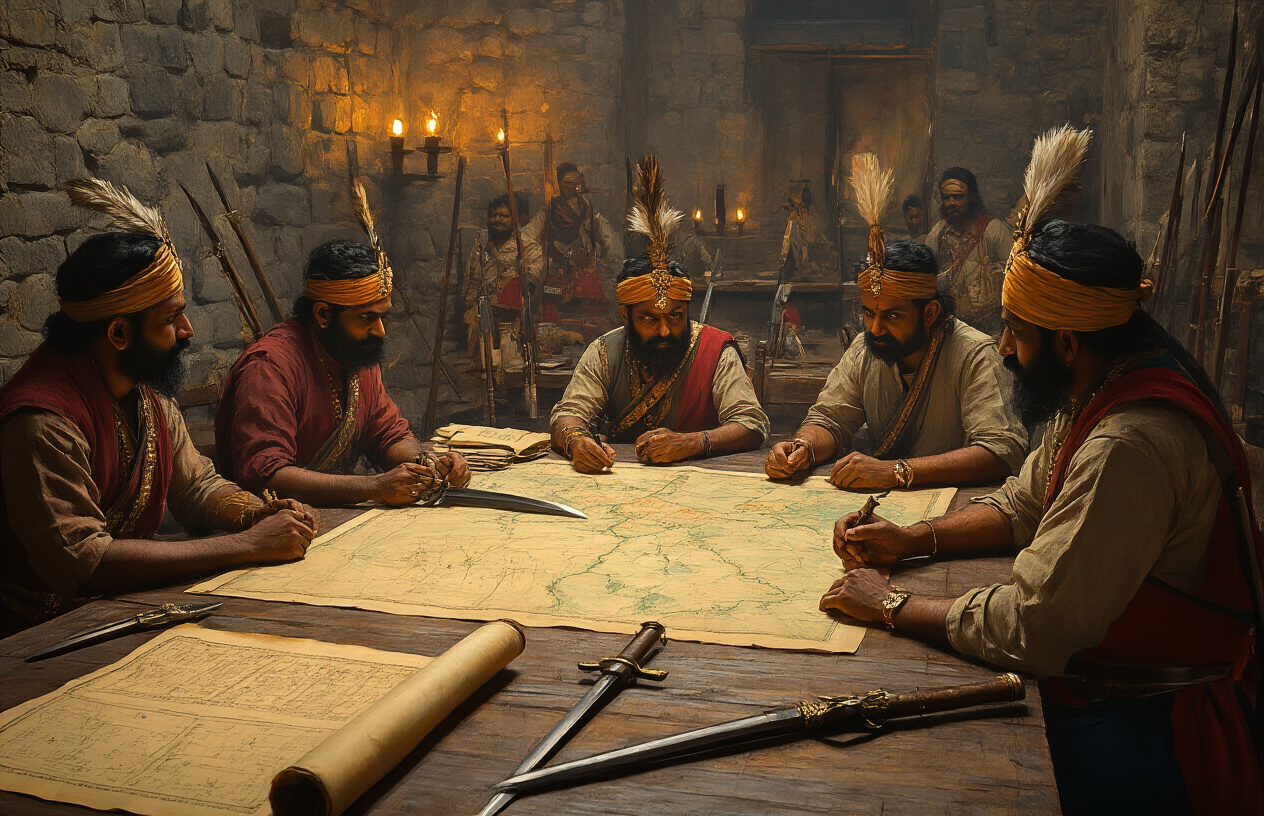
Travancore’s Army Modernization Efforts
Marthanda Varma understood that defeating the Dutch East India Company required more than traditional warfare. The Battle of Calachel would become a turning point largely due to his revolutionary approach to military reform. Starting in the late 1730s, Travancore embarked on an ambitious army modernization program that transformed a regional force into a formidable military machine.
The most significant change came through European military advisors, particularly Captain Eustachius De Lannoy, a Belgian officer who had previously served with the Dutch. De Lannoy introduced European drilling techniques, discipline, and formation fighting to Travancore troops. This wasn’t just about copying Western methods – it was about adapting them to local conditions and combining them with traditional Kerala martial arts.
Travancore’s military reforms included:
- Standardized training regimens based on European military manuals
- Uniform weapons and equipment to improve battlefield coordination
- Professional officer corps with clear command structures
- Regular pay systems to maintain soldier loyalty and discipline
The kingdom also invested heavily in local weapon manufacturing. Blacksmiths worked around the clock producing muskets, cannons, and ammunition. Unlike many Indian rulers who relied entirely on imported weapons, Marthanda Varma established domestic production capabilities that could sustain prolonged campaigns.
Dutch Naval and Land Forces Deployment
The Dutch East India Company approached the Travancore conflict with characteristic confidence, believing their superior technology and experience would guarantee victory. Their deployment strategy reflected typical colonial military thinking – overwhelming firepower combined with established supply lines.
Dutch naval forces positioned themselves strategically along the Kerala coast, with warships anchored at key ports. The company’s naval superiority seemed unquestionable, with heavily armed vessels capable of providing artillery support to land operations. Their ships carried experienced crews familiar with Indian Ocean warfare and monsoon patterns.
On land, the Dutch assembled a mixed force combining European officers, local sepoys, and allied troops from various princely states. This multi-ethnic army reflected the company’s standard approach to colonial warfare, but it also created communication challenges and divided loyalties.
| Dutch Military Assets | Specifications |
|---|---|
| Naval Vessels | 8-12 warships with 20-40 cannons each |
| European Officers | Approximately 200 trained professionals |
| Local Sepoys | 2,000-3,000 infantry troops |
| Artillery Pieces | 50+ cannons of various calibers |
| Cavalry Units | 500+ mounted soldiers |
The Dutch deployment revealed both strengths and weaknesses. While their firepower was impressive, their forces were spread across multiple objectives, diluting their concentrated strength at crucial moments during the Battle of Calachel.
Intelligence Gathering and Battlefield Selection
The Travancore Dutch conflict showcased the critical importance of intelligence in 18th-century warfare. Both sides invested heavily in gathering information about enemy movements, supply routes, and strategic intentions.
Travancore maintained extensive spy networks throughout Dutch-controlled territories. Local fishermen, traders, and even servants in Dutch households provided regular intelligence updates. Marthanda Varma’s intelligence system proved particularly effective because it relied on people with legitimate reasons to travel between territories.
The Dutch, despite their organizational advantages, struggled with intelligence gathering. Their reliance on European officers limited their access to local information networks. Many Dutch intelligence efforts depended on unreliable informants or captured prisoners whose information was often outdated.
Battlefield selection became a chess match between the opposing commanders. The Dutch preferred open terrain where their artillery and cavalry could operate effectively. Travancore forces favored areas with natural cover and limited maneuverability for large formations.
The eventual choice of Calachel as the primary battlefield reflected both strategic necessity and tactical opportunity. The location offered:
- Natural defensive positions for Travancore forces
- Limited Dutch naval support due to distance from major ports
- Familiar terrain for local Travancore troops
- Supply line advantages favoring the defending kingdom
Weapon Technology and Tactical Innovations
The Battle of Calachel demonstrated how technological adaptation could overcome apparent disadvantages. While the Dutch possessed superior individual weapons, Travancore’s tactical innovations proved decisive.
Travancore’s approach to weapon technology was pragmatic rather than revolutionary. Instead of trying to match Dutch firepower directly, they focused on maximizing the effectiveness of available weapons. Local blacksmiths modified traditional weapons to work alongside newly acquired muskets and cannons.
The kingdom developed innovative tactical formations that combined traditional Kerala martial arts with European military techniques. These hybrid tactics confused Dutch commanders who expected either purely traditional Indian fighting or complete European-style warfare.
Key tactical innovations included:
- Mixed formation fighting combining spear units with musket-armed troops
- Flexible command structures allowing rapid tactical adjustments
- Guerrilla warfare elements integrated with conventional battle tactics
- Coordinated artillery support using captured and locally-produced cannons
The Dutch technological advantage in individual weapons was offset by Travancore’s superior tactical coordination and battlefield adaptability. This technological and tactical balance would prove crucial when the armies finally clashed at Calachel, setting the stage for one of colonial India’s most surprising military upsets.
The Battle of Calachel Unfolds
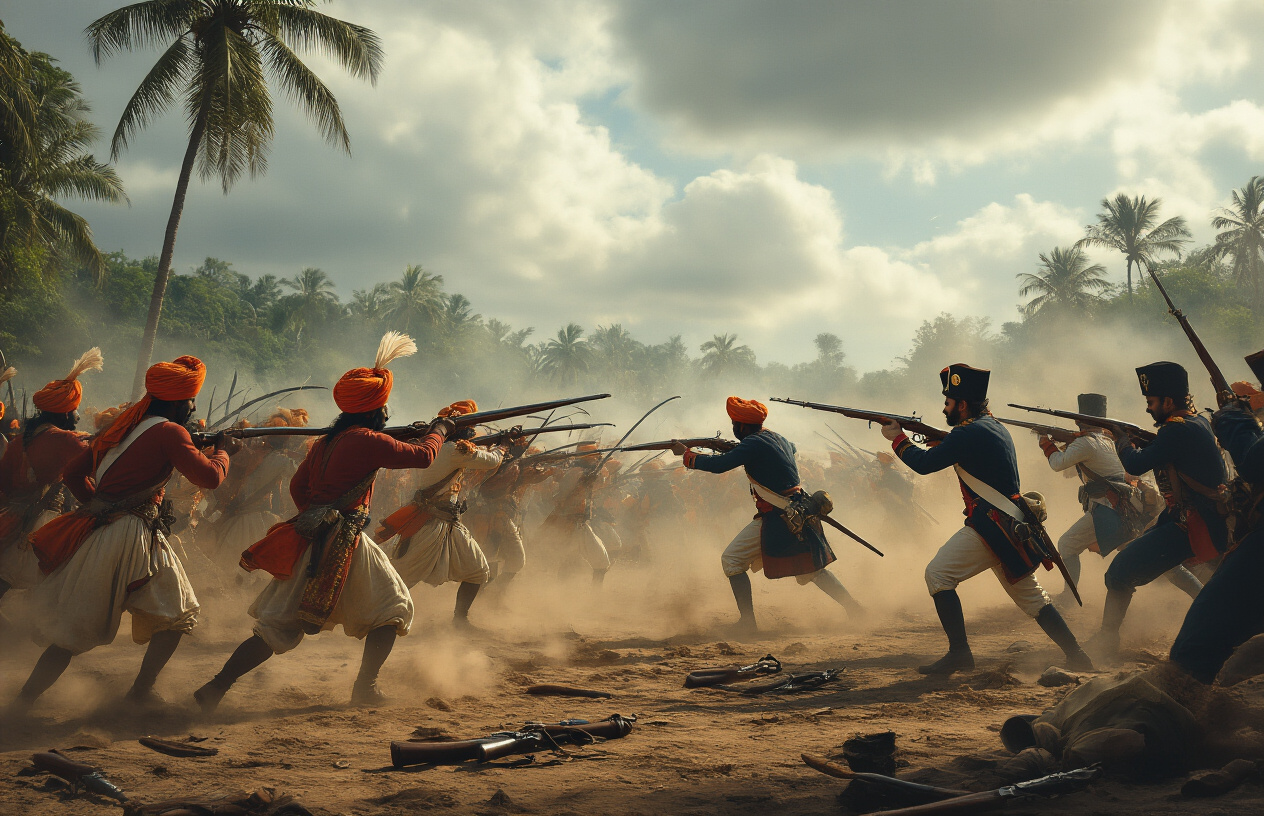
Opening Moves and Initial Engagements
The Battle of Calachel 1741 began at dawn on August 10th with Dutch forces confidently advancing toward Travancore positions. Commander Eustachius De Lannoy led approximately 3,000 well-equipped Dutch troops, including seasoned European soldiers and local mercenaries armed with the latest muskets and artillery pieces. The Dutch military machine had crushed numerous Indian rulers before, and De Lannoy expected another routine victory.
Travancore forces, numbering around 4,000 under the brilliant leadership of Ramayyan Dalawa, took defensive positions near the Calachel village. The opening exchanges saw Dutch artillery attempting to break Travancore formations with concentrated bombardments. However, Marthanda Varma’s forces had prepared extensive earthworks and trenches that absorbed much of the Dutch firepower’s impact.
Early skirmishes revealed the Dutch underestimation of Travancore military capabilities. Small Travancore units harassed Dutch flanks using guerrilla tactics, disrupting their traditional European battle formations. These hit-and-run attacks created confusion among Dutch ranks, who struggled to adapt their rigid military doctrine to the fluid battlefield conditions.
The initial cannon exchanges lasted nearly two hours, with both sides testing each other’s resolve. Dutch gunners found their artillery less effective against Travancore’s mobile defensive positions, while Travancore forces demonstrated remarkable discipline under fire, maintaining cohesion despite the thunderous bombardment.
Decisive Moments That Changed the Course
The battle’s turning point came when Travancore forces executed a brilliant flanking maneuver around midday. Ramayyan Dalawa had positioned elite troops in concealed positions along the Dutch right flank, waiting for the perfect moment to strike. As Dutch forces became heavily engaged in frontal assault, these hidden units emerged from dense vegetation to attack the exposed Dutch supply lines.
This surprise assault created immediate panic in Dutch ranks. European soldiers found themselves cut off from ammunition resupply and reinforcements. De Lannoy’s attempts to reorganize his scattered forces failed as Travancore warriors pressed their advantage with coordinated attacks from multiple directions.
The capture of key Dutch artillery pieces marked another decisive moment. Travancore forces overran several cannon positions, turning these weapons against their former owners. The psychological impact of facing their own guns proved devastating to Dutch morale. European mercenaries began abandoning their positions, creating gaps in the battle line that Travancore forces quickly exploited.
Weather conditions also favored Travancore. A sudden monsoon shower made gunpowder difficult to keep dry, neutralizing much of the Dutch technological advantage. Local troops, accustomed to fighting in such conditions, maintained their effectiveness while Dutch forces struggled with wet weapons and slippery terrain.
Tactical Brilliance of Travancore Forces
Marthanda Varma’s military innovations shone during the Travancore vs Dutch confrontation. His forces employed a flexible defensive strategy that combined traditional Kerala martial techniques with modern warfare principles. Rather than meeting Dutch forces head-on, Travancore commanders used the terrain to their advantage, creating killing zones where superior Dutch firepower became less effective.
The coordination between different Travancore military units demonstrated exceptional planning. Infantry, cavalry, and specialized archer units worked together seamlessly, each exploiting weaknesses created by the others. This integrated approach contrasted sharply with the compartmentalized Dutch military structure, where communication between units often broke down under pressure.
Travancore military history reveals their innovative use of local knowledge during this Kerala historical battle. Soldiers familiar with every stream, hill, and forest path guided tactical movements that repeatedly caught Dutch forces off-guard. Local intelligence networks provided real-time information about Dutch positions and movements, allowing Travancore commanders to anticipate enemy actions.
The battle showcased remarkable adaptability as Travancore forces modified their tactics throughout the engagement. When Dutch forces attempted to reform their lines, Travancore units shifted from defensive positions to aggressive pursuit. This tactical flexibility, combined with superior knowledge of local conditions, proved decisive in achieving victory against the previously invincible Dutch East India Company forces.
Immediate Aftermath and Historical Impact
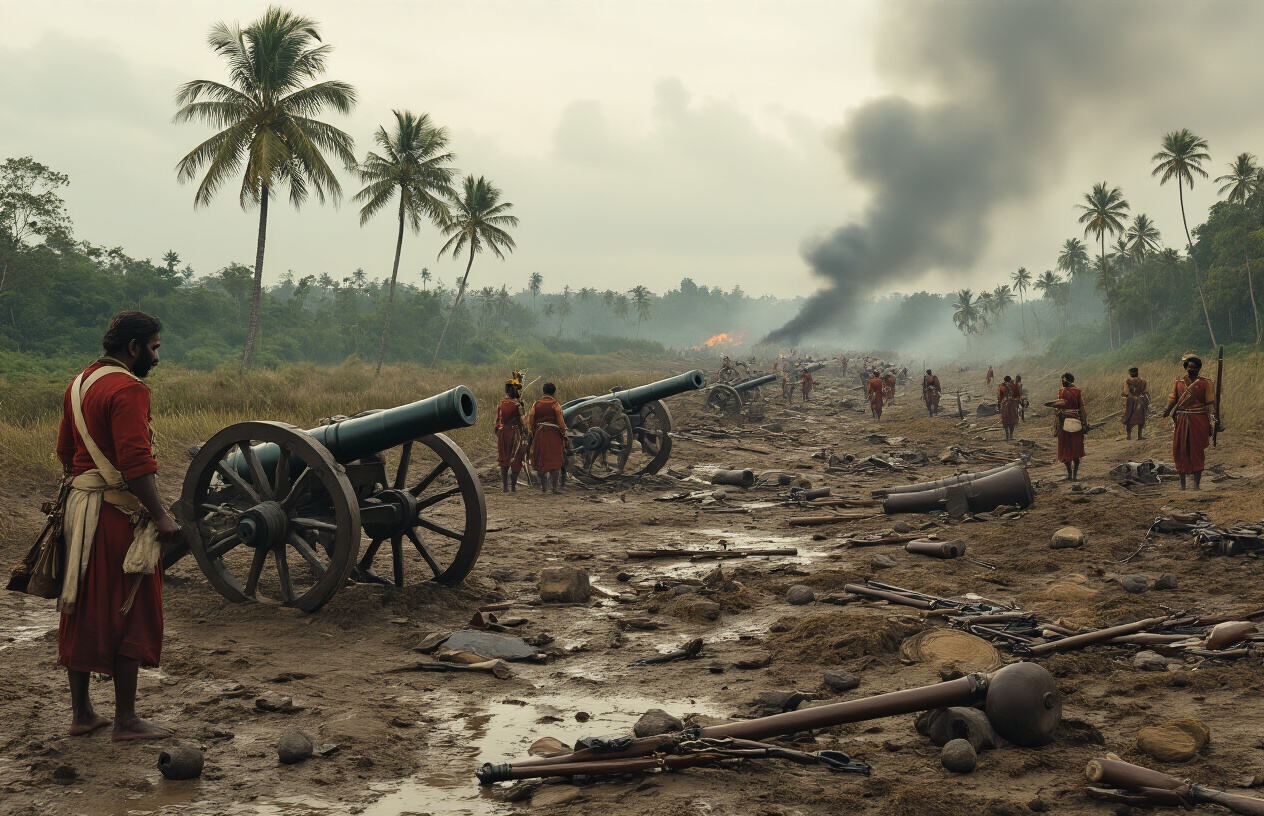
Dutch Defeat’s Effect on European Colonial Ambitions
The Battle of Calachel 1741 sent shockwaves through European colonial circles, marking the first major defeat of a European power by an Indian ruler in direct combat. The Dutch East India Company’s loss shattered the myth of European military invincibility in the subcontinent. News of Admiral Eustachius De Lannoy’s capture and the destruction of Dutch forces reached Amsterdam months later, causing panic among shareholders and forcing a complete reassessment of colonial strategies.
Other European powers took notice immediately. The British East India Company began viewing Travancore vs Dutch conflicts as a warning sign, realizing that local rulers possessed sophisticated military capabilities. French colonial administrators in Pondicherry studied the battle’s outcome closely, recognizing that underestimating Indian kingdoms could prove catastrophic. The defeat exposed vulnerabilities in European military doctrine when facing well-organized indigenous forces on familiar terrain.
The Dutch East India Company defeats at Calachel forced the company to abandon aggressive expansion policies in Kerala. They shifted focus from territorial conquest to maintaining existing trading posts, marking a fundamental change in Dutch colonial strategy throughout the Indian Ocean region.
Travancore’s Rise as Regional Power
Marthanda Varma victories at Calachel transformed Travancore from a modest kingdom into the dominant force in southern India. The capture of European military officers, artillery, and modern weapons provided Travancore with advanced military technology previously exclusive to colonial powers. De Lannoy’s forced service as military advisor revolutionized Travancore’s army structure, introducing European drill methods while maintaining indigenous tactical flexibility.
The victory attracted neighboring kingdoms’ attention, with many seeking alliances with Travancore. Travancore military history records show rapid territorial expansion following Calachel, as smaller kingdoms either submitted willingly or faced conquest by the newly powerful state. The kingdom’s reputation for defeating Europeans brought diplomatic recognition from regional powers who previously dismissed Travancore as insignificant.
Economic benefits flowed equally impressively. Control over spice trade routes, previously dominated by Dutch interests, brought immense wealth. Travancore’s ports became major trading hubs as merchants sought alternatives to Dutch-controlled facilities. The kingdom invested war profits into infrastructure, building roads, irrigation systems, and fortifications that would serve for generations.
Long-term Consequences for Indian Resistance Movements
The Calachel Battle became a powerful symbol inspiring resistance movements across India. Stories of Marthanda Varma’s victory spread through traveling merchants, pilgrims, and scholars, demonstrating that European forces weren’t invincible. Revolutionary leaders like Tipu Sultan later cited Calachel as proof that organized Indian states could successfully challenge colonial powers.
Kerala historical battles gained new significance as military strategists studied Calachel’s tactics. The battle proved that combining traditional Indian warfare methods with captured European technology created formidable fighting forces. This hybrid approach influenced military thinking across the subcontinent, encouraging other rulers to modernize their armies while maintaining cultural military traditions.
The psychological impact extended beyond military circles. Colonial wars in India took on new dimensions as local populations witnessed European defeat. British colonial records from subsequent decades show increased incidents of resistance, often referencing Travancore’s success as motivation. The victory provided concrete evidence that independence was achievable through proper planning and execution.
Lessons for Future Military Campaigns
Forgotten Indian battles like Calachel offered crucial strategic lessons that influenced warfare for generations. The battle highlighted the importance of local knowledge, with Travancore forces using terrain advantages and monsoon patterns that European commanders failed to understand. Military historians note that successful indigenous campaigns consistently leveraged environmental factors against colonial forces.
The Travancore Dutch conflict demonstrated the effectiveness of adaptive military strategies. Marthanda Varma’s forces successfully combined traditional cavalry charges with modern artillery placement, creating tactical flexibility that confounded European military doctrine. This hybrid approach became a template for subsequent resistance movements throughout India.
Supply line management emerged as another critical lesson. Travancore’s victory partly resulted from their ability to maintain local supply chains while disrupting Dutch logistics. Future military leaders learned that controlling local resources often mattered more than superior weaponry. The battle also showed that capturing enemy officers provided invaluable intelligence and military expertise, turning adversaries into unwilling advisors for indigenous forces.

The Battle of Calachel stands as one of those amazing moments in history that gets overlooked way too often. This clash between Travancore and the Dutch East India Company shows us how local rulers could actually take on mighty European powers and win big. The smart planning, brave leadership, and tactical brilliance that went into this victory changed the power balance in South India forever.
What makes this battle so special is how it proved that being the underdog doesn’t mean you’re doomed to lose. Travancore’s success at Calachel should inspire us to dig deeper into these lesser-known historical gems that shaped our world. Next time you think about colonial history, remember that the story isn’t just about European dominance – sometimes the local heroes fought back and won spectacularly.
For private historical and culture tours in Kerala, please visit 5 Senses Tours.
Leave a Reply