

In the 16th century, when most rulers sought power through conquest, a chieftain from a small village near Yelahanka dreamt of something different — a city that would stand for fairness, commerce, and faith. His name was Hiriya Kempe Gowda I, and his vision gave birth to what we now call Bangalore, or as the locals still lovingly say, Bengaluru.
Stand atop the rocky outcrop near Lalbagh on a cool morning, and you can almost imagine him there — gazing across the wilderness, sketching in his mind the outlines of a city yet to rise. What he created in 1537 CE wasn’t just a fortified town; it was a carefully planned settlement that would grow into one of India’s most dynamic metropolises.
For a private guided tour of Bangalore, please visit Bangalore Experience.
A City Born from Vision
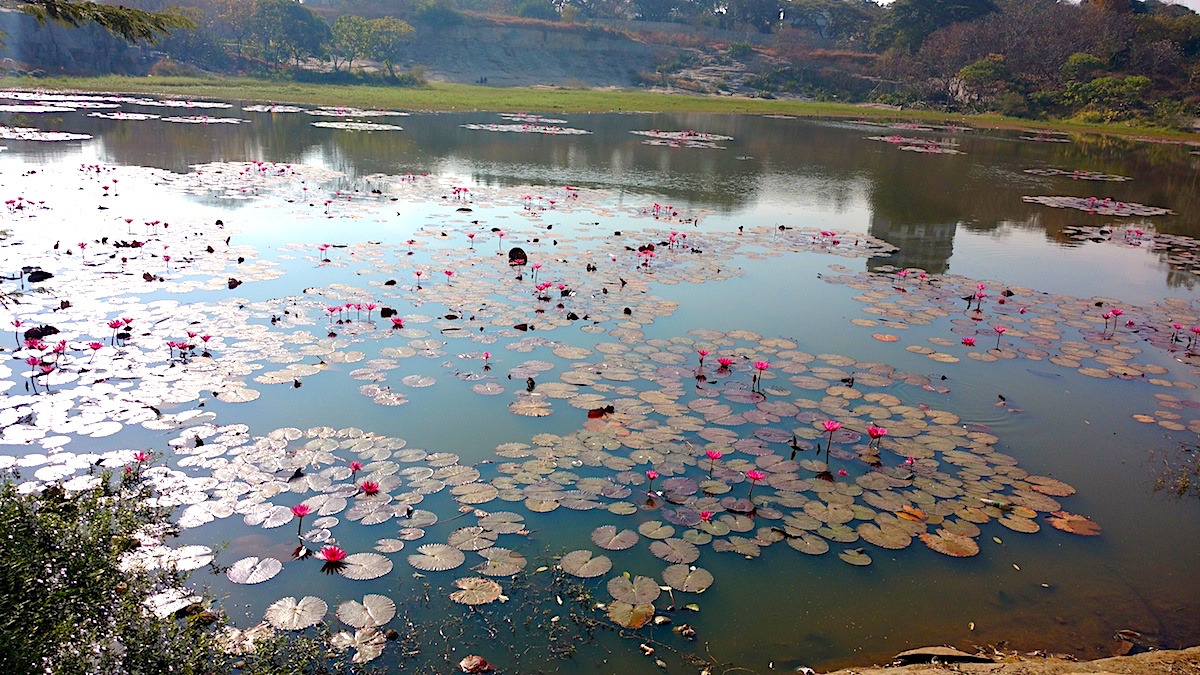 Kempe Gowda was a feudatory under the mighty Vijayanagara Empire, but unlike most regional chiefs, he looked beyond warfare. Historical records from the Vijayanagara period describe him as an able administrator and visionary. Archaeological studies show that his original mud fort followed a grid-like pattern — an idea that predated modern urban planning by centuries. The fort had eight gates, each leading to bustling markets that connected villages and artisans across the Deccan plateau.
But what makes Kempe Gowda stand apart is his concept of civic foresight. He imagined a town with markets, temples, tanks (lakes), and streets so well-planned that even the modern city’s layout still faintly echoes it.
The Four Watchtowers — Guardians of a Dream
To define his city’s boundaries, Kempe Gowda erected four massive watchtowers — a remarkable urban vision for its time.
Even today, you can trace the invisible perimeter of his Bengaluru through these towers:
- South: One rises inside Lalbagh Botanical Garden, surrounded by blooming flora.
- North: Another stands at Mekhri Circle, peeking through traffic and greenery.
- East: A third guards Ulsoor Lake, shimmering beside old colonial quarters.
- West: The last watches over Kempambudhi Lake, near the mystical Gavi Gangadhareshwara Temple.
Each tower, built on granite rock, marks the spirit of Kempe Gowda’s dream — that a city could be not just a collection of homes, but a living organism connected by belief, balance, and purpose.
The Temples That Tell His Story
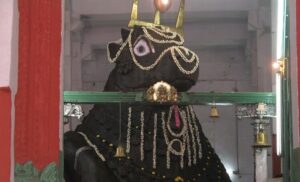
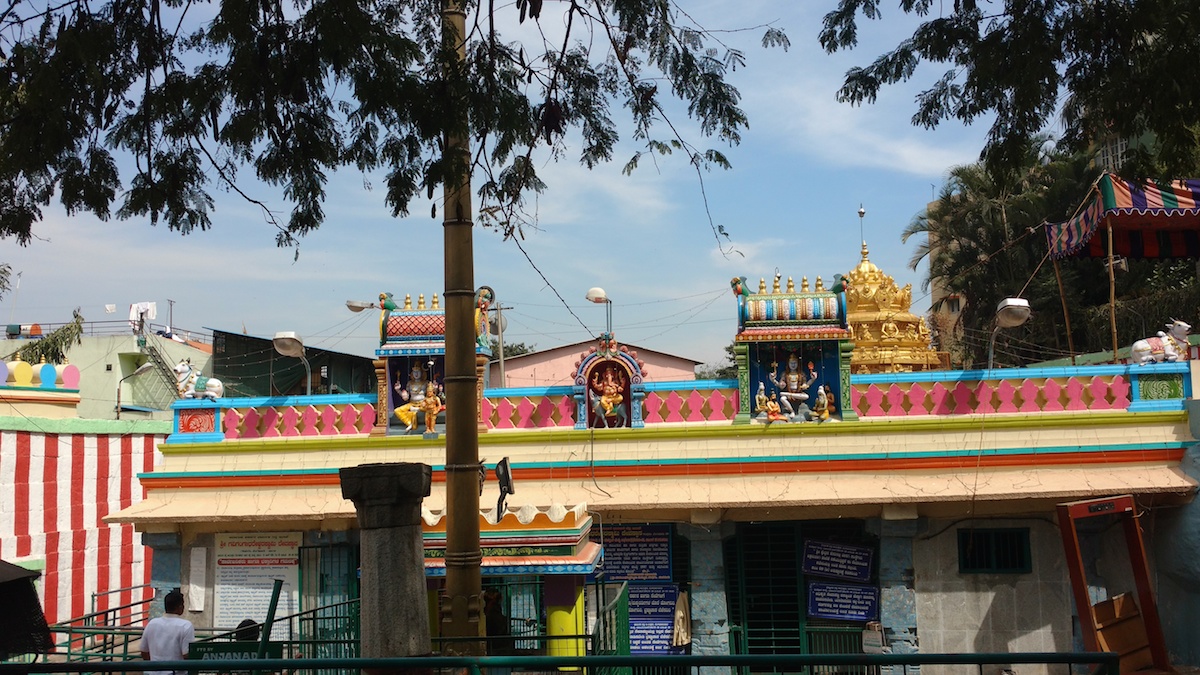
Kempe Gowda’s architectural legacy wasn’t limited to forts. He built temples that reflected both devotion and artistry — the most famous being Dodda Basavana Gudi (Bull Temple) in Basavanagudi and Gavi Gangadhareshwara Temple in Gavipuram.
The Bull Temple, with its massive monolithic Nandi (sacred bull), remains one of the largest of its kind in the world. Local legend says the Nandi once grew so large that Kempe Gowda had to cover it with butter to calm its divine energy — a story that still adds mythic warmth to Bengaluru’s cultural lore.
Meanwhile, the Gavi Gangadhareshwara Temple, carved from a single rock, was designed so that sunlight would illuminate the Shiva Lingam only on Makar Sankranti — a marvel of astronomical precision. Scholars have called it an example of early Indian scientific thought in sacred architecture.
Kempe Gowda’s Living Legacy
Today, Kempe Gowda’s presence hums quietly beneath Bengaluru’s rush of technology and traffic. The city’s new Kempegowda International Airport and the towering 108-feet bronze statue that greets travelers there are tributes to his enduring vision. Even the modern grid of Bengaluru’s central districts — Basavanagudi, Chickpet, and Avenue Road — carries the ghost of his original design.
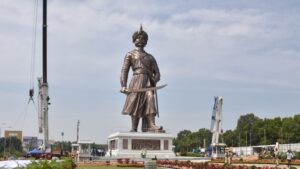
In many ways, he was India’s first urban futurist — someone who thought of a city as a system of human connection, not merely land and walls. Modern urban historians such as Prof. S. Settar have noted that his governance model was unusually advanced for its time — emphasizing social harmony, irrigation networks, and trade fairness.
Walk the Kempe Gowda Trail
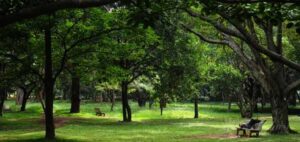
For travelers seeking to experience this legacy, a Kempe Gowda Heritage Trail offers a moving journey through time:
- Start at Lalbagh, where one of his watchtowers stands amidst rare tropical flora.
- Visit the Bull Temple and Gavi Gangadhareshwara Temple, to feel the city’s spiritual core.
- Pause by Kempambudhi Lake, one of the earliest water bodies he created to sustain his fort.
- Explore the Kempegowda Museum in Mayo Hall, where rare maps and sketches reveal the origins of the city.
- End at Mekhri Circle Tower, now surrounded by trees and chaos — a perfect metaphor for how old Bengaluru still breathes within the new.
Where Past Meets Future

Kempe Gowda’s Bengaluru has transformed into a landscape of innovation and ideas, yet the foundation remains his. Beneath the hum of start-ups, metro lines, and cafes lies a city built on one man’s extraordinary foresight. His spirit lingers in the lakes that once sustained life, the temples that still hold prayer, and the invisible lines of order that guide its endless sprawl.
To walk through Bengaluru is to walk through Kempe Gowda’s dream — a city born not of war or empire, but of imagination.
For a private guided tour of Bangalore, please visit Bangalore Experience.
Leave a Reply