
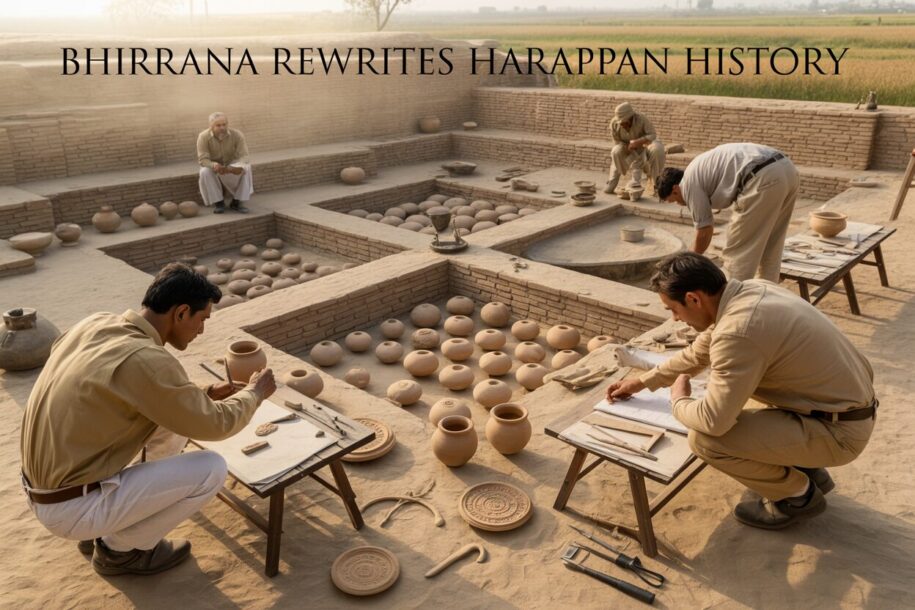
How Bhirrana Rewrites Harappan Civilization History
Recent excavations at Bhirrana have turned everything we thought we knew about the Harappan civilization upside down. This ancient site in Haryana, India, is forcing archaeologists and history enthusiasts to completely rethink when and where this remarkable civilization actually began.
The findings at Bhirrana challenge the traditional timeline of Harappan civilization and reveal technologies that were far more advanced than previously imagined. We’ll explore the groundbreaking scientific dating methods that pushed back the civilization’s origins by thousands of years, examine the sophisticated technologies discovered at the site, and discuss what these revelations mean for our broader understanding of ancient Indian history.
Get ready to discover how one archaeological site is rewriting the textbooks on one of the world’s earliest urban civilizations.
Revolutionary Archaeological Discoveries at Bhirrana
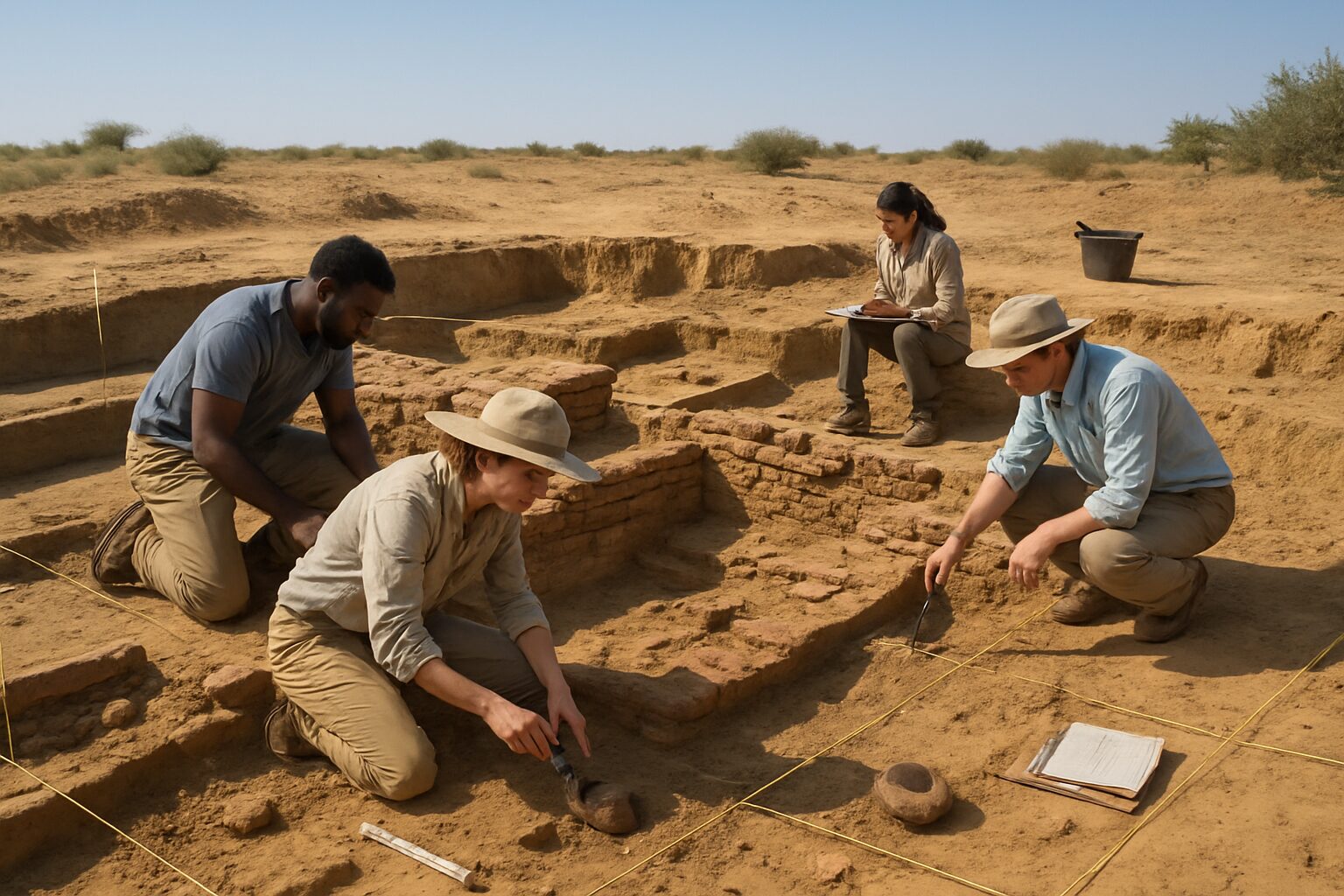
Uncovering Evidence of Earlier Settlement Dates
Archaeological excavations at Bhirrana have completely upended what we thought we knew about when the Harappan civilization began. Carbon dating results from the site’s deepest layers show human habitation stretching back to around 7500 BCE, pushing the origins of this civilization thousands of years earlier than previously believed. This makes Bhirrana older than many famous Mesopotamian sites that were once considered the cradles of civilization.
The evidence comes from carefully stratified layers that tell the story of continuous human occupation. Each layer reveals pottery fragments, tools, and architectural remains that show a gradual evolution from simple farming communities to sophisticated urban centers. What’s really exciting is that these early settlements already showed signs of the planning and organization that would later become hallmarks of Harappan culture.
Advanced Urban Planning Systems Predating Known Harappan Cities
The urban layout discovered at Bhirrana reveals planning concepts that appeared here centuries before they showed up at Harappa or Mohenjo-daro. The settlement follows a grid pattern with wide main streets running north-south and east-west, intersected by smaller lanes that create organized residential blocks.
What sets Bhirrana apart is its multi-phase development. Archaeologists have identified at least nine distinct building phases, each showing increasingly sophisticated planning. The earliest phases already demonstrate:
- Standardized brick sizes that remained consistent across different construction periods
- Planned drainage systems integrated into street layouts
- Designated areas for different activities like pottery making, grain storage, and metalworking
- Fire altars and ritual spaces positioned according to specific orientations
The site also shows evidence of zoning, with industrial areas kept separate from residential quarters. This level of urban planning sophistication challenges the traditional timeline that placed such developments much later in the Harappan period.
Sophisticated Water Management Technologies
Bhirrana’s water management systems represent some of the most advanced hydraulic engineering of the ancient world. The site sits in a region that would have faced significant seasonal water challenges, yet the inhabitants developed ingenious solutions that sustained a thriving community for millennia.
The centerpiece of this system is a series of interconnected reservoirs and channels that captured and distributed monsoon water throughout the settlement. Archaeological evidence reveals:
| Feature | Purpose | Innovation |
|---|---|---|
| Stepped wells | Groundwater access | Design for seasonal variations |
| Covered drains | Waste water removal | Corbelled brick construction |
| Storage tanks | Water conservation | Waterproof plaster lining |
| Distribution | Irrigation | Gravity-fed network |
The most remarkable discovery is a sophisticated filtration system using layers of sand, gravel, and charcoal to purify water before storage. This technology shows an understanding of water treatment principles that wouldn’t reappear in many parts of the world for thousands of years.
Unique Pottery and Craftsmanship Styles
The pottery found at Bhirrana tells its own story of technological advancement and cultural evolution. The ceramic traditions here show a gradual development from simple, hand-made vessels to the wheel-thrown, highly decorated pottery that became characteristic of mature Harappan culture.
Early period pottery features distinctive red and black designs with geometric patterns that are unique to this site. The craftsmanship shows remarkable consistency in form and decoration, suggesting established workshops and standardized techniques. Some vessels show evidence of specialized firing techniques that produced different colors and textures within single pieces.
Bronze and copper artifacts from Bhirrana display exceptional skill in metalworking. Archaeologists have found elaborate ornaments, tools, and ceremonial objects that demonstrate mastery of casting, hammering, and decorative techniques. The quality of these artifacts rivals anything found at later Harappan sites, showing that sophisticated craftsmanship was already well-established in the earliest phases of the civilization.
Seal-making technology also appears earlier at Bhirrana than at other sites, with examples of proto-Harappan seals that show the evolution toward the standardized square seals with pictographic scripts found throughout the mature Harappan period.
Scientific Dating Methods That Changed Everything
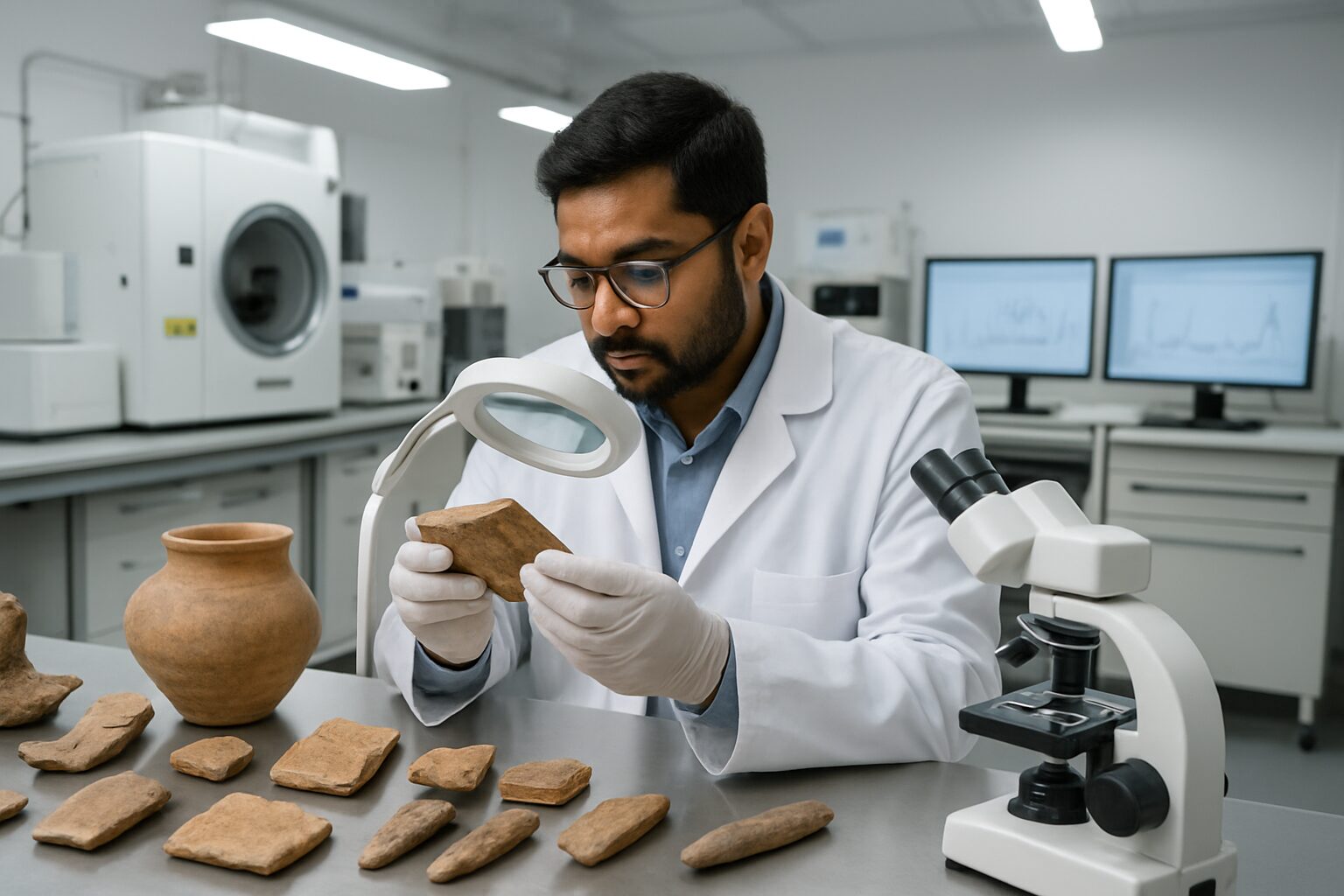
Carbon-14 Dating Results Pushing Back Civilization Timeline
The game-changing moment came when researchers subjected pottery fragments and organic materials from Bhirrana to carbon-14 dating analysis. The results stunned the archaeological community. Instead of confirming the traditionally accepted timeline of 2600-1900 BCE for the Harappan civilization, the radiocarbon dates consistently pointed to much earlier periods.
Multiple samples returned dates ranging from 8000 to 6000 BCE for the earliest layers, with continuous occupation extending through various phases. These findings suggest that proto-Harappan communities were already establishing sophisticated settlements thousands of years before previously thought. The pre-Harappan phase at Bhirrana showed dates around 7000 BCE, while the Early Harappan phase dated to approximately 5500 BCE.
What makes these results particularly compelling is their consistency across different sample types. Charcoal fragments from ancient hearths, grain samples, and pottery residues all pointed to similar timeframes. The dating laboratory employed accelerator mass spectrometry (AMS) techniques, which provide much higher precision than conventional radiocarbon methods. This approach eliminated potential contamination issues that might have skewed earlier dating attempts.
The implications stretch far beyond simple chronology. If these dates hold up to continued scrutiny, they push the origins of organized urban planning, sophisticated drainage systems, and standardized weights and measures back by several millennia. The carbon-14 evidence from Bhirrana challenges the entire narrative of how civilization developed in the Indian subcontinent.
Thermoluminescence Testing of Ancient Artifacts
Thermoluminescence (TL) dating provided crucial independent verification of the carbon-14 results. This method measures the accumulated radiation dose in crystalline materials like pottery and fired clay artifacts. When heated in ancient times, these materials reset their “radiation clock,” making them perfect candidates for determining when they were last fired.
Pottery sherds from different layers at Bhirrana underwent TL analysis at specialized laboratories. The results aligned remarkably well with the radiocarbon dates, providing strong corroborative evidence for the extended timeline. TL dating of pottery from the deepest layers returned dates of 7500-8000 years ago, matching the carbon-14 evidence from the same stratigraphic levels.
The beauty of thermoluminescence dating lies in its independence from carbon-based contamination issues. Unlike radiocarbon dating, which can be affected by groundwater intrusion or organic contamination, TL dating relies on the physical properties of fired clay minerals. This makes it particularly valuable for validating controversial dates.
Researchers tested over 150 pottery samples from various depths and contexts within the site. The consistent pattern that emerged showed continuous habitation with technological development progressing through identifiable phases. Early pottery showed simpler firing techniques and basic forms, while later periods revealed increasingly sophisticated ceramic technology with better firing control and more complex vessel shapes.
Comparative Analysis with Other Harappan Sites
When placed alongside dating evidence from established Harappan sites like Harappa, Mohenjo-daro, and Dholavira, the Bhirrana dates create a fascinating picture of civilization development. Traditional Harappan sites typically show occupation periods from 2600-1900 BCE, representing the mature phase of the civilization.
| Site | Early Dates | Peak Period | Late Dates |
|---|---|---|---|
| Bhirrana | 8000 BCE | 5500-3000 BCE | 1800 BCE |
| Harappa | 3300 BCE | 2600-1900 BCE | 1700 BCE |
Mohenjo-daro | 2600 BCE | 2500-1900 BCE | 1700 BCE |
| Dholavira | 3000 BCE | 2650-1450 BCE | 1200 BCE |
The comparison reveals that Bhirrana represents the earliest known phase of what would eventually become the Harappan civilization. Rather than sudden appearance, the evidence suggests a long developmental process spanning thousands of years. Sites like Mehrgarh in Balochistan had previously shown early agricultural development around 7000 BCE, but Bhirrana bridges the gap between these early farming communities and the urban Harappan centers.
Recent dating work at other sites in the Ghaggar-Hakra river system has begun supporting the Bhirrana timeline. Kunal and Banawali, both located in the same river basin, have yielded dates extending back to 4000-5000 BCE. This pattern suggests that the Ghaggar-Hakra region served as a crucial heartland where Harappan civilization slowly developed over millennia before spreading to other areas.
The comparative analysis also highlights regional variations in development. While Bhirrana shows gradual evolution over thousands of years, sites in Sindh and Gujarat appear to represent later expansion phases when fully developed Harappan culture spread to new territories.
Redefining the Origins of Harappan Civilization
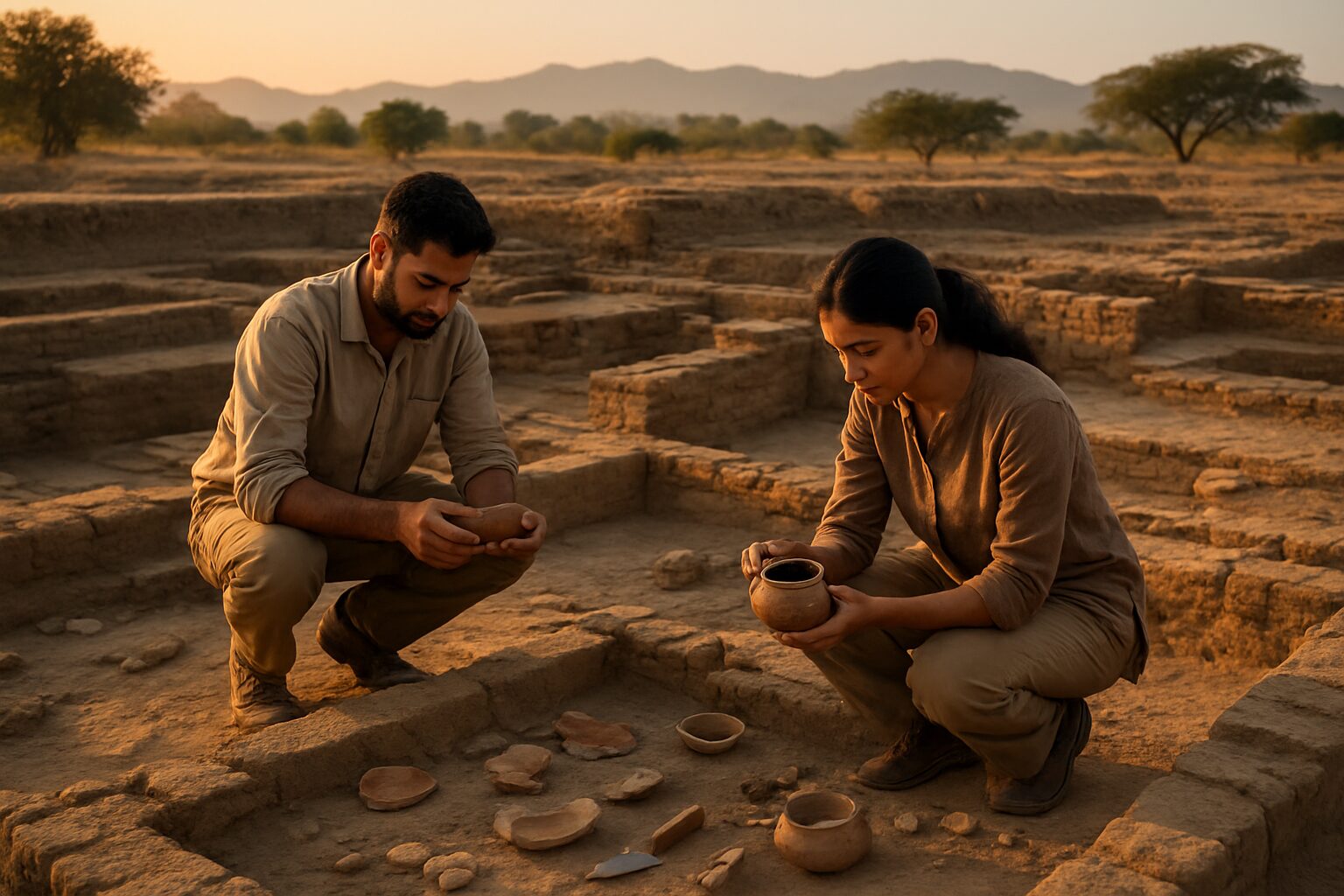
Evidence of Pre-Harappan Cultural Continuity
Archaeological layers at Bhirrana reveal something extraordinary – a continuous cultural development spanning thousands of years. The site shows evidence of human habitation from around 7570-7180 BCE, making it potentially older than previously accepted Harappan sites. What makes this discovery truly remarkable is how the cultural artifacts show gradual evolution rather than sudden appearance.
Pottery styles found in the deepest layers share striking similarities with later Harappan ceramics, suggesting that many “Harappan” innovations actually developed locally over millennia. The wheel-thrown pottery, geometric patterns, and even early forms of standardized weights demonstrate that sophisticated technologies weren’t imported but evolved organically within the region.
New Understanding of Civilization Development Phases
Bhirrana challenges the traditional three-phase model of Harappan civilization (Early, Mature, Late). The site reveals at least six distinct cultural phases, each building upon the previous one. This extended timeline shows that the “Mature Harappan” period wasn’t a sudden flowering of civilization but the culmination of thousands of years of technological and social development.
The phases show progressive urbanization, with early settlements gradually developing advanced drainage systems, standardized brick sizes, and sophisticated town planning. This gradual development model completely reshapes our understanding of how ancient civilizations emerged and flourished.
Impact on Traditional Historical Narratives
These findings shake up established historical timelines that placed Mesopotamian and Egyptian civilizations as the world’s earliest urban centers. If Bhirrana’s dates hold up to scrutiny, the Harappan civilization might predate these famous ancient cultures by several centuries.
The discoveries also challenge the migration theory that suggested advanced technologies came to the Indus Valley from outside sources. Instead, Bhirrana points toward indigenous development, with local communities creating their own sophisticated urban solutions over generations.
Connections to Vedic Period References
The extended timeline creates fascinating possibilities for connecting archaeological evidence with ancient texts. Some researchers suggest that the later phases of Bhirrana’s occupation might overlap with early Vedic periods, potentially providing archaeological context for some of the earliest Sanskrit references to urban life and technological achievements.
References to advanced drainage systems, standardized measurements, and urban planning in Vedic literature might reflect actual memories of Harappan-era innovations that survived in oral tradition long after the cities themselves had been abandoned.
Advanced Technologies Found at Bhirrana
Sophisticated Drainage and Sewerage Systems
The excavations at Bhirrana revealed an intricate network of drainage channels that puts many modern urban planning systems to shame. These weren’t just simple ditches dug into the ground – archaeologists uncovered carefully engineered brick-lined drains with precise gradients for optimal water flow. The system included covered drains, manholes for maintenance access, and strategically placed settling tanks that filtered sediments before water moved to the next stage.
What makes this discovery groundbreaking is the level of planning involved. The drainage system was clearly designed before the settlement was built, not added as an afterthought. Houses connected to main drains through smaller branch channels, creating a comprehensive waste management network that served the entire community. The bricks used in construction were fired at specific temperatures to ensure they could withstand constant water exposure without deteriorating.
Fire-Altered Brick Manufacturing Techniques
Bhirrana’s brick-making technology demonstrates remarkable sophistication for its time period. Archaeological evidence shows that craftsmen used standardized molds to create uniform bricks in specific ratios – typically 4:2:1 for length, width, and thickness. This standardization allowed for consistent construction quality across different buildings and time periods.
The firing process involved carefully controlled kilns that reached temperatures between 900-1000°C. Different areas of the kiln produced bricks with varying hardness levels, and builders knew exactly which type to use for different construction purposes. Foundation bricks were made harder and denser, while interior walls used lighter variants. The kilns themselves were engineering marvels, with air circulation systems that ensured even heating throughout the firing chamber.
Recent analysis of the clay composition reveals that Harappan potters mixed specific additives like rice husk and sand to improve brick durability and reduce cracking during the firing process.
Agricultural Innovations and Crop Storage Methods
The agricultural technology discovered at Bhirrana shows a deep understanding of crop management and food security. Large granary structures with raised platforms kept stored grain away from moisture and pests. These storage facilities included ventilation systems with small openings positioned to create air circulation while preventing rodent intrusion.
Archaeological evidence points to advanced irrigation techniques, including canal systems that diverted river water to agricultural fields. The settlement’s location was strategically chosen near the Ghaggar River, allowing farmers to practice both flood irrigation and well-based watering systems.
Crop diversity was impressive – excavations uncovered remains of wheat, barley, peas, sesame, and dates. The presence of standardized weights suggests that grain trading was a regular practice, with farmers measuring crops for both local consumption and long-distance trade.
Metallurgy and Tool-Making Advancements
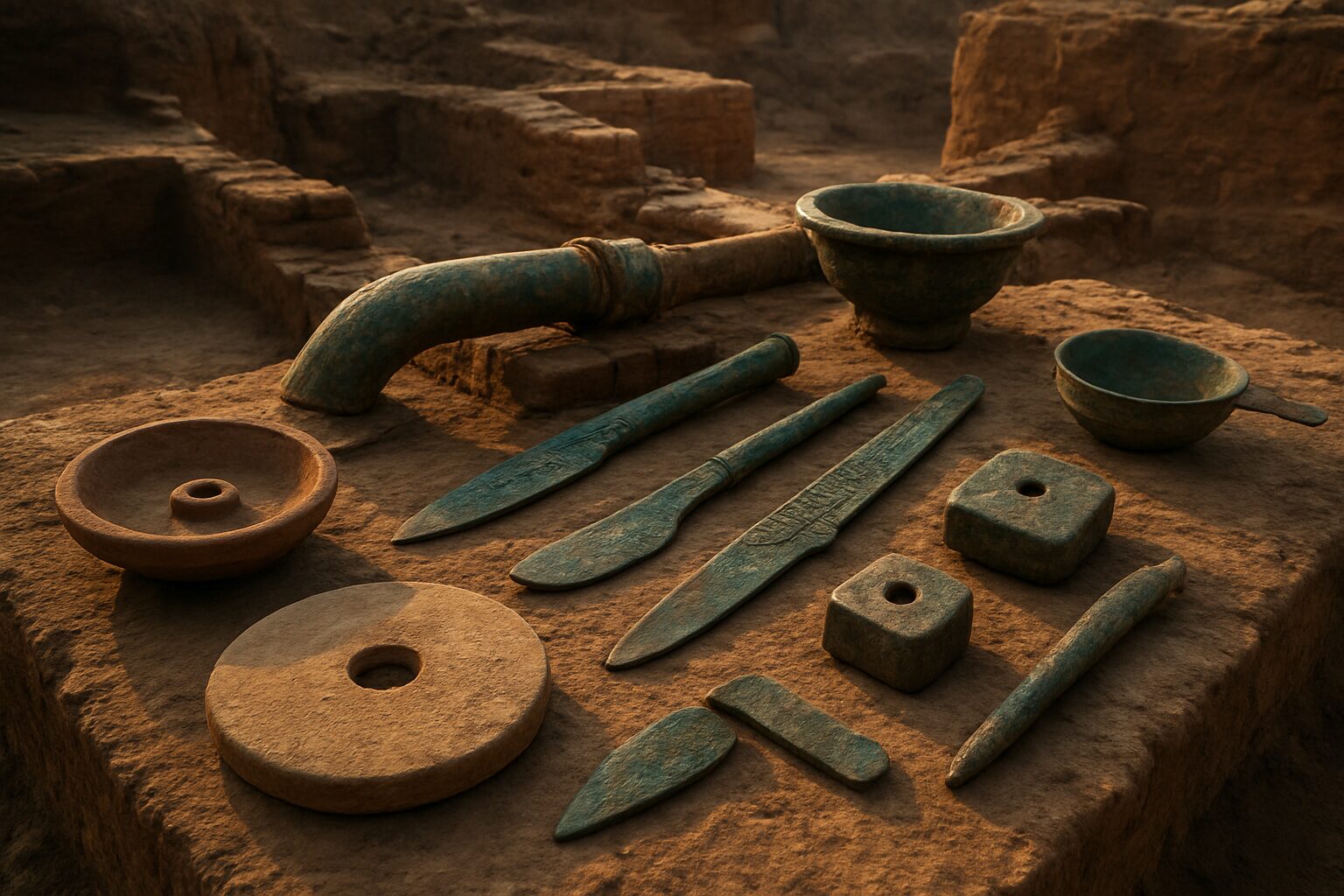
Bhirrana’s metalworking capabilities extended far beyond basic copper tools. Craftsmen produced bronze alloys with consistent tin ratios, indicating sophisticated knowledge of metal properties and their applications. Tools discovered at the site include surgical instruments, measuring devices, and agricultural implements with ergonomic designs that maximized efficiency.
The smelting furnaces found at Bhirrana could reach temperatures necessary for copper and bronze production. Crucible fragments show evidence of multiple metal types being processed, suggesting a diverse metalworking industry that served various community needs.
Stone tool technology remained important alongside metal production. Artisans created precise cutting implements from local stone varieties, often combining stone handles with metal working edges for optimal performance.
Trade Route Evidence and Commercial Practices
Bhirrana served as a crucial hub in an extensive trade network that stretched across the subcontinent and beyond. Archaeological finds include seals and weights from distant regions, indicating regular commercial exchanges with other Harappan settlements and foreign territories.
The standardized weight system found at Bhirrana matches measurements discovered at other Harappan sites, proving the existence of unified commercial standards across the civilization. These weights were made from polished stone and followed a binary system that made calculations straightforward for traders.
Pottery styles and raw materials from non-local sources demonstrate trade relationships extending to present-day Afghanistan, Central Asia, and the Arabian Peninsula. The presence of marine shells far from any ocean confirms that trade routes connected inland settlements with coastal communities, creating a complex economic network that supported the civilization’s prosperity.
Implications for Understanding Ancient Indian History
Challenging Western Academic Theories About Indian Civilization
The discoveries at Bhirrana have sent shockwaves through Western academic circles that have long maintained the theory of external origins for Indian civilization. For decades, scholars promoted the Aryan migration theory and suggested that advanced urban planning came to the Indian subcontinent through outside influences. Bhirrana’s carbon-dated evidence completely dismantles these assumptions.
The site’s pre-Harappan layers, dating back to 7570 BCE, predate Mesopotamian cities by several millennia. This timeline forces a complete recalibration of how we understand the development of urban civilization. Western archaeological establishments now face mounting pressure to acknowledge that sophisticated city planning, drainage systems, and metallurgy emerged independently on the Indian subcontinent.
The evidence from Bhirrana also challenges the linear progression model favored by Western academics, which placed Mesopotamia as the starting point for all urban development. Instead, the archaeological record suggests multiple centers of innovation developing simultaneously across different regions, with the Indian subcontinent playing a pioneering role.
Supporting Indigenous Historical Records and Texts
Ancient Sanskrit texts and Puranic literature have consistently described a much older timeline for Indian civilization than Western archaeology previously accepted. The Bhirrana discoveries provide tangible archaeological support for these traditional accounts.
Texts like the Rig Veda contain geographical references to rivers and settlements that align remarkably well with the Bhirrana findings. The Saraswati River, mentioned extensively in Vedic literature, ran through the region where Bhirrana sits today. This correlation between textual evidence and archaeological discovery strengthens the credibility of indigenous historical records.
Traditional Indian chronologies, often dismissed as mythological by Western scholars, now receive validation through scientific dating methods. The concept of yugas (cycles of time) and the extensive genealogies preserved in Sanskrit literature suddenly appear more historically grounded when viewed alongside Bhirrana’s extended timeline.
Local oral traditions in the region have also maintained stories of ancient settlements and advanced civilizations that predate accepted historical timelines. These community memories, passed down through generations, now find archaeological backing in the stratified layers of Bhirrana.
Reshaping Archaeological Research Methodologies
The Bhirrana excavations have revolutionized how archaeologists approach ancient Indian sites. Traditional dig strategies focused on identifying distinct cultural periods often missed the continuous occupation patterns that Bhirrana revealed. The site demonstrates the importance of long-term, systematic excavation rather than quick exploratory digs.
New interdisciplinary approaches combining archaeology with geology, paleoclimatology, and advanced dating techniques have emerged directly from lessons learned at Bhirrana. Researchers now understand that single-method dating can produce incomplete pictures of site chronology.
The discovery has also highlighted the need for more extensive surveys across the Indian subcontinent. Many potential sites remain unexplored due to previous assumptions about the region’s archaeological significance. Bhirrana proves that systematic investigation of seemingly ordinary mounds can yield extraordinary insights into human civilization.
Archaeological teams working in India now prioritize environmental reconstruction alongside artifact recovery. Understanding ancient climate patterns, river systems, and ecological changes has become essential for interpreting settlement patterns and cultural development. This holistic approach, pioneered at Bhirrana, is becoming the new standard for archaeological research in South Asia.
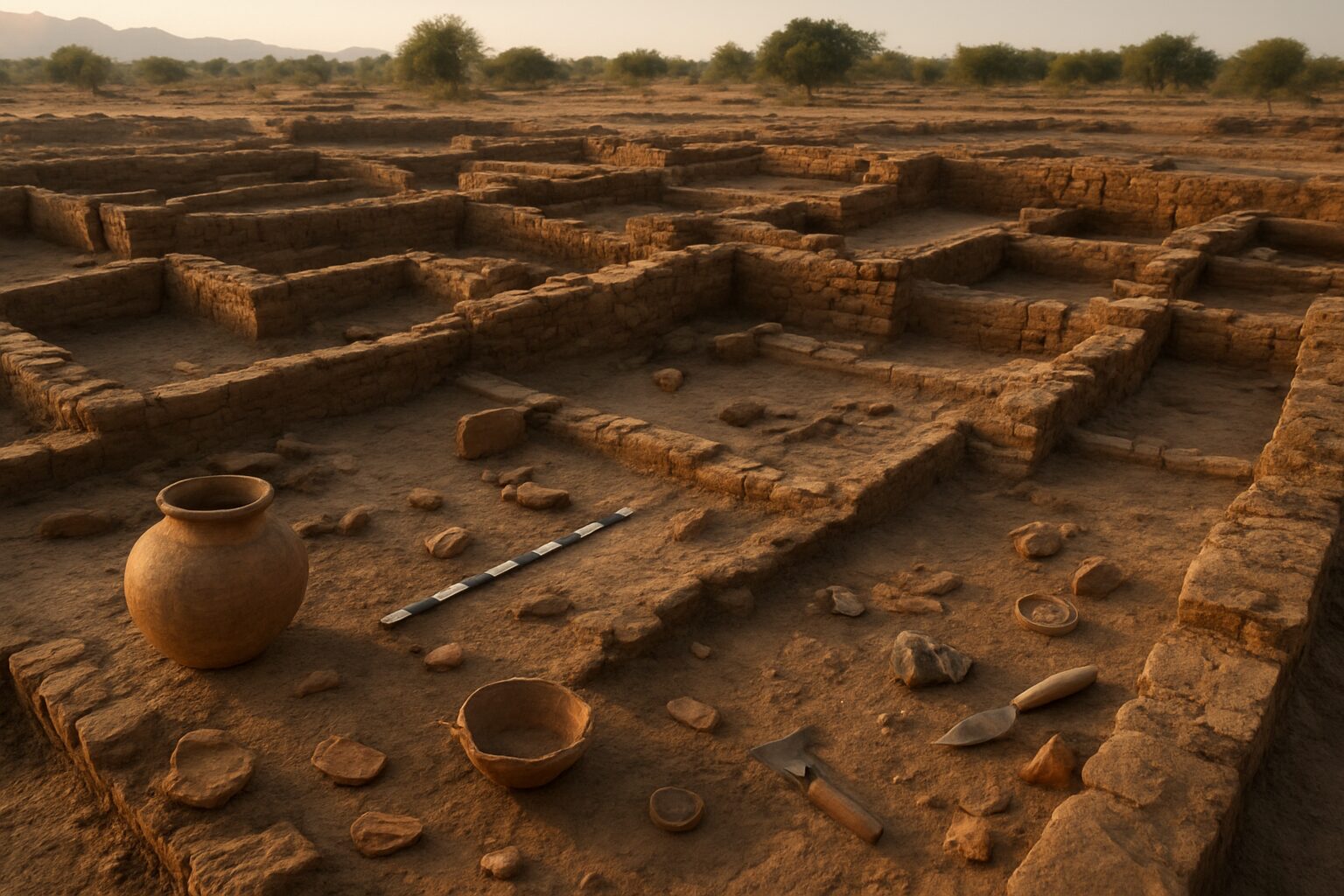
The groundbreaking discoveries at Bhirrana have completely changed how we understand the Harappan civilization. New archaeological evidence and cutting-edge dating methods show this ancient settlement is much older than we previously thought, pushing back the timeline of one of the world’s earliest civilizations. The advanced technologies uncovered at the site reveal a level of sophistication that challenges many long-held beliefs about early Indian history.
These findings don’t just add a few years to our timeline – they fundamentally reshape our understanding of how civilization developed in the Indian subcontinent. If you’re fascinated by ancient history or want to understand how modern archaeology is rewriting textbooks, keep following the research coming out of Bhirrana. The next discovery could reveal even more secrets about our shared human past and prove once again that history is far more complex and amazing than we ever imagined.
Leave a Reply