
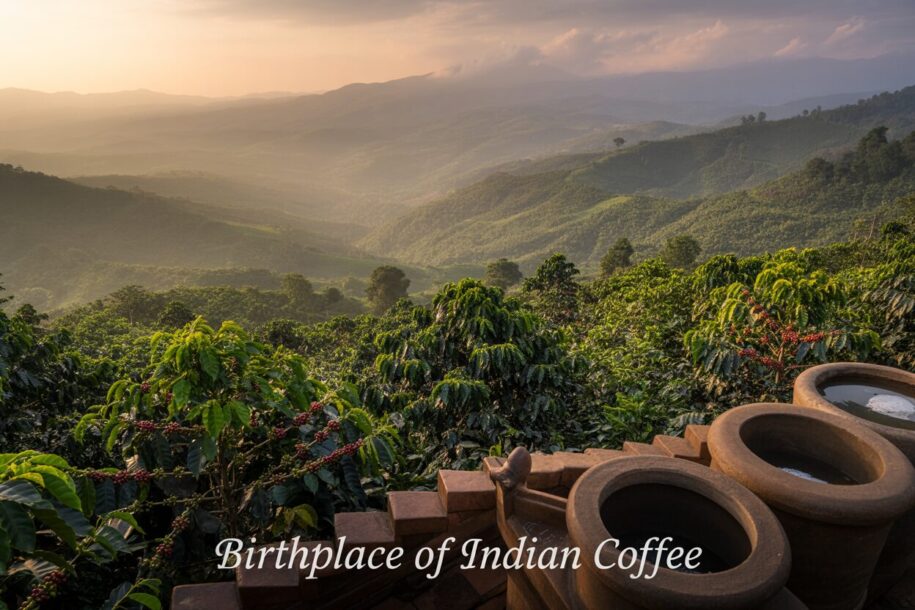
Coffee lovers, history buffs, and anyone curious about how their morning brew made it to India – this story will change how you think about that cup in your hands. Chikmagalur, a small hill station in Karnataka, holds the secret to how coffee first took root in Indian soil over 400 years ago.
You’ll discover the fascinating legend of Baba Budan, the 17th-century Sufi saint who smuggled coffee seeds from Yemen and planted them in these misty hills. We’ll explore why Chikmagalur’s unique climate and geography created the perfect conditions for coffee to thrive. Finally, you’ll learn how this region transformed from a hidden coffee paradise into the commercial powerhouse that shaped India’s entire coffee industry.
Get ready to uncover the remarkable journey of how one man’s bold adventure in Chikmagalur changed India’s relationship with coffee forever.
For a private tour of Chikmagalur, please visit Coffee Trail to Chikmagalur.
The Legendary Origins of Coffee Discovery in Chikmagalur
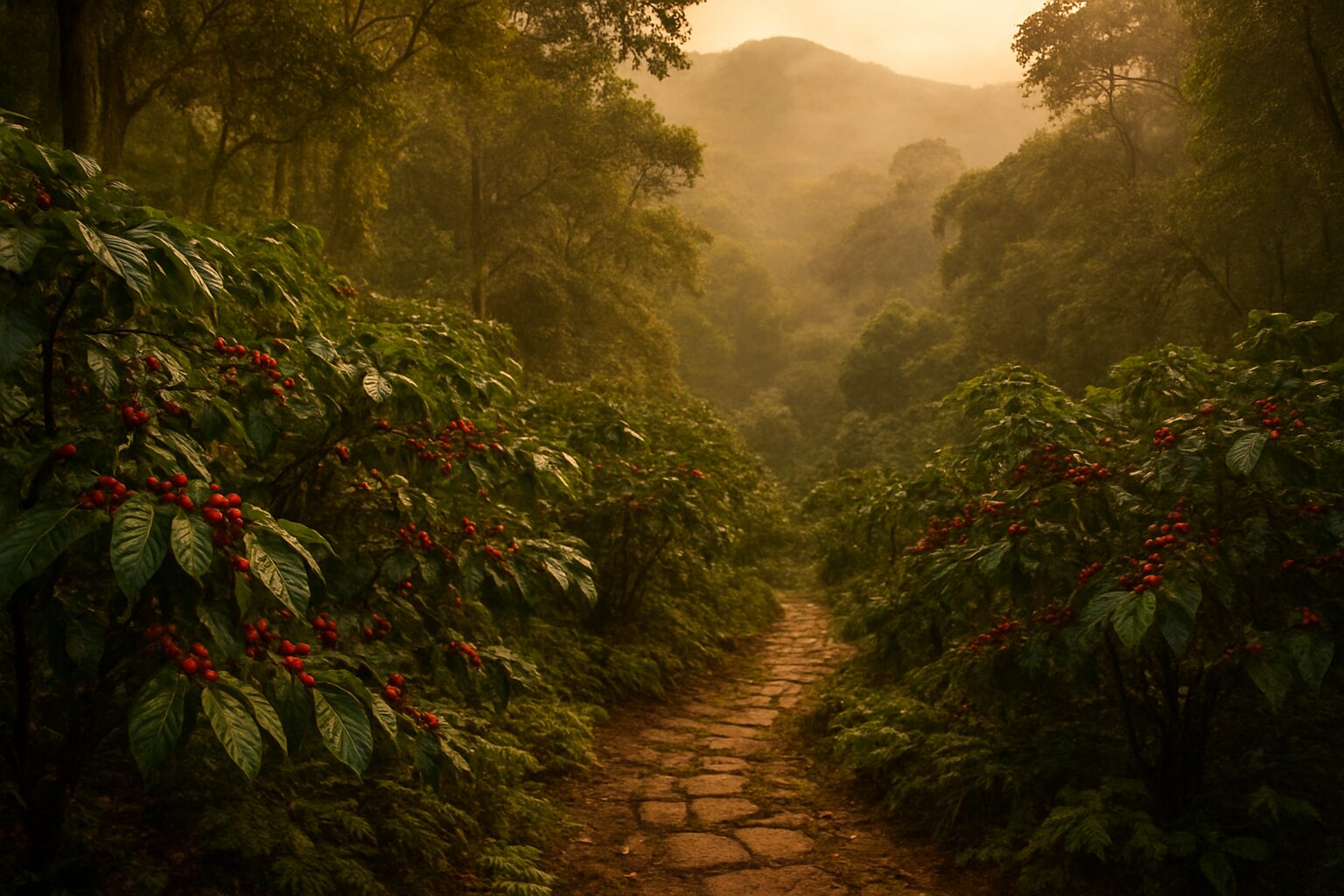
Baba Budan’s pioneering journey to Yemen in the 17th century
In the mid-1600s, a Sufi saint named Baba Budan embarked on a pilgrimage that would forever change India’s agricultural landscape. This wasn’t just any ordinary journey to Mecca – Baba Budan possessed the curiosity and vision of someone who understood the potential of what he encountered in the bustling markets and hillsides of Yemen.
During his travels through the Arabian Peninsula, Baba Budan witnessed something remarkable: vast plantations of coffee bushes producing the aromatic beans that had become the cornerstone of Arab trade. The locals jealously guarded their coffee cultivation secrets, understanding that their monopoly on this precious commodity brought immense wealth and influence. Coffee had already begun spreading across the Ottoman Empire and into European markets, creating an insatiable demand that the Arabs were happy to supply – exclusively.
Baba Budan recognized the revolutionary potential of bringing coffee cultivation to Indian soil. His keen eye for opportunity, combined with his deep understanding of agriculture from his homeland in the Western Ghats, made him realize that the climate and terrain around his native Chikmagalur could support these exotic plants.
The seven sacred coffee beans smuggled from Mecca
The story of coffee’s arrival in India centers around seven small beans that would grow into an industry worth billions. According to legend, Baba Budan carefully selected and concealed seven coffee beans on his person during his return journey from Mecca. This wasn’t a casual decision – Islamic law and Arab trade regulations strictly prohibited the export of fertile coffee beans, ensuring their continued monopoly on cultivation.
These seven beans represented more than just seeds; they carried the genetic foundation of an entire industry. Baba Budan had chosen them from the finest coffee plants he had observed, understanding that the success of his experiment would depend entirely on the quality of these original specimens. Each bean held the potential to spawn thousands of plants, creating a lineage that would eventually spread across South India.
The number seven holds special significance in Islamic tradition, and many believe Baba Budan’s choice was deliberate, imbuing his mission with spiritual meaning. Whether guided by faith, practical considerations, or both, his careful selection of these particular beans demonstrated remarkable foresight. The genetic diversity contained within these seven seeds would prove crucial for establishing a robust coffee population that could adapt to Indian growing conditions.
Strategic planting on the slopes of Chandragiri Hills
Upon returning to Chikmagalur, Baba Budan faced the critical decision of where to plant his precious cargo. He chose the slopes of Chandragiri Hills, a location that demonstrated his sophisticated understanding of coffee cultivation requirements. These hills, rising to about 6,400 feet above sea level, provided the perfect microclimate that coffee plants desperately needed.
The Western Ghats offered several advantages that Baba Budan intuitively recognized. The elevation provided cooler temperatures that slowed the ripening process, allowing beans to develop complex flavors. The region’s monsoon patterns delivered consistent rainfall during crucial growing periods, while the sloping terrain ensured proper drainage – preventing the root rot that destroys coffee plants in waterlogged conditions.
Baba Budan planted the seven beans in the courtyard of his hermitage, creating what would become known as the first coffee plantation in India. The choice of location near his spiritual retreat wasn’t coincidental – it allowed him to personally tend to these precious plants while continuing his religious practices. The hermitage provided protection from wildlife and human interference, giving the young coffee plants the best possible chance of survival.
The soil composition of Chandragiri Hills proved ideal for coffee cultivation. Rich in organic matter from centuries of forest growth, well-drained yet moisture-retentive, it provided the perfect foundation for the coffee plants to establish strong root systems. The natural shade provided by the surrounding forest canopy mimicked the understory conditions where coffee originally evolved in Ethiopian highlands.
Breaking the Arab monopoly on coffee cultivation
Baba Budan’s successful cultivation of coffee in Chikmagalur represented more than agricultural innovation – it shattered a carefully maintained economic monopoly that had enriched Arab traders for generations. For centuries, the Arabs had controlled every aspect of coffee production and distribution, ensuring that no fertile beans left their territories and that all coffee consumed worldwide came from their plantations.
This monopoly had made coffee one of the world’s most valuable commodities, with Arab merchants commanding premium prices in European markets. They had successfully prevented coffee cultivation in other regions through a combination of export restrictions, seed treatment to prevent germination, and diplomatic pressure. The penalty for attempting to smuggle viable coffee seeds was often severe, sometimes including death.
By successfully establishing coffee cultivation in India, Baba Budan inadvertently launched what would become a global transformation of the coffee industry. His small garden in Chikmagalur proved that coffee could thrive outside its traditional Arabian homeland, opening possibilities for cultivation across tropical regions worldwide. This breakthrough would eventually lead to coffee plantations in Java, Ceylon, the Caribbean, and Central America.
The economic implications were enormous. As coffee cultivation spread beyond Arab control, prices began to stabilize and the beverage became accessible to broader populations. The Arab stranglehold on production gradually weakened as new growing regions emerged, each developing their own unique coffee characteristics based on local climate, soil, and processing methods.
Geographic Advantages That Made Chikmagalur Perfect for Coffee
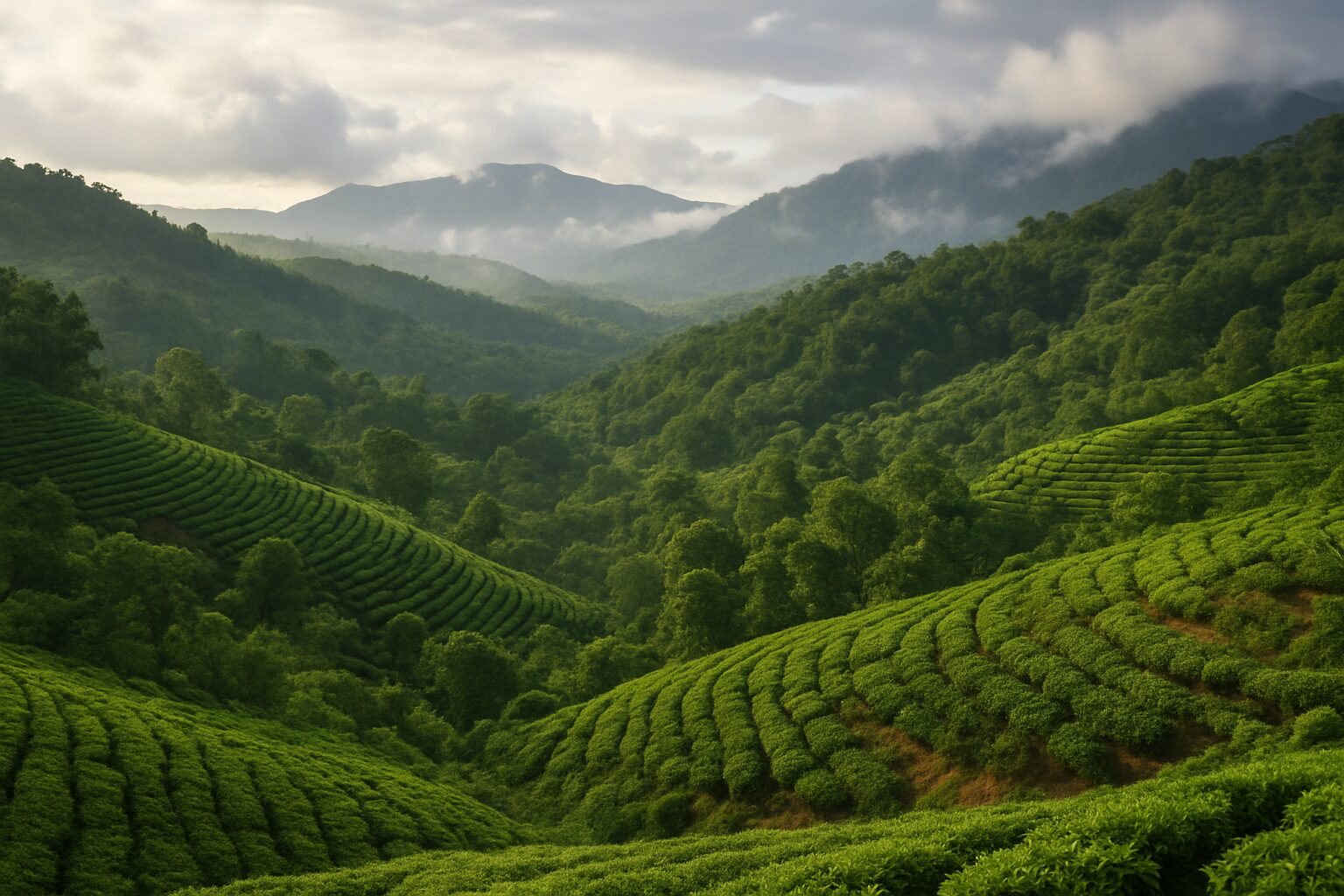
Ideal altitude and climate conditions for arabica cultivation
The Western Ghats blessed Chikmagalur with the perfect elevation sweet spot for growing premium arabica coffee. Sitting comfortably between 3,000 to 5,000 feet above sea level, these hills create an environment where coffee plants absolutely thrive. The temperature here dances between 15°C to 25°C year-round, never getting too hot during the day or too cold at night. This gentle temperature rhythm allows coffee cherries to ripen slowly and develop those complex flavors that make Chikmagalur beans so special.
What makes this altitude even more magical is how it creates natural microclimates. Morning mists roll in from the Arabian Sea, wrapping the coffee plants in a cool, humid blanket that protects them from harsh sunlight. As the day progresses, the mist lifts gradually, giving plants just the right amount of sunshine they need. The cooler nights at this elevation slow down the fruit development process, which concentrates the sugars and oils that give coffee its distinctive taste profile.
Rich volcanic soil composition supporting premium coffee growth
The soil beneath Chikmagalur’s coffee estates tells a story millions of years in the making. Ancient volcanic activity in the Western Ghats left behind incredibly fertile, well-draining soil that coffee plants love. This red lateritic soil is packed with essential minerals like potassium, phosphorus, and nitrogen that coffee plants crave for healthy growth.
The volcanic origin of this soil creates excellent drainage properties, preventing water from pooling around roots and causing diseases. Yet it retains just enough moisture to keep plants hydrated during drier periods. The soil’s slightly acidic pH level, typically ranging from 6.0 to 6.5, creates the perfect chemical environment for coffee plants to absorb nutrients efficiently.
Natural organic matter from decades of fallen leaves creates a rich humus layer that feeds the soil ecosystem. This living soil supports beneficial microorganisms that help coffee plants resist diseases and pests naturally, reducing the need for artificial interventions.
Abundant rainfall patterns creating optimal growing seasons
Chikmagalur receives its water blessing from the southwest monsoons, which deliver around 1,500 to 2,000 millimeters of rainfall annually. This precipitation pattern aligns perfectly with coffee’s natural growing cycle. The monsoons arrive just as coffee plants are flowering, providing the moisture needed for healthy fruit development.
The rain doesn’t come all at once but spreads across several months, giving plants steady hydration without overwhelming them. Between June and September, regular showers keep the soil consistently moist while the cooler temperatures prevent excessive evaporation. The dry season that follows allows coffee cherries to ripen properly and makes harvesting much easier.
This predictable weather pattern has allowed local farmers to develop cultivation techniques that work in harmony with nature’s rhythm, creating a sustainable coffee-growing ecosystem that has flourished for centuries.
Evolution from Secret Gardens to Commercial Plantations
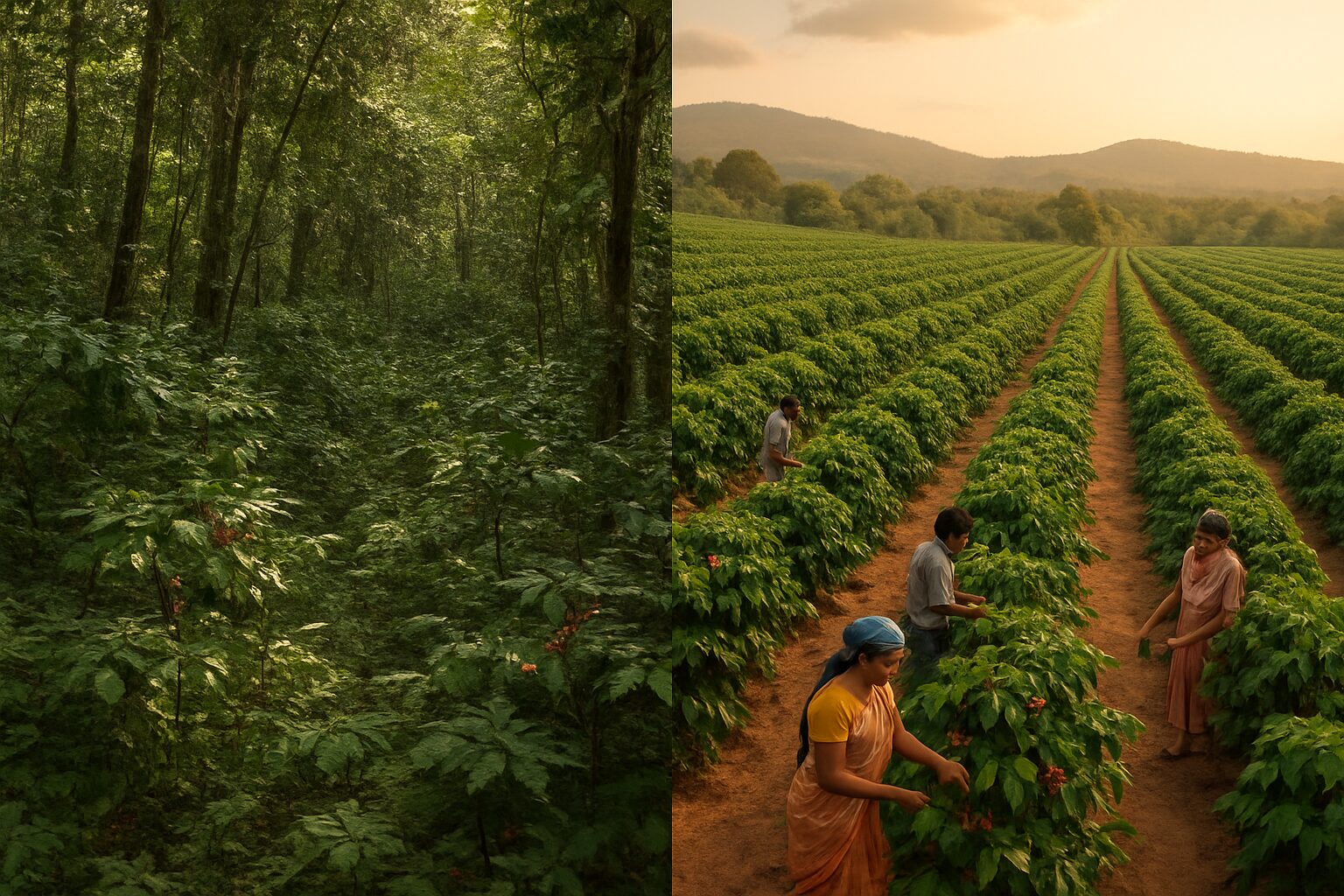
Expansion from Baba Budan’s original seven plants
The seven coffee seeds that Baba Budan smuggled from Yemen in the 17th century would become the foundation of India’s entire coffee industry. These original plants, carefully nurtured in the hills of Chikmagalur, began multiplying in the fertile soil and favorable climate. Local farmers noticed the unusual shrubs producing aromatic red cherries and gradually started cultivating coffee on a small scale.
Word spread through the region about these mysterious plants that yielded a drink similar to what traders had tasted in distant lands. Families began dedicating small plots of their land to coffee cultivation, sharing seeds and knowledge with neighbors. The plant’s natural adaptation to Chikmagalur’s elevation and rainfall patterns made expansion relatively straightforward, though still requiring careful attention to soil preparation and shade management.
British colonial recognition and systematic cultivation methods
The British East India Company recognized coffee’s commercial potential in the late 1700s, transforming what had been scattered family plots into organized agricultural ventures. Colonial administrators brought scientific approaches to cultivation, introducing concepts like plantation layouts, systematic pruning, and proper spacing between plants.
British planters established large estates in the Western Ghats, implementing structured farming techniques that maximized yield while maintaining quality. They introduced detailed record-keeping, seasonal cultivation calendars, and standardized processing methods. The colonial administration also invested in infrastructure, building roads and establishing trading posts that connected Chikmagalur’s remote coffee-growing areas to major markets.
European planters experimented with different varieties, importing seeds from other coffee-growing regions to improve local strains. They established nurseries, created detailed maps of suitable growing areas, and developed quality grading systems that would later become industry standards.
Transformation of local economy through coffee farming
Coffee cultivation completely reshaped Chikmagalur’s economic landscape, moving the region from subsistence farming to cash crop agriculture. Families who had previously grown only food crops for local consumption suddenly found themselves connected to international markets through their coffee beans.
The new industry created employment opportunities beyond farming itself. People found work in harvesting, processing, transportation, and trading. Small businesses emerged to support the growing coffee community – tool makers, cart builders, and local merchants who specialized in coffee trade.
Land values increased dramatically as coffee-suitable plots became highly sought after. Farmers who owned prime coffee land saw their economic status rise significantly, while others sought employment on established plantations. The crop’s annual cycle created a rhythm of seasonal employment that attracted workers from neighboring regions during harvest periods.
Local communities developed specialized knowledge about coffee cultivation that passed through generations. This expertise became a valuable asset, with experienced coffee farmers serving as consultants for new plantations across southern India.
Development of processing techniques unique to the region
Chikmagalur’s coffee growers developed distinctive processing methods adapted to local conditions and resources. The traditional “wet processing” technique involved removing the fruit pulp immediately after harvesting, then fermenting the beans in specially designed tanks built near natural water sources.
Local innovators created unique drying methods using the region’s consistent sunshine and gentle breezes. They built raised platforms and specially designed courtyards where coffee beans could dry evenly while being protected from sudden rain showers common in the Western Ghats.
The region pioneered specific fermentation techniques that enhanced the coffee’s flavor profile, taking advantage of natural yeasts present in the local environment. These methods produced coffee with distinctive taste characteristics that became associated with Chikmagalur beans.
Farmers also developed efficient storage systems using locally available materials, creating warehouses that protected dried beans from humidity while allowing proper air circulation. These storage techniques helped maintain quality during the monsoon season and extended the shelf life of processed coffee, making long-distance trade more viable.
Chikmagalur’s Role in Shaping India’s Coffee Industry
Establishing India as a major global coffee producer
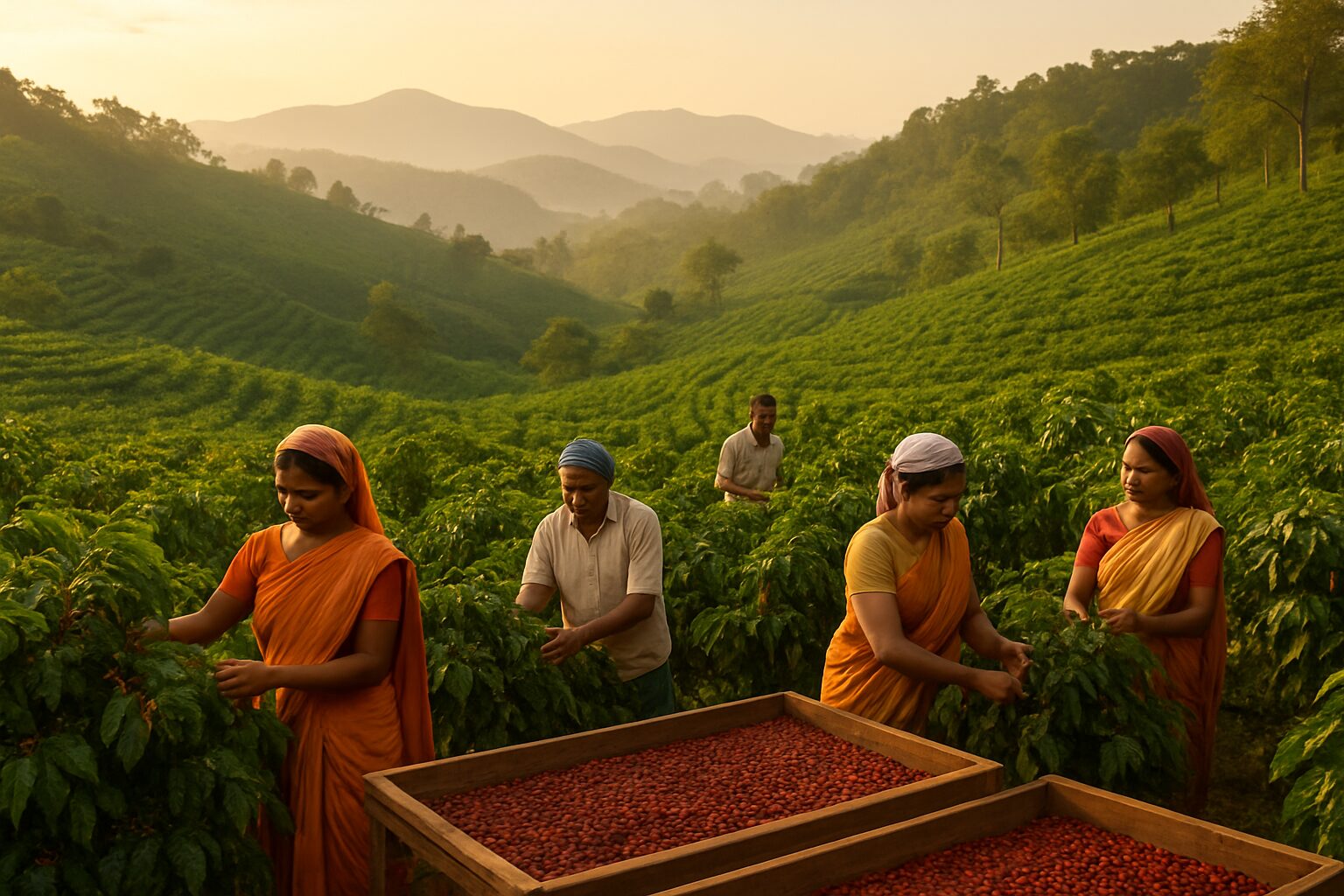
Chikmagalur’s pioneering coffee cultivation didn’t just introduce a new crop to India—it positioned the entire subcontinent as a serious player in the global coffee trade. From those first seven seeds planted by Baba Budan, India gradually developed sophisticated cultivation techniques that caught the attention of international buyers. The unique growing conditions in Chikmagalur produced coffee beans with distinct flavor profiles that European traders couldn’t find anywhere else.
By the 18th and 19th centuries, British colonial administrators recognized the commercial potential of Indian coffee. They expanded plantations beyond Chikmagalur into neighboring regions, but the original growing area remained the gold standard for quality. The high-altitude estates, combined with the region’s specific microclimate, created coffee that rivaled beans from Yemen and Java—the premium origins of that era.
Today, India ranks among the world’s top coffee-producing nations, with Chikmagalur district alone contributing a significant portion of the country’s total output. The arabica varieties grown here consistently receive high grades in international markets, with specialty coffee roasters worldwide seeking out beans specifically from this historic region.
Creating the foundation for South Indian coffee culture
The cultural impact of Chikmagalur’s coffee legacy extends far beyond agricultural success. This region essentially birthed South India’s distinctive coffee culture, which remains fundamentally different from tea-dominated North Indian preferences. The traditional filter coffee preparation method, using the iconic metal drip filter, originated from the need to brew the strong, aromatic beans grown in these hills.
Coffee houses became social gathering spots throughout Karnataka, Tamil Nadu, Andhra Pradesh, and Kerala, with each state developing its own variations of coffee preparation and serving rituals. The famous “degree coffee” culture of South India traces its roots directly back to the quality standards first established in Chikmagalur plantations.
Local families began incorporating coffee into daily routines, religious ceremonies, and hospitality customs. The practice of serving coffee to guests became an integral part of South Indian etiquette, creating a social fabric woven around this beverage that continues to define regional identity today.
Influencing agricultural practices across the Western Ghats
Chikmagalur’s success with coffee cultivation sparked agricultural innovation throughout the Western Ghats mountain range. Farmers in neighboring districts observed the prosperity of coffee growers and adapted similar shade-grown cultivation techniques for their own crops. The multi-layered canopy system used in coffee plantations—with native trees providing shade, pepper vines climbing the trunks, and coffee bushes forming the understory—became a model for sustainable agriculture.
This approach influenced how farmers grew cardamom, pepper, and other spices across the region. The intercropping methods pioneered in coffee estates proved that high-value crops could thrive under forest canopies while preserving biodiversity. Many plantation owners diversified their crops using these techniques, creating the mixed spice and coffee estates that characterize the Western Ghats landscape today.
The water conservation methods developed for coffee cultivation also spread to other agricultural regions. Terracing techniques, natural pest management using beneficial insects, and organic composting practices first refined in Chikmagalur coffee estates became standard practices across South Indian hill agriculture.
Contributing to India’s export economy through premium coffee beans
Chikmagalur established India’s reputation in international coffee markets, creating an export industry that generates substantial foreign exchange revenue. The district’s premium arabica beans command high prices in specialty coffee markets across Europe, Japan, and North America. Single-origin coffees from specific Chikmagalur estates regularly sell at premium prices, competing with renowned origins like Jamaica Blue Mountain and Hawaiian Kona.
The economic ripple effects extend beyond raw bean exports. Coffee processing facilities, roasting operations, and packaging plants have developed around Chikmagalur, creating employment opportunities and contributing to local economic development. The region has attracted international buyers who establish direct trade relationships with plantation owners, ensuring better prices for farmers while maintaining quality standards.
Coffee tourism has emerged as another revenue stream, with thousands of visitors arriving annually to experience plantation tours, coffee tasting sessions, and cultural programs. This agrotourism sector provides additional income for farming families while showcasing Indian coffee heritage to the world, creating a sustainable economic model that supports both agriculture and tourism industries.
Modern Legacy and Continued Coffee Excellence

Premium coffee varieties still grown using traditional methods
Chikmagalur’s coffee estates continue to nurture some of India’s most coveted arabica varieties using techniques passed down through generations. The famous Kent and S.795 varieties thrive in these misty hills, where plantation owners still follow shade-grown cultivation methods that Baba Budan would recognize. Silver oak, jackfruit, and indigenous trees create a natural canopy, protecting the delicate coffee cherries from harsh sunlight while enriching the soil with organic matter.
Many estates deliberately avoid mechanization for harvesting, instead relying on skilled workers who hand-pick only the ripest cherries. This selective harvesting, combined with traditional wet processing methods, produces coffee beans with complex flavor profiles that have earned Chikmagalur international recognition. The region’s microclimate, with its consistent rainfall patterns and cool temperatures, creates perfect conditions for slow cherry maturation, resulting in beans with exceptional acidity and aromatic qualities.
Estate owners take pride in maintaining old-world processing techniques, using traditional pulping machines and fermenting the beans in concrete tanks for precise periods. The careful sun-drying process on parchment floors, constantly turned by hand, ensures uniform moisture content that modern mechanical dryers struggle to achieve.
Coffee tourism attracting visitors to historical plantation sites
The birthplace of Indian coffee has transformed into a pilgrimage destination for coffee enthusiasts worldwide. Visitors flock to the original Baba Budan Giri hills, where guided tours reveal the exact spots where the first coffee plants allegedly took root. Heritage coffee estates now open their doors to tourists, offering immersive experiences that blend history with sensory exploration.
Popular plantation stays like Serai and Coffee Day resorts provide guests with hands-on experiences in coffee cultivation. Tourists can participate in cherry picking during harvest season, learn about different processing methods, and witness the journey from bean to cup. These experiences often include traditional coffee cupping sessions where visitors taste the nuanced differences between various estate-grown beans.
The annual Coffee Festival celebrates the region’s rich heritage, bringing together planters, roasters, and coffee lovers. Local guides share stories of legendary planters and the evolution of coffee culture in Karnataka. Many estates have preserved colonial-era bungalows and processing equipment, creating living museums that showcase centuries of coffee-making tradition.
Adventure tourism complements coffee experiences, with trekking trails leading through coffee-covered hills to ancient temples and waterfalls. The Mullayanagiri peak offers panoramic views of endless coffee plantations stretching across the Western Ghats.
For a private tour of Chikmagalur, please visit Coffee Trail to Chikmagalur.
Sustainable farming practices preserving Baba Budan’s heritage
Today’s Chikmagalur coffee growers embrace environmental stewardship as passionately as their predecessors valued tradition. Organic certification has become increasingly common among estates committed to chemical-free cultivation. These farmers rely on natural composting methods, using coffee pulp and organic waste to create nutrient-rich soil amendments.
Bird-friendly certification programs recognize estates that maintain diverse tree canopies, supporting migratory bird populations that naturally control pest insects. This ecological approach mirrors the original forest-like environment where wild coffee once grew. Many plantations have reintroduced native tree species, creating wildlife corridors that connect fragmented forest areas.
Water conservation initiatives address the region’s growing environmental concerns. Innovative planters have developed systems to recycle processing water, reducing consumption by up to 70%. Solar-powered pulping stations and energy-efficient drying methods minimize carbon footprints while maintaining quality standards.
Several estates participate in direct trade relationships, ensuring fair prices for farmers while promoting sustainable practices. These partnerships often fund community development projects, including education programs and healthcare facilities for plantation workers. Carbon offset programs allow environmentally conscious consumers to support reforestation efforts in degraded areas around coffee plantations, ensuring that Baba Budan’s legacy continues to flourish for future generations.
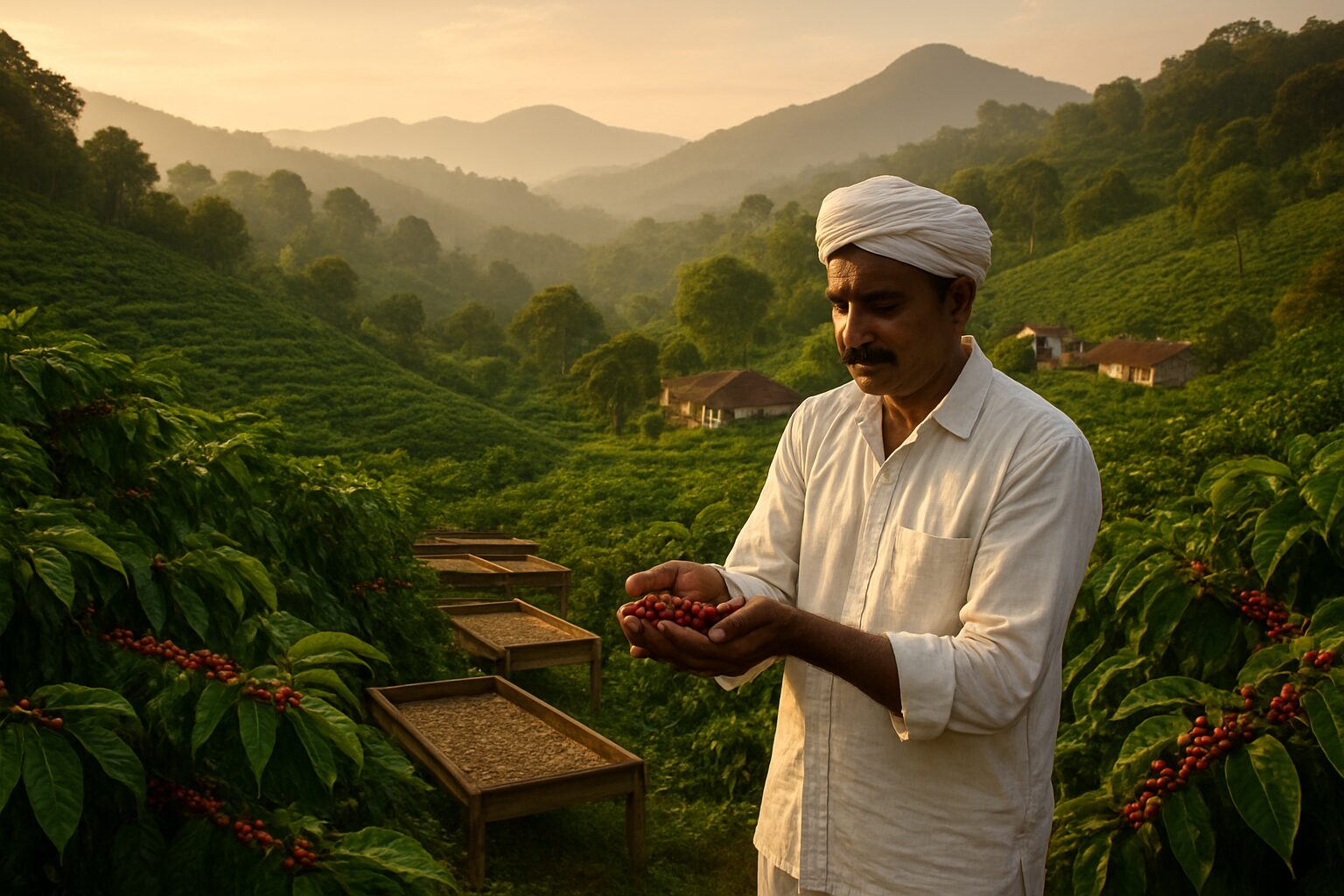
Chikmagalur’s story shows how one small region can change an entire country’s agricultural landscape. From Baba Budan’s legendary journey with seven coffee beans to today’s thriving plantations, this Karnataka district proved that the right combination of climate, terrain, and human determination can create something extraordinary. The hills that once hid secret coffee gardens now openly celebrate their role as India’s coffee birthplace.
The legacy lives on in every cup of Indian coffee we drink today. Chikmagalur didn’t just introduce coffee to India – it created a culture, an industry, and a tradition that continues to grow. If you’re a coffee lover looking to understand where your morning brew truly began, plan a visit to these historic hills. You’ll taste not just great coffee, but centuries of passion and pioneering spirit in every sip.
For a private tour of Chikmagalur, please visit Coffee Trail to Chikmagalur.
Leave a Reply