
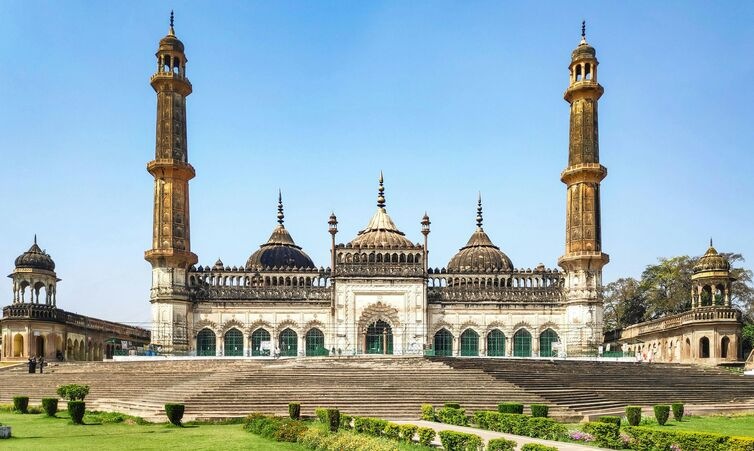
Lucknow, the capital of Uttar Pradesh, is one of India’s most refined and culturally layered cities. While many travelers focus on Delhi or Agra, those seeking depth, elegance, and historical continuity will find that a Lucknow Heritage Tour offers something far more immersive. This city is not simply a collection of monuments; it is a living archive of Nawabi culture, Mughal-influenced architecture, courtly etiquette, and legendary cuisine.
For inbound travelers looking to explore India beyond the conventional Golden Triangle circuit, Lucknow presents an experience that is intimate, authentic, and culturally sophisticated.
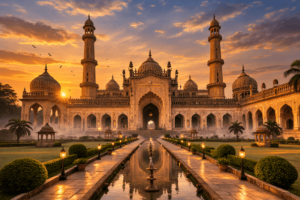
Why Choose a Lucknow Heritage Tour?
Lucknow flourished under the Nawabs of Awadh in the 18th and 19th centuries. Their patronage shaped the city’s architecture, cuisine, poetry, music, and textiles. Unlike heavily commercialized destinations, Lucknow retains a sense of lived heritage.
A well-curated Lucknow Heritage Tour allows visitors to understand:
- The architectural evolution from late Mughal to Nawabi grandeur
- The fusion of Persian, Central Asian, and Indian design aesthetics
- The refinement of Awadhi culinary traditions
- The city’s role in India’s political and cultural history
This layered experience makes Lucknow one of North India’s most intellectually and culturally rewarding destinations.
Architectural Highlights of a Lucknow Heritage Tour
Bara Imambara: Engineering Brilliance of the Nawabs
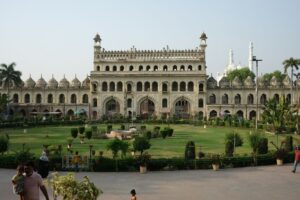
Built in 1784 by Nawab Asaf-ud-Daulah, the Bara Imambara is the crown jewel of any Lucknow Heritage Tour. Its central hall remains one of the largest arched constructions in the world built without supporting beams or pillars. The structure demonstrates advanced load-distribution engineering long before modern structural science formalized such principles.
The complex includes:
- The Asfi Mosque
- The historic Baoli (stepwell)
- Intricate passageways known as the Bhulbhulaiya
It stands as a testament to architectural precision and aesthetic restraint.
Chhota Imambara: Ornamental Elegance
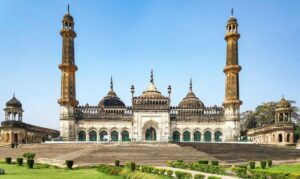
Constructed in 1838 by Nawab Muhammad Ali Shah, Chhota Imambara contrasts with Bara Imambara’s structural grandeur through decorative brilliance. Chandeliers, mirror work, Arabic calligraphy, and symmetrical design elements make it a highlight of any Lucknow Heritage Tour.
The monument reflects the later Nawabi preference for ornamentation and refined visual drama.
Rumi Darwaza: The Symbol of Lucknow
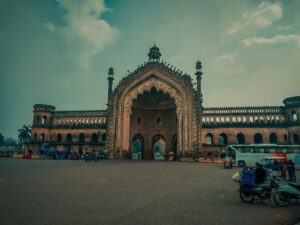
Standing approximately 60 feet tall, Rumi Darwaza was inspired by Ottoman gateways of Constantinople. Built in 1784, it symbolizes Lucknow’s cosmopolitan outlook and Indo-Islamic architectural fusion.
For visitors on a Lucknow Heritage Tour, walking beneath this monumental gateway is a symbolic entry into the Nawabi era.
La Martiniere: Colonial Influence in Nawabi Lucknow
Established in 1840, La Martiniere College reflects a blend of European and Indian architectural styles. Its grand façade and hybrid design illustrate the layered history of Lucknow during the colonial period.
Including this landmark in a Lucknow Heritage Tour provides important historical context about the city’s transition during British rule.
Culinary Experiences on a Lucknow Heritage Tour
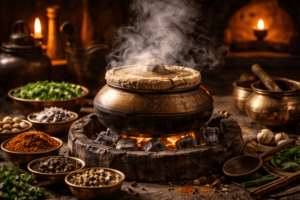
Lucknow’s heritage is incomplete without its cuisine. Awadhi cooking developed in royal kitchens where culinary experimentation was encouraged.
Dum Pukht: The Science of Slow Cooking
“Dum Pukht” involves slow-cooking food in sealed containers, allowing internal steam circulation to preserve moisture and enhance flavor infusion. Modern food science explains that this technique improves retention of volatile aroma compounds while preventing moisture loss.
Experiencing authentic Dum Pukht dishes is essential during a Lucknow Heritage Tour.
Galauti Kebab: A Royal Innovation
Created for a Nawab who could not chew tough meat, the Galauti Kebab uses finely minced meat blended with over a dozen spices. The texture is so soft that it dissolves effortlessly.
This dish remains one of Lucknow’s most iconic culinary contributions.
Other Awadhi Specialties
A complete Lucknow Heritage Tour often includes tasting:
- Kakori Kebabs
- Nihari
- Sheermal
- Roomali Roti
Each recipe reflects courtly refinement and centuries of culinary evolution.
Chikankari: The Living Craft of Lucknow
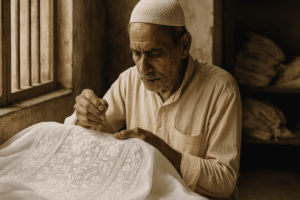
Chikankari embroidery is one of India’s most celebrated textile traditions. This delicate hand-embroidery technique uses fine thread to create floral and geometric patterns on lightweight fabrics.
A Lucknow Heritage Tour that includes artisan workshops allows visitors to observe the meticulous craftsmanship behind this centuries-old tradition. Supporting authentic Chikankari artisans also helps sustain this cultural heritage.
Best Time for a Lucknow Heritage Tour
The ideal time to visit Lucknow is between October and March, when temperatures are moderate and comfortable for exploring monuments and old city markets.
During this period, cultural events and local festivals further enrich the heritage experience.
Why a Guided Lucknow Heritage Tour Enhances the Experience
While Lucknow’s monuments are impressive on their own, historical context transforms them from structures into stories. A knowledgeable local guide can interpret architectural symbolism, explain Nawabi etiquette, and connect culinary traditions to political history.
This depth of interpretation elevates a Lucknow Heritage Tour from sightseeing to cultural immersion.
Lucknow’s Cultural and Historical Significance

Lucknow played an important role in India’s political history, including the 1916 Lucknow Pact between the Indian National Congress and the All-India Muslim League. The city was also a center of Urdu poetry, Kathak dance refinement, and Indo-Persian court culture.
Understanding this intellectual and artistic legacy adds dimension to any Lucknow Heritage Tour.
Plan Your Lucknow Heritage Tour
Lucknow offers:
- Monumental architecture
- Refined Awadhi cuisine
- Traditional textile craftsmanship
- A rich blend of Mughal, Nawabi, and colonial history
For travelers seeking an authentic cultural experience in North India, a Lucknow Heritage Tour provides historical depth, architectural brilliance, and culinary sophistication rarely matched elsewhere.
Exploring Lucknow is not simply about visiting monuments; it is about understanding how elegance, etiquette, and artistry shaped a city that continues to preserve its legacy.
For immersive culture walks in India, visit 5 Senses Walks.
Leave a Reply