heritage
Neemrana & Alwar
Rajasthan begins two hours from Delhi — forts, lake palaces and a king who almost changed history
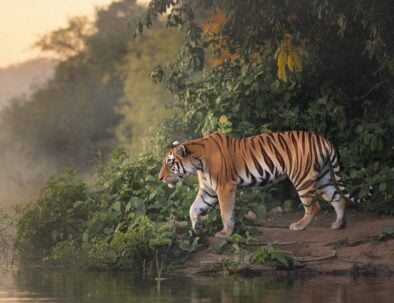
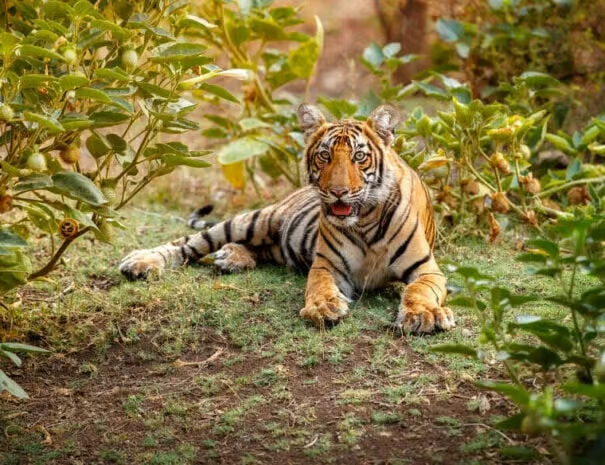
In 2005 Sariska Tiger Reserve made international headlines for the worst possible reason. Every single one of its eighteen tigers had been poached. The reserve, once the private hunting ground of the Maharaja of Alwar, was completely empty of tigers for the first time in recorded history. What happened next became one of the most remarkable wildlife conservation stories anywhere in the world. In 2008 the Indian government launched the world's largest tiger relocation project, moving tigers from Ranthambore National Park into Sariska for the first time in history. By 2025 the reserve has fifty tigers. Fifty. Where there were none seventeen years ago, a breeding population of eleven adult males, fourteen adult females and twenty-five cubs is now thriving in the dry deciduous Aravalli forest, watched over by one of the most intensively managed tiger conservation programmes in Asia. When you enter Sariska on a morning safari with a 5 Senses Tours naturalist guide, you are not simply watching wildlife. You are witnessing the living result of one of the most dramatic conservation recoveries in the history of the natural world. This tour puts Sariska at the centre of everything. Two safaris, one on the afternoon of Day 1 and one at dawn on Day 2, give you the fullest possible encounter with the forest at its two most productive wildlife hours. The morning of Day 1 is the drive from Delhi into the Aravalli Hills. The afternoon of Day 2 after the second safari is the drive back through Alwar, where the Moosi Maharani Chhatri and Siliserh Lake, two of the most beautiful heritage landmarks in Rajasthan, make the return journey home extraordinary in their own right.
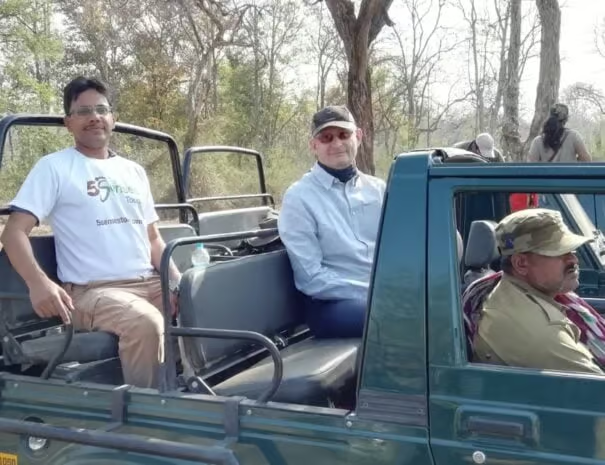
The Sariska Tiger Reserve and Alwar tour from Delhi begins with hotel pickup at 7.30 am in a private air conditioned vehicle. The drive to Sariska takes approximately four hours via the NH48 through the Aravalli hills, the landscape shifting gradually from the Delhi plains into the rocky Rajasthan terrain. You arrive at the reserve in time to check in, have lunch and prepare for the first safari.
Day 1: Afternoon Safari at Sariska Tiger Reserve
You arrive at the Sariska reserve by midday. After checking in to your overnight accommodation inside the forest, lunch and a briefing from your naturalist guide on the reserve’s fifty-tiger population and what to look for in the afternoon, you board the jeep at 2 pm for the first safari.
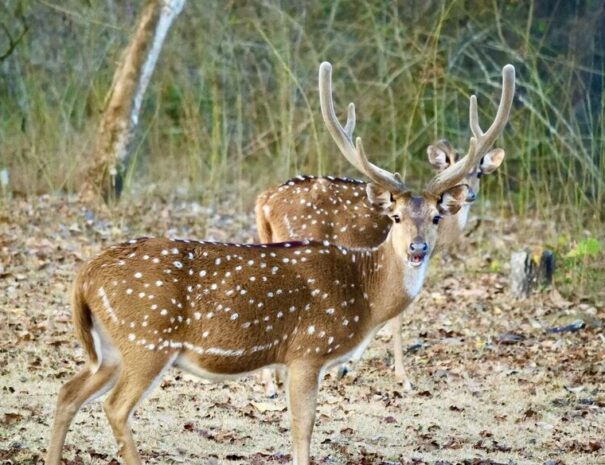
The afternoon safari at Sariska runs until 5.30 pm in winter months and covers Zones 1, 2 and 3 through the Sariska Gate, the entry point with the highest tiger sighting probability in the reserve. The dry deciduous Aravalli forest at this hour is alive with activity. Chital deer move toward water sources. Nilgai graze at the forest edges. Langur monkeys call alarm from the canopy above. And the forest roads, covered in dust that records every pawprint, tell your naturalist guide a detailed story of who has been where since the morning.
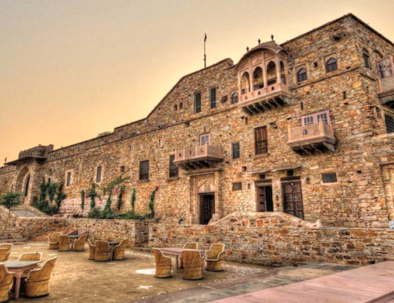
The reserve’s extraordinary interior also contains Kankwari Fort, a historically significant Mughal-era fortification deep inside the forest that was used by Aurangzeb to imprison his brother Dara Shikoh. Visible from the safari route, this extraordinary combination of living tiger forest and ancient human history makes Sariska unique among India’s tiger reserves.
Beyond tigers, the reserve supports leopards, striped hyena, jungle cat, caracal, golden jackal, sloth bear, chital, sambar, nilgai, chinkara, four-horned antelope and wild boar. The birdlife is equally extraordinary, with the crested serpent eagle, Indian eagle-owl, Indian peafowl, grey partridge, sand grouse and golden-backed woodpecker among the most celebrated species.
Dinner and overnight stay at your accommodation inside Sariska Tiger Reserve.
Day 2: Dawn Safari Then Alwar Highlights
The morning safari at Sariska begins at 7 am in winter, the single most productive wildlife encounter time of the entire visit. Tigers are most active in the early morning hours, moving between territories, visiting water sources and hunting before the day warms. Your naturalist guide has spent the evening tracking the latest movement reports from the forest rangers and enters the reserve on Day 2 with specific knowledge of where the most promising sightings are likely.
The dawn safari runs until 10.30 am. After returning to the property for breakfast, you begin the drive back to Delhi via Alwar, where two of the most extraordinary heritage landmarks in Rajasthan make the journey home a genuine cultural experience rather than simply a transfer.
Siliserh Lake, created in 1845 by Maharaja Vinay Singh, who is said to have fallen in love with a woman from the village below and built a palace on the water’s edge to be near her, is one of the most romantically situated lake palaces in Rajasthan. The views across the water to the Aravalli Hills are at their most beautiful in the late morning light.
The Moosi Maharani Chhatri, built in 1815 in memory of King Bakhtawar Singh and his queen Moosi, is one of the most refined pieces of funerary architecture in Rajasthan, its ground floor in red sandstone and its upper storey in white marble with carved domed arches and intricate floral tracery. It takes approximately forty-five minutes to explore properly and rewards every minute.
Drive onward to Delhi, arriving by approximately 6.30 pm.
Experience Sariska Tiger Reserve over 2 days from Delhi
Sariska Tiger Reserve is approximately 200 kilometres from Delhi, a drive of approximately four hours via the NH48 through the Aravalli hills. We depart at 7.30 am to arrive at Sariska by midday, giving you time to check in and prepare for the afternoon safari at 2 pm. The morning safari on Day 2 ends by 10.30 am, and we visit the Siliserh Lake and Moosi Maharani Chhatri highlights in Alwar on the return journey before reaching Delhi by early evening.
As of 2025 Sariska Tiger Reserve has fifty tigers, including eleven adult males, fourteen adult females and twenty-five cubs. This is one of the most remarkable wildlife conservation recovery stories in India. In 2005 every tiger in the reserve was wiped out by poaching. The government launched the world’s largest tiger relocation programme in 2008, moving tigers from Ranthambore into Sariska for the first time. The population has grown steadily since and Sariska is now considered one of India’s most successful tiger recovery stories.
Tigers are most active at dawn and in the late afternoon, the two hours that bracket the hotter middle of the day when wildlife movement slows significantly. A single safari gives you one encounter window. Two safaris give you both, more than doubling your probability of a tiger sighting and giving you the complete rhythm of the reserve across two different light qualities, the extraordinary golden hour of a Sariska afternoon safari and the first light of a Sariska dawn. For a reserve with fifty tigers and one of the most extraordinary conservation stories in India, two safaris is simply the right way to experience it.
The best time to visit Sariska is from October to March, when the weather is most comfortable and wildlife activity is most reliable. The reserve is open from October 1 to June 30 each year and closed during the monsoon from July to September. Safaris are also closed every Wednesday regardless of season, so please check the day of your planned visit before booking. November to February offers the most comfortable safari temperatures and the clearest light for photography.
Sariska supports leopards, striped hyena, jungle cat, caracal, golden jackal, sloth bear, chital, sambar, nilgai, chinkara, four-horned antelope and wild boar. The birdlife includes the crested serpent eagle, Indian eagle-owl, Indian peafowl in their hundreds, grey partridge, sand grouse and golden-backed woodpecker. The Kankwari Fort inside the forest and the Pandupol Hanuman Temple make Sariska unique in combining active tiger wildlife with ancient history inside the same protected landscape.
The Alwar highlights on the return journey from Sariska on Day 2 cover two of the most beautiful and most underappreciated heritage landmarks in Rajasthan. Siliserh Lake was created in 1845 by a Maharaja who fell in love with a woman from the village below and built a palace on the water’s edge to be near her. The Moosi Maharani Chhatri, built in 1815, is one of the most refined examples of funerary architecture in Rajasthan with red sandstone below and white marble above. Both are unhurried stops that complement the energy of the two wildlife safaris perfectly. For travellers wanting the complete Alwar royal heritage programme including the Bala Quila fort and City Palace, our Neemrana Fort and Alwar tour from Delhi covers Alwar in full depth across a dedicated two-day itinerary.
Choose from our comprehensive list of private guided tours that are immersive cultural experiences.
Join our immersive culture walks to discover authentic India. Led by a guide, experience culture, heritage & food across India.
Listen to Incredible India Travel, a podcast about the best places to visit and experiences in India.
Join our ride on Royal Enfield Motorcycles s we experience authentic India, led by an escort rider.