

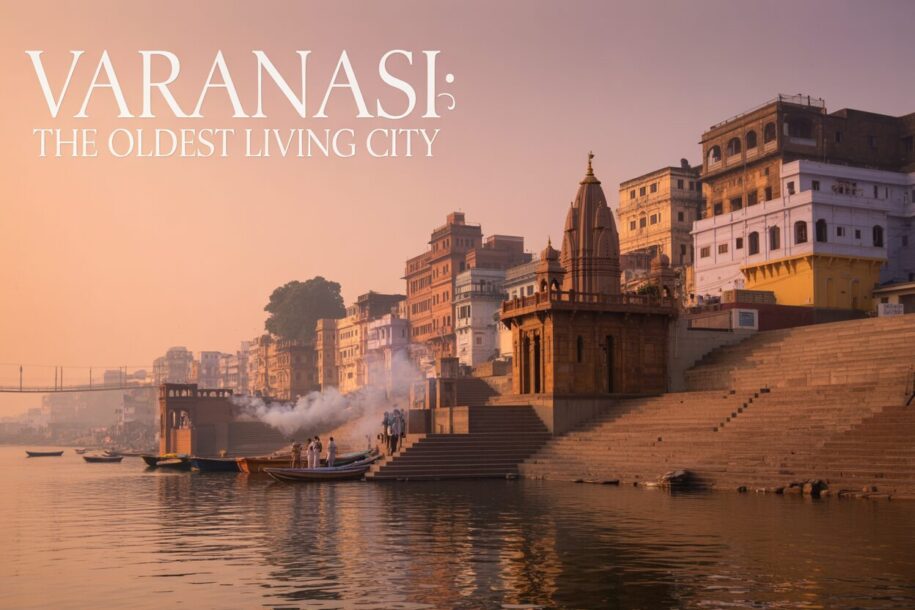
Varanasi hits you like nothing else on Earth. This ancient city along the Ganges River has been continuously inhabited for over 3,000 years, making it arguably the oldest living city on the planet. Every traveler, spiritual seeker, and culture enthusiast who walks its narrow lanes comes away fundamentally changed.
This guide is for anyone curious about what makes Varanasi so transformative – from first-time India visitors to seasoned travelers seeking deeper meaning. You’ll discover how this sacred city’s ancient heritage continues to thrive in modern times, defying the passage of millennia. We’ll explore the profound spiritual awakening that happens along the holy Ganges, where daily rituals of life and death unfold before your eyes. Finally, you’ll understand how Varanasi’s intense sensory experience – the sounds, smells, colors, and chaos – rewires your perspective on what really matters in life.
Get ready to see why Mark Twain called Varanasi “older than history, older than tradition, older even than legend.”
Planning a Varanasi tour is one of the most rewarding decisions any traveller to India can make. Varanasi is the world’s oldest continuously inhabited city, older than Rome, older than Athens, older than Jerusalem, and it remains today exactly what it has always been: the spiritual heart of a civilisation that has been asking the deepest questions about human existence for over three thousand years. This complete Varanasi tour guide covers everything you need to know to experience this extraordinary city with the depth and understanding it deserves.
Varanasi Tour: Ancient Heritage That Has Defied 3000 Years of Time
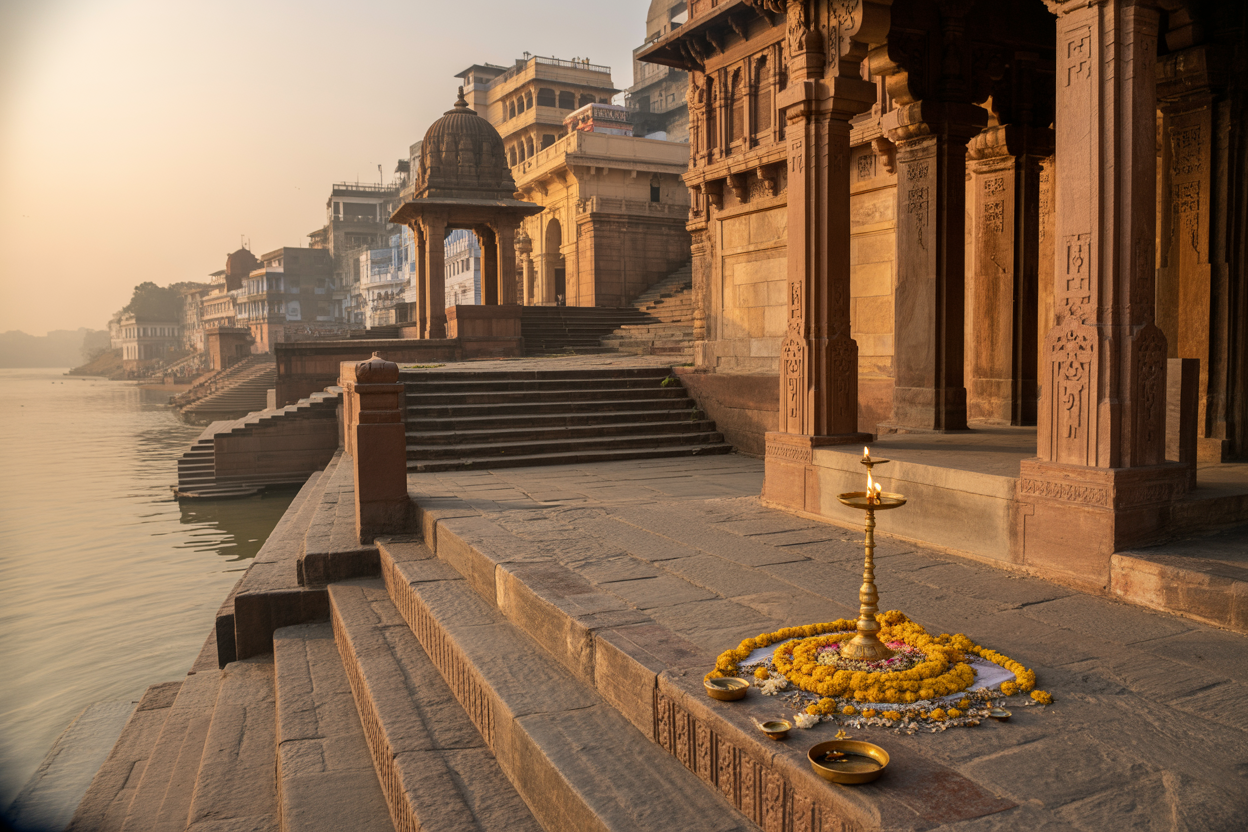
Archaeological Evidence That Makes Varanasi the Oldest Continuously Inhabited City on Earth
Digging beneath Varanasi’s bustling streets reveals layers of history that stretch back over three millennia. Archaeological excavations have uncovered pottery shards, coins, and artifacts dating to 1200 BCE, making this one of the world’s oldest continuously inhabited cities. The ancient settlement of Kashi predates Rome, Athens, and Jerusalem as vibrant urban centers.
Recent excavations near the Ganga ghats have revealed:
- Ancient foundations dating to the 6th century BCE
- Ceramic fragments showing unbroken cultural traditions
- Sanskrit inscriptions carved into stone centuries ago
- Buddhist and Jain relics from the 5th century BCE
What makes Varanasi extraordinary isn’t just its age—it’s the unbroken chain of human habitation. While other ancient cities fell to conquests or natural disasters, Varanasi adapted and survived. The same families have been performing rituals here for dozens of generations, creating an living archaeological record of human spiritual evolution.
Sacred Traditions Preserved Unchanged for Over 2500 Years of Continuous Practice
The spiritual practices you witness today in Varanasi have remained largely unchanged for over 2,500 years. Morning prayers along the Ganges follow Sanskrit verses composed when Buddha walked these very streets. The evening Ganga Aarti ceremony recreates rituals that ancient texts describe in vivid detail.
Traditional practices still thriving include:
- Fire ceremonies using techniques described in the Vedas
- Chanting traditions passed down orally through priest families
- Sacred thread ceremonies following ancient Hindu customs
- Funeral rites that connect the living with cosmic cycles
The city’s 2,000 temples serve as repositories of ancient wisdom. Priests here don’t just perform rituals—they preserve knowledge systems that predate written history. Sanskrit scholars still teach students using methods identical to those used 1,000 years ago, creating an unbroken link to humanity’s spiritual heritage.
Living Museums Where Ancient Varanasi and Modern India Coexist on Every Street Corner
Walking through Varanasi feels like time travel because the past isn’t preserved in glass cases—it’s alive on every corner. Ancient trades continue exactly as they did centuries ago. Silk weavers use looms their ancestors designed, while traditional musicians play instruments crafted using medieval techniques.
The city operates as multiple time periods simultaneously:
- Medieval markets where haggling follows ancient customs
- Traditional workshops producing goods with historical methods
- Ancient streets navigated by modern rickshaws and smartphones
- Spiritual centers where contemporary seekers study ancient texts
Families here trace their lineage back 20-30 generations, often living in the same neighborhoods their ancestors inhabited centuries ago. These human connections create living bridges across time, allowing visitors to experience history not as distant events but as continuing stories.
Varanasi Architecture: The Ghats, Temples and Hidden Passages That Survived Every Invasion
Despite facing multiple invasions, earthquakes, and floods, Varanasi’s architectural treasures demonstrate remarkable resilience. The Kashi Vishwanath Temple has been destroyed and rebuilt multiple times, yet its spiritual significance never diminished. Each reconstruction layered new artistic elements onto ancient foundations.
Surviving architectural highlights include:
- Ghat steps carved from single stone blocks centuries ago
- Temple spires rebuilt using traditional engineering techniques
- Narrow alleyways designed to confuse invading armies
- Stone platforms where saints meditated for decades
The city’s unique architecture reflects its survival strategy—buildings were designed to be rebuilt quickly while preserving sacred geometries. Hidden passages connected temples to the riverfront, allowing religious activities to continue even during sieges. Today’s visitors can still trace these ancient escape routes, walking paths that saved countless lives across the centuries.
The best way to experience the full depth of Varanasi’s extraordinary ancient heritage is with an expert cultural guide who knows where to look and what stories to tell. Our Varanasi tours take you through the ancient lanes, the hidden temples and the living heritage of the world’s oldest city with cultural evangelists who have spent years understanding every layer of this extraordinary place.
Varanasi Spiritual Tour: Awakening Along the Sacred Ganges at Dawn
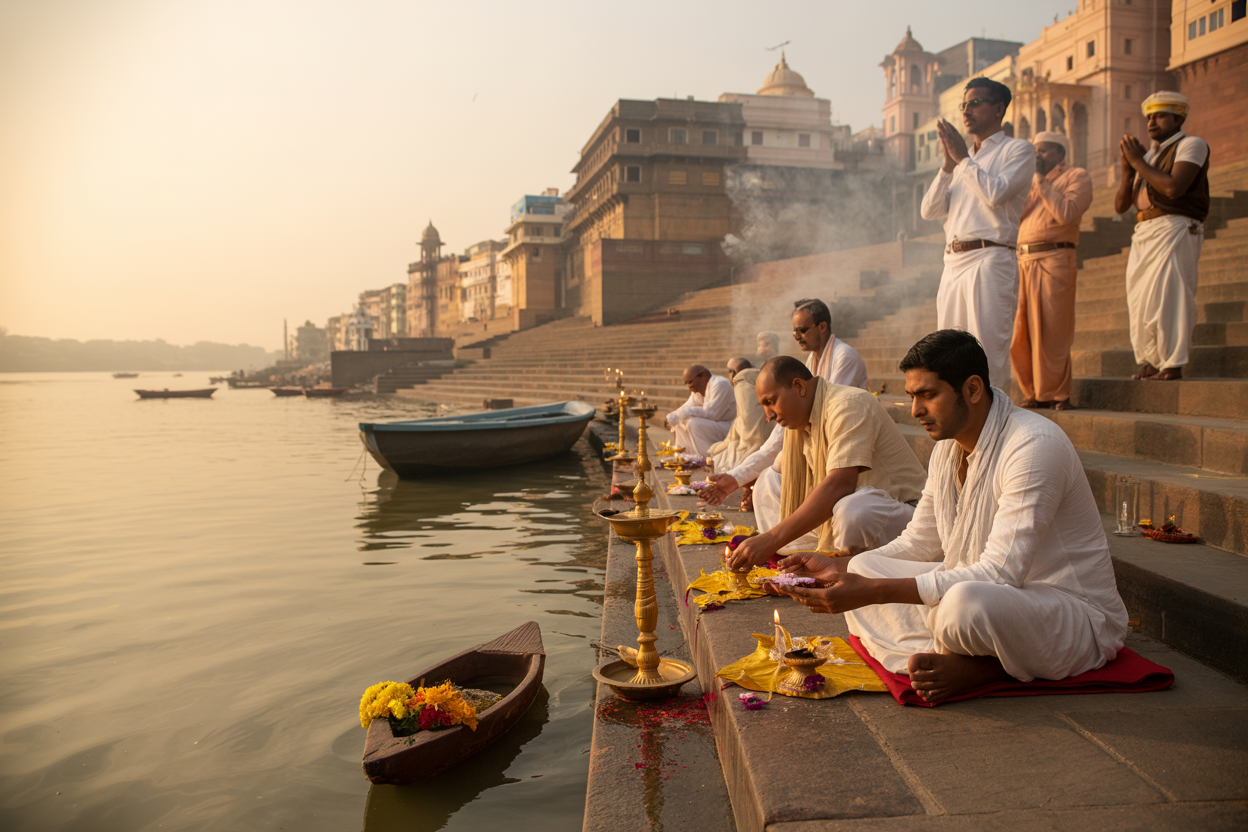
Varanasi Ganga Aarti and Dawn Prayers: The Morning Rituals That Connect the Living to Eternity
The first light of dawn reveals something magical along the ghats of Varanasi. As darkness slowly retreats, hundreds of devotees descend the ancient stone steps toward the sacred Ganges. Their synchronized movements create a living tapestry of devotion that has remained unchanged for thousands of years.
Standing among these worshippers, you quickly realize this isn’t just a religious ritual – it’s a profound communion between the earthly and divine. The rhythmic chanting of Sanskrit mantras fills the air while oil lamps flicker like earthbound stars. Pilgrims cup river water in their palms, offering it back to the sun with reverent whispers.
What strikes most visitors is the palpable energy that surrounds these morning prayers. Strangers become united in purpose, their individual struggles dissolving into collective devotion. The barriers between self and universe begin to blur as ancient words wash over you like the river itself.
Many travelers describe feeling unexpectedly moved to tears during these dawn ceremonies, even without understanding the language or customs. The raw authenticity of faith displayed by people from all walks of life creates an emotional bridge that transcends cultural differences.
Sadhus, Mystics and Holy Men: The Encounters That Change Every Varanasi Visitor Forever
Varanasi attracts spiritual seekers from across the world, creating a unique ecosystem where ancient wisdom meets modern questioning. The city’s sadhus, or holy men, carry centuries of mystical knowledge in their weathered faces and penetrating gazes.
These encounters rarely happen on your terms. A sadhu might approach you with a knowing smile at a chai stall, or you might find yourself drawn into conversation with a mystic sitting quietly by the river. Their insights often arrive through simple observations that somehow address your deepest concerns.
The most profound meetings occur spontaneously:
- Street-side philosophers who share life-altering perspectives during casual conversations
- Temple priests whose stories reveal the deeper meanings behind rituals
- Wandering ascetics who demonstrate living with complete detachment from material possessions
- Local devotees whose unwavering faith challenges your own beliefs about spirituality
These holy men possess an uncanny ability to see through surface-level concerns and address the fundamental questions you didn’t even know you were asking. Their words often resonate long after you’ve left Varanasi, becoming internal guides during difficult moments.
Ganga Aarti and Ancient Temple Rituals: Participating in Ceremonies That Have Run for Millennia
Stepping into Varanasi’s ritual life means crossing invisible thresholds into sacred space. The city invites participation rather than mere observation, drawing visitors into ceremonies that have shaped human consciousness for millennia.
The Ganga Aarti, performed every evening at Dashashwamedh Ghat, transforms spectators into participants through sheer spiritual magnetism. As massive oil lamps are raised toward the heavens, thousands of individual flames merge into one brilliant offering. Holding your own small diya (oil lamp), you become part of this ancient dialogue between earth and sky.
Temple rituals offer even deeper immersion:
- Puja ceremonies where offerings become prayers made tangible
- Circumambulation around sacred sites that creates moving meditation
- Sacred thread ceremonies that mark spiritual transitions
- Fire rituals that purify intentions and release attachments
Each ritual operates on multiple levels – physical actions trigger emotional responses that open pathways to spiritual understanding. What begins as cultural curiosity often evolves into genuine spiritual practice.
Experiencing the Ganga Aarti at Dashashwamedh Ghat with an expert guide who can explain the full theological and historical significance of what you are witnessing transforms a spectacular ceremony into a genuinely profound encounter with one of humanity’s oldest living spiritual traditions. Our Varanasi tours include expert guided access to the morning and evening Aarti ceremonies, the Kashi Vishwanath Temple and the ancient cremation ghats with cultural evangelists who bring every moment to life.
Manikarnika Ghat: Understanding Life Death and Rebirth Through Varanasi’s Sacred Cremation Ceremonies
Varanasi confronts visitors with humanity’s most profound mystery: the transition between life and death. The city’s burning ghats serve as classrooms where abstract concepts about mortality become visceral realities.
Witnessing cremation ceremonies along the Ganges initially shocks most travelers. The open acknowledgment of death’s inevitability cuts through modern society’s careful avoidance of this universal experience. Families gather around funeral pyres with a mixture of grief and acceptance that challenges Western approaches to loss.
The continuous presence of death paradoxically celebrates life’s preciousness. Observing how families honor their departed while simultaneously embracing renewal creates a new framework for understanding existence. The river carries away both ashes and attachments, demonstrating nature’s endless cycles of transformation.
This daily confrontation with mortality often triggers personal revelations:
- Priorities clarify as trivial concerns lose their grip
- Relationships deepen when viewed through the lens of impermanence
- Present moments intensify as future anxieties diminish
- Life’s meaning expands beyond individual achievements
Ganges River Meditation: Finding Inner Peace Along the Most Sacred Waterway on Earth
The Ganges offers more than religious significance – it provides a natural meditation environment that stills restless minds. Sitting quietly along the ghats, watching the river’s eternal flow, creates space for inner reflection that busy modern life rarely allows.
The river’s constant movement paradoxically induces stillness within observers. Thoughts begin to flow like the water itself – arising, flowing, and dissolving without resistance. The gentle lapping of waves against stone steps creates a natural soundtrack for contemplation.
Early morning and sunset hours provide optimal conditions for river meditation. The soft light, cooler temperatures, and reduced crowds create intimate spaces for inner exploration. Many visitors develop daily practices of sitting by the water, discovering that external simplicity encourages internal clarity.
Regular river meditation often produces lasting changes in perspective. The practice of observing without judgment – watching boats pass, pilgrims bathe, and life unfold – develops into a transferable skill for navigating life’s complexities with greater equanimity and acceptance.
The Sensory Experience of Varanasi: What the Ancient City Looks Sounds and Smells Like
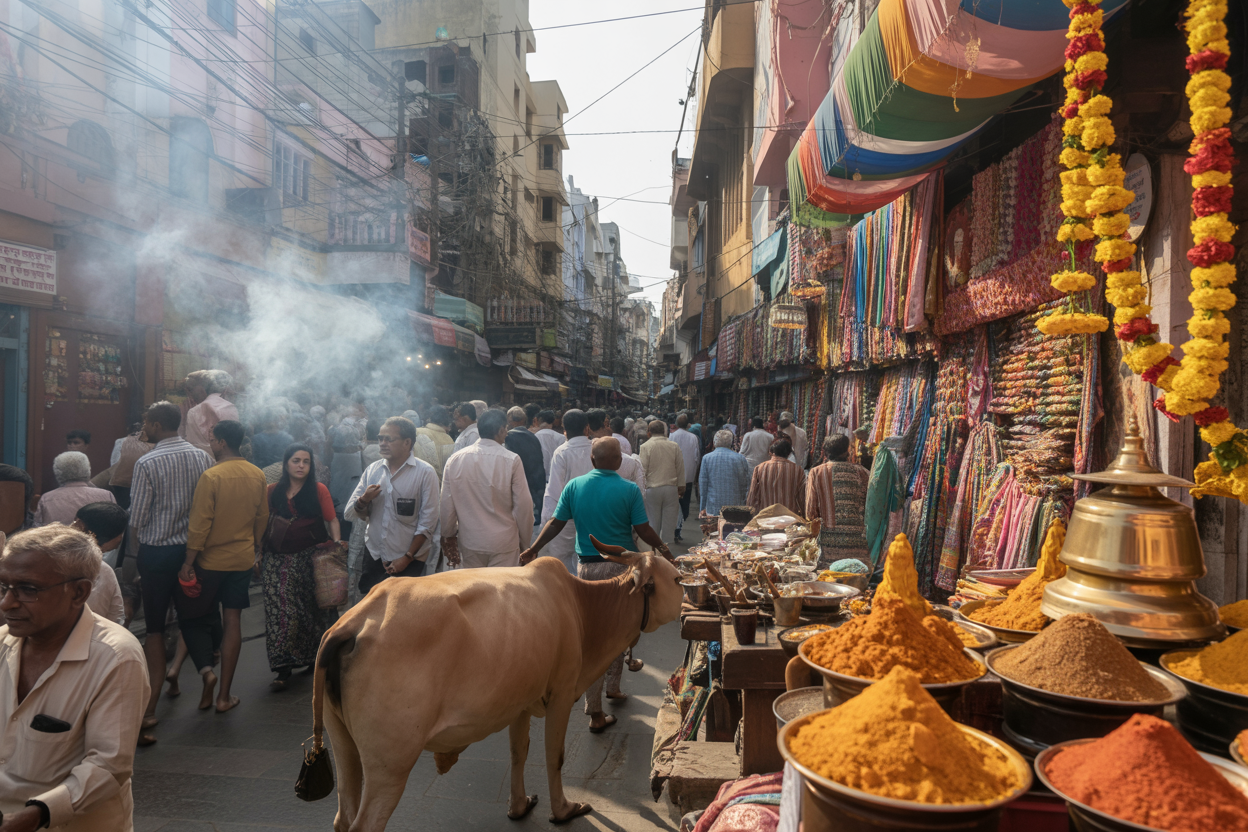
The Narrow Lanes of Varanasi Old City: Every Alley Carries 3000 Years of Stories
The labyrinthine gullies of Varanasi assault your senses before you even know what’s happening. These ancient pathways, barely wide enough for two people to pass, have witnessed more human drama than any modern city street. Every turn reveals something unexpected – a sadhu lost in meditation, children playing cricket with makeshift bats, or vendors selling everything from silk scarves to religious trinkets.
The stone walls seem to whisper secrets from centuries past. You’ll find yourself touching them instinctively, feeling the grooves worn smooth by countless hands. Local residents navigate these maze-like passages with practiced ease, while visitors stumble and marvel at the architectural chaos that somehow makes perfect sense. The narrow alleys force intimate encounters – you can’t help but make eye contact with strangers, smell the cooking spices from hidden kitchens, and hear fragments of conversations in languages you don’t understand.
Varanasi Street Food and Incense: The Extraordinary Aromas of the Oldest Living City
Varanasi’s aromatic landscape hits you like a wall of sensory complexity. The sacred smoke from temple incense mingles with the earthy smell of the Ganges, creating an otherworldly atmosphere that’s both spiritual and deeply human. But then the food aromas join the symphony – sizzling jalebis in bubbling oil, fresh lassi being churned, and the irresistible pull of chaat vendors preparing their spicy concoctions.
Your nose becomes your guide through this olfactory adventure. The sweet fragrance of marigold garlands competes with the pungent aroma of burning ghats in the distance. Street food stalls emit clouds of aromatic steam that make your mouth water despite your initial hesitation. The city teaches you to trust your senses in ways you never have before, pushing you beyond your comfort zone with every breath.
Sanskrit Chants and Temple Bells: The Ancient Soundscape of Varanasi That Never Goes Silent
The soundscape of Varanasi operates on multiple layers simultaneously. Temple bells ring at seemingly random intervals, creating a metallic percussion that punctuates the constant hum of human activity. But the chants – those ancient Sanskrit verses that bounce off medieval walls – create something almost hypnotic.
You don’t need to understand the words to feel their power. The repetitive mantras seep into your consciousness, whether you’re sitting by the ghats at sunrise or walking through the old quarters at midnight. These sounds have been echoing through the same stones for thousands of years, creating an acoustic time machine that connects you to countless generations of pilgrims and seekers.
The audio chaos initially overwhelms – motorcycle horns, vendors calling out their wares, temple drums, and dogs barking all blend into what seems like noise. But gradually, your ears adapt and you start hearing the rhythm underlying the apparent disorder. The city has its own musical logic that reveals itself slowly to those who listen.
Life on the Ghats: The Extraordinary Human Contrast That Defines Varanasi’s Daily Reality
Varanasi strips away any illusions about economic inequality with brutal honesty. You’ll step out of a comfortable guesthouse and immediately encounter families living on the street with nothing but a tarp for shelter. The contrast isn’t hidden or sanitized – it’s right there, forcing you to confront realities that many other destinations keep carefully out of sight.
Wealthy pilgrims arrive in air-conditioned cars to perform elaborate ceremonies while beggars sit just meters away, hoping for small coins. The juxtaposition challenges every assumption about happiness, spirituality, and what constitutes a meaningful life. You’ll see children with bright smiles despite having few material possessions, while others struggle with burdens that seem overwhelming.
This stark reality doesn’t depress as much as it enlightens. The city shows you that human dignity exists independent of material circumstances, and that contentment can flourish in the most unlikely conditions. The experience fundamentally shifts your perspective on what truly matters in life.
What Every Varanasi Tour Teaches You: Life Lessons From the City of Light
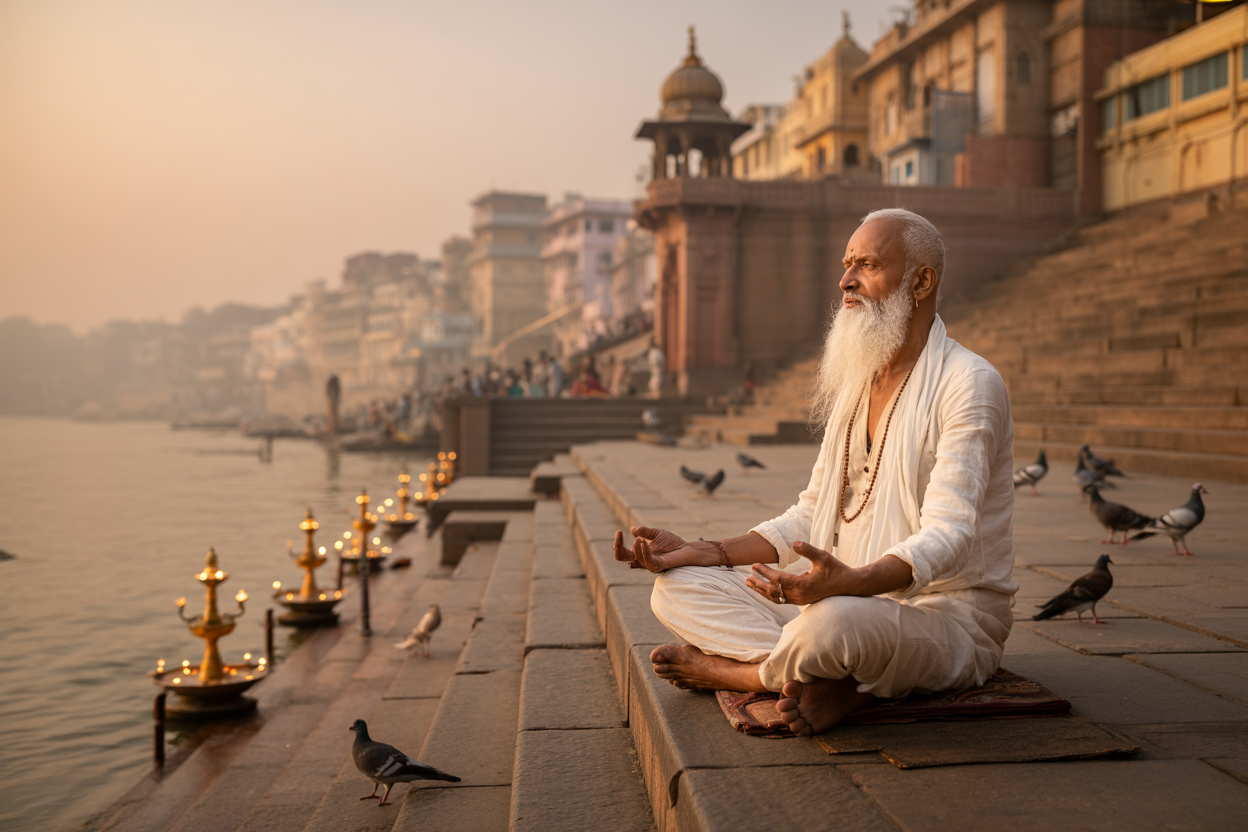
Learning Acceptance by Witnessing the Cycle of Life and Death on the Ganges Every Day
Varanasi forces you to confront the raw reality of existence in ways no other place can. Walking through the ancient lanes, you’ll witness birth celebrations in one corner while funeral processions pass through the next. The ghats serve as stages where life’s most profound moments unfold simultaneously—families bathing newborns in the sacred Ganges while cremation fires burn just steps away.
This constant exposure to life’s cyclical nature strips away the Western tendency to compartmentalize death and hide it from daily view. You start understanding that acceptance isn’t about resignation or giving up—it’s about embracing the natural flow of existence without fighting the inevitable. Watching elderly pilgrims peacefully prepare for their final journey while children play cricket nearby teaches you that every phase of life holds equal importance and beauty.
Discovering Resilience: How Varanasi’s Residents Find Peace Within Extraordinary Chaos
The sensory assault of Varanasi initially overwhelms most visitors, but locals navigate this maze with remarkable composure. Street vendors maintain their smiles despite crushing crowds, temple priests perform elaborate rituals while motorcycles honk inches away, and families conduct sacred ceremonies amid absolute pandemonium.
This resilience isn’t born from ignorance or numbness—it comes from understanding that chaos and peace can coexist. You learn that strength doesn’t mean controlling your environment but finding inner stability regardless of external circumstances. The city teaches you to bend without breaking, to find calm within storms rather than waiting for perfect conditions.
Local residents demonstrate how to adapt without losing core values. They maintain spiritual practices despite modernization pressures, preserve traditions while embracing necessary changes, and show genuine hospitality even when resources are scarce. Their resilience becomes a masterclass in maintaining authenticity while rolling with life’s punches.
True Devotion: What Varanasi’s Pilgrims and Believers Teach Every Visitor About Faith
The depth of faith you encounter in Varanasi redefines what devotion actually means. Pilgrims travel thousands of miles with limited resources, carrying elderly parents on their backs to reach the holy river. Daily worshippers rise before dawn to perform complex rituals they’ve never missed in decades, regardless of weather or personal circumstances.
This isn’t the casual spirituality found in yoga studios or weekend retreats. These believers demonstrate devotion through action, sacrifice, and unwavering commitment. Their faith doesn’t waver when prayers aren’t immediately answered or when life becomes difficult. Instead, their devotion deepens through challenges, creating an unshakeable foundation that supports entire communities.
You witness how true devotion transcends religious boundaries. Hindu pilgrims, Muslim artisans, and Christian volunteers work together, united by shared reverence for something greater than themselves. Their example shows that authentic spirituality builds bridges rather than walls, creating connections based on love rather than doctrine.
Spiritual Wealth Over Material Possessions: The Most Important Lesson Varanasi Teaches
Varanasi’s economic contrasts hit you immediately. Street vendors earning daily wages display more contentment than wealthy tourists clutching expensive cameras and branded bags. Families living in single rooms maintain elaborate altars, prioritizing spiritual spaces over material comfort. Sadhus who own nothing but a cloth demonstrate a richness of spirit that puts material abundance to shame.
The city reveals how spiritual wealth operates on completely different principles than material accumulation. Local families share meals with strangers despite having little, finding joy in generosity rather than hoarding. Temple donations flow from the poorest pilgrims while the wealthy sometimes give reluctantly, showing that spiritual generosity has nothing to do with bank balances.
You start questioning what you actually need versus what you think you want. Watching people find deep satisfaction through simple pleasures—sharing tea with neighbors, singing bhajans at sunset, or feeding stray dogs—reveals how much happiness you’ve been seeking in wrong places. The city strips away artificial needs, helping you discover what truly nourishes your soul versus what merely fills empty spaces in your life.
The life lessons that Varanasi offers are available to every traveller who visits with genuine curiosity and an expert guide to illuminate what they encounter. Our Varanasi tours connect international travellers from the USA, UK and Australia to the living spiritual and cultural heart of India’s most ancient city. And for travellers who want to experience the broader spiritual circuit of North India, our Bodhgaya tours and Patna tours extend the journey into the extraordinary Buddhist heritage of the Gangetic plain.
Varanasi Cultural Tour: The Immersive Experiences That Change Your Identity Forever
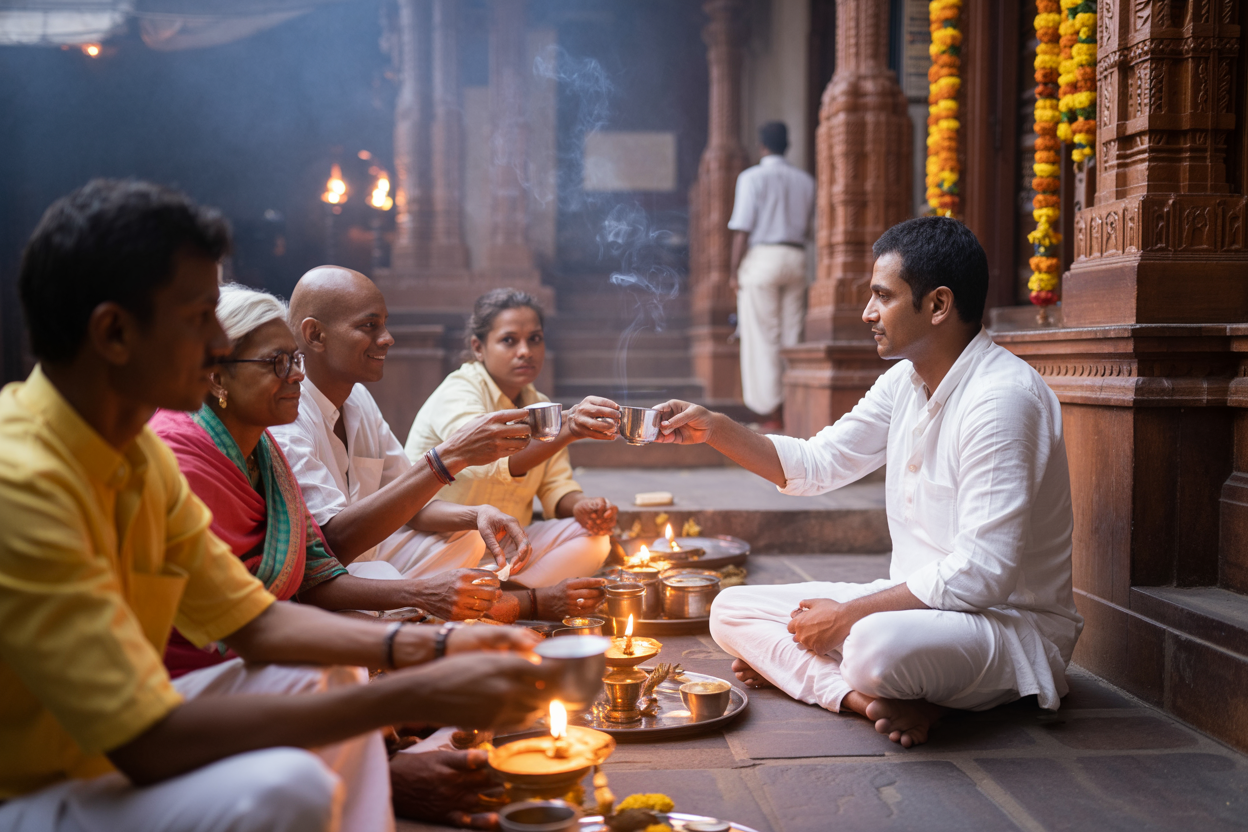
How a Varanasi Tour Breaks Down Every Western Preconception About Time and Progress
Walking through Varanasi’s narrow lanes shatters everything you thought you knew about efficiency and advancement. The city operates on its own rhythm—one that’s existed for millennia. Here, a shopkeeper might close his store mid-afternoon for a family gathering, or a craftsman will spend three days perfecting a single piece rather than rushing to meet arbitrary deadlines.
This deliberate pace isn’t laziness or lack of ambition. It’s a profound understanding that some things can’t be hurried. You’ll find yourself gradually releasing the Western obsession with optimization and measurable outcomes. The city teaches you that progress isn’t always linear, and that preservation of tradition carries its own value that can’t be quantified in spreadsheets or productivity metrics.
Watching a silk weaver work his loom with the same techniques his ancestors used centuries ago, you realize that not everything needs to be disrupted or improved. Sometimes, the old way is the right way. This revelation often leaves visitors questioning their own relationship with time, success, and what truly matters in life.
Authentic Community: How Varanasi’s Ghats Bring Every Social Class Together
Varanasi’s social fabric weaves together people from vastly different economic backgrounds in ways that would seem impossible in modern Western cities. During festivals, you’ll witness wealthy merchants sharing sweets with street vendors, and professors seeking blessings from illiterate holy men who command deep respect for their spiritual wisdom.
The ghats serve as great equalizers where everyone—regardless of their bank balance or social status—comes to perform the same rituals, face the same river, and contemplate the same eternal questions. A CEO might sit beside a rickshaw driver during evening prayers, both seeking the same divine connection.
This organic mixing challenges visitors’ preconceptions about class barriers and social mobility. You’ll discover that respect here isn’t automatically tied to wealth or education, but to age, wisdom, spiritual dedication, and community contribution. A temple priest might live in a tiny room but command more reverence than a millionaire businessman.
The city demonstrates how communities can function when relationships matter more than transactions, and when people see themselves as part of something larger than individual achievement.
Silk Weavers, Musicians and Priests: Generational Wisdom Passed Through Varanasi’s Daily Life
Every morning in Varanasi unfolds like a masterclass in living traditions. Grandmothers teach young girls to draw intricate rangoli patterns at their doorsteps, each design carrying symbolic meanings passed down through generations. Boys learn to tie specific knots for hanging flower garlands by watching their fathers and uncles work.
The transmission of knowledge happens naturally, woven into daily life rather than confined to classrooms or formal settings. A master tabla player doesn’t schedule lessons—he simply plays, and curious children gather around, absorbing rhythms and techniques through observation and mimicry.
This living education system preserves not just skills but entire worldviews. Ancient cooking techniques, healing remedies, spiritual practices, and philosophical insights flow from elder to younger like a river that never stops moving. The city becomes your classroom, and every elder person becomes a potential teacher with stories and wisdom that can’t be found in any book.
Chai, Boat Rides and Temple Bells: How Varanasi Teaches You to Find Joy in Simple Pleasures
Varanasi strips away the complexity of modern life and reveals joy in the most basic human experiences. Sharing chai with strangers becomes a profound moment of connection. Watching the sunset paint the Ganges in golden hues transforms into meditation. The simple act of walking barefoot on ancient stones connects you to thousands of pilgrims who’ve made the same journey.
The city teaches you to find richness in restraint. A meal of dal, rice, and vegetables eaten while sitting on the floor with others becomes more satisfying than any fancy restaurant experience. Conversations without phones or distractions reveal depths of human connection you’d forgotten existed.
You start noticing small details that usually escape attention—the way morning light filters through old buildings, how temple bells create natural music throughout the day, or the satisfaction of completing a simple task without rushing to the next one. These moments of mindful presence, which the city naturally encourages, often become the most treasured memories visitors take home.
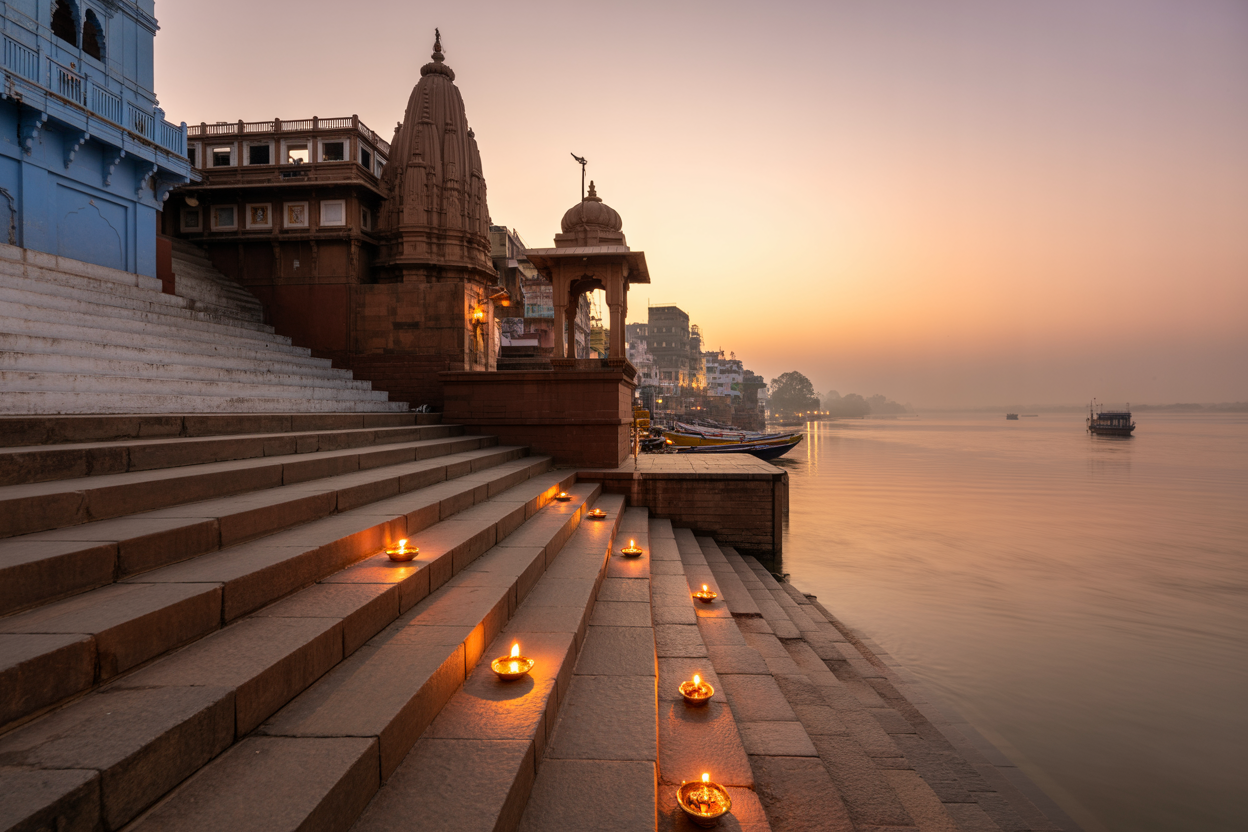
Varanasi doesn’t just show you its ancient streets and sacred rituals – it rewrites something deep inside you. The city’s timeless heritage, the raw spirituality of the Ganges, and the overwhelming sensory experience combine to create moments that stick with you long after you leave. You’ll find yourself thinking differently about life, death, and what really matters after witnessing the daily dance between the sacred and the everyday.
This isn’t a destination you simply visit and check off your list. Varanasi demands that you engage with it fully, and in return, it offers profound lessons about resilience, faith, and the beauty found in chaos. If you’re ready to be challenged, moved, and transformed, book that trip to the City of Light. Just remember – you won’t return as the same person who left.
Varanasi does not just show you its ancient streets and sacred rituals. It rewrites something deep inside you. And the depth of that rewriting depends entirely on the quality of the guide who walks those streets with you and the stories they carry.
Varanasi rewards the curious traveller who comes with an open heart and an expert guide who knows where the real experiences are hidden. Our Varanasi tours include sunrise boat rides on the Ganges, guided walks through the ancient lanes of Kashi, visits to the Kashi Vishwanath Temple and Sarnath, silk weaving workshops and the full evening Ganga Aarti experience at Dashashwamedh Ghat. For travellers combining Varanasi with the Golden Triangle, our Agra tours and Jaipur tours offer expert guided experiences across North India’s most extraordinary heritage destinations.
Our Varanasi tours are led by cultural evangelists who have spent years understanding every layer of this extraordinary city, designed for international travellers from the USA, UK and Australia who want more than sightseeing. We want you to truly understand what you are standing in front of.
And Varanasi is only the beginning of what this region of India has to offer.
Seventy kilometres from Varanasi lies Ayodhya, the birthplace of Lord Rama and one of the seven sacred cities of Hinduism, whose significance to India’s spiritual landscape is as profound and as ancient as Varanasi itself. The newly consecrated Ram Mandir has transformed Ayodhya into one of the most visited pilgrimage destinations in India and our expert guided Ayodhya tours bring the full historical, architectural and devotional story of this extraordinary city to life.
Further along the sacred geography of the Gangetic plain lies Bodhgaya, the site where the Buddha attained enlightenment beneath the Bodhi Tree over 2500 years ago. The Mahabodhi Temple complex is a UNESCO World Heritage Site and one of the most spiritually charged destinations on earth, drawing pilgrims and seekers from every Buddhist tradition worldwide. Our Bodhgaya tours connect the extraordinary Buddhist heritage of the Gangetic plain to the wider spiritual story of ancient India.
Lucknow, the City of Nawabs, offers a completely different dimension of North India’s cultural depth. The refined Awadhi culture of the Nawabs produced some of the most sophisticated poetry, cuisine, architecture and classical music traditions in Indian history. The Bara Imambara, the Rumi Darwaza and the extraordinary living tradition of Lucknowi craftsmanship in chikan embroidery and itar perfumery create a heritage experience unlike anything available elsewhere in India. Our Lucknow tours reveal the extraordinary cultural legacy of a city that most international travellers have never considered visiting.
Kannauj, just two hours from Lucknow, is the ancient perfume capital of India, a city that has been distilling attar from flowers using traditional deg and bhapka methods for over a thousand years. The itar tradition of Kannauj is one of the most extraordinary surviving examples of ancient Indian craftsmanship and an experience that engages the senses in a way that no other destination can match.
Agra needs no introduction. The Taj Mahal is the most visited monument in India and one of the most extraordinary buildings ever created by human hands. But Agra offers far more than the Taj. Agra Fort, the ghost city of Fatehpur Sikri and the extraordinary marble inlay craft tradition of the Mughal artisan community create a destination of extraordinary depth and richness. Our Agra tours go far beyond the surface to reveal the full human and artistic story behind the world’s most famous monument to love.
And Khajuraho, the UNESCO World Heritage Site whose extraordinary 10th and 11th century temple sculptures have astonished and provoked the world for centuries, represents the full flowering of the Chandela dynasty’s artistic vision at a moment of extraordinary creative confidence. The temples of Khajuraho are one of the most extraordinary artistic achievements in human history and our expert guided Khajuraho tours reveal the full philosophical, theological and artistic context of these remarkable structures in a way that transforms what might otherwise be a bewildering encounter into one of the most intellectually and aesthetically rewarding experiences available anywhere in India.
This entire extraordinary circuit of sacred cities, Mughal monuments, ancient perfume traditions and UNESCO World Heritage temples is available as a customised private itinerary with 5 Senses Tours, designed around your interests, your pace and your travel dates.
Explore our full portfolio of India heritage tours and begin planning the most extraordinary journey of your life.

Leave a Reply