
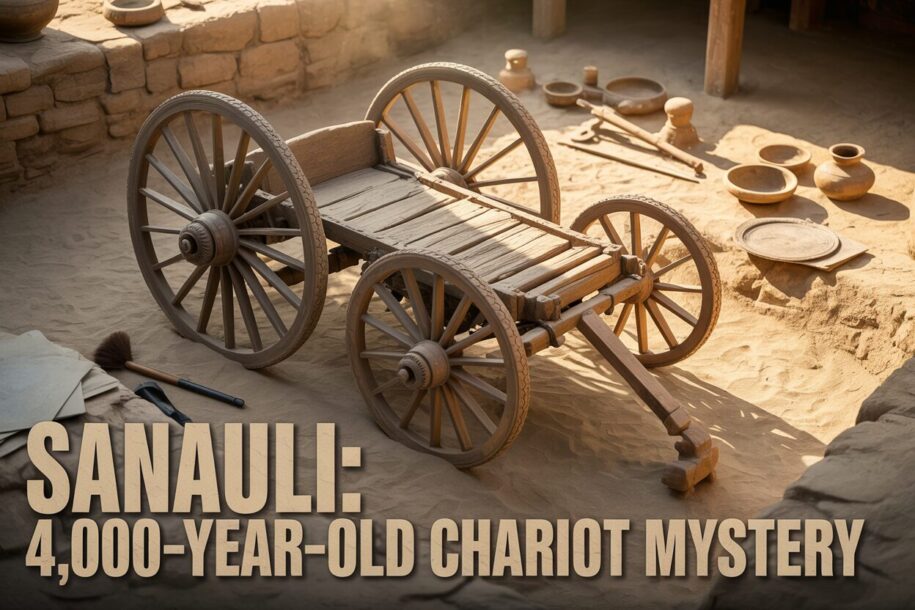
The 2018 discovery of 4,000-year-old chariots at Sanauli has turned everything we thought we knew about ancient India upside down. This groundbreaking find challenges the long-held belief that chariots arrived in India much later, potentially rewriting the timeline of Indian civilization.
This article is for history enthusiasts, archaeology fans, and anyone curious about India’s ancient past who wants to understand what makes the Sanauli discovery so significant.
We’ll explore how these ancient Indian chariots compare to chariot technology found elsewhere in the world, examining their unique design features and what they tell us about early Indian craftsmanship. You’ll also learn about the heated archaeological debate surrounding these findings – why some experts are skeptical and others are convinced this discovery proves India’s technological sophistication was far ahead of its time. Finally, we’ll look at how modern technology is helping researchers unlock the secrets of these 4,000-year-old vehicles and what they reveal about ancient Indian society.
The Revolutionary Discovery at Sanauli
Groundbreaking Archaeological Excavation Details
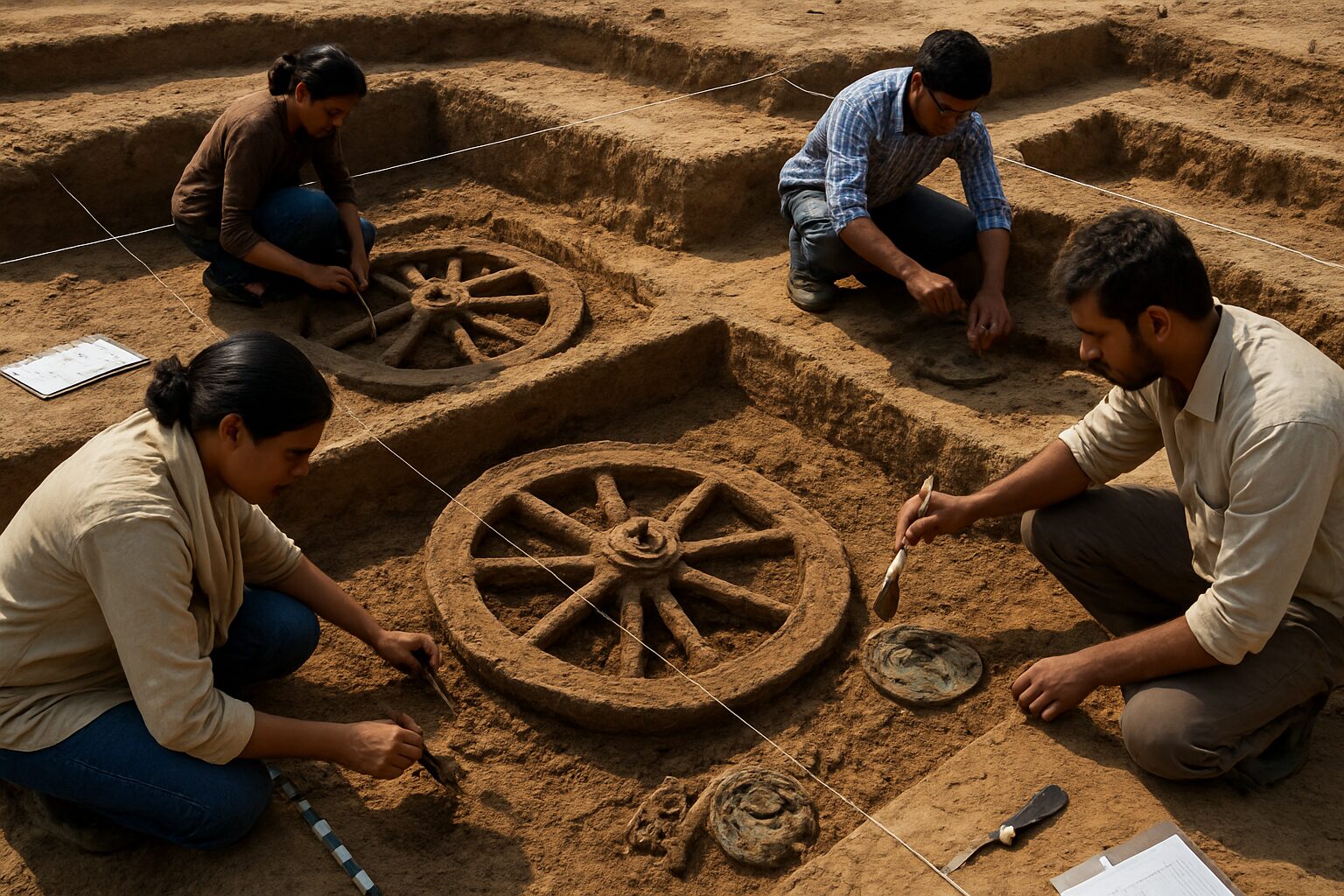
The Archaeological Survey of India (ASI) team, led by SK Manjul, uncovered something extraordinary in Sanauli village, Uttar Pradesh, that would challenge everything historians thought they knew about ancient Indian transportation. This small farming community sits in the Baghpat district, about 68 kilometers northeast of Delhi, where beneath ordinary agricultural fields lay buried treasures dating back four millennia.
The excavation began in 2018 as part of ongoing archaeological surveys in the region. What started as routine digging quickly became one of India’s most significant archaeological discoveries. The team found not just one, but multiple burial sites containing what appeared to be sophisticated wheeled vehicles alongside human remains, weapons, and ornate pottery.
The dig site revealed a complex burial ground spanning several acres. Workers carefully removed layers of soil using both traditional hand tools and modern equipment, photographing and cataloging every artifact’s exact position. The methodical approach paid off when they uncovered eight burial pits, each containing remarkable preservation of organic and metal materials that typically decompose over such vast time periods.
Dating Methods That Revealed the 4,000-Year Timeline
Radiocarbon dating became the key to unlocking Sanauli’s temporal secrets. Scientists collected organic samples from charcoal, bone fragments, and wooden remnants found within the burial chambers. These samples underwent accelerator mass spectrometry (AMS) dating at specialized laboratories.
The results consistently pointed to the Late Harappan period, approximately 2000-1800 BCE. This timeline places the Sanauli discoveries squarely within the Bronze Age, making them contemporaneous with other major civilizations like ancient Mesopotamia and early dynastic Egypt.
Thermoluminescence dating provided additional confirmation. Clay pottery shards and fired ceramic materials underwent this technique, which measures when the items were last heated. The results aligned perfectly with radiocarbon findings, strengthening confidence in the 4,000-year timeline.
Stratigraphy analysis revealed distinct layers of soil deposition, each corresponding to different time periods. The chariot burials occupied the deepest, oldest layer, undisturbed by later settlements or agricultural activity that occurred above them over subsequent millennia.
Physical Evidence Found at the Site
The most stunning discoveries were the wheeled vehicles themselves – three remarkably preserved examples that sparked international attention. These weren’t crude carts but sophisticated constructions with evidence of advanced metallurgy and woodworking techniques.
Key findings include:
- Copper-plated wheels: Solid wooden wheels covered with decorative copper sheeting, measuring approximately 1.2 meters in diameter
- Iron weapons: Daggers, spearheads, and arrowheads showing advanced metalworking skills
- Decorative elements: Intricate geometric patterns on copper plates suggesting artistic sophistication
- Horse remains: Skeletal evidence of horses buried alongside the vehicles, indicating their ceremonial importance
- Human burials: Elite individuals interred with their prized possessions and vehicles
- Pottery collections: Ornate ceramic vessels with distinctive designs characteristic of Late Harappan culture
The vehicles show signs of actual use rather than being purely ceremonial objects. Wear patterns on wheels and axles suggest these chariots traveled considerable distances before being retired to their underground resting places.
Gold and silver ornaments accompanied the burials, indicating these were high-status individuals. Beaded jewelry, metallic bangles, and elaborate headdresses paint a picture of a sophisticated society with distinct social hierarchies and burial customs.
Initial Expert Reactions and Significance
The archaeological community’s response was immediate and intense. International scholars who had long debated when wheeled vehicles first appeared in the Indian subcontinent suddenly had concrete evidence pushing back timelines by centuries.
Dr. Vasant Shinde from Deccan College called the discovery “game-changing” for understanding ancient Indian civilization. The find challenged existing theories that chariots were introduced to India much later through external influences or migrations.
Initial skepticism arose from some quarters, with experts questioning whether these were true chariots or simply ceremonial carts. The debate centered on technical definitions – chariots traditionally require spoked wheels and are designed for speed and warfare, while these Sanauli vehicles featured solid wheels more suited for ceremonial purposes.
The discovery’s timing proved particularly significant, coming during renewed interest in ancient Indian achievements and technological capabilities. Media coverage was extensive, with headlines proclaiming India’s ancient engineering prowess.
Archaeological peers praised the excavation methodology and documentation quality. The team’s careful preservation techniques allowed for detailed analysis that might have been impossible with less meticulous approaches. Digital scanning and 3D modeling created permanent records of artifacts in their original positions.
The find also raised new questions about trade routes, technological transfer, and cultural connections between ancient Indian civilizations and their contemporaries in Mesopotamia and Central Asia. Evidence suggests these weren’t isolated developments but part of broader Bronze Age technological innovations spreading across connected ancient worlds.
Understanding Ancient Indian Chariots vs Global Chariot Technology
Defining What Constitutes a True Chariot
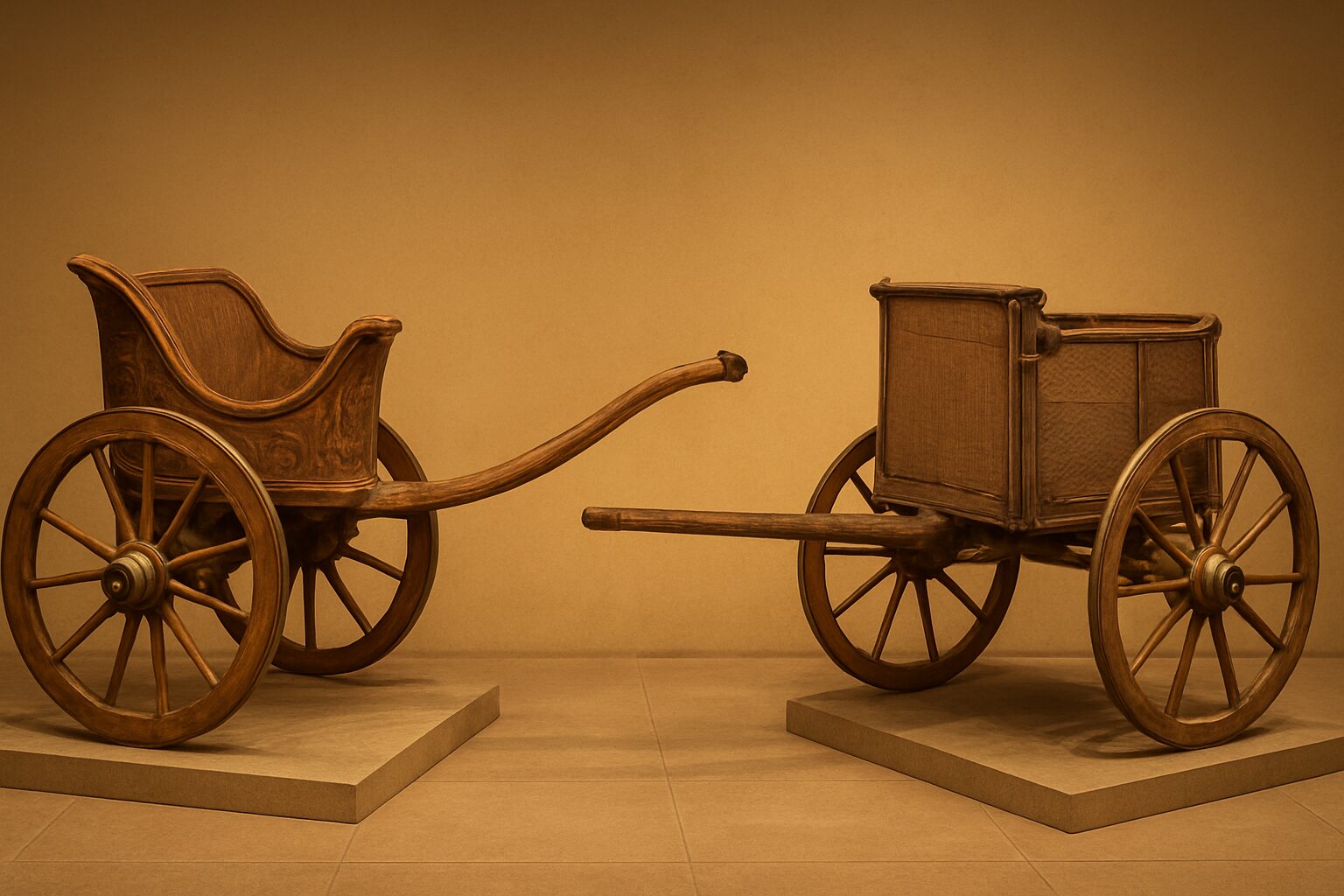
The question of what makes a chariot “true” has sparked heated debates among archaeologists worldwide. At its core, a proper chariot needs three essential components: a lightweight platform or body, spoked wheels for speed and maneuverability, and a rigid axle system that can handle high-speed turns and rough terrain. The vehicle must also be designed specifically for warfare or ceremonial purposes, not just everyday transport.
Most experts agree that true chariots emerged around 2000 BCE, representing a revolutionary leap in military technology. These weren’t just fancy carts – they were precision-engineered war machines that could change the outcome of entire battles. The key difference lies in their construction: chariots used advanced joinery techniques, bronze fittings, and carefully balanced designs that allowed for rapid deployment of archers or spear-throwers.
The Sanauli discoveries challenge our timeline because they appear to meet these technical criteria while predating many accepted examples by several centuries. The vehicles show sophisticated engineering with copper decorations, suggesting they weren’t crude prototypes but refined examples of established technology.
Comparing Sanauli Findings to Mesopotamian and Egyptian Chariots
When archaeologists first examined the Sanauli vehicles, the similarities to established chariot designs were striking. Mesopotamian chariots from sites like Ur featured similar wheel configurations and platform designs, though they typically appeared 300-500 years later than the Indian examples. The famous Standard of Ur depicts chariots with solid wheels, but later Mesopotamian examples evolved to include spoked designs remarkably similar to Sanauli.
Egyptian chariot technology, particularly from the New Kingdom period, shows even more pronounced similarities. Both traditions emphasized lightweight construction, dual-horse hitching systems, and elevated platforms for warriors. The Egyptians perfected the art of chariot warfare during their conflicts with the Hittites, creating vehicles that could pivot quickly while maintaining stability for archers.
What’s fascinating is how the Sanauli chariots seem to bridge these traditions. They combine the robust construction methods seen in early Mesopotamian examples with the refined engineering that wouldn’t appear in Egypt for centuries. This suggests either independent innovation in the Indian subcontinent or complex trade relationships that historians are only beginning to understand.
The decorative elements also tell a compelling story. While Mesopotamian and Egyptian chariots often featured religious or royal iconography, the Sanauli vehicles show distinctive artistic motifs that appear uniquely South Asian, pointing to local cultural adaptation of the technology.
Unique Design Features of the Sanauli Vehicles
The Sanauli chariots reveal several distinctive characteristics that set them apart from their global counterparts. Most notably, they feature solid copper decorative elements rather than the bronze or gold inlays common in other civilizations. This choice of material suggests both local resource availability and specific cultural preferences for copper’s symbolic significance.
The wheel design represents another unique aspect. While maintaining the essential spoked structure, the Sanauli wheels show a particular spoke pattern and hub construction that doesn’t exactly match contemporary designs from other regions. The craftsmen appear to have developed their own solutions to engineering challenges, creating wheels that were both functional and aesthetically distinctive.
Perhaps most intriguingly, the platform design suggests these vehicles were built for specific ceremonial or burial purposes rather than active warfare. The decorative elements and construction techniques indicate they may have served dual roles – functional vehicles that could also serve as status symbols or ritual objects. This multipurpose design philosophy differs significantly from the purely military focus of many Mesopotamian and Egyptian examples.
The harness system also shows innovation. Archaeological evidence suggests the Sanauli chariots used a distinctive yoke design that would have distributed weight differently than other contemporary examples. This adaptation likely reflects the specific requirements of local horse breeds or terrain conditions, showing how global technology was adapted to regional needs.
These unique features don’t diminish the sophistication of the Sanauli chariots – they actually highlight the independent innovation occurring in ancient India, suggesting a more complex and interconnected Bronze Age world than previously imagined.
The Great Archaeological Debate

Scholars Who Support the Chariot Theory
The Sanauli discovery has galvanized a group of archaeologists and historians who see compelling evidence for sophisticated chariot technology in Bronze Age India. Dr. Sanjay Kumar Manjul, the lead excavator at Sanauli, stands firmly behind the chariot interpretation. His team points to the copper-plated wheels, decorative elements, and systematic burial patterns as unmistakable signs of ceremonial vehicles designed for elite transportation and warfare.
Supporting this view, several metallurgy experts have examined the copper work and construction techniques, noting the advanced craftsmanship required to create such intricate wheel designs. The geometric patterns and sophisticated joinery methods suggest a well-established tradition of vehicle construction rather than experimental attempts.
Prominent Indologist Dr. B.B. Lal argues that the Sanauli finds align perfectly with descriptions found in ancient Vedic texts, which frequently reference horse-drawn chariots in both warfare and religious ceremonies. This textual-archaeological correlation strengthens the case for interpreting these artifacts as genuine chariots.
Recent comparative studies with Mesopotamian and Egyptian chariot remains have also bolstered supporter arguments. The structural similarities in wheel construction and axle placement suggest that ancient Indian craftsmen were part of a broader Bronze Age technological network, possibly developing chariot technology independently or through cultural exchange.
Critics and Alternative Interpretations
Not everyone accepts the chariot theory, and vocal critics have raised substantial questions about the interpretation. Dr. Shereen Ratnagar, a respected authority on Harappan civilization, suggests the artifacts might represent ceremonial carts or ritual objects rather than functional war chariots. She points out that the lightweight construction and decorative emphasis seem impractical for actual combat use.
Archaeological skeptics highlight the absence of horse remains at Sanauli, which creates a fundamental problem for the chariot theory. Without evidence of the animals needed to pull these vehicles, critics argue that calling them chariots jumps to conclusions unsupported by the archaeological record.
Alternative interpretations propose these might be:
- Ceremonial burial furniture designed to accompany the deceased
- Symbolic representations of cosmic or mythological concepts
- Early experimental wheeled vehicles for transport, not warfare
- Ritual objects with religious significance unrelated to transportation
Some researchers suggest the copper-plated wheels could have served as solar symbols or religious artifacts, given the importance of wheel imagery in ancient Indian spiritual traditions. The careful placement in burial contexts supports this ritualistic interpretation rather than practical vehicle use.
Missing Components That Fuel the Controversy
The archaeological record at Sanauli presents tantalizing glimpses while leaving crucial gaps that intensify the debate. Most significantly, no horse bones have been discovered at the site, despite horses being essential for chariot functionality. This absence creates a major stumbling block for those advocating the chariot theory.
The wooden components of the supposed chariots have completely decomposed, leaving only copper fittings and decorative elements. This preservation bias means researchers must reconstruct entire vehicles from fragmentary remains, opening the door to multiple interpretations of the same evidence.
Missing elements include:
- Complete wheel assemblies with intact spokes
- Axle mechanisms and their attachment systems
- Harness hardware and reins
- Body framework beyond decorative panels
- Clear evidence of wheel wear patterns from actual use
The burial context itself raises questions. Unlike other ancient civilizations where chariots were buried intact with warriors, the Sanauli artifacts appear deliberately dismantled before burial. This practice could indicate ritual significance rather than practical vehicle interment.
Carbon dating results, while placing the artifacts around 2000-1800 BCE, don’t resolve functional questions. The dating confirms the age but can’t determine whether these objects actually rolled across ancient Indian landscapes or served purely ceremonial purposes.
Impact on Established Historical Timelines
The chariot debate at Sanauli threatens to reshape fundamental assumptions about ancient Indian technological development. If these artifacts represent true chariots, they would push back the timeline for sophisticated wheeled warfare in the subcontinent by several centuries, predating many established historical markers.
Traditional scholarship placed advanced chariot technology in India around 1500-1200 BCE, coinciding with later Vedic periods. The Sanauli evidence suggests such technology existed 500 years earlier, during the mature Harappan period. This temporal shift would require historians to reconsider the pace and nature of technological advancement in ancient India.
The implications extend beyond India’s borders. If proven authentic, Sanauli chariots would represent some of the world’s earliest evidence for sophisticated wheeled vehicles, potentially rivaling developments in Mesopotamia and the Caucasus region. This would challenge the traditional narrative of technology flowing from west to east.
Political and cultural ramifications have also emerged. Some scholars worry that overenthusiastic interpretation of the Sanauli finds serves nationalist agendas seeking to demonstrate ancient Indian technological superiority. This politicization complicates objective archaeological assessment and polarizes academic discourse.
The debate highlights broader methodological challenges in archaeology. How much evidence constitutes proof? When does interpretation become speculation? The Sanauli case exemplifies these eternal questions, reminding us that ancient mysteries rarely yield simple answers despite our sophisticated modern tools and techniques.
Broader Implications for Ancient Indian Civilization
Rewriting the History of Harappan Culture
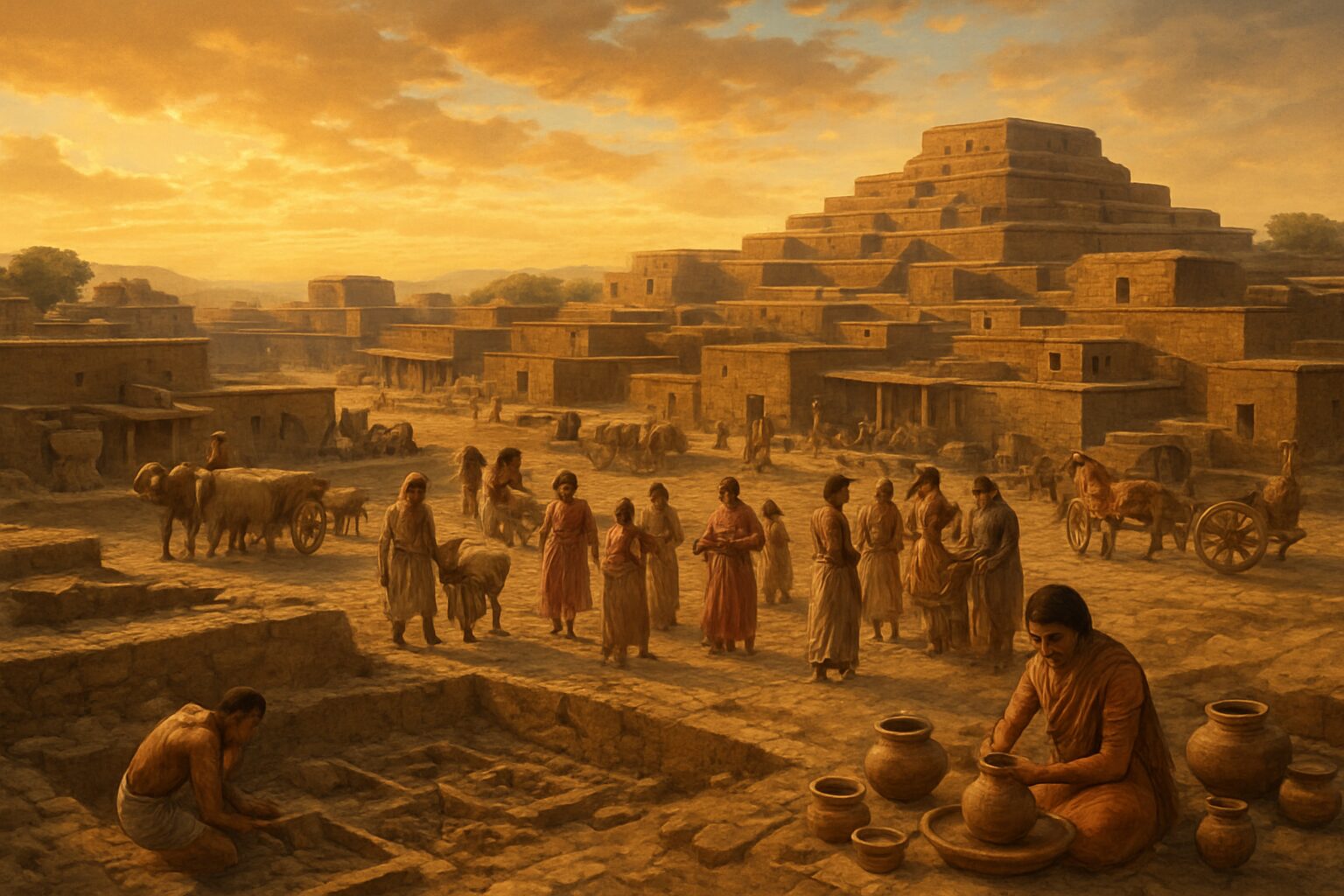
The chariot discoveries at Sanauli challenge everything we thought we knew about the Harappan civilization. For decades, scholars believed the Indus Valley people were primarily peaceful traders who focused on urban planning and commerce rather than warfare or advanced transportation. These copper and bronze chariots flip that narrative completely.
The timeline gets particularly interesting when you consider that these chariots date to around 2000-1800 BCE, right when the mature Harappan phase was transitioning into its late period. This wasn’t some primitive society struggling to survive – these people were crafting sophisticated vehicles that required advanced engineering knowledge. The discovery forces us to reconsider whether the Harappans had military capabilities we never imagined.
What’s really striking is how this changes our understanding of social hierarchy in ancient India. Chariots weren’t everyday transportation; they were symbols of power, wealth, and status. The presence of these vehicles suggests a stratified society with warrior elites – something that doesn’t match the egalitarian image many historians painted of Harappan culture.
The geographical spread of chariot technology across northern India also hints at much more complex political structures than previously thought. Instead of isolated city-states, we might be looking at interconnected kingdoms with sophisticated military and ceremonial traditions that rival anything found in Mesopotamia or Egypt during the same period.
Evidence of Advanced Metallurgy and Craftsmanship
The technical mastery displayed in these Sanauli chariots blows away previous assumptions about Bronze Age Indian metallurgy. The copper and bronze work shows incredibly sophisticated alloying techniques that required precise temperature control and deep understanding of metal properties. You don’t just stumble into this level of craftsmanship – it represents generations of accumulated knowledge and specialized training.
The decorative elements on these chariots reveal artistic traditions that were far more advanced than anything we’d associated with this time period in the region. The intricate patterns and symbolic motifs suggest not just technical skill but also complex religious and cultural belief systems that influenced design choices.
What’s particularly impressive is the engineering required for functional chariot wheels and axles. Creating wheels that could withstand the stress of rapid movement while maintaining structural integrity demanded mathematical precision and materials science that rivals contemporary civilizations in other parts of the world.
The preservation state of these artifacts also tells us something important about ancient Indian burial practices and beliefs about the afterlife. The care taken to include fully functional chariots in burials indicates these weren’t just symbolic offerings but represented real technological achievements the society wanted to preserve for eternity.
Trade Networks and Cultural Exchange Possibilities
These chariots open up fascinating questions about ancient India’s connections to the wider world. Chariot technology didn’t develop in isolation – it spread through trade routes, cultural exchange, and sometimes conquest. The Sanauli discoveries suggest the Indian subcontinent was far more integrated into Bronze Age global networks than we realized.
The similarities between these Indian chariots and contemporaneous vehicles from Mesopotamia and Central Asia point to active communication between these regions. Raw materials, design concepts, and manufacturing techniques were clearly flowing back and forth across vast distances. This wasn’t a backward corner of the world – it was a sophisticated participant in international Bronze Age culture.
Archaeological evidence from other Harappan sites now makes more sense when viewed through this lens. The standardized weights and measures, the uniform brick sizes, the extensive trade goods from distant regions – all of this points to a civilization that was deeply connected to international commerce and cultural exchange networks.
The presence of horse-drawn chariots also raises intriguing questions about when and how horses arrived in the Indian subcontinent. These animals weren’t native to the region, so their appearance in burial contexts suggests established trade relationships with Central Asian horse-breeding cultures. This agricultural and technological exchange likely transformed Indian society in ways we’re only beginning to understand.
Modern Technology Solving Ancient Mysteries
Advanced Dating Techniques Used in Analysis
The Sanauli excavation relied heavily on cutting-edge scientific methods to determine the age and authenticity of the discovered artifacts. Radiocarbon dating played a central role, analyzing organic materials like wood fragments from the chariot wheels and copper alloy components to establish a timeline around 2000-1800 BCE. This technique measures the decay of carbon-14 isotopes, providing archaeologists with precise chronological data that revolutionized our understanding of Bronze Age India.
Thermoluminescence dating complemented these efforts by examining pottery shards and ceramic artifacts found alongside the chariots. This method determines when ceramic materials were last heated, offering independent verification of the site’s age. Archaeologists also employed Optical Stimulated Luminescence (OSL) dating on quartz grains within the soil layers, creating a comprehensive temporal framework for the entire excavation site.
Mass spectrometry analysis helped identify the exact composition of metal artifacts, revealing sophisticated metallurgical techniques used by ancient Indian craftspeople. X-ray fluorescence spectroscopy provided non-destructive analysis of copper and bronze implements, showing remarkable consistency in alloy compositions that suggests standardized manufacturing processes.
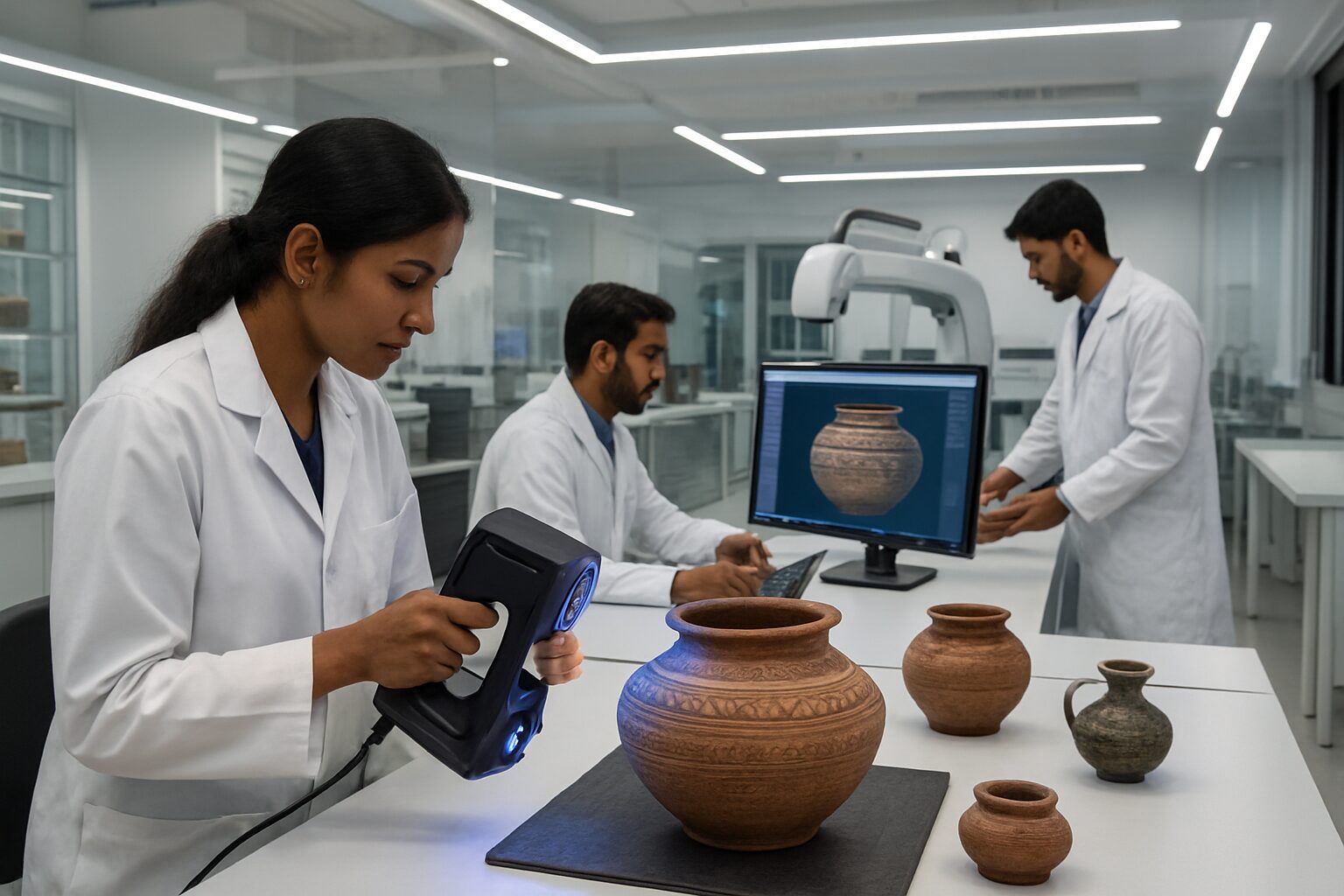
3D Modeling and Reconstruction Methods
Digital reconstruction transformed fragmented archaeological remains into comprehensive visual representations of the original chariots. High-resolution 3D scanning captured every detail of the excavated wooden wheels, copper decorations, and structural components. These scans created precise digital models that archaeologists could manipulate, analyze, and share globally without risking damage to the original artifacts.
Photogrammetry techniques allowed researchers to build detailed 3D models from hundreds of overlapping photographs taken from different angles. This approach proved particularly valuable for documenting the spatial relationships between artifacts before their removal from the excavation site. The resulting models preserve contextual information that traditional drawings and photographs cannot capture.
Virtual reconstruction software enabled archaeologists to digitally reassemble broken pieces and hypothesize about missing components. Computer algorithms analyzed wear patterns, joint connections, and material properties to suggest how the original chariots might have functioned. These reconstructions revealed sophisticated engineering solutions, including spoked wheels and axle systems that demonstrate advanced understanding of mechanics and load distribution.
How Digital Archaeology is Changing Historical Understanding
Digital archaeology has completely transformed how researchers approach ancient civilizations, moving beyond traditional excavation methods to embrace comprehensive data collection and analysis. Ground-penetrating radar and magnetometry surveys now map entire archaeological sites before any digging begins, revealing hidden structures and helping archaeologists plan more strategic excavations.
Database integration allows researchers worldwide to compare findings instantly, connecting discoveries across continents and time periods. The Sanauli chariots can now be analyzed alongside similar artifacts from Mesopotamia, Central Asia, and Europe, creating a broader understanding of ancient trade networks and cultural exchange. This global perspective challenges previous assumptions about isolated civilizations and suggests more interconnected ancient world systems.
Artificial intelligence and machine learning algorithms analyze patterns in archaeological data that human researchers might miss. These tools can identify subtle similarities in construction techniques, decorative motifs, and manufacturing methods across different sites and time periods. For the Sanauli discovery, AI-assisted analysis revealed connections to chariot-making traditions from distant regions, supporting theories about ancient migration patterns and technological diffusion.
Virtual reality platforms now allow people worldwide to experience archaeological discoveries firsthand, democratizing access to historical knowledge. Students, researchers, and the general public can explore digitally reconstructed ancient sites, examining artifacts in detail and understanding their historical context in ways previously impossible. This technology bridges the gap between academic research and public education, making ancient history more accessible and engaging than ever before.
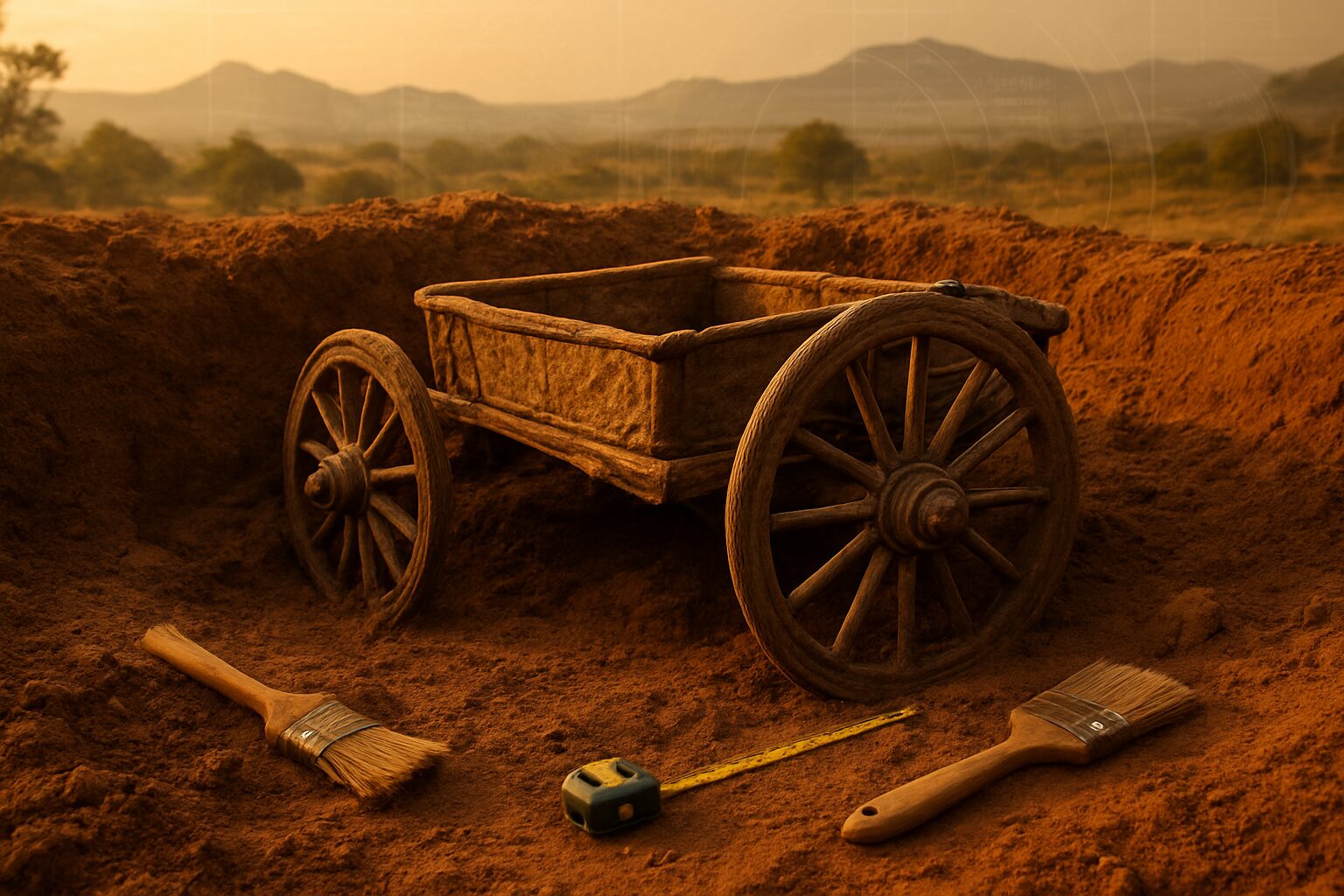
The discovery at Sanauli has completely changed how we think about ancient Indian transportation and technology. These 4,000-year-old wooden vehicles show that sophisticated chariot-making skills existed in India much earlier than many experts believed. The ongoing debate about whether these are true chariots or ceremonial carts doesn’t take away from their importance – either way, they prove that ancient Indian craftspeople had incredible engineering abilities.
What makes this find even more exciting is how modern archaeological techniques helped unlock secrets that have been buried for thousands of years. The careful excavation and analysis at Sanauli gives us a real glimpse into a civilization that was far more advanced than we imagined. This discovery reminds us that there’s still so much we don’t know about our past, and every new dig could completely rewrite the history books.
For private guided tours of Indus Valley sites, please email contact@5sensestours.com or visit 5 senses tours.
Leave a Reply