

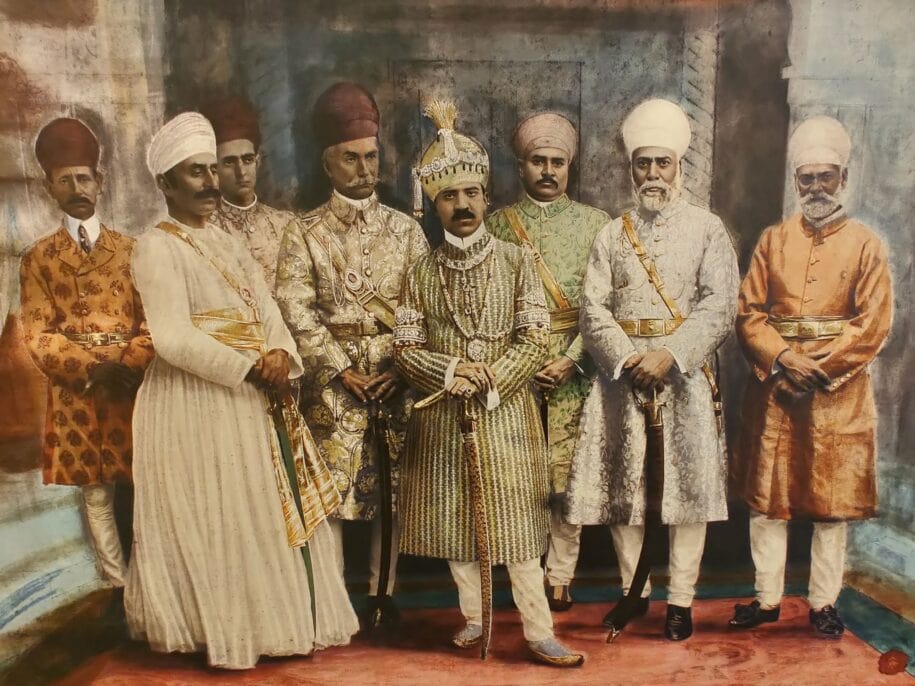
Picture this: the year is 1912. In a world ruled by monarchs and empires, where London and Istanbul dictated the rhythm of global power, there stood another throne — not in Europe, but in the heart of India. A throne so wealthy, so refined, that even the Ottoman Sultan addressed its ruler as an equal.
This was Hyderabad under the Nizams, and at its height, it was among the most dazzling courts the modern world had ever seen.
For a guided tour of the legacy of Nizams please visit Private tour of Hyderabad.
A Kingdom Where Wealth Knew No Bounds
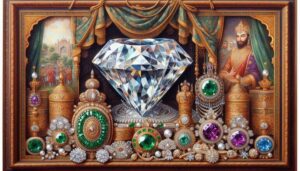
The Nizams’ treasury defied belief. They were heirs to the riches of the Golconda mines — the source of the Kohinoor, Hope, and Orlov diamonds — and their vaults overflowed with gems that would make the crowns of Europe pale.
The Jacob Diamond, the world’s fifth-largest, was reportedly used as a paperweight by the last Nizam, Mir Osman Ali Khan, who was once the richest man on Earth. In Hyderabad’s court, opulence was not an affectation — it was the air they breathed.
Hyderabad: The Global Capital of the Deccan
Hyderabad was a city of paradoxes: deeply traditional yet cosmopolitan, Indian in its roots yet global in its reach. The Nizams’ empire drew influences from Persia, the Mughals, and the Ottomans, creating a culture that was uniquely Deccani — a fusion of languages, art, and architecture that glittered like the city’s fabled pearls.
The Ottoman Connection: The Sultan’s Ally in the East
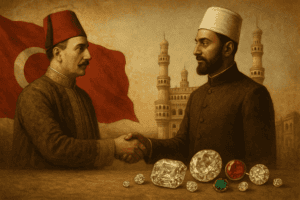
The Nizams shared a particularly warm and intriguing relationship with the Ottoman Empire, then the spiritual heart of the Islamic world.
Letters, envoys, and gifts passed between Sultan Abdul Hamid II of the Ottomans and the Nizams of Hyderabad — most notably Mir Osman Ali Khan and his predecessor Mahbub Ali Pasha, who was affectionately called the “Most Faithful Ally of the Caliph.”
During the First World War, when the Ottoman Caliphate faced collapse, the Nizam contributed vast sums for the welfare of Ottoman soldiers and for the restoration of mosques in Istanbul and Jerusalem.
In return, the Sultan conferred upon the Nizam the title “Faithful Ally of the Caliph,” a rare honour never before bestowed upon an Indian ruler. This gesture wasn’t mere diplomacy — it recognized Hyderabad as a global power within the Islamic world.
Even today, in the archives of Istanbul and Hyderabad, letters written in Persian and Ottoman Turkish reveal a friendship built on intellect, respect, and shared vision. The Nizams admired the Ottomans’ embrace of modernity while holding fast to faith — a model they brought home to the Deccan.
Opulence with Purpose
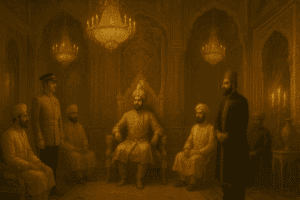
While Europe obsessed over jewels, the Nizam built a state that fused elegance with progress.
He established Osmania University, named in his honour but inspired by Ottoman ideals of secular education. He funded hospitals, libraries, and the magnificent Osmania General Hospital, whose Indo-Saracenic domes still recall the grandeur of Istanbul.
Hyderabad was among the first princely states to have its own railway, currency, and postal system. It was a self-contained empire — modern yet traditional, spiritual yet pragmatic.
A Lifestyle Draped in Legend
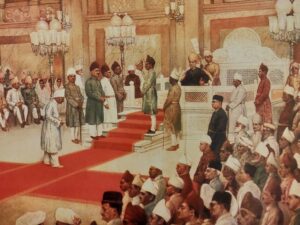
At royal banquets, guests dined from gold plates while orchestras played Persian melodies beneath Belgian chandeliers. The Falaknuma Palace, whose name means Mirror of the Sky, was a wonder of its time — a palace of marble and mirrors where the Nizam entertained royals, scholars, and viceroys alike.
And yet, for all his wealth, Mir Osman Ali Khan lived simply. He wore a frayed fez for years, wrote poetry, and repaired his own pens. His humility balanced Hyderabad’s grandeur — a reminder that true royalty shines through restraint.
A City That Still Glows with Royal Memory
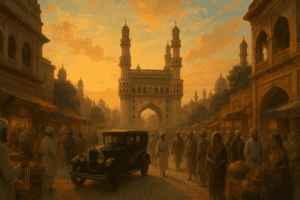
Today, Hyderabad still hums with the rhythm of Nizami grace.
The Charminar, the Chowmahalla Palace, the Purani Haveli, and the Falaknuma Palace aren’t relics — they are living stories.
Walk through Laad Bazaar, and the glitter of bangles recalls the shimmer of Ottoman glass lamps once gifted to the Nizam’s court.
And of course, the city’s world-famous Hyderabadi biryani — born in royal kitchens blending Persian and Turkish techniques — continues to carry the fragrance of empire in every grain of rice.
A Global Legacy Still Revered
The Nizams’ jewels now travel across the world for exhibitions, their craftsmanship drawing gasps in London and New York. Historians still study their letters to European monarchs and Ottoman sultans — documents that reveal how a ruler from southern India stood as a global statesman.
The Nizam’s Hyderabad was more than a city; it was a statement — that culture, intellect, and beauty could build empires as enduring as any conquest.
Why the World Must Visit Hyderabad
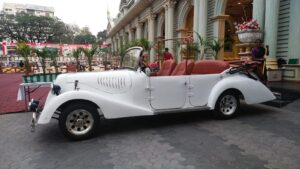
To visit Hyderabad is to walk through a royal paradox — where wealth met wisdom, and global diplomacy met poetry.
It is to enter a city that once stood as the bridge between India and the Islamic world, between ancient opulence and modern aspiration.
Hyderabad doesn’t just preserve the memory of the Nizams — it keeps their spirit alive.
Come for the palaces and pearls, stay for the stories — because the world still sparkles where the Nizams once dreamed.
For a guided tour of the legacy of Nizams please visit Private tour of Hyderabad.
Please visit The Hyderabad Experience to know more about all the private culture tours available in Hyderabad.

Leave a Reply