
The Deccan plateau holds some of India’s most stunning medieval cities, yet Bidar, Gulbarga, and Bijapur remain largely off the beaten path for most travelers. These three Karnataka gems formed a powerful triangle during the Bahmani and Adil Shahi periods, leaving behind incredible forts, tombs, and mosques that rival the Taj Mahal in craftsmanship.
This guide is perfect for history buffs, architecture enthusiasts, and curious travelers who want to explore India beyond the typical tourist circuits. You’ll discover why these cities were so strategically important and how they shaped medieval Indian history.
We’ll walk you through Bidar’s stunning Persian-influenced monuments and underground water systems that still work today. You’ll also learn about Gulbarga’s unique blend of Islamic and local architectural styles, plus get practical tips for navigating these heritage sites without the crowds you’d face in more popular destinations.
For a private guided tour of the Deccan, please visit Bijapur Experience and Sultan’s legacy at Bidar
Discover the Strategic Importance of the Deccan Triangle
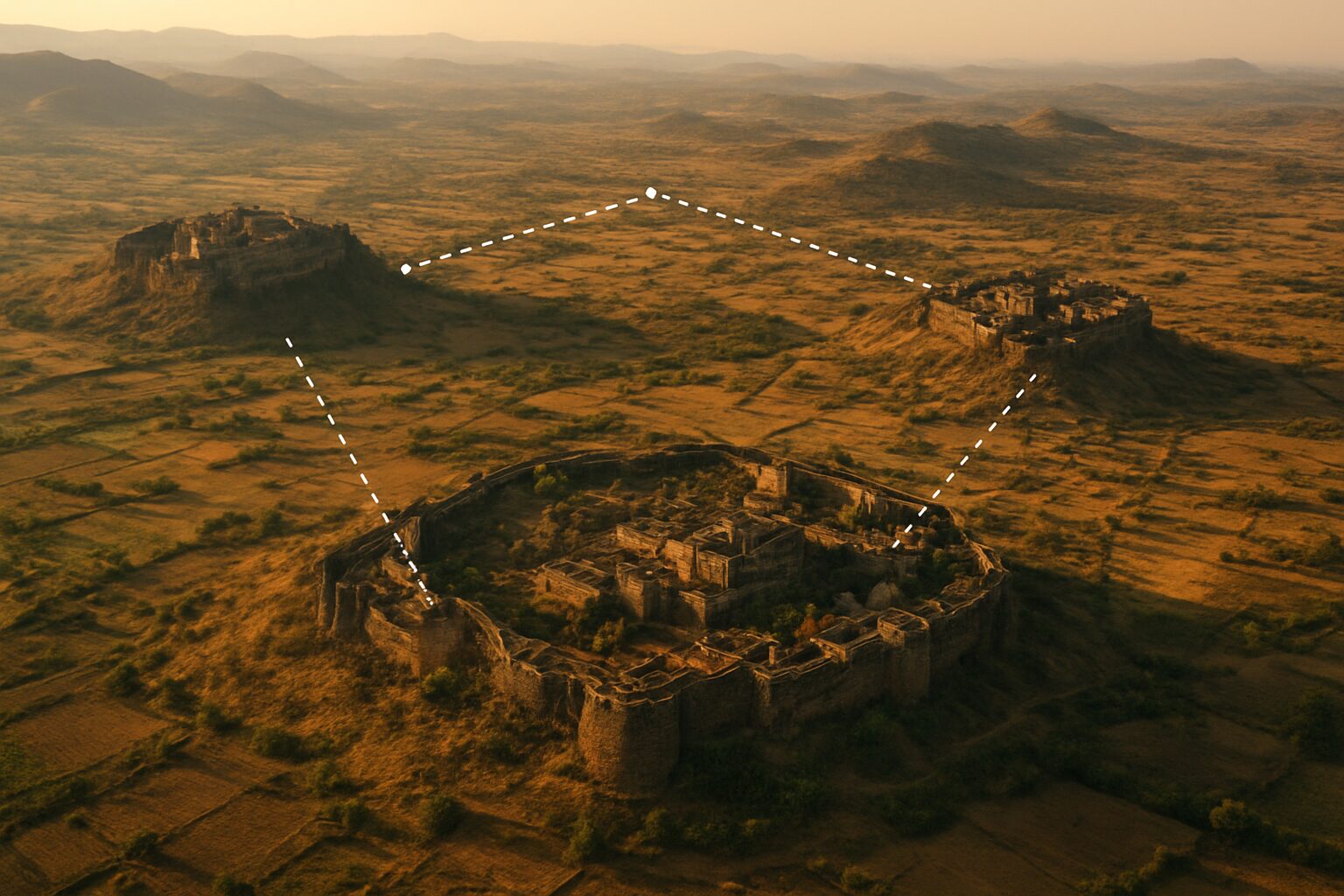
Uncover Medieval Trade Routes That Shaped Three Kingdoms
The Deccan plateau served as the crucial crossroads where wealth, culture, and power intersected for centuries. Bidar, Gulbarga, and Bijapur weren’t just random cities that rose to prominence – they strategically positioned themselves along ancient trade arteries that connected the Arabian Sea ports with the diamond mines of Golconda and the spice markets of Malabar.
Merchants from Persia, Arabia, and Central Asia traveled these well-worn paths, carrying silk, horses, and precious metals southward while returning north with cotton textiles, spices, and diamonds. The rulers of these three kingdoms understood something fundamental: control the trade routes, control the economy. They built caravanserais, imposed taxes on passing merchants, and established currency systems that facilitated commerce across vast distances.
The famous Silk Road wasn’t just about China – its southern branches snaked through the Deccan, making these cities wealthy beyond imagination. Persian traders settled permanently in Bidar, Arab merchants established communities in Gulbarga, and Turkish craftsmen brought their architectural expertise to Bijapur. This wasn’t accidental migration; these kingdoms actively courted foreign merchants and artisans, offering them protection, tax incentives, and cultural freedom.
Explore Strategic Military Positions That Controlled South India
Geography handed these three cities a military advantage that smart rulers exploited brilliantly. Bidar perched on a plateau edge, providing natural fortification and commanding views of approaching armies. Gulbarga controlled the vital north-south corridor, while Bijapur dominated the western approaches from the Konkan coast.
The Bahmani Sultanate initially recognized this triangular formation’s defensive potential. When the kingdom fractured in the late 15th century, these three cities emerged as independent sultanates, each fortifying their positions with sophisticated military architecture. The rulers built concentric fortifications, underground tunnels, and water harvesting systems that could withstand lengthy sieges.
| City | Strategic Advantage | Military Innovation |
|---|---|---|
| Bidar | Plateau fortress | Underground water systems |
| Gulbarga | North-south corridor control | Cannon-resistant walls |
| Bijapur | Western coast access | Advanced artillery positions |
The Adil Shahis of Bijapur particularly excelled at military engineering, creating the famous Gagan Mahal and other structures that doubled as palaces and fortresses. They understood that psychological warfare mattered as much as physical defenses – their imposing architecture was designed to intimidate potential invaders while reassuring their own people.
Learn How Geography Influenced Political Power Dynamics
The Deccan’s unique geography created a political chessboard where these three kingdoms played a complex game of alliance and rivalry. The region’s black cotton soil made it incredibly fertile, supporting large populations and generating agricultural wealth that funded military campaigns and architectural projects.
Water sources determined settlement patterns and political boundaries. The Krishna and Godavari river systems provided not just irrigation but also transportation networks for moving troops and supplies. During monsoon seasons, these rivers became natural barriers that protected kingdoms from invasion, while in dry seasons, they served as highways for conquest.
The plateau’s elevation created distinct microclimates that affected everything from crop choices to military timing. Rulers learned to time their campaigns around weather patterns, striking during the post-monsoon period when roads were passable but water sources remained abundant. The Deccan’s position between the Western and Eastern Ghats also meant that these kingdoms controlled multiple climate zones, from semi-arid regions perfect for cotton cultivation to lush areas ideal for rice and sugarcane.
Political marriages between these kingdoms often reflected geographical realities – alliances were forged to control river valleys, mountain passes, or fertile plains. The constant shifting of boundaries wasn’t random political maneuvering but calculated responses to geographical advantages and agricultural cycles.
Experience Bidar’s Architectural Marvels and Rich Heritage
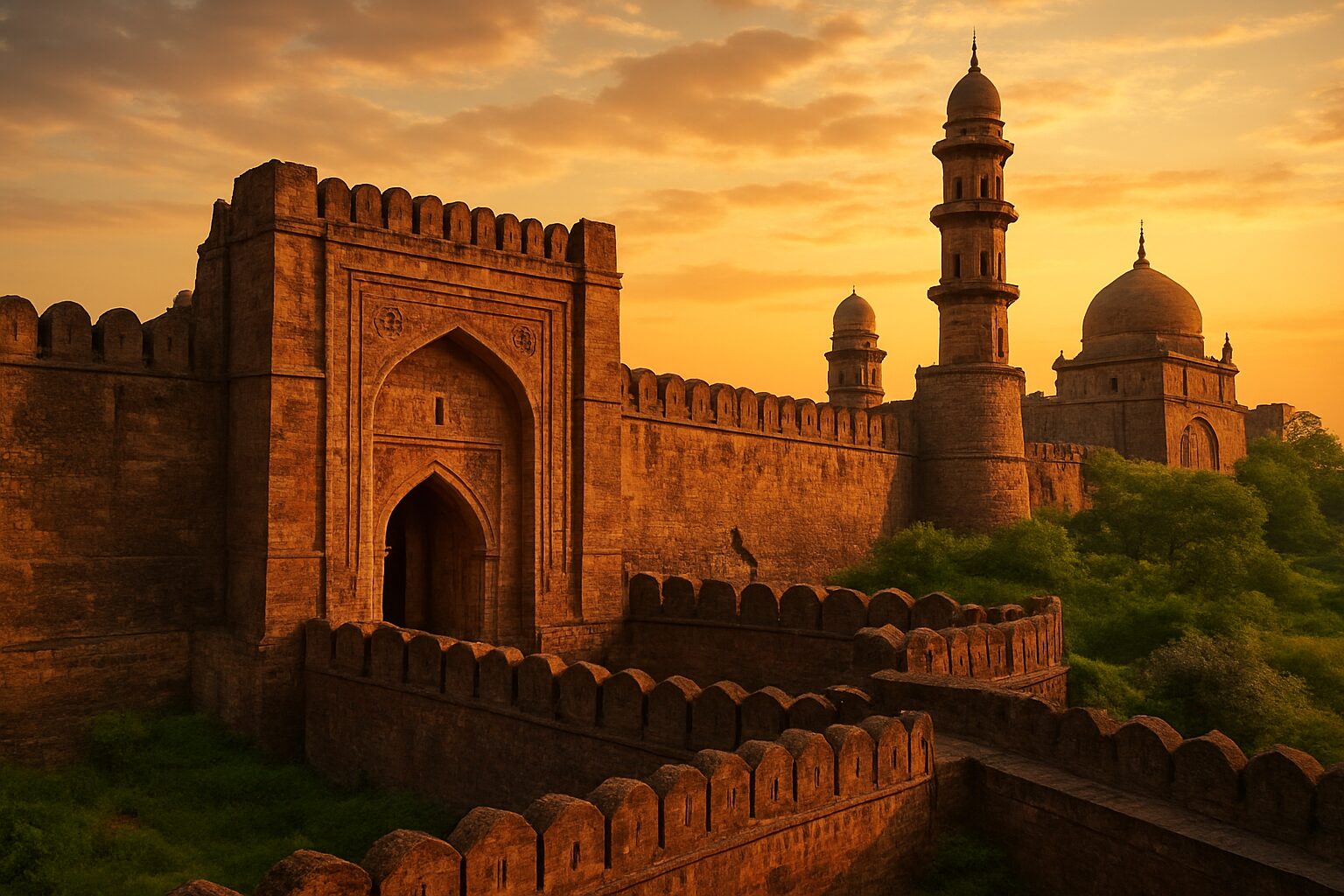
Marvel at the Magnificent Bidar Fort Complex
Standing proudly on a red laterite plateau, Bidar Fort represents one of the most impressive medieval fortifications in southern India. Built by Ahmad Shah Wali Bahmani in 1427, this massive complex stretches across 4.5 kilometers and showcases the military genius of the Bahmani sultans. The fort’s triple-layered defense system features 37 bastions connected by curtain walls, creating an nearly impregnable fortress.
The Rangin Mahal inside the fort complex dazzles visitors with its stunning mother-of-pearl inlay work and Persian tile decorations. The palace chambers reveal intricate geometric patterns and calligraphic inscriptions that speak to the refined tastes of medieval Islamic rulers. The Diwan-i-Am (Hall of Public Audience) demonstrates remarkable acoustic engineering, where whispers from the throne can be heard clearly across the vast hall.
Walking through the Gagan Mahal’s seven-story structure offers panoramic views of the surrounding countryside. The underground chambers and secret passages add an air of mystery to the exploration. The fort’s sophisticated water management system, including the Panchadhara well and ancient aqueducts, shows the engineering prowess of its builders.
| Key Features | Historical Period | Architectural Style |
|---|---|---|
| Triple Defense Walls | 15th Century | Indo-Islamic |
| 37 Bastions | Bahmani Era | Military Architecture |
| Rangin Mahal | 15th-16th Century | Persian Influenced |
Witness Exquisite Bidriware Craftsmanship Techniques
Bidar’s most celebrated contribution to Indian handicrafts, Bidriware represents a metalwork tradition that has survived for over 600 years. This unique craft involves creating intricate designs on blackened zinc and copper alloy, then inlaying them with pure silver wire. The distinctive black color comes from a special soil found only in Bidar, mixed with ammonium chloride and other chemicals.
Master craftsmen begin with casting the basic shape in an alloy of zinc, copper, lead, and tin. The surface gets treated with the special black paste, creating the characteristic dark patina that makes Bidriware instantly recognizable. Artisans then carve delicate patterns by hand before hammering thin silver wire into the grooves. Popular motifs include Persian floral patterns, geometric designs, and Arabic calligraphy.
The craft reached its zenith during the Barid Shahi period when royal patronage encouraged innovation and refinement. Traditional items include vases, boxes, hookahs, trays, and decorative panels. Each piece requires weeks of meticulous work, with skills passed down through generations of artisan families.
Modern Bidriware artists continue adapting ancient techniques for contemporary markets while preserving traditional methods. Visiting local workshops provides insight into this labor-intensive process and supports the craftsmen who keep this heritage alive.
Explore Ancient Madrasas and Their Educational Legacy
Bidar’s madrasas stand as testimonies to medieval Islamic education and intellectual achievement. The Mahmud Gawan Madrasa, built in 1472 by the prime minister of the same name, once ranked among the most prestigious educational institutions in medieval India. This three-story structure attracted scholars from across the Islamic world, creating a vibrant center of learning that rivaled universities in Baghdad and Cairo.
The madrasa’s architectural design reflects its educational purpose, with spacious lecture halls, residential quarters for students, and a magnificent library that housed thousands of manuscripts. The building’s geometric patterns and calligraphic inscriptions create an environment conducive to contemplation and study. Turkish-style minarets and Persian architectural elements demonstrate the cosmopolitan nature of Bidar’s intellectual community.
Educational subjects taught here included theology, philosophy, mathematics, astronomy, medicine, and literature. Students came from as far as Central Asia and the Middle East, making Bidar a truly international center of learning. The curriculum balanced religious studies with secular sciences, producing well-rounded scholars who served as administrators, judges, and teachers throughout the Deccan region.
Other notable madrasas include the Khwaja Mahmud Gilani Madrasa and several smaller institutions scattered throughout the old city. These buildings show how education shaped Bidar’s cultural identity and connected it to the broader Islamic world.
Discover Persian and Turkish Influences in Local Architecture
Bidar’s architecture tells the fascinating story of cultural synthesis between local Deccan traditions and foreign influences brought by Persian and Turkish immigrants. The city’s builders skillfully blended Indo-Islamic architectural elements with distinctive Persian features, creating a unique regional style that influenced construction throughout the northern Deccan.
Persian architectural influences appear most prominently in the use of pointed arches, ribbed domes, and extensive use of glazed tiles. The Solah Khamba Mosque exemplifies this Persian influence with its elegant proportions and decorative tile work featuring blue and green geometric patterns. Turkish elements manifest in the construction techniques, particularly the use of rubble masonry and the distinctive bulbous domes seen on many monuments.
The royal necropolis contains over 40 tombs that showcase this architectural fusion. The Tomb of Ahmad Shah demonstrates how local artisans adapted Persian funerary architecture to suit Deccan climate conditions. The octagonal plan, characteristic of Central Asian mausoleums, gets modified with local materials like black trap stone and red laterite.
Decorative elements reveal the cosmopolitan nature of Bidar’s ruling elite. Calligraphic inscriptions in Persian and Arabic scripts adorn doorways and mihrab walls. Geometric patterns derived from Persian carpet designs appear in stone inlay work. Even residential architecture shows these influences, with traditional Deccan houses incorporating Persian-style courtyards and Turkish-inspired rooflines.
For a private guided tour, please visit Sultan’s legacy at Bidar
Journey Through Gulbarga’s Spiritual and Cultural Treasures
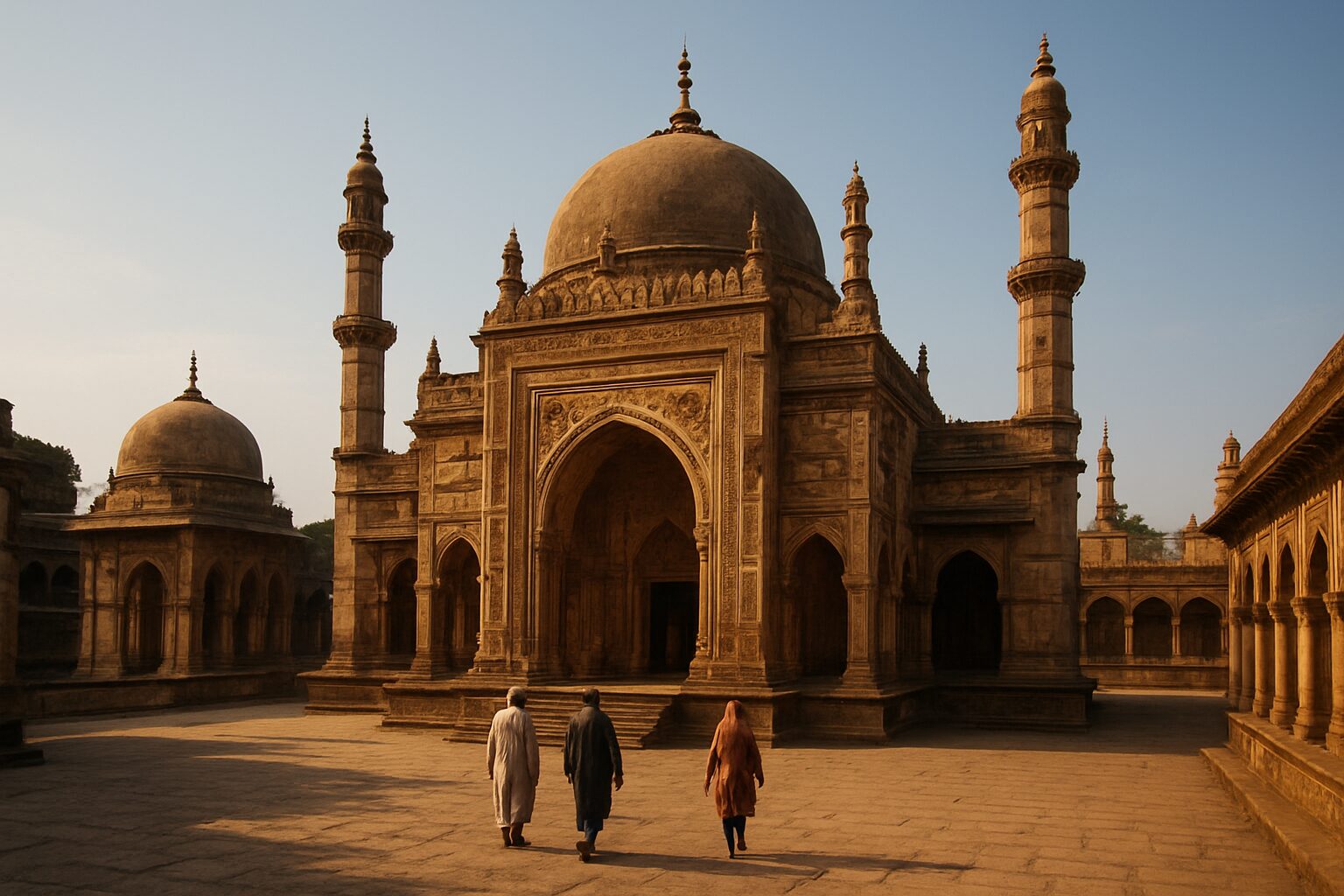
Visit the Spectacular Jama Masjid and Its Unique Design
Gulbarga’s crown jewel stands tall in the form of the magnificent Jama Masjid, commissioned by Sultan Ahmed Shah Wali in 1367. This architectural wonder breaks away from traditional mosque designs with its distinctive closed-style construction, where the entire prayer hall sits under a solid roof instead of an open courtyard. Walking through its entrance, you’ll immediately notice how different this feels from other mosques across India.
The mosque spans an impressive area with 75 arches creating a rhythmic pattern across its facade. Inside, four massive pillars support the central dome, creating an intimate atmosphere perfect for contemplation. The mihrab features intricate geometric patterns and Arabic calligraphy that showcase the artistic brilliance of Bahmani craftsmen.
What makes this mosque truly special is its Persian-influenced architecture blended with local Deccan elements. The use of local black stone creates a striking contrast against the white lime plaster decorations. During prayer times, the acoustics create an almost mystical experience as voices echo through the covered halls.
Visit during the golden hour just before sunset when the light filtering through the arched openings creates dramatic shadows across the prayer hall. The mosque remains active, so dress modestly and remove shoes before entering the main prayer area.
Explore Bahmani Tombs and Royal Burial Traditions
The Haft Gumbaz complex houses seven magnificent tombs that tell the story of Bahmani royal burial customs and architectural evolution. Each tomb represents different periods of the dynasty, showcasing how Persian, Turkish, and local architectural styles merged over centuries.
The tomb of Sultan Ahmed Shah Wali stands out with its double-domed structure and intricate tile work. Persian craftsmen brought blue and turquoise glazed tiles that still catch sunlight after 600 years. The tomb chambers reveal fascinating insights into medieval burial practices, with separate spaces for male and female members of the royal family.
Royal burial traditions here involved elaborate ceremonies lasting several days. The deceased rulers were buried with precious artifacts, manuscripts, and personal belongings believed necessary for the afterlife. Archaeological excavations have revealed coins, jewelry, and weapons that paint a picture of the wealth and cultural sophistication of the Bahmani court.
Key tombs to explore:
- Ahmad Shah Wali’s Tomb: Features the finest Persian tilework
- Alauddin Bahman Shah’s Tomb: Shows early Bahmani architectural style
- Taj ud-Din Firoz’s Tomb: Contains beautiful Arabic inscriptions
- Shams ud-Din Daud’s Tomb: Displays unique geometric patterns
Walk around the complex during early morning hours when the mist often shrouds the tombs, creating an ethereal atmosphere that connects you to centuries of history.
Experience Local Sufi Culture and Mystical Practices
Gulbarga pulses with Sufi spirituality, most prominently centered around the shrine of Hazrat Banda Nawaz Gesu Daraz, one of India’s most revered Sufi saints. The 14th-century saint’s teachings of love, tolerance, and spiritual devotion continue to attract thousands of pilgrims from across the subcontinent.
The shrine complex buzzes with activity throughout the day. Qawwali sessions fill the air with mystical music every Thursday evening, where devotees gather to experience spiritual ecstasy through rhythmic chanting and melodic poetry. These performances often continue late into the night, creating an atmosphere where time seems to dissolve.
Local Sufi practices include sama (spiritual listening), where participants enter meditative states through music and movement. Many visitors report profound spiritual experiences during these gatherings, regardless of their religious background. The saint’s teachings emphasized universal love and acceptance, making the shrine welcoming to people of all faiths.
The annual Urs festival transforms the entire city into a spiritual celebration. Streets fill with pilgrims, vendors selling rose petals and incense, and the aroma of traditional food prepared as offerings. During this time, you can witness centuries-old traditions of fatiha (prayer offerings) and tabarruk (blessed food distribution).
Sufi experiences to seek:
- Thursday evening Qawwali sessions at the main shrine
- Dawn prayers with local devotees
- Rose petal offerings at the saint’s tomb
- Traditional Sufi calligraphy workshops with local artisans
- Meditation sessions in the shrine’s peaceful gardens
The shrine’s library contains rare manuscripts in Persian, Arabic, and Urdu, including the saint’s own writings on mystical practices and spiritual philosophy.
Uncover Bijapur’s Magnificent Adil Shahi Dynasty Legacy
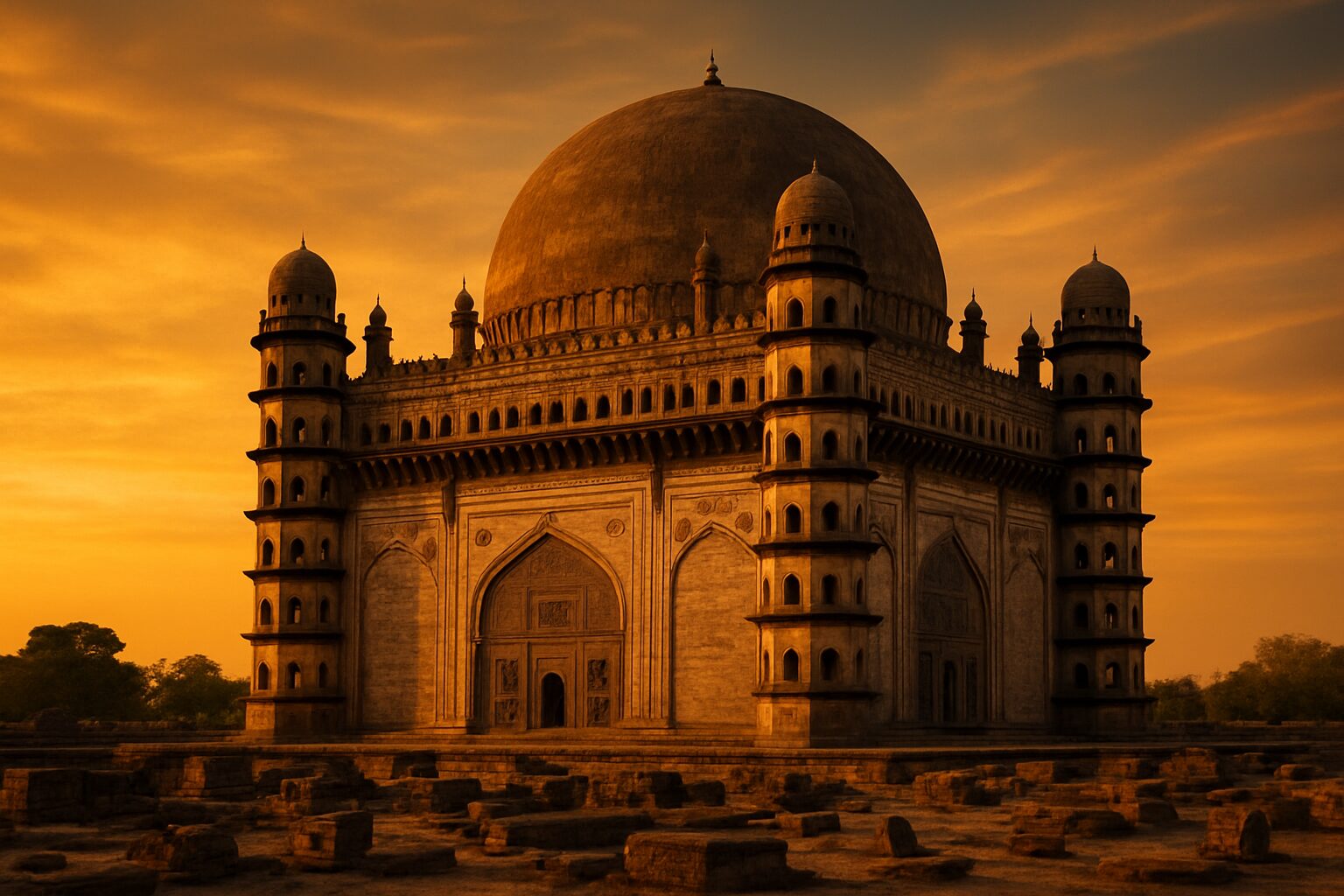
Stand in Awe of the Iconic Gol Gumbaz Dome
The Gol Gumbaz stands as Bijapur’s crown jewel, featuring the world’s second-largest dome after St. Peter’s Basilica in Rome. This architectural marvel was built in 1659 as the mausoleum of Sultan Muhammad Adil Shah, the seventh ruler of the Adil Shahi dynasty. The massive structure rises 124 feet high with an internal diameter of 124 feet, creating perfect acoustic properties that make even the softest whisper audible across the entire hall.
What makes this dome truly extraordinary is its engineering brilliance. The builders achieved this massive span without any supporting pillars, relying instead on a complex system of intersecting arches and pendentives. The four minarets at each corner aren’t just decorative – they house the staircases leading to the whispering gallery that runs around the dome’s interior perimeter.
The tomb houses not only Sultan Muhammad Adil Shah but also his wife, daughter, and grandson. The simple black stone cenotaphs contrast dramatically with the grandeur of the surrounding architecture, reflecting the Islamic principle of humility in death despite earthly power.
Explore Ibrahim Rauza’s Perfect Architectural Symmetry
Ibrahim Rauza represents the pinnacle of Adil Shahi architectural refinement, often called the “Crown of Bijapur” and believed to have inspired the Taj Mahal’s design. Built between 1605-1626, this complex contains the tomb of Ibrahim Adil Shah II and his queen Taj Sultana, along with a mosque, creating a perfect symmetrical composition.
The entire structure demonstrates extraordinary attention to detail and proportion. The twin buildings face each other across a formal garden, with identical minarets and domes creating mirror images. The delicate stone latticework, intricate calligraphy, and geometric patterns showcase Persian and Turkish influences blended with local Deccan artistry.
The mosque’s mihrab features some of the finest stone carving in India, with verses from the Quran rendered in beautiful Naskh script. The tomb chamber contains exquisite painted decorations on the ceiling, depicting floral motifs and geometric patterns in gold and bright colors that have survived over four centuries.
Discover Innovative Water Management Systems
The Adil Shahi rulers developed sophisticated water management systems that sustained their capital through centuries of growth. The most impressive example is the Chand Bawdi, a massive stepped well that descends seven stories underground, providing water even during the harshest droughts.
The city’s water infrastructure included an intricate network of underground channels, storage tanks, and distribution systems. The rulers built multiple bawdis (stepwells) throughout the city, each serving specific neighborhoods and featuring unique architectural elements. These structures weren’t just functional – they served as gathering places and provided relief from the intense Deccan heat.
The Taj Bawdi, near Ibrahim Rauza, showcases the most refined architectural approach to water storage. Its stepped design allows access to water at different levels depending on seasonal variations, while its arched galleries provide shade and ventilation. The engineering principles used here influenced water management across the Deccan plateau.
Learn About Artillery Innovations at Malik-e-Maidan
Malik-e-Maidan houses one of the world’s largest medieval cannons, weighing over 55 tons and measuring 14 feet in length. Cast in 1549 during the reign of Ibrahim Adil Shah I, this bronze masterpiece required 400 oxen, dozens of elephants, and hundreds of men to transport it to Bijapur from Ahmednagar.
The cannon’s muzzle is shaped like a lion’s head with open jaws, and its surface features intricate Arabic inscriptions. The weapon could fire cannonballs weighing 700 pounds over considerable distances, making it a formidable defensive tool. Local legends claim that firing the cannon once required stuffing the muzzle with gunpowder, and the thunderous roar could be heard for miles.
Beyond its impressive size, Malik-e-Maidan represents the Adil Shahi dynasty’s military innovations and their adoption of advanced artillery technology. The rulers maintained skilled metalworkers and military engineers who created various other cannons and defensive weapons, establishing Bijapur as a major military power in medieval India.
For a private guided tour, please visit Bijapur Experience.
Navigate Practical Travel Tips for Your Deccan Adventure
Plan Optimal Routes Between the Three Historic Cities
Creating an efficient route between Bidar, Gulbarga, and Bijapur saves time and maximizes your exploration opportunities. The most practical approach involves starting from Hyderabad as your base, which offers the best connectivity to all three destinations.
Recommended Route Options:
- Linear Route: Hyderabad → Bidar (145 km) → Gulbarga (100 km) → Bijapur (165 km)
- Triangle Circuit: Start and end in Gulbarga, visiting Bidar first, then Bijapur
- Hub-and-Spoke: Use Gulbarga as your central base for day trips to both cities
Road conditions between these cities are generally good, with well-maintained state highways connecting all three locations. The Bidar-Gulbarga stretch offers scenic countryside views, while the Gulbarga-Bijapur route passes through historical villages worth brief stops.
Transportation Modes:
| Mode | Pros | Cons | Best For |
|---|---|---|---|
| Car | Flexibility, comfort | Higher cost | Groups, families |
| State Bus | Cheap, frequent | Fixed | Budget travelers |
| Train | Reliable | Limited routes | Longer stays |
Book accommodations in advance, especially during festival seasons. Each city requires at least two full days to properly explore its monuments and absorb the historical atmosphere.
Identify Best Seasons and Weather Considerations
Timing your Deccan adventure correctly makes the difference between a memorable journey and an uncomfortable experience. The region experiences a semi-arid climate with distinct seasonal variations that directly impact sightseeing comfort.
Optimal Travel Seasons:
October to March represents the ideal window for exploration. Temperatures range from 15°C to 28°C, creating perfect conditions for outdoor monument visits and photography. Morning mist often enhances the mystical atmosphere around ancient structures, while evenings remain pleasant for leisurely walks through historic quarters.
April to June brings intense heat, with temperatures soaring above 40°C. This period challenges even seasoned travelers, making outdoor exploration uncomfortable during midday hours. However, early morning visits (6-9 AM) and late evening explorations remain feasible.
Monsoon months (July-September) transform the landscape into lush greenery but create practical challenges. Heavy rainfall can disrupt travel plans and limit monument access. Some archaeological sites may close temporarily during severe weather.
Monthly Weather Guide:
- November-February: Cool, dry, perfect visibility
- March: Warm but manageable, fewer crowds
- April-May: Hot, early morning visits essential
- June-September: Monsoon, unpredictable conditions
- October: Post-monsoon freshness, excellent for photography
Pack light cotton clothing for hot months, layers for winter visits, and waterproof gear during monsoons. The region’s low humidity levels make heat more bearable than coastal areas.
Find Authentic Local Accommodations and Dining Options
Each city offers distinct accommodation personalities reflecting their historical character. Bidar provides heritage properties converted from nobleman’s residences, while Gulbarga offers religious guest houses near Sufi shrines. Bijapur balances luxury hotels with budget-friendly options catering to diverse traveler needs.
Accommodation Categories:
Heritage Properties in Bidar include restored havelis and palace complexes offering authentic architectural experiences. These properties maintain original design elements while providing modern amenities. Expect carved wooden furniture, traditional courtyards, and knowledgeable staff sharing local legends.
Religious Guest Houses in Gulbarga, particularly near Hazrat Khwaja Bande Nawaz Dargah, provide budget-friendly stays with spiritual ambiance. These establishments offer simple, clean rooms and vegetarian meals, perfect for travelers seeking cultural immersion.
Modern Hotels in Bijapur range from business-class properties to boutique establishments. Many feature rooftop restaurants with Gol Gumbaz views, creating memorable dining experiences.
Local Dining Experiences:
Sample authentic Deccani cuisine at local establishments rather than hotel restaurants. Bidar’s mutton curry and jowar rotis represent regional specialties. Gulbarga’s biryani carries distinct Hyderabadi influences with local variations. Bijapur’s street food scene offers delicious kebabs and traditional sweets.
Recommended Local Eateries:
- Traditional thali restaurants near major monuments
- Sweet shops famous for regional specialties
- Roadside vendors offering fresh seasonal fruits
- Local bakeries serving Persian-influenced breads
Access Essential Permits and Entry Requirements
Most monuments in these three cities operate under Archaeological Survey of India (ASI) management, requiring standard entry tickets rather than special permits. However, understanding entry procedures and documentation ensures smooth access to all attractions.
Standard Requirements:
Indian nationals need valid photo identification for ticket purchases at major monuments. Foreign visitors require passports for entry to protected monuments, with some sites offering discounted rates for SAARC country citizens.
Ticketing Information:
ASI monuments typically charge nominal fees (₹5-25 for Indians, ₹100-600 for foreigners). Composite tickets covering multiple monuments in each city offer substantial savings for comprehensive exploration. Purchase tickets at monument entrances or designated counters.
Photography Guidelines:
Still photography remains free at most sites, while video recording may require additional charges. Professional photography equipment needs prior permission from ASI authorities. Drone photography requires specific clearances and isn’t permitted at most heritage sites.
Special Access Considerations:
Some monuments restrict access during prayer times or maintenance periods. Religious sites may have dress codes requiring modest attire. Certain areas within larger complexes might remain off-limits for conservation reasons.
Documentation Checklist:
- Valid photo ID (mandatory)
- Camera/video recording permits (if applicable)
- Foreign tourist registration (for international visitors)
- Travel insurance documents (recommended)
Plan monument visits during operational hours (typically sunrise to sunset) and carry adequate cash for entry fees, as card payment facilities remain limited at smaller sites.
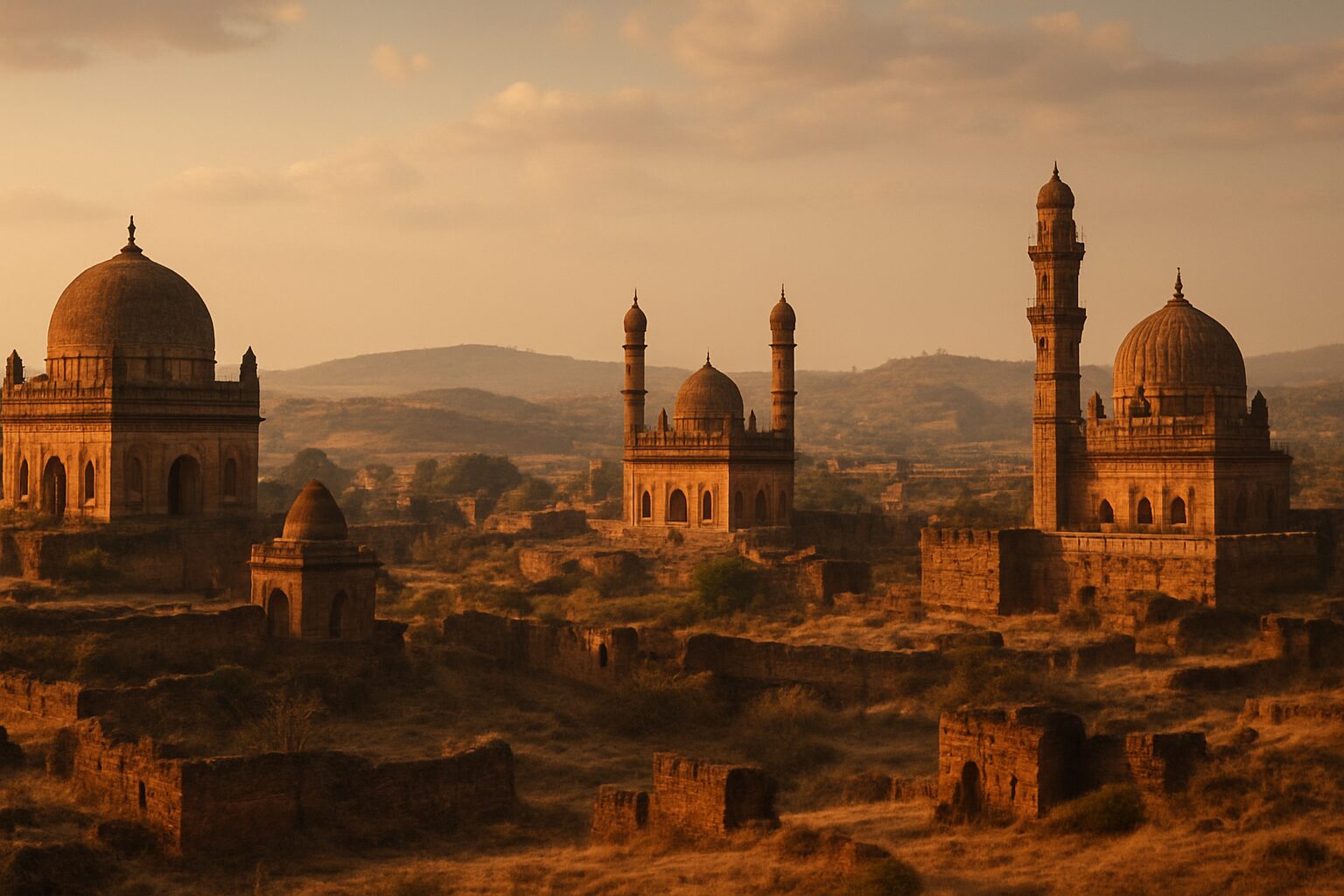
The forgotten cities of Bidar, Gulbarga, and Bijapur form an incredible triangle of history that’s just waiting for curious travelers to explore. Each destination offers something special – Bidar’s stunning Indo-Islamic architecture, Gulbarga’s spiritual sanctuaries and cultural depth, and Bijapur’s grand monuments that showcase the power of the Adil Shahi rulers. Together, these three cities paint a complete picture of the Deccan’s rich past and its role in shaping India’s medieval history.
Planning your trip to this region doesn’t have to be complicated, and the rewards are absolutely worth it. You’ll walk through centuries of history, marvel at architectural masterpieces that rival any famous monument, and experience a side of India that many travelers never discover. Pack your bags, grab a good camera, and get ready to uncover the secrets of the Deccan – these hidden gems are calling your name.
For a private guided tour of the Deccan, please visit Bijapur Experience and Sultan’s legacy at Bidar
Leave a Reply