
Most people who visit Goa think its history began in 1510.
That was the year the Portuguese admiral Afonso de Albuquerque sailed into the harbour, defeated the Bijapur Sultanate and established the colony that would last for 451 years until Indian troops marched in and ended it in 1961. The Portuguese left behind extraordinary churches, elegant colonial architecture, a distinct cuisine and a cultural legacy that defines the Goa the world knows today.
But Goa’s history did not begin in 1510. It began two thousand years before that.
And the most dramatic chapter of the story that most foreign tourists never discover is not about what the Portuguese built. It is about what they tried to destroy and could not.
The Goa Inquisition, one of the most severe in history, led to the destruction of hundreds of Hindu temples across the region. The Portuguese made it illegal to practice Hinduism openly, demolishing temples and converting their materials into the very churches and forts that now stand as the monuments most tourists photograph.
And yet three ancient Goa temples survived.
Not by luck. By strategy. By courage. And in one extraordinary case, by being so completely hidden in the jungle that the Portuguese never even found it.
These three ancient Goa temples are waiting for you right now. And visiting them with an archaeologist guide who can tell the complete story of what happened here is one of the most extraordinary heritage experiences available anywhere in India.
This is the real history of Goa. And almost no foreign tourist knows it exists.
Ancient Goa Temples: The Civilisation That Existed 2000 Years Before the Portuguese Arrived
The Kadamba Dynasty and the Ancient Goa Temples They Built Across an 800-Year Kingdom
Before the Portuguese, before the Bijapur Sultanate, before the Delhi Sultanate and before any of the Muslim powers that preceded the Europeans, Goa was ruled by the Kadamba dynasty, one of the most artistically sophisticated and culturally ambitious kingdoms in South Indian history.
Over the centuries Goa was ruled by a number of dynasties including the Konkan Mauryas, Rashtrakutas, Chalukyas, Shilaharas, Yadavas, Bhojas, Kadambas and Vijayanagar rulers. The Kadambas were the most powerful, flourishing from the mid-10th century until the 13th century and leaving behind a tradition of temple building that combined elements of Chalukya, Yadava and Jain styles into something distinctively their own.
The Kadambas were great builders. They established Goa as a major trading port, developed its agricultural hinterland and commissioned ancient Goa temples of extraordinary architectural quality across the region. Their artistic tradition, now known as Kadamba-Yadava architecture, is one of the rarest and most beautiful in all of Indian heritage.
Almost all of it was destroyed.
When the Bahmani Sultanate invaded in the 14th century, ancient Goa temples were demolished. When the Portuguese arrived in the 16th century and established the Inquisition, the destruction accelerated dramatically. The extraordinary Kadamba artistic tradition was deliberately and systematically eliminated. The stones of destroyed temples were used to build the very churches that now stand as monuments to Goan heritage.
What survived did so through extraordinary means. The story of how each of the three ancient Goa temples on the 5 Senses Tours temple trail survived is one of the most compelling heritage narratives in India.
The Goa Inquisition: The Ancient Goa Temples History That Foreign Tourists Are Never Told
The Goa Inquisition began in 1560 and lasted in various forms until 1812. It was established to enforce Catholic orthodoxy among converted Goans and to eliminate all remaining Hindu religious practice in Portuguese-controlled territory.
Its methods were extreme. Ancient Goa temples were demolished and their sites consecrated as churches. The possession of Hindu religious texts was punishable by imprisonment. Communities that had practiced their faith for centuries were given the choice of conversion or exile.
The cultural consequences were catastrophic. An entire artistic and architectural tradition, centuries of ancient Goa temple building, sculpture, painting and ritual practice, was systematically eliminated from the landscape of what is now the most visited tourist destination in India.
The temples that survived did so by being moved, hidden, protected by kings from outside Goa’s borders or simply so remote that the Portuguese never reached them. Understanding this history transforms a visit to Goa’s ancient temples from a pleasant heritage excursion into a genuinely moving encounter with the human story of cultural survival against extraordinary odds.
Our expert archaeologist guides on the Forest Shrine and Magnificent Temples of Goa tell the complete story of the Goa Inquisition and its consequences at every ancient Goa temple you visit, giving international tourists the historical context that makes these extraordinary sites truly comprehensible.
Tambdi Surla Mahadev Temple: The Ancient Goa Temple That Survived by Hiding in the Forest
Of the three ancient Goa temples on the 5 Senses Tours temple trail, the Tambdi Surla Mahadev Temple is the one that most dramatically encapsulates the story of survival.
As Goa’s oldest intact Hindu temple, it escaped destruction during the Portuguese colonial era due to its remote jungle location and continues to serve as an active place of worship.
The Portuguese could not destroy what they could not find. And they never found Tambdi Surla.
The 12th Century Ancient Goa Temple That No Invader Ever Reached
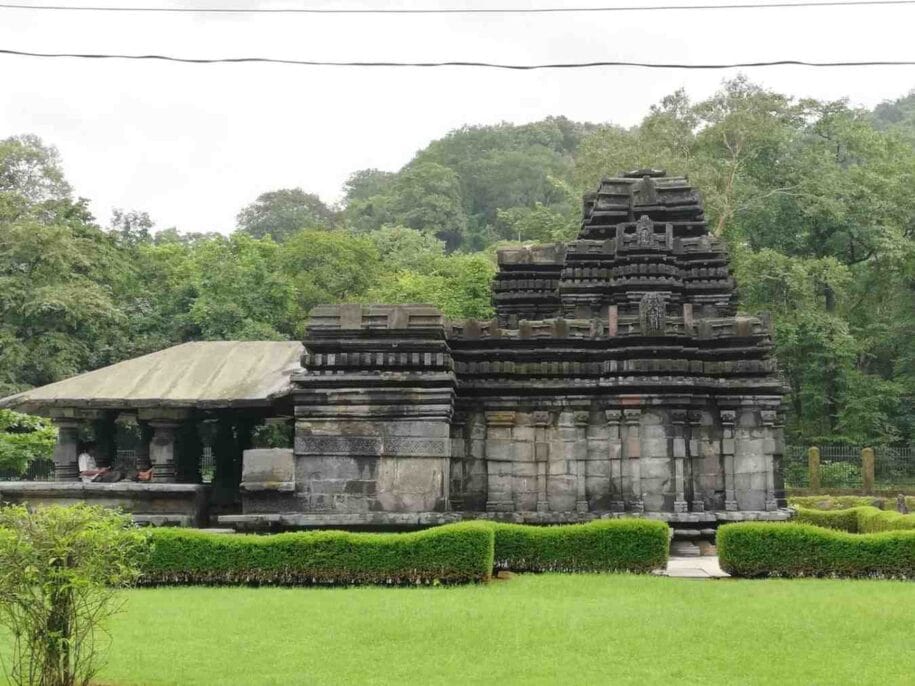
The Mahadev Temple at Tambdi Surla was built by the Yadava king Ramachandra in the late 12th or early 13th century during the reign of the Kadamba dynasty in Goa. The Kadambas were the first rulers to establish a Hindu kingdom in Goa and patronize art, literature and temple building.
The temple was built in the Kadamba style from basalt carried across the mountains from the Deccan Plateau and carved by craftsmen. It is considered to be the only specimen of Kadamba architecture in basalt stone preserved and available in Goa. The temple survived the Islamic invasions and the Goa Inquisition due to its remote location in a clearing deep in the forest at the foot of the Western Ghats.
Think about what this means. The temple’s existence faded from broader awareness until its rediscovery in 1935 by Anant Ramkrishna Sinai Dhume, a government employee, during the late Portuguese era. For hundreds of years while the Goa Inquisition raged across the coast, while ancient Goa temples were being demolished and their stones recycled into churches, this extraordinary 12th century temple sat completely undisturbed in the jungle. The forest kept its secret. The invaders never came.
The Architecture of Tambdi Surla: Why This Ancient Goa Temple Is Unlike Anything Else in the State
The temple is built on a raised platform and consists of three main parts. The shikhara is the tower-like structure that rises above the sanctum and has a pyramidal shape. The mandapa is the hall where devotees gather and pray. The garbhagriha is the inner sanctum where the Shiva linga is enshrined. The temple is made of black basalt stone, a volcanic rock that is hard, durable and resistant to weathering. The stone blocks are finely cut and fitted together without any mortar or cement.
The temple faces east so that the rays of the rising sun fall on the deity at the crack of dawn. Bas-relief figures of Lord Shiva, Lord Vishnu and Lord Brahma with their respective consorts appear on panels at the sides of the temple.
The only surviving ancient Goa temple from the Kadamba period displays one of the unique features rarely found in Indian architecture, a pyramidical shikhara that rises in steps without any kalasa at the top.
For international visitors with an interest in architecture and history, the Tambdi Surla Mahadev temple is one of the most architecturally distinctive monuments in India. There is nothing else like it in Goa. There is almost nothing like it anywhere in the country. Its combination of basalt stone construction, mortarless interlocking assembly and Kadamba-Yadava architectural vocabulary creates a building of extraordinary refinement that has somehow survived eight centuries of jungle, monsoon, invasion and colonial suppression completely intact.
The Atmosphere of Tambdi Surla: What Ancient Goa Temple Visitors Experience When They Arrive
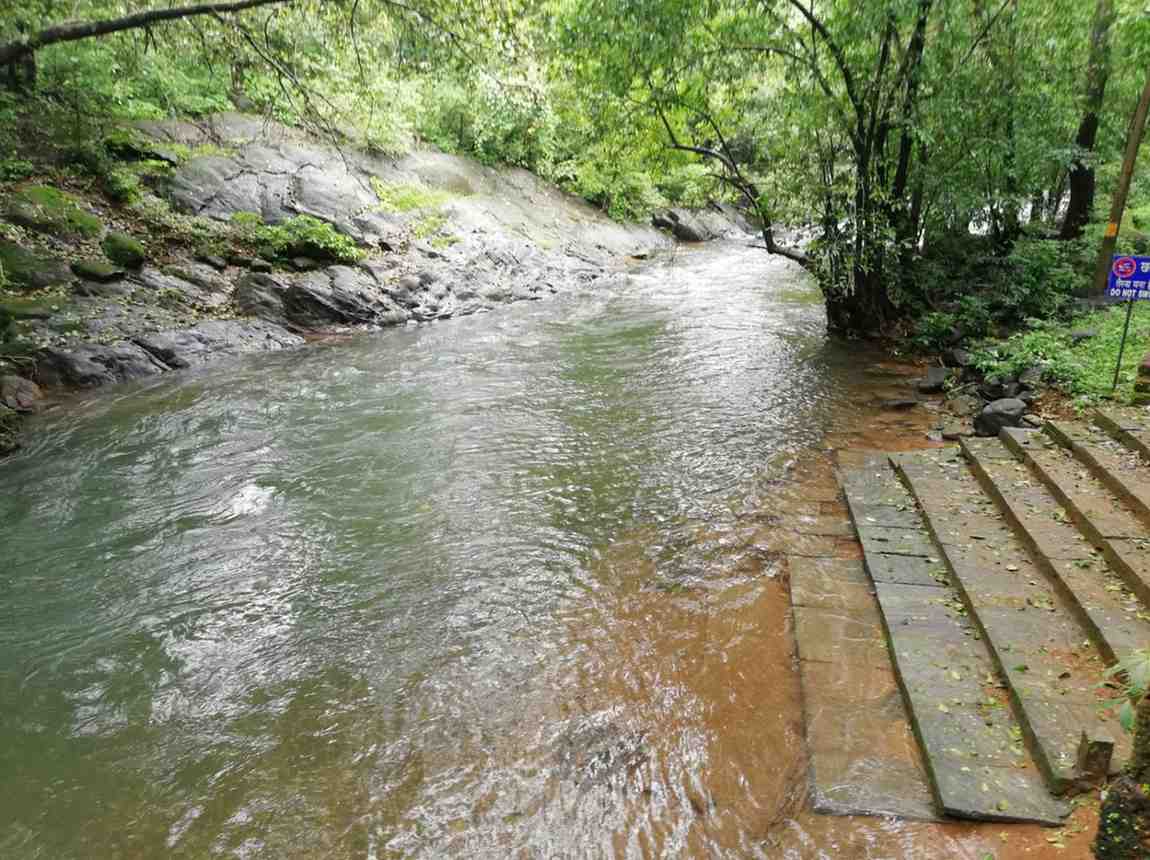
As one walks up to the temple through a small bridge-like structure constructed on the flowing river and steps inside the temple premises they are transported to the bygone centuries with only the chirping of birds to be heard and the gushing of the river water. The silence is poignant and suits the history and legends associated with it.
A black cobra is said to be a permanent resident of this temple, staying in the dark garbhagriha interiors. It is said to be the guardian of the temple.
The cobra legend is the kind of detail that a guidebook mentions in passing and a knowledgeable guide delivers at the right moment with the full weight of its cultural significance. In Hindu tradition the cobra is inseparable from Lord Shiva, who wears the serpent around his neck as an ornament. The idea that a cobra guards the inner sanctum of this ancient Goa temple is not merely a colourful local story. It is a connection to the living devotional tradition that has kept this temple sacred since the 12th century.
The temple houses a Shiva linga and a headless Nandi statue, with local legends claiming a king cobra still resides in its shadows. The headless Nandi in the mandapa is one of the most poignant details of the entire ancient Goa temple. Whether damaged by natural weathering or by iconoclasm at some point in the temple’s turbulent history, the headless bull creates a powerful visual contrast with the extraordinary intactness of everything around it, a reminder that this temple’s survival, remarkable as it is, was not without cost.
Our Forest Shrine and Magnificent Temples of Goa tour begins at Tambdi Surla with an archaeologist guide who brings the full architectural, historical and devotional story of this extraordinary ancient Goa temple to life in a way that transforms every carved panel and every stone block from heritage detail into human narrative.
Saptakoteshwar: The Ancient Goa Temple That a King Rescued From Destruction
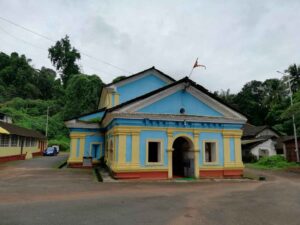
The story of Saptakoteshwar is the most dramatically heroic of the three ancient Goa temples on the heritage trail. It is a story of deliberate destruction, determined survival and the intervention of one of the greatest warriors in Indian history.
How the Bahmani Sultan Demolished This Ancient Goa Temple
Saptakoteshwar was one of the most important ancient Goa temples in the medieval period, the chief deity of the Kadamba kings and a centre of religious and political authority in the region for centuries. Our archaeologist guide will bring alive the events of the 14th century when the Bahmani Sultan destroyed the temple and how the Vijayanagara Kings later defeated the Sultan and restored the temple to its former glory.
Its destruction by the Bahmani Sultan in the 14th century was not random iconoclasm. It was a deliberate act of political dominance, the elimination of the religious symbol of the power that the Bahmani forces had defeated.
But the story does not end there.
How Chhatrapati Shivaji Maharaj Rescued This Ancient Goa Temple From the Portuguese
When the Portuguese arrived and the Inquisition began in the 16th century, the Saptakoteshwar deity was at risk again.
The rescue of the Saptakoteshwar deity from Portuguese destruction involved one of the most extraordinary figures in Indian history. Chhatrapati Shivaji Maharaj, the great Maratha warrior-king whose military genius had established an empire across the Deccan, took personal interest in the preservation of the Saptakoteshwar Shiva linga. The deity was moved to Narve in Bicholim in North Goa, outside Portuguese-controlled territory, where it could be worshipped freely.
The intervention of Shivaji Maharaj in the preservation of this ancient Goa temple gives the Saptakoteshwar story a dimension that no other Goan temple possesses. This is not simply a story of survival. It is a story of active rescue by one of the most celebrated military and cultural figures in Indian history, a man who understood that the preservation of ancient Goa temples was inseparable from the preservation of the people and the culture they served.
Visiting Saptakoteshwar: What This Ancient Goa Temple Reveals About Cultural Survival
The Saptakoteshwar temple that stands at Narve today is a later structure built to house the rescued deity, its architecture reflecting the post-Portuguese era of Goan temple building. But what it lacks in architectural antiquity it more than compensates for in the extraordinary weight of the story it carries.
Standing before the Saptakoteshwar Shiva linga with the full story of its destruction, rescue and preservation by Shivaji Maharaj explained by an expert archaeologist guide transforms the ancient Goa temple experience from a monument visit into a genuine encounter with the human drama of cultural survival at its most heroic.
Our Forest Shrine and Magnificent Temples of Goa includes the Saptakoteshwar temple with an archaeologist guide who tells the complete story of the Bahmani destruction, the Portuguese Inquisition and the extraordinary role of Shivaji Maharaj in rescuing this ancient Goa temple for future generations.
Mangeshi Temple: The Ancient Goa Temple With the Lamp Tower That Photographers Travel to Photograph
The Mangeshi Temple is the most visually spectacular of the three ancient Goa temples on the 5 Senses Tours heritage trail and the one that most immediately rewards the international visitor who arrives with a camera and an eye for extraordinary architectural beauty.
How This Ancient Goa Temple Deity Escaped the Portuguese by Moving
The Mangeshi Temple used to be located in another town called Cortalem. However in 1565 the deity was moved to the present location after the Portuguese started destroying all Hindu temples in the region.
The year 1565 is significant. It was the year of the Battle of Talikota, the catastrophic defeat of the Vijayanagara Empire that left most of South India without the major Hindu power that had until then provided some protection against the Portuguese. The communities of Goa understood immediately what this meant. The Mangeshi deity was moved immediately.
When the Portuguese forbade the people to follow Hindu customs in the area, this ancient Goa temple was transformed into a venue for conducting weddings. This extraordinary act of cultural camouflage, disguising a temple as a wedding venue to prevent its destruction, is one of the most creative and most poignant stories of religious survival in the entire history of the Goa Inquisition.
The Deepastambha: The Seven-Storey Lamp Tower of This Ancient Goa Temple That Stops Every Photographer
The Deepastambha, the lamp tower of the Mangeshi Temple, is one of the most extraordinary architectural elements in any ancient Goa temple. Rising seven storeys into the Goa sky, its every surface covered with rows of oil lamp niches that when lit on festival nights create a column of fire visible from kilometres away, it is one of the most photogenic single architectural elements in the entire Indian subcontinent.
For international photographers visiting Goa, the Deepastambha of Mangeshi is a subject of extraordinary visual power. The geometry of the lamp niches, the way the light falls across the stone in the early morning, the contrast between the white-washed tower and the blue of the Goa sky, and the festival-night spectacle of the tower in full illumination create photographic opportunities that no beach or church in Goa can match.
The Mangeshi Temple complex also reflects a completely different architectural tradition from Tambdi Surla. Where Tambdi Surla is ancient, austere and forest-hidden, Mangeshi is vibrant, colourful and community-centred. Its whitewashed walls, its ornate gopuram, its active daily worship and the extraordinary cultural life that surrounds it give the international visitor an encounter with living ancient Goa temple tradition in a form that is completely specific to coastal Goa.
What Makes Mangeshi the Most Visited Ancient Goa Temple Among International Photographers
The visual contrast between the Mangeshi temple and anything a foreign tourist expects to find in Goa is immediate and total. Goa in the international imagination means beaches, beach shacks, churches and sunsets. The Mangeshi temple, with its seven-storey lamp tower, its sacred pond, its ornate gopuram and its daily cycle of worship, devotion and community life, belongs to an entirely different India.
That contrast is precisely what makes it so extraordinary and so memorable for the international visitor who finds it. This is not the Goa the brochures promised. This is the Goa that existed long before the brochures. And standing in front of the Deepastambha of Mangeshi with the full story of how this ancient Goa temple survived the Portuguese Inquisition by disguising itself as a wedding venue, delivered by an expert archaeologist guide at the exact moment you are looking up at the seven-storey lamp tower, is an experience that stays with you for the rest of your life.
Plan Your Ancient Goa Temple Tour With 5 Senses Tours: The Complete Experience
Book Your Ancient Goa Temple Heritage Tour With 5 Senses Tours
Our Forest Shrine and Magnificent Temples of Goa is the most comprehensive and most deeply contextualised ancient Goa temple experience available from any tour operator in India. All three temples are covered with an expert archaeologist guide throughout, private vehicle, hotel pickup from anywhere in Goa and all entry fees included.
This is the tour that gives international visitors the complete story of how Goa’s Hindu heritage survived one of history’s most devastating episodes of religious suppression. It is a tour designed for travellers who believe that the greatest experiences in Goa are not on the beach but in the stories written into the stone of its most ancient and most extraordinary sacred sites.
Extend Your Ancient Goa Temple Experience With the Complete Goa Heritage Portfolio
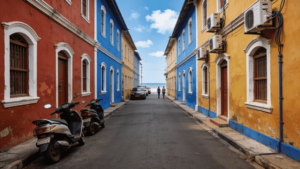
The ancient Goa temples are the beginning of a heritage journey that extends far beyond a single day. Goa is one of the most layered and most surprising heritage destinations in India and 5 Senses Tours has built a complete portfolio of expert guided experiences designed to reveal the Goa that most tourists never find.
The Panjim Heritage Walk takes you through the Latin Quarter of Fontainhas, its brightly painted houses, overhanging balconies and winding lanes, and through the wider story of how Goa’s capital evolved from a sleepy Portuguese retreat into the living, breathing, culturally extraordinary city it is today. The Mint House, the Church of Our Lady of the Immaculate Conception, the Tobacco Square, the Fortin and the extraordinary St Sebastian Chapel with the only crucifix in India on which Jesus has his eyes open, all explained by expert cultural guides who understand the specific history of Panjim. For walking tours of Panjim and Old Goa our Goa walks with 5 Senses Walks cover the full heritage of the region on foot with expert guides who bring every lane and every facade to life with the complete story behind it.
The Chandor Grand Mansions tour takes you inside the most extraordinary surviving examples of Indo-Portuguese domestic architecture in Goa, including the Braganza House in Chandor and the Sara Fernandes House in Loutolim. These are lived-in family homes whose generations of accumulated history, from European chandeliers to private Hindu shrines hidden behind Catholic facades, tell the story of how Goa’s elite families navigated centuries of colonial rule with extraordinary cultural creativity and resilience. The hidden Hindu shrines inside these ostensibly Catholic mansions are perhaps the most intimate and most moving parallel to the ancient Goa temple survival story you encountered at Tambdi Surla, Saptakoteshwar and Mangeshi.
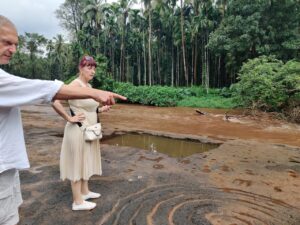
The Ancient Rock Art, Bubble Lake and Cave tour takes you to Usgalimal on the banks of the Kushavati River, where 9000-year-old petroglyphs carved into laterite rock by prehistoric communities represent the oldest surviving human artistic tradition in Goa, a full eight millennia older than the ancient Goa temples you visited on the forest shrine tour. The same archaeologist guide who can explain the Kadamba dynasty’s architectural tradition can also explain what these extraordinary carvings tell us about the people who made them. The Rivona caves, believed in local tradition to be the shelter of the Pandavas during their exile, and the extraordinary bubbling lake at Netravali add further dimensions of ancient heritage and natural wonder to a tour that comprehensively reframes what Goa actually is.
Together the ancient Goa temple tour, the Panjim heritage walk, the Goa walking tours, the grand mansion visit and the ancient rock art experience create the most complete and most intellectually rewarding picture of Goa available to any international visitor. This is the Goa that existed before the Portuguese arrived. The Goa that survived their attempt to destroy it. And the Goa that is still here, waiting for the curious traveller who is willing to look beyond the beaches.
Explore our complete Goa tours portfolio and discover the India most tourists never find.
Book your ancient Goa temple tour with 5 Senses Tours today
Leave a Reply