
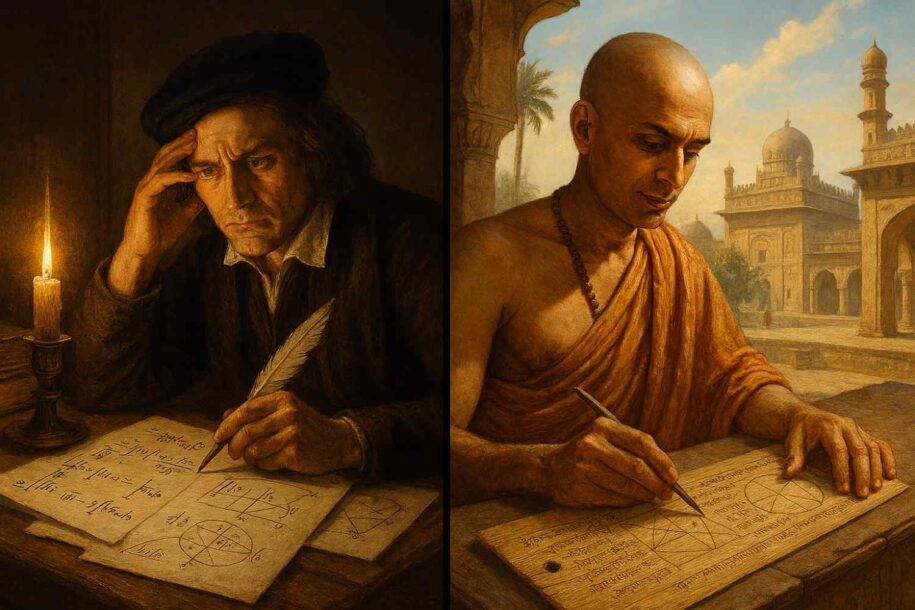
In 1150 CE a mathematician in Bijapur wrote the foundational concepts of differential calculus into a Sanskrit verse.
Isaac Newton was born five hundred and fourteen years later.
In 850 CE a Jain scholar at the court of a Karnataka king wrote the first text in human history devoted entirely to mathematics. In 629 CE another Karnataka mathematician placed a small circle in a Sanskrit manuscript and invented the zero that every number system on earth still uses. And somewhere in a Karnataka monastery around 840 CE a monk was encoding a 600,000-verse literary work in numerical matrices using cipher techniques so sophisticated that modern cryptographers are still studying them.
Four scholars. One Indian state. Five centuries of unbroken mathematical genius that the world outside India has almost entirely forgotten.
This is the complete guide to the four ancient Karnataka mathematicians, Bhaskara I, Mahavira, Kumudendu Muni and Bhaskara II, their extraordinary contributions to human knowledge and the heritage sites across Karnataka where their world can still be experienced today. Each section below covers one mathematician in depth, connecting their intellectual achievements to the physical landscape of Karnataka that produced them and to the tours through which international travellers can walk through that world.
Ancient Karnataka Mathematicians: The Four Scholars Who Changed the World
Why Karnataka Produced the Most Extraordinary Concentration of Mathematical Genius in the Ancient World
Karnataka’s extraordinary concentration of mathematical genius between the 7th and 12th centuries was not accidental. It emerged from a specific combination of royal patronage, philosophical tradition and institutional continuity that created the conditions for sustained intellectual achievement across five centuries.
The Rashtrakuta dynasty, which ruled from their capital at Manyakheta in present-day Gulbarga district from the 8th to the 10th century, were among the most culturally ambitious patrons in Indian history. They supported Jain scholars with particular generosity and the Jain philosophical tradition, with its emphasis on systematic logic, its commitment to classifying and understanding the structure of the physical world and its tradition of rigorous mathematical reasoning, created an intellectual environment of extraordinary productivity.
The result was a tradition of mathematical scholarship that began with Bhaskara I in the 7th century, reached its first peak with Mahavira in the 9th century, produced the extraordinary cryptographic genius of Kumudendu Muni in the same era and culminated in the supreme achievement of Bhaskara II in the 12th century.
These are not four isolated individuals. They are four chapters of a single extraordinary story of mathematical achievement, rooted in the soil of Karnataka and the intellectual traditions of its royal courts and monastic institutions.
Ancient Karnataka Mathematician 1: Bhaskara I and the Circle That Changed Numbers Forever

Who Was Bhaskara I and What Did He Discover
Bhaskara I was a 7th-century Indian mathematician and astronomer who made one of the most consequential contributions to the history of human thought. He was the first to write numbers in the Hindu-Arabic decimal system with a circle for the zero and gave a unique and remarkable rational approximation of the sine function in his commentary on Aryabhata’s work.
Read that again. Bhaskara I was the first person in recorded human history to write a zero as a circle.
The circle for zero is so fundamental to every number system used in the world today that it is almost impossible to imagine mathematics without it. Every calculation performed on every computer, every smartphone and every financial system on earth uses a number representation that traces directly to the moment when Bhaskara I placed a small circle in a Sanskrit manuscript to represent the absence of quantity.
Bhaskara I also known as Bhaskara Acharya or Bhaskara the First was a 7th-century Indian mathematician and astronomer. He is particularly known for pioneering the Hindu decimal system. As a devoted follower of Aryabhata, Bhaskara wrote a critique titled Aryabhatiyabhasya in 629 CE considered the oldest Sanskrit work in the fields of mathematics and astronomy.
The Aryabhatiyabhasya of 629 CE is where the circle for zero appears. The oldest surviving Sanskrit work in mathematics and astronomy contains the founding notation of the number system that the entire modern world uses. And it was written in Karnataka.
Bhaskara I’s Sine Approximation: The Formula That Anticipates Modern Trigonometry

Beyond the zero, Bhaskara I made a second contribution of extraordinary mathematical sophistication that modern mathematicians still study with genuine admiration.
His approximation formula for the sine function, derived without the tools of modern calculus, produces values of remarkable accuracy across the complete range of angles from zero to 180 degrees. The formula is elegant, compact and in some respects more practically useful than the infinite series expansions that western mathematics developed a thousand years later.
Bhaskara particularly stressed the importance of proving mathematical rules rather than just relying on tradition or expediency. In supporting Aryabhata’s approximation to π, Bhaskara criticised the traditional use of the square root of ten for it which was common among Jain mathematicians.
This insistence on proof rather than tradition is the methodological contribution that makes Bhaskara I genuinely modern in his mathematical approach. He was not content to use a formula because his predecessors had used it. He demanded to know why it worked. This demand for demonstrated proof rather than inherited authority is the epistemological foundation of modern science and Bhaskara I was practicing it in Karnataka in the 7th century.
The Indian Space Research Organisation honoured his legacy by naming a satellite after him, Bhaskara I, launched in 1979. The satellite whose name traces to the mathematician who first wrote the zero as a circle was communicating with the world using precisely the digital binary mathematics that the decimal number system and the zero made possible.
Ancient Karnataka Mathematician 2: Mahavira and the First Textbook Devoted Entirely to Mathematics
Who Was Mahavira the Mathematician and Why His Work Is Historically Unique
Mahavira, also known as Mahaviracharya, was a 9th-century Jain mathematician who worked under the patronage of the Rashtrakuta king Amoghavarsha in Karnataka. All that is known about Mahavira’s life is that he was a Jain and that he wrote Ganitasarasangraha, Compendium of the Essence of Mathematics, during the reign of Amoghavarsha of the Rashtrakuta dynasty.
The Ganitasarasangraha, completed around 850 CE, is historically unique for a reason that is easy to state but difficult to fully appreciate. It is the first known text in human history devoted entirely to mathematics.
Every mathematical text before Mahavira’s, including the works of Aryabhata and Brahmagupta, embedded mathematical content within broader astronomical or philosophical frameworks. Mathematics was always part of something else. Mahavira was the first person to say that mathematics is sufficient in itself to deserve a text of its own. He separated mathematics from astronomy, from astrology, from philosophy and presented it as an independent discipline deserving systematic treatment on its own terms.
He separated astrology from mathematics. It is the earliest Indian text entirely devoted to mathematics. He expounded on the same subjects on which Aryabhata and Brahmagupta contended but he expressed them more clearly.
The act of separating mathematics from astrology is not merely a practical organisational decision. It is an epistemological claim. Mahavira was arguing that mathematics is a different kind of knowledge from astrology, that it operates by different rules, that it demands different standards of evidence and that it deserves different institutional treatment. He was defining mathematics as an autonomous intellectual discipline. The modern university mathematics department owes its institutional existence to exactly this claim.
What Mahavira Contributed to Algebra, Fractions and Mathematical Terminology
The work comprises more than 1130 versified rules and examples divided in nine chapters: the first chapter for terminology and the rest for mathematical procedures such as operations with fractions including methods for breaking integers into fractions and units of fractions.
The 1130 versified rules and examples of the Ganitasarasangraha cover ground that western mathematics would not reach in systematic form for several more centuries. Mahavira’s treatment of fractions, of operations with negative numbers, of combinations and permutations, of quadratic and higher-degree equations and of geometric measurement was the most comprehensive mathematical textbook available anywhere in the world in the 9th century.
He is highly respected among Indian mathematicians because of his establishment of terminology for concepts such as equilateral and isosceles triangle, rhombus, circle and semicircle.
The mathematical vocabulary that Mahavira standardised in the Ganitasarasangraha is still used in Indian mathematical education today. The terms for equilateral triangle, isosceles triangle, rhombus, circle and semicircle that he defined in the 9th century remain the standard Kannada and Sanskrit mathematical vocabulary in the 21st century. This is linguistic continuity across twelve hundred years, from the court of the Rashtrakuta king Amoghavarsha to the mathematics classrooms of modern Karnataka.
Mahavira also made a claim that his contemporaries would have found alarming and that modern mathematicians find fascinating. He was the first mathematician to state explicitly that the square root of a negative number exists. He acknowledged that it was beyond the scope of his current mathematical framework to resolve but he was clear that the problem was real and that a solution existed. Imaginary numbers were not formally incorporated into mathematics until the work of 16th-century Italian mathematicians. Mahavira identified the question a full seven centuries earlier.
The Rashtrakuta Royal Court and the Ajanta Ellora Connection
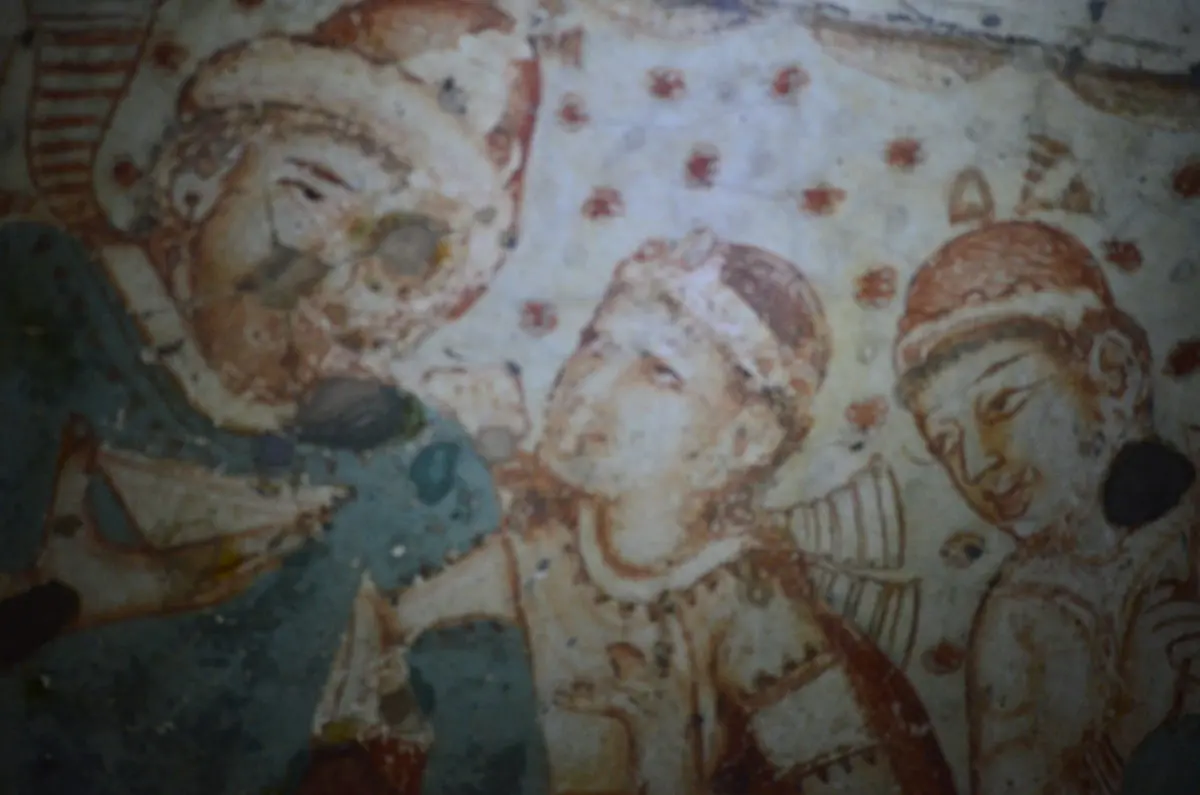
Mahavira worked at the court of Amoghavarsha I, the Rashtrakuta king who ruled from Manyakheta in present-day Gulbarga district from 814 to 878 CE. Amoghavarsha was one of the most remarkable rulers in Indian history, a king who wrote poetry, patronised scholars across multiple traditions and is said to have offered his own hand as a sacrifice to the goddess Lakshmi to end a famine in his kingdom.
From 814 CE to 968 CE Manyakheta rose to prominence when the capital of the Rashtrakuta Empire was moved to Maanyakheta. Amoghavarsha, a Jain ruler, patronised several Jain scholars including the mathematician Mahaviracharya and intellectuals who contributed to the development of Kannada literature during his reign.
The Rashtrakuta dynasty was also the royal family responsible for the most significant phase of construction at the Ellora Caves, where the Kailashnath Temple carved from a single cliff face remains one of the most audacious architectural achievements in human history. The same dynasty that patronised Mahavira’s mathematical genius also commissioned the most extraordinary piece of rock-cut architecture ever created.
The mathematician and the architect were working within the same royal intellectual ecosystem, funded by the same patron and embedded in the same extraordinary cultural moment. Standing in the Kailashnath Temple at Ellora, understanding that the king who commissioned it also provided the institutional support for the first mathematics textbook in human history, transforms both experiences simultaneously.
Our Aurangabad tours cover both the Ellora Caves and the Ajanta Caves, giving international visitors the complete artistic legacy of the cultural tradition that Mahavira inhabited. Plan your Rashtrakuta heritage experience with 5 Senses Tours and stand in the Kailashnath Temple knowing that the king who built it was also the patron of the mathematician who wrote the first textbook in human history devoted entirely to mathematics.
Ancient Karnataka Mathematician 3: Kumudendu Muni and the 9th-Century Cryptographic Code That Has Still Not Been Fully Broken
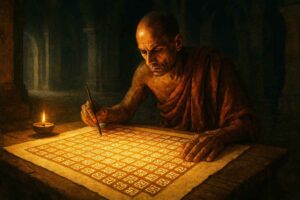
Who Was Kumudendu Muni and What Is the Siribhoovalaya
Kumudendu Muni is the most extraordinary and the most completely unknown of the four ancient Karnataka mathematicians in this heritage trail. He was a Jain Digambara monk who lived in Karnataka around 840 CE, a contemporary of Mahavira at the court of Amoghavarsha. And he wrote something so unusual, so technically ambitious and so intellectually extraordinary that it has no parallel in world literature.
Kumudendu Muni was a Jain Digambar monk and polymath from Karnataka India. He is traditionally credited with the authorship of the Siribhoovalaya, a literary and scientific work written entirely in Kannada numerals. This work is believed to encode content across multiple Indian languages, disciplines and philosophical systems using intricate mathematical grids and cipher techniques. The Siribhoovalaya is believed to contain valuable information about a wide range of subjects including mathematics, chemistry, physics, metallurgy, astronomy, medicine, history and even space travel.
The Siribhoovalaya is a book written entirely in numbers.
Not a book that uses numbers. Not a book that discusses numbers. A book in which every single character is a numeral. Not a letter of the Kannada script or any other script appears anywhere in the work. It is composed entirely in Kannada numerals arranged in 27 by 27 matrices called chakras and the text of the work, the actual literary and scientific content, is hidden within those numerical matrices using cipher keys that Kumudendu Muni encoded in the structure of the work itself.
The work is said to have around 600,000 verses, nearly 6 times as big as the ancient Indian epic Mahabharata. In total there are 26 chapters constituting a very large volume of text of which only three have been decoded.
Six hundred thousand verses. Six times the length of the Mahabharata. Written entirely in numbers. In a 9th-century Karnataka monastery. And after a thousand years of existence, only three of the twenty-six chapters have been decoded.
The Cryptographic System of Kumudendu Muni: Ancient Karnataka’s Block Cipher
The technical details of Kumudendu Muni’s cryptographic system, when examined by modern computer scientists and cryptographers, produce a response that ranges from impressed to frankly astonished.
There are many distinctive features of this unique creation but in this presentation focus is on the cryptographic constituents which are strikingly similar to ones used in modern applications of cryptography in information security. One can noticeably observe creative deployment of substitution and transposition ciphers in chakras of this epic. Built upon notions of matrices these are mathematical applications of combinatorics and permutations. A generalised version of this mechanism in modern terminology has been proposed as KES or Kumudendu Encryption System which can measure up to a versatile and robust block cipher as compared to existing ones.
Substitution ciphers. Transposition ciphers. Matrix-based encoding. Combinatorics and permutations deployed in a systematic cryptographic framework. These are the foundational techniques of modern digital encryption. The AES encryption system that protects your bank transactions, your messages and your online purchases uses block cipher techniques that are structurally related to the mathematical principles Kumudendu Muni was applying in his 27 by 27 chakra matrices in 9th-century Karnataka.
The work is unique as it does not use alphabets but is composed entirely in Kannada numerics called Anka lipi. Totally there are 26 chapters in big volumes of which only three have been decoded. This method of writing and coding represents 18 scripts and over 700 languages.
Eighteen scripts. Over 700 languages. All encoded within a numerical matrix system written by a Jain monk in Karnataka around 840 CE.
The most celebrated cryptographic achievements of the ancient world, the Caesar cipher of Rome, the Vigenere cipher of Renaissance Europe, the Enigma machine of the 20th century, are all technically simpler than what Kumudendu Muni constructed in the Siribhoovalaya. The work has been at the National Archives of India since it was rediscovered in the early 20th century. The decoding effort continues. The vast majority of its content remains locked inside the numerical matrices of a monk who died in ancient Karnataka over a thousand years ago.
The Siribhoovalaya is preserved at the National Archives of India. The decoding effort is ongoing. And the Rashtrakuta Karnataka where Kumudendu Muni created it is still visitable through the Ellora Caves whose Kailashnath Temple was commissioned by the same king who supported this extraordinary cryptographic tradition. Experience the Rashtrakuta world with 5 Senses Tours.
Ancient Karnataka Mathematician 4: Bhaskara II and the Calculus Europe Did Not Discover for Five Hundred More Years
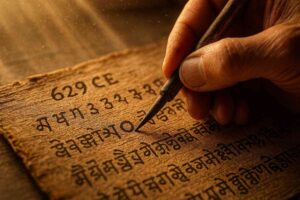
Who Was Bhaskara II and Why Is He Called the Greatest Mathematician of Medieval India
Bhaskara II was born in Saka 1036 AD 1114 in Biddur Bijapur Karnataka India. He has been called the greatest mathematician of medieval India.
He represented the peaks of mathematical knowledge in the 12th century and was the head of the astronomical observatory at Ujjain the leading mathematical centre of ancient India.
Bhaskara II, also known as Bhaskaracharya or Bhaskara the Teacher, was born in Bijapur in Karnataka in 1114 CE and died around 1185 CE. He grew up learning mathematics from his father Mahesvara, himself a celebrated astrologer and mathematician, and reached a level of mathematical sophistication that his contemporaries in Europe would not match for several more centuries.
His principal work the Siddhanta Shiromani, completed in 1150 CE, is divided into four parts. These four sections deal with arithmetic, algebra, mathematics of the planets and spheres respectively. Together they constitute the most comprehensive mathematical and astronomical treatise produced anywhere in the world in the 12th century.
Bhaskara II and Calculus: The Discovery Europe Made Five Centuries Later
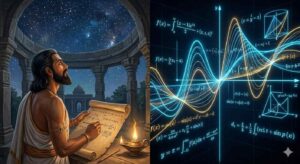 The most extraordinary claim about Bhaskara II is also the most verifiable. He demonstrated concepts that are foundational to differential calculus five centuries before Isaac Newton and Gottfried Leibniz developed calculus in Europe in the 17th century.
In many ways Bhaskaracharya represents the peak of mathematical knowledge in the 12th century. He reached an understanding of the number systems and solving equations which was not to be achieved in Europe for several centuries.
In his astronomical work within the Siddhanta Shiromani, Bhaskara II used what mathematicians now recognise as the concept of the derivative to solve problems involving instantaneous velocity and the rate of change of planetary positions. He described the concept of a function approaching a limit. He applied what are effectively differential calculus techniques to problems in spherical geometry and planetary motion.
His contributions to this topic are particularly important since the rules he gives are the same as those given by the Renaissance European mathematicians of the 17th century yet his work was of the 12th century.
The rules he gives are the same as those given by the Renaissance European mathematicians of the 17th century. Five hundred years earlier. In a text written in Bijapur in Karnataka.
5 Senses Tours takes international travellers to Bijapur, the birthplace of the mathematician who described calculus five centuries before Europe. Our expert cultural guides bring the complete story of Bhaskara II to life at the physical landscape where he was born. If this story has moved you, the place that produced it is accessible as part of our Deccan heritage circuit. Plan your Bijapur heritage visit with 5 Senses Tours.
Bhaskara II, Division by Zero and the Concept of Infinity
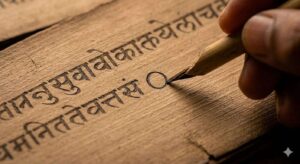
Bhaskara II was the first to gain some understanding of the meaning of division by zero for he specifically stated that the value of 3/0 is an infinite quantity.
Division by zero is the mathematical operation that brings most calculation systems to a halt. Modern computers return an error when asked to divide by zero. The question of what happens when you divide a finite quantity by nothing is philosophically profound and mathematically challenging.
Bhaskara II looked at the problem directly and stated that dividing any number by zero produces infinity. This is the conceptually correct answer in the mathematical framework of limits and calculus. When a denominator approaches zero, the result approaches infinity. Bhaskara II stated this nine hundred years before the mathematics of limits was formally developed.
His understanding of the relationship between zero, infinity and finite quantities anticipates concepts that were not formalised in European mathematics until Cantor’s work on transfinite numbers in the 19th century.
Lilavati: The Mathematical Masterpiece Named After a Woman

The Lilavati, the arithmetic section of the Siddhanta Shiromani, is one of the most beloved mathematical texts in Indian history and the source of one of the most poignant stories in the history of mathematics.
Bhaskara II used letters to represent unknown quantities much as in modern algebra and solved indeterminate equations of 1st and 2nd degrees. He reduced quadratic equations to a single type and solved them and investigated regular polygons up to those having 384 sides thus obtaining a good approximate value of π equal to 3.141666.
The legend holds that Lilavati was Bhaskara II’s daughter, whose horoscope predicted she would never marry. Bhaskara II determined an auspicious time for her wedding and set a water clock to mark the moment. But Lilavati, curious about the clock, leaned over to examine it and a pearl from her nose ring fell in, stopping the water flow. The auspicious moment passed unmarked. The marriage never happened.
To console his daughter and to immortalise her name, Bhaskara II wrote the most accessible and the most beautiful of his mathematical works in her name, addressing many of its problems directly to her. Lilavati, meaning The Beautiful, became the most widely read mathematical textbook in India for centuries after its composition and one of the most celebrated examples in any language of mathematics presented not as a set of rules to be memorised but as a form of intellectual play to be enjoyed.
Bhaskara’s arithmetic text Lilavati covers the topics of definitions, arithmetical terms, interest computation, arithmetical and geometrical progressions, plane geometry, solid geometry, the shadow of the gnomon, methods to solve indeterminate equations and combinations.
A mathematician from Bijapur in Karnataka named a textbook after his daughter and wrote it as if speaking directly to her. That textbook was the most advanced mathematics available anywhere in the world in the 12th century. It described calculus concepts five hundred years before Europe. And it is still in print today.
Experience the Ancient Karnataka Mathematicians Heritage Trail With 5 Senses Tours

The ancient Karnataka mathematicians heritage trail is not an abstract intellectual journey. It is a physical landscape you can walk through, touch and inhabit. The cave temples of Badami were carved from the same red sandstone hills that overlooked the Chalukya kingdom whose cultural successors patronised Mahavira, the mathematician who wrote the first textbook in human history devoted entirely to mathematics. The ruins of Hampi represent the Vijayanagar empire that inherited and celebrated the same intellectual traditions. Aihole, where more than a hundred stone temples have stood since the 5th century, was the architectural laboratory of the very dynasty whose royal courts created the conditions for Karnataka’s extraordinary mathematical flowering.
Our 8 Day Best of Karnataka Private Tour covers Bangalore, Mysore, Belur and Halebid, Hampi, Badami, Aihole, Pattadakal and Chitradurga. Every site on this itinerary carries the fingerprints of the same royal courts, the same philosophical traditions and the same civilisational confidence that produced Bhaskara I’s circle for zero, Mahavira’s first mathematics textbook, Kumudendu Muni’s undecoded cryptographic masterpiece and Bhaskara II’s calculus five centuries before Newton.
This is not sightseeing. This is walking through the world that changed the history of human thought.
The tour is private, expert guided and completely customised for your group. Pick up and drop from your Bangalore hotel is included. Our guides are trained specifically to bring the complete intellectual, scientific and cultural story of Karnataka’s ancient civilisation to life at the physical sites where it happened.
5 Senses Tours is recognised by India’s Ministry of Tourism, winner of the Tripadvisor Travellers Choice Award and the Outlook Responsible Tourism Award. We have been guiding international travellers from the USA, UK, Australia and beyond through India’s most extraordinary heritage destinations for over a decade.
Talk to us about your Karnataka heritage experience. Every journey we create is private, personalised and built around your specific interests, travel dates and time available.
Leave a Reply