
If India were a person, it would be the rare soul who still performs a morning ritual at the temple — and then checks stock prices on a smartphone before breakfast. It’s a land where the sacred and the scientific don’t merely coexist; they dance in rhythm.
Welcome to India 2.0, a living paradox where 5,000 years of civilization plugs into the digital age, and tradition meets technology in dazzling harmony.
The Pulse of Progress — A New Kind of India

For centuries, India has been a storyteller of continuity — where change happens slowly, like the turning of a massive wheel. But today, that wheel is spinning fast. The country has become the world’s fastest-growing digital economy, yet it’s also home to over 40 UNESCO World Heritage Sites.
Foreign travelers often expect to find relics of the past — and they do. But they also discover something unexpected: India’s ancient rhythm humming inside its modern heartbeat.
A street vendor in Delhi scans payments through QR codes beside a Mughal-era gateway. In Varanasi, centuries-old chants echo as drones film the evening aarti for livestreams worldwide. The contrasts aren’t contradictions — they’re clues to India’s genius for adaptation.
Smart Heritage — Where Temples Meet Technology

The age-old stones of India’s monuments are whispering new stories through digital tools.
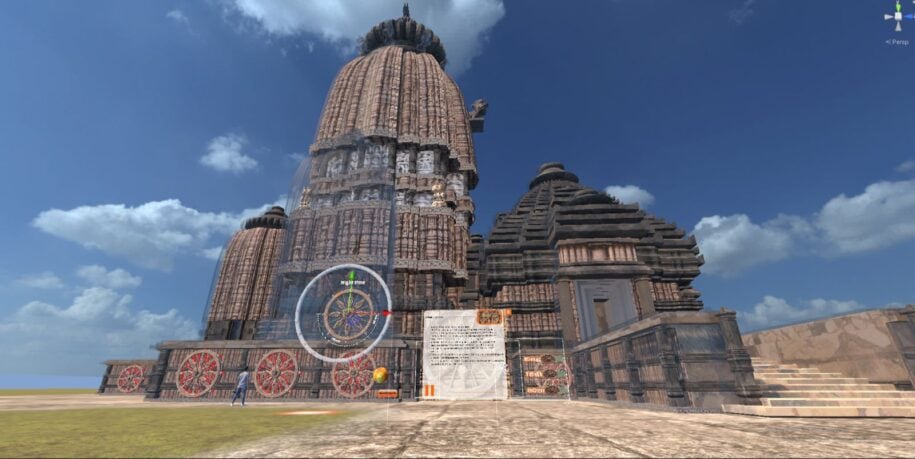
In Hampi, visitors can slip on AR headsets and see how palaces once looked before time wore them down. In Delhi’s Red Fort, holographic recreations of Mughal courts come alive. Archaeologists now use drones and AI-driven mapping to digitally preserve the delicate carvings of the Ajanta Caves — an astonishing merger of art and algorithm.
This isn’t just about preservation. It’s about participation. Technology invites travelers to experience history as an unfolding drama rather than a silent ruin. It’s the difference between watching a story and walking inside it.
Craft Meets Code — The Artisan’s Digital Renaissance

India’s craft villages are buzzing with Wi-Fi signals and creativity.
In Banaras, weavers who once worked in near anonymity now display their silk saris on Instagram, selling to clients in Paris and Tokyo. In Kutch, artisans digitize traditional embroidery motifs to design textiles that blend local heritage with global fashion. Even tribal artists from Madhya Pradesh have turned their Gond paintings into NFTs, selling digital art rooted in centuries-old folklore.
Technology hasn’t erased the handmade; it’s given it a megaphone. Every purchase online carries the fingerprint of a tradition — and a story that travels farther than any trader from the ancient Silk Route could have dreamed.
Green Tech, Old Wisdom — India’s Sustainable Revolution

For all its modern innovation, India’s sustainability movement draws strength from ancient ecological intelligence.
In Ladakh, solar-powered homestays are built with mud and stone — the same materials used for centuries, now optimized with smart insulation. In Meghalaya, bamboo, once the “poor man’s timber,” is used in state-of-the-art green architecture. Ayurvedic wellness resorts use AI diagnostics to personalize centuries-old healing therapies.
Modern science is finally catching up to what Indian traditions long knew: that sustainability is not a trend, but a way of life. UNESCO even recognizes India’s “traditional ecological knowledge systems” as vital to achieving the world’s Sustainable Development Goals.
The Traveler’s Playground — Experiences of Fusion
This blend of old and new creates thrilling experiences for the modern traveler.
In Kochi, heritage hackathons bring together designers, coders, and historians to reimagine museum storytelling. In Kutch, you can learn embroidery from local women — then digitize your design into a piece of wearable art. In Chennai, the Carnatic music festival now streams live in 4K, allowing global audiences to join virtually while local rasikas (connoisseurs) still attend in person.
These are not just attractions — they are collaborations between eras. Each encounter becomes an education in how tradition reinvents itself.
Where the Future Still Wears a Bindi

What makes India mesmerizing isn’t its ability to preserve the past like a museum artifact — it’s the way it continually reinvents that past to fit the present. The same land that invented zero now teaches coding to millions; the same philosophy that spoke of cosmic unity now finds expression in quantum physics.
For travelers, India 2.0 offers something rare: a glimpse of a civilization that is both ancient and alert, spiritual and scientific, timeless and trending. It’s a journey into a country that’s not just keeping up with the world — it’s quietly teaching the world how to connect meaning with modernity.
And somewhere between a temple bell and a touchscreen, you realize: the future has always been at home here.
Leave a Reply