
The forest is quiet.
Not the polite quiet of a library or the muffled quiet of a hotel corridor. This is Himalayan quiet — the kind where wind moves slowly through tall sal trees and the distant roar of the Ganges hums like a low, ancient chant.
Somewhere along these forest paths, more than half a century ago, four young men who had changed global music sat cross-legged in meditation huts, trying to quiet their minds.
Those men were the members of The Beatles.
And the place was the now-legendary Beatles Ashram in Rishikesh.
What happened here in 1968 became one of the strangest and most fascinating encounters between Western pop culture and ancient Indian spirituality. The story transformed Rishikesh into a global destination for seekers, musicians, and curious travelers.
Today, visitors can walk the same forest trails, step inside the meditation huts, and experience a place where creativity, philosophy, and Himalayan nature collided in unforgettable ways.
For a guided tour of Rishikesh, including the Beatles Ashram, visit 2 Days Tour of Rishikesh & Haridwar.
Why Rishikesh Has Attracted Spiritual Seekers for Centuries
Long before musicians arrived, Rishikesh had already built a reputation as one of India’s most sacred spiritual landscapes.
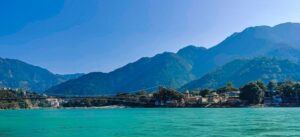
The town sits along the upper stretches of the Ganges River, where the river first emerges from the Himalayas and flows into the plains of northern India. In Hindu philosophy, this region is believed to carry immense spiritual energy, and ancient scriptures frequently mention sages meditating here.
The environment plays a surprising role in this reputation.
Modern psychological research has shown that natural environments can significantly reduce stress hormones and improve cognitive clarity. Studies in environmental psychology describe forests, rivers, and mountains as “restorative environments” that help the brain recover from mental fatigue.
Rishikesh has all three.
Dense Himalayan forests surround the town, the Ganges flows with constant energy, and the mountains form a dramatic natural amphitheater. The result is an atmosphere that encourages stillness and reflection.
It was precisely this environment that attracted one of the most famous bands in the world.
When the Beatles Arrived in Rishikesh
In February 1968, the four members of the Beatles — John Lennon, Paul McCartney, George Harrison, and Ringo Starr — arrived in India.
At the height of global fame, they had sold millions of records and redefined modern music. Yet they were increasingly interested in spirituality and meditation.
Their journey to India was inspired by the teachings of Maharishi Mahesh Yogi, who had introduced them to Transcendental Meditation, a practice designed to calm the mind through silent mantra repetition.
The Maharishi invited them to study meditation at his secluded ashram in Rishikesh.
So the band traded screaming stadiums for Himalayan forests.
It must have felt like stepping into another universe.
The Beatles Ashram: Chaurasi Kutia
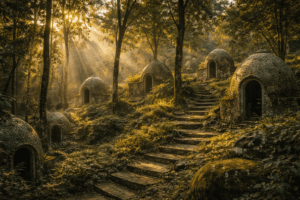
The meditation center where the Beatles stayed was known locally as Chaurasi Kutia, meaning “84 huts.”
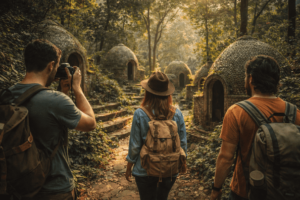
These small domed structures were designed as individual meditation spaces where students could practice in quiet isolation. The complex also contained residential cottages, lecture halls, and forest trails overlooking the Ganges valley.
Today the site is known worldwide as the Beatles Ashram.
Walking through it feels less like visiting a monument and more like discovering a hidden archaeological site from the 1960s counterculture movement.
Stone pathways wind through forest vegetation.
Meditation huts appear unexpectedly among trees.
Bird calls echo across the hills.
The place has the feeling of a quiet experiment in human consciousness.
A Burst of Creativity in the Himalayan Foothills

Something remarkable happened during the Beatles’ stay in Rishikesh.
Freed from relentless touring schedules and surrounded by nature, the band began writing music at an astonishing pace. During their time at the ashram they composed dozens of songs, many of which later appeared on their famous 1968 double album, The White Album.
Songs linked to this creative period include:
Dear Prudence
Mother Nature’s Son
Blackbird
Sexy Sadie
Creativity researchers often note that relaxed mental states encourage idea generation. Neuroscientific studies show meditation can alter activity in the brain’s default mode network, a system associated with imagination, memory, and creative thinking.
In simpler terms, meditation sometimes allows ideas to flow more freely.
For the Beatles, the quiet forests of Rishikesh became an unexpected creative laboratory.
Life Inside the Ashram
Despite its remote setting, the ashram was surprisingly comfortable.
The Beatles stayed in private cottages equipped with basic amenities, and their days followed a gentle rhythm that mixed meditation with leisure.
Morning meditation sessions began early.
Vegetarian meals were served communally.
Lectures on philosophy were delivered by the Maharishi.
Afternoons often included long walks through the forest or music sessions among the guests.
The retreat attracted a curious mix of international visitors, including actress Mia Farrow and musician Donovan.
The atmosphere reportedly felt part monastery, part creative commune.
One could easily imagine guitars being passed around under the trees while someone nearby practiced meditation.
The Unexpected End of the Beatles’ Stay
The Beatles’ time in Rishikesh lasted several weeks before tensions and disagreements emerged.
Rumors circulated about the guru and the internal atmosphere of the retreat, and gradually the band members left India earlier than expected.
The departure was abrupt, but the cultural impact remained enormous.
Music historians often point to this moment as a turning point in Western awareness of meditation and Eastern philosophy. Interest in yoga, mindfulness, and spiritual travel expanded dramatically in the decades that followed.
Rishikesh became globally associated with yoga and meditation.
And the Beatles had played a surprising role in that transformation.
When the Ashram Fell Silent
After the Maharishi’s lease on the land expired in the early 1980s, the ashram slowly faded into abandonment.
For years the buildings sat empty inside the forest.
Trees grew through walls.
Leaves covered meditation halls.
Curious travelers occasionally climbed over broken fences to explore the ruins, but the place largely disappeared from public attention.
Nature was quietly reclaiming the experiment.
The Beatles Ashram Today
In 2015, the forest department reopened the site as a heritage attraction within the nearby national park region.
Today, visitors can wander through the remains of the ashram and see:
The famous 84 meditation huts
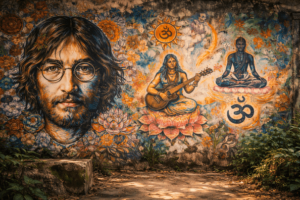
The large meditation hall covered in murals
Forest trails overlooking the Ganges valley
Residences once used by the Maharishi and his students
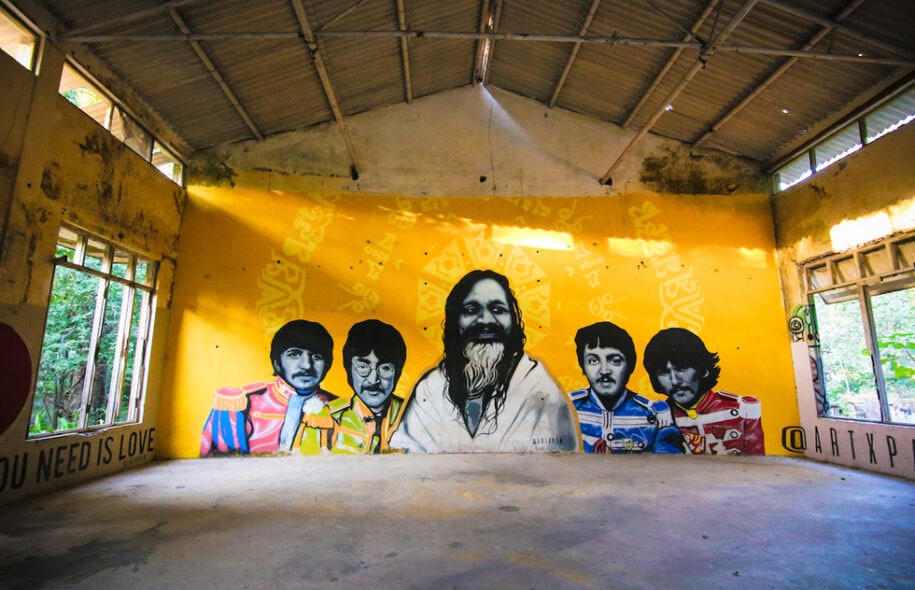
Modern artists have transformed many walls into colorful murals celebrating the Beatles and the spirit of the 1960s.
Portraits of Lennon and psychedelic symbols mix with Sanskrit mantras and spiritual imagery.
The result feels like a strange open-air museum where music, art, and philosophy share the same walls.
What Visiting the Beatles Ashram Feels Like
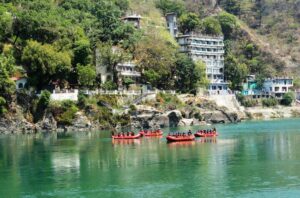
Most visitors approach the ashram from the area near Ram Jhula, crossing one of the famous suspension bridges over the Ganges.
The bustling streets of Rishikesh slowly fade as forest paths begin.
Soon the entrance appears.
Inside the gates, the atmosphere changes instantly.
The jungle grows thicker.
The sound of traffic disappears.
Stone meditation huts begin appearing among trees like forgotten relics.
The large meditation hall stands silent except for birds and wind.
Standing there, many travelers experience a curious moment of reflection.
If the most famous musicians on Earth once came here seeking peace, perhaps there really is something about this place.
Experiencing Rishikesh Beyond the Beatles Ashram
A visit to the Beatles Ashram is only one chapter of a deeper Rishikesh experience.
The town offers a remarkable combination of spirituality, adventure, and Himalayan scenery.
Many travelers explore:
The iconic Lakshman Jhula bridge
Evening Ganga Aarti ceremonies at riverfront ashrams
Yoga and meditation sessions in traditional schools
White-water rafting on the Ganges
Forest walks along the Himalayan foothills
Few destinations in India combine nature, philosophy, and adventure so seamlessly.
Rishikesh is not merely a tourist stop.
It is a place that invites reflection.
Why the Beatles Ashram Still Draws Travelers From Around the World
The Beatles stayed in Rishikesh for only a short time.
Yet their visit permanently linked the town with a global story about creativity, spirituality, and cultural exchange.
Music lovers come here to stand where legendary songs were written.
Spiritual seekers come to meditate in the same forest silence.
Photographers come for the haunting beauty of jungle ruins covered in colorful art.
But perhaps the deeper attraction is harder to explain.
Some places simply carry stories in their atmosphere.
The Beatles Ashram is one of them.
Walking Into the Story Yourself
Travel writing sometimes exaggerates the magic of places.
Rishikesh does not need exaggeration.
The mountains are real.
The river is real.
The quiet forest where the Beatles once searched for inspiration still exists.
Walking through the meditation huts today feels less like visiting a historic monument and more like stepping into an unfinished story.
And somewhere between the trees, the Ganges, and the Himalayan air, travelers often discover the same feeling that drew musicians, sages, and seekers here for centuries.
Curiosity.
Rishikesh has always been a place where people arrive looking for something.
Sometimes they even find it.
For a guided tour of Rishikesh, including the Beatles Ashram, visit 2 Days Tour of Rishikesh & Haridwar.
For immersive culture walks in India, visit 5 Senses Walks.
Leave a Reply