
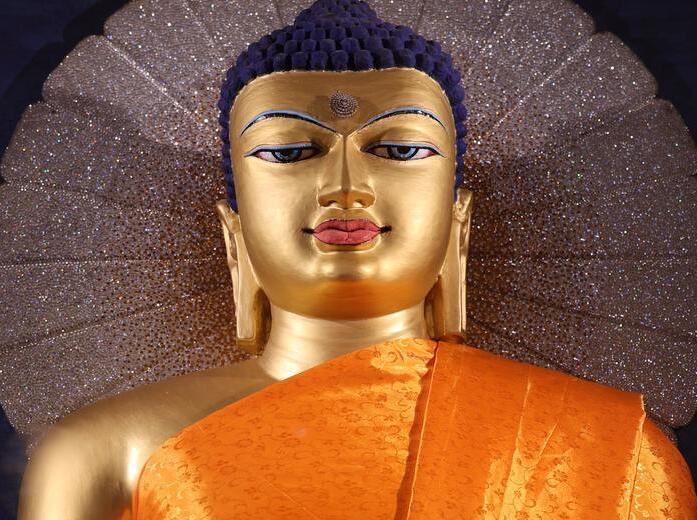
In the year 528 BCE, on the banks of the Niranjana River in what is now the state of Bihar in India, a prince from Nepal sat beneath a fig tree and refused to move until he understood the nature of suffering.
He sat for 49 days.
On the 49th day, in the early hours of the morning as the last star faded from the sky, Siddhartha Gautama attained enlightenment and became the Buddha. The Awakened One.
The fig tree still stands.
Not the same tree, but a direct descendant of the original Bodhi Tree, grown from a cutting taken by Emperor Ashoka’s daughter Sanghamitta when she carried Buddhism to Sri Lanka in the 3rd century BCE, returned to Bodhgaya as a sapling centuries later. The same species. The same sacred lineage. Standing in the same place where the most transformative moment in the history of Asian civilisation occurred.
Bodhgaya is the most sacred site in the Buddhist world. More sacred than Lumbini where the Buddha was born. More sacred than Sarnath where he first taught. More sacred than Kushinagar where he died. Because it is here, beneath this tree, beside this river, in this extraordinary small town in Bihar, that the teaching itself was born.
For Buddhist pilgrims from Japan, Thailand, Sri Lanka, Myanmar, Korea, China, Tibet and every corner of the Buddhist world, this is not simply a heritage destination. It is the source. Whatever path Buddhism took to reach each of these countries, wherever it was shaped and refined by centuries of local culture and devotional practice, it began here. In this town. Beneath this tree. On this ground.
For travellers from the West who may not be Buddhist themselves but who are drawn to the extraordinary human story at the heart of this place, Bodhgaya offers something equally powerful. A direct physical encounter with the origin point of one of the world’s great civilisational traditions, a tradition that shaped the art, philosophy, architecture and daily life of more than a billion people across the largest continent on earth.
This is your complete guide to the Bodhgaya Buddhist pilgrimage tour with 5 Senses Tours, covering the Mahabodhi Temple, the Bodhi Tree, the international monasteries, the sacred caves of Dungeshwari and the extraordinary extension to Rajgir and the ruins of Nalanda University that makes our tour unlike any other Bodhgaya experience available in India.
Bodhgaya Buddhist Pilgrimage Tour: Why This Is the Most Sacred Journey in the Buddhist World
The Buddha himself identified four places that every Buddhist should visit during their lifetime. Lumbini in Nepal where he was born. Bodhgaya in Bihar where he attained enlightenment. Sarnath near Varanasi where he gave his first teaching. And Kushinagar in Uttar Pradesh where he died.
Of these four sacred sites, Bodhgaya is the one that pilgrims return to again and again throughout their lives. Because Bodhgaya is not just one of the four. It is the pivotal moment. The hinge of history. The place without which there would be no Buddhism at all.
The Story of Prince Siddhartha and the Night That Changed the History of an Entire Continent
Prince Siddhartha Gautama was born into extraordinary privilege in Lumbini, in what is now southern Nepal, in approximately 563 BCE. His father, King Suddhodana, surrounded him with every pleasure and shielded him from every form of suffering. He grew up in palaces, was trained as a warrior, married a beautiful princess and fathered a son. By every measure available to his society he had everything.
And then, on a series of journeys outside the palace walls, he encountered an old man, a sick man, a corpse and a wandering ascetic. For the first time in his sheltered life he understood that old age, sickness and death are the universal conditions of human existence, inescapable by anyone regardless of wealth or power. The realisation shattered him.
At 29 he left his palace, his wife and his infant son in the middle of the night and began a search for the truth about suffering and its end. For six years he wandered, studying with the greatest meditation teachers of his era and eventually pushing the practice of physical austerity to its absolute limit, reducing himself to near starvation in the belief that transcendence of the body was the path to liberation.
It did not work.
He came to Bodhgaya, accepted a bowl of milk rice from a young village woman named Sujata, bathed in the Niranjana River and sat beneath a large fig tree on a cushion of grass. He made a vow not to rise until he had found what he was searching for. And after 49 days of unbroken meditation, as the morning star rose on the horizon, he found it.
The understanding that suffering arises from craving and that the cessation of craving is the path to liberation. The Four Noble Truths. The Eightfold Path. The complete philosophical and practical system that would become Buddhism and transform the civilisation of an entire continent and eventually reach every corner of the world.
The tree under which he sat is in Bodhgaya. The platform of stone on which he placed his cushion of grass, the Vajrasana or Diamond Throne, is still there. The Mahabodhi Temple that Emperor Ashoka built to mark the site in the 3rd century BCE, rebuilt and expanded over millennia, still stands above it. And the Niranjana River still flows nearby.
This is why people come to Bodhgaya. Not as tourists. As pilgrims.
How Buddhism Spread From This Small Town in Bihar to Every Corner of the World

The extraordinary global reach of Buddhism, now the religion of over half a billion people across Asia and a growing community worldwide, traces its entire lineage back to a single moment in Bodhgaya. Understanding how the teaching that originated here under this tree travelled to reach Japan, Thailand, Tibet, Sri Lanka, China, Korea, Vietnam and eventually the entire world gives the Bodhgaya Buddhist pilgrimage tour a historical and cultural depth that no other heritage destination in India can match.
Emperor Ashoka, who visited Bodhgaya in the 3rd century BCE and built the first permanent structure to mark the sacred site, was the single most important figure in the early spread of Buddhism. His missionaries carried the teaching to Sri Lanka, Central Asia, the Hellenistic world and Southeast Asia. His daughter Sanghamitta carried not just the teaching but a cutting of the original Bodhi Tree to Sri Lanka, establishing the lineage of sacred trees that connects the Bodhi Tree in Bodhgaya today to the original tree beneath which the Buddha sat.
From Sri Lanka Buddhism spread to Southeast Asia. From Central Asia and China it spread to Korea and Japan. From Tibet it spread across the Himalayas. From Thailand and Myanmar it spread throughout the Indochina peninsula. Every tradition that travelled these routes carries within it a direct lineage connection to this town in Bihar, to this tree, to this moment of awakening.
For a pilgrim visiting Bodhgaya, it is not only an immense feeling to pray and feel the inner peace at Mahabodhi Temple, but it is also a great opportunity and experience for travellers to go around Bodh Gaya and visit the different monasteries built by the countries of Japan, China, Bhutan, Thailand, Sri Lanka, Vietnam, Myanmar and Nepal. Each monastery reflects a different chapter in the extraordinary story of how Buddhism travelled from this spot to transform an entire continent.
Our Bodhgaya tours with 5 Senses Tours are designed to give every pilgrim and every culturally curious traveller the most complete, most deeply contextualised and most spiritually meaningful encounter with Bodhgaya and its surrounding sacred landscape available from any tour operator in India.
The Mahabodhi Temple Complex: The Heart of the Bodhgaya Buddhist Pilgrimage Tour
The Mahabodhi Temple complex marks the exact location of the Buddha’s enlightenment and is a UNESCO World Heritage Site of extraordinary significance. It attracts millions of Buddhist pilgrims annually from Thailand, Tibet, Japan, Sri Lanka, Myanmar and every Buddhist nation on earth. It is one of the oldest brick structures in India, its origins traceable to the great Emperor Ashoka who visited Bodhgaya in the 3rd century BCE and built the first permanent structure to mark the sacred site.
The Bodhi Tree and the Vajrasana: The Most Sacred Ground in the Buddhist World
The Bodhi Tree that stands in the Mahabodhi Temple complex today is a direct descendant of the original tree beneath which the Buddha attained enlightenment. The original tree was destroyed multiple times over the centuries and each time a cutting or descendant tree was replanted from the lineage tree in Sri Lanka. The current tree is ancient, enormous and immediately powerful in its presence.
Its branches spread over the Vajrasana, the stone platform that marks the exact spot where the Buddha sat during his 49-day meditation. The Vajrasana dates to the Ashokan period, making it one of the oldest surviving artefacts connected directly to the Buddha’s life. Sitting at the base of the Bodhi Tree in meditation, as pilgrims from every Buddhist nation do around the clock throughout the year, is the single most powerful experience available anywhere in the Buddhist world.
The atmosphere around the Bodhi Tree at dawn and at dusk is unlike anything available at any other heritage or spiritual site in India. Tibetan monks in burgundy robes perform prostrations on wooden boards. Japanese monks in white robes sit in perfect stillness. Thai monks in saffron recite the Pali suttas. Sri Lankan monks in orange carry flowers. Korean nuns in grey chant softly. The entire spectrum of Asian Buddhist tradition converges on this one spot in the most extraordinary display of living cultural and spiritual diversity available anywhere on earth. For any traveller regardless of their own religious background, the experience of sitting at the base of the Bodhi Tree and watching this extraordinary gathering of the world’s Buddhist traditions is profoundly moving.
The Mahabodhi Temple Tower: 1700 Years of Sacred Architecture
The towering pyramidal spire of the Mahabodhi Temple rises 52 metres above the surrounding landscape, visible from kilometres away across the flat Bihar plain. This extraordinary structure, built and rebuilt over seventeen centuries of continuous renovation and devotion, is the defining visual icon of Bodhgaya and one of the most recognisable religious buildings in Asia.
The temple’s architectural form, a tall pyramidal tower rising above a square sanctum housing the image of the Buddha in the earth-touching pose that commemorates the moment of enlightenment, established the template for Buddhist temple architecture across an enormous swathe of Asia. Temples in Thailand, Myanmar, Sri Lanka and Japan all carry the influence of this original design in their architectural vocabulary. Standing before the Mahabodhi Temple and understanding that every Buddhist temple you have ever seen in any Asian country carries within its design a reference to this original building is one of the most illuminating experiences the Bodhgaya Buddhist pilgrimage tour delivers.
The interior houses a golden image of the Buddha in the Bhumisparsha mudra, the earth-touching gesture in which the right hand reaches down to touch the ground as witness to the enlightenment. The devotional atmosphere of the interior sanctum, filled with the offerings of pilgrims from dozens of nations, creates an encounter with the living practice of Buddhism at its most diverse and most universally reverent.
The International Monasteries of Bodhgaya: The Entire Buddhist World in One Small Town
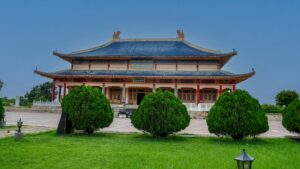
One of the most extraordinary and least anticipated aspects of a Bodhgaya Buddhist pilgrimage tour is the concentration of international Buddhist monasteries that have been built in and around the town over the past century. Each monastery has been built in a particular way so that it reflects the diverse Buddhist cultures of these regions and also their different architectural styles.
The Japanese Indosan Nippon Temple expresses the minimalist aesthetic of Japanese Buddhist architecture in its most refined form, its clean lines and peaceful courtyards creating a space of extraordinary tranquillity. This temple symbolises friendship between India and Japan and its tranquil setting invites quiet reflection. The Thai monastery brings the ornate golden spires and elaborate mirror mosaic decoration of Bangkok’s greatest temples to the Bihar countryside. The Tibetan monastery recreates the mandala architecture of the great Himalayan monasteries. The Bhutanese monastery expresses the fortress-like form of dzong architecture. The Chinese, Sri Lankan, Vietnamese, Burmese and Korean monasteries each bring their own completely distinct national Buddhist aesthetic to this single sacred landscape.
Walking through Bodhgaya and visiting these monasteries is an experience unlike anything available anywhere else in India or the world. Within the space of a short walk you move from one Asian country’s spiritual aesthetic to another, encountering completely different artistic traditions, liturgical languages, architectural vocabularies and devotional practices, all centred on the same source, the same teaching, the same enlightened mind that sat beneath a fig tree two and a half thousand years ago.
For Western travellers who may be encountering Asian Buddhist traditions for the first time, the international monasteries of Bodhgaya offer an extraordinary and completely accessible introduction to the extraordinary diversity of the Buddhist world. For Buddhist pilgrims from any Asian country, the monasteries offer both the familiarity of their own tradition and the inspiring encounter with every other tradition that shares the same origin.
Our Bodhgaya tours include guided visits to the most significant international monasteries with cultural guides who explain the distinctive architectural and devotional traditions of each nation’s Buddhist expression and how they connect to the original teaching of the Buddha at this sacred site.
Beyond the Mahabodhi Temple: The Sacred Landscape Around Bodhgaya

The Dungeshwari Caves: Where the Buddha Practised Austerity Before His Enlightenment
Twelve kilometres from the Mahabodhi Temple, carved into a rocky hillside above a dry river valley, are the Dungeshwari Caves, also known as the Mahakala Caves. These are the caves where Siddhartha spent years practising extreme physical austerity before realising that self-mortification was not the path to liberation and descending to Bodhgaya for his final meditation.
A few kilometres drive from Bodhgaya will bring you face to face with the fascinating Dungeshwari Caves. The caves highlight the incidences from the life of Lord Buddha through amazing statues, stone carvings, paintings and graphics. The caves contain shrines maintained by both Buddhist and Hindu traditions, reflecting the extraordinary religious pluralism of the Bihar landscape. The hillside setting, the ancient rock formations and the knowledge that this is where the Buddha spent years of his spiritual search before arriving at Bodhgaya gives the Dungeshwari Caves a rawness and an emotional power that is completely different from the polished devotional atmosphere of the Mahabodhi Temple.
For pilgrims who want to understand the complete human story of Siddhartha’s journey to enlightenment, the Dungeshwari Caves are essential. They represent the years of searching, the wrong turns and the moment of realisation that preceded and made possible the enlightenment at Bodhgaya. They remind every visitor that the Buddha was not born enlightened. He found his way there through years of genuine struggle and honest inquiry.
The Great Buddha Statue: A Monument to Global Buddhist Unity

Standing at around 80 feet or 25 metres tall, the Great Buddha Statue is one of the most recognised attractions in the Buddhist pilgrimage city of Bodh Gaya. It was consecrated in 1989 with the Dalai Lama’s blessings on the grounds of the Daijokyo Buddhist Temple.
The Daijokyo Temple, which houses the Great Buddha Statue, was established by a Japanese Buddhist organisation as a gift to the global Buddhist community at Bodhgaya. The consecration of this statue by the Dalai Lama in 1989, one of the most revered figures in the Buddhist world regardless of tradition, gave it a significance that transcends any single national Buddhist tradition. The Great Buddha Statue is partially hollow and is said to contain some 20,000 bronze Buddhas.
The statue stands as a powerful symbol of what Bodhgaya uniquely represents: the one place on earth where every Buddhist tradition on earth, regardless of national origin, theological position or historical development, gathers in common reverence for the moment that gave rise to all of them.
Rajgir Tour: The Ancient City Where the Buddha Taught for Twelve Years
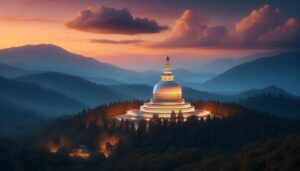
No Bodhgaya Buddhist pilgrimage tour is complete without extending to Rajgir, 70 kilometres north of Bodhgaya, where the Buddha spent twelve years teaching after his enlightenment.
Vulture’s Peak and the Veluvana Bamboo Grove: Where the Buddha’s Teaching Tradition Was Established
Rajgir, the ancient capital of the Magadha kingdom, was where the Buddha established his primary teaching tradition after the enlightenment. The king of Magadha, Bimbisara, became one of the Buddha’s most devoted lay supporters and offered him the Veluvana Bamboo Grove as a permanent residence and teaching ground. Here, surrounded by monks from across the subcontinent, the Buddha delivered some of his most important discourses.
The Gridhakuta Hill or Vulture’s Peak, rising above the ancient hot springs of Rajgir, is where the Buddha delivered the Heart Sutra and the Lotus Sutra, two of the most important texts in the entire Mahayana Buddhist tradition. These sutras are the foundational texts of several of the world’s most significant Buddhist schools and their significance extends across Japanese, Chinese, Korean, Tibetan and Vietnamese Buddhist traditions simultaneously.
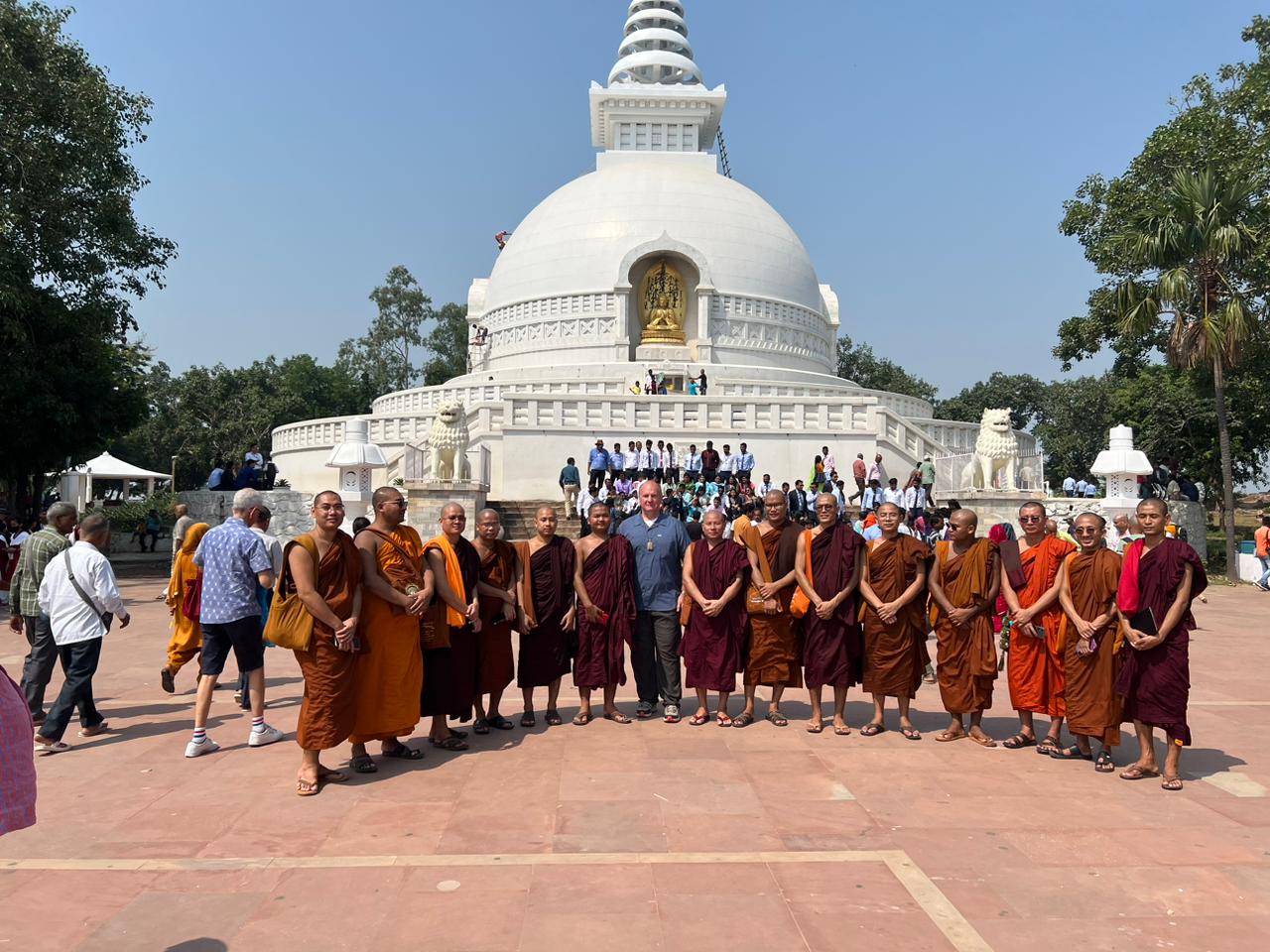
A ropeway cable car ascends the Gridhakuta Hill to the Japanese Shanti Stupa, a white peace pagoda built by the Japanese Buddhist organisation Nipponzan Myohoji and consecrated by the Dalai Lama. The stupa’s position at the top of the hill where the Buddha taught gives it an extraordinary spiritual authority. Built as a gift from Japan to the global Buddhist community, it stands as one of the most moving examples of how the tradition that originated in Bodhgaya continues to inspire acts of devotion and generosity across every cultural boundary. The views across the ancient landscape of the Magadha kingdom from its terrace create one of the most powerful experiences available anywhere on the Buddhist pilgrimage circuit in India.
The Ancient Walls of Magadha and the Hot Springs of Rajgir
The ancient cyclopean stone walls of Magadha, built using enormous rough-hewn boulders fitted together without mortar, surround the valley in which Rajgir sits and are among the oldest surviving urban fortifications in India. Walking along these walls with the knowledge that the Buddha walked in this same landscape creates a direct physical connection to the earliest history of Buddhism that no museum or documentary can replicate.
The hot springs of Rajgir have been considered sacred since before the Buddha’s time and continue to draw pilgrims and devotees from across Bihar and beyond. The Veluvana Bamboo Grove, the site of the Buddha’s primary monastery at Rajgir, is a peaceful park of exceptional tranquillity where the tank built by King Bimbisara is still visible and the atmosphere of a community of meditating monks persists in the quietness of the bamboo and the birdsong.
Our Bodhgaya tours include a full day in Rajgir with expert cultural guides who bring the complete story of the Buddha’s twelve years here to life in a way that transforms every site from a historical landmark into a living encounter with the origins of one of the world’s great spiritual traditions.
Nalanda Tour: The Greatest University the Ancient World Ever Built
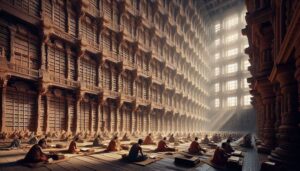
From Rajgir it is a short drive to Nalanda, the site of what was once the greatest university in the ancient world and one of the most important centres of Buddhist scholarship in history.
How Nalanda Transmitted Buddhist Knowledge Across the Entire Continent of Asia
Nalanda University was established in the 5th century CE and operated continuously for approximately 800 years until its destruction in 1193 CE. At its height it accommodated approximately 10,000 students and 2000 teachers from across Asia, offering courses in Buddhist philosophy, logic, grammar, medicine, astronomy and the complete intellectual curriculum of ancient Indian higher education.
The Chinese monk Xuanzang, who visited Nalanda in the 7th century CE and spent over a decade studying there, left detailed descriptions of the university’s extraordinary library, its residential colleges and the quality of its scholars. His accounts of Nalanda are among the most important historical documents about the ancient Buddhist world and his journey to India to study at Nalanda has become one of the great pilgrimage narratives of East Asian Buddhism. The intellectual tradition of Nalanda, its systematic philosophical scholarship and its commitment to debate and rational inquiry, shaped the development of Buddhist thought in China, Korea and Japan in ways that are still visible in those traditions today.
For every Buddhist pilgrim regardless of national origin, Nalanda carries the profound significance of a place where the teaching that originated at Bodhgaya was studied, systematised, debated and transmitted to the world with extraordinary rigour and devotion. For Western travellers interested in the history of knowledge and the extraordinary human achievement of ancient universities, Nalanda is one of the most moving heritage sites in India.
The ruins of Nalanda, excavated by the Archaeological Survey of India, reveal the foundations of multiple residential colleges, lecture halls, libraries and temples spread across a vast site that gives a vivid impression of the scale and ambition of the original institution. The Nalanda Archaeological Museum contains extraordinary sculptures and artefacts recovered from the site. The Nalanda Multimedia Museum provides an immersive reconstruction of the university at the height of its glory, giving visitors a powerful sense of what was lost when the library was burned, reportedly so vast that it burned for three months.
The New Nalanda University: An Ancient Vision Reborn
Adjacent to the ancient ruins, the new Nalanda University has been established in the 21st century as a revival of the ancient institution’s spirit of international Buddhist scholarship. The university accepts students from across Asia and beyond, recreating the cosmopolitan intellectual community that made the original Nalanda the most important centre of Buddhist learning in the world.
For pilgrims visiting the ruins of the ancient university, the new institution’s presence gives the experience a dimension of hope and continuity that transforms what might otherwise be a purely archaeological encounter into something more complex and more meaningful. The knowledge of what was lost here is profound. The knowledge that the tradition it served is alive and still flowering makes the visit to Nalanda a meditation on resilience as much as on loss.
Our Bodhgaya tours include a full guided visit to the Nalanda ruins and museum with expert cultural guides who explain the complete history of the university, its connection to the Buddha’s teaching at Rajgir and its extraordinary role in the transmission of Buddhism across Asia and ultimately to every Buddhist nation on earth.
Plan Your Bodhgaya Buddhist Pilgrimage Tour With 5 Senses Tours
The Complete Itinerary: Bodhgaya, Rajgir and Nalanda With 5 Senses Tours
Our Bodhgaya Buddhist pilgrimage tour is a private expert guided experience covering all three extraordinary destinations across two to three days depending on the depth of experience you want.
Day 1 covers Bodhgaya in full. The Mahabodhi Temple complex and the Bodhi Tree at dawn, the Vajrasana, a comprehensive tour of the most significant international monasteries from Japan, Thailand, Tibet, Bhutan, China, Sri Lanka and Myanmar, the Great Buddha Statue at the Daijokyo Temple, the Bodhi Sarovar and the extraordinary Dungeshwari Caves.
Day 2 covers Rajgir. The Veluvana Bamboo Grove where the Buddha established his primary monastery, the cable car ascent to Vulture’s Peak where some of the most important Buddhist sutras were delivered, the Shanti Stupa built as a gift from Japanese Buddhist monks to the global Buddhist community, the ancient hot springs and the cyclopean walls of the Magadha kingdom.
Day 3 covers Nalanda. The extraordinary ruins of the ancient university, the Nalanda Archaeological Museum and the Nalanda Multimedia Museum with its immersive reconstruction of the institution at the height of its extraordinary glory.
All three days are guided by expert cultural guides who have spent years understanding the Buddhist heritage of Bihar and who bring every site to life with the full depth of its historical, philosophical and spiritual significance for visitors of every background and tradition.
Best Time to Visit Bodhgaya
The best time to visit Bodh Gaya is between October and March when temperatures are coolest. However this is also the busiest time of year so expect crowds. April and May weather tends to be hot. If you can brave the high temperatures you’ll get to visit during key Buddhist festivals including Buddha Jayanti which commemorates the Buddha’s birthday and Bodhi Purnima which honours his enlightenment.
For the most comfortable visit with manageable crowds and the best weather conditions November to February is ideal, with December and January offering the coolest temperatures and the highest concentration of international pilgrims from across the Buddhist world creating the most extraordinary communal atmosphere at the Mahabodhi Temple complex.
Buddha Jayanti, which falls on the full moon day of the month of Vaisakh usually in May, is the most sacred day in the Bodhgaya calendar when pilgrims from across Asia gather in extraordinary numbers for all-night chanting and devotion. The atmosphere at the Mahabodhi Temple on this day is one of the most powerful spiritual experiences available anywhere in the world for pilgrims and non-pilgrims alike.
How to Reach Bodhgaya and Practical Information
Bodhgaya is accessible by air through Gaya International Airport, which operates direct flights from Colombo and Bangkok. For travellers from further afield the most practical routing is typically via Delhi, Kolkata or Patna with onward connections to Gaya. Located at a distance of 130km, Patna airport is another airport which is well connected to Mumbai, Delhi, Ranchi, Lucknow and Kolkata.
Our Bodhgaya tours include airport pickup from Gaya or Patna, all accommodation, private air-conditioned vehicle throughout, expert cultural guides for all three days and all entry fees. Everything is arranged so that you can focus entirely on the experience itself.
Extend Your Sacred Journey to the Complete Buddhist Circuit of India

Bodhgaya, Rajgir and Nalanda together form the most concentrated sacred landscape of the Buddhist world. But they are part of a wider pilgrimage circuit that encompasses all four of the sacred sites the Buddha himself identified as worthy of pilgrimage.
Our Varanasi tours include Sarnath, the Deer Park where the Buddha delivered his first teaching after the enlightenment at Bodhgaya, the location of the first turning of the wheel of Dharma where the Five Noble Truths were first spoken to the world. The atmosphere at Sarnath, where monks from across the Buddhist world gather in the Deer Park at dusk for chanting and meditation, creates an encounter with living Buddhist practice that is the perfect complement to the historical and archaeological depth of Bodhgaya.
Our Patna tours include Vaishali, where the Buddha delivered some of his most important later discourses and where the second Buddhist council was held after his death, and Pataliputra, the great capital of Emperor Ashoka whose extraordinary patronage of Buddhism transformed it from a regional spiritual movement into a civilisational force that changed the world.
For travellers wanting to complete the entire sacred circuit in a single journey, 5 Senses Tours can create a customised private itinerary covering Bodhgaya, Rajgir, Nalanda, Sarnath, Varanasi and Kushinagar in a comprehensive Buddhist pilgrimage of extraordinary depth and completeness that traces the complete geography of the Buddha’s life and teaching from enlightenment to final liberation.
Explore our complete portfolio of India heritage and pilgrimage tours and begin planning the most extraordinary journey of your life.
Book your Bodhgaya Buddhist pilgrimage tour with 5 Senses Tours today
Leave a Reply