
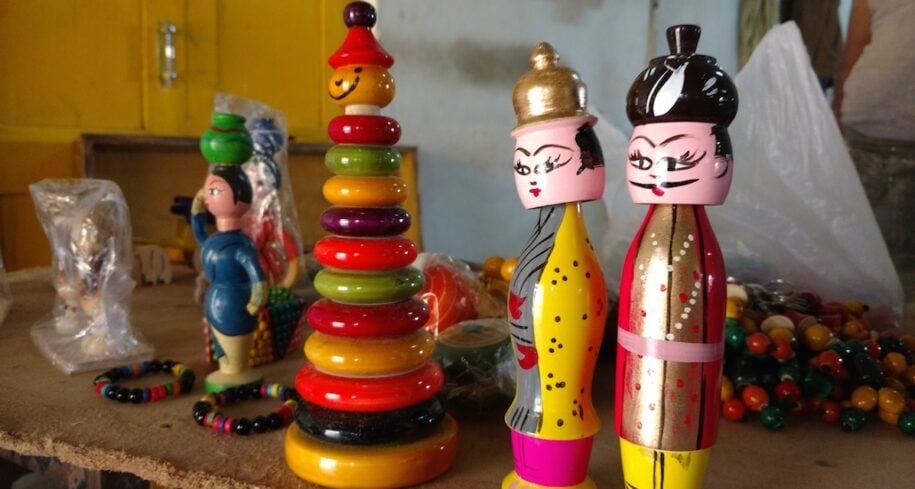
The toys have a story that begins with a king who was called the Tiger of Mysore.
In the last decade of the 18th century, Tipu Sultan, the most formidable military adversary the British East India Company ever faced in South India, looked at the small town of Channapatna 60 kilometres from his capital at Srirangapatna and made a decision that would outlast his empire, his wars and his death in battle by over two centuries.
He decided to make it the toy capital of India.
The toys date back to the time of Tipu Sultan, who had a stronghold over the Mysore region towards the end of the 18th century. Whether he brought Persian artisans to train local craftsmen in lacquerware or whether he created an international export market for toys that were already being made, the historical record is clear on one extraordinary fact. He encouraged Persian artists to buy these toys and the export of the toys was a great source of revenue for Tipu’s kingdom. He specifically created the Daria Daulat Bagh, which translates to water or overseas, money, park or meeting place, to hold meetings with overseas traders and strongly encouraged the export of indigenous products, largely Channapatna toys.
The Channapatna toys that Tipu Sultan helped make internationally famous are still being made in the same town. By the same families. Using the same ivory wood. The same vegetable dyes made from turmeric, spinach and beetroot. The same lathe technique where a craftsman presses a coloured lac stick against spinning wood and the friction of the motion melts the colour into the grain.
These toys were bought by the then US First Lady Michelle Obama during her visit to India in 2010 and were also gifted to the US President Barack Obama when he visited the country in January 2015.
From Tipu Sultan’s export market to the White House. In two centuries.
The Channapatna toys tour from Bangalore with 5 Senses Tours takes you inside the workshops where these extraordinary toys are still being made, into Asia’s largest silk cocoon auction market and through the Janapada Loka folk art museum that is one of the most surprising and most rewarding cultural experiences available on any day trip from Bangalore.
This is not a standard craft tour. It is an encounter with the living heritage of a craft tradition that a king built, a Japanese-trained artisan refined, an international market discovered and Michelle Obama made famous.
Channapatna Toys Tour From Bangalore: The Full Story Behind the World’s Most Historically Connected Wooden Toys
How Tipu Sultan Turned a Small Karnataka Town Into the Toy Capital of India
The story of Channapatna toys and dolls begins in the 18th century with Tipu Sultan, the ruler of Mysore. A keen admirer of art, particularly woodwork, Tipu Sultan invited Persian artisans to train local craftsmen in the art of lacquerware. This laid the foundation for Channapatna’s unique toy-making tradition which evolved with the incorporation of local aesthetic sensibilities.
The town of Channapatna sits on the old highway between Bangalore and Mysore, in the Ramanagara district of Karnataka that most travellers pass through without stopping. It is called Gombegala Ooru in Kannada. The Town of Toys. And it has earned this name through two and a half centuries of unbroken craft tradition that connects a 18th century king’s aesthetic passion to the hands of the 1500 artisan families who work in Channapatna today.
According to the seventh-generation descendant of Tipu Sultan, Tipu was a great innovator and his administrative innovation is still alive in the form of Channapatna toys. He encouraged the handicraft art by providing 25 to 30 acres of land where nearly 250 to 300 artisans worked. He took this decision in consultation with his administrator and minister Dewan Poorniah Pandit.
The decision to support Channapatna’s craft community was not sentiment. It was economics. Tipu Sultan’s kingdom needed export revenue. The toys were beautiful, durable, unique and completely unavailable anywhere else in the world. They were exactly the kind of product that international traders, Persian, Egyptian, Chinese and Turkish merchants who visited Srirangapatna, would carry home and sell at significant profit.
Tipu Sultan understood craft as economic policy. And the policy outlasted him by centuries.
The Japanese Connection: The Craftsman Who Travelled to Tokyo and Brought Back Secrets
The Channapatna story did not end with Tipu Sultan. It took a completely unexpected turn in 1904 when the Maharaja of Mysore made a decision as strategically brilliant in its own way as Tipu Sultan’s original patronage.
In 1904, it was the Maharaja of Mysore who sponsored Bavas Miyan, then a superintendent at the Government Industrial School in Channapatna, to travel to Japan. Bavas Miyan undertook trips to Japan to study its advanced lacquerware and toy-making techniques, with the specific aim of improving production efficiency and reducing the labor required for each toy.
A craftsman from a small Karnataka town, sponsored by a Maharaja, travelling to Japan at the beginning of the 20th century to study the most sophisticated lacquerware tradition in the world. The journey is so unlikely and so extraordinary that most accounts of Channapatna’s history mention it only in passing. But its consequences are visible in every Channapatna toy made today.
Afterwards, a man named Bavas Miyan introduced doll making as a part of Channapatna toys. His dolls were inspired by Japanese dolls. And to this day you can see these dolls occupying prominent space on the shelves of Channapatna shops.
The Channapatna doll with its rounded base that allows it to wobble without falling, so recognisable and so immediately appealing to children of every culture, is Bavas Miyan’s direct legacy. A Japanese design principle absorbed by a Karnataka craftsman and transformed into something that is now one of the most recognisable craft objects in India.
Tipu Sultan’s Persian connection. Bavas Miyan’s Japanese connection. Two extraordinary chapters of international cultural exchange, both flowing through a small town 60 kilometres from Bangalore, both visible in the toys you will hold in your hands on the Channapatna toys tour from Bangalore with 5 Senses Tours.
Michelle Obama, Barack Obama and the GI Tag: How Channapatna Toys Went Global
In 2006, the Channapatna toys and dolls were granted Geographical Indication tag by the government of India, protecting the rights of the artisans’ community. The GI tag, which places Channapatna toys in the same protected category as Darjeeling tea, Kanchipuram silk and Alphonso mangoes, was the formal international recognition of what Tipu Sultan had understood two centuries earlier. These toys are unique. They are irreplaceable. And they belong specifically to this town in Karnataka.
Four years after the GI tag, the toys reached the White House.
These toys were bought by the then US First Lady Michelle Obama during her visit to India in 2010 and were also gifted to the US President Barack Obama when he visited the country in January 2015.
The journey from Tipu Sultan’s export market to Barack Obama’s gift table took two and a quarter centuries. It passed through Bavas Miyan’s Japan trip, the Karnataka Handicrafts Development Corporation’s revival programmes, a near-death experience as Chinese plastic toys flooded the market, and the extraordinary resilience of the artisan families of Channapatna who kept making what they had always made because they did not know how to stop.
Our Channapatna toys tour from Bangalore takes you inside this extraordinary story and into the workshops where the next chapter is being written by the hands of craftsmen whose families have been part of it since Tipu Sultan first decided that this town should make toys for the world.
What You Will Experience on the Channapatna Toys Tour From Bangalore
Inside the Toy Workshop: Watching a 250-Year-Old Craft in Real Time
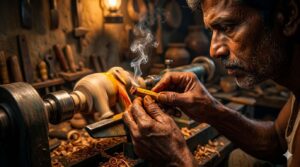
The first stop on the Channapatna toys tour is a working toy workshop where the complete process of Channapatna toy making unfolds in front of you in real time.
The eco-friendly toys and dolls of Channapatna are crafted from locally-grown hale wood, known for its softness and lightness, as the base material. The wood is spun on a lathe, a machine that makes it twirl. As it spins, skilled artisans press coloured lac sticks against it. The friction creates heat, melting the lac and coating the wood in vibrant hues, all derived from vegetal dyes. After the colourful transformation, the artisans use palm leaves to buff the toys to a beautiful shine.
Artisans used turmeric for yellow, spinach for green and beetroot for red.
The process is simultaneously ancient and extraordinarily satisfying to watch. The lathe spins. The craftsman’s hands move with a precision built over years of daily practice. The lac stick touches the spinning wood and the colour bleeds in instantly, creating a richness and depth that no paint or dye applied by brush can achieve. The friction does the work. The craftsman’s skill is in knowing exactly how much pressure, at exactly what angle, for exactly what duration.
Manufacturing stages include procuring the wood, seasoning the wood, cutting the wood into the desired shapes, pruning and carving the toys, applying the colours and finally polishing the finished product. Vegetable dyes are used in the colouring process to ensure that the toys and dolls are safe for use by children.
The environmental credentials of Channapatna toys are not a marketing addition. They are intrinsic to the craft. The vegetable dyes have been used since the beginning because they were available, affordable and produced colours of extraordinary warmth and subtlety. The ivory wood from managed forests is light, strong and workable at the lathe with a consistency that synthetic materials cannot replicate. The toys that result are chemical-free, edgeless, rounded and completely safe for children, characteristics that Tipu Sultan’s Persian and Egyptian market customers understood two centuries before anyone used the word sustainable to describe manufacturing.
Your 5 Senses Tours cultural guide explains every stage of the process with the full historical and cultural context that transforms watching a craftsman at work from an interesting experience into a genuinely moving encounter with a living tradition of extraordinary depth.
Asia’s Largest Silk Cocoon Auction: The Most Surprising Stop on Any Bangalore Day Trip

The second stop on the Channapatna toys tour from Bangalore is one of the most extraordinary and most completely unexpected experiences available on any day trip from the city.
Asia’s largest silk cocoon auction market operates near Channapatna with a frequency and a scale that makes it one of the most remarkable commercial spectacles in South India. Thousands of silk farmers from across the Ramanagara district arrive at the market with their cocoons, which are weighed, graded and auctioned in real time to silk reelers who will use them to produce the raw silk thread that eventually becomes the Mysore silk sarees and Bangalore silk garments that are sold across India and exported worldwide.
The scene at the auction is extraordinary. Mounds of golden cocoons piled on the auction floor. Farmers and buyers negotiating in rapid Kannada. The grading process that separates cocoons by quality with a speed and expertise that reflects generations of accumulated knowledge. The smell of fresh cocoons, warm and faintly sweet, filling the enormous auction hall.
This is not a tourist attraction. It is a working commercial market that happens to be available for visitors to observe because 5 Senses Tours has built relationships with the market authorities over years of responsible cultural tourism. The access it provides to a completely authentic slice of rural Karnataka’s economic life is the kind of experience that no standard Bangalore day trip itinerary includes. It is, for most international visitors, one of the most memorable hours of their entire India trip.
Our Channapatna toys tour from Bangalore includes the silk cocoon auction with a cultural guide who explains the complete sericulture story, from the mulberry leaves that feed the silkworms to the export market that makes Mysore silk one of India’s most valuable traditional craft products.
Janapada Loka: The Folk Art Museum That Completely Surprises Every Visitor
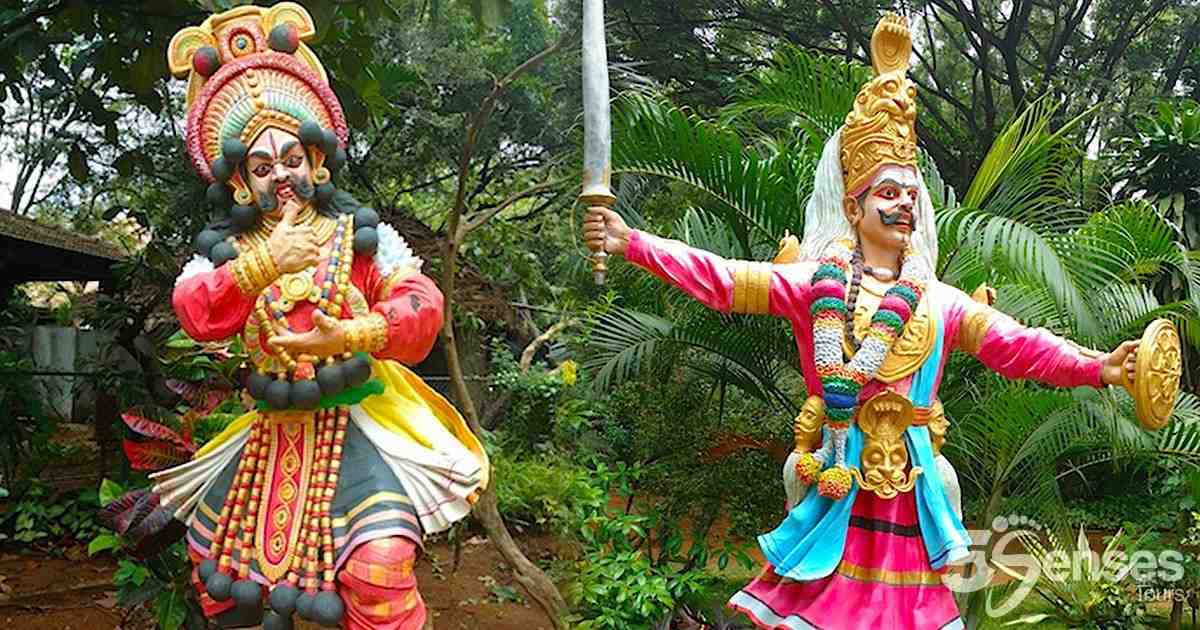
The third stop on the Channapatna toys tour from Bangalore is Janapada Loka, the Karnataka Janapada Trust’s extraordinary folk art and rural heritage museum located on the Bangalore-Mysore highway just outside Channapatna.
Janapada Loka is a centre for promoting village folk art of the State of Karnataka. It makes for a great cultural trip for kids and adults alike.
Janapada Loka is one of the most underappreciated cultural institutions in Karnataka. Its collection documents the full breadth of Karnataka’s rural folk traditions, from the extraordinary wooden sculptures and terracotta figurines of village shrines to the agricultural implements, textile traditions, musical instruments and performance arts of communities across the state. The folk theatre traditions. The ritual art forms. The craft traditions that exist only in specific villages and specific communities and that are documented here as a living archive of the cultural life that India’s rural communities have maintained for centuries.
The museum’s outdoor collection of larger sculptures and installations creates a unique landscape in which the folk artistic tradition of Karnataka is displayed in the natural light and open space that it was designed for rather than in the enclosed climate-controlled environment of a conventional museum. Walking through Janapada Loka is walking through the visual world of rural Karnataka across multiple centuries, guided by someone who understands what each object is doing and what community created it for what purpose.
For international travellers from the USA, UK and Australia who have seen India’s grand Mughal heritage and its ancient temple traditions, Janapada Loka offers something completely different and completely unexpected. The folk tradition. The village tradition. The tradition that is not in any UNESCO list but is arguably the most living, most continuously practiced and most deeply rooted artistic heritage India possesses.
The Big Banyan Tree: Nature’s Most Extraordinary Living Monument
The Channapatna toys tour from Bangalore also includes a visit to the Big Banyan Tree at Dodda Aalada Mara near Ramanagara, one of the largest single trees in Asia.
A single banyan tree whose aerial roots have grown down into the ground across an area of approximately three acres, creating a forest that is actually a single organism. The Big Banyan Tree is estimated to be over 400 years old. Its canopy covers an area so large that it was once used as a marketplace by the surrounding villages, its roots providing natural shade across a space large enough to accommodate hundreds of traders and buyers simultaneously.
Standing beneath the Big Banyan Tree and understanding that the entire forest of trunks and roots around you is a single living plant is one of those experiences that recalibrates your understanding of what nature is capable of. It requires no cultural knowledge and no historical context. It simply requires the willingness to stop and look at something extraordinary.
The tree is Karnataka’s most beloved natural landmark and one of the most photographed subjects in the entire region. For families and children visiting on the Channapatna toys tour from Bangalore it is often the moment the day becomes genuinely magical.
Why the Channapatna Toys Tour From Bangalore Matters Beyond Tourism

Responsible Tourism and the Channapatna Artisan Community
The Channapatna craft faced a genuine existential crisis at the turn of the 21st century. The lack of demand and a viable market for toys had this industry on the brink of closure. With no financial and marketing support, the toy industry faced a major crisis.
The combination of cheap Chinese plastic toys flooding the Indian market and the failure to develop new designs and new markets had reduced the Channapatna industry from its historical scale to a shadow of what it had been under Tipu Sultan’s patronage and the subsequent Maharaja’s support.
With the help of the Karnataka Handicrafts Development Corporation, the craft has been revived and the artisans involved are being trained on changing trends in the industry. Many new companies and social enterprises have been reviving the Channapatna craft to suit modern tastes.
Responsible cultural tourism is one of the most effective tools available for the long-term viability of craft traditions like Channapatna’s. Every visitor who comes to the workshop, watches the craftsman at work, understands the historical and cultural depth of what they are seeing and buys a toy or a craft object directly from the maker is contributing to an economic model that keeps the craft alive on its own terms rather than as a subsidised museum piece.
5 Senses Tours runs the Channapatna toys tour from Bangalore specifically because we believe that travel at its finest strengthens the communities it visits. Our guides are trained from and employed by the local communities. Our workshop visits are arranged in partnership with artisan cooperatives that ensure a fair proportion of the visitor spend reaches the craftspeople directly. And every toy purchased on the tour is a direct investment in the continuation of a tradition that Tipu Sultan started, Bavas Miyan refined and Michelle Obama put on the world stage.
What to Buy and How to Buy It Responsibly
The Channapatna toys tour from Bangalore includes time at the craft shops and cooperative outlets where you can purchase directly from the artisan community. Our cultural guide will help you understand what to look for in a genuine Channapatna toy, how to distinguish handmade from machine-made, what the different wood types and dye techniques produce in terms of quality and durability and which products represent the best value for the artisans who make them.
The result is a host of handcrafted treasures ranging from toys, bangles, boxes, fruit bowls, Christmas decorations, photo frames and jewellery stands to trays, coasters and lamp stands. T
The Channapatna toy makes one of the most thoughtful and most culturally meaningful souvenirs available anywhere in India. It is made from natural materials. It is completely safe for children. It carries a GI tag that certifies its authenticity and its geographic origin. And it carries the weight of a story that connects Tipu Sultan’s 18th century export market to Bavas Miyan’s Tokyo journey to Michelle Obama’s White House visit to the craftsman’s hands you watched at work a few hours earlier.
That is a story worth carrying home.
Plan Your Channapatna Toys Tour From Bangalore With 5 Senses Tours
What Is Included and How to Book
Our Channapatna toys tour from Bangalore is a private full-day experience from your Bangalore hotel that covers the complete Channapatna craft experience in a single extraordinary day.
The tour includes hotel pickup in a private air-conditioned vehicle, expert cultural guide throughout the day, the working toy workshop with complete craft demonstration, Asia’s largest silk cocoon auction market, Janapada Loka folk art museum and the Big Banyan Tree at Dodda Aalada Mara. All entry fees are included. Shopping time at the artisan cooperative shops is built into the itinerary.
The tour is designed specifically for international travellers from the USA, UK and Australia who want to go beyond the standard heritage circuit and encounter the living craft and folk traditions of Karnataka in the most authentic and most meaningful way available.
5 Senses Tours is recognised by India’s Ministry of Tourism and is a Tripadvisor Travellers Choice Award winner. Our Channapatna toys tour has consistently received five-star reviews from international visitors who describe it as one of the most memorable and most surprising experiences of their India trip.
Best Time to Visit and How to Combine With Mysore
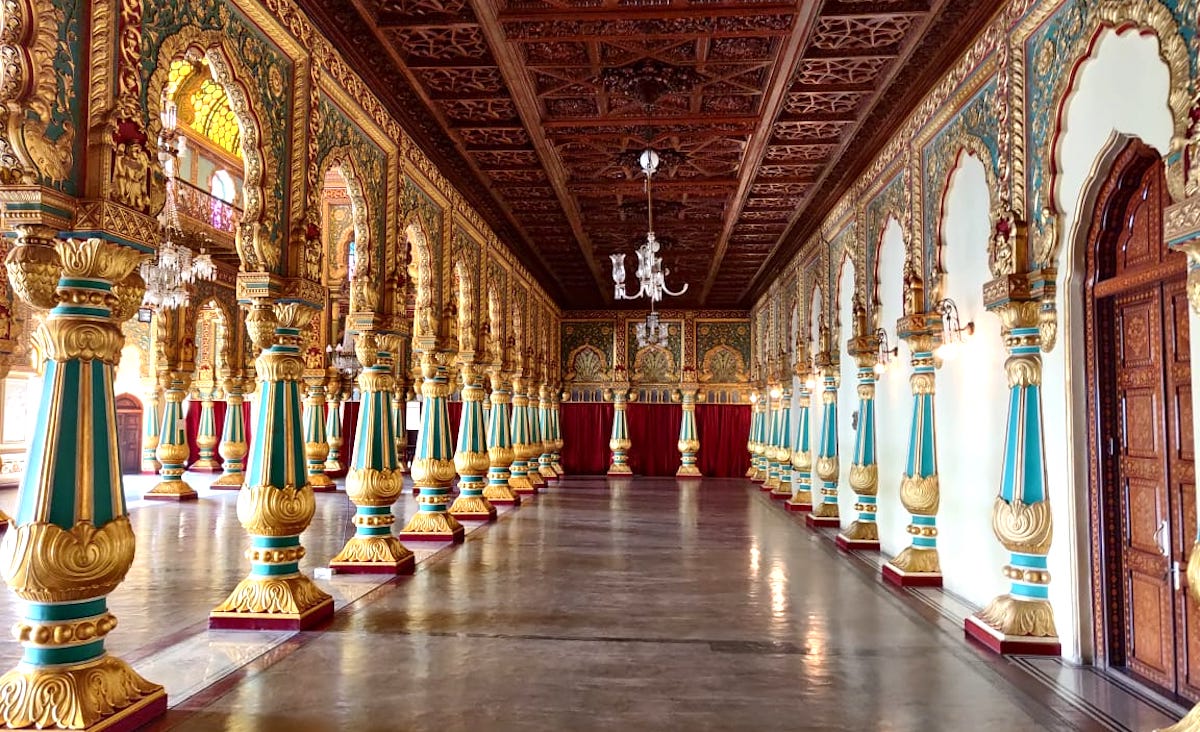
The Channapatna toys tour from Bangalore is available year-round and the craft workshops and folk art museum operate throughout the year regardless of season. The silk cocoon auction market is most active during the peak silk production seasons of February to May and September to November, when the highest volumes of cocoons arrive at the market and the auction atmosphere is at its most dramatic.
Channapatna sits directly on the Bangalore-Mysore highway, making it a natural addition to any Mysore itinerary. Our Mysore Silk Tour from Bangalore combines the Mysore Palace, Asia’s largest silk cocoon auction and the royal silk weaving factory in a single extraordinary day that connects the living craft traditions of the Mysore region directly to their royal heritage. The two tours together, Channapatna on one day and Mysore on another, create the most complete encounter with Karnataka’s extraordinary craft heritage available from Bangalore.
For travellers wanting to extend their Karnataka cultural journey further, our Hampi tour from Bangalore covers the UNESCO World Heritage ruins of the Vijayanagara Empire, our Belur and Halebid day trip covers the extraordinary Hoysala temples and our Chitradurga fort from Bangalore tour covers the extraordinary story of Onake Obavva and the impregnable Seven-Circled Fort.
Explore our complete Bangalore tours portfolio for the full range of day trips and extended experiences available from the city.
Book your Channapatna toys tour from Bangalore with 5 Senses Tours today
Leave a Reply