
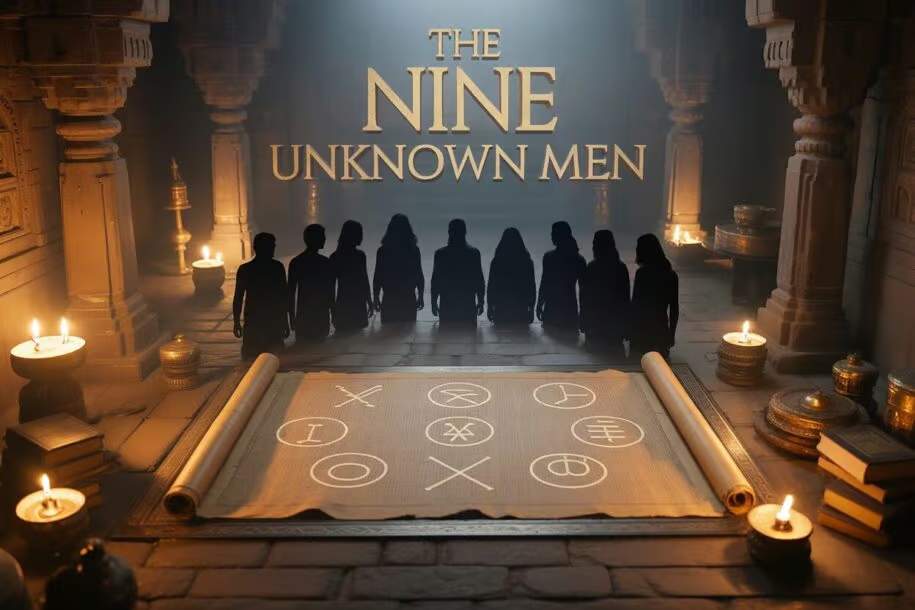
Around 270 BCE, Emperor Ashoka created what may be history’s most secretive organisation. Nine scholars, handpicked from across his vast empire, were tasked with protecting knowledge so dangerous it could destroy civilisations. This legendary group, known as the Nine Unknown Men, has captivated historians, conspiracy theorists and anyone fascinated by the mysteries of ancient India for over two thousand years.
The story of Emperor Ashoka’s secret society is one of the most extraordinary legends in all of Indian history. It raises questions that remain unanswered to this day. Who were these nine guardians? What forbidden knowledge did they protect? And is it possible that this ancient Indian secret society continues to operate in the shadows of the modern world?
This deep dive examines the historical evidence behind the legend, explores the nine books of forbidden knowledge they allegedly protect, and investigates modern claims of their continued existence. Get ready to question everything you thought you knew about ancient India’s most enduring mystery.
Emperor Ashoka’s Transformation and the Birth of an Ancient Indian Secret Society
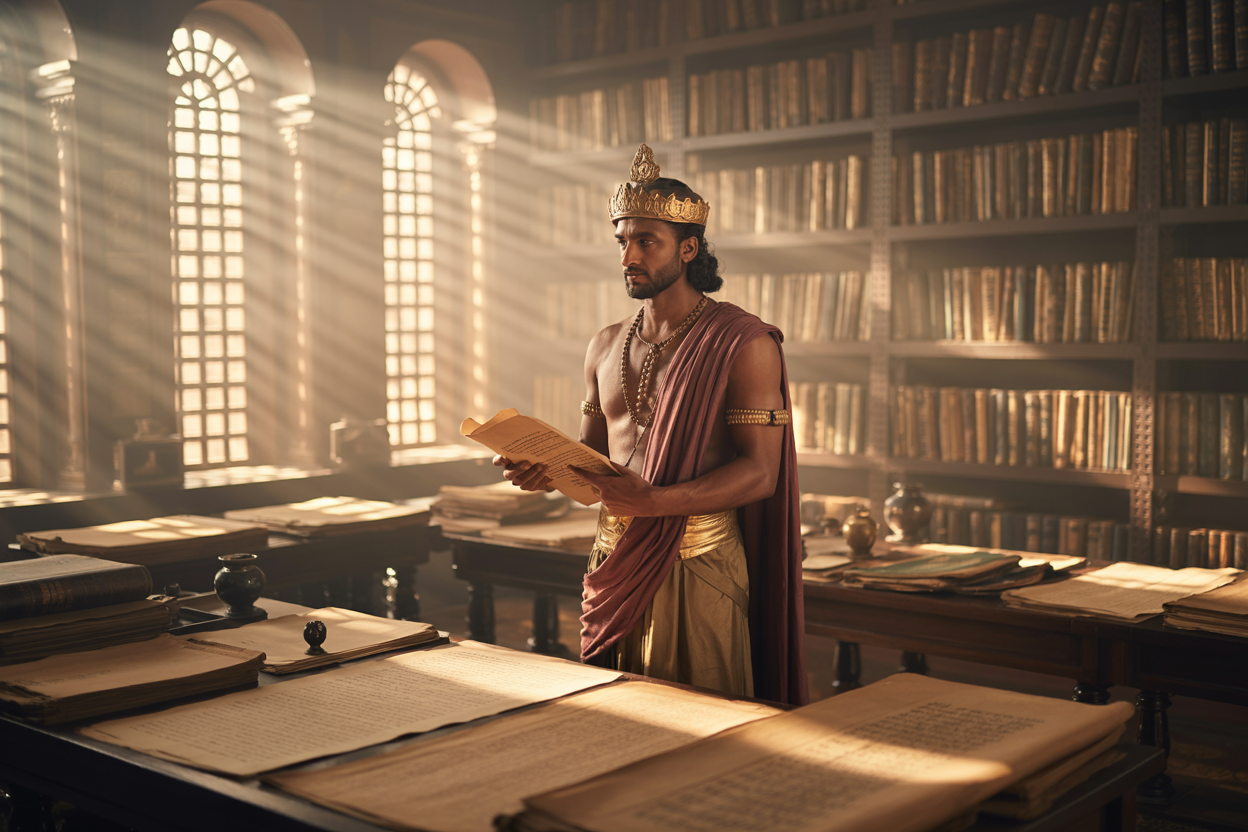
The legend of the Nine Unknown Men begins not with secrecy but with slaughter. Emperor Ashoka, one of the greatest rulers in Indian history, came to power through brutal military conquest. His empire stretched from present-day Afghanistan to Bangladesh, making it one of the largest in the ancient world. But it was a single battle that changed everything and may have given rise to India’s most extraordinary secret society.
From Ruthless Conqueror to Enlightened Ruler: The Kalinga War That Changed India
The Kalinga War of around 261 BCE claimed over 100,000 lives and left 150,000 more displaced. Standing amid the devastation, Ashoka witnessed firsthand the catastrophic consequences of his own ambition. Rock Edict XIII, one of the most remarkable documents to survive from the ancient world, records his profound horror and remorse. This wasn’t political theatre. Ashoka abandoned military expansion entirely, embraced Buddhism, and set about governing his empire through moral authority rather than fear.
This transformation is one of the most thoroughly documented in all of ancient Indian history. The same emperor who had crushed kingdoms with military force now promoted non-violence, religious tolerance and social welfare across his territories. Visitors to the sites of Ashoka’s inscribed pillars and rock edicts today can trace this remarkable journey in stone.
If you want to walk in the footsteps of this extraordinary emperor, our Bhopal tours include the Great Stupa of Sanchi, one of the oldest Buddhist monuments in India and a direct legacy of Ashoka’s reign. Our Patna tours take you to Pataliputra, the very capital where Ashoka ruled and where the legend of the Nine Unknown Men may have been born.
Ashoka’s Recognition of the Dangerous Power of Advanced Knowledge
During his reign, Ashoka had access to accumulated wisdom from across the known world. The Mauryan Empire created unprecedented opportunities for knowledge exchange between Greek, Persian and Indian civilisations. Royal libraries contained texts on metallurgy, medicine, astronomy and military technology that far exceeded what most contemporary societies possessed.
Ancient Indian texts suggest that knowledge of flying machines, powerful explosives and what some interpret as atomic-level understanding existed in Sanskrit works of this period. Whether these claims are literal or metaphorical, they indicate that ancient scholars understood certain knowledge to be genuinely dangerous in the wrong hands. Ashoka had witnessed at Kalinga exactly what happened when military technology was wielded without moral restraint.
The Strategic Decision That Created India’s Most Famous Secret Society
Rather than destroying dangerous knowledge, Ashoka chose a more nuanced path entirely consistent with his Buddhist principles of the Middle Way. He established a system of controlled preservation, keeping the most sensitive information accessible only to nine scholars of demonstrated wisdom, moral character and complete loyalty to the principle of preventing harm.
Each guardian would be responsible for one specific area of knowledge, ensuring no single person could access all the dangerous information simultaneously. This systematic approach to knowledge management was revolutionary in the ancient world and may represent history’s first organised effort to control the proliferation of potentially destructive technologies while preserving them for legitimate future use.
The Formation of the Nine Unknown Men: How Emperor Ashoka Built His Secret Society
The Selection Criteria for Ashoka’s Nine Guardians of Forbidden Knowledge
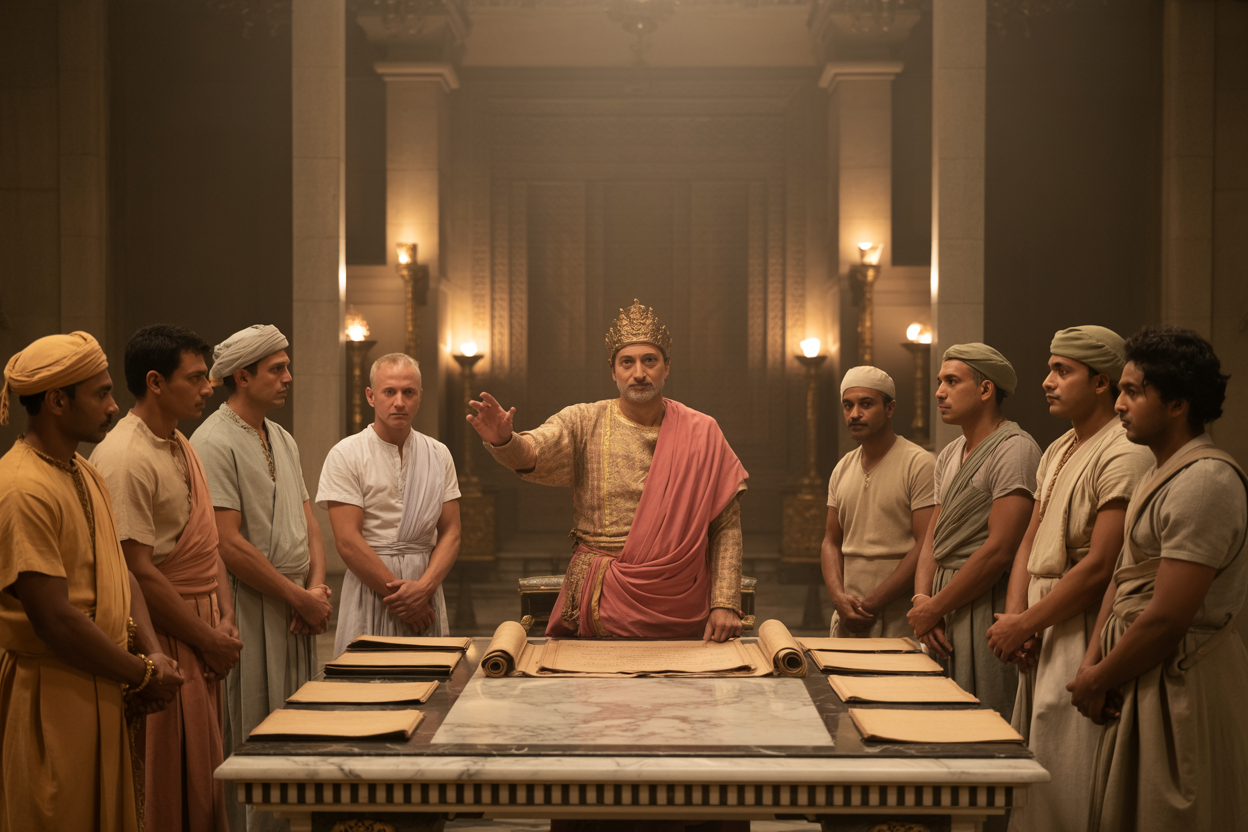
The selection of Emperor Ashoka’s nine guardians was not arbitrary. According to ancient accounts, each candidate had to demonstrate exceptional intellectual ability, proven loyalty to the empire and unwavering moral character. Many were reportedly chosen from Ashoka’s inner circle of advisors, royal scientists and trusted generals who had already demonstrated their ability to keep secrets and resist temptation.
Physical and mental endurance were also considered crucial. The guardians needed to withstand the psychological burden of possessing information that could destroy civilisations. Some accounts suggest Ashoka tested candidates by revealing lesser secrets and observing their behaviour over months or even years before making his final selections.
The Nine Areas of Forbidden Knowledge and Their Devastating Potential
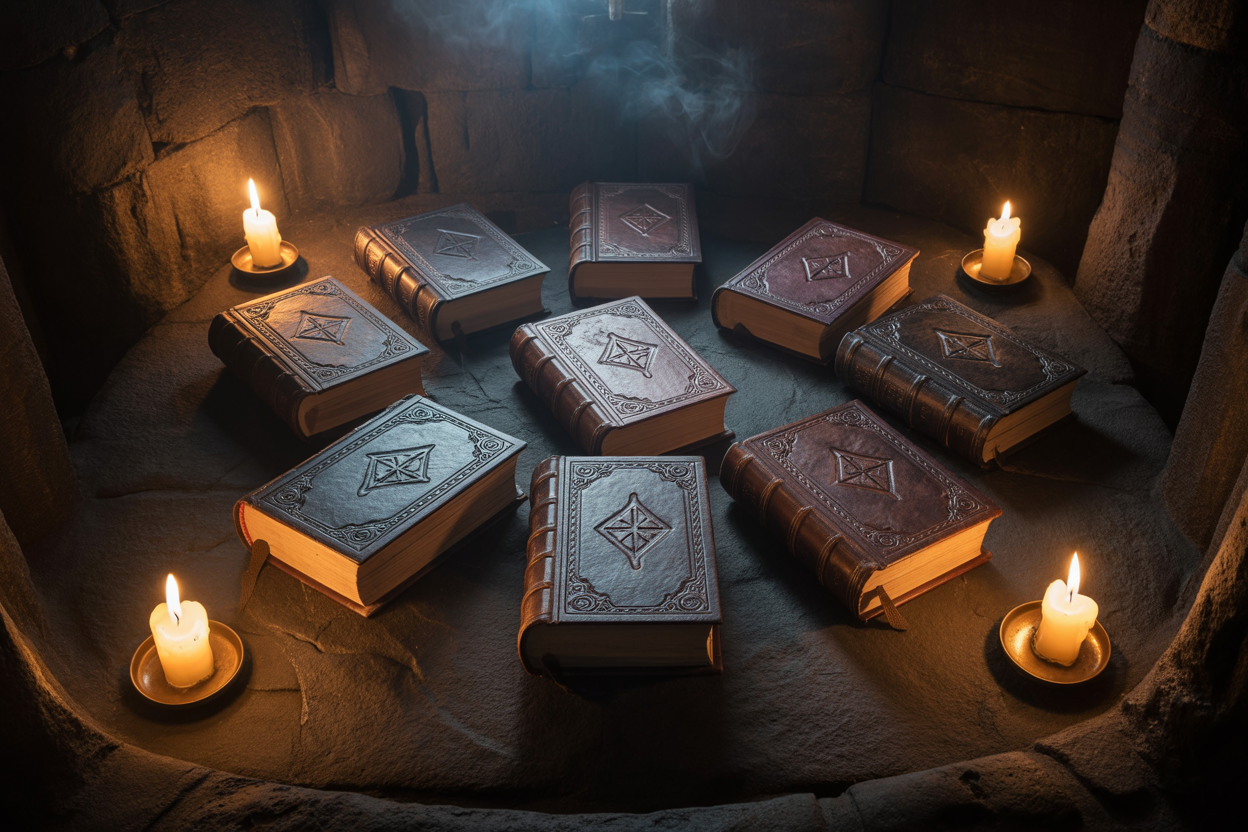
Each of the nine guardians received responsibility for one specific book containing knowledge deemed too dangerous for public consumption. The first book reportedly covered psychological manipulation and propaganda techniques capable of controlling entire populations. The second contained detailed knowledge of human physiology, including pressure points and techniques that could disable or kill without visible marks.
The third book covered microbiology and biological warfare, describing detailed understanding of how diseases spread and how pathogens could be weaponised, millennia before modern science formally identified bacteria and viruses. The fourth dealt with alchemy and the transformation of metals, representing advanced chemistry and materials science. The fifth covered communication technologies and what some accounts describe as anti-gravity and principles of space travel.
The remaining four books covered equally powerful domains: metallurgy and the creation of materials stronger than any known metal, methods for long-distance communication, understanding of time and astronomical prediction, and finally the most closely guarded secret of all, principles that some accounts describe as controlling gravity itself.
The Sacred Oath That Bound the Nine Unknown Men Across Generations
The oath taken by each guardian was not simply a promise of secrecy. It was a sacred vow binding them to protecting humanity from its own potential for destruction. The ceremony reportedly took place in absolute secrecy, with each member swearing never to reveal their knowledge outside the society, never to use the information for personal gain, and never to allow the secrets to fall into dangerous hands even under threat of death.
Crucially, the oath included provisions for succession. Each guardian was required to identify and train a replacement before their death, ensuring the knowledge would never be lost but also never exposed. It is this succession protocol that forms the core of the argument that the society might still exist today.
Historical Evidence for Emperor Ashoka’s Secret Society in Ancient Indian Texts.

The question of whether the Nine Unknown Men were real or legendary hinges on the historical evidence. The answer, as with most ancient Indian mysteries, lies somewhere between definitive fact and compelling mythology.
References to Knowledge Guardians in Buddhist and Sanskrit Manuscripts
The earliest mentions of secret knowledge keepers appear in several Buddhist texts and Sanskrit manuscripts, though they rarely name the society directly. The Arthashastra, attributed to Chanakya, Chandragupta Maurya’s legendary advisor, describes elaborate networks of knowledge protectors working for the empire. Buddhist manuscripts from monasteries in Tibet and Myanmar contain cryptic references to nine guardians of wisdom who served the great emperor.
Ancient Jain texts reference a group of scholar-protectors who safeguarded dangerous knowledge after the Kalinga War. Tibetan manuscripts discovered in the Potala Palace archives mention holders of nine seals who travelled across India during Ashoka’s reign. Most intriguing are fragmentary Sanskrit texts found in Kerala’s temple libraries that speak of knowledge too powerful for ordinary minds, carbon-dated to the 3rd century BCE.
Exploring the living heritage of ancient Indian scholarship is possible through our tours. Our Madurai tours include the extraordinary Meenakshi Temple, a repository of architectural and philosophical knowledge accumulated over two millennia. Our Varanasi tours take you to the oldest living city on earth, where Sanskrit scholarship has been continuous since before Ashoka’s time.
Archaeological Discoveries at Pataliputra and Sanchi Linked to Ashoka’s Initiatives
Recent excavations at Pataliputra, Ashoka’s capital, have revealed underground chambers and tunnels that do not match typical palace architecture. These spaces feature sophisticated ventilation systems and reinforced walls suggesting they housed something valuable and potentially dangerous. Stone tablets found in these chambers contain mathematical symbols and chemical formulas that appear remarkably advanced for their era.
The Ashoka pillars scattered across India contain more than moral edicts. Archaeologists have discovered hidden compartments sealed with a unique cement mixture in several pillars. Inside these compartments, researchers found metal scrolls written in a cipher combining Greek, Aramaic and Brahmi scripts, portions of which reference guardians of knowledge and protected learning.
At Sanchi, excavations beneath the Great Stupa uncovered a chamber containing precision-crafted metal instruments, chemical apparatus and stone tablets with detailed anatomical drawings, discoveries that do not fit the typical Buddhist monastery pattern and suggest a parallel organisation operating alongside religious institutions.
Stand in these extraordinary places yourself. Our Bhopal tours include the UNESCO-listed Sanchi Stupa, one of the oldest stone structures in India and the very site where some of these mysterious artefacts were discovered.
Foreign Travellers Who Documented Ashoka’s Mysterious Scholars
Greek ambassador Megasthenes wrote about nine individuals in Ashoka’s court who possessed knowledge beyond the understanding of common men. His accounts describe scholars who rarely appeared together publicly but wielded significant influence over imperial decisions, noting their unusual practice of never recording their discussions in conventional writing.
Chinese traveller Xuanzang, visiting India in the 7th century CE, documented stories told by local monks about ancient knowledge keepers and libraries hidden beneath Buddhist monasteries. Persian scholar Al-Biruni in the 11th century wrote about meeting individuals in Kashmir who claimed descent from Ashoka’s original scholars, demonstrating knowledge of metallurgy and chemistry that surprised even the widely-travelled polymath.
Could Ashoka’s Secret Society Still Exist? Modern Evidence and Contemporary Encounters
The most extraordinary dimension of the Nine Unknown Men legend is the claim that the society did not die with its founders but has continued, through an unbroken chain of successors, for over two thousand years.
Alleged Modern Encounters With Individuals Possessing Impossible Knowledge
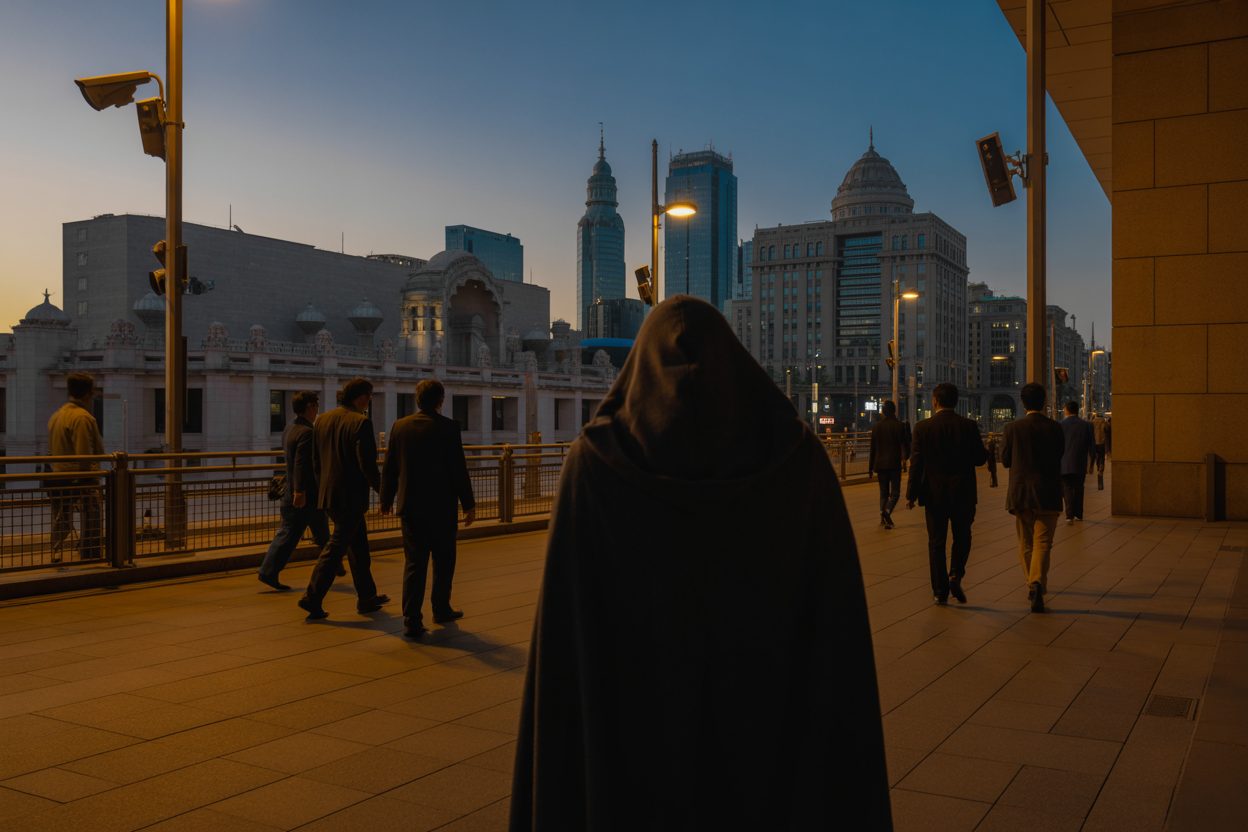
Reports of encounters with enigmatic individuals displaying knowledge far beyond their apparent background have surfaced throughout the 20th and 21st centuries. In 1952, a physicist documented meeting an elderly man in a Delhi library who demonstrated understanding of nuclear fusion decades before mainstream science reached similar conclusions. The stranger vanished after their conversation, leaving behind only cryptic notes in ancient Brahmi script.
More recent accounts describe mysterious consultants appearing at critical moments in technology development, providing breakthrough insights then disappearing without trace. Researchers at major institutions have filed accounts of visiting scholars with no official credentials who possessed encyclopaedic knowledge spanning multiple disciplines, typically staying briefly before vanishing and leaving behind research notes that advanced entire fields of study.
Unexplained Technological Breakthroughs Potentially Linked to the Ancient Indian Secret Society
Several groundbreaking discoveries have emerged with suspicious timing that researchers struggle to explain through conventional scientific progression. Computer scientists have noted peculiar patterns in open-source code repositories where sophisticated algorithms appear overnight without clear authorship. Biotechnology firms have documented instances of receiving anonymous research data that accelerated their projects by years, arriving through untraceable channels at precisely critical moments.
Whether these modern phenomena have any genuine connection to Ashoka’s ancient Indian secret society remains entirely unproven. What they do reveal is how persistently the legend of the Nine Unknown Men continues to shape the way we interpret extraordinary events.
Intelligence Agency Investigations Into Ashoka’s Nine Unknown Men
Declassified CIA documents from the 1960s reveal a classified investigation into reports of individuals possessing advanced scientific knowledge, operating under a programme that was mysteriously shuttered with all files marked for permanent classification. British Intelligence files reference the society in connection with Cold War-era technology transfers. Indian intelligence services are reported to maintain active files on the organisation, with partial documents suggesting ongoing surveillance of locations historically connected to Ashoka’s empire.
The Historical Debate: Ancient India’s Greatest Mystery or Its Greatest Legend?

Why Scholars Question the Nine Unknown Men’s Existence
Academic historians approach the Nine Unknown Men story with considerable scepticism. The earliest detailed accounts do not appear in contemporary sources from Ashoka’s time but emerge centuries later in texts that blend mythology with historical record. The convenient round number of nine members, each with perfectly distinct areas of expertise, fits common storytelling patterns throughout ancient literature far more than it fits administrative reality.
Most significantly, Ashoka’s genuine historical record is remarkably well documented through his own inscriptions, yet nothing in that record directly references the Nine Unknown Men. Given his tendency to document his major initiatives in stone across his entire empire, this absence is particularly telling.
The Challenge of Separating Ancient Indian History From Legend

Ancient Indian historical records present unique challenges. Writers of antiquity freely mixed factual accounts with moral teachings, religious beliefs and cultural myths to create narratives that served philosophical purposes. Stories passed through oral tradition for generations before being committed to writing inevitably evolve, with each retelling potentially adding new details or altering existing ones.
The Nine Unknown Men story fits perfectly into the ancient Indian literary tradition of using historical figures as vehicles for broader philosophical teaching. Ashoka’s transformation from brutal conqueror to enlightened ruler was real and documented. The legend of his secret society may represent a symbolic elaboration of his genuine concern for the responsible use of knowledge, a concern that was itself real and expressed repeatedly in his actual edicts.
Why the Legend of Ashoka’s Secret Society Endures Across Two Millennia
Whether historically real or symbolically true, the legend of the Nine Unknown Men endures because it speaks to concerns that are permanently relevant. The question of what to do with knowledge that could be catastrophically misused is not an ancient Indian problem. It is our problem too, right now, in the age of artificial intelligence, genetic engineering and weapons of mass destruction.
Emperor Ashoka asked a question two thousand years ago that we are still struggling to answer. Who should guard the most dangerous knowledge? How do you preserve wisdom while preventing its misuse? Is any society truly ready to handle knowledge that could destroy it?
The Nine Unknown Men represent the most inspiring possible answer. That somewhere, guided by the transformation of a man who witnessed the worst of human nature and chose a better path, a small group of guardians has been wrestling with that question ever since.
Walk the Trail of Emperor Ashoka: Experience Ancient India’s Greatest Mysteries with 5 Senses Tours

The story of Emperor Ashoka and his secret society is not confined to books and legends. It is written into the living landscape of India, in the edicts carved into rock faces, in the stupas he commissioned, in the temples built by the empires that followed him, and in the extraordinary ancient sites that survive across the subcontinent to this day.
At 5 Senses Tours, we have spent years building expert guided experiences that bring these stories to life for travellers from around the world.
Stand at the Great Stupa of Sanchi in Madhya Pradesh, one of the oldest Buddhist monuments in the world and a direct legacy of Ashoka’s reign, on our Bhopal tours. Walk through Pataliputra, Ashoka’s extraordinary capital and the city where the legend of the Nine Unknown Men may have been born, on our Patna tours.
Experience the living continuity of ancient Indian scholarship in Varanasi, the oldest city on earth and the unbroken home of Sanskrit learning for over three thousand years. Discover the rock-cut temples of Aurangabad, including the Ajanta and Ellora caves, which contain ancient knowledge and artistry that still astonishes the world. Explore the Hyderabad Old City, where the Kakatiya dynasty that built the extraordinary Ramappa Temple once ruled over a civilisation of comparable ambition and mystery to Ashoka’s own.
And if the story of Ashoka’s secret society has ignited in you the desire to understand India at its deepest and most extraordinary, our full portfolio of India tours offers experiences across every region of this endlessly astonishing country.
The mysteries of ancient India are not just history. They are waiting for you to discover them.
Explore All India Tours with 5 Senses Tours
Leave a Reply