
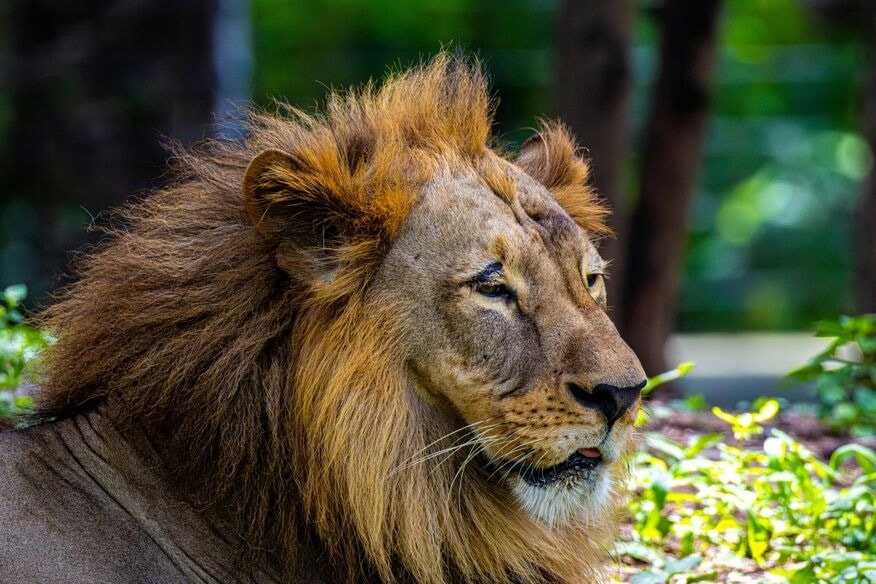
There is only one place on earth outside Africa where you can see lions in the wild.
Not a reserve in Kenya. Not a game park in Tanzania. Not a safari destination in Botswana or Zimbabwe or any of the other African landscapes that the world associates with the word lion.
One forest. In Gujarat, India. Approximately 1400 square kilometres of dry deciduous woodland in the Saurashtra peninsula, bordered by agricultural land and the Arabian Sea coast. The Sasan Gir National Park and Wildlife Sanctuary.
This is where the last Asiatic lions on earth have survived. This is where, against every prediction that conservation scientists made in the early 20th century, a population that had fallen to fewer than 20 individuals has recovered to approximately 700 lions across the broader Gir landscape. And this is where the Gir forest Asiatic lion tour with 5 Senses Tours takes you into the territory of an animal whose story is one of the most extraordinary tales of conservation success and last-chance survival in the natural world.
Gir Forest Asiatic Lion Tour: Why These Are the Most Extraordinary Lions on Earth
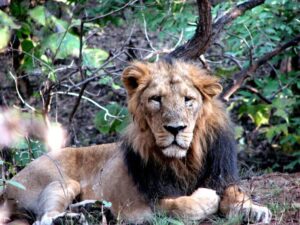
The Asiatic lion is not the same animal as its African cousin. Centuries of separate evolution in a completely different landscape have produced a lion that is distinctly different in appearance, behaviour and ecology. Understanding these differences is the first thing that transforms a Gir forest Asiatic lion tour from a safari into a genuinely profound wildlife encounter.
The Physical Differences That Distinguish the Asiatic Lion From Its African Relative
The Asiatic lion is slightly smaller than the African lion, with a distinctive longitudinal fold of skin running along its belly that African lions do not possess. The mane of the male Asiatic lion is typically shorter and less full than the African male’s, often leaving the ears visible, which gives the Asiatic lion a distinctly different facial appearance. The most reliable identification feature is the elbow tufts, prominent tufts of hair on the elbows that are present in Asiatic lions but absent or much reduced in African lions.
These physical differences are the product of thousands of years of evolution in the Indian subcontinent’s dry forests, where the hunting requirements, prey species and climate are completely different from the African savannah. The Asiatic lion evolved specifically for the dry deciduous forests of Gujarat, and its physical characteristics reflect the demands of that specific landscape in ways that make the animal extraordinarily well-adapted to its environment.
The Extraordinary Social Behaviour That Makes Gir Lions Unlike Any African Lions You Have Ever Seen
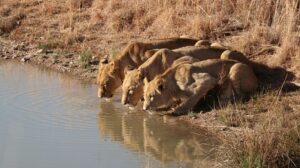
The social structure of Asiatic lions is fundamentally different from the African lion pride structure that most wildlife enthusiasts know from documentaries. In Africa, lions live in mixed-gender prides where males and females share territory and socialise continuously. In Gir, the males and females live largely separately except during mating.
Asiatic lion females live with their cubs and other related females in cohesive groups. The males form separate coalitions of two to three individuals, occupying overlapping territories with multiple female groups but spending most of their time apart from the females and cubs. This separation means that a sighting of a male Asiatic lion in Gir is a distinctly different experience from a female group sighting, with each encounter offering different behavioural dynamics and photographic opportunities.
The Gir lions are also remarkably habituated to human presence in ways that make close-range viewing possible. The long history of coexistence between the Maldhari tribal communities who have lived inside the sanctuary for generations and the lions who share their landscape has produced a relationship between humans and lions that is entirely unlike the fearful avoidance that characterises most African lion populations.
How the Asiatic Lion Was Saved From Extinction: The Most Extraordinary Conservation Story in Indian Wildlife History
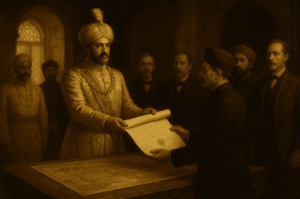
At the beginning of the 20th century the Asiatic lion was functionally extinct across virtually its entire former range. It had been hunted to elimination across Persia, Syria, Turkey, Palestine, Iraq and across most of India. The last surviving population, fewer than 20 individuals, was clinging to existence in the forests of the Nawab of Junagadh in Saurashtra, Gujarat.
The Nawab’s decision to protect his lions rather than permit their hunting was the single act that prevented the complete extinction of the Asiatic lion. By the time Gujarat’s forests were gazetted as a protected sanctuary the population had recovered to approximately 50 individuals. By the time the Gir Wildlife Sanctuary was declared a national park in 1975 there were approximately 180 lions. The 2020 census recorded 674 lions across the broader Gir landscape and recent estimates suggest the population has now exceeded 700 individuals.
This recovery from fewer than 20 to over 700 individuals in a century is one of the greatest conservation achievements in the history of Indian wildlife. It is the story at the heart of every Gir forest Asiatic lion tour and it is a story that transforms a safari from a wildlife viewing experience into an encounter with conservation history.
Our expert guides on the Gir forest Asiatic lion tour tell this complete conservation story alongside every lion sighting, giving you not just the visual thrill of seeing the last Asiatic lions on earth but the full historical and ecological context that makes every encounter genuinely meaningful.
The Gir Forest Landscape: What You Will See Beyond the Lions
The Gir National Park is far more than a lion sanctuary. It is one of the most biodiverse dry deciduous forest ecosystems in India, with a wildlife richness that extends across mammals, birds and reptiles to create an extraordinarily rewarding safari experience regardless of whether any given drive produces a lion sighting.
The Complete Wildlife of Gir Beyond the Asiatic Lion
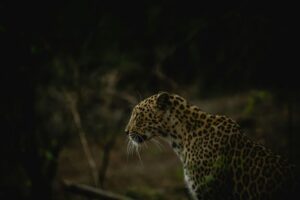
The leopard population of Gir is one of the most underappreciated wildlife stories in India. Sharing territory with the Asiatic lion creates a competitive dynamic that most visitors never see in any other Indian wildlife destination. The leopards of Gir have adapted to coexistence with lions by becoming largely nocturnal and by occupying the rockier, more broken terrain within the sanctuary. Expert guides who know the specific territories and movement patterns of individual leopards can make dedicated leopard sightings possible with patient, well-planned positioning.
The Gir jungle cat, the rusty-spotted cat and the caracal are among the smaller feline species present in the sanctuary, making Gir one of the most remarkable multi-feline wildlife destinations in Asia. The Indian wolf, the striped hyena and the golden jackal complete an extraordinary carnivore guild that has no parallel in any other Indian national park.
The herbivore community of Gir includes the Chital deer, Sambar deer, Nilgai, Chinkara and the four-horned antelope, a species found almost exclusively in India. The marsh crocodile population of Gir’s seasonal rivers and water bodies adds a prehistoric dimension to the wildlife experience that surprises many first-time visitors.
Over 300 species of birds have been recorded in Gir, including the Changeable Hawk-Eagle, the Crested Serpent Eagle, the Indian Pitta, the White-eyed Buzzard and the extraordinary Indian Courser. The Eurasian Eagle-Owl, the Brown Fish Owl and the Forest Eagle-Owl make Gir an outstanding destination for owl enthusiasts willing to venture out after dark with an expert naturalist guide.
The Maldhari Communities: The Human Story at the Heart of the Gir Conservation Story
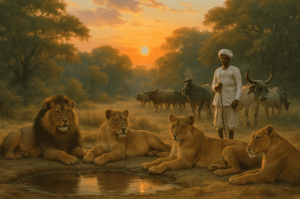
The Maldhari are a pastoral community who have lived inside the Gir sanctuary for generations, sharing their landscape with the lions in a relationship of coexistence that has no parallel anywhere in the world. Their traditional lifestyle, raising Gir cattle and buffalo within the sanctuary boundaries, has shaped the ecology of the forest and the behaviour of its lions in ways that conservation scientists are still documenting.
The Maldharis live in circular settlements called nesses, hand-built enclosures of thorny branches that protect their livestock from lion predation while allowing the community to maintain their traditional pastoral way of life within the protected area. The relationship between the Maldharis and the lions is complex and fascinating. Lion predation on Maldhari livestock is a constant economic reality but the Maldharis have developed cultural practices and practical livestock management techniques that minimise conflict while maintaining their deep connection to the forest and its wildlife.
An encounter with a Maldhari community as part of your Gir forest Asiatic lion tour adds a dimension of human cultural heritage to the wildlife experience that transforms it from a safari into a complete cultural and ecological journey. Our Gir forest tour includes opportunities to visit Maldhari nesses with expert cultural guides who can facilitate genuine encounters with this extraordinary community and their remarkable way of life.
Planning Your Gir Forest Asiatic Lion Tour With 5 Senses Tours
The Complete Safari Experience: Jeep Safaris and Zone Allocation at Gir National Park
The Gir National Park is divided into multiple safari zones, each with its own character, vegetation type and lion population density. The core zone of the park, covering approximately 258 square kilometres, offers the highest lion sighting probability and the most pristine forest landscape. Access to the core zone is strictly limited and permit allocation is competitive, particularly during peak season.
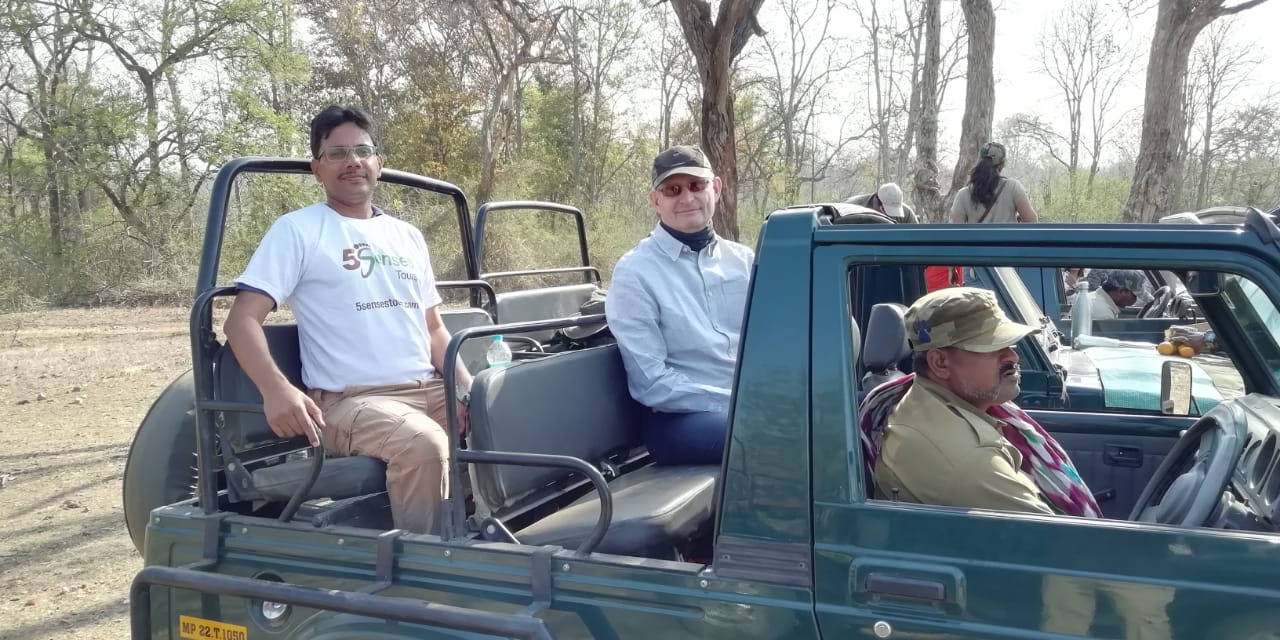
Each safari covers approximately 30 to 40 kilometres of forest tracks in a shared or private jeep, lasting approximately three hours in the early morning or late afternoon when lion activity is at its highest. The permit system requires advance booking through the official Gir National Park online portal, which opens 90 days before the date of visit and sells out rapidly for popular dates between October and March.
Our Gir forest Asiatic lion tour with 5 Senses Tours handles all permit acquisition on your behalf, ensuring you have confirmed safari access before you travel. Our expert naturalist guides have years of experience reading the signs of lion movement in the Gir forest and positioning the vehicle for the best possible sighting opportunities with the minimum disturbance to the animals.
The Best Time to Visit Gir and How to Combine With Gujarat’s Extraordinary Heritage
October to March is the optimal season for the Gir forest Asiatic lion tour. The monsoon months from June to September close the park entirely as the forest recovers its extraordinary biodiversity beneath the seasonal rains. October brings the park back to life with fresh vegetation and well-watered waterholes that concentrate wildlife activity and maximise sighting opportunities across all species.
December and January offer the coolest and most comfortable safari conditions and some of the year’s best birdwatching as winter migrants arrive in significant numbers. February and March are the peak months for lion sightings as the dry season concentrates all wildlife activity around the remaining water sources and the thinning vegetation makes spotting easier across all forest layers.
Gir sits in Saurashtra, one of Gujarat’s most historically and culturally rich regions. The Somnath Temple, one of the twelve Jyotirlingas of Shiva and one of India’s most sacred pilgrimage sites, is just 45 kilometres from Sasan Gir. The Junagadh fort complex, with its extraordinary Buddhist caves and Ashokan rock edicts, is 60 kilometres distant. The extraordinary step wells of Gujarat and the heritage pols of Ahmedabad create a complete Gujarat cultural circuit that pairs perfectly with the Gir wildlife experience.
For travellers wanting to combine the Gir forest Asiatic lion tour with the wider Gujarat heritage circuit, our Ahmedabad tours and Dholavira tour are available as extensions that create one of the most extraordinary and most complete travel experiences available anywhere in India.
Gujarat is one of the most extraordinary and most underexplored states in India and the Gir forest Asiatic lion tour is only the beginning of what this remarkable region offers. The ancient Indus Valley civilisation sites of Dholavira and the White Rann of Kutch, accessible on our 3-day Dholavira and White Desert tour, take you 4500 years back into one of the world’s earliest urban civilisations against the backdrop of one of India’s most dramatic desert landscapes. The UNESCO World Heritage stepwell of Rani ki Vav at Patan and the extraordinary Modhera Sun Temple, built in the 11th century and perfectly aligned with the rising sun, are accessible on our Rani ki Vav and Sun Temple day tour from Ahmedabad. The Statue of Unity, the world’s tallest statue at 182 metres rising from the Narmada River valley as a monument to Sardar Patel, the man who unified India after independence, is accessible on our Statue of Unity tour. And the ancient port city of Lothal, home to the world’s earliest known dock and 4500-year-old drainage systems that rival many modern cities, is accessible on our Lothal tour. Our Ahmedabad tours hub gives you access to the complete Gujarat portfolio, from the pols of India’s first UNESCO World Heritage City to the wildlife, heritage and desert landscapes that make this one of India’s most rewarding travel destinations.
Leave a Reply