
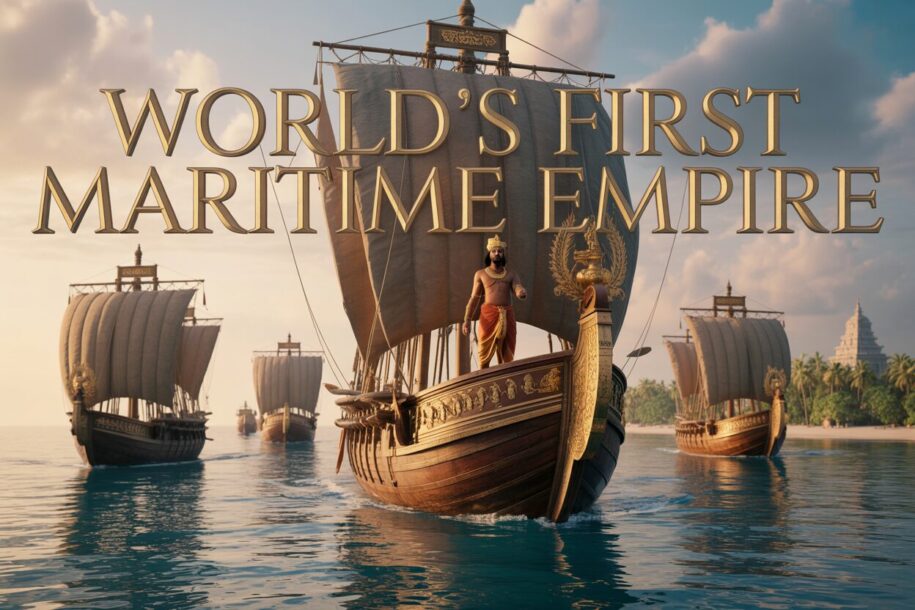
Rajendra Chola didn’t just build a navy – he created the world’s first maritime empire that stretched across the Indian Ocean and dominated Southeast Asian trade routes for centuries. This remarkable achievement by an 11th-century Indian ruler revolutionized how empires could project power across vast oceanic distances.
This deep dive is perfect for history enthusiasts, students of ancient civilizations, and anyone curious about how ancient Indian naval power shaped global trade long before European colonial expansion.
We’ll explore how Rajendra Chola’s revolutionary naval technologies gave his fleet unprecedented dominance over rival powers, allowing systematic conquest of key maritime chokepoints from Sri Lanka to the Malacca Strait. You’ll discover how the Chola dynasty’s innovative approach to maritime trade control transformed their economy and created an administrative system that managed territories separated by thousands of miles of ocean. Finally, we’ll examine the lasting legacy of this ancient maritime empire and its influence on Indian Ocean commerce that persisted long after the Cholas themselves faded from history.
For a private guided tour of the Chola sites, please visit Golden Triangle of Chola world heritage sites.
Rajendra Chola’s Maritime Vision

Leveraging Coastal Advantages
The Coromandel Coast offered Rajendra Chola an unmatched foundation for building his maritime empire. Tamil Nadu’s lengthy coastline stretched over 900 kilometers, providing numerous natural harbors and strategic launching points for naval expeditions. The region’s geography created perfect conditions for shipbuilding, with access to teak forests for vessel construction and iron ore deposits for weapons manufacturing.
Major ports like Nagapattinam, Kaveripattinam, and Mamallapuram served as the empire’s maritime nerve centers. These harbors connected the Chola heartland directly to lucrative Southeast Asian trade routes, positioning the kingdom at the crossroads of Indian Ocean commerce. The monsoon patterns worked in the Cholas’ favor, allowing their fleets to sail eastward during favorable winds and return with the seasonal changes.
The fertile Kaveri delta provided the agricultural surplus needed to support large naval operations. Rice production funded shipbuilding programs, while the river system itself served as a training ground for naval personnel. Coastal communities developed sophisticated maritime skills over generations, creating a natural pool of experienced sailors and navigators.
Building Upon Father Rajaraja’s Naval Innovations
Rajaraja Chola I laid the groundwork for his son’s maritime conquests by establishing the world’s first organized royal navy. His reign saw the construction of massive shipyards at Nagapattinam, capable of building vessels ranging from swift patrol boats to heavy warships carrying 200 warriors. These facilities became the backbone of Rajendra Chola’s naval empire.
The elder Chola’s military reforms created specialized naval divisions with distinct roles. Marines trained specifically for ship-to-ship combat, while naval engineers developed innovative siege techniques for coastal fortifications. Rajaraja’s campaigns in Sri Lanka and the Maldives provided valuable experience in amphibious warfare, teaching the Chola forces how to coordinate land and sea operations.
Chola naval technology innovations under Rajaraja included the development of fire-arrows for naval battles and improved ship designs for better maneuverability. His administration established a naval intelligence network that tracked merchant vessels and potential threats across the Indian Ocean, giving Rajendra detailed knowledge of maritime trade patterns and rival naval capabilities.
Alliances with Maritime Trading Communities
Rajendra Chola understood that controlling the seas required more than military might—it demanded partnerships with established trading networks. He forged alliances with Arab merchants who dominated western Indian Ocean routes, ensuring Chola goods reached Middle Eastern and African markets. These partnerships provided intelligence about distant ports and rival kingdoms while generating revenue to fund naval expansion.
Tamil merchant guilds like the Ayyavole and Manigramam became essential partners in the Chola maritime strategy. These organizations maintained trading posts from Socotra to Sumatra, creating a commercial network that supported military objectives. Guild members served as diplomats, intelligence gatherers, and cultural ambassadors, smoothing the path for Chola expansion into Southeast Asia.
The Chola administration offered protection to foreign merchants in exchange for tribute and strategic information. Chinese traders, Arab merchants, and Southeast Asian kingdoms found it profitable to cooperate with Chola authorities rather than resist them. This approach created a maritime empire based on mutual benefit rather than pure conquest, making Rajendra Chola’s maritime empire the world’s first successful model of naval-commercial integration.
Local fishing communities and pearl divers provided crucial support services, from coastal reconnaissance to underwater repairs of vessels. These alliances created a comprehensive maritime ecosystem that supported both commercial prosperity and military dominance across the Indian Ocean.
Naval Technologies That Dominated the Seas
Advanced Shipbuilding Techniques
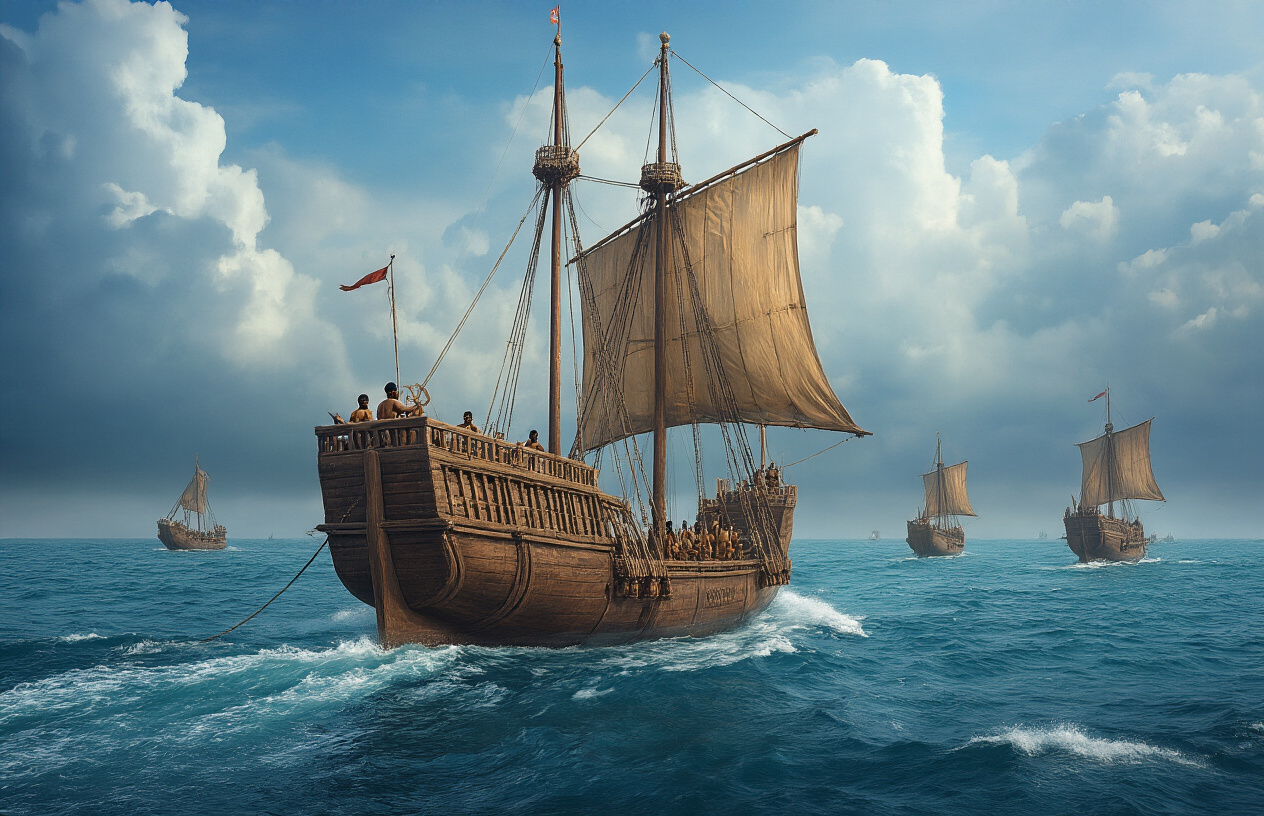
The Chola shipbuilders transformed South Indian forests into the backbone of their maritime empire. They mastered the art of selecting specific timber types for different parts of their vessels – teak for the hull’s strength, bamboo for flexibility, and ironwood for durability against saltwater corrosion.
Chola craftsmen developed revolutionary joining techniques that eliminated the need for metal nails in many areas. They used wooden dowels, coconut fiber ropes, and natural resins to create watertight seals. This approach made their ships lighter and more flexible in rough seas compared to their rigid competitors.
The empire’s shipyards along the Kaveri River delta became legendary for producing vessels of unprecedented size. Archaeological evidence suggests some Chola warships stretched over 200 feet in length, dwarfing contemporary vessels. These massive ships featured multiple decks, compartmentalized storage areas, and reinforced sections designed specifically for ramming enemy vessels.
Superior Navigation Systems for Long-Distance Voyages
Chola naval technology innovations included sophisticated navigation instruments that allowed their fleets to traverse vast oceanic distances with remarkable accuracy. Tamil mariners developed detailed star charts and understood monsoon patterns better than any other civilization of their time.
They created the world’s first systematic approach to deep-sea navigation using a combination of celestial observation, wind pattern recognition, and ocean current mapping. Chola navigators carried specialized instruments including magnetic compasses adapted for tropical conditions and water-resistant astronomical devices.
The empire established a network of coastal lighthouses and navigation markers across the Indian Ocean. These structures guided Chola vessels safely through treacherous waters while denying enemy fleets crucial navigational assistance.
Innovative Tactics for Naval Warfare
Rajendra Chola’s admirals revolutionized naval combat through coordinated fleet formations that maximized their technological advantages. They pioneered the “crescent formation” – arranging their largest warships in a curved line that could envelop enemy fleets from multiple angles.
Chola naval strategy emphasized speed and maneuverability over brute force. Their lighter, faster vessels could outflank heavier enemy ships while delivering devastating attacks from unexpected directions. This approach proved particularly effective against Southeast Asian kingdoms that relied on traditional ramming tactics.
The Chola naval empire history shows they also developed specialized vessel types for different combat roles. Fast scout ships gathered intelligence, heavy assault vessels broke enemy lines, and support ships provided ammunition and repairs during extended battles.
Integration of Greek Fire and Incendiary Weapons
The Cholas adapted and improved upon Byzantine Greek fire technology, creating their own devastating incendiary weapons perfectly suited for tropical naval warfare. They developed a unique formula using locally available materials like coconut oil, sulfur deposits from volcanic regions, and specialized tree resins.
Chola incendiary weapons came in multiple forms – handheld projectiles for close combat, catapult ammunition for long-range attacks, and ship-mounted flame throwers that could devastate enemy vessels at medium range. These weapons proved particularly effective against the wooden ships common throughout Southeast Asia.
The psychological impact of Chola fire weapons was immense. Enemy sailors often surrendered rather than face the terrifying prospect of their ships being consumed by flames in the middle of the ocean. This reputation alone helped the Chola naval empire secure many victories through intimidation rather than actual combat.
Systematic Conquest of Trade Routes
Maldives as a Naval Base
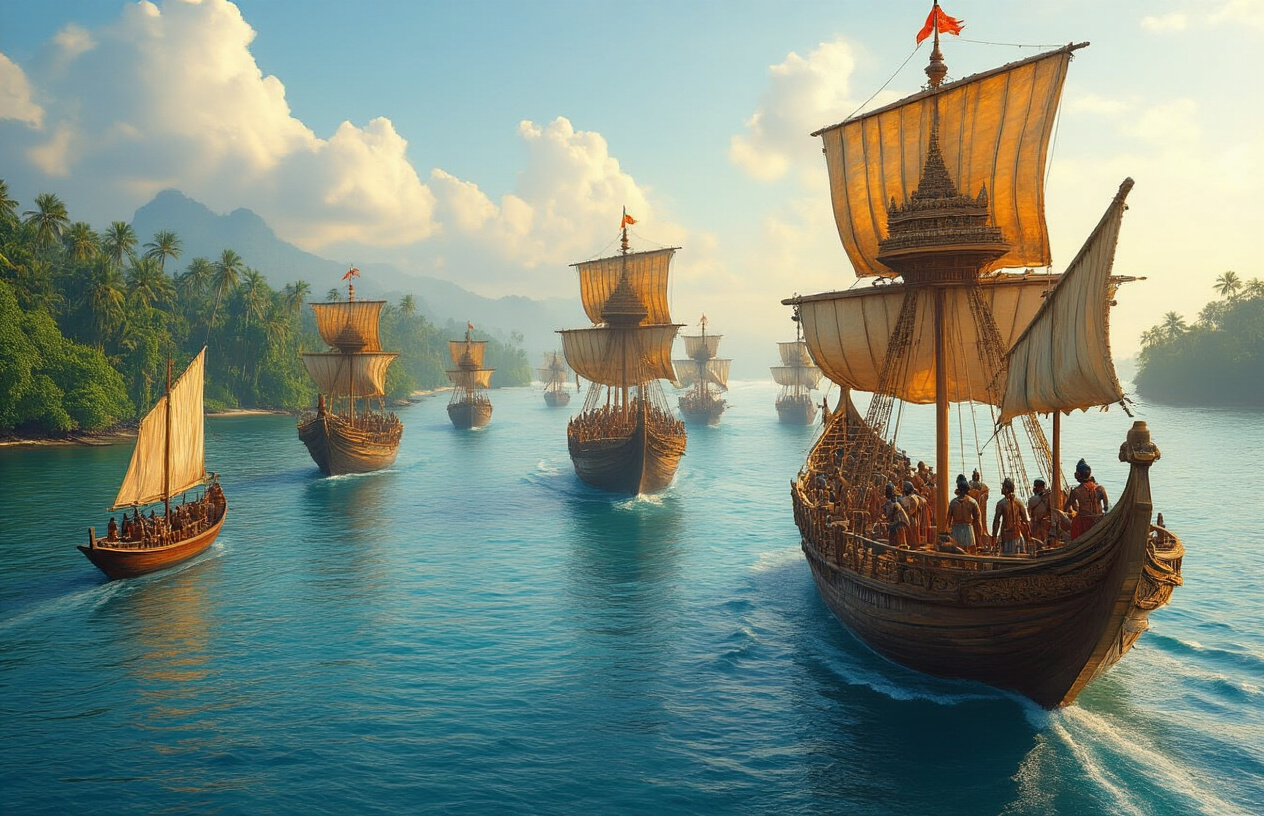
The Maldive Islands represented the perfect launching pad for Rajendra Chola’s ambitious maritime expansion. These scattered atolls sat right in the heart of the Indian Ocean’s busiest shipping lanes, making them incredibly valuable real estate for any naval power. Rajendra Chola understood that controlling the Maldives meant controlling the gateway between the Arabian Sea and the Bay of Bengal.
The conquest wasn’t just about military muscle – it was strategic brilliance. The islands offered natural harbors that could shelter entire fleets during monsoon seasons. Local populations already had deep knowledge of ocean currents and wind patterns that Chola admirals desperately needed for longer voyages into Southeast Asian waters.
Once secured, the Maldives became the empire’s primary naval refueling station. Ships could resupply with fresh water, food, and conduct repairs before pushing deeper into foreign waters. The islands also served as an intelligence hub where Chola spies gathered information about rival kingdoms and merchant activities throughout the region.
Conquering Lanka to Control Indian Ocean Passages
Sri Lanka’s position made it absolutely crucial for anyone wanting to dominate Indian Ocean trade. The island sits like a massive toll booth between India and Southeast Asia, forcing most merchant vessels to pass within striking distance of its ports.
Rajendra Chola’s invasion of Sri Lanka wasn’t a quick raid – it was a calculated takeover of the entire northern and central regions of the island. The Chola forces systematically captured key ports including Polonnaruwa, which became their administrative headquarters. This gave them control over both the eastern and western sea routes around the island.
The conquest brought immediate rewards. Sri Lankan ports had been major stops for Arab, Chinese, and Southeast Asian merchants for centuries. By controlling these harbors, the Cholas could now tax every major trading expedition passing through the region. They also gained access to Sri Lanka’s valuable pearl fisheries and spice gardens, adding even more wealth to their growing maritime empire.
Establishing Dominance Over the Strait of Malacca
The Strait of Malacca was the golden prize of medieval maritime trade – a narrow waterway that every merchant ship traveling between China and India had to navigate. Whoever controlled this strait could essentially tax the entire East-West trade network.
Rajendra Chola’s naval forces moved methodically to secure both sides of the strait. They established permanent naval bases on strategic islands and coastal positions that allowed them to monitor and intercept any vessel attempting passage. The Chola navy developed a sophisticated system of patrol boats and signal fires that could quickly alert larger warships to approaching merchant fleets.
The economic impact was staggering. Chinese records from this period mention having to pay tribute to “powerful Tamil kings” just to ensure safe passage for their trading expeditions. The Cholas didn’t just collect taxes – they also provided protection services, escorting valuable cargo ships through pirate-infested waters in exchange for substantial fees.
Securing Key Ports in Sumatra and the Malay Peninsula
The final piece of Rajendra Chola’s maritime puzzle involved capturing major port cities along Sumatra’s coast and the Malay Peninsula. Places like Palembang, Jambi, and Kedah weren’t just trading posts – they were the nerve centers of regional commerce where spices, gold, and exotic goods changed hands.
Each conquest followed a similar pattern. Chola naval forces would blockade the port while land troops, often transported by specialized landing craft, would assault coastal fortifications. Local rulers faced a simple choice: submit and become Chola vassals, or watch their cities burn.
The administrative approach was surprisingly sophisticated. Rather than completely replacing local governments, the Cholas often kept existing rulers in place as puppet kings. This reduced resistance while ensuring continued tribute payments. They also established Tamil trading communities in each conquered port, creating a network of loyal merchants who could gather intelligence and maintain Chola influence even when the main fleet wasn’t present.
These Southeast Asian bases became launching points for even more ambitious expeditions. From Sumatra, Chola fleets could reach the spice-rich islands of Java and the valuable trading ports of what’s now Vietnam and Cambodia, extending their maritime empire’s reach across thousands of miles of ocean.
Economic Transformation Through Maritime Trade Control
Monopolizing Spice Trade Routes to Europe and China
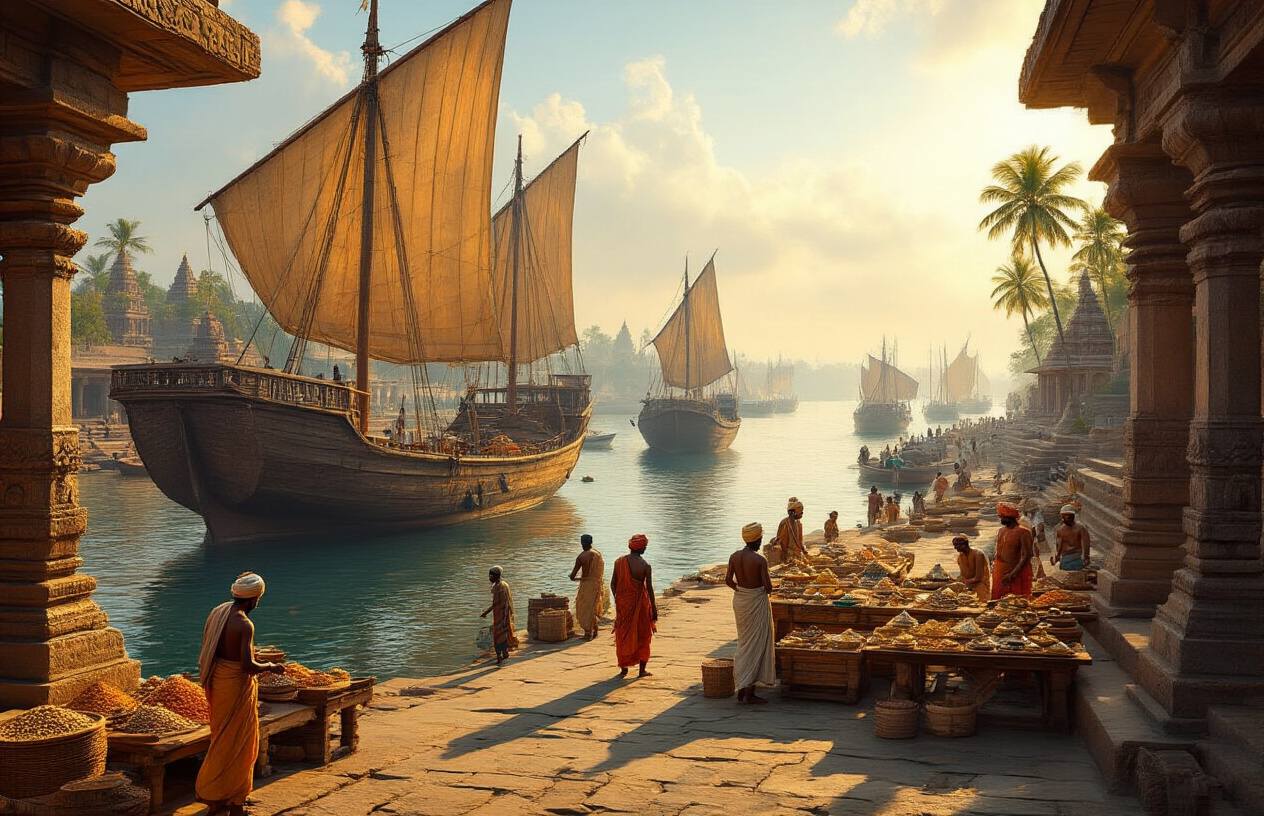
The Chola dynasty transformed the Indian Ocean into their economic playground by seizing control of the world’s most lucrative spice trade routes. Rajendra Chola’s maritime empire positioned itself as the gatekeeper between the spice-producing islands of Southeast Asia and the hungry markets of Europe and China. Black pepper, cardamom, cinnamon, and nutmeg flowed through Chola-controlled ports, generating unprecedented wealth for the empire.
Strategic naval bases established in Sri Lanka, the Maldives, and key Southeast Asian ports created an unbreakable chain of control. Merchant vessels carrying precious spices had no choice but to navigate through Chola waters, paying hefty fees for safe passage. The empire’s naval supremacy meant that alternative routes were either too dangerous or completely blocked, forcing traders to accept Chola terms.
The Cholas didn’t just tax the spice trade—they actively participated in it. Royal merchants, backed by the empire’s military might, negotiated exclusive deals with spice producers in Java, Sumatra, and the Malayan Peninsula. This vertical integration allowed the Chola dynasty maritime trade network to control both supply and distribution, maximizing profits at every stage of the transaction.
Collecting Tribute from Merchant Vessels and Trading Posts
Rajendra Chola’s maritime empire operated the world’s first systematic maritime taxation system. Every merchant vessel entering Chola waters faced a carefully calculated toll based on cargo value, vessel size, and destination. This wasn’t random piracy—it was organized revenue collection that funded the empire’s continued expansion.
Trading posts throughout the Indian Ocean paid regular tribute to maintain Chola protection. These payments guaranteed safe harbor, access to fresh water and supplies, and military escort through dangerous waters. Foreign merchants understood that paying Chola tribute was simply the cost of doing business in the region’s most profitable trade routes.
The tribute system created a self-reinforcing cycle of power. Revenue from merchant taxes funded larger naval fleets, which in turn secured more trade routes and attracted additional merchant traffic. Port cities from Malacca to Colombo competed to offer the best terms to Chola administrators, knowing that imperial favor meant commercial prosperity.
Establishing Standardized Currency Systems Across the Empire
The Chola maritime empire introduced standardized gold and silver coins across their vast territorial network, revolutionizing international trade. These coins bore Chola royal symbols and were accepted from the Coromandel Coast to Java, eliminating the confusion and delays caused by multiple regional currencies.
Standardized weights and measures accompanied the unified currency system. A pound of pepper in Palembang meant the same thing as a pound of pepper in Pulicat, reducing disputes and speeding up transactions. This predictability attracted merchants who valued efficiency over haggling about measurements and exchange rates.
The currency system extended beyond simple commerce. Local rulers in tributary states began minting coins following Chola specifications, symbolically acknowledging their subordinate status while practically integrating their economies into the broader imperial system. This economic integration proved more lasting than military conquest alone, creating bonds of mutual benefit that survived even when Chola naval power eventually declined.
Regional banks emerged to handle currency exchange and credit, with Chola gold coins serving as the ultimate store of value across the maritime trade network.
Administrative Genius in Managing a Water-Based Empire

Creating Efficient Communication Networks Across Ocean Territories
Building communication networks across vast ocean territories presented unprecedented challenges for Rajendra Chola’s maritime empire. The Chola administration developed an intricate relay system using fast messenger boats that could navigate between strategic islands and coastal outposts. These swift vessels, known as “drona” boats, carried coded messages written on palm leaves and sealed in waterproof containers made from treated leather.
The empire established signal stations on elevated points across key islands, using fire beacons during night hours and smoke signals during daylight. Each station maintained trained personnel who could interpret and relay complex military and administrative messages using standardized codes. This network enabled communication between the mainland and distant territories like Srivijaya within weeks rather than months.
Chola administrators also created a sophisticated courier system that combined naval and land routes. Messages would travel by ship to major ports, then continue overland through established trade routes. The system included backup routes and multiple message copies to ensure critical information reached its destination despite potential losses at sea or piracy attacks.
Installing Local Governors While Maintaining Central Authority
The Chola maritime empire perfected a delicate balance between local autonomy and central control through their innovative governance structure. Rajendra Chola appointed trusted Tamil nobles as governors in conquered territories while simultaneously incorporating local elite into the administrative hierarchy. This dual approach prevented rebellions while ensuring efficient local management.
Local governors, called “adhikaris,” received extensive powers to handle day-to-day administration, trade disputes, and minor military matters. However, major policy decisions, taxation rates, and military deployments required approval from the central authority in Thanjavur. The Chola administration created detailed written protocols that clearly defined the scope of local versus central authority.
The empire established rotating inspection tours by royal officials who would visit remote territories to audit local governors and ensure compliance with imperial policies. These inspectors carried sealed orders from the emperor and had authority to override local decisions when necessary. The system created healthy competition among governors while maintaining loyalty to the central government.
Regular communication between local governors and the imperial court happened through quarterly reports detailing trade volumes, tax collections, military activities, and local political developments. This information flow helped the central administration make informed decisions about resource allocation and strategic priorities across the vast maritime empire.
Developing Maritime Law and Trade Regulations
Rajendra Chola’s administration created the world’s first comprehensive maritime legal framework to govern trade and navigation across their ocean territories. The Chola maritime code established standardized rules for port operations, customs procedures, and commercial disputes that applied across all controlled territories from the Indian coast to Southeast Asian ports.
The legal system addressed critical maritime issues including salvage rights, ship registration, cargo insurance, and piracy punishment. Merchant vessels received official documentation that guaranteed safe passage through Chola-controlled waters and access to designated ports. The administration created specialized maritime courts staffed by judges who understood both local customs and imperial law.
Trade regulations standardized weights, measures, and currency exchange rates across the empire, making commerce more efficient and reducing disputes. The Chola administration issued official trade permits that specified allowed cargo types, destination ports, and tax obligations. These regulations helped prevent smuggling while generating substantial revenue for the empire.
The maritime law also established protocols for dealing with foreign merchants and diplomatic vessels. Special provisions covered emergency situations like storms, shipwrecks, and medical emergencies, creating a comprehensive legal framework that promoted safe and profitable maritime trade throughout the Indian Ocean.
Sustainable Supply Chains for Naval Outposts
Managing supply chains across ocean territories required revolutionary logistics planning that the Chola administration executed with remarkable precision. The empire established a network of strategically located supply depots on islands and coastal settlements that could provision naval fleets and maintain remote outposts year-round.
Each major naval base maintained stockpiles of essential supplies including preserved food, fresh water, weapons, ship repair materials, and medical supplies. The administration created detailed inventory systems that tracked supply levels and automatically triggered resupply missions when stocks reached predetermined thresholds. This proactive approach prevented critical shortages that could compromise naval operations.
The Chola supply chain incorporated local production capabilities wherever possible to reduce dependence on long-distance shipments. Remote outposts developed their own food production through fishing, farming, and livestock raising. Local craftsmen received training to perform basic ship maintenance and weapon repairs, reducing the need for specialized personnel from the mainland.
The empire established regular supply runs using dedicated cargo vessels that followed predetermined routes and schedules. These supply ships traveled in convoys for protection and carried standardized cargo loads optimized for different types of outposts. The system included emergency supply protocols that could rapidly deploy additional resources to locations facing unexpected challenges or military threats.
Storage facilities used advanced preservation techniques including salt curing, oil treatments, and airtight containers to extend shelf life of critical supplies in tropical climates. The administration maintained detailed records of supply consumption rates at different outposts, enabling accurate planning for future requirements and efficient resource allocation across the maritime empire.
Lasting Legacy of the World’s First Maritime Empire

Influencing Modern Naval Strategy and Ocean Trade Concepts
Rajendra Chola’s maritime empire laid the groundwork for naval strategies that modern powers still use today. His approach to controlling sea lanes through strategic port captures became the standard playbook for maritime dominance. The Chola method of establishing naval bases at key chokepoints like the Strait of Malacca directly inspired later Portuguese, Dutch, and British strategies in the Indian Ocean.
The concept of projecting power across vast oceanic distances through coordinated naval operations traces back to Rajendra Chola’s campaigns. His systematic approach to maintaining supply lines across thousands of miles of open water solved logistical challenges that would later challenge European maritime empires. Modern naval doctrines around force projection and sea lane control can trace their origins to these ancient Indian innovations.
The Chola naval empire history shows how Rajendra understood that controlling maritime trade routes meant controlling wealth itself. This principle drives contemporary geopolitical strategies where nations compete for influence over shipping lanes that carry trillions in trade value. The South China Sea disputes and competition over Arctic shipping routes echo the same strategic thinking that drove ancient Indian naval power expansion.
Establishing Cultural Exchange Patterns Still Visible Today
The cultural bridges built during Rajendra Chola’s reign created exchange patterns that persist across Southeast Asia. Tamil inscriptions scattered across Indonesia, Malaysia, and Thailand represent just the surface of deeper cultural transformations. Hindu-Buddhist temple architecture in Angkor Wat and Borobudur carries distinct South Indian influences that arrived through Chola maritime networks.
These cultural connections created lasting linguistic impacts. Tamil vocabulary embedded in Malay, Javanese, and Khmer languages reflects the depth of interaction during the Chola naval empire period. Maritime trade terminology, administrative concepts, and artistic techniques spread through these networks, creating a shared cultural vocabulary across the Indian Ocean region.
Religious and philosophical exchanges during this period shaped Southeast Asian spiritual practices for centuries. The synthesis of Hindu-Buddhist traditions with local beliefs, facilitated by Chola maritime trade, created unique cultural identities that define modern Southeast Asian nations. Festival traditions, dance forms, and architectural styles still reflect this ancient cultural fusion.
Creating the Template for Future European Maritime Empires
European maritime powers didn’t invent oceanic empire-building – they adapted and refined the template established by Rajendra Chola centuries earlier. Portuguese expansion into the Indian Ocean followed remarkably similar patterns to ancient Indian naval power strategies. They targeted the same strategic ports, recognized the same chokepoints, and understood that controlling trade meant controlling territory.
The administrative structures Portuguese and Dutch colonizers used to manage distant territories borrowed heavily from successful models they encountered. The Chola system of appointing local governors while maintaining central control became the standard approach for managing far-flung maritime territories. European trading companies adopted similar organizational principles to coordinate activities across vast distances.
The economic model of extracting wealth through controlled maritime trade routes directly mirrored Chola practices. European powers recognized that the infrastructure for oceanic commerce already existed – they simply needed to capture and redirect it. The trading posts, port facilities, and commercial networks established during the world’s first maritime empire provided the foundation that later colonial powers built upon.
The Chola approach to balancing military control with commercial cooperation became the gold standard for maritime empire management. European colonizers learned that pure military domination was less effective than the Chola model of creating mutually beneficial trade relationships backed by superior naval power.
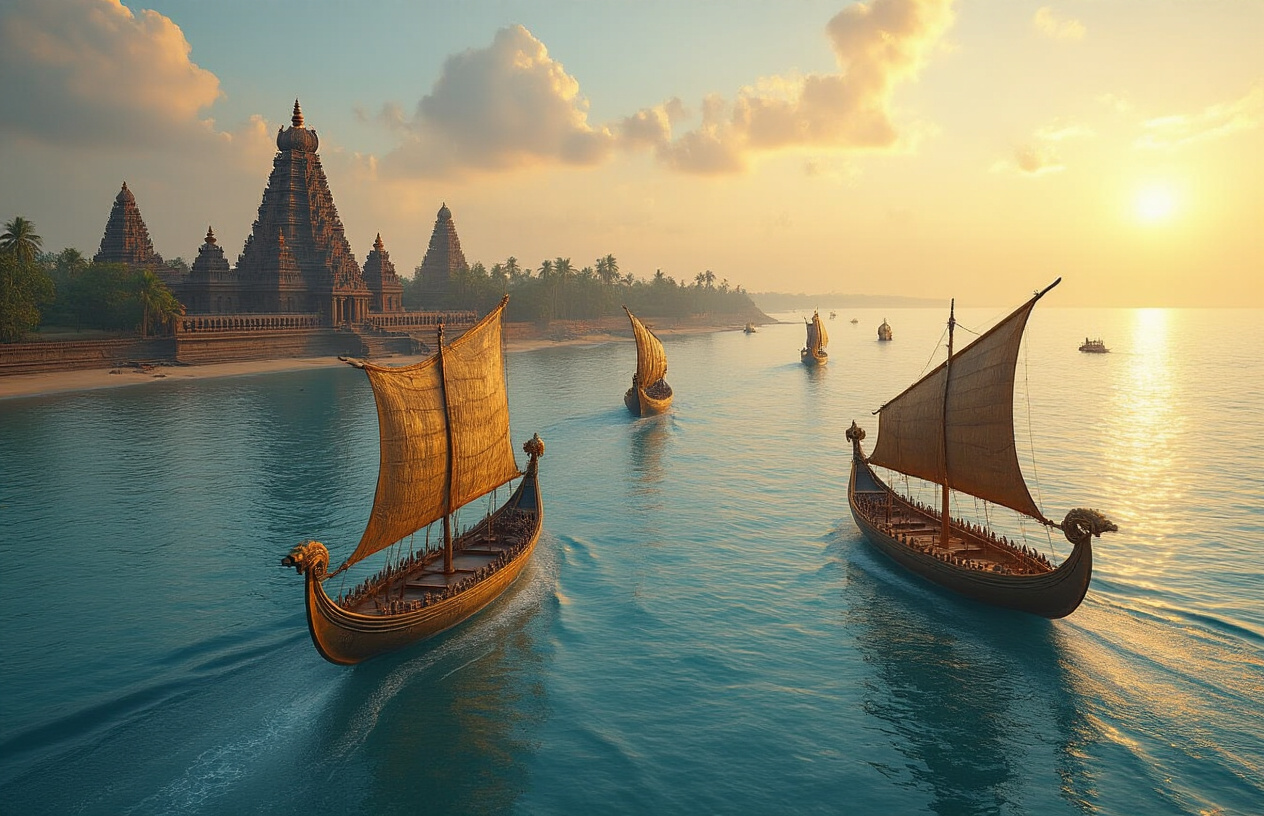
Rajendra Chola’s maritime empire stands as one of history’s most remarkable achievements, born from his brilliant strategic vision and revolutionary approach to naval warfare. His systematic conquest of Southeast Asian trade routes wasn’t just about military might – it was about understanding how controlling the seas could transform an entire civilization. The Chola navy’s advanced technologies and innovative ship designs gave them a decisive edge that allowed them to dominate waters from the Bay of Bengal to the South China Sea.
What makes Rajendra’s empire truly extraordinary is how he managed to govern vast territories separated by thousands of miles of ocean. His administrative systems created the blueprint for managing a water-based empire, balancing local autonomy with central control in ways that wouldn’t be seen again for centuries. The economic prosperity that flowed from controlling these maritime trade networks didn’t just enrich the Cholas – it connected distant cultures and laid the foundation for the interconnected world we know today. Rajendra Chola didn’t just build ships and conquer islands; he created the world’s first truly global empire and showed future generations that the seas could be highways to unprecedented power and prosperity.
For a private guided tour of the Chola sites, please visit Golden Triangle of Chola world heritage sites.
Leave a Reply