
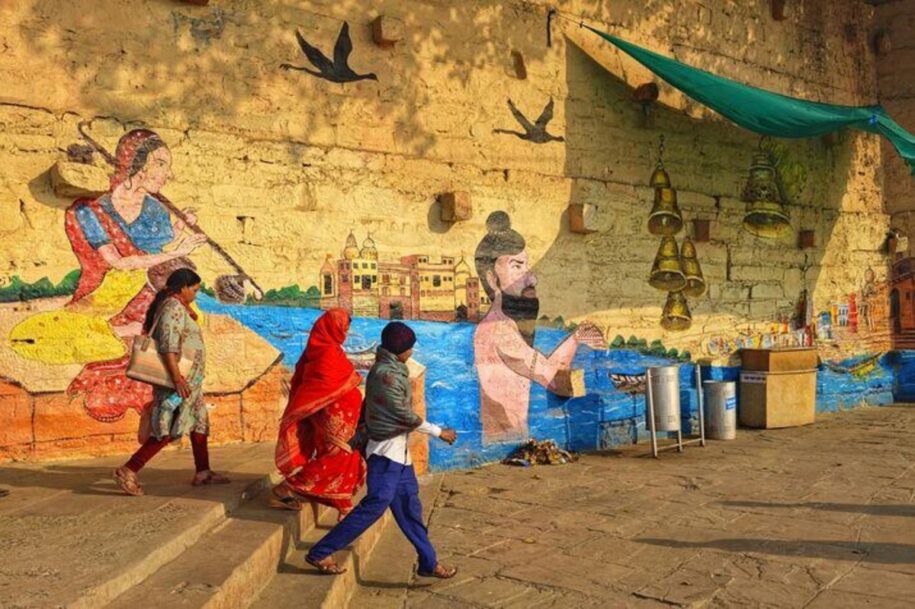
For many first-time visitors, India begins as a list.
The Taj Mahal. Varanasi. Rajasthan’s forts. Kerala’s backwaters.
These places are extraordinary, but lists have a problem: they flatten meaning. They turn a civilization that has evolved over five thousand years into a sequence of photo stops. India, more than most countries, resists that kind of compression.
What travellers often discover—sometimes with surprise—is that India does not reveal itself through monuments alone. It reveals itself through context: who you meet, how long you stay, and whether someone helps you interpret what you are seeing rather than simply showing it to you.
This is where private, culturally immersive journeys change everything.
India Is Not Difficult—It Is Dense
A common myth in travel writing is that India is “overwhelming.”
From a cognitive science perspective, this isn’t quite accurate. India is information-dense.
Studies in environmental psychology show that the human brain experiences stress not from novelty itself, but from unstructured novelty—too many unfamiliar stimuli without interpretive cues. India offers colour, sound, ritual, language, and social interaction all at once. Without context, the brain tires quickly. With context, curiosity replaces fatigue.
Private journeys designed by cultural specialists—like those curated by 5 Senses Tours—work precisely because they introduce structure without rigidity. You are not shielded from India; you are guided through it slowly enough to understand what is unfolding around you.
The Difference Between Seeing and Understanding
Take a temple visit, for example.
On a group tour, it often becomes a timed stop: shoes off, photos, move on.
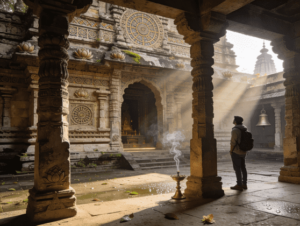
On a privately guided cultural walk, the same temple becomes something else entirely. You learn why the deity faces a particular direction, why oil lamps are lit at dusk, why the soundscape matters as much as the sculpture. Religious studies scholars have long noted that Hindu temples are designed as experiential spaces, meant to be felt rather than merely observed.
Travellers exploring India with 5sensestours.com often remark that these explanations don’t make the experience heavier—they make it lighter. Meaning reduces confusion. Understanding replaces spectacle.
Why Time Is the Most Valuable Luxury in India
Luxury in India is often misunderstood. It is not always about hotels or cars. It is about time.
Tourism research consistently shows that slower itineraries improve memory retention and emotional satisfaction. When days are overpacked, experiences blur. When space is left for conversation, tea breaks, and unplanned encounters, memories sharpen.
This is why private cultural journeys matter so deeply in India. They allow for:
– lingering in a market without pressure
– returning to a place at a different time of day
– accepting an invitation for chai without worrying about a group schedule
Journeys designed by 5 Senses Tours deliberately leave room for these moments, because India’s most meaningful encounters are rarely scheduled—they are noticed.
India Happens Between the Sights
Ask travellers what they remember most vividly months after returning home, and the answers are rarely architectural.
They remember:
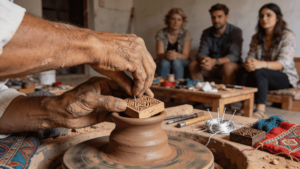
– a conversation with a textile artisan
– the quiet inside a village shrine
– a home-cooked meal shared with strangers
Anthropologists describe these as micro-cultural encounters—small, human-scale interactions that create emotional connection. These moments are difficult to access on large tours, but they are the foundation of immersive travel.
By focusing on privately guided experiences, 5sensestours.com creates conditions where these encounters can happen naturally, without performance or intrusion. You are not watching culture; you are briefly participating in it.
Why India Is Best Experienced Privately
India is deeply social, but it is also deeply personal. Questions about belief, family, food, and ritual often emerge organically when travellers feel safe and unhurried.
Private travel allows guides to adapt explanations to the traveller’s background—whether they are interested in history, spirituality, architecture, or everyday life. Educational psychology supports this approach: personalized learning dramatically increases comprehension and engagement.
Rather than delivering rehearsed scripts, cultural guides become interpreters—helping travellers read India the way locals do, layer by layer.
From Destinations to Relationships
One of the quiet shifts that happens on an immersive journey is that places stop feeling like destinations and start feeling like relationships.
A city is no longer “chaotic”; it is complex.
A ritual is no longer “exotic”; it is intentional.
A silence is no longer awkward; it is meaningful.
This shift is the hallmark of transformational travel, a concept widely discussed in contemporary tourism studies. Travel becomes less about consumption and more about connection.
The journeys curated by 5 Senses Tours are designed with this philosophy at their core: India is not something to conquer or decode quickly. It is something to listen to.
Why This Matters for First-Time Visitors
Many first-time travellers worry that they will “miss something” in India. Ironically, the opposite is true. When everything is rushed, the deeper patterns are missed entirely.
A well-paced, privately guided journey does not show you more India. It helps you understand enough India to want to return.
And that is often what happens. Research on destination loyalty shows that travellers who feel emotionally connected to a place are far more likely to revisit. India rewards this kind of relationship-based travel generously.
India, Read Slowly
India is not a country you skim. It is a text written over millennia—layered, contradictory, poetic, and alive.
To read it well, you need more than transport and accommodation. You need context, patience, and people who understand how culture reveals itself over time.
That is the quiet promise behind journeys crafted by 5 Senses Tours: not to simplify India, but to make it intelligible; not to rush experience, but to deepen it.
For travellers willing to slow down, India offers something rare in modern travel—a sense that you have not just visited a place, but briefly learned how it thinks.
Leave a Reply