
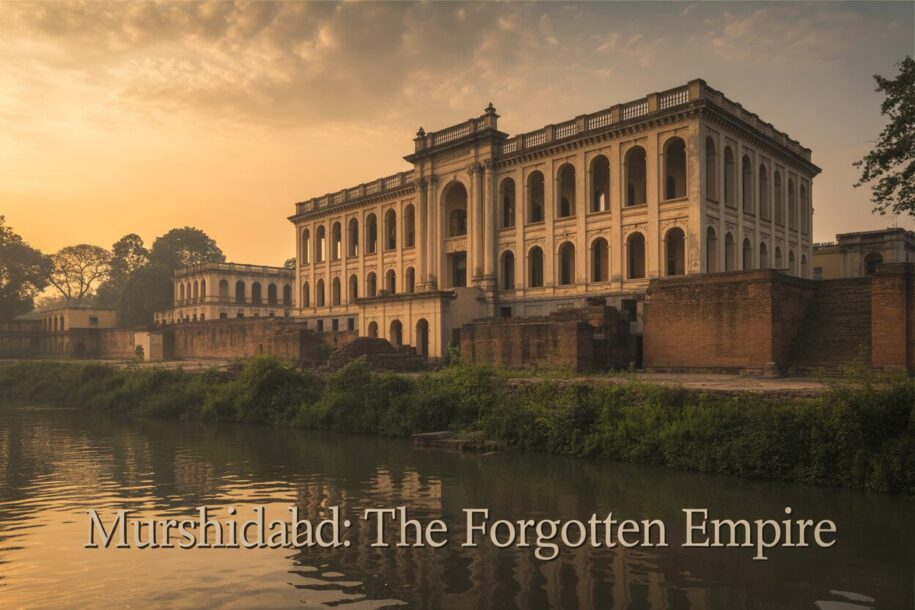
Most people have never heard of Murshidabad, yet this Bengali city once controlled wealth that made European kings jealous. From the early 1700s to the mid-1800s, Murshidabad served as Bengal’s capital and became one of the world’s richest cities—funding massive armies, building stunning palaces, and controlling trade routes that connected Asia to Europe.
Then it all vanished.
We’ll explore how Murshidabad rose to become an economic powerhouse that rivaled European nations, generating more revenue than entire kingdoms. You’ll discover the architectural marvels and cultural achievements that made this forgotten capital a center of learning and luxury. Finally, we’ll uncover how British colonial policies systematically dismantled this empire and why modern history books rarely mention a city that once shaped global commerce.
Today, crumbling palaces and empty streets tell the story of what happens when empires fall and winners write the history books.
For a private guided tour of Murshidabad, please visit The Great Betrayal.
The Golden Age of Murshidabad as the Capital of Bengal
Rise to power under Nawab Murshid Quli Khan in the early 18th century
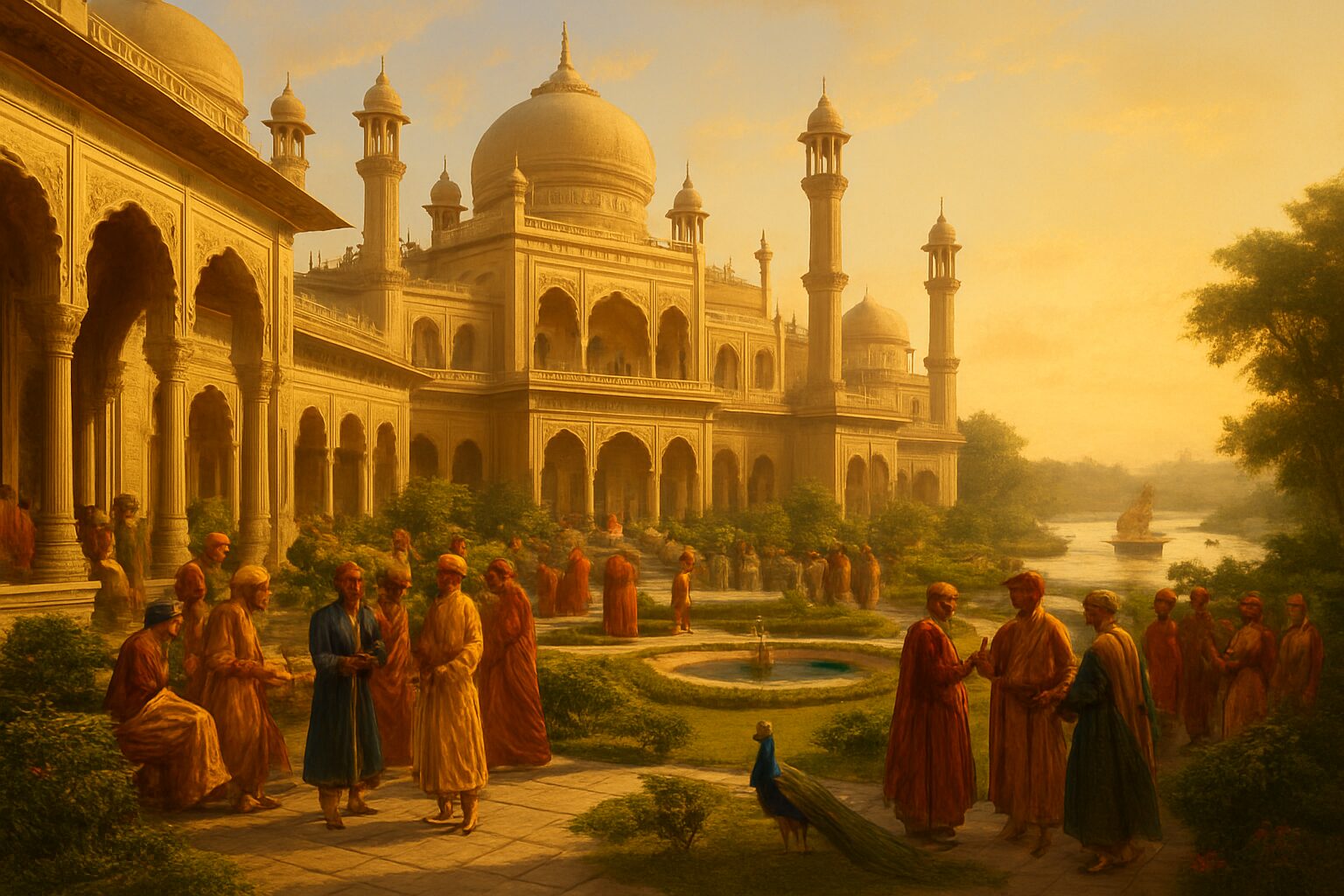
When Murshid Quli Khan arrived in Bengal in 1700 as the Mughal Empire’s revenue collector, nobody could have predicted he would transform a sleepy town into one of the world’s most prosperous capitals. This shrewd administrator, originally from a humble background in Central Asia, possessed an almost supernatural ability to organize and extract wealth from Bengal’s fertile lands.
Khan didn’t just collect taxes – he revolutionized the entire system. He moved the capital from Dhaka to Murshidabad in 1704, renaming the city after himself with characteristic boldness. Within two decades, he had essentially carved out an independent kingdom while still paying nominal tribute to the weakening Mughal court in Delhi. His genius lay in recognizing that Bengal’s enormous agricultural surplus could fund a magnificent state if properly managed.
The transformation was breathtaking. Khan recruited talented administrators from across the subcontinent, established efficient record-keeping systems, and created a network of local agents who could squeeze maximum revenue from every village. His court attracted poets, artists, and intellectuals who would help create Bengal’s distinctive cultural identity during this golden period.
Strategic location on the Ganges River enabling massive trade networks
Murshidabad’s position on the Ganges wasn’t just convenient – it was absolutely perfect for controlling Bengal’s entire economy. The city sat at the intersection of major river routes that connected the rich agricultural heartlands with the Bay of Bengal, creating a natural chokepoint where Khan could monitor and tax virtually all trade flowing through the region.
Rivers served as Bengal’s highways, and Murshidabad became the ultimate toll booth. Boats loaded with rice, silk, cotton, and spices had to pass through the city’s waters, where Khan’s officials would assess duties and fees. The Ganges also connected Murshidabad directly to the sea, allowing European trading companies to sail their ships right up to the city’s docks.
This river network stretched like arteries throughout Bengal, reaching remote villages where farmers grew crops specifically for export. Cotton cultivators in distant districts knew their harvest would eventually flow through Murshidabad’s markets. Silk producers planned their output around the city’s trading seasons. The entire regional economy began to revolve around Murshidabad’s gravitational pull.
Control over Bengal’s lucrative textile and silk industries
Bengal’s textile industry during Murshidabad’s golden age produced fabrics so fine and beautiful that European aristocrats would pay astronomical prices for a single piece. The region’s humid climate, skilled weavers, and abundant cotton created perfect conditions for producing textiles that were literally worth their weight in silver.
Khan and his successors didn’t just tax these industries – they actively promoted and protected them. They established royal workshops where master craftsmen could work without interference, guaranteed steady supplies of raw materials, and created quality control systems that maintained Bengal’s reputation for excellence. The famous Murshidabad silk became a luxury brand recognized from London to Istanbul.
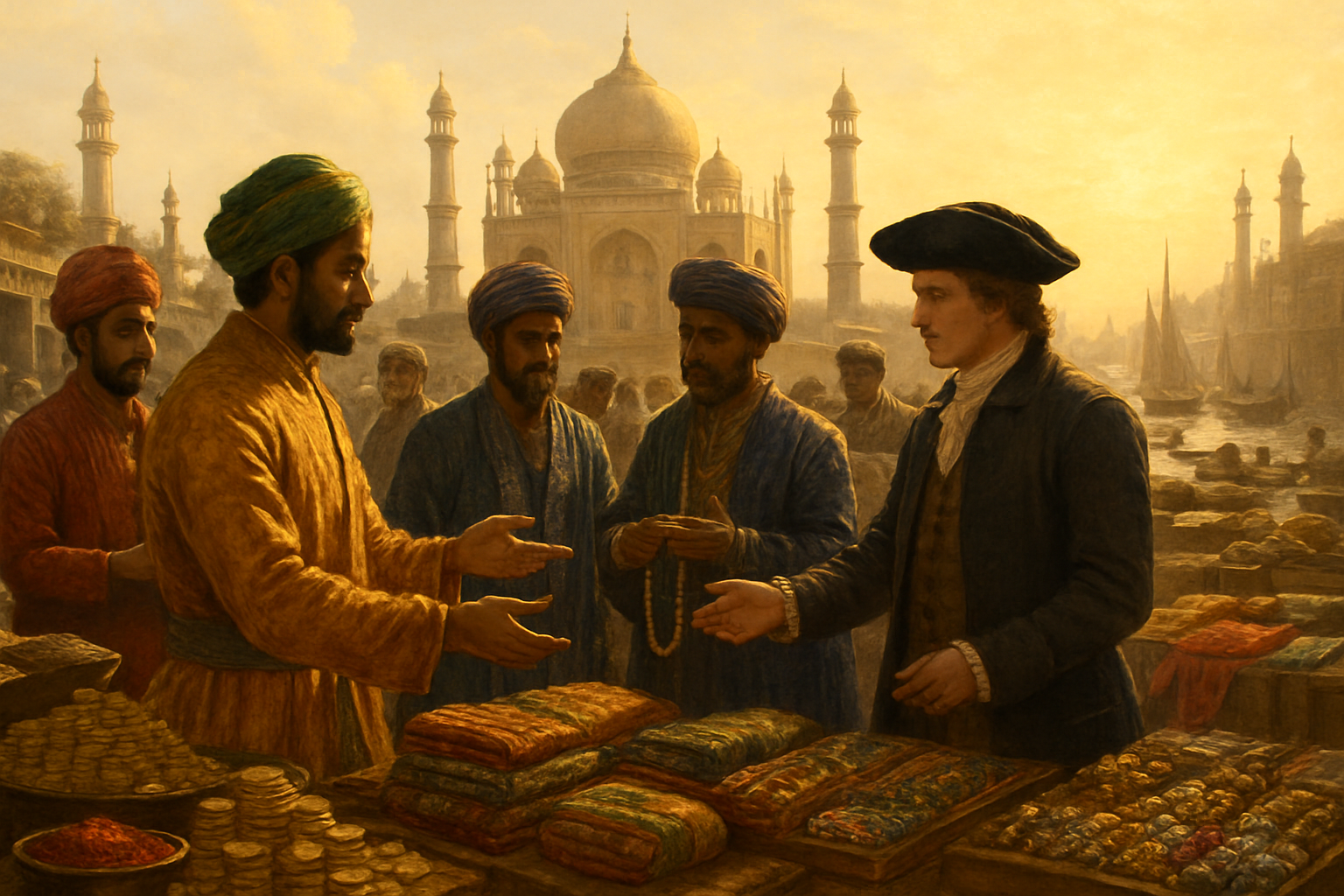
The textile trade generated enormous profits that flowed directly into the Nawab’s treasury. European companies like the East India Company competed fiercely for the right to purchase Bengal’s textiles, often agreeing to pay premium prices just to secure their supply chains. A single ship loaded with Bengal silk and cotton could generate more profit than an entire year’s agricultural output from many other regions.
To visit Bishnupur and meet weavers of today in action, visit Bishnupur & Baluchari Silk.
Administrative efficiency that maximized revenue collection
Khan’s administrative system was a masterpiece of efficiency that would have impressed modern bureaucrats. He divided Bengal into manageable districts, appointed capable local officials, and created accountability systems that prevented corruption while maximizing tax collection. Every village had its revenue assessment, every trader faced standardized duties, and every official knew exactly what was expected of them.
The system worked because it was both fair and ruthless. Farmers knew exactly how much tax they owed and when it was due. Merchants could predict their costs when planning trading expeditions. Officials who performed well were rewarded generously, while those who failed faced swift punishment. This predictability created confidence that encouraged economic growth.
Record-keeping reached almost obsessive levels of detail. Khan’s administration maintained detailed accounts of every transaction, every tax payment, and every official decision. These records allowed the government to spot trends, identify problems, and adjust policies quickly. The revenue generated through this system was so substantial that Murshidabad could afford to maintain armies, build magnificent palaces, and fund cultural projects while still sending tribute to Delhi.
For a guided walk through British Kolkata, visit British Raj Walk.
Economic Powerhouse That Rivaled European Nations
Annual revenue that exceeded many contemporary kingdoms
During the 18th century, Murshidabad generated staggering revenues that put most European kingdoms to shame. The Bengal Subah under the Nawabs collected approximately 14-16 crores of rupees annually, a sum that exceeded the entire royal treasury of France at its peak. This massive income came from multiple sources: agricultural taxes from the fertile Ganges delta, customs duties from bustling river ports, and tribute from vassal states.
The sheer scale becomes clear when compared to contemporary powers. While the British East India Company’s annual profits from all Indian operations rarely exceeded 2-3 crores, Bengal alone was generating five times that amount. Even the mighty Ottoman Empire, at its zenith, couldn’t match Bengal’s consistent revenue streams. The region’s wealth was so legendary that European travelers routinely described it as richer than any single European nation.
Financing of Mughal Empire operations across India
Bengal served as the financial backbone of the Mughal Empire’s military and administrative machinery. The Nawabs of Murshidabad regularly dispatched enormous sums to Delhi to support imperial campaigns in the Deccan, maintain the imperial court’s lavish lifestyle, and fund infrastructure projects across the subcontinent.
Military expeditions into South India were almost entirely bankrolled by Bengal’s treasury. The famous campaigns of Aurangzeb in the Deccan relied heavily on Bengali gold and silver. When the imperial treasury in Delhi ran dry, emperors turned to Murshidabad for emergency funding. This financial dependence became so pronounced that some historians argue the Mughal Empire’s decline accelerated when Bengal’s tribute payments became irregular following political instability in the region.
The Nawabs maintained dedicated revenue departments that managed these imperial obligations while ensuring local administration remained well-funded. This dual responsibility required sophisticated financial planning and demonstrated the region’s exceptional economic capacity.
International trade connections spanning from Europe to Southeast Asia
Murshidabad sat at the center of a vast trading network that connected three continents. European companies—Dutch, French, British, and Portuguese—maintained permanent establishments in the city, competing fiercely for access to Bengal’s coveted textiles, silk, and saltpeter. Ships from Amsterdam, London, and Lisbon regularly anchored at nearby river ports, their holds filled with silver that would soon flow into Murshidabad’s markets.
Eastward, Bengali merchants maintained thriving connections with Southeast Asian ports. Chittagong and Dhaka served as launching points for trading expeditions to Burma, Malacca, and the Indonesian archipelago. Bengali textiles were so prized in Southeast Asian courts that local rulers often paid premiums for guaranteed supplies.
The city’s merchants weren’t passive recipients of foreign trade. They actively invested in shipping ventures, maintained warehouses in distant ports, and developed sophisticated credit arrangements with international partners. Some Bengali trading houses operated on a scale comparable to European joint-stock companies, with capital investments reaching hundreds of thousands of rupees.
Banking and credit systems that supported imperial expansion
Murshidabad pioneered banking innovations that rivaled contemporary European financial centers. The city’s sarrafs (money changers) and mahajans (merchant bankers) created complex credit instruments that facilitated trade across vast distances. These financial houses issued hundis (bills of exchange) that were honored from Kabul to Coromandel, creating India’s most sophisticated credit network.
The banking system supported imperial expansion through strategic lending. When regional governors needed quick capital for military campaigns or infrastructure projects, Murshidabad’s bankers provided immediate liquidity against future tax revenues. This system allowed the Mughal administration to respond rapidly to military threats or administrative needs without waiting for slow-moving treasury transfers.
Local banking houses also financed private trade ventures, agricultural improvements, and manufacturing enterprises. The Jagat Seths, Murshidabad’s most prominent banking family, operated with capital reserves that exceeded the budgets of most European principalities. Their credit decisions could influence military campaigns, determine the success of trading expeditions, and even impact imperial succession disputes through strategic lending to competing factions.
The Architectural and Cultural Splendor of a Forgotten Capital

Grand palaces and monuments that showcased imperial wealth
Walking through Murshidabad today, you can still catch glimpses of what once made European visitors gasp in amazement. The Hazarduari Palace, literally meaning “palace of a thousand doors,” stands as the most spectacular reminder of the Nawabs’ incredible wealth. This three-story marvel stretches across 41 acres and actually contains 1,000 doors – 100 of which are false doors designed to confuse potential intruders.
The palace’s Durbar Hall could accommodate thousands of courtiers, its ceiling soaring 80 feet high and decorated with chandeliers that came directly from Europe. Persian carpets worth fortunes covered marble floors that reflected light from countless mirrors imported from Venice. The throne room housed the legendary Masnad, a silver throne that weighed over 400 pounds and was studded with precious gems.
Beyond the main palace, the Nawabs built an entire complex of architectural wonders. The Katra Mosque, commissioned by Murshid Quli Khan himself, became one of Bengal’s largest mosques. The Wasif Manzil and Sang-i-Dalan showcased different architectural styles – from Mughal grandeur to European neoclassical influences that started appearing in the later period.
The famous Murshidabad silk was so prized that the Nawabs built entire neighborhoods for master weavers. These artisan quarters featured beautifully designed workshops with special lighting and ventilation systems that protected the delicate fabric work.
Flourishing arts, crafts, and intellectual centers
Murshidabad became the beating heart of Bengali culture during its golden years. The Nawabs didn’t just collect wealth – they poured it into creating an artistic renaissance that attracted talent from across the subcontinent and beyond.
The city’s ivory carving workshops produced pieces so intricate that each artist might spend months on a single decorative box. Master craftsmen developed techniques for carving multiple layers within single pieces, creating optical illusions that still baffle modern artisans. These ivory artists enjoyed royal patronage and lived in special quarters near the palace.
The Nawabs established what was essentially Bengal’s first major library and translation center. Persian, Arabic, and Sanskrit texts were copied and translated, creating an intellectual hub that drew scholars from Delhi, Isfahan, and even distant Samarkand. The court employed dozens of poets, historians, and philosophers who documented not just the political events but also the cultural life of this extraordinary city.
Music flourished under the Nawabs’ generous patronage. They brought in master musicians from the Mughal courts and local Bengali traditions merged with Persian and Arabic musical forms. Evening concerts in the palace courtyards became legendary, featuring both classical ragas and folk songs from the Bengal countryside.
The city’s textile industry went far beyond the famous silk. Craftsmen developed new dyeing techniques using local plants and minerals, creating colors that European traders had never seen. The workshops became schools where techniques passed from master to apprentice, creating artistic lineages that lasted for generations.
Religious tolerance fostering diverse cultural communities
What really set Murshidabad apart from many other Indian capitals was the Nawabs’ remarkable approach to religious diversity. Rather than favoring one community, they created space for everyone to thrive – and this tolerance became one of their greatest strengths.
The city housed magnificent Hindu temples alongside Islamic monuments. The Kali temple at Khosh Bagh drew devotees from across Bengal, while the Nawabs themselves sometimes participated in Hindu festivals. They funded temple construction and repairs, understanding that religious harmony meant economic prosperity.
The Armenian community established a significant presence in Murshidabad, bringing their expertise in international trade. They built beautiful churches and became key players in the silk trade with Europe. The Nawabs protected Armenian merchants and even granted them special trading privileges, recognizing their value as intermediaries with European companies.
Jewish traders also found welcome in the city, adding another layer to its cosmopolitan character. Portuguese and Dutch merchants maintained permanent residences, creating small European enclaves that introduced new architectural styles and customs.
This religious mixing created unique cultural fusion. Hindu artisans worked on Islamic monuments, incorporating traditional Bengali motifs into Persian designs. Muslim musicians collaborated with Hindu temple singers, creating new musical forms that blended different traditions. Christian Armenian merchants funded Hindu festivals, while Muslim Nawabs celebrated Durga Puja with the same enthusiasm as Eid.
The result was a city where different communities didn’t just coexist – they actively collaborated and influenced each other. This tolerance wasn’t just noble idealism; it was smart politics that made Murshidabad incredibly wealthy and culturally rich.
The Downfall: How British Colonial Policies Destroyed an Empire
The Battle of Plassey and the End of Independent Rule
The Battle of Plassey in 1757 marked the beginning of the end for Murshidabad’s golden era. Siraj ud-Daulah, the last independent Nawab of Bengal, faced Robert Clive’s forces on June 23rd in what would become one of history’s most consequential battles. The outcome wasn’t decided by superior British military might but by betrayal from within. Mir Jafar, the Nawab’s own commander, had already struck a deal with the British, ensuring their victory before the first shot was fired.
The battle itself lasted barely three hours, but its impact resonated for centuries. With Siraj ud-Daulah’s defeat and subsequent execution, Bengal lost its independence. The British installed Mir Jafar as a puppet ruler, but real power now rested with the East India Company. The centuries-old system of local governance, which had made Bengal one of the world’s wealthiest regions, crumbled overnight.
What made this defeat particularly devastating was timing. Murshidabad was at its peak – controlling vast trade networks, commanding enormous revenues, and maintaining one of Asia’s most sophisticated administrative systems. The city’s treasury held wealth that European nations could only dream of, accumulated through generations of shrewd governance and strategic trade policies.
Systematic Dismantling of Local Industries by the East India Company
The East India Company wasted no time in destroying Bengal’s industrial backbone. Their approach was methodical and ruthless, designed to transform a manufacturing powerhouse into a supplier of raw materials for British factories.
The famous textile industry of Bengal, particularly silk and cotton production, faced immediate assault. British policies forced local weavers to sell exclusively to Company agents at prices far below market rates. Weavers who refused faced brutal punishment – some had their thumbs cut off to prevent them from working independently. The Company then flooded Indian markets with cheap, machine-made British textiles, driving local artisans out of business.
Murshidabad’s banking system, once sophisticated enough to handle international transactions across Asia and Europe, was systematically dismantled. Local bankers and merchants who had financed trade for generations found themselves cut out of lucrative deals, replaced by British trading houses that answered only to London.
The shipbuilding industry, which had made Bengal vessels famous from the Arabian Sea to Southeast Asia, was deliberately destroyed. British policies prohibited local shipbuilders from constructing vessels above a certain size, effectively ending Bengal’s maritime independence. Skilled craftsmen who had built some of the world’s finest ships were reduced to repairing small fishing boats.
Agricultural policies proved equally destructive. The Company imposed new tax collection systems that extracted maximum revenue with little concern for local conditions. The permanent settlement of 1793 turned farmers into tenants on land their families had worked for generations.
Transfer of Administrative Power to Calcutta
The British understood that controlling Bengal meant controlling its administrative heart. In 1772, Warren Hastings made the strategic decision to shift the seat of government from Murshidabad to Calcutta. This wasn’t merely an administrative change – it was a calculated move to break the power structures that had made Bengal prosperous for centuries.
Murshidabad had been carefully chosen by the Mughals as their provincial capital because of its strategic location on the Ganges, its accessibility to both land and river routes, and its position at the center of Bengal’s agricultural heartland. The city’s bureaucrats, merchants, and nobles had developed intricate networks of trade and governance that extended across the subcontinent.
When the British moved government offices to Calcutta, they didn’t just transfer buildings and paperwork. They destroyed an entire ecosystem of local expertise. Experienced administrators who understood local conditions, languages, and customs found themselves sidelined. The new British system imported officials from England who knew nothing about Bengal’s complex social and economic realities.
The shift also had immediate economic consequences. Government spending, which had supported thousands of jobs in Murshidabad – from clerks and translators to suppliers and service providers – suddenly disappeared. The city’s markets, which had thrived on government demand, began their long decline.
Calcutta’s rise came directly at Murshidabad’s expense. The British concentrated infrastructure investments, port facilities, and industrial development in their new chosen city, ensuring that Murshidabad would never regain its former prominence.
Economic Exploitation That Drained Centuries of Accumulated Wealth
The scale of wealth extraction from Bengal under early British rule remains staggering. Economic historians estimate that the East India Company drained resources worth trillions in today’s currency from the region between 1757 and 1857. This wasn’t just taxation – it was systematic economic colonialism designed to transfer Bengal’s accumulated wealth to Britain.
The Company’s revenue collection methods were particularly brutal. They imposed tax rates that often exceeded the total agricultural output of villages, forcing farmers to sell land, livestock, and even family members into bondage to meet British demands. The resulting famines, including the devastating Bengal Famine of 1770, killed millions while the Company continued exporting grain to maximize profits.
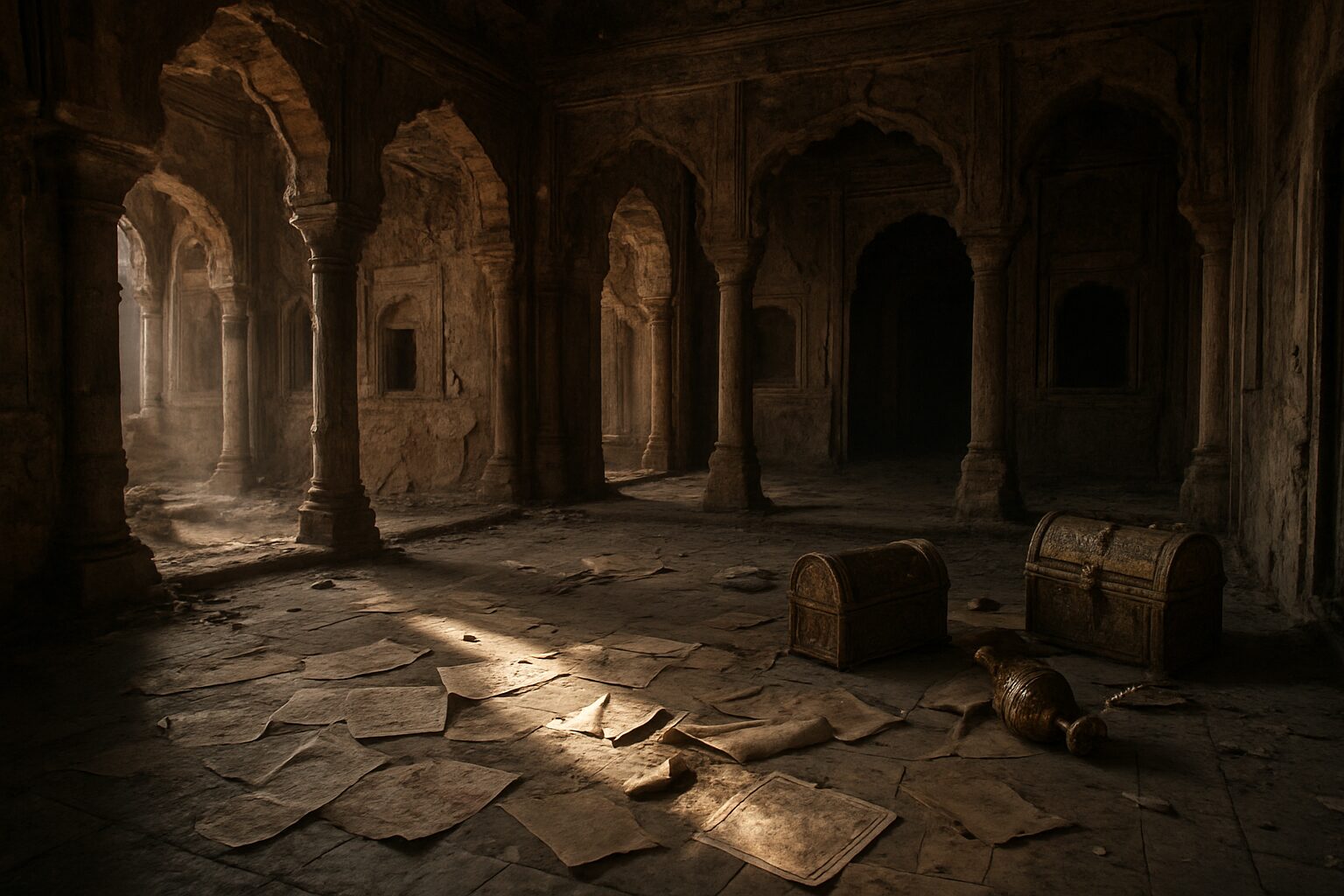
Murshidabad’s legendary treasury, built up over generations of careful financial management, was systematically looted. The Nawabs had maintained gold and silver reserves that rivaled European royal treasuries, along with vast collections of jewels, art, and precious artifacts. The British confiscated these treasures, shipping them to London where they funded Britain’s industrial revolution.
The Company also manipulated currency and trade to maximize extraction. They used their political control to grant themselves monopolies on profitable goods while forcing Indian producers to accept below-market prices. Salt, opium, and textiles – three pillars of Bengal’s economy – became tools for extracting wealth rather than generating prosperity for local communities.
Perhaps most damaging was the Company’s practice of using Bengali revenues to fund their operations elsewhere in India. Money collected from Bengal’s farmers and merchants paid for British military campaigns in other regions, effectively forcing Bengal to finance its own subjugation and the conquest of the rest of India.
The Great Erasure: Why History Forgot Murshidabad
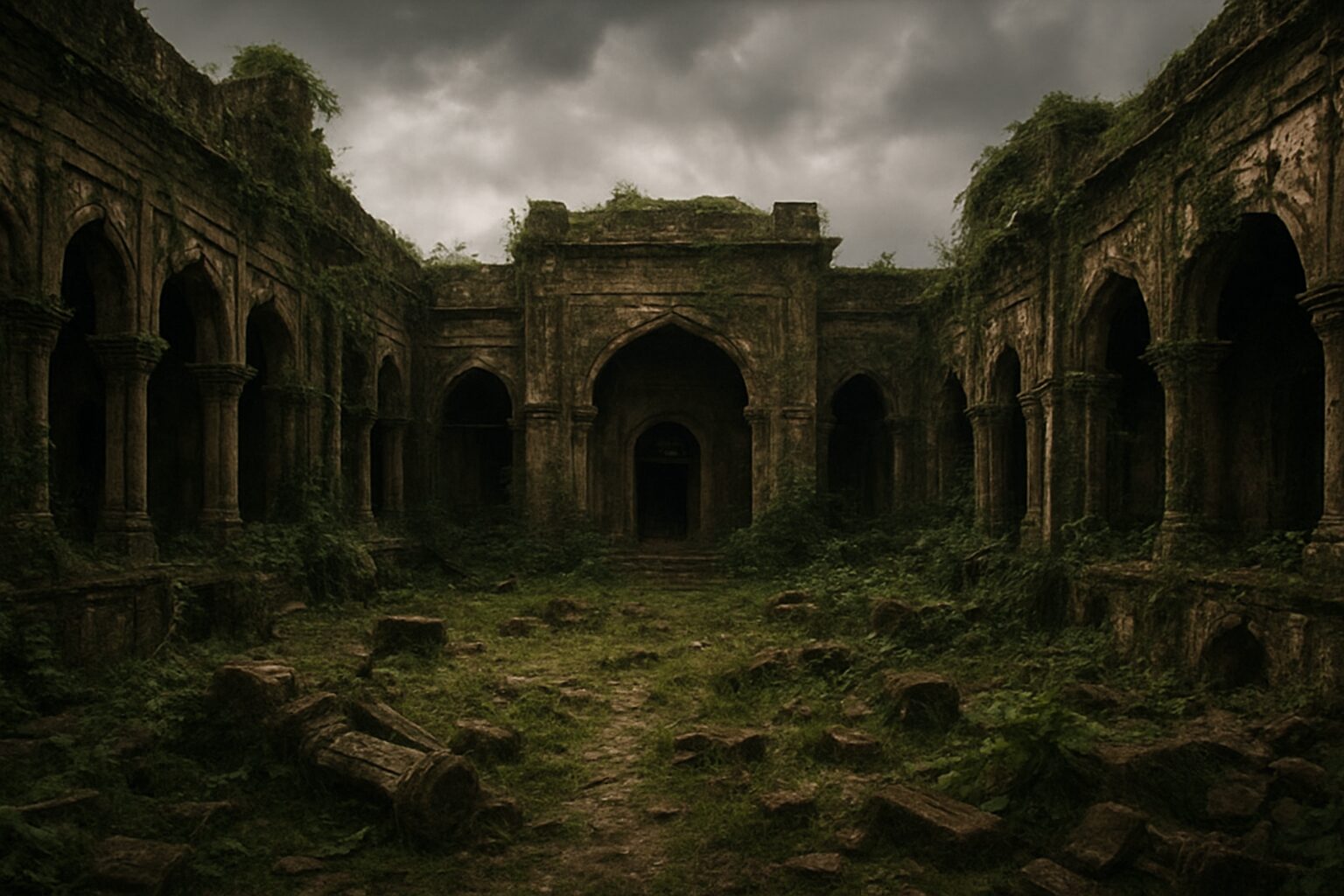
Colonial historiography that minimized pre-British achievements
British colonial historians crafted a narrative that painted India before colonialism as a land of perpetual chaos and economic stagnation. This wasn’t accidental – it served a crucial purpose in justifying imperial rule. When British scholars wrote about Bengal’s history, they systematically downplayed Murshidabad’s remarkable achievements during the 18th century.
The East India Company’s official records, which later became the foundation for much historical scholarship, portrayed the Nawabs of Bengal as corrupt, inefficient rulers who squandered their wealth on luxury while their subjects suffered. This portrayal conveniently ignored the sophisticated administrative systems, thriving trade networks, and cultural patronage that made Murshidabad one of the world’s wealthiest cities.
European travelers who visited Murshidabad before British conquest described it as rivaling Paris or London in grandeur and commerce. Yet these accounts were overshadowed by colonial narratives that emphasized the “civilizing mission” of British rule. The colonial education system further cemented these distorted perspectives by teaching Indian students a version of their own history that glorified British achievements while diminishing indigenous accomplishments.
Academic institutions established during the colonial period became echo chambers for these interpretations. Indian scholars, trained in British universities or colonial institutions, often internalized these biases, perpetuating the myth that India lacked significant economic or political achievements before European intervention.
Deliberate suppression of indigenous economic success stories
The British Empire had a vested interest in erasing evidence of India’s pre-colonial economic prosperity. Acknowledging that places like Murshidabad once generated wealth that dwarfed entire European nations would have undermined the moral foundation of colonial rule.
Official British documentation systematically understated the scale of Bengal’s economic output during Murshidabad’s heyday. Tax records and trade statistics were manipulated or selectively reported to support the narrative that British administration brought unprecedented prosperity to the region. The reality was exactly the opposite – Bengal’s contribution to global trade declined dramatically after British control was established.
The destruction of local records and archives wasn’t merely collateral damage from political upheaval. British administrators actively discouraged the preservation of documents that highlighted pre-colonial achievements. Libraries and manuscript collections that contained evidence of Murshidabad’s economic sophistication were neglected or dispersed.
Financial institutions and trading practices that had evolved over centuries in Murshidabad were dismissed as primitive by colonial administrators who replaced them with British systems. The indigenous banking networks, credit mechanisms, and commercial partnerships that had once connected Bengal to markets across Asia were systematically dismantled and their significance erased from official histories.
Shift of global attention to British-established commercial centers
As the British Empire consolidated its control over India, global attention naturally shifted toward the new centers of power they established. Calcutta, founded as the East India Company’s headquarters, quickly overshadowed Murshidabad in international consciousness. The world began to see India through British eyes, focusing on British-created cities while ignoring the indigenous urban centers that had existed for centuries.
International trade networks that had once connected Murshidabad to merchants in Central Asia, Southeast Asia, and the Middle East were gradually redirected through British-controlled ports. European diplomatic missions, which had once maintained representatives in Murshidabad’s court, relocated to follow the new centers of political power.
The emergence of British-established hill stations, presidency towns, and cantonment areas created an entirely new geography of importance in colonial India. These places became the subjects of travelogues, official reports, and scholarly studies, while traditional centers like Murshidabad faded from international awareness.
Even after independence, this colonial geographic imagination persisted. Modern India’s focus on developing former British administrative centers meant that places like Murshidabad continued to be marginalized in national development plans and international attention. The infrastructure investments, educational institutions, and industrial development that could have restored some of Murshidabad’s prominence were directed elsewhere, completing the city’s transition from imperial capital to historical footnote.
Modern Murshidabad: Traces of Glory in a Declining Town

Current Economic Struggles and Population Decline
Once the economic heart of Bengal, Murshidabad today faces harsh realities that starkly contrast with its glorious past. The district has become one of West Bengal’s most economically backward regions, with unemployment rates soaring above state averages. Young people migrate to Kolkata, Delhi, and other metropolitan cities in search of opportunities that their ancestral town can no longer provide.
The textile industry that once made Murshidabad famous has largely collapsed, unable to compete with mechanized production centers. Traditional crafts like silk weaving and ivory carving survive only as small-scale cottage industries, employing a fraction of the workforce they once sustained. Agricultural productivity remains low due to outdated farming techniques and frequent flooding from the Bhagirathi River.
Population statistics tell a sobering story. While surrounding districts have seen growth, Murshidabad’s urban areas show declining numbers as families seek better prospects elsewhere. The literacy rate lags behind state averag.es, and healthcare infrastructure struggles to serve remote villages. Power cuts remain frequent, hampering any industrial development that might reverse the economic decline
Surviving Architectural Remnants Telling Stories of Past Grandeur
Walking through Murshidabad feels like stepping into a living museum where history whispers from every crumbling wall. The Hazarduari Palace, with its thousand doors, stands as the most prominent survivor of the Nawabi era. Built in 1837, this neoclassical marvel houses an extraordinary collection of artifacts, from European chandeliers to ornate palanquins, each piece narrating tales of cosmopolitan luxury.
The Katra Masjid, constructed by Nawab Murshid Quli Khan himself, displays the architectural fusion that defined the city’s golden age. Its massive gateway and sprawling courtyard once echoed with prayers from thousands of devotees. Nearby, the tomb of the city’s founder lies in peaceful decay, visitors few but reverence intact.
Scattered throughout the district, numerous smaller monuments dot the landscape like forgotten jewels. The Motijhil complex, with its palatial ruins reflected in an ancient lake, creates an almost ethereal atmosphere. The Nimak Haram Deorhi, though weathered by centuries, still showcases intricate stucco work that speaks of master craftsmen whose skills have long vanished.
These structures face constant threats from monsoon rains, rising groundwater, and inadequate maintenance funds. Many private heritage buildings serve as family homes, their ornate facades hiding families who can barely afford basic upkeep. Each passing year sees further deterioration of details that took generations to create.
Local Efforts to Preserve Historical Heritage and Memory
Despite limited resources, passionate individuals and organizations work tirelessly to keep Murshidabad’s legacy alive. Local historians like Professor Arun Naskar have spent decades documenting oral histories from elderly residents whose families witnessed the transition from Nawabi rule to British administration. Their recordings capture stories that would otherwise disappear with their narrators.
The Murshidabad Heritage Development Society, formed by concerned citizens, organizes heritage walks and cultural programs to raise awareness among younger generations. They’ve created detailed maps marking historical sites and published booklets in Bengali and English to guide visitors through the city’s rich past. Their volunteer guides, many retired teachers and government employees, share knowledge passed down through generations.
School initiatives play a crucial role in heritage preservation. Several local institutions have introduced mandatory heritage education classes where students learn about their city’s significance in Indian history. Student groups regularly clean and maintain smaller monuments, fostering a sense of ownership and pride in their heritage.
Photography clubs and cultural societies document architectural details before they’re lost to time and weather. Their digital archives serve as valuable resources for researchers and restoration experts. Social media campaigns help spread awareness beyond Murshidabad’s boundaries, attracting heritage tourists and potential funding sources.
The West Bengal government has designated Murshidabad as a heritage city, bringing some official recognition and limited funds for restoration projects. However, local advocates argue that much more systematic effort is needed to prevent further deterioration of this irreplaceable historical treasure.

Murshidabad’s story reads like a cautionary tale about how quickly greatness can fade into obscurity. This city wasn’t just another regional capital – it was an economic powerhouse that could go toe-to-toe with major European nations, boasting architectural marvels and cultural richness that made it the jewel of Bengal. The British didn’t just conquer Murshidabad; they systematically dismantled everything that made it great, stripping away its wealth, political importance, and eventually its place in our collective memory.
Walking through modern Murshidabad today, you’ll find fragments of its glorious past scattered among the everyday struggles of a town that time forgot. The palaces still stand, the silk weavers still work their looms, but the world has moved on without them. This isn’t just about one city’s rise and fall – it’s about how colonial powers reshaped entire civilizations and decided which stories get told. Murshidabad deserves better than being a footnote in history books. Its legacy reminds us that empires can vanish, but the human spirit that built them never truly dies.
For a private guided tour of Murshidabad, please visit The Great Betrayal.
Leave a Reply