
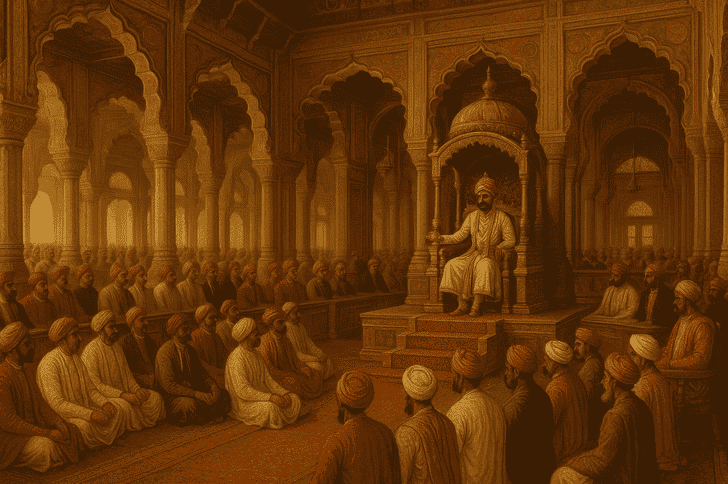
Mysore Kingdom stands as a remarkable testament to the harmonious fusion of monarchical wisdom and democratic principles, establishing itself as a beacon of progressive governance long before India’s independence. Under the visionary leadership of the Wadiyar dynasty, particularly during the reigns of Maharaja Chamaraja Wadiyar X and Maharaja Nalvadi Krishnaraja Wadiyar IV, Mysore transformed into what Mahatma Gandhi aptly termed “Model Mysore,” worthy of emulation by other principalities.
This princely state distinguished itself by pioneering democratic institutions, implementing comprehensive welfare schemes, and fostering industrial development that would serve as a template for modern India’s governance structure. The kingdom’s commitment to people-centric governance established foundations that continue to influence democratic practices in contemporary Karnataka.
First Representative Institutions
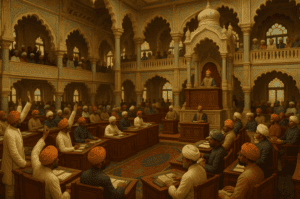
The Mysore Kingdom made history in 1881 when Maharaja Chamaraja Wadiyar X established the Mysore Representative Assembly, marking the first democratic institution in princely India. This groundbreaking initiative preceded the Indian National Congress by four years and demonstrated the kingdom’s commitment to inclusive governance. The assembly’s creation was inspired by the maharaja’s belief that “the interests of the government are identical with those of the people”.
Within days of assuming power on March 25, 1881, Chamaraja Wadiyar issued an order on August 25 stating his desire that government measures should be “better known and appreciated by the people for whose benefit they are intended”. This represented a radical departure from traditional autocratic rule, establishing a precedent for participatory democracy in India.
Evolution of the Bicameral System
The democratic framework evolved significantly under Maharaja Nalvadi Krishnaraja Wadiyar IV (1902-1940), who expanded the representative system into a sophisticated bicameral legislature. In 1907, the kingdom established the Mysore Legislative Council as an upper house, transforming the unicameral Representative Assembly into a comprehensive two-house system.
This bicameral structure comprised:
1. The Mysore Representative Assembly (Lower House)
- Initially consisted of 144 members in 1881
- Expanded to 250 members by 1923
- Represented diverse constituencies including urban, rural, and special interest groups
- Provided a platform for direct people’s participation in governance
2. The Mysore Legislative Council (Upper House)
- Established in 1907 with 15 members, later expanded to 50 by 1923
- Included both elected and nominated members
- Featured representatives from universities, trade and commerce, and labor organizations
- Served as a deliberative body for policy refinement and expert input
Constitutional Reforms
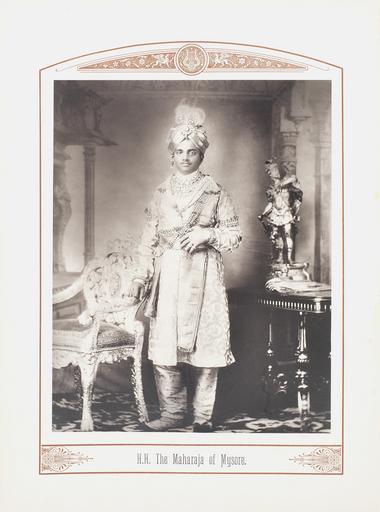
The Government of Mysore Act 1923 formalized these democratic institutions, granting them substantial powers including:
- Budget discussions and approval (introduced in 1914)
- Voting on demand for grants (granted in 1923)
- Moving cut motions to reduce government expenditure
- Legislative oversight of government policies and administration
Remarkably, the system incorporated the principle that bills should first pass through the Representative Assembly before introduction in the Legislative Council, ensuring democratic legitimacy. This process demonstrated the kingdom’s commitment to bottom-up governance, where people’s representatives had genuine influence over legislation.
People’s Decision-Making
The Mysore Kingdom pioneered decentralized governance through a multi-tiered system that brought decision-making closer to the people. This structure included:
District and Taluk Boards
- Established with significant autonomy for local administration
- Enabled communities to address regional concerns directly
- Facilitated resource allocation based on local priorities
Municipal Governance
- Cities like Mysore and Bangalore had elected councils
- Managed sanitation, water supply, and urban planning
- Provided citizens with direct control over municipal services
Village Panchayats
- Headed by elected members rather than appointed officials
- Addressed grassroots concerns and local development needs
- Established democratic participation at the most fundamental level
Political Pluralism and Opposition
The kingdom demonstrated remarkable political maturity by accommodating diverse political viewpoints. Multiple political parties operated within the system:
- Praja Mitra Mandali (1917): Demanded equal representation for various castes
- Praja Paksha (1930): Founded by K.C. Reddy with broader inclusion perspectives
- Praja Samyuktha Paksha (1934): Merged entity representing unified opposition
The practice of “walkouts” from the assembly to protest government policies originated in Mysore, demonstrating the kingdom’s tolerance for dissent and democratic protest. This political pluralism allowed for healthy debate and alternative policy perspectives within the governance framework.
Constitutional Government Without Struggle
Unlike other regions where democratic institutions emerged through conflict, Mysore’s constitutional government arose from the “spontaneous desire” of its rulers to share power with the people. The rulers voluntarily limited their own authority, creating a system where “rarely are the wishes of the representatives of the people as expressed in the two constitutional assemblies overridden, unless the ministers can place a clearly convincing case before His Highness”.
Industrial Development & Modernization
The kingdom’s industrial vision materialized through the establishment of the Mysore Iron and Steel Works at Bhadravati in 1918. This ambitious project, initiated under the guidance of Sir M. Visvesvaraya, represented India’s first major indigenous steel production facility.
Key Features of the Steel Works:
- Started as “Mysore Wood Distillation & Iron Works” in 1918
- Commenced pig iron production in 1923 with a 60-tonne daily capacity
- Utilized charcoal from local forests as fuel, demonstrating environmental consciousness
- Created thousands of employment opportunities for local communities
The facility evolved continuously, adding:
- Cast iron pipe plant (1927)
- Open hearth furnace and rolling mills
- Electric pig-iron smelting (1952) – making it India’s first electricity-powered iron smelting operation
Sandalwood Industry
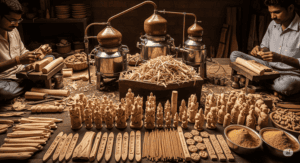
Mysore developed the world’s most sophisticated sandalwood industry, transforming this natural resource into a global brand. The kingdom’s approach combined economic development with cultural preservation:
Industrial Infrastructure:
- Mysore Sandalwood Oil Factory established in 1916
- World’s first scientific sandalwood oil distillation facility
- Development of specialized extraction techniques and quality standards
Economic Impact:
- Sandalwood contributed an average of Rs. 1.5 lakh annually between 1834-1861
- Prices surged from Rs. 387 per ton (1880-81) to Rs. 5,000 per ton before WWI
- Created extensive employment in cultivation, processing, and craftsmanship
The industry’s success stemmed from the kingdom’s state monopoly system, ensuring quality control and sustainable harvesting practices that protected this valuable resource for future generations.
Comprehensive Industrial Portfolio
Beyond steel and sandalwood, Mysore developed a diverse industrial base:
Traditional Industries:
- Silk production: Mysore silk gained national and global recognition
- Coffee plantations: Extensive development with modern processing facilities
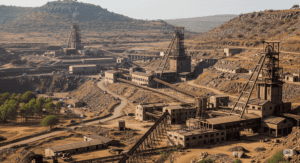
- Gold mining: Kolar Gold Fields operations commenced during this period
Modern Industries:
- Banking sector: State Bank of Mysore launched in 1913
- Hydroelectric power: Shivanasamudra project (1899) – India’s first major hydroelectric initiative
- Railway development: 315 miles of railway lines constructed
Educational & Human Development
The establishment of the University of Mysore in 1916 marked a watershed moment in Indian higher education. This institution held the distinction of being:
- The sixth oldest university in India
- The first university in Karnataka
- The first university outside British-administered territories
Founding Vision and Leadership:
The university emerged from the collaborative vision of Maharaja Nalvadi Krishnaraja Wadiyar IV and Sir M. Visvesvaraya. Its establishment followed five years of intensive research on global higher education systems, ensuring that the institution incorporated international best practices.
Academic Structure:
- Initially offered four faculties: Arts, Science, Engineering, and Medicine
- Established 28 specialized Boards of Studies and Boards of Examiners
- Administered 12 educational institutions across the kingdom
Inclusive Education Policies
The kingdom implemented groundbreaking educational reforms that prioritized accessibility and equality:
Women’s Education:
- Maharani’s School established in 1881, later becoming Maharani’s College
- Special provisions for widow education and professional training
- State-funded schools specifically for girls and marginalized communities
Marginalized Communities:
- Scholarships and mid-day meals introduced to retain students
- Miller Committee (1918) introduced educational quotas for non-Brahmins
- Temple entry movements and anti-untouchability initiatives supported
Professional Development:
- Adult literacy programs through public libraries and night schools
- Vocational training in various trades and crafts
- Merit-based recruitment in government services
Healthcare Infrastructure and Public Welfare
The Mysore Kingdom established a comprehensive healthcare network that served as a model for other princely states:
Major Healthcare Facilities:
- Krishna Rajendra Hospital (1927): 1,050-bed tertiary care facility
- Cheluvamba Hospital (1939): Specialized maternity and pediatric care
- Minto Eye Hospital (1903): World’s oldest dedicated eye hospital
Public Health Initiatives:
- Vaccination drives against smallpox and plague
- Modern sewage systems in major cities
- Municipal hospitals providing affordable healthcare
- Sanitation improvements with Rs. 27.15 lakh allocated for Bangalore and Mysore
Urban Primary Health Centres
The kingdom pioneered community healthcare through an extensive network of 32 Urban Primary Health Centres. Each center was staffed with qualified doctors, nurses, and supporting personnel, providing:
- Essential medical investigations and treatments
- Preventive healthcare services
- Community health education programs
- Emergency medical assistance
For a guided tour of the Mysore Kingdom, please visit Royal Mysore Kingdom.
Infrastructure Development and Public Works
The Krishna Raja Sagar (KRS) Dam, completed in 1931, stands as one of the kingdom’s greatest engineering achievements. Designed by Sir M. Visvesvaraya and constructed during a severe drought, this project demonstrated the kingdom’s commitment to long-term public welfare.
Technical Specifications:
- Length: 2,621 meters (8,600 feet)
- Height: 40 meters (130 feet)
- Reservoir area: 130 square kilometers
- 177 iron sluices with some featuring automatic doors
Multi-purpose Benefits:
- Irrigation: Primary water source for Mysore and Mandya districts
- Drinking water: Supplies Mysore, Mandya, and Bangalore
- Hydroelectric power: Supports Shivanasamudra power station
- Flood control: Mitigates impact of seasonal flooding
Transportation Networks
The kingdom developed an extensive transportation infrastructure that connected remote areas with major centers:
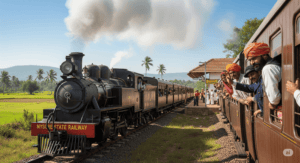
Railway Development:
- Mysore State Railway established extensive network
- Mysore-Nanjangud line (25.51 km) opened in 1891
- Birur-Shimoga line (60.74 km) operational by 1899
- Shimoga-Talaguppa section completed in 1930 for forest resource transport
Road Networks:
- Comprehensive road system connecting all major settlements
- Ring road alignments for efficient urban traffic management
- State highways linking Mysore to neighboring regions
Financial Systems and Economic Management
The kingdom established a robust financial system that supported both individual prosperity and state development:
State Bank of Mysore:
- Established in 1913 as “Bank of Mysore Ltd.”
- Founded under the patronage of Maharaja Krishna Raja Wadiyar IV
- Guided by the banking committee headed by Sir M. Visvesvaraya
- Became an agent of Reserve Bank of India in 1953
Financial Services Network:
The kingdom hosted numerous financial institutions providing comprehensive services:
- Public sector banks for government transactions
- Private banking for commercial activities
- Cooperative banks for agricultural financing
- Educational loans for student advancement
Fiscal Management and Revenue Generation
The kingdom demonstrated exemplary fiscal management during Chamaraja Wadiyar’s reign:
Financial Achievements:
- Annual revenue increased by 75.24% over fourteen years
- Net assets: Rs. 176 lakh against Rs. 30 lakh liability
- Infrastructure investment: Rs. 100 lakh on irrigation alone
- Railway investment: Rs. 164 lakh for 315 miles of track
This financial prudence enabled sustained investment in public welfare without compromising the state’s fiscal stability.
Social Justice and Reforms
The Mysore Kingdom pioneered social justice initiatives that predated India’s constitutional provisions:
Miller Committee Reforms (1918):
- Reservation system for backward castes in education & employment
- Quota provisions ensuring proportional representation
- Merit-based advancement while maintaining social equity
Anti-Discrimination Measures:
- Temple entry movements actively supported
- Anti-untouchability initiatives promoted
- Intercaste marriage practice encouraged
- Educational scholarships for marginalized communities
For an immersive walk in Mysore, visit Mysore Walk.
Women’s Empowerment
The kingdom implemented progressive women’s policies well ahead of global standards:
Political Participation:
- Women’s voting rights granted before many Western nations
- Female representation in educational institutions
- Professional opportunities in teaching and administration
Economic Opportunities:
- Widow rehabilitation programs providing professional training
- Women’s cooperative societies for economic empowerment
- Healthcare services designed for women and children
Cultural & Artistic Patronage
Maharaja Nalvadi Krishnaraja Wadiyar IV earned the title “Dakshina Bhoja” for his exceptional patronage of arts and culture. His support included:
Cultural Institutions:
- Palace drama company promoting Kannada language
- Archaeological Survey of Mysore (1890) preserving historical heritage
- Oriental Manuscripts Library protecting ancient texts
Artistic Development:
- Music and dance academies receiving state support
- Traditional crafts including sandalwood carving and silk weaving
- Literature and poetry promotion through various forums
Religious Tolerance
The kingdom demonstrated remarkable religious inclusivity:
- Equal support for temples, mosques, and churches
- Religious festivals celebrated across communities
- Educational institutions welcoming students of all faiths
- Cultural exchange promoting mutual understanding
Template for Democratic India
The Mysore Kingdom’s governance model provided crucial insights for post-independence India:
Constitutional Contributions:
- Bicameral legislature concept adopted by modern India
- Reservation policies serving as precedent for affirmative action
- Decentralized governance influencing panchayati raj system
- Public welfare schemes inspiring modern government programs
Democratic Transition:
Post-independence, Mysore was the first major state to accept the Instrument of Accession. The smooth transition demonstrated the kingdom’s genuine commitment to democratic principles and national integration.
Contemporary Relevance
The Mysore model continues to influence modern governance practices:
Urban Planning:
- Integrated development approaches for infrastructure
- Environmental consciousness in industrial development
- Public-private partnerships in service delivery
Educational Excellence:
- University of Mysore continues as a premier institution ranked 19th nationally
- Research and development culture established during the kingdom era
- Inclusive education policies serving as ongoing inspiration
Industrial Development:
- Government initiatives for reviving historical industries like the Visvesvaraya Iron and Steel Plant
- Sandalwood industry modernization efforts
- Sustainable development practices rooted in kingdom-era policies
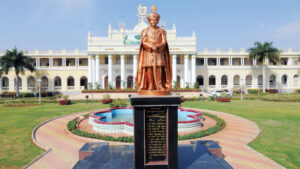
Conclusion: Visionary Legacy
The Kingdom of Mysore stands as an extraordinary example of enlightened monarchy that successfully integrated democratic principles with traditional governance. Under the visionary leadership of the Wadiyar dynasty, particularly Chamaraja Wadiyar X and Nalvadi Krishnaraja Wadiyar IV, the kingdom established institutions and practices that were decades ahead of their time.
The kingdom’s achievements in democratic governance, industrial development, education, healthcare, and social justice created a comprehensive model of progressive statecraft. The establishment of India’s first representative assembly, the development of a sophisticated bicameral legislature, and the implementation of inclusive policies demonstrated that monarchical authority and democratic participation could coexist harmoniously.
Most significantly, the Mysore Kingdom proved that people-centric governance was not merely an idealistic concept but a practical reality that could deliver tangible benefits to citizens. The kingdom’s welfare schemes, industrial policies, and educational initiatives created a foundation for sustainable development that continues to influence contemporary governance practices.
The legacy of the Mysore Kingdom reminds us that visionary leadership, institutional innovation, and commitment to public welfare can transform societies regardless of the political system. As we face modern challenges of governance, development, and social justice, the Mysore model offers valuable insights into creating inclusive, progressive, and sustainable governance frameworks that truly serve the people’s interests.
This remarkable kingdom demonstrated that democracy is not just about electoral processes but about creating genuine opportunities for people’s participation in governance, ensuring equitable access to resources and opportunities, and building institutions that serve the common good. Mysore Kingdom’s pioneering legacy continues to inspire efforts toward creating more democratic, just, and prosperous societies in the 21st century.
For a guided tour of the Mysore Kingdom, please visit Royal Mysore Kingdom.
For a blog on travel tips for India, please visit Great Holiday Ideas.
Leave a Reply