
Three thousand years ago, if you believe the Mahabharata, the Pandava brothers spent part of their twelve years of forest exile somewhere in the Aravalli Hills of what is now Rajasthan.
Three hundred and fifty years ago, a Mughal emperor built a fort deep inside these same hills and put his own brother in it to die.
Twenty years ago, the last tiger in this forest was poached.
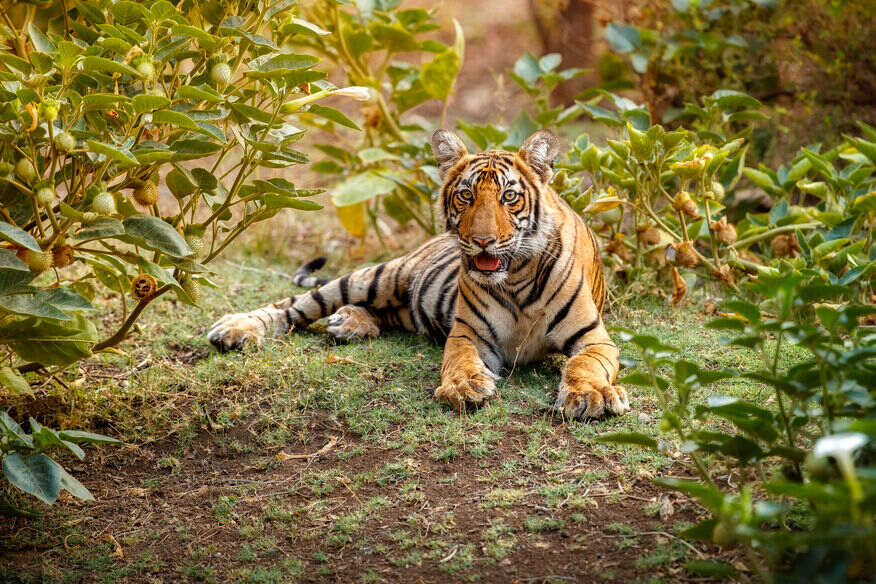
And today, fifty tigers move through the same Aravalli landscape, in one of the most extraordinary wildlife conservation recoveries in the history of the natural world.
Sariska is a fascinating blend of nature, history, and conservation. But that description understates what is actually here. This is a forest where mythology, Mughal power, royal excess and modern conservation science have all left their marks, layered one on top of the other across three millennia, in a landscape of dry deciduous forest and rocky Aravalli outcrop that is, by any measure, one of the most historically and ecologically extraordinary protected areas in India. Vocal Media
This is the complete story of Sariska Tiger Reserve.
Sariska Tiger Reserve: Three Stories From Three Thousand Years of History
The Mahabharata in the Aravalli Hills: Why the Pandavas Came to Sariska
Sariska is regarded as the place in the Mahabharata where the Pandavas found sanctuary during their last year of banishment. The twelve years of forest exile that the five Pandava brothers endured after losing everything in the dice game, and the thirteenth year of incognito living that followed, took them through forests across the subcontinent, and tradition holds that the Aravalli Hills of what is now Sariska was among the places they sheltered.
According to legend, it was here that the strongest Pandava brother, Bhima, was defeated by Hanuman. A shrine dedicated to Hanuman at Pandupol, which means gateway of the Pandavas in Sanskrit, is thronged by thousands of pilgrims on certain auspicious days.
The story of Bhima’s encounter with Hanuman at Pandupol is one of the most beloved episodes in the Mahabharata’s forest chapters. Bhima, the most physically powerful of the five brothers, encounters an old monkey lying across his path and asks it to move. The monkey, who is actually Hanuman, challenges Bhima to lift his tail. Bhima, who can move mountains, cannot shift it by a fraction. The episode is a lesson in the limits of physical strength and the deeper power of devotion, and the shrine at Pandupol, accessible on the jeep safari route through Zone 1, is the physical memory of this story preserved in stone in the middle of a tiger forest.
The Pandupol Hanuman Temple, deep within the reserve, requires a safari vehicle to reach. Pilgrims who make the journey to this ancient shrine travel the same dusty tracks through the same dry deciduous forest that the Pandavas are believed to have walked, with the Aravalli boulders rising on either side and the forest canopy of dhok trees overhead. The combination of wildlife encounter and pilgrimage that Sariska uniquely offers makes it unlike any other tiger reserve in India.
Kankwari Fort: The Prison Where Aurangzeb Buried His Brother
Inside the core zone of Sariska, visible from the safari route and accessible on specific heritage permits, stands Kankwari Fort, one of the most historically significant and least visited Mughal monuments in India.
Kankwari fort was constructed with the sole intention of Dara Shikoh’s imprisonment.
To understand why a fort was built inside a forest for this specific purpose, you need to understand who Dara Shikoh was, and what was at stake in the Mughal succession war of 1657 to 1659.
Dara Shikoh was the eldest son and heir-apparent of the Mughal emperor Shah Jahan. Dara was designated with the title Padshahzada-i-Buzurg Martaba, meaning Prince of High Rank, and was favoured as a successor by his father and his older sister, Princess Jahanara Begum.

He was also something far more unusual than simply an heir apparent. Dara was a liberal-minded unorthodox Muslim. He authored the work The Confluence of the Two Seas, which argues for the harmony of Sufi philosophy in Islam and Vedanta philosophy in Hinduism. A great patron of the arts, he was more inclined towards philosophy and mysticism rather than military pursuits. He translated the Upanishads into Persian. He sought the common spiritual ground between Islam and Hinduism at the height of the Mughal Empire. He is one of the most genuinely interesting intellectual figures of the 17th century anywhere in the world.
He was executed by Aurangzeb in 1659 on charges of heresy.
The war of succession that destroyed Dara Shikoh was the bitterest family conflict in Mughal history. Following Shah Jahan’s serious illness in 1657, a war of succession broke out among his four sons: Dara Shikoh, Shah Shuja, Aurangzeb and Murad Bakhsh. Dara Shikoh’s forces were defeated by his brother Aurangzeb at the Battle of Samugarh on May 29, 1658. This decisive battle led to Aurangzeb imprisoning their father and eventually crowning himself emperor.
Kankwari fort was chosen by Aurangzeb because this fort was located at a convenient distance from Delhi and was under the supervision of Jai Singh, who was one of his most trustworthy people. It is believed that Aurangzeb was so particular about the imprisonment that he surrounded the fort with a huge rampart from all the sides and kept it guarded all around.
The philosopher prince who had argued for the harmony of all religions, the man his father had loved most and wanted most to succeed him, died in the fort at the heart of what is now Sariska Tiger Reserve. Dara found himself at the losing end of a bitter family struggle, was put on trial for apostasy and executed in 1659, altering the course of Mughal rule towards a more orthodox Islamic approach.
The course of the history of the Indian subcontinent, had Dara Shikoh prevailed over Aurangzeb, has been a matter of some conjecture among historians. Standing at Kankwari Fort, deep inside the tiger reserve, looking out over the Aravalli forest from the same battlements that imprisoned the most intellectually extraordinary Mughal prince, that conjecture becomes something more personal and more present than any history book can convey.
The Maharajas of Alwar: When British Royalty Came to Hunt
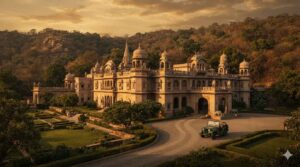
In more recent history, the jungles of Sariska were the private hunting reserve of the Maharaja of Alwar, who entertained guests, including British royals, until hunting was banned in the area in 1955.
The Sariska Palace, which today operates as a heritage hotel inside the reserve, was built in the late 19th century by Maharaja Jai Singh of Alwar as a royal hunting lodge and summer retreat. Its architecture beautifully blends French and Indian styles, with grand halls, vintage furniture and sprawling gardens that reflect the opulence of Rajasthan’s regal era.
The forest that sheltered the Pandavas and imprisoned Dara Shikoh became, in the colonial era, the personal sporting estate of one of Rajasthan’s most flamboyant princely rulers. The same landscape that had witnessed Bhima’s humbling and the philosopher prince’s imprisonment was, in the early 20th century, hosting viceroys and princes for tiger shoots that later generations would regard as the direct cause of the crisis that nearly ended Sariska’s wildlife entirely.
This pristine landscape was declared a wildlife sanctuary in 1955 and became a Tiger Reserve in 1978 under India’s pioneering Project Tiger.
Sariska Tiger Reserve: The Crisis That Shocked India and the Recovery That Astonished the World
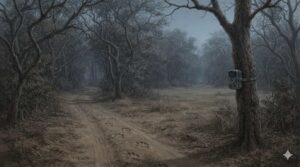
How Sariska Lost Every Single Tiger
By 2004, rampant poaching led to the extinction of tigers from the reserve.
The story of how Sariska lost every tiger it had is one of the most disturbing episodes in Indian conservation history, precisely because it happened inside a supposedly protected reserve, under the watch of a management system that was supposed to prevent exactly this. Wildlife biologist Saroj Rai Chaudhuri documented the declining tiger population through camera trap data from 2003 onwards. By 2004 it was clear the numbers were catastrophically low. By 2005 independent monitoring confirmed the devastating conclusion that no tigers remained in Sariska at all.
The poaching network that had systematically emptied the reserve operated with extraordinary efficiency and apparent impunity. Investigations eventually led to arrests across a network that extended far beyond Sariska’s boundaries. The crisis prompted a complete rethink of how Indian tiger reserves were managed and monitored, and it directly drove the creation of the National Tiger Conservation Authority with its independent monitoring mandate.
Sariska in 2005 was the moment that Indian conservation could not pretend the status quo was working.
The World’s First Successful Tiger Relocation Programme
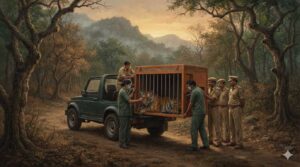
What happened next is the story that makes Sariska genuinely extraordinary rather than merely cautionary.
To restore the tiger population, a relocation program was launched in 2008, bringing tigers from Ranthambore National Park.
Moving wild tigers between reserves had never been attempted at this scale anywhere in the world. Tigers are intensely territorial animals. Moving them requires tranquilising them, transporting them in confined conditions across significant distances and releasing them into unfamiliar territory where they must establish new ranges and, if the programme is to succeed, breed. Wildlife managers, conservationists and tiger experts debated whether it could work. The consensus among many experts was cautious at best.
The government proceeded. The first tigers arrived from Ranthambore in 2008. Then more in subsequent years. The monitoring was intensive. The protection was rigorous. And the tigers, against the expectations of the most cautious observers, began to settle, to hunt, to establish territories and eventually to breed.
By 2025 Sariska Tiger Reserve has fifty tigers. Sariska is world-renowned for being the first reserve to successfully relocate and reintroduce tigers.
Fifty tigers where there were none in 2005. Eleven adult males, fourteen adult females and twenty-five cubs now move through the same Aravalli forest where Bhima met Hanuman and Dara Shikoh looked out from his prison walls. The recovery is not complete in the sense of being finished. It is ongoing, intensively managed and continuously monitored. But it is real, it is documented and it is extraordinary.
Sariska Tiger Reserve: What You Will Experience on Safari

The Two Safari Zones and What Each Reveals
There are three main safari zones: Zone 1 covering Pandupol, Zone 2 covering Kalighati, and Zone 3 covering Slopka. Each offers unique landscapes and wildlife viewing opportunities.
Zone 1, the Pandupol zone, is where the Pandupol Hanuman Temple is located and where the forest transitions between open grassland and denser dry deciduous cover. This zone is particularly productive for tiger sightings in the early morning, when tigers move between the water sources of the open areas and the cover of the dhok forest. It is also where Kankwari Fort sits on its hilltop, visible through the trees from the safari track.
Zone 2 and Zone 3 cover the rockier, more densely forested sections of the Aravalli Hills terrain, with deep ravines and boulder-strewn slopes that leopards use as much as tigers. These zones give the most dramatic Aravalli landscape experience, the feeling of being inside a genuinely wild mountain forest rather than a managed wildlife corridor.
The Wildlife Beyond the Tiger

The star of Sariska is the tiger. But the full wildlife experience of the reserve is considerably richer than a single species.
Sariska is home to a wide range of wildlife including leopards, striped hyena, jungle cat, caracal, golden jackal and various herbivores such as chital, sambar, nilgai, wild boar and langur monkeys.
The leopard population at Sariska is substantial and increasingly well-documented. Leopards, being more adaptable and less intensively studied than tigers, had maintained a steady presence in the reserve even through the crisis years. A Sariska leopard sighting, the animal moving across a rocky Aravalli slope at dusk, is a genuinely spectacular encounter that would headline any other reserve in India.
The birdlife is equally extraordinary, with over 220 species including Indian peafowl, golden-backed woodpeckers and crested serpent eagles. The peafowl at Sariska are present in such extraordinary numbers that they become part of the texture of the forest, their calls the constant background soundtrack of the safari and their display plumage, in the breeding season, one of the most vivid natural spectacles available anywhere in the Aravalli landscape.
The striped hyena, rarely seen in Indian wildlife reserves, is a regular presence at Sariska. The four-horned antelope, or chausingha, is another Sariska speciality, a small and shy species found only in the Indian subcontinent and among the most distinctive of the reserve’s herbivores.
The Best Time to Visit Sariska Tiger Reserve
Sariska is open from October 1 to June 30 each year, closed during the monsoon from July to September. Safari timings vary by season, with winter morning safaris starting at approximately 7 am and afternoon safaris running from 2 pm to 5.30 pm.
The best months for tiger sightings are November to March, when the cooler temperatures keep tigers active for longer periods and the dry vegetation makes them more visible against the landscape. April and May, though hot, are also productive because the drying of seasonal water sources concentrates wildlife around permanent water points, creating exceptional sighting opportunities for patient visitors.
Safaris are closed every Wednesday regardless of the season. Check the day of your planned visit before booking.
Experience Sariska Tiger Reserve With 5 Senses Tours
The Two-Safari Tour That Does Sariska Properly
A single safari gives you one encounter window with the forest. Two safaris, one on the afternoon of Day 1 and one at dawn on Day 2, give you the forest at its two most productive wildlife hours and more than double your probability of a tiger encounter.
Our Sariska Tiger Reserve and Alwar tour from Delhi combines both safaris in a private two-day journey from Delhi, with an overnight stay inside the reserve itself, the complete Alwar heritage programme including the Bala Quila fort and Siliserh Lake on the return journey, and a naturalist guide who tracks the latest tiger movement reports each morning before entering the reserve.
The Fairy Queen Option: Arrive in Alwar on a 171-Year-Old Steam Locomotive

For travellers visiting between October and March, this tour can be transformed into one of the most extraordinary combined heritage and wildlife experiences available from Delhi by arriving in Alwar on the Fairy Queen train, the world’s oldest working steam locomotive certified by the Guinness Book of Records in 1998. The Fairy Queen runs on select Saturdays from Delhi Cantonment Station to Alwar, from where we transfer by private car to Sariska for the afternoon safari. Contact us when booking to check available dates.
Combining Sariska With the Complete Alwar Royal Heritage
Alwar, 37 kilometres from Sariska, is one of the most historically significant and most underappreciated royal cities in Rajasthan. The Bala Quila fort above the city was never conquered by the Mughal Empire. The City Palace museum contains Rajput miniature paintings of exceptional quality. Siliserh Lake, created by a Maharaja who fell in love with a woman from the village below and built a palace on the water’s edge to be near her, is one of the most romantically situated lake palaces in Rajasthan.
For travellers who want the complete Alwar royal heritage alongside the Sariska wildlife experience, our Neemrana Fort and Alwar tour from Delhi covers the full Alwar programme including the fort, the City Palace, Siliserh Lake and the Moosi Maharani Chhatri, with an overnight stay in the thousand-year-old Dadhikar Fort and a Day 2 visit to the 15th-century Neemrana Fort Palace.
5 Senses Tours is recognised by India’s Ministry of Tourism, winner of the Tripadvisor Travellers Choice Award and the Outlook Responsible Tourism Award. Every tour is private, expert-guided and completely customised for your group.
Contact 5 Senses Tours to begin planning your Sariska Tiger Reserve experience today