
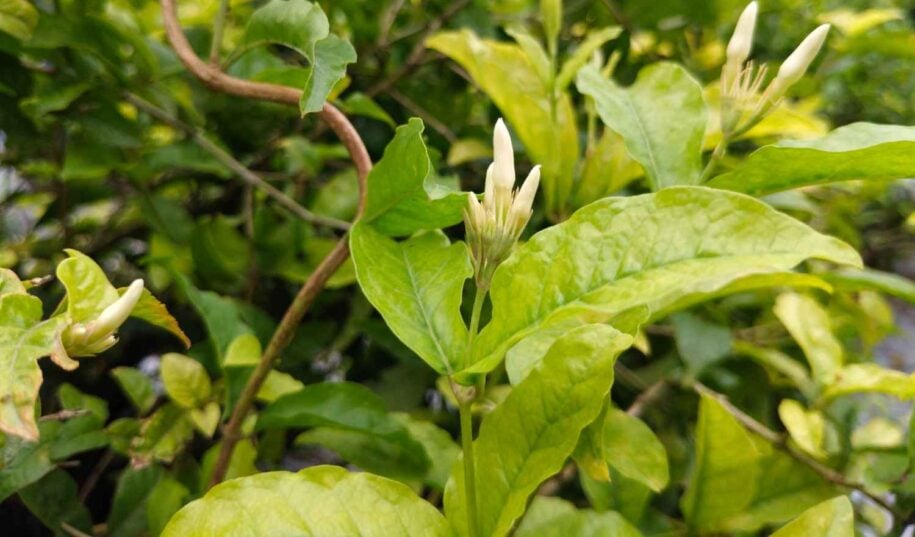
The flowers have to come off the plants before the heat of the day.
This is not a preference. It is biology. Jasmine blossoms at its most fragrant in the cool hours before sunrise, and a flower left unpicked past mid-morning in the coastal Karnataka heat loses both its scent and its market value within hours. So the families of Shankarapura are in the fields before the light changes, plucking in the dark by habit and touch, filling their baskets before the rest of the world has had its first coffee.
This nondescript town is the jasmine capital of Dakshin Kannada. Jasmine has many names in India, among them juhi, mogra and chameli are well known. In Karnataka, the jasmine flower is called mallige. Of the three species cultivated in Karnataka, Udupi mallige, known botanically as Jasminum sambac, is grown in Shankarapura and surrounding villages of Pangala, Kurlkal, Moodubettu, Innanje and Shirva.
The Shankarapura mallige is not simply famous in the district or the state. It has buyers in Mumbai, in Kerala, in West Asia. Weddings in the entire Konkan region, regardless of religion, use jasmine from here to decorate brides. Temples across coastal Karnataka require it for daily puja. The perfume industry extracts its essential oil. The demand, in ordinary times, is substantial and consistent.
And yet the farmers who grow it face a precarity that the scale of demand does not suggest they should face. The price of a single atti of jasmine can swing from Rs 840 to Rs 90 within a single day depending on factors the grower cannot control, predict or protect against. The flower that the whole coast wants can be worthless in the farmer’s hands by the time it reaches the auction.
This is the complete story of the Shankarapura mallige and the farming families whose lives are organised around a flower that cannot wait.
Shankarapura Mallige: The Flower, the Farm and the Farming Life
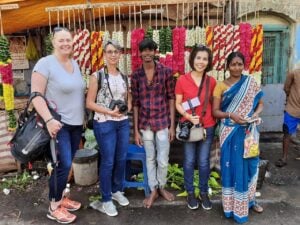
What the Shankarapura Mallige Actually Is and Why It Cannot Be Substituted
For weddings in the Konkan region, irrespective of religion, jasmine strings are used to decorate the bride. Even in daily life, jasmine strings are worn by women in their hair.
The Shankarapura mallige carries the Geographical Indication tag that legally designates it as a product of this specific geography. The GI protection means that only flowers grown in Shankarapura and the surrounding villages of the Udupi district can legally be sold as Shankarapura mallige. This is not simply a marketing label. It reflects a genuine difference in fragrance and bloom quality that buyers across the coastal region can identify on smell alone.
The GI tag enhances market recognition, facilitating exports to regions like the Middle East and major Indian cities such as Mumbai and Bengaluru, which boosts overall income for approximately 7,000 growers in Udupi district alone, where production valued at Rs 12.09 crore supports household earnings contributing up to 40 percent from jasmine farming.
Forty percent of household income. For thousands of families across the Udupi district, the jasmine that grows in their fields and gardens is not a supplementary crop or a hobby. It is the difference between financial stability and financial precarity, and it depends entirely on a flower that must be picked at dawn and sold before it wilts.
The Seasonal Precarity That Makes Every Harvest a Gamble
The yield in jasmine plants during summer is ten times more than the yield in winter and monsoon. This tenfold swing in production across the seasons is the structural reality that makes jasmine farming in Shankarapura so financially vulnerable. In the summer months when the plants are producing at maximum capacity, the market can be flooded, prices can collapse and a farmer can find that the flower that commands Rs 800 per atti in October commands Rs 90 in June, even though the effort of growing and plucking it is the same.
Despite the coastal region opening itself for the wedding and festive season, the market price for Udupi jasmine also known as Shankarapura Mallige, has witnessed a sudden dip. A jasmine atti which was priced Rs 820 on Saturday was dipped to Rs 330 on Sunday. The ready availability of Bhatkal jasmine in the market is said to be the main reason for the sudden dip in price.
The price competition from Bhatkal jasmine, a neighbouring variety whose cultivation has increased as farmers in that region have sought to capture the market that Shankarapura commands, is a structural threat that cannot be solved by better farming practice. The Shankarapura farmers grow their GI-tagged variety as well as they always have. The price can still halve overnight because a competing variety arrived in the same market on the same day.
In Shankarapura, there are four jasmine kattes selling to wholesalers and retailers. Here traders sit together to calculate the price that they will be paying the farmers. The price is determined based on the demand from their prospective wholesalers, and bulk orders are given well in advance by the agents.
The katte, the local auction market, is where the day’s price is set. Farmers bring their morning harvest, gathered before dawn, and the price they receive for it is determined by conversations between traders that reflect demand signals from Mumbai, from Mangaluru, from wedding planners and temple procurement agents across the region. The farmer has no leverage in this conversation. The flower that took three years to coax from a newly planted jasmine plant has to go today, at whatever price the katte agrees to pay.
What Happens When the Rains Come at the Wrong Time
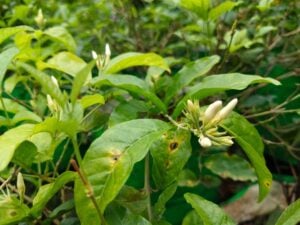
Shankarapura jasmine faces pressure not only from the market but from the weather itself, and the coastal Karnataka climate is becoming less predictable.
Jasmine cultivators attributed the decline in production of jasmine to heavy rain during the season. Following heavy rainfall, water remained stagnant in jasmine fields. As a result, the plants were affected by blight disease and the production fell, leading to a decline in supply of jasmine flowers to the market.
In Shankarapura, Shankarapura Mallige’s fragrance trapped in COVID-19 lockdown. Known for its fragrance, the jasmine is used in marriages, decorations, temples, production of perfumes and incense sticks. Though the flower has gained a wide market in the West Asian region as well as in Mumbai, Pune and Bengaluru, the lockdown put an end to the market. The rates of Shankarapura Mallige had declined from March 20 after the authorities laid restrictions for large gatherings.
The COVID-19 years showed what the farmers already knew: the jasmine market has no buffer. When weddings stop, when temples close, when the events that drive demand disappear overnight, the flower keeps blooming and the farmer keeps plucking because the only alternative is to let the pest damage the entire plant. The income stops. The work continues. The flower is wasted.
This is the reality of farming a luxury product that is also a daily devotional necessity for millions of people in coastal Karnataka and beyond.
Experience the Shankarapura Mallige Harvest With 5 Senses Tours
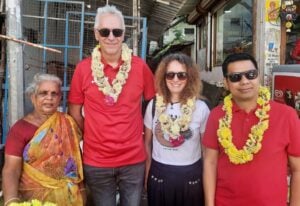
Before you arrive at Shankarapura, the families have been in the fields for hours. The plucking begins before dawn and is timed entirely around the real harvest schedule, not around when visitors can conveniently arrive. Guests join the farming families in the fields and learn the traditional technique of tying jasmine using banana fibre, the same technique used before modern materials arrived and still preferred for the weddings and temple offerings that command the highest prices.
The visit includes a walk through the gardens with farming families who speak candidly about the pressures the trade faces today, from price volatility at the katte to the threat of dry season water stress. There is a visit to the local auction market, where the daily price is being determined in real time. And the overnight stay at a dedicated jasmine homestay, with an evening coastal cuisine cooking class, is timed around the actual seasonal rhythm of the farm rather than a tourist-friendly schedule.
The community sets the pace. The visit is shaped around what they are actually doing that day, because that is the only honest way to experience it.
This visit is part of our seven-day Coast to Canopy: A Regenerative Trail Across the Western Ghats and Coastal Karnataka. Groups are small, always private, never exceeding eight people.
Contact 5 Senses Tours to join the Coast to Canopy trail and experience the Shankarapura jasmine harvest at dawn