
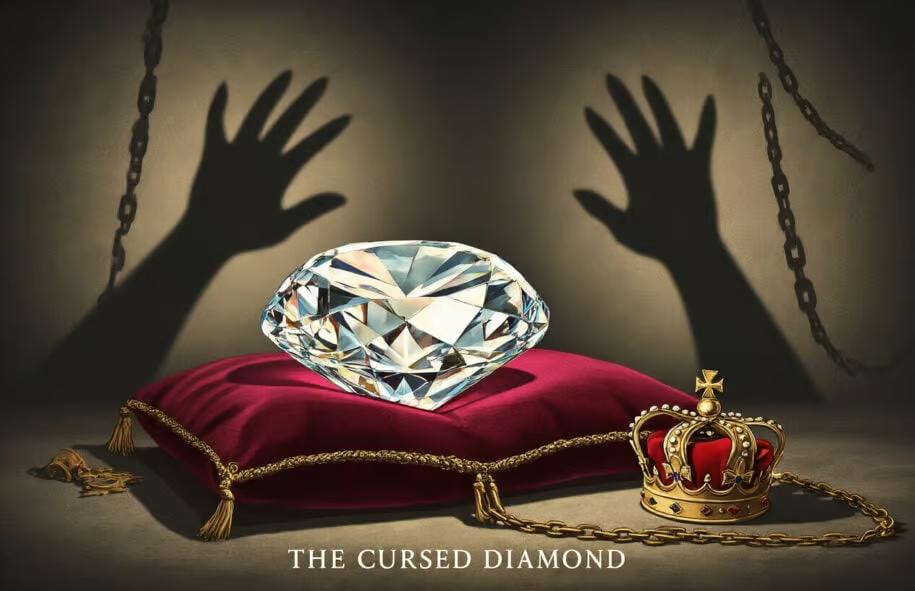
Ever caught yourself wondering if cursed diamonds are just fiction? Well, the Kohinoor Diamond’s bloody trail of ownership might change your mind. This massive 105.6-carat diamond has witnessed more backstabbing than a Shakespeare tragedy.
Kings beheaded, empires crumbled, and rulers poisoned – all while clutching history’s most controversial diamond. The Kohinoor’s curse isn’t just folklore; it’s documented chaos spanning centuries across India, Persia, Afghanistan, and Britain.
I’ve uncovered five jaw-dropping betrayals that followed this gem from one bloody hand to the next. Each more devious than the last.
And the most shocking part? The first betrayal happened before the diamond even got its famous name…
For a guided tour about Kohinoor diamond and its connection to Bhadrakali temple in Warangal, please visit Kohinoor Trail.
The Notorious Origins of the Kohinoor Diamond
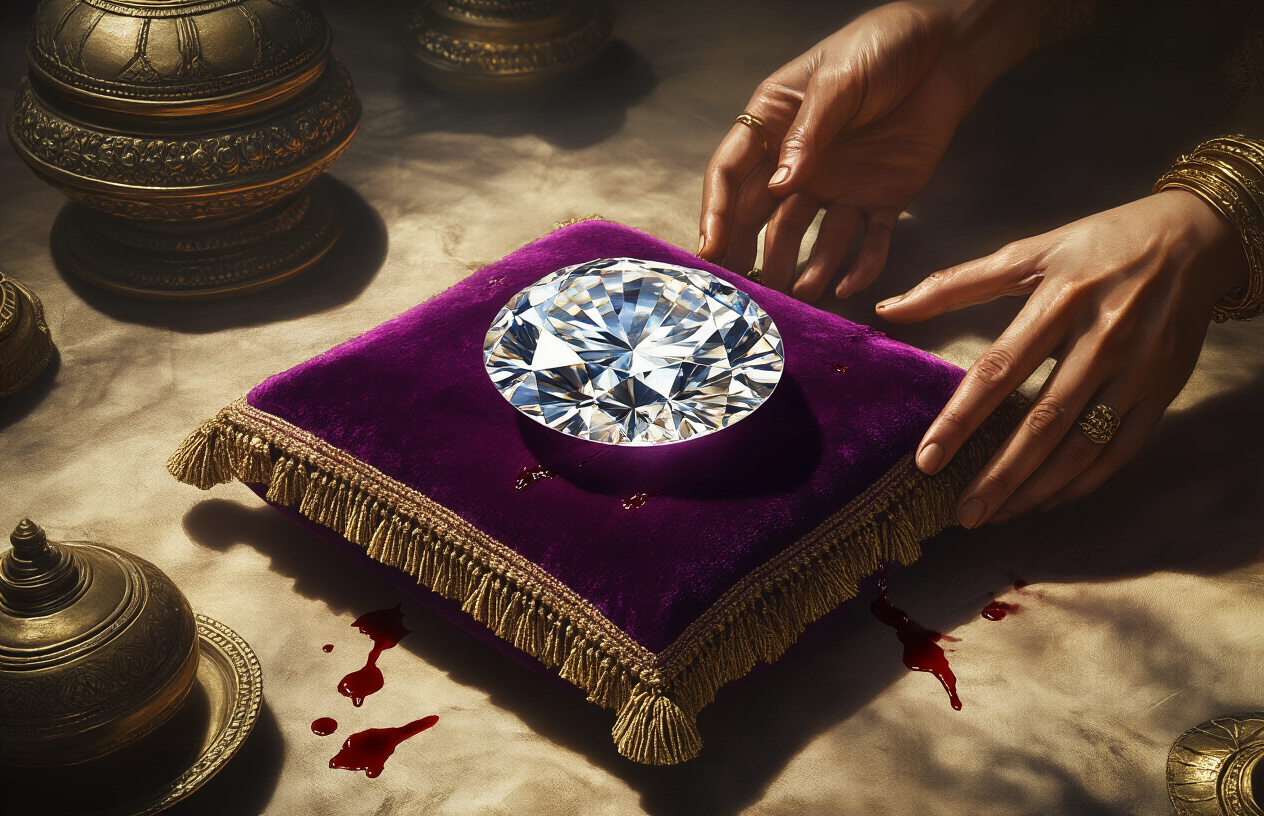
Ancient Indian beginnings and royal ownership
You’d think a diamond weighing 105.6 carats would have a simple history. Not the Kohinoor.
This infamous gem first appeared in historical records around the 13th century in the Kakatiya dynasty of India. Back then, it wasn’t just a pretty rock – it was literally worth kingdoms.
Kings killed for it. Brothers betrayed brothers over it.
The diamond passed through the hands of various Mughal rulers, including the famous Shah Jahan (yes, the same guy who built the Taj Mahal). Each transfer of ownership came with bloodshed and backstabbing. When you owned the Kohinoor diamond, you basically painted a target on your back.
How the diamond gained its reputation for misfortune
The Kohinoor diamond didn’t just randomly get labeled “cursed.” The evidence stacked up.
Almost every male owner met a violent end or lost their throne. Shah Jahan was imprisoned by his own son while possessing it. Nadir Shah of Persia stole it, only to be assassinated. The pattern was so consistent that when the British got hold of it in 1849, they made sure to give it to their queen, not the king.
A Persian text from 1739 quoted Nadir Shah saying: “Whoever possesses this diamond will own the world, but will also know all its misfortunes.” Talk about a product warning label.
The physical characteristics that made it worth betrayal
The Kohinoor diamond wasn’t always the polished gem we know today. In its original form, it weighed a whopping 186 carats and sparkled with an unusual blue-white fire rarely seen in other diamonds.
What made people lose their minds over it?
- Its exceptional clarity
- The unusual color that seemed to trap light
- Its massive size (one of the largest diamonds known)
- The perfect crystalline structure
When Prince Albert had it recut in 1852 to increase its brilliance, diamond experts actually cried. I’m not kidding. They literally wept at the loss of 40% of its original weight. That’s how special this rock was.
Early documented cases of treachery surrounding the gem
The body count around this diamond is straight-up disturbing.
In 1739, Nadir Shah of Persia invaded Delhi after hearing rumors about the stone. The Mughal emperor Muhammad Shah tried hiding it in his turban. During a ceremonial exchange of headwear (yes, really), Nadir spotted it and uttered the famous phrase “Koh-i-Noor!” meaning “Mountain of Light.”
Then there’s the case of Shah Shuja Durrani, who was forced to surrender the diamond to Maharaja Ranjit Singh in 1813. Shuja was fleeing for his life, and the diamond was his bargaining chip for protection.
But the most brutal betrayal? When Maharaja Duleep Singh, just a child of 10, was manipulated into “gifting” it to Queen Victoria after the British annexed Punjab in 1849. They literally took candy—well, a diamond—from a baby.
Shah Jahan’s Imprisonment and the Diamond’s Role
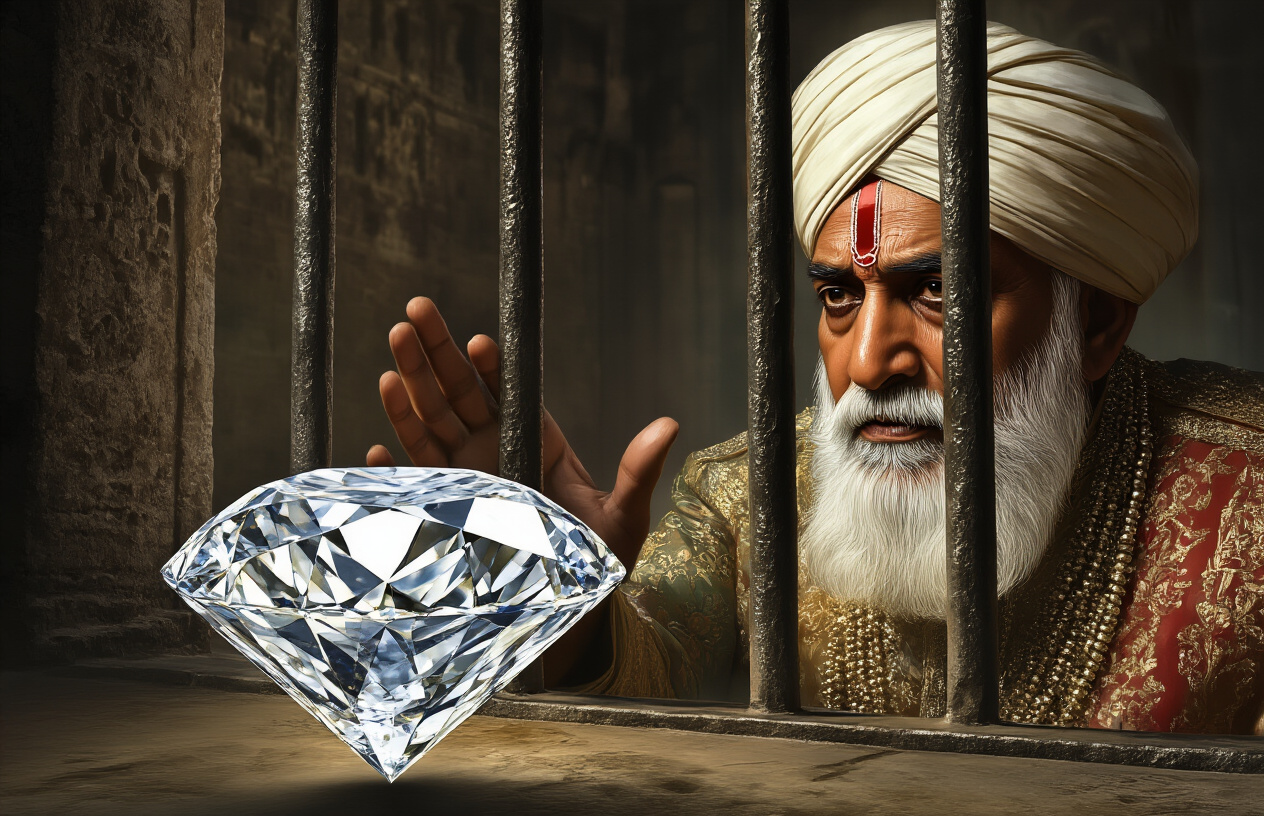
The Mughal Emperor’s Relationship with the Diamond
The legendary Kohinoor wasn’t just a diamond to Shah Jahan—it was the ultimate symbol of Mughal power. This wasn’t some ordinary gem collecting dust in the treasury. The man who gave us the Taj Mahal had a particular fascination with this 186-carat behemoth, often wearing it as the centerpiece of his ornate turban during court ceremonies.
Shah Jahan’s connection to the diamond went beyond mere ownership. Court records suggest he’d spend hours gazing into its depths, believing it channeled divine favor for his reign. The diamond wasn’t just pretty—it was political. When foreign dignitaries visited, he made sure they noticed it gleaming on his person, a not-so-subtle reminder of who held the power.
How His Son Aurangzeb Betrayed Him for Power and the Jewel
Talk about family drama! In 1658, while Shah Jahan lay ill, his third son Aurangzeb saw an opportunity too good to pass up. He spread rumors that his father had died, positioned himself as the rightful heir, and then defeated his brothers in a brutal succession war.
But here’s the kicker—once Aurangzeb seized power, he didn’t just take the throne. He imprisoned his own father in Agra Fort, keeping him in a room with a distant view of the Taj Mahal. And you better believe one of the first treasures Aurangzeb claimed was the Kohinoor diamond, which he flaunted openly as proof of his legitimacy.
The Consequences of This Father-Son Betrayal
The aftermath? Devastating all around. Shah Jahan spent his final eight years as a prisoner, watching his greatest architectural achievement through a tiny window, while his prized diamond adorned the turban of his treacherous son.
For Aurangzeb, the diamond didn’t bring the blessings his father had hoped for. His reign, though long, was marked by constant rebellion and the slow fracturing of the mighty Mughal Empire. Many courtiers whispered that the Kohinoor diamond had brought its first taste of the “curse” to the family.
This betrayal marked a turning point for the diamond itself. From then on, the Kohinoor diamond seemed to carry the stain of this treachery, beginning its reputation as a jewel that brought misfortune to men who possessed it. The pattern was set—whoever took the diamond through violence would themselves face a violent end.
Nadir Shah’s Deception and Violent Acquisition
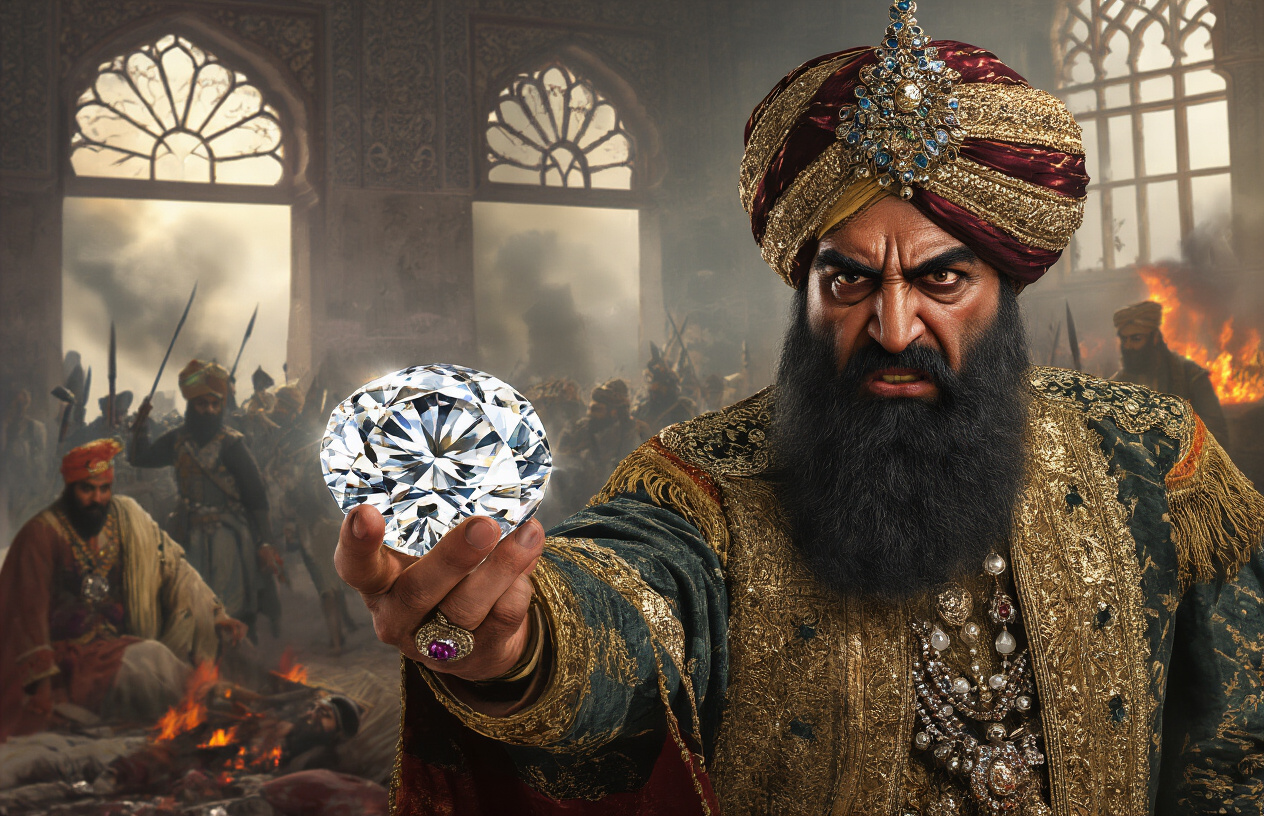
A. The Persian ruler’s cunning plan to obtain the diamond
Nadir Shah wasn’t just any Persian ruler. He was the guy who saw something shiny and thought, “I’m taking that home with me.” In 1739, he had his sights set on the Mughal Empire’s treasures—particularly the Kohinoor diamond.
The clever fox didn’t just march in demanding jewels. He played the long game. First, he defeated the Mughal army at Karnal. Then, instead of immediately ransacking Delhi, he entered as a “guest” of Emperor Muhammad Shah.
During a celebration feast, Nadir noticed something odd—the emperor never wore his famous jeweled turban that reportedly contained the Kohinoor diamond. So Nadir pulled the oldest trick in the book: the “friendly exchange.” He proposed they swap turbans as a symbol of eternal friendship.
What could Muhammad Shah do but smile and hand over his priceless diamond? Refuse and risk insulting the man with an army at Delhi’s gates? Not a chance.
B. The brutal Delhi massacre that followed
The diamond wasn’t enough for Nadir Shah. When rumors spread that some Persian soldiers had been killed, he unleashed hell on Delhi.
For nine horrific hours on March 22, 1739, his troops slaughtered Delhi’s residents. Blood literally ran through the streets. The death toll? Nearly 30,000 people—men, women, children—all massacred while Nadir supposedly sat at the Sunehri Masjid, watching the carnage unfold.
The streets of Delhi turned into rivers of blood just so one man could walk away with treasures worth roughly $700 million in today’s money—including the Kohinoor diamond.
C. How the diamond changed hands through bloodshed
The blood-soaked diamond didn’t stay with Nadir Shah long. In 1747, he was assassinated (surprise, surprise) by his own officers. The Kohinoor diamond then passed to his grandson, who was promptly blinded and deposed.
Next up? Ahmad Shah Durrani, Nadir’s cavalry commander, who snatched it while fleeing Persia. Talk about employee theft.
The diamond’s journey continued through a series of murders, betrayals, and political assassinations. Shah Shuja, a later owner, was literally tortured for the diamond by having hot rods applied to his head until he revealed its hiding place.
Each transfer of the diamond seemed to come with a fresh body count. Not exactly the kind of provenance you’d brag about at dinner parties.
D. The lasting impact on Indo-Persian relations
The Delhi massacre created wounds that never fully healed. For generations, the relationship between the Persian and Mughal empires remained poisoned by this betrayal.
The Mughals, once the mightiest empire in the region, never recovered their former glory. Their military reputation was shattered, their treasury emptied, and their most precious treasures—including the Peacock Throne and the Kohinoor diamond—were carried off to Persia.
Trade routes shifted. Political alliances crumbled. The power vacuum created by the weakened Mughal Empire eventually allowed European colonial powers to gain footholds in the region.
Even today, historians point to Nadir Shah’s invasion as one of the pivotal moments that changed the course of South Asian history—all sparked by the lust for a single diamond.
E. The emergence of the “curse” narrative
After witnessing the diamond’s bloody trail, people started connecting the dots. “Maybe this rock isn’t bringing anyone good luck,” they thought.
The pattern was hard to ignore. Nadir Shah—murdered. His grandson—blinded and overthrown. Almost every male owner met a violent end or lost their kingdom. Women owners fared better, but the men? Not so much.
By the time the British got involved in the diamond’s story, the curse narrative was already well-established in local lore. The East India Company officials who acquired it from Maharaja Duleep Singh heard whispers about its deadly history.
The curse story gained such traction that when Queen Victoria obtained the diamond, her ministers advised that only women should wear it—men would suffer its wrath. That’s why, to this day, the Kohinoor diamond sits in the Queen Mother’s crown, not the King’s regalia.
Some call it superstition. Others point to the undeniable trail of blood following this diamond through history. Coincidence or curse? You decide.
The Sikh Maharaja and British Colonial Treachery
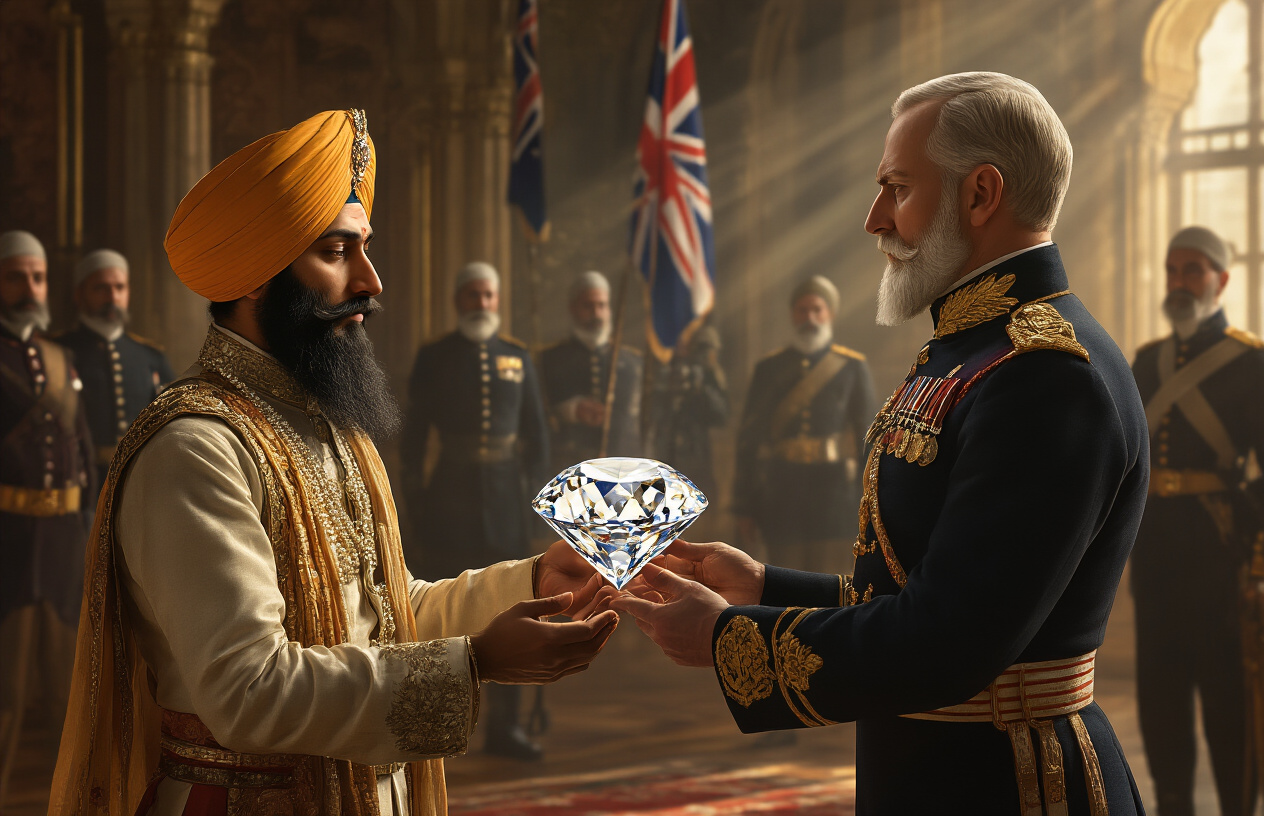
A. Duleep Singh’s forced surrender of the diamond
Picture this: an 11-year-old boy, sitting on a throne, surrounded by British officials who are practically salivating over the diamond in his possession. That boy was Duleep Singh, the last Maharaja of Punjab.
The year was 1849. The British had just defeated the Sikh Empire in the Second Anglo-Sikh War. Rather than killing the young ruler, they saw an opportunity. Why assassinate when you can manipulate?
The Treaty of Lahore became the stage for one of history’s most notorious heists. British Governor-General Lord Dalhousie didn’t even try to hide his intentions. In his own words, the Kohinoor diamond would be “a symbol of conquest.” The child Maharaja didn’t stand a chance.
B. The manipulation of a child ruler by the East India Company
The East India Company’s tactics were downright predatory. They isolated Duleep from his mother, Maharani Jindan Kaur, who they knew would fight tooth and nail to protect her son’s inheritance.
Company officials became the boy’s “guardians,” filling his ears with tales of how the British Crown would “safeguard” his precious diamond. They painted Queen Victoria as a maternal figure who would care for the gem until he came of age – a promise they never intended to keep.
The company installed British tutors who systematically dismantled the young Maharaja’s cultural identity. They converted him to Christianity and taught him to despise his Sikh heritage. This wasn’t just about a diamond – it was cultural reprogramming.
C. How colonial powers justified the acquisition
The British spin machine went into overdrive to justify this daylight robbery. They claimed they were “rescuing” the diamond from “barbaric” hands. Colonial newspapers portrayed the acquisition as a “gift” from a grateful Indian prince to his benevolent queen.
Lord Dalhousie wrote to his superiors: “The gem is a historical emblem of conquest in India. It has now found its proper home in the crown of Britain’s Queen.”
What’s truly wild is how they rewrote history. Colonial historians crafted narratives about the Kohinoor diamond’s “curse,” suggesting the diamond brought misfortune to male owners. This convenient myth justified keeping it in Queen Victoria’s possession while painting previous Indian owners as unworthy or unlucky.
D. The psychological impact on the deposed Maharaja
Duleep Singh’s life spiraled after losing his diamond and kingdom. Raised in England as a British gentleman, he became Queen Victoria’s exotic pet project – she even painted his portrait.
The psychological toll was crushing. As an adult, Singh finally realized how thoroughly he’d been played. He tried desperately to reclaim his identity, reconverting to Sikhism and plotting (unsuccessfully) to return to India.
His final years were tragic – broke, exiled, and denied entry to his homeland. He died in Paris, far from Punjab, his mental health shattered by decades of manipulation.
The British still have the diamond. The last Maharaja’s descendants still want it back. The wound remains open, a glittering reminder of colonial treachery that changed not just who owned a diamond, but who controlled a nation’s story.
The Final Royal Betrayals and Modern Controversy
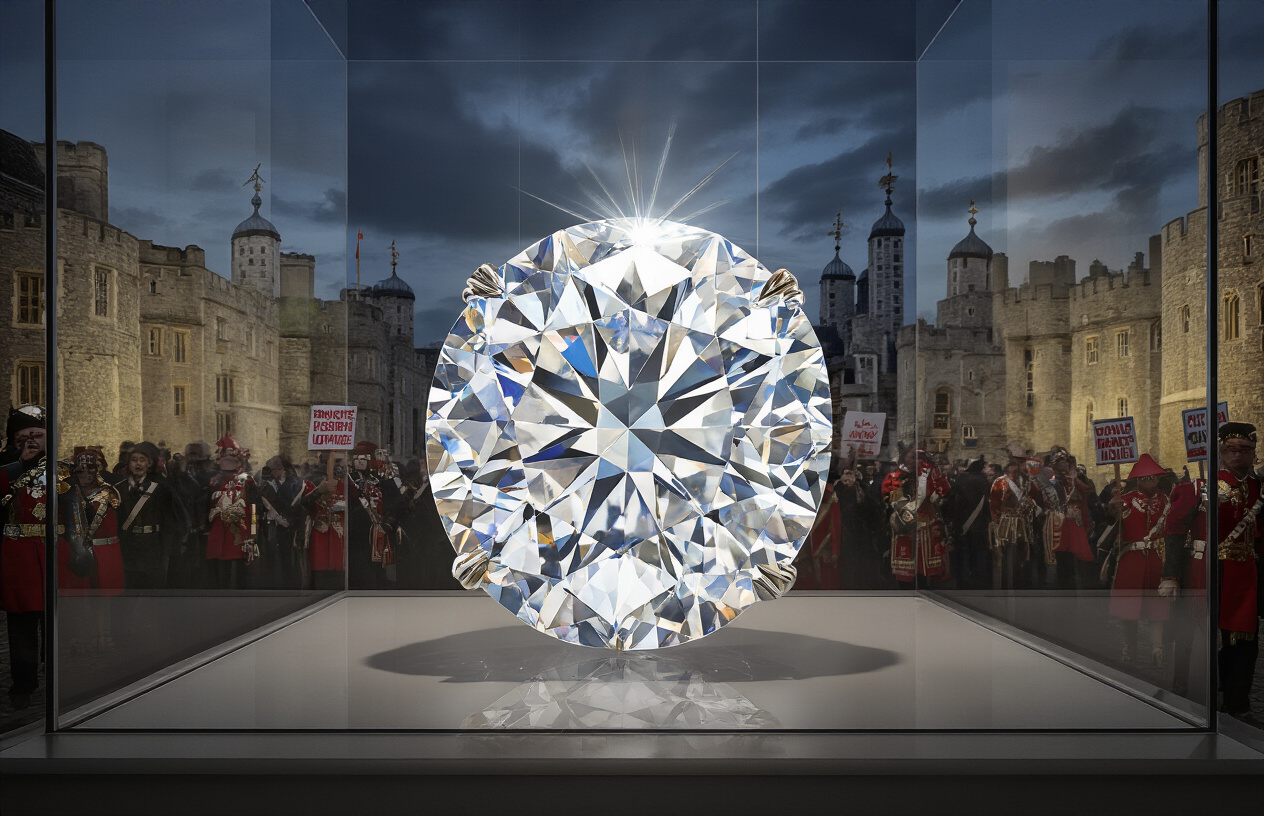
A. Queen Victoria’s possession and the diamond’s transformation
The Kohinoor diamond changed hands for the final time in 1849 when the British forced the ten-year-old Maharaja Duleep Singh to “gift” it to Queen Victoria. Talk about a twisted birthday present! The diamond arrived in England in 1850, but Victoria wasn’t impressed with its appearance.
She decided the legendary stone needed a makeover. Prince Albert supervised as the diamond was recut in 1852, shrinking it from 186 carats to 105.6 carats. The transformation sacrificed size for sparkle, but many historians view this as the ultimate act of cultural vandalism – erasing centuries of Asian craftsmanship to suit European tastes.
B. How the jewel became embedded in British royal regalia
After Victoria’s death, the diamond began its journey through various royal crowns. First mounted in Queen Alexandra’s crown in 1902, then transferred to Queen Mary’s crown in 1911. But its most famous home came in 1937 when it was set into the crown made for Queen Elizabeth (the Queen Mother).
This placement wasn’t random. The British deliberately positioned the diamond as the centerpiece of their royal regalia, transforming a stolen treasure into a symbol of imperial power. Every time the crown appeared at state occasions, it silently proclaimed Britain’s dominance over its former colonial possessions.
C. Modern demands for repatriation and the refusal to return it
Since India’s independence in 1947, the calls for the Kohinoor diamond’s return have grown louder. Pakistan, Afghanistan, Iran and even the Taliban have joined India in demanding its repatriation.
The British response? A firm “nope.”
In 2013, Prime Minister David Cameron bluntly stated: “I don’t think that’s the right approach… If you say yes to one, you suddenly find the British Museum would be empty.”
When King Charles III was crowned in 2023, the controversy reached new heights. The palace tactfully avoided the issue by keeping the diamond-studded crown in storage, using the excuse that it was “inappropriate” following the Queen Mother’s death.
D. Competing ownership claims from multiple nations
The diamond’s complex journey has created a messy ownership dispute:
- India claims it as their historical treasure
- Pakistan argues it was taken from Lahore, now in their territory
- Afghanistan points to Shah Shuja’s forced surrender
- Iran cites Nader Shah’s conquest
The British conveniently use these competing claims to justify keeping the diamond, arguing there’s no clear rightful owner. It’s like stealing someone’s wallet, watching several people argue over whose it is, then declaring “I’ll just keep it until you all figure it out!”
E. How the diamond continues to symbolize historical betrayal
The Kohinoor diamond remains the ultimate symbol of colonial plunder. Its display in the Tower of London attracts millions who gawk at its brilliance while often missing its dark history.
The diamond embodies a chain of betrayals spanning centuries – from Shah Jahan’s imprisonment to the exploitation of a child maharaja. But the greatest betrayal might be happening now: the refusal to acknowledge this history and make amends.
Every day the diamond sits in the British Crown Jewels, it reinforces the message that the spoils of empire remain untouchable. The cursed diamond continues its work, now symbolizing the unhealed wounds of colonialism and the stubborn refusal to right historical wrongs.
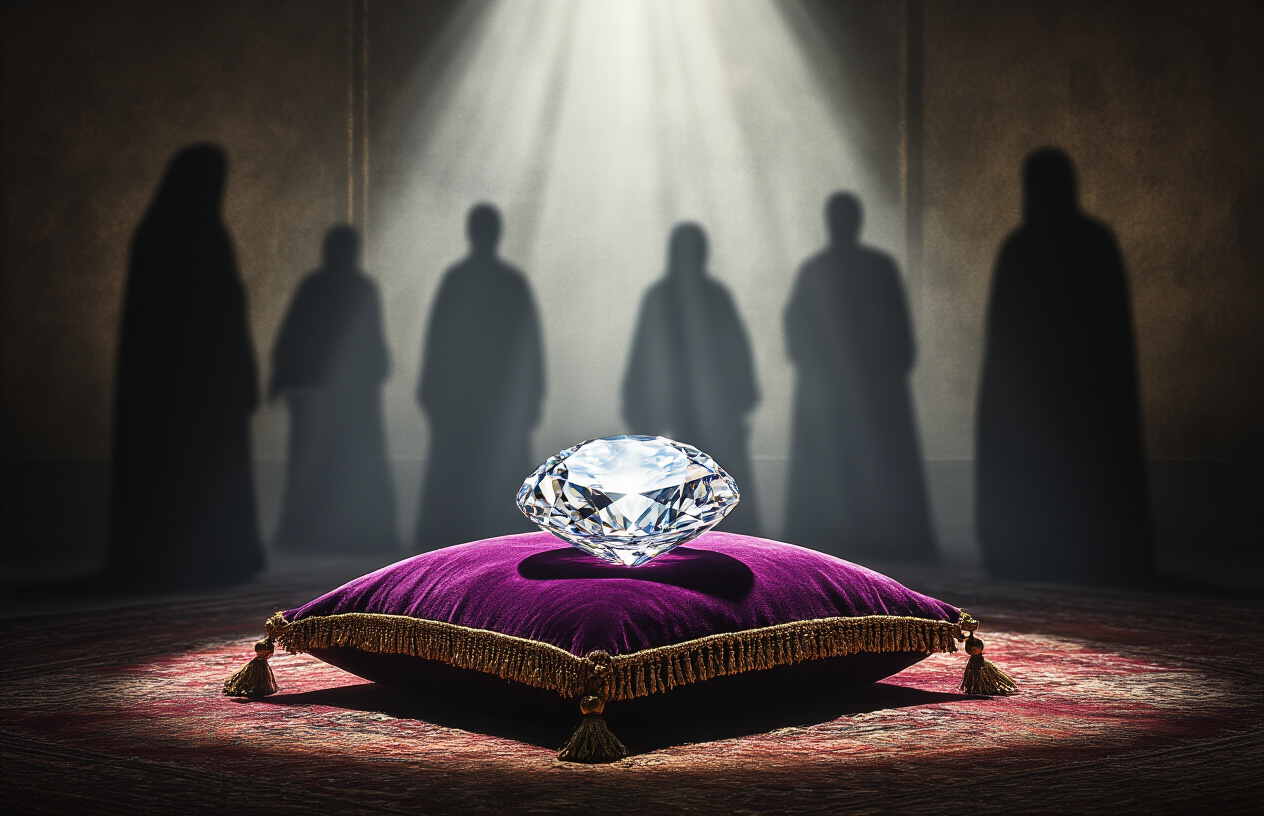
The captivating story of the Kohinoor diamond reveals a dark pattern of betrayal, violence, and controversy spanning centuries. From Shah Jahan’s imprisonment to Nadir Shah’s brutal acquisition, the Sikh Maharaja’s fate, and the British colonial seizure, this precious gem has left a trail of misfortune for those who possessed it.
As debates continue about the diamond’s rightful ownership, the Koh-i-Noor serves as a powerful reminder of how greed and power can corrupt even the most steadfast relationships. Whether truly cursed or simply caught in humanity’s worst impulses, this legendary stone continues to captivate our imagination while challenging us to confront difficult historical truths about conquest, possession, and justice.
For a guided tour about Kohinoor diamond and its connection to Bhadrakali temple in Warangal, please visit Kohinoor Trail.
Leave a Reply