
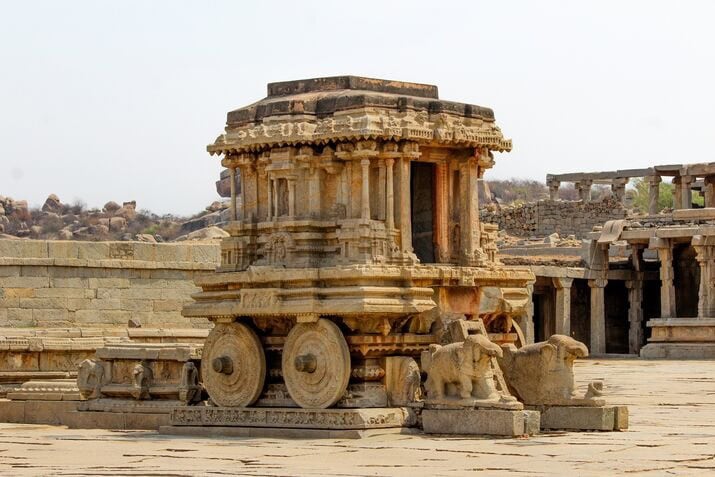
How 56 Stone Pillars Produce Real Musical Notes — and Why No One Has Fully Explained It
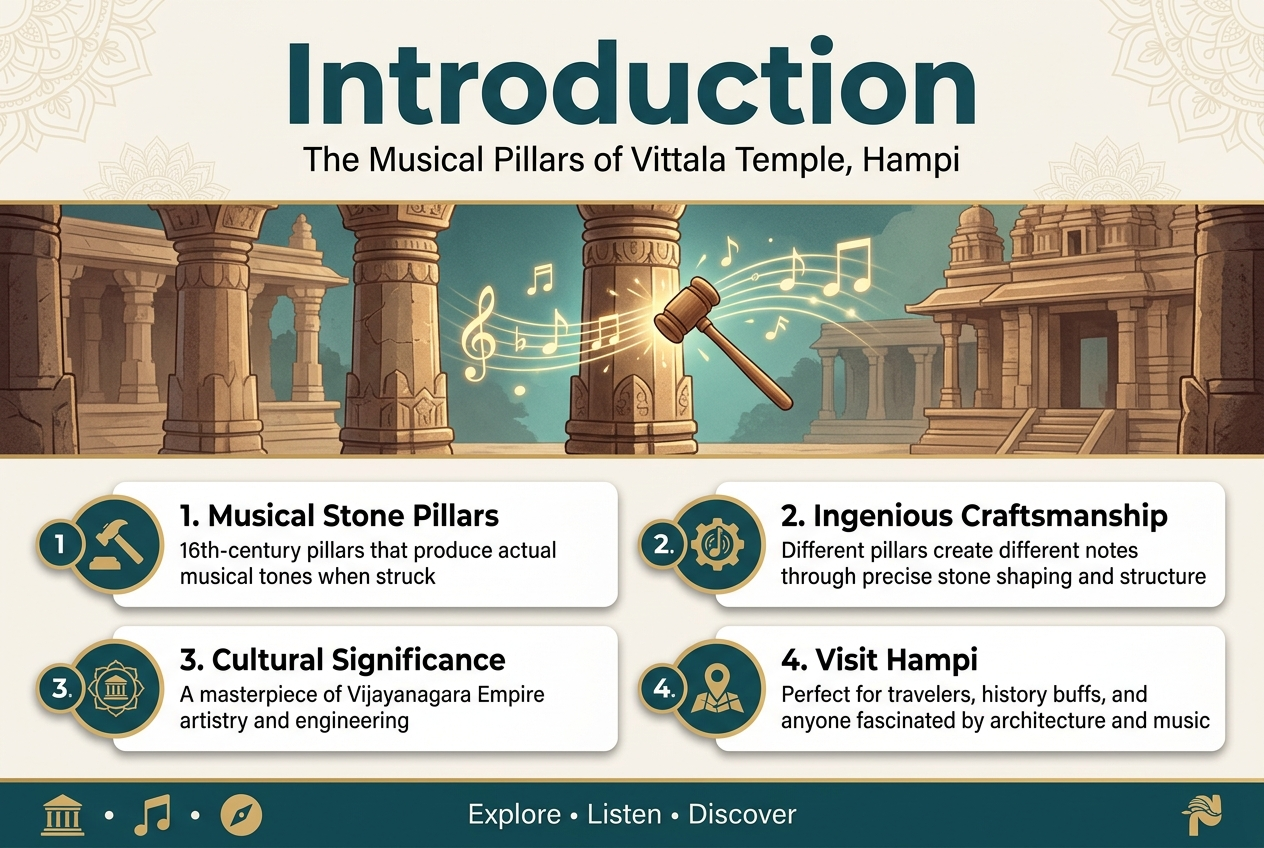
Hampi’s Vittala Temple contains one of the most astonishing architectural secrets in the entire world. Its 16th century stone pillars produce real, resonant musical notes when struck, a feat of ancient engineering that has puzzled scientists, musicians and architects for centuries. This guide is for travellers planning a journey to Hampi, history lovers curious about the genius of the Vijayanagara Empire, and anyone drawn to the place where architecture, music and spirituality converge in breathtaking harmony.
You will discover how these stone pillars produce distinct musical tones through craftsmanship so precise it remains impossible to fully replicate today. You will explore the cultural and spiritual significance of this musical architecture and what it reveals about one of medieval India’s greatest civilisations. And you will find everything you need to plan your own visit to experience these remarkable pillars firsthand.
Ready to walk these ancient stones in person? Explore our Hampi Tour from Bangalore and let an expert guide bring every pillar to life.
Discover the Architectural Marvel of Vittala Temple
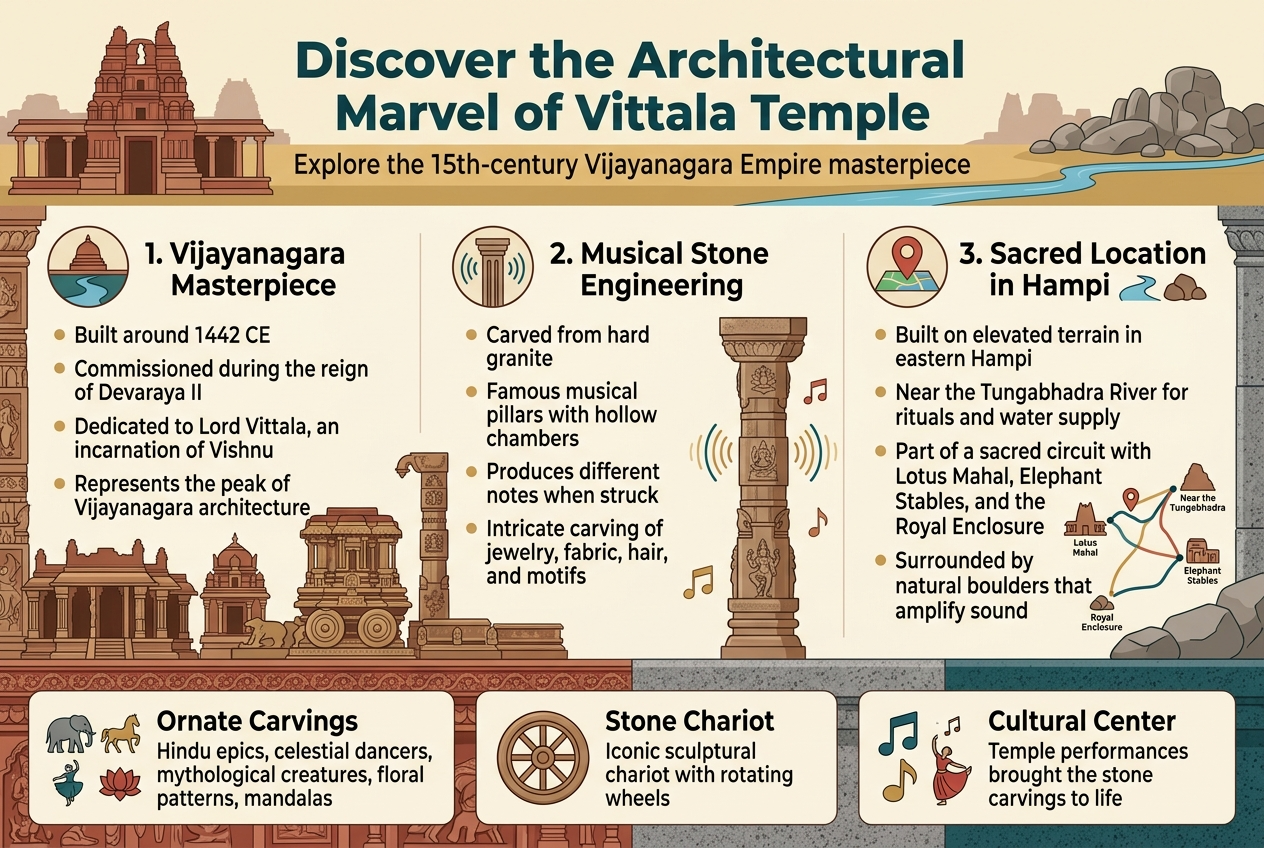
Explore the 15th-century Vijayanagara Empire masterpiece
Standing on the banks of the Tungabhadra River, Vittala Temple represents the absolute pinnacle of Vijayanagara architecture. Built during the reign of Devaraya II around 1442 CE, this temple complex showcases an artistic vision and engineering prowess that the world has rarely seen equalled. The Vijayanagara rulers commissioned this magnificent structure as a tribute to Lord Vittala, an incarnation of Vishnu, creating what would become one of India’s most celebrated architectural treasures.
The temple’s construction spanned several decades, with successive rulers adding their own artistic touches. What makes Vittala extraordinary is not merely its age but the revolutionary building techniques employed by its craftsmen, who developed methods for carving granite so intricate that they produced the famous musical pillars that continue to baffle the modern world.
The complex stands as testament to the empire’s wealth and cultural sophistication during its golden age. Every surface tells a story through elaborate carvings depicting scenes from the Hindu epics, celestial dancers and mythological creatures. The temple served as both a place of worship and a living centre for cultural life, hosting music and dance performances that brought its stone carvings to vibrant life.
Witness this wonder yourself on our Hampi Tour from Bangalore, crafted for travellers who want more than photographs.
The Temple’s Sacred Position Within Hampi’s Landscape
Vittala Temple occupies a prime position within Hampi’s sprawling sacred geography, chosen by ancient architects who understood the spiritual significance of landscape with extraordinary sophistication. Nestled in the eastern part of the Hampi ruins, the temple sits on elevated terrain offering commanding views of the boulder-strewn Deccan plateau and the meandering Tungabhadra River below.
The location was far from accidental. Ancient Hindu texts emphasise the importance of building temples near water bodies and elevated ground, believing these spots to possess stronger spiritual energy. Within Hampi’s layout, Vittala Temple forms part of a larger sacred circuit that includes the Lotus Mahal, Elephant Stables and the Royal Enclosure, all of which our guided Hampi Tour covers in full.
The surrounding boulder formations create natural acoustic chambers that amplify the temple’s musical experiments. These massive granite outcrops, some balanced precariously for millions of years, add to the site’s deeply mystical atmosphere and provide natural sound barriers that enhance the musical qualities of the stone pillars.
The Intricate Stone Craftsmanship That Defies Belief
The artisans of Vittala Temple pushed the boundaries of stone carving to create details so fine they seem impossible to achieve with medieval tools. Working exclusively with granite, one of the hardest stones available, these master craftsmen developed techniques that allowed them to carve delicate jewellery, flowing fabric and even individual strands of hair on their sculptural figures.
The temple walls display an entire encyclopaedia of Vijayanagara artistic themes: rampaging elephants and prancing horses carved with anatomical accuracy, celestial dancers shown in classical dance poses, mythological scenes from the Ramayana and Mahabharata, floral and vine patterns that create optical illusions of movement, and geometric mandala designs representing cosmic order.
The famous stone chariot integrates seamlessly with the temple’s overall design philosophy. Its wheels actually rotate, demonstrating the craftsmen’s understanding of mechanical engineering principles. Every decorative element serves both aesthetic and functional purposes, creating a harmonious blend of art, architecture and engineering that continues to inspire builders and artists worldwide.
Uncover the Secret Behind the Musical Stone Pillars
The Acoustic Properties of Carved Granite Columns
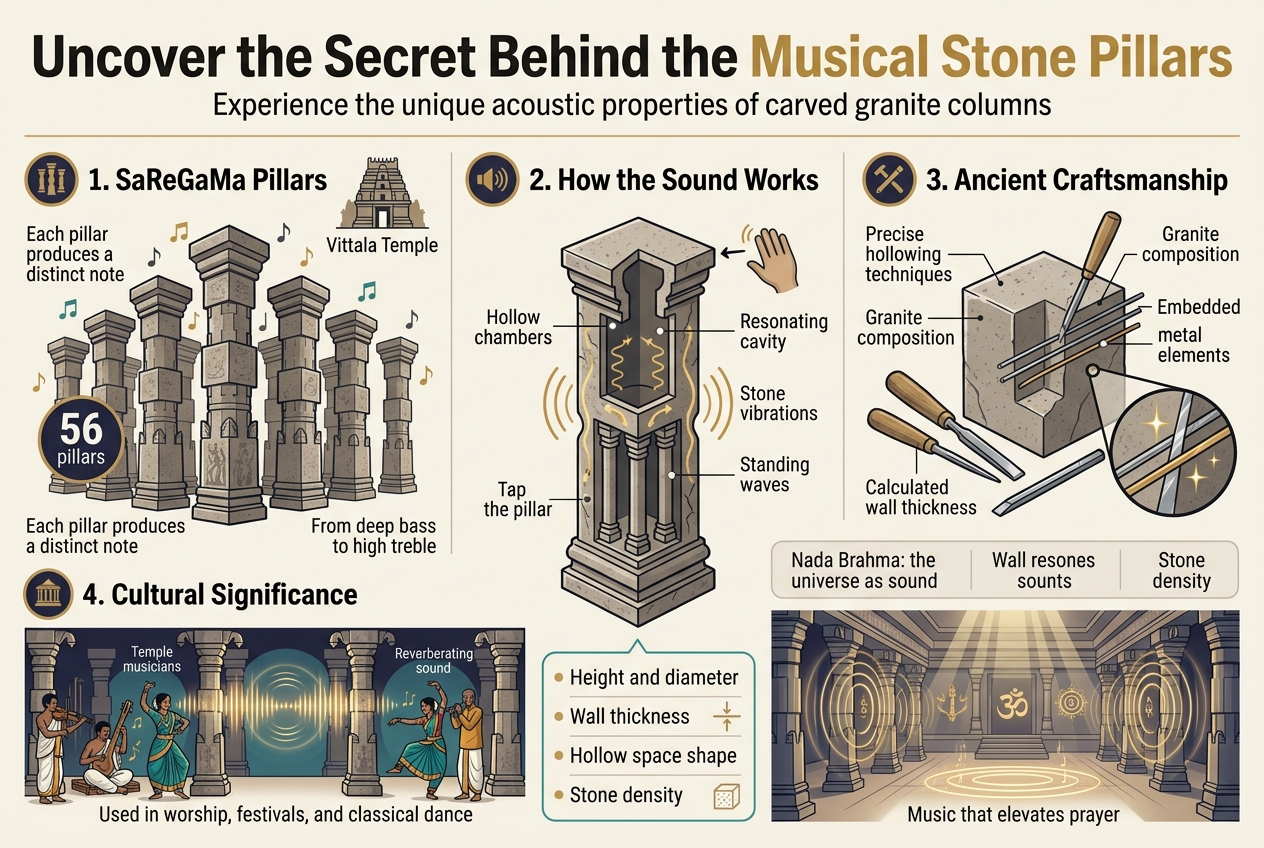
The musical pillars at Vittala Temple showcase one of the most remarkable achievements in the entire history of Indian architecture. These 56 pillars, known as the SaReGaMa pillars, produce distinct musical notes when gently tapped. Each pillar creates a different pitch and tone, ranging from deep bass sounds to higher treble notes that resemble various classical musical instruments.
What makes this phenomenon truly extraordinary is the precision with which these granite columns were carved. The pillars consist of main support columns surrounded by smaller subsidiary pillars, each contributing to the overall acoustic effect. When struck with the palm or fingers, these stone structures emit clear, resonant tones that carry throughout the entire temple complex.
How Ancient Architects Achieved Musical Resonance in Stone
Ancient Vijayanagara architects possessed sophisticated knowledge of acoustics and engineering that enabled them to create these sonic marvels. The secret lies in the specific composition of the granite used and the precise hollowing techniques employed during construction. The pillars were carefully carved to create hollow chambers within the solid granite structure, acting as resonating chambers much like the body of a musical instrument.
Some researchers believe that thin metal elements were embedded within the stone structure during the carving process, enhancing the acoustic properties and creating the distinctive metallic ring that accompanies each note. The thickness of the pillar walls was calculated to produce specific frequencies when vibrations pass through the stone, a level of mathematical precision that modern architects still struggle to replicate.
The Science Behind the Sound
The musical pillars operate on fundamental principles of physics, particularly wave mechanics and resonance. When struck, the granite creates vibrations that travel through the stone’s crystalline structure. The hollow chambers within each pillar amplify these vibrations, creating standing wave patterns that produce audible sound.
The frequency of each note depends on the diameter and height of the pillar, the thickness of the granite walls, the size and shape of internal hollow spaces, and the density and composition of the stone material. Different sections of each pillar produce varying pitches because the internal structure changes throughout the column’s height. The base typically produces lower frequencies while the upper portions generate higher tones, allowing skilled musicians to create melodies by striking different areas of the same pillar.
The Cultural Significance of Music in Temple Worship
Music held profound spiritual importance in Vijayanagara temple traditions. The musical pillars were not merely architectural curiosities but served specific religious and cultural functions. During festivals and daily worship rituals, temple musicians used these pillars to accompany devotional songs and classical dance performances.
The integration of music into temple architecture reflects the Hindu belief that sound and vibration are fundamental forces of creation. The concept of Nada Brahma, the idea that the universe itself is sound, influenced the design of these musical elements. Devotees believed that the sacred sounds produced by the pillars could purify the mind and elevate consciousness during prayer.
Master the Art of Creating Music from Stone Pillars
The Proper Technique for Striking the Pillars
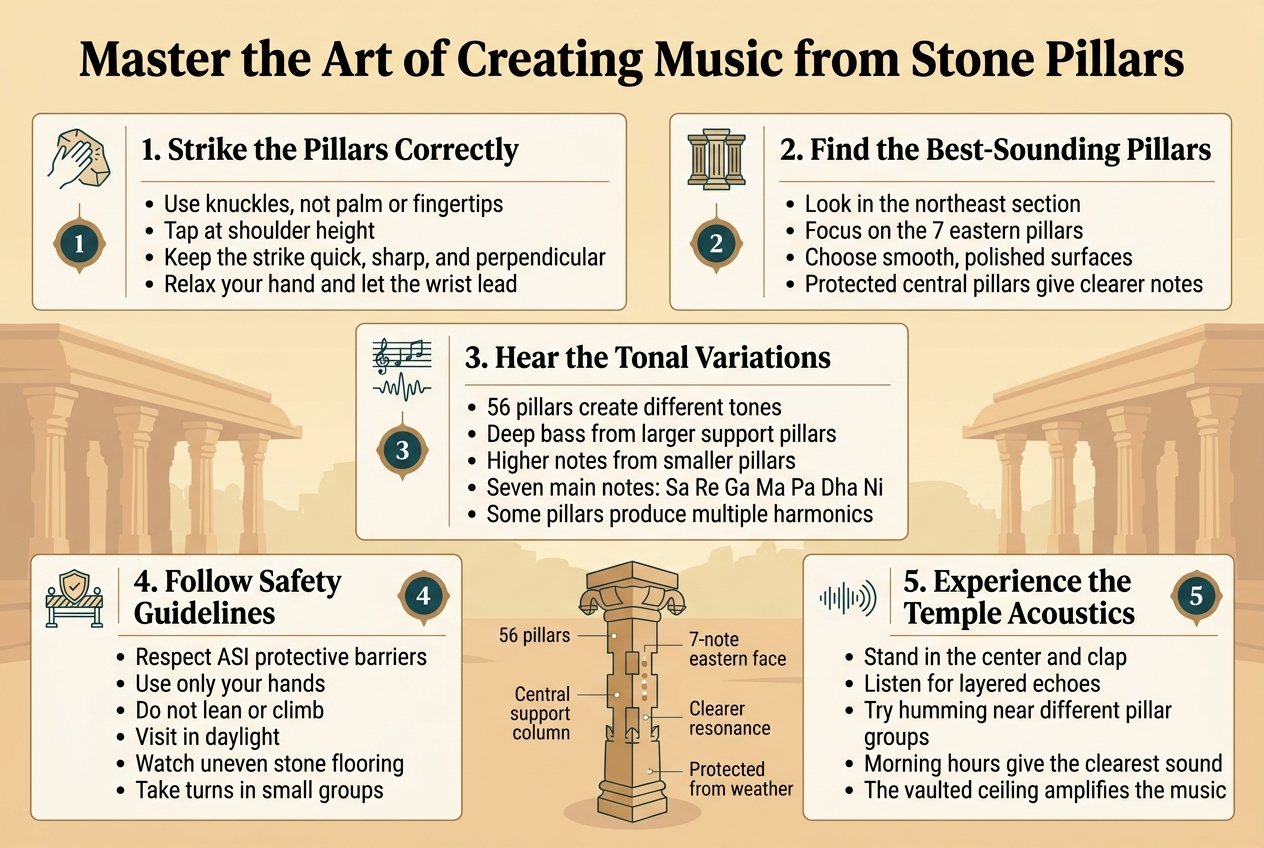
Getting the perfect sound from Vittala Temple’s musical pillars requires a gentle but confident touch. Use your knuckles rather than your palm or fingertips as the bone-to-stone contact produces the clearest resonance. Strike the pillar at shoulder height where the circumference is most uniform. A quick, sharp tap works better than a prolonged press. The stone responds best to a perpendicular strike rather than a glancing blow.
Keep your hand relaxed and let your wrist do most of the work. The pillars have been creating music for over 500 years and they will continue long after your visit if treated with care and respect.
Which Pillars Produce the Clearest Musical Notes
The main musical pillar cluster sits in the temple’s northeast section, where 56 smaller pillars surround a central support column. The seven pillars on the eastern face produce the most distinct notes, ranging from deep bass tones to higher pitches, and show less weathering than others in the complex. Look for pillars with smooth, polished surfaces as these typically generate the clearest sounds.
The seven pillars of the main cluster each produce a different note of the traditional Indian musical scale, Sa Re Ga Ma Pa Dha Ni. Moving clockwise around the cluster you will notice the tonal progression. Some pillars create multiple harmonics when struck at different points, adding extraordinary complexity to the musical experience.
Safety and Preservation Guidelines
The Archaeological Survey of India has placed protective barriers around the most delicate sections. Never use objects to strike the pillars and only use your hands. Current restrictions include no striking with coins, keys or metal objects, gentle finger taps only, group size restrictions during peak hours, and designated pathways to prevent overcrowding around fragile structures. These guidelines exist so that future generations may experience the same wonder you are enjoying today.
Explore the Cultural and Spiritual Significance of Musical Architecture
How Music Enhanced Religious Ceremonies
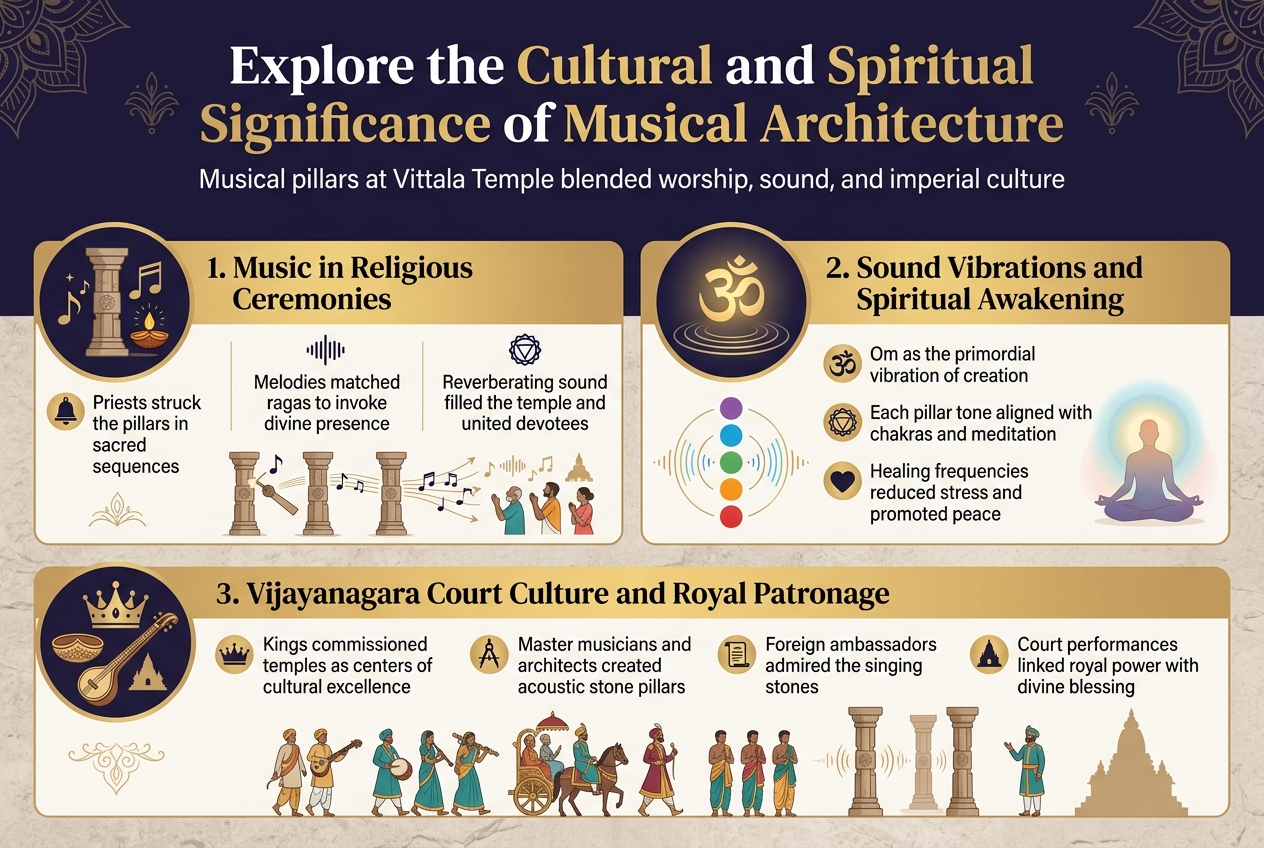
Music played a central role in transforming ordinary worship into transcendent spiritual experience at Vittala Temple. During ceremonies dedicated to Lord Vishnu, priests would strike the pillars in specific sequences, creating melodic patterns that corresponded to different ragas believed to invoke divine presence. The acoustic properties of the temple created an immersive soundscape where devotees felt surrounded by celestial music.
Sound Vibrations and Spiritual Awakening
Ancient Indian philosophy recognises sound as a fundamental force of creation, with the sacred syllable Om representing the primordial vibration from which the universe emerged. Each pillar’s unique tone corresponds to particular energy centres in the human body. When struck in sequence, these sounds create vibrational patterns that practitioners believed could induce meditative states and facilitate spiritual awakening.
Modern research into sound therapy validates many of these ancient beliefs, showing how specific frequencies influence brainwave patterns and emotional states. The builders of Vittala Temple intuited these connections centuries before science could explain them.
Music in Vijayanagara Court Culture
The Vijayanagara Empire celebrated music as both high art and spiritual practice, making it central to court life and royal patronage. Royal courts employed master musicians who collaborated with architects to design acoustically perfect spaces, developing techniques for carving pillars that would produce precise tones while maintaining structural integrity. Foreign ambassadors wrote home about these miraculous singing stones, spreading the reputation of Vijayanagara’s cultural achievements across medieval Asia.
Plan Your Visit to Experience the Musical Pillars
The Best Time to Visit
Early mornings between 7 AM and 9 AM offer the most magical acoustic experience at Vittala Temple. During these quiet hours, minimal tourist chatter allows you to fully appreciate the subtle resonance of each musical pillar. Visit during the cooler months from October through March for the best overall experience. Monsoon season from June to September should be avoided as humidity can affect the stone’s acoustic properties and make the surfaces slippery.
Guided Tour Options
The Karnataka State Tourism Development Corporation offers specialised Musical Heritage Tours focusing on the acoustic properties of Vittala Temple. Local expert guides provide demonstrations during regular visiting hours and can identify specific pillars that mimic the sounds of different classical instruments including the tabla, flute and veena.
For the richest, most immersive experience of Vittala Temple and the entire Hampi ruins complex, join our expert-led Hampi Tour from Bangalore. Our guides bring centuries of history alive with the depth and passion these extraordinary stones deserve.
Photography and Interaction Guidelines
Photography is permitted throughout the temple complex but flash photography near the musical pillars is discouraged. Use only fingertips for gentle tapping, avoid wearing rings or jewellery that might scratch the stone, and take turns when multiple people want to experience the same pillar. Professional photography requiring tripods or special equipment needs advance permission from the Archaeological Survey of India.
Beyond Hampi: Explore More of India’s Extraordinary Heritage with 5 Senses Tours
Hampi is one chapter in a story of extraordinary depth. If the Vijayanagara Empire has ignited your passion for India’s ancient civilisations, our portfolio of tours from Hyderabad will take you further into the Deccan’s magnificent heritage.
Stand at the ramparts of Golconda Fort, the diamond fortress whose mines produced the Koh-i-Noor and the Hope Diamond. Walk in wonder through the Ramappa UNESCO World Heritage Temple, an 800 year old Kakatiya masterpiece that shares Vittala Temple’s genius for integrating art, engineering and spirituality. Follow the Pochampally Silk Route through the weaving villages where some of India’s most celebrated textiles are still created on handlooms. And venture into the wild forests of Amrabad, one of the finest wildlife sanctuaries on the Deccan plateau.
For those who wish to begin their journey in the city itself, our Hyderabad Old City Walking Tour uncovers the hidden treasure vaults, royal palaces and ancient bazaars of the Nizam’s legendary capital, while our Hyderabad Food Street Walk takes you deep into the flavours that have made this city’s cuisine famous across the world.
Every one of these experiences is crafted by specialists who believe that travel, at its finest, changes the way you see the world.
Explore the full range of Tours from Hyderabad with 5 Senses Tours and begin planning your journey today.
In Conclusion
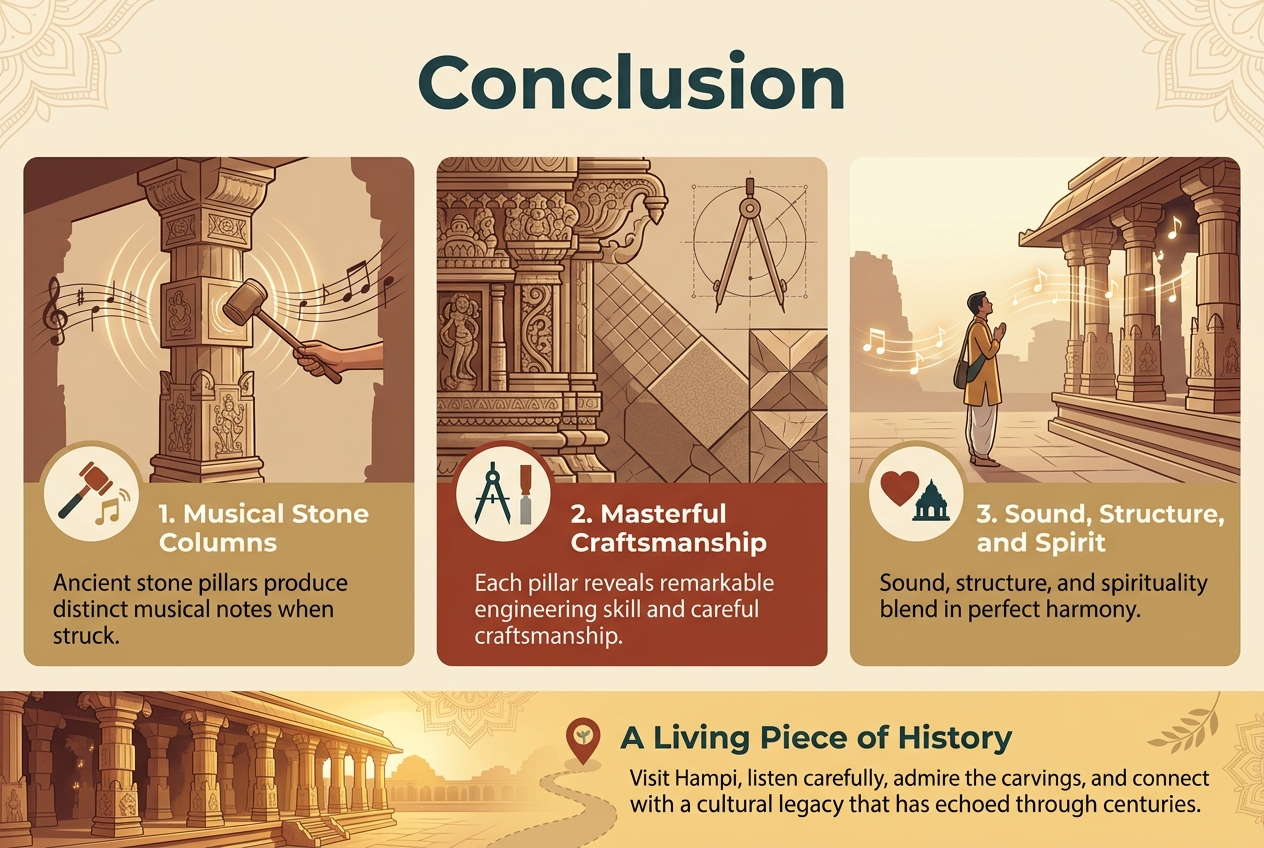
The musical pillars of Vittala Temple stand as one of history’s most incredible architectural achievements. These ancient stone columns produce distinct musical notes when struck, showcasing the remarkable engineering genius of the Vijayanagara Empire at its most inspired. The careful craftsmanship behind each pillar reveals how sound, structure and spirituality can blend together in perfect harmony.
Your journey to Hampi offers a rare and irreplaceable chance to witness this living piece of history firsthand. When you stand before these musical pillars, you are not simply seeing ancient stones. You are experiencing a testament to human creativity and devotion that has echoed across centuries, waiting for you to add your own moment to its story.
Book your Hampi Tour from Bangalore with 5 Senses Tours and let the stones sing for you.
Leave a Reply