


Chennai Tour
Chennai is the gateway to South India and is a cultural melting pot. Join us for an immersive experience.
Boat across Pulicat Lake, meet fishermen mending nets, weave palm leaf with a women's group and walk a Dutch cemetery
Most people drive past Pulicat on the way to somewhere else. This is a day spent with the people who live on this lagoon: the fishermen who mend nets on the sand, the women who turn palm leaf into baskets, and the elders who still tell the history of a trading coast, each of them paid directly for the time they give you.
📍 Pulicat Coast
⏱ Meet the lagoon communities
🛶 Boat across Pulicat Lake
🪦 Dutch Cemetery
Port to Palm is a private one day responsible tourism journey from Chennai to Pulicat, where you cross the lagoon by boat, sit with fishermen as they mend their nets, learn palm leaf weaving from a women’s self help group, meet a senior teacher of the local community and walk through the Dutch cemetery that remembers a trading coast. Every host is paid directly by 5 Senses Tours, built into the price, and the group never exceeds 8 guests.
Tour | Port to Palm, a private responsible tourism day trip from Chennai |
Route | Chennai, Pulicat and back, about 2 to 2.5 hours each way by private car |
Stops: | Boat trip on Pulicat Lake, the Adhinarayana temple, a mosque with an old method of telling time, fishermen mending nets, a homemade lunch, a palm leaf weaving self help group, the Muslim community and its senior teacher, the 25th mile canal, the lighthouse and the Dutch cemetery |
Transport: | Air conditioned privare car |
Community Hosts: | Fishermen, net menders, self help group and the community elders |
Group size: | Private |
Price: | From Rs 8000-9750 per person |
| Guide language: | English |
Operator: | 5 Senses Tours, Ministry of Tourism approved, running tours across India since 2015 |




Two thousand years ago, a ship sailing the Coromandel coast would have known this name. A Greek sailor’s guide of the first century, the Periplus, lists a port called Podouke, and the geographer Ptolemy lists it again in the second century. By the seventh century the Pallavas called it Mamalla Pattinam. Arab traders settled here. The Portuguese came in 1502. The Dutch followed in the early 1600s, built Fort Geldria, struck coins in their own mint here, and made Pulicat the headquarters of their trade on the Coromandel coast.
Then the water and the world moved on. The lagoon that sheltered the ships is shallow, and shoals and silt made it hard for large vessels, which is why a lighthouse was later raised here simply to warn ships away. Trade routes shifted after the fall of Vijayanagara. The Dutch moved their headquarters to Nagapattinam, the British took control in 1825, and Madras, a short way south, grew into the great port that Pulicat had once been. A harbour that held the attention of the world became a quiet shore where fishing families still live and work.
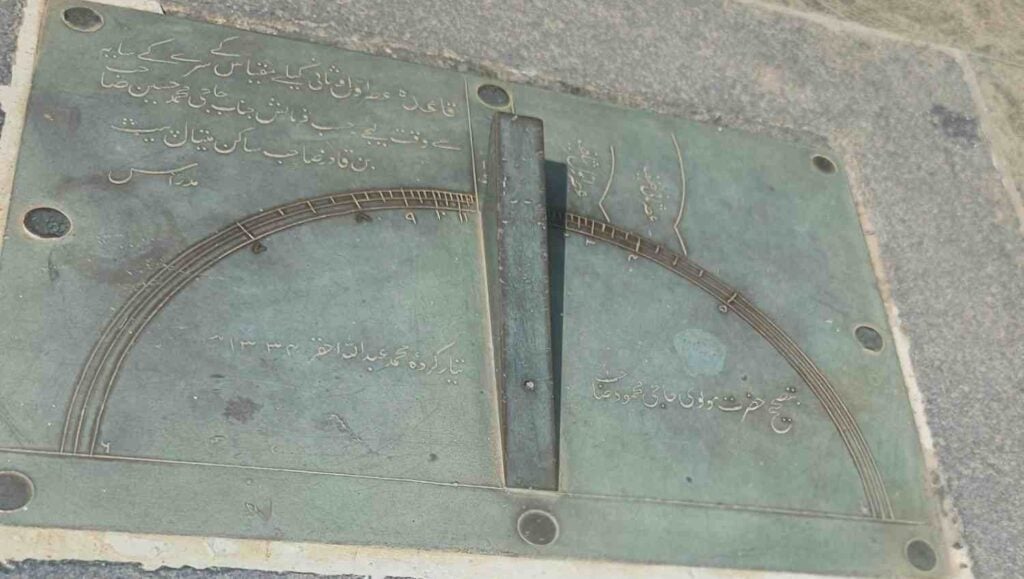
The traces of that old life are still standing. The Adinarayana temple is built entirely of laterite blocks, a stone more common on the Malabar and Konkan coasts than in Tamil Nadu, a quiet clue that this temple’s builders had links by sea. Chinna Pallivasal, a mosque of the town, keeps a sundial that told the people when to gather for prayer. And in the Dutch cemetery, carved tomb slabs and domed mausoleums stand over graves that span the mid 1600s into the 1700s.
It is also a place that asks you to look honestly. Between 1621 and 1665, Dutch records count 131 ships carrying 38,441 enslaved Indians, many bought through brokers at Pulicat, most of them taken across the sea to Batavia, today’s Jakarta. The same ground that holds the beauty of the lagoon holds this grief, and your guide will not look away from it.
You will not watch any of this from a bus window. You will cross the water by boat, sit on the sand beside the net menders, eat a homemade lunch, and learn to turn a strip of palm leaf into a small tea coaster beside the women who live by it. Every person you meet is paid directly for the time they give you, built into the price of the journey and never left to tips
Port to Palm at a glance
The day runs about 12 hours by private car from your Chennai hotel, covers ten stops around Pulicat (a boat trip on the lake, the Adhinarayana temple, a mosque with an old way of telling time, fishermen mending nets, a homemade lunch, a palm leaf weaving self help group, local community and its senior teacher, the 25th mile canal, the lighthouse and the Dutch cemetery), includes lunch, and returns you to your hotel between 7:15 and 7:30 in the evening. It is run by 5 Senses Tours, a Ministry of Tourism approved operator and winner of the Outlook Responsible Tourism Award, with every host paid directly and a maximum of 8 guests.
Port to Palm is a full day, roughly twelve hours door to door, that leaves your Chennai hotel at 7 AM and moves through the lagoon, the town and its communities. It begins on the water, moves to the temple and mosque, settles into the work of the fishermen and the women of the palm leaf group, and closes with the canal, the lighthouse and the Dutch cemetery as the light softens.
This is built as responsible tourism, not marketed as it. Every fisherman, self help group member and community elder you meet is paid directly by 5 Senses Tours for their time, built into the cost of your journey and never left to tips. Visits happen during real working hours, nothing is staged for a camera, and each host decides what to open to you and how much.
Named bodies stand behind this model. 5 Senses Tours has won the Outlook Responsible Tourism Award, is approved by the Ministry of Tourism, is a member of the Indian Association of Tour Operators, and was a Tripadvisor Travellers Choice 2025 winner. The company is ranked number one of 226 tours and activities in Chennai on Tripadvisor, with a 4.9 rating, and has run private tours across more than fifteen Indian cities since 2015.
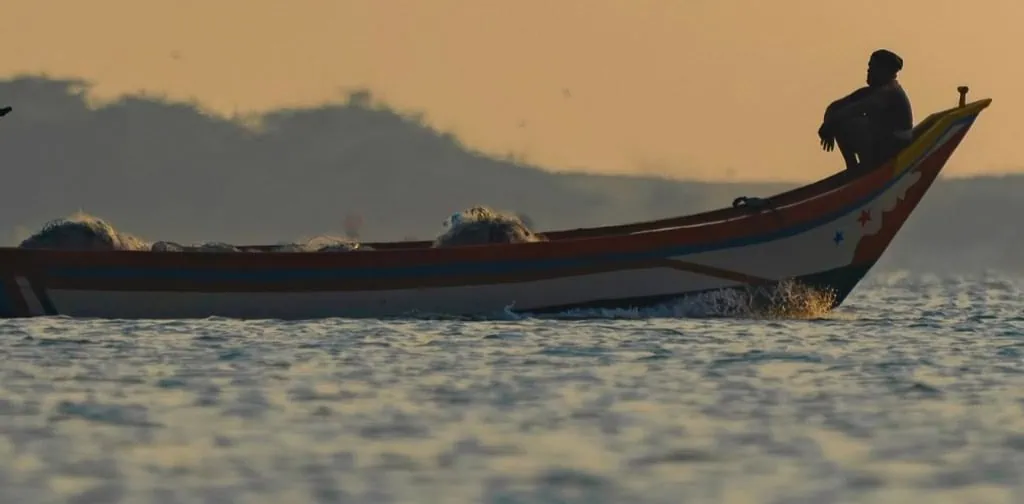
Pulicat Lake is a shallow lagoon along the coast north of Chennai, and the boat is the best way to understand it. The boats are run by local fishermen, who are paid directly for the trip. The crossing takes about 45 minutes each way, with a short stay on a small island in the lake.
The net yard is the working heart of the coast. Stacks of green and blue nets rise beside tin sheds, and fishermen sit on the sand mending torn mesh by hand, a knot at a time. Nothing is arranged for visitors. You watch the work as it happens, ask how a net is repaired and how long one lasts, and listen to the fishermen speak about the lake and the sea
In a small centre, women split palm leaf into strips, colour them pink, green and orange, and weave them into baskets, trays, lidded boxes, pencil boxes and bags. The palm tree itself is part of the story: it helps conserve groundwater, and its leaves, which are biodegradable, have long gone into household goods. Your guide explains how the craft is used, and the women show you each step from raw leaf to finished piece.
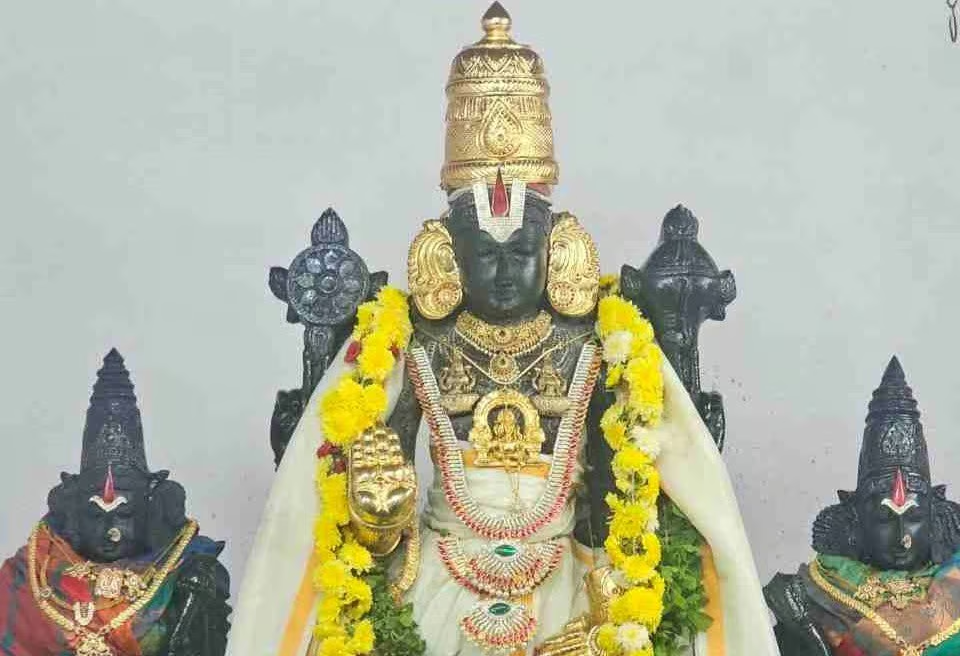
The Adinarayana temple, also written Adi Narayana Perumal temple, is a Vishnu temple in Pulicat and one of the two largest temples in the town. Unlike most South Indian temples, which are built of granite, it is built entirely of laterite blocks, a porous stone found along the Malabar and Konkan coasts and not in Tamil Nadu, and your guide reads it as a clue to Pulicat’s maritime links.
Chinna Pallivasal is one of the two prominent mosques of Pulicat, known in Tamil as Pazhaverkadu, and both are nearly 300 years old. It stands in a town where Arab maritime traders had settled by the 9th century, and its story belongs to the same sea routes that brought Pulicat its early trade. Long before clocks, the people here read the time from the sun. A marker was used to work out the hour, and in 1914 a sundial was installed at the mosque to show the time and to call the community together for prayer. Your guide shows how the shadow falls and what each mark means
The lighthouse gives you the shape of the coast in one look: sea, sand, lagoon and town. It was raised to warn ships away from the Pulicat shoals, not to welcome them into a port, which tells you something about how the harbour changed.
The day ends at the Dutch cemetery, a walled ground of about 77 graves with carved tomb slabs, domed mausoleums, an obelisk and a skull motif carved above the arch, with burials that date from the mid 1600s to the 1700s.
Every host on this journey is paid directly by 5 Senses Tours at the time of your visit, built into the price. There are no tips to hand over and no shop to be steered into. Visits happen during real working hours, so you see the net mending and the palm leaf weaving as they truly are. Each host decides what to share and how much to open. The days are small, a maximum of 8 guests, so the fishermen and the women are not overwhelmed.
🏆 Outlook Responsible Tourism Award
🏛️ Ministry of Tourism Recognised
⭐ Ranked #1 on Tripadvisor
🤝 IATO Member
Your guide sits on the floor with the palm leaf weavers, stands among the fishermen at the net yard, and walks the Dutch cemetery as easily as the sand by the lake. Expect Pulicat told as a story you are standing inside, from the ancient port to the quiet shore, and not as a script recited at a monument gate.
Over a day with this much to take in, your guide reads the group quickly. A guest who wants to stay longer with the net menders is given the time, and a guest who is moved by the Dutch cemetery is given the quiet. The pace belongs to your group, because the day is private.
Your guide also carries the harder part of this history with care. The Dutch slave trade that ran through Pulicat is spoken of plainly and respectfully, as part of the same story as the lagoon and its people, without sensation.
The same standard applies to the hosts. Your guide knows the fishermen, the women of the self help group and the community elders you meet, which is why these doors open to our guests at all. Your guide is not only narrating the day. They are the reason the day works.
✅ Private air conditioned car from your Chennai hotel and back
✅ Boat trip on Pulicat Lake
✅ Homemade lunch in a community canteen
✅ Palm leaf weaving visit
✅ Entry fees where applicable
✅ An expert cultural guide
✅ Direct payment to every community host
The tour includes a private car from Chennai, a boat trip on Pulicat Lake, a homemade lunch, a palm leaf weaving visit, entry fees where applicable, an expert guide and direct payment to every community host.
The day takes about 12 hours. You leave your Chennai hotel at 7 AM, spend about 2 to 2.5 hours driving each way, and return between 7:15 and 7:30 in the evening.
The boat fishermen, the net menders, the cooks of the homemade lunch, the palm leaf self help group and the community elders are each paid directly by 5 Senses Tours at the time of your visit, built into the tour cost.
Every 5 Senses Tours journey is private and built around your group. If you would like to add a temple such as Kamakshi Amman or Ekambareswarar to the day, or spend longer at one stop, tell us before you travel and we will arrange it.
Accordion Content
Tradition says so, and many in Tamil Nadu hold it firmly. Some scholars read the early Chinese accounts of his life as describing a prince of the Pallava dynasty, whose capital was Kanchipuram. Historians do not treat his birthplace as settled, and his life is known mostly through later accounts. We present it as tradition, which is exactly what it is.
Choose from our comprehensive list of guided tour from Chennai.
Join our immersive culture walks to discover authentic India. Led by a guide, experience culture, heritage & food across India.
Listen to Incredible India Travel, a podcast about the best places to visit and experiences in India.
Join our ride on Royal Enfield Motorcycles s we experience authentic India, led by an escort rider.

