
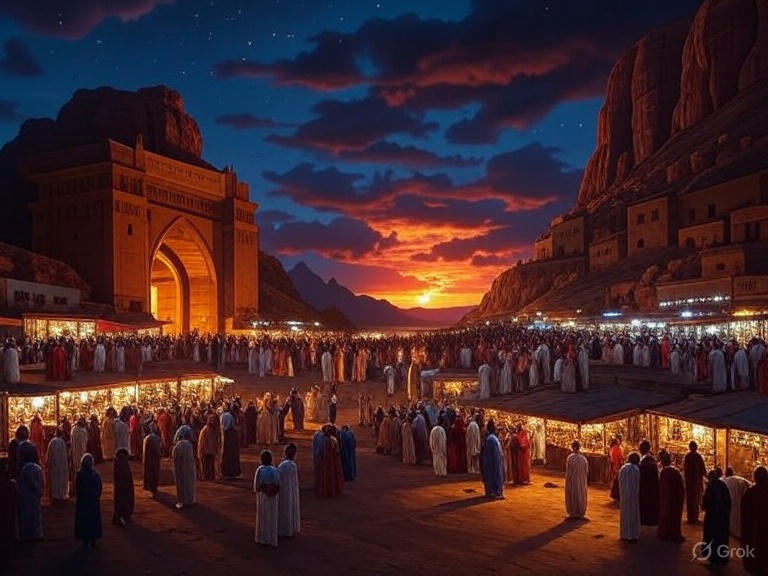
Imagine this: The sun crests over the vast, sun-baked expanse of the Rann of Kutch, casting a golden glow on crumbling stone walls that have stood for over 5,000 years. You’re at Dholavira, a forgotten metropolis of the Indus Valley Civilization, where the wind carries echoes of ancient voices. As you step through the massive North Gate, etched with scars of time, a shiver runs down your spine.
This isn’t just ruins—it’s a portal to a saga of ingenuity, survival, and enigma. What secrets does this Harappan jewel hold? Why did a thriving city vanish into the desert? Buckle up for a storytelling adventure through Dholavira that will make you book a ticket to Gujarat faster than you can say “ancient wonder.”
Our tale begins in 1967, with archaeologist Jagat Pati Joshi stumbling upon peculiar mounds in the remote island of Khadir Bet, surrounded by the salt flats of the Great Rann. Locals called it Kotada Timba, a “fort on a mound,” but Joshi sensed something monumental. By 1989, R.S. Bisht and his team from the Archaeological Survey of India descended like detectives on a cold case. Shovels clashed against stone, revealing a city frozen in time. Earthquakes had ravaged it, yet here it was—one of the largest Harappan sites, sprawling across 100 hectares. UNESCO crowned it a World Heritage Site in 2021, but back then, it was pure drama: a civilization’s ghost rising from the grave, challenging what we knew about ancient urban life.
Now, time-travel to Dholavira’s heyday, around 3000 BCE. Envision a metropolis rising defiantly against the arid backdrop of Gujarat’s Kutch district.
No lush rivers here like those nourishing Mohenjo-Daro—this was a city born of willpower in a land where water was more precious than gold. Its founders, perhaps migrants from distant Harappan hubs, chose this spot for its strategic perch, flanked by seasonal streams: the Manhar and Mansar. Droughts were villains, earthquakes plot twists, yet Dholavira scripted a triumph of engineering that would make modern architects blush.
Approach as an ancient trader, your camel caravan laden with lapis lazuli from Afghanistan. The first sight? Towering fortifications, 18 meters high, encircling the city like a protective embrace. Divided into three parts—the Citadel for the elite, the Middle Town for merchants, and the Lower Town for the masses—Dholavira was a masterpiece of urban planning. Drama unfolds at the North Gate, flanked by reservoirs shimmering like mirages. Guards might have scrutinized your wares, their eyes sharp under the sun. Inside, a grid of streets, straight as arrows, lined with baked-brick houses that withstood millennia.
Water was the lifeblood of this desert drama.
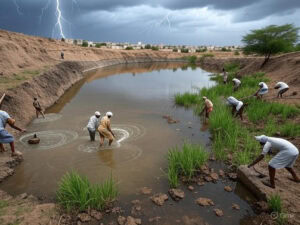
Dholavira’s residents were hydro-wizards, crafting a system rivaling today’s sustainable designs. Sixteen reservoirs, some rock-cut and massive, like the 79-meter-long East Reservoir, harvested monsoon drops. Channels snaked through the city, while stepwells plunged into the earth. Imagine the tension during a dry spell: families praying at reservoirs as water dipped. Around 2000 BCE, climate change struck, shifting monsoons and turning abundance to scarcity. Earthquakes cracked walls, forcing adaptations that delayed the inevitable. Wander these basins today, and feel the echo of that struggle—a story of defiance that tugs at your heart.
Venture into the Citadel, the city’s heart atop a mound, where power reigned. A “castle” and “bailey” complex housed rulers, perhaps priest-kings orchestrating trade and rituals. Drama peaks at the ceremonial ground, a vast “stadium” 80 meters long, with tiered seating for thousands. Was it for assemblies, with drumming and chants? Or games, with athletes competing under the stars? Nearby, the “signboard”—a 3-meter-long inscription in the undeciphered Indus script—looms like an unsolved riddle. Ten symbols, perhaps proclaiming the city’s name, taunt us still. What did it say? “Welcome to Eternity”? This enigma alone is worth the pilgrimage.
Descend to the Middle and Lower Towns, where daily drama unfolded.

Artisans hammered gold, potters spun terracotta seals with unicorns—symbols of trade stretching to Mesopotamia. Beads glittered in markets, bartered for timber or shells. Imagine Mira, a young artisan, etching designs under oil lamps, dreaming of distant lands. Her world was cosmopolitan, yet orderly: bathrooms with drains feeding covered sewers, a hygiene obsession shaming some modern cities. But shadows loomed—disease, perhaps, or rivalries. Archaeological finds whisper of luxury: polished stone vases, intricate pottery, even a nearby fossil park with 13-million-year-old remnants.
The plot thickens with Dholavira’s downfall, a mystery wrapped in tragedy. Around 1500 BCE, the city emptied, its people scattering. Was it drought, drying streams? Or earthquakes, toppling structures? No weapons or battle scars mar the site—only abandonment’s quiet sorrow. Graves yield clues: bodies buried with pottery, but no royal tombs. This peaceful exit adds poignancy; Dholavira faded, leaving us to ponder humanity’s fragility.
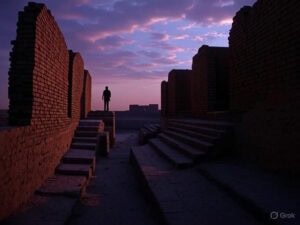
Today, Dholavira isn’t a dusty relic—it’s a living adventure. Nestled in the ethereal White Rann, reachable from Bhuj (250 km), the site pulses with drama under Gujarat’s skies. Arrive at sunset, when ruins glow amber, and camp under stars ancient eyes once saw. The on-site museum brims with artifacts—seals, tools, jewelry—that transport you back. Hike reservoirs, feel the stone, and imagine ancient waters. Combine it with the Rann Utsav festival, where camel rides and folk dances echo Harappan festivities. Birdwatchers spot flamingos, while history buffs revel in guided tours.
Why visit? In a world of fleeting distractions, Dholavira offers profound drama: a reminder that civilizations rise and fall, yet innovation endures. Stand amid the ruins, connected to Mira, the water-harvesters, the survivors. It’s a call to adventure, blending mystery, beauty, and introspection. Gujarat Tourism makes it accessible, with eco-resorts like Evoke Dholavira offering glamping vibes.
Heed the wind’s whisper: Dholavira awaits. Pack your bags, chase the horizon, and step into history’s embrace. You might unravel a secret or two. In this ancient theater, every visitor is part of the unfolding drama.
Leave a Reply