
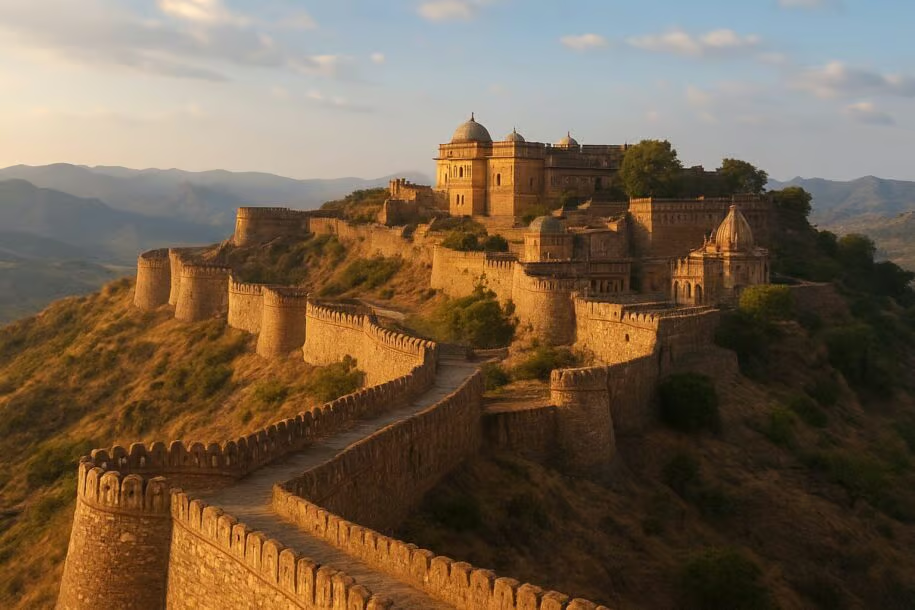
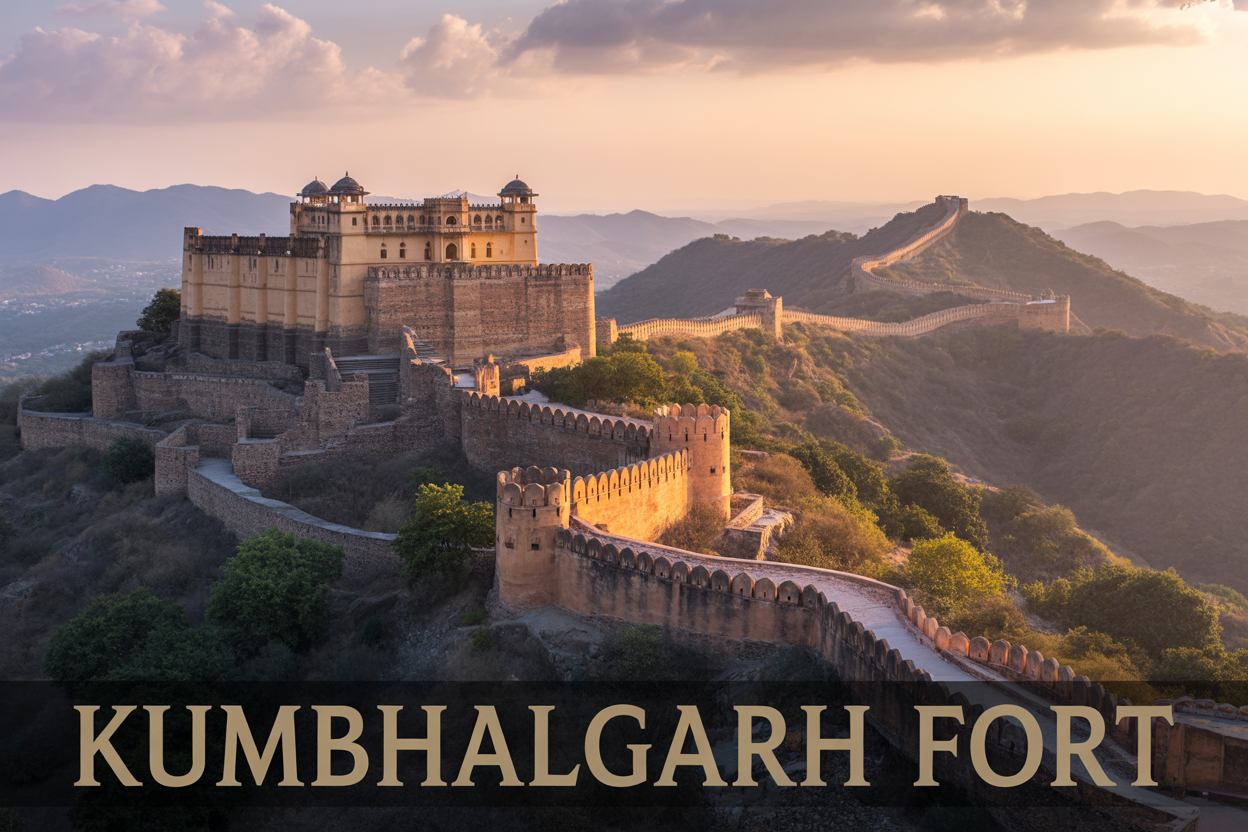
Kumbhalgarh Fort stands as one of Rajasthan’s most impressive UNESCO World Heritage Sites, famous for housing the second-longest wall in the world after China’s Great Wall. This Kumbhalgarh travel guide is perfect for history buffs, adventure seekers, and anyone planning a trip to explore Rajasthan’s majestic forts.
Nestled in the Aravalli Hills about 85 kilometres from Udaipur, this 15th-century fortress offers breathtaking views, fascinating architecture, and stories that bring India’s royal past to life. The massive fort complex stretches over 36 kilometers and contains over 360 temples within its walls.
We’ll walk you through the captivating Kumbhalgarh Fort history, from its construction by Rana Kumbha to its role as an unconquered stronghold. You’ll also discover practical details about how to visit Kumbhalgarh, including the best routes, Kumbhalgarh Fort timings, entry fees, and insider tips to make your trip memorable. Plus, we’ll help you plan the perfect Kumbhalgarh itinerary that covers all the must-see spots without feeling rushed.
For a guided tour of Kumbhalgarh Fort and Ranakpur Jain temple please visit Great Wall of India.
Discover the Rich History of Kumbhalgarh Fort
Origins and Construction Under Rana Kumbha in the 15th Century
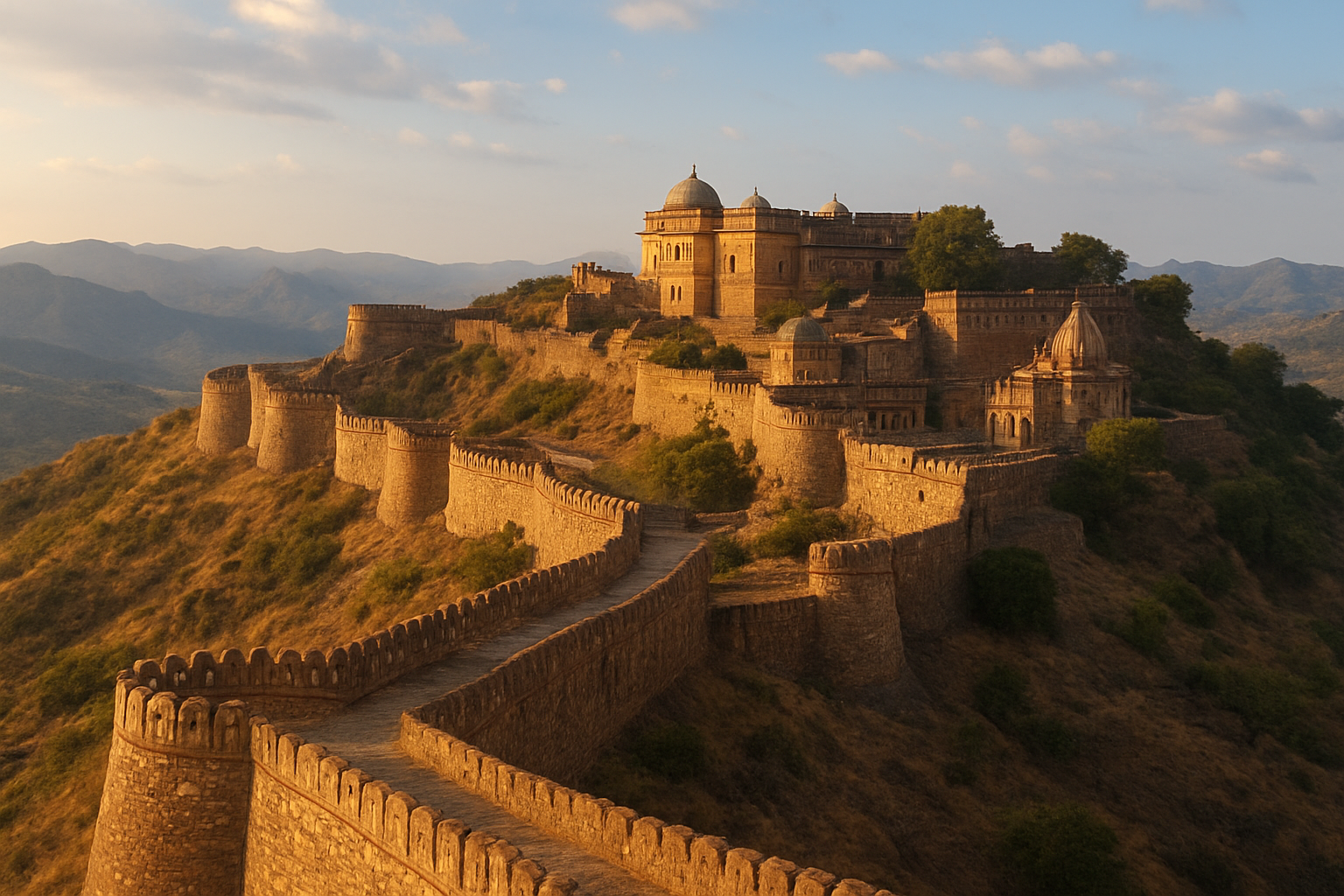
Rana Kumbha, the visionary ruler of Mewar, commissioned the construction of Kumbhalgarh Fort in the 15th century as a testament to Rajput architectural prowess. Built between 1443 and 1458 CE, this magnificent fortress took over 15 years to complete and stands as one of the most remarkable achievements of medieval Indian architecture.
The fort’s construction required an enormous workforce and innovative engineering techniques. Master architect Mandan designed the complex, incorporating advanced military architecture that would make Kumbhalgarh virtually impregnable. The builders used local sandstone and marble, creating structures that seamlessly blend with the rugged Aravalli Hills.
What makes Kumbhalgarh Fort history truly fascinating is its strategic location on a hilltop 1,100 meters above sea level. The fort covers an area of 36 square kilometers, making it one of the largest fort complexes in Rajasthan. Within its walls, Rana Kumbha built over 360 temples, creating a self-sufficient city that could withstand lengthy sieges.
The construction also included an intricate water management system with step wells, reservoirs, and tanks that ensured water supply even during extended conflicts. This engineering marvel reflects the sophisticated planning that went into making Kumbhalgarh Fort an unconquerable stronghold.
Strategic Military Importance in Mewar Kingdom
Kumbhalgarh Fort served as the second most important fortress in the Mewar Kingdom after Chittorgarh. Its location provided control over crucial trade routes connecting Gujarat and Rajasthan, making it economically vital for the kingdom’s prosperity.
The fortress functioned as:
- A military stronghold protecting the northwestern frontier
- A secure retreat for the royal family during emergencies
- A treasury and arsenal for the Mewar forces
- A refuge for local populations during invasions
The fort’s strategic positioning allowed defenders to spot approaching enemies from miles away. Its massive walls and bastions could accommodate large garrisons, while the internal space provided shelter for thousands of people and their livestock during sieges.
Military historians recognize Kumbhalgarh as an excellent example of defensive architecture. The fort never fell to direct assault, earning it the reputation of being unconquerable. Even the mighty Mughal forces under Akbar could only capture it once through treachery, not military might.
For a guided tour exploring Rajasthan in a week, please visit 7 Day Rajasthan tour, including a desert camp.
Legendary Stories and Historical Battles
Kumbhalgarh Fort witnessed numerous legendary battles and heroic tales that have become part of Rajasthani folklore. The most famous story involves Maharana Udai Singh II, the founder of Udaipur, who was born within these walls in 1522.
The fort’s most dramatic moment came during the 1567-1568 siege by Akbar’s forces. The Mughal emperor deployed a massive army led by generals including Man Singh of Amber and Asaf Khan. Despite their superior numbers, the Mughals couldn’t breach the fort’s defenses through conventional warfare.
According to historical accounts, the siege was broken only when the water supply was poisoned, forcing the defenders to surrender. This remains the only recorded instance of Kumbhalgarh falling to enemy forces, highlighting its otherwise impregnable nature.
Local legends speak of hidden treasures still buried within the fort’s chambers and secret passages that allowed defenders to move undetected. These stories, passed down through generations, add an air of mystery to the Kumbhalgarh Fort history.
UNESCO World Heritage Site Recognition
In 2013, UNESCO recognized Kumbhalgarh Fort as a World Heritage Site under the group “Hill Forts of Rajasthan.” This prestigious designation acknowledges the fort’s outstanding universal value and exceptional architectural achievement.
The UNESCO recognition highlights several key aspects:
- Exceptional example of Rajput military architecture
- Outstanding integration with natural landscape
- Well-preserved medieval fortification system
- Cultural significance as a center of Mewar civilization
This international recognition has brought global attention to Kumbhalgarh Fort Rajasthan, making it a must-visit destination for travelers interested in authentic historical experiences. The UNESCO status also ensures better conservation efforts and sustainable tourism development.
The World Heritage designation places Kumbhalgarh alongside other renowned fortifications worldwide, cementing its position as one of India’s most important historical monuments. This recognition has significantly boosted tourism while emphasizing the need to preserve this architectural marvel for future generations.
Explore the Great Wall of India at Kumbhalgarh
Impressive 36-Kilometer Wall Circumference Facts
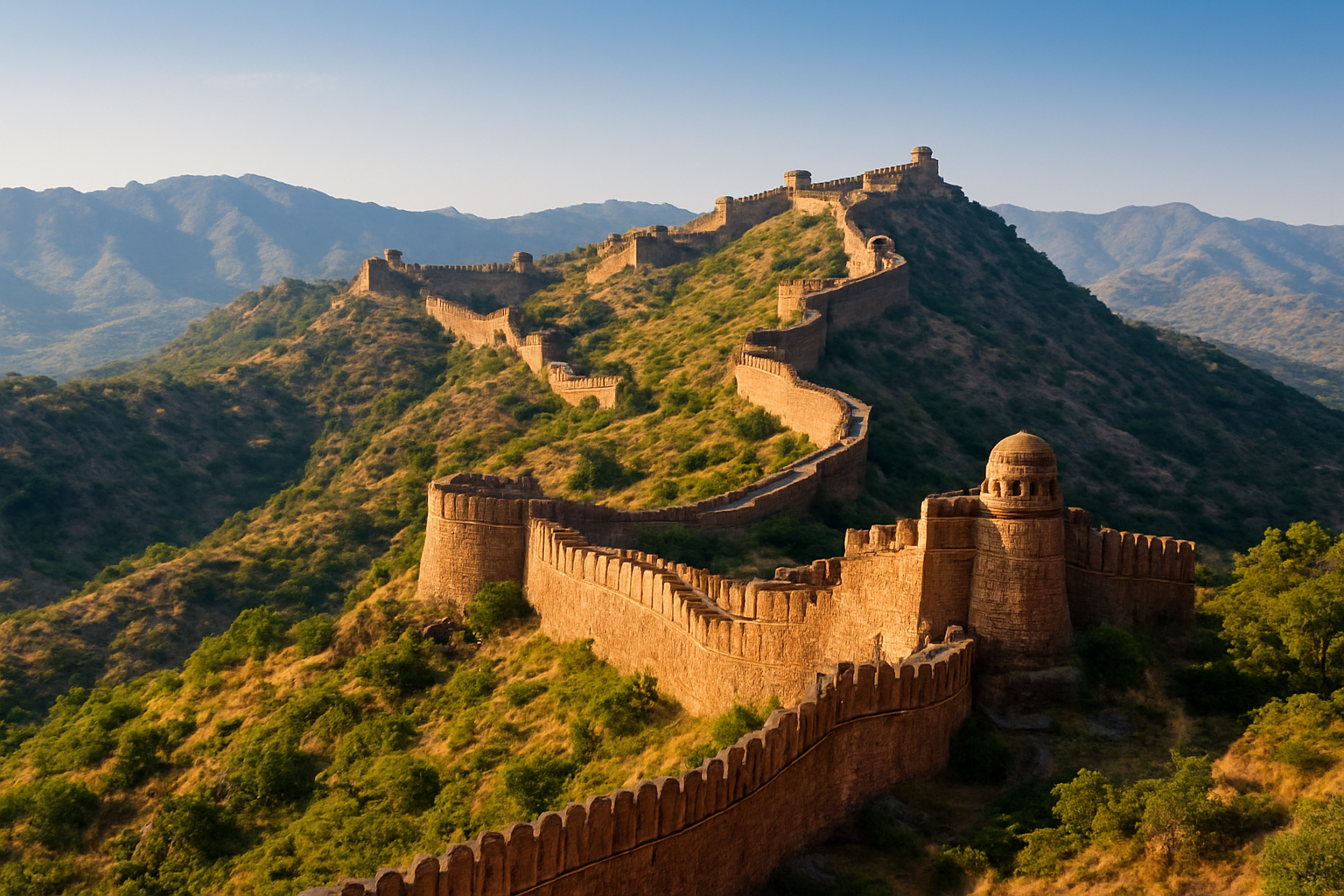
The Great Wall of India stretches an astounding 36 kilometers around Kumbhalgarh Fort, making it the second-longest continuous wall in the world. This massive fortification required over 15 years to complete and employed thousands of workers who transported massive stone blocks up the rugged Aravalli Hills. The wall’s width varies from 15 to 25 feet, allowing up to eight horses to ride abreast along its ramparts.
Built with locally quarried limestone and marble, the wall incorporates over 360 temples within its boundaries. The construction consumed approximately 40,000 tons of stone, with some sections rising 45 feet above ground level. Seven fortified gateways punctuate the wall’s perimeter, each designed with intricate defensive mechanisms including multiple entry points and hidden chambers.
Architectural Marvel and Engineering Techniques
Medieval engineers employed sophisticated techniques to construct this formidable barrier across challenging terrain. The wall follows the natural contours of the Aravalli ridge, utilizing the landscape’s defensive advantages while maintaining structural integrity. Master builders used a unique interlocking stone system without mortar in many sections, allowing the structure to flex with temperature changes and seismic activity.
The construction features include:
- Stepped ramparts enabling easy movement for defenders
- Watch towers positioned at strategic intervals for maximum visibility
- Water channels integrated into the design for monsoon drainage
- Secret passages connecting different sections for tactical movements
- Ammunition storage chambers built directly into the wall structure
Ingenious architectural elements like sloped surfaces deflect enemy projectiles, while carefully calculated angles provide optimal firing positions for defenders.
Comparison with China’s Great Wall
While China’s Great Wall spans thousands of kilometers, Kumbhalgarh’s Great Wall of India holds its own impressive distinctions. Both structures demonstrate remarkable engineering prowess, but Kumbhalgarh’s wall showcases unique characteristics suited to Rajasthan’s desert warfare conditions.
Key differences include:
- Construction material: Kumbhalgarh uses local limestone versus China’s brick and stone combination
- Purpose: Designed primarily to protect a single fort complex rather than an entire border
- Terrain adaptation: Built specifically for Aravalli hill defense rather than mountain ridge protection
- Cultural integration: Incorporates numerous Hindu and Jain temples within its circuit
The Indian wall’s continuous nature around a single fortress makes it architecturally unique, creating an impregnable circular defense system.
Best Viewpoints for Photography
Capturing the Great Wall of India requires strategic positioning at key vantage points around Kumbhalgarh Fort. The main palace complex offers spectacular panoramic shots where the wall snakes across multiple ridges, disappearing into distant hills.
Prime photography locations:
- Badal Mahal (Cloud Palace): Highest point providing 360-degree views
- Neelkanth Mahadev Temple: Eastern perspective showing wall’s mountain integration
- Vedi Temple area: Western viewpoint perfect for sunset shots
- Main entrance gate: Ground-level architectural detail photography
- Ram Pol gateway: Dramatic angles showcasing defensive features
Early morning golden hour (6:30-8:00 AM) provides the most dramatic lighting, while sunset offers warm tones against the Aravalli backdrop. Drone photography captures the wall’s full scale, though permits may be required.
Wall Walking Experience and Safety Tips
Walking sections of the Great Wall of India offers an immersive historical experience, but requires preparation and caution. Well-maintained pathways allow visitors to traverse approximately 2 kilometers of the wall’s length, providing close-up views of construction techniques and defensive features.
Essential safety considerations:
- Wear sturdy hiking boots with good grip for uneven stone surfaces
- Carry water bottles as the walk can take 2-3 hours in Rajasthan heat
- Start early morning to avoid peak sun exposure
- Stay on marked paths to prevent damage to historical structures
- Use handrails where provided, especially on steep sections
The walk includes several rest points with shade and seating. Guided tours provide historical context while ensuring visitor safety. Some sections have restoration work in progress, so check with authorities about accessible areas before planning your wall walking adventure.
Navigate Your Visit to Kumbhalgarh Fort
Best Time to Visit for Weather and Crowds
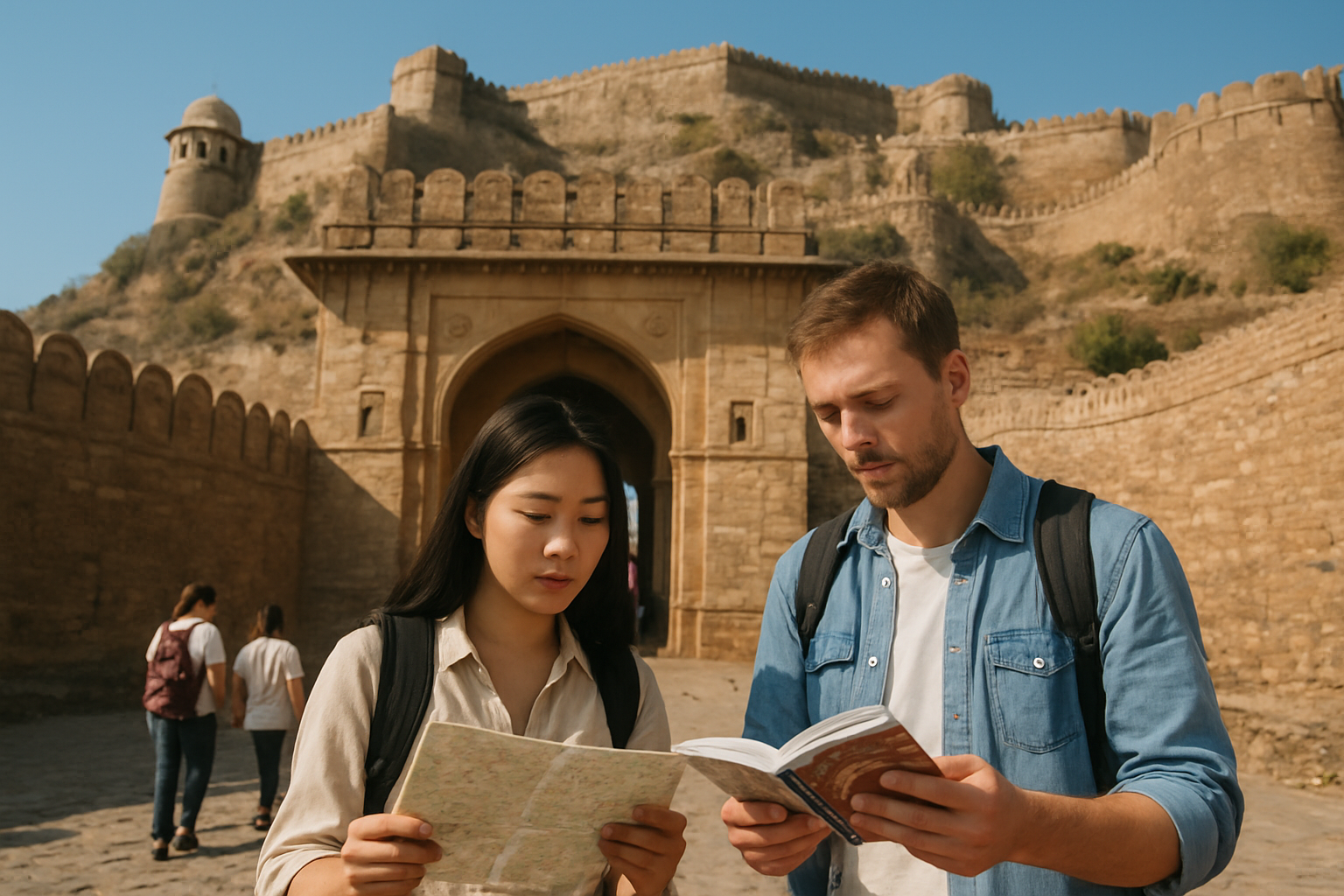
October through March offers the most comfortable weather for exploring Kumbhalgarh Fort. During these months, temperatures range from 10°C to 25°C, making it perfect for walking along the massive ramparts and exploring the fort’s numerous structures. The winter months also provide crystal-clear views of the Aravalli Hills, which look absolutely stunning from the fort’s elevated position.
Summer months (April to June) can be quite challenging, with temperatures soaring above 40°C. The scorching heat makes climbing the fort’s steep pathways exhausting, and you’ll find fewer photo opportunities due to hazy conditions. Monsoon season (July to September) brings relief from the heat but creates slippery pathways and limited visibility.
Peak tourist season runs from December to January when crowds are heaviest, especially on weekends and holidays. If you prefer a quieter experience, visit during November or February when the weather remains pleasant but tourist numbers drop significantly. Early morning visits (around 9 AM) help you avoid both crowds and the midday heat.
Entry Fees and Timings Information
Kumbhalgarh Fort welcomes visitors daily from 9:00 AM to 6:00 PM, with last entry allowed at 5:30 PM. The fort remains open throughout the week, including holidays, making it convenient for travelers with flexible schedules.
Entry fees are quite reasonable for this UNESCO World Heritage site:
- Indian nationals: ₹15 per person
- Foreign tourists: ₹200 per person
- Children under 15: Free entry
Camera fees apply separately:
- Still photography: ₹25
- Video recording: ₹200
Keep your tickets safe as security personnel check them at multiple points within the fort complex. The ticket counter accepts both cash and digital payments, though carrying cash is recommended as connectivity can be spotty in this remote location.
Transportation Options from Major Cities
Getting to Kumbhalgarh Fort requires some planning since it’s located in a relatively remote area of Rajasthan, about 85 kilometers from Udaipur.
From Udaipur (Most Popular Route):
- By Car/Taxi: The 85-kilometer journey takes approximately 2 hours via NH27. Private taxis cost ₹2,500-3,500 for a round trip, while self-drive car rentals start from ₹1,200 per day.
- By Bus: Rajasthan State Transport buses run regular services to Kelwara (15 km from the fort), from where you can catch local transportation.
From Jodhpur:
- By Road: 160 kilometers via NH62, taking about 3.5 hours. Most visitors hire private vehicles as public transport options are limited on this route.
For guided tours in Jodhpur, visit 5 Senses Experiences in Jodhpur.
From Jaipur:
- By Road: 350 kilometers via NH48 and NH27, approximately 6-7 hours of driving. Flying to Udaipur and then driving is often more practical.
For guides tour of Jaipur and Ranthambore Tiger Reserve, please visit 5 Senses Experience of Jaipur,
The nearest railway station is Falna (80 km away), but road connectivity from there is challenging. Most travelers find flying into Udaipur’s Maharana Pratap Airport and driving to be the most convenient option, especially when combining Kumbhalgarh with other Rajasthan destinations.
Plan Your Perfect Kumbhalgarh Itinerary
Essential Areas to Explore Within the Fort
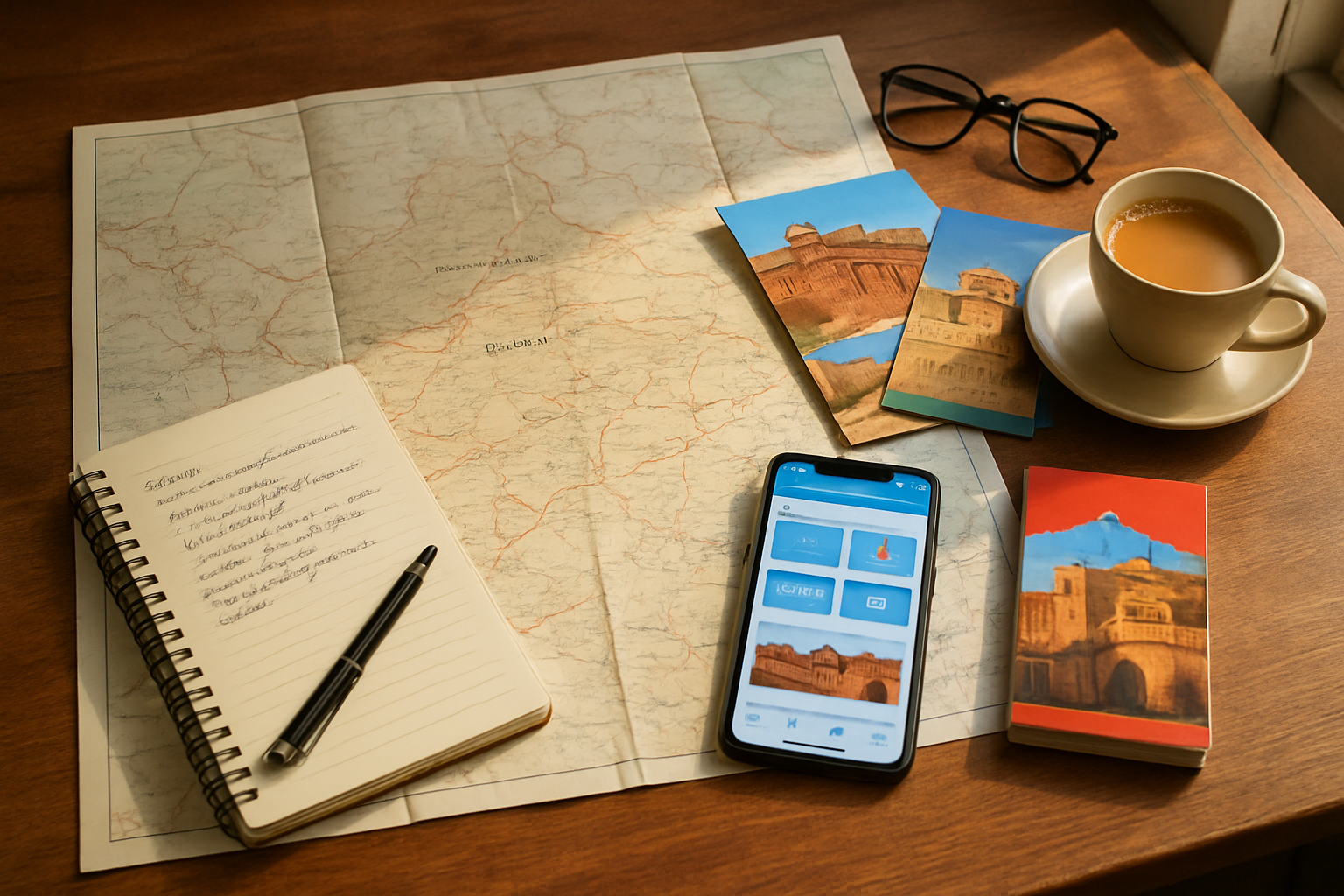
Kumbhalgarh Fort sprawls across 13 peaks of the Aravalli range, making it one of the largest fort complexes in the world. Start your exploration at the main entrance, Ram Pol, where you’ll immediately understand why this fortress remained unconquered for centuries. The fort contains seven massive gates, each telling its own story of architectural brilliance and strategic defense.
The Badal Mahal (Palace of Clouds) sits at the highest point and serves as your ultimate destination. Walk along the fort walls – the second-longest continuous wall after the Great Wall of China – which stretches over 36 kilometers. These walls are wide enough for eight horses to march side by side, offering spectacular views of the Aravalli hills and surrounding wilderness.
Don’t miss the step wells and water storage systems scattered throughout the complex. These engineering marvels kept the fort self-sufficient during long sieges. The Neelkanth Mahadev Temple area provides peaceful moments away from crowds, while the various military structures showcase medieval warfare tactics.
Must-See Temples and Palaces Inside
Kumbhalgarh Fort houses over 360 temples, making it a spiritual journey alongside your historical exploration. The Vedi Temple, built in Jain architecture, stands as the most significant religious structure within the fort walls. Its intricate carvings and peaceful atmosphere make it perfect for quiet reflection.
Badal Mahal deserves extended time on your Kumbhalgarh itinerary. This two-story palace features separate sections for summer and winter living, with beautiful frescoes and architectural details that survived centuries of weather. The top floor offers panoramic views that photographers dream about.
Kumbha Palace, the birthplace of Maharana Pratap, holds immense historical significance. Though partially in ruins, you can still imagine royal life within these walls. The palace complex includes underground chambers, secret passages, and royal quarters that bring history alive.
Neelkanth Mahadev Temple, dedicated to Lord Shiva, attracts both pilgrims and history enthusiasts. The temple’s ancient architecture blends seamlessly with the fort’s overall design, creating a harmonious spiritual space.
Light and Sound Show Timings and Booking
The spectacular light and sound show transforms Kumbhalgarh Fort into a magical experience after sunset. The show runs year-round but timings change with seasons. During summer months (April to September), shows typically start at 7:30 PM, while winter shows (October to March) begin at 7:00 PM.
Book tickets in advance, especially during peak tourist season from October to March. Online booking through official Rajasthan Tourism websites ensures guaranteed seats and often offers slight discounts. Tickets cost approximately ₹100 for adults and ₹50 for children, though prices may vary during festivals or special events.
The 45-minute show narrates Kumbhalgarh Fort history through dramatic lighting effects and compelling storytelling. Arrive 15-20 minutes early to secure good seating positions. The amphitheater offers excellent acoustics, but front-row seats provide the most immersive experience.
Weather can affect outdoor shows, so check conditions before heading out. During monsoon season, shows may be cancelled on rainy days. Winter evenings can get chilly, so bring light jackets for comfort.
Recommended Duration for Complete Experience
Plan a full day for your Kumbhalgarh Fort visit to truly appreciate its grandeur. Most travelers spend 4-6 hours exploring the main attractions, but history enthusiasts often need 8-10 hours for thorough exploration. Start early morning around 9:00 AM to avoid crowds and harsh afternoon sun.
Dedicate 2-3 hours for the main palace complex and temples. Walking the fort walls takes another 2-3 hours, depending on how much you want to explore. Photography enthusiasts should allocate extra time for sunset shots from various vantage points.
If attending the light and sound show, plan to stay overnight in nearby Kumbhalgarh village or Ranakpur. This approach lets you explore the fort leisurely without rushing to catch evening transportation. Many visitors combine Kumbhalgarh with Ranakpur Jain Temples for a two-day itinerary.
First-time visitors often underestimate the fort’s size. Wear comfortable walking shoes and carry water bottles, as climbing and walking can be strenuous. The best time to visit Kumbhalgarh is during cooler months when you can comfortably spend extended hours exploring this magnificent fortress.
Maximize Your Kumbhalgarh Experience
Photography Tips for Stunning Fort Pictures
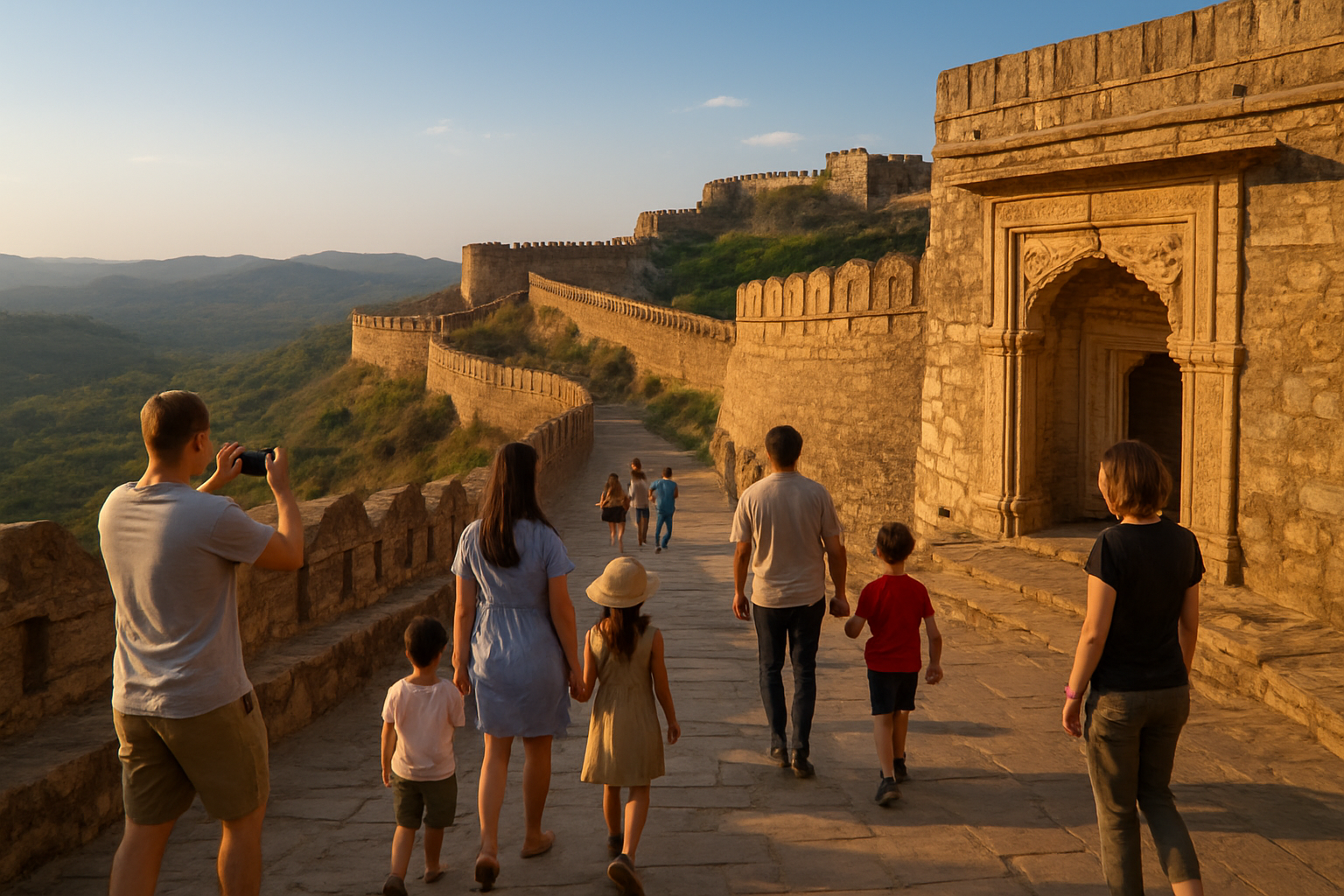
The golden hour transforms Kumbhalgarh Fort into a photographer’s paradise. Arrive early morning or stay until sunset to capture the fort’s massive walls bathed in warm, golden light. The Great Wall of India looks absolutely magnificent during these times, creating dramatic shadows and highlights across the ramparts.
Position yourself at the outer walls for sweeping panoramic shots that showcase the fort’s incredible scale against the Aravalli hills. The viewing points near the Badal Mahal offer breathtaking elevated perspectives perfect for wide-angle photography. Don’t forget to capture the intricate details – the carved brackets, ancient doorways, and weathered stone textures tell stories of centuries past.
For the best shots of the Great Wall of India snaking across the hills, head to the highest accessible points within the fort complex. Use a polarizing filter to cut through haze and enhance the contrast between the wall and surrounding landscape. Night photography enthusiasts should stick around for the illuminated fort – the lighting system creates a magical ambiance perfect for long-exposure shots.
Pack extra batteries and memory cards, as you’ll find countless photo opportunities throughout your Kumbhalgarh Fort visit. The play of light and shadow changes constantly throughout the day, offering fresh perspectives on this architectural marvel.
Nearby Attractions Worth Visiting
Your Kumbhalgarh itinerary becomes even more rewarding when you explore the surrounding attractions. The Kumbhalgarh Wildlife Sanctuary spans over 600 square kilometers and houses leopards, wolves, and numerous bird species. Early morning jungle safaris offer excellent wildlife spotting opportunities and complement your fort visit perfectly.
Ranakpur Jain Temple, just 30 kilometers away, stands as one of India’s most spectacular marble temples. The temple’s 1,444 intricately carved pillars create a mesmerizing visual experience that rivals the fort’s grandeur. Plan a half-day visit to appreciate the temple’s architectural brilliance and peaceful atmosphere.
The ancient Surya Narayan Temple within the fort complex deserves dedicated exploration time. Built in the 10th century, this temple offers insights into the region’s religious heritage and provides stunning views of the surrounding countryside.
Muchhal Mahavir Temple, famous for its mustached idol, sits about 5 kilometers from the fort and attracts pilgrims from across Rajasthan. The temple’s unique features and local legends add cultural depth to your Kumbhalgarh travel experience.
Consider visiting the nearby villages to witness traditional Rajasthani rural life. Local artisans still practice ancient crafts, and these interactions provide authentic cultural experiences beyond the typical tourist trail.
Local Cuisine and Dining Options
The restaurants around Kumbhalgarh Fort serve authentic Rajasthani cuisine that perfectly complements your historical exploration. Dal baati churma remains the regional specialty – these hard wheat dumplings served with spiced lentils and sweetened crushed wheat create a hearty meal perfect after fort exploration.
Hotel Kumbha Palace and Club Mahindra offer excellent dining experiences with traditional thali meals featuring local specialties. Their ker sangri (desert bean and berry curry) and gatte ki sabzi (gram flour dumplings in curry) showcase the region’s unique desert cuisine adapted to local ingredients.
Street food enthusiasts should try the local kachori and samosas available near the fort entrance. These crispy snacks filled with spiced lentils provide quick energy for your fort exploration. The chai stalls serve strong, spiced tea that’s perfect for warming up during early morning or evening visits.
Don’t miss trying the local sweets like ghewar and feeni, especially if you’re visiting during festival seasons. These traditional desserts reflect the region’s culinary heritage and make perfect gifts for family and friends.
Many hotels offer special Rajasthani dinner experiences with folk performances, creating memorable evenings after your day exploring the Great Wall of India. These cultural dining experiences often include traditional music and dance performances that bring the region’s rich heritage to life through multiple senses.
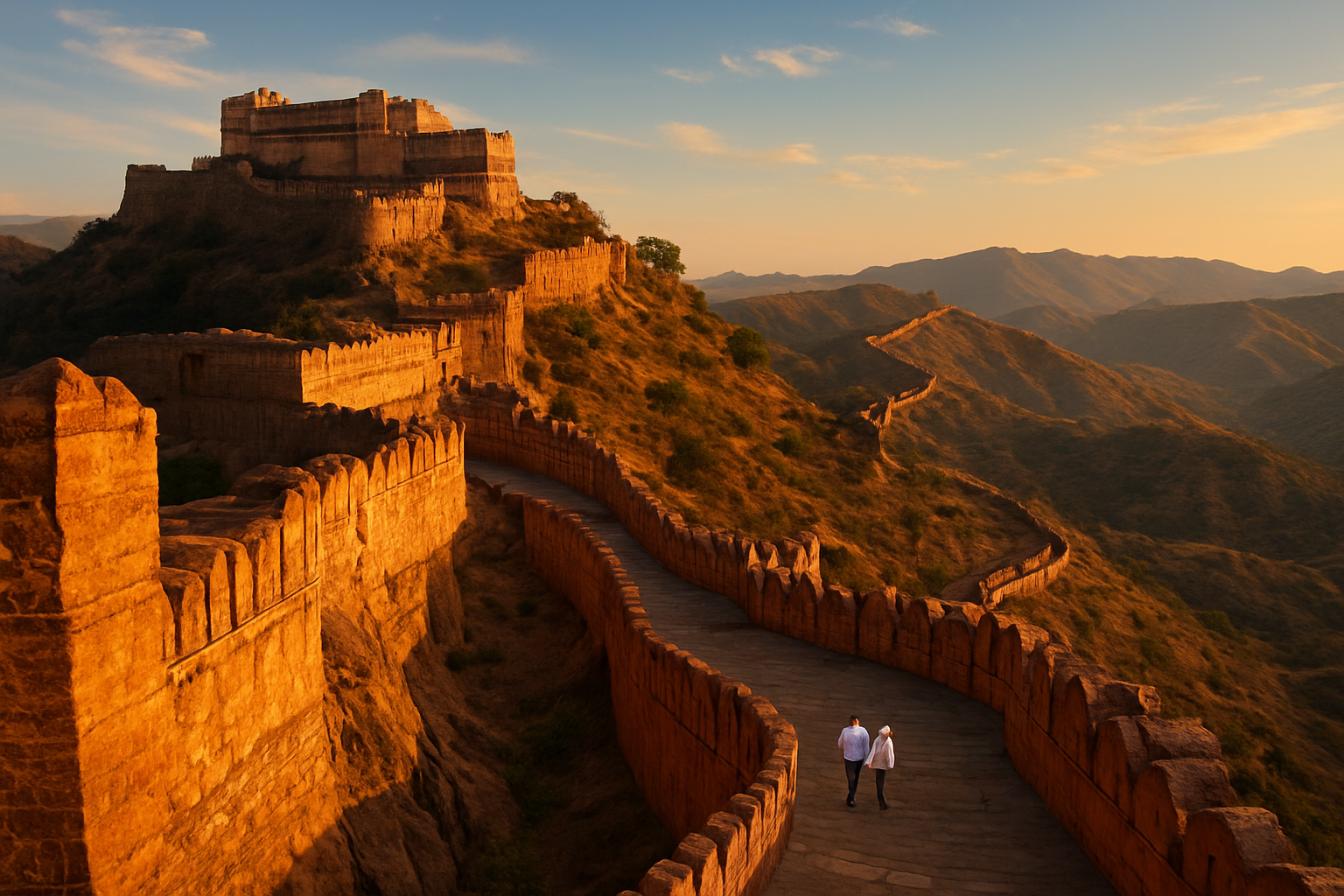
Kumbhalgarh Fort stands as one of India’s most impressive historical treasures, offering visitors a perfect blend of architectural wonder and cultural heritage. From its fascinating Rajput history to the second-longest wall in the world that snakes across the Aravalli Hills, this UNESCO World Heritage site delivers an unforgettable experience. The fort’s strategic location, stunning views, and well-preserved structures make it a must-visit destination for anyone exploring Rajasthan’s royal legacy.
Planning your trip with the right timing, transportation, and itinerary will help you make the most of your Kumbhalgarh adventure. Whether you’re watching the sunset from the palace walls, exploring the intricate temples, or simply walking along the Great Wall of India, every moment here connects you to centuries of remarkable history. Pack your camera, wear comfortable shoes, and prepare to be amazed by one of India’s most spectacular fortresses that truly lives up to its legendary status.
For a guided tour of Kumbhalgarh Fort and Ranakpur Jain temple please visit Great Wall of India.
To explore Udaipur city, visit the Full Day City tour of Udaipur.
For immersive culture walks in India, please visit 5 Senses Walks.
Leave a Reply