
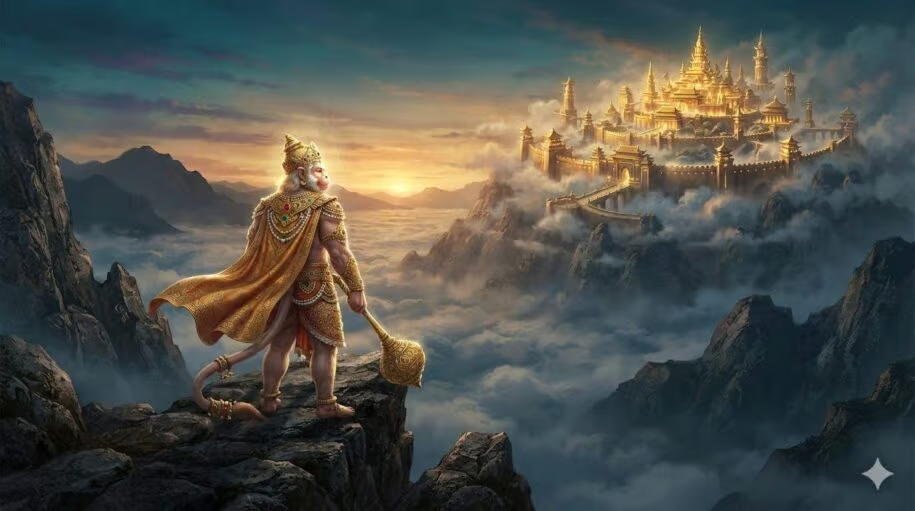
Lord Hanuman stands on a mountaintop, out of breath from the longest leap in literature, and looks up.
There, floating above the sea as if it had no weight at all, is a city of gold. Walls shine. Gates glitter. Lotus filled moats ring the ramparts. This is Ravana’s Lanka, the most famous address in the Ramayana, and nobody has ever agreed on where to find it.
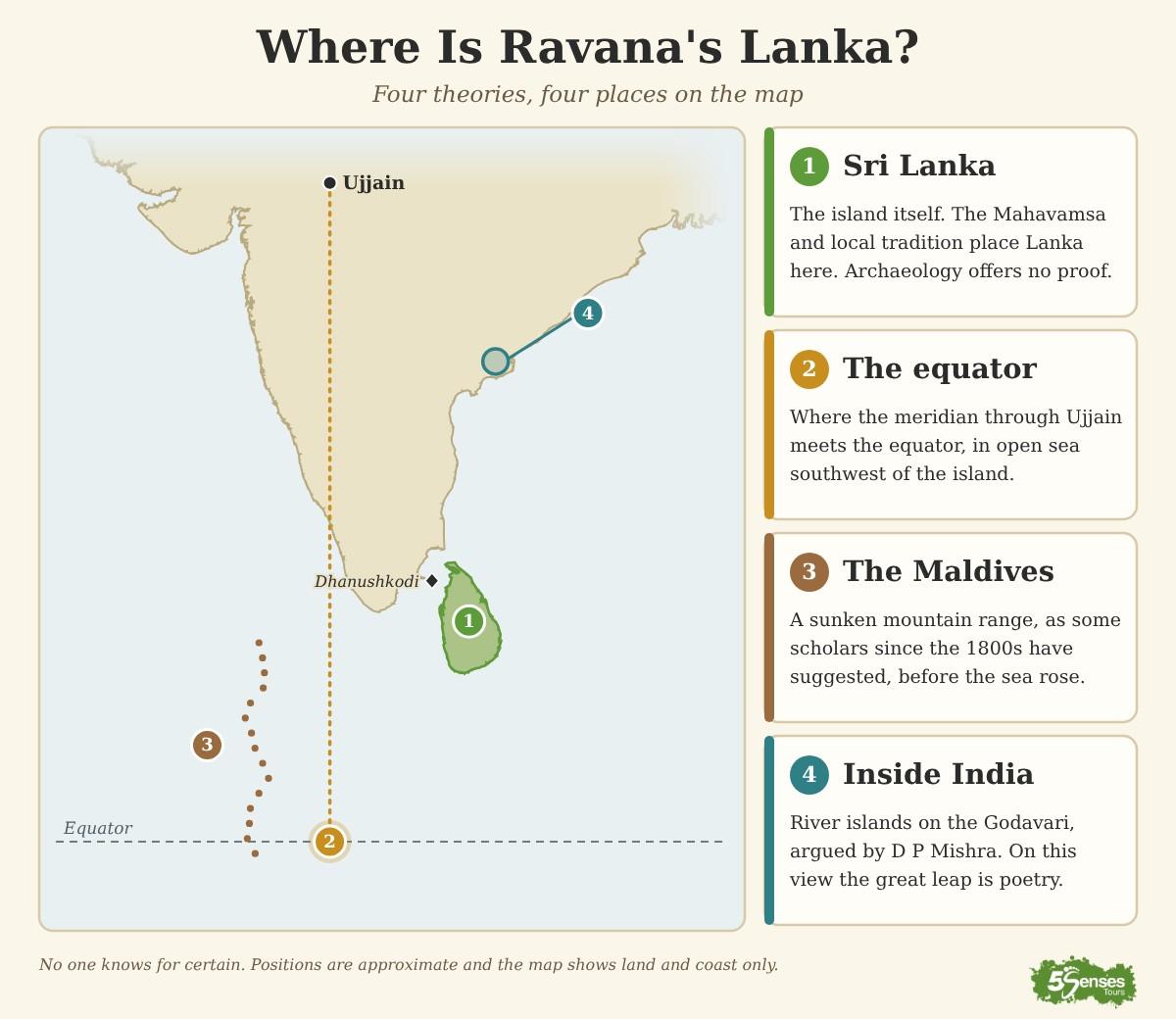
Where is Ravana’s Lanka? The question sounds simple. Most of us were told the answer as children. But scholars, priests, astronomers and travellers have been arguing about it for centuries, and the arguments are better than the answer. Here are four places they have searched.
What Valmiki tells us about Ravana’s Lanka
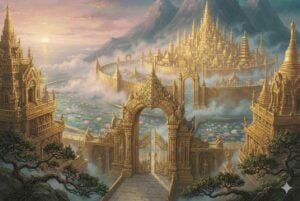
Before any theory, the text. When Hanuman first sees Ravana’s Lanka in the Sundara Kanda, he sees it from a mountain called Trikuta. The city sits high on the summit, so lofty that it seems to float in the sky. A golden wall encloses it. Moats filled with lotuses and water lilies surround it. Golden archways mark its gates, and Hanuman later approaches the northern one.
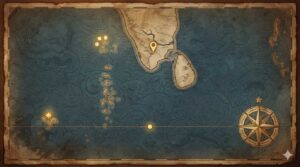
Elsewhere the epic gives distances. Sampati the vulture, who can see far across the water, speaks of a hundred yojanas. When Ravana carries Sita away, he tells her that his city lies in the middle of the sea. These are the clues. A mountain with three peaks, a city on top of it, an island or a land cut off by water, and a great distance.
Every theory below tries to fit those clues to a real map.
Theory 1: Is Ravana’s Lanka Sri Lanka?
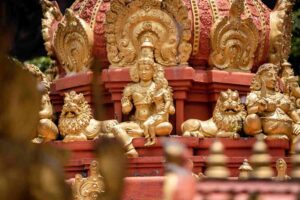
This is the answer most people give, and it has deep roots. The fifth century Sri Lankan chronicle, the Mahavamsa, places Lanka on the island. For centuries Ceylon was simply assumed to be Ravana’s Lanka, and in 1972 the country formally took the name Sri Lanka. Tamil devotional poets, the Alvars, called it Thennilangai, southern Lanka.
Sri Lanka has also made the epic part of its landscape. Near Gurulupotha, local tradition holds that Sita was first kept in a palace belonging to Mandodari, and a forest trail now leads to a spot called Sita Kotuwa, Sita’s Fort. Around Nuwara Eliya, the Seetha Amman Temple marks the garden where tradition says Hanuman found her, and nearby rocks carry marks said to be his footprints. Hakgala Gardens is another place linked to her captivity. At Divurupola near Welimada, a temple is said to mark where Sita proved her purity by fire. Some writers even link Ravana’s palace to the rock fortress of Sigiriya, though that fortress was built by a king centuries later, so the link is a matter of legend and not of dates.
The case against is quiet but serious. The Sri Lankan archaeologist Senarath Paranavitana found no archaeological evidence to support the Ramayana story on the island. The Archaeological Survey of India says there is no conclusive evidence for the events of the epic. And the politician and writer D P Mishra argued that ancient chronicles called the island Simhala, not Lanka, which he took to mean that the epic’s Lanka lay somewhere else.
The names that make Ravana’s Lanka feel real in Sri Lanka
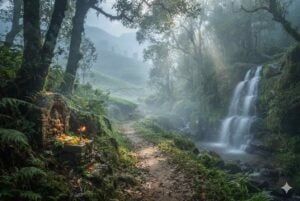
Walk the island with the epic in mind and the map starts to whisper. At Wirangantota, a name read as a place where aircraft land, local tellings say Ravana brought Sita down from the sky. At Dunuvila, a lakeside place in Matale district whose name is linked to the words for arrow and lake, they say Rama loosed his divine weapon at Ravana. Near Bandarawela, a cave and a waterfall carry Ravana’s name, and the cave is said to join other caves through tunnels that served as his secret roads.
Near Colombo, a Buddhist temple at Kelaniya holds a mural of a coronation, and locals say the king being crowned is Vibhishana, the brother who left Ravana to join Rama. Vibhishana is counted among the island’s four guardian deities, so shrines to him are not rare. Ravana himself, one traveller notes, has no tradition of worship there.
A fair guide should add what that traveller adds. Most of these shrines are not very old, and many of the links rest on place names and not on the epic itself. That does not make them less moving. It means the island has done what every great story does to the land it loves. It has answered back.
Theory 2: The Lanka on the equator
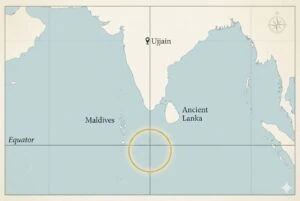
The second theory comes not from the Ramayana but from the sky.
Ancient Indian astronomers, in works such as the Surya Siddhanta and the Siddhanta Shiromani, used a place called Lanka as their reference point. It was the spot where the equator crosses their prime meridian, the line from which they measured the world. Some scholars, including Sewell and Dikshit in 1995, read the epic’s Lanka and this astronomical Lanka as the same place.
There is a startling consequence. That point lies more than 160 kilometres southwest of present day Sri Lanka, in open ocean. If the theory is right, Ravana’s Lanka is not on any modern map, and the island we call Sri Lanka only inherited its name. Others have pointed to Lingga Island, which also sits on the equator, and some writers believe an equatorial island may have been lost beneath the sea. Critics reply that the astronomical Lanka is a mathematical device, and that nothing in Valmiki ties it to Ravana’s city.
Theory 3: The sunken mountain of the Maldives
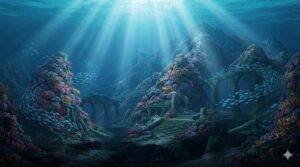
The third theory is the most imaginative, and it has a long pedigree. Since the nineteenth century, scholars including Edward Moor, H C P Bell and M S Purnalingam Pillai have wondered whether Ravana’s Lanka stood where the Maldives are today, when that region was a high mountain range before the sea rose.
One clue comes from the little island of Minicoy. Its ancient name was Minikaa, or Mainaka, and Mainaka is the name of the mountain that, in the epic, rises from the waves to offer Hanuman a place to rest on his way to Lanka. A related reading of the oldest versions of Valmiki suggests that Lanka lay in the western part of the Indian Ocean, among large islands, drowned mountains and sunken plateaus.
Not everyone agrees. One scholar who argues that Lanka is Sri Lanka points out that the Maldives region carries names that echo Ravana’s ancestors, Mali, Sumali and Malyavan. On her reading it was their ancestral homeland, and not the city Ravana himself ruled.
Theory 4: A Lanka inside India
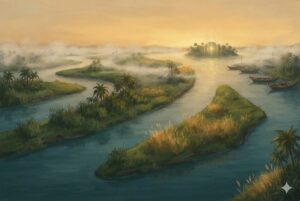
The fourth idea turns the whole question on its head.
The word lanka, scholars note, simply means a raised piece of land surrounded by water, and India has many such places, often in rivers. D P Mishra pointed to a chain of river islands on the Godavari in Andhra Pradesh. On this view, Ravana’s Lanka was never across the ocean at all, and the great leap and the great bridge belong to poetry and to later retelling.
Romila Thapar, the historian, has said simply that Indian scholars have debated this for centuries and that the location remains unidentified. A few writers have proposed Sumatra, Madagascar, and even Australia through the Sunda Islands. Those suggestions rest on very little, but they show how far the search has travelled.
The clue every theory must explain: Ram Setu
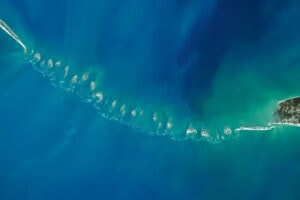
Whichever Lanka you choose, you meet the same problem. A bridge.
Between Pamban Island in India and Mannar Island in Sri Lanka runs a chain of limestone shoals, long known as Ram Setu or Adam’s Bridge. Tradition says the vanara army built it so that Rama could cross. The shoals stretch for roughly thirty kilometres. Valmiki, however, speaks of a bridge of a hundred yojanas, a length that does not match the strait.
Scholars read this in different ways. Some take a hundred as the epic’s conventional way of saying very large, a number used for all kinds of great things. Others see it as a sign that the geography of the epic is different from the one we know. The two readings sit side by side, and the debate has never quite ended.
So where is Ravana’s Lanka?
The honest answer is that no one knows.
The honest and more interesting answer is that all four theories reveal something. Sri Lanka shows how a land can adopt a story until the story becomes its own. The equator shows how an ancient people placed Lanka at the centre of their map of the world. The Maldives show how much of the sea floor was once land. And the Godavari shows that the Ramayana belongs wherever people have chosen to tell it.
Ravana’s Lanka may be a place, a memory, or both. What is certain is that people have walked toward it for two thousand years.
Stand where the search for Ravana’s Lanka begins
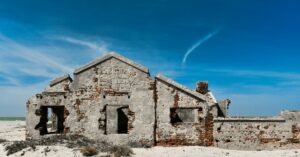
If you want to feel the question in your bones, go to the place where the epic’s journey turns toward the sea.
Rameswaram sits on an island off the coast of Tamil Nadu, and its great temple, Ramanathaswamy, is one of the most important pilgrimage sites in Hinduism. Tradition says Rama worshipped Shiva here. Some say he did so after defeating Ravana, and others say before he crossed. At the end of the road lies Dhanushkodi, where the land narrows to a point and you can look across the water toward Sri Lanka, near the crossing the epic describes.
Both are stops on our 14 day Ramayana tour of India, which follows Rama’s journey from Ayodhya through the forests of exile to Hampi and then south to the sea. At the edge of the strait, your guide will lay out all four theories on the sand and ask you which one you believe.