
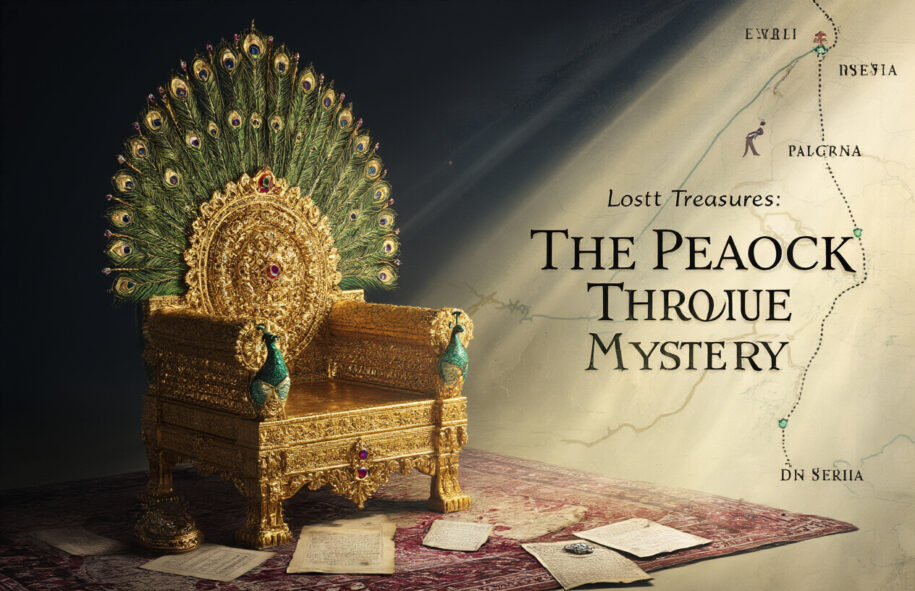
Lost Treasure: Peacock Throne
History buffs and treasure hunters will be captivated by the Peacock Throne – one of the world’s most valuable lost treasures. This opulent seat of Mughal emperors disappeared centuries ago, leaving behind questions that remain unanswered today. We’ll explore the throne’s incredible craftsmanship and historical significance, examine the dramatic circumstances of its theft, and look at ongoing efforts to track this priceless artifact through the corridors of time.
The Origin and Magnificence of the Peacock Throne
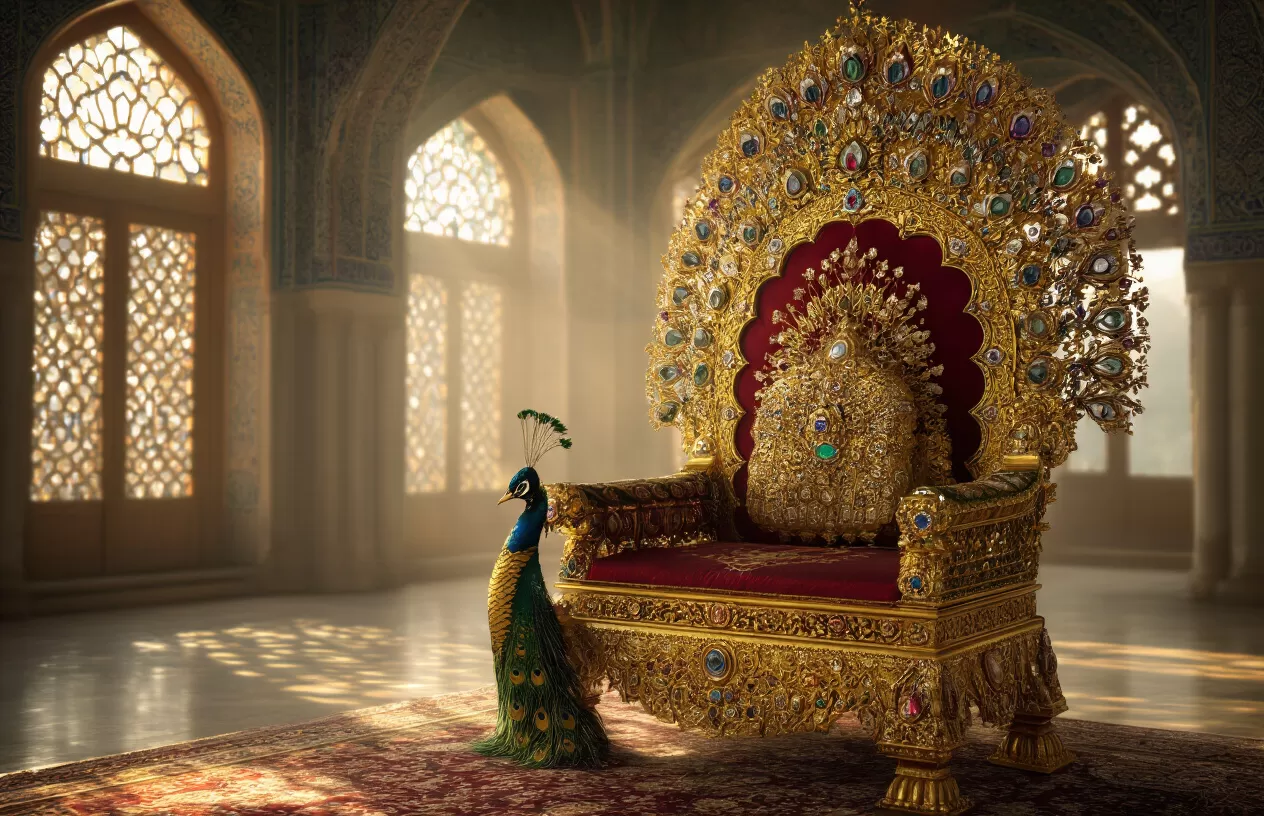
The Royal Commission: Shah Jahan’s Vision
Ever wonder what a throne fit for a god-emperor looks like? In 1628, Shah Jahan had exactly that thought after ascending to the Mughal throne. He wasn’t satisfied with just any royal seat – he wanted something that would make visitors weak at the knees.
The story goes that Shah Jahan commissioned the throne during the first year of his reign, determined to create a symbol that would eclipse anything seen before in royal courts worldwide. This wasn’t just furniture – it was a political statement cast in gold and gemstones.
The emperor pulled together the finest artisans from across his empire, giving them a seemingly impossible task: create a throne so magnificent it would literally embody paradise on earth. And he wasn’t kidding about the budget either – historical records suggest he poured the equivalent of millions in today’s currency into this single piece.
For a tour of the greatest work of Shah Jahan, visit a tour of the Taj Mahal.
Architectural Marvel: Design and Construction Details
The Peacock Throne wasn’t just big – it was massive. Standing about 6 feet long and 4 feet wide, this wasn’t your average chair. The base featured 12 columns inlaid with rows of dazzling pearls, supporting a canopy crowned with a stunning peacock.
What made this throne truly mind-blowing was its construction technique. Craftsmen used the kundan technique – a specialized form of Indian gemstone setting where gold foil holds stones in place without prongs or bezels. The result? A seamless sea of jewels with no visible metal.
The throne’s defining feature was the two peacocks on the canopy, their tails studded with sapphires, emeralds, rubies, and pearls arranged to catch light in ways that mimicked the iridescent quality of actual peacock feathers. Between these birds perched a life-sized parrot carved from a single emerald.
Gemstone Splendor: The Precious Materials Used
Talk about bling! The Peacock Throne contained an estimated 26,733 precious stones. And we’re not talking about just any gems.
The throne’s gold base was completely covered with diamonds, emeralds, pearls, and rubies. The most famous gem? The 186-carat Koh-i-Noor diamond, set right in the center of the headrest. This wasn’t even the largest diamond – that honor went to the Darya-i-Noor, a pale pink diamond weighing approximately 182 carats.
Other notable stones included:
- Timur Ruby (352 carats)
- Multiple Colombian emeralds exceeding 100 carats
- Perfectly matched pearls from the Persian Gulf
- Spinels and rubies from what is now Tajikistan
Craftsmen spent seven years assembling this masterpiece, carefully placing each stone to create color patterns that shifted in different lighting conditions.
Cultural Significance in Mughal India
The Peacock Throne wasn’t just about showing off wealth – though it certainly did that. It represented divine kingship in Mughal political theology. When Shah Jahan sat upon it, he physically embodied the axis between heaven and earth.
Court poets wrote endless verses comparing the emperor on his throne to Solomon, whose legendary throne was supposedly carried by jinns. One contemporary chronicler claimed the Peacock Throne “put the rainbow to shame.”
Official court proceedings transformed when conducted from this throne. Foreign ambassadors reported being rendered speechless during audiences, unable to deliver prepared speeches when faced with such overwhelming splendor.
The throne also established a visual language of power that subsequent Mughal rulers had to acknowledge. Later emperors might wear simpler clothes or live modestly, but court ceremony centered on the Peacock Throne remained inviolable – until its fateful disappearance, of course.
The Dramatic Disappearance
A. Persian Invasion: Nadir Shah’s Conquest of Delhi
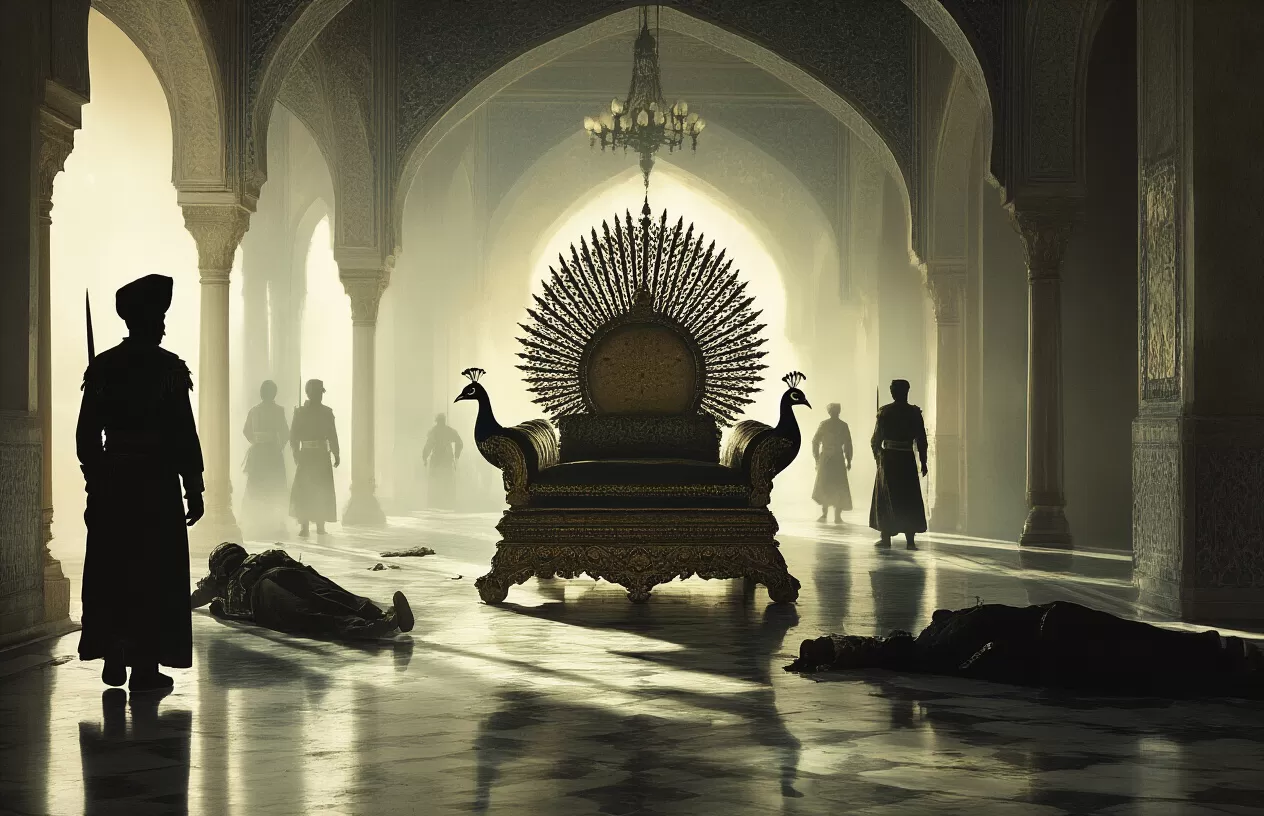
The year was 1739. Mughal Emperor Muhammad Shah sat nervously on his throne as Nadir Shah, the ambitious ruler of Persia, marched toward Delhi with 55,000 battle-hardened soldiers.
The Mughal Empire wasn’t what it used to be. Years of weak leadership had left it vulnerable, and Nadir Shah knew it. He’d already conquered parts of Afghanistan and had his eyes set on India’s legendary wealth.
When the Persian army reached Delhi, the battle was embarrassingly brief. The Mughal forces collapsed within three hours. Just like that, Delhi fell to foreign hands.
What happened next was a military occupation that makes modern war crimes look tame. Nadir Shah initially showed restraint, even attending a feast with Emperor Muhammad Shah. But when rumors spread that some Persian soldiers had been killed, Nadir’s response was swift and brutal.
B. The Fateful Plunder of 1739
The morning of March 22, 1739 marked the beginning of a massacre. Nadir Shah ordered his troops to slaughter Delhi’s citizens. For nine horrific hours, they killed everyone they saw. Blood ran through the streets as approximately 20,000 people were butchered.
But the human toll was just the beginning. Nadir Shah had come for treasure, and he got it. His systematic looting of Delhi lasted 58 days. His soldiers stripped the city of everything valuable – gold, silver, jewels, weapons, and art.
The crown jewel of this plunder? The magnificent Peacock Throne.
This wasn’t just any royal seat. The throne contained 26,733 precious stones, including some of the world’s most famous diamonds – the Koh-i-Noor and the Timur Ruby. Constructed from solid gold and shaped like a peacock with outstretched tail feathers, it was worth roughly $1 billion in today’s money.
C. Journey to Persia: How the Throne Changed Hands
The journey back to Persia must have been quite a sight. Imagine a procession of 700 elephants, 4,000 camels, and 12,000 horses carrying the stolen treasures. The Peacock Throne was dismantled for transport – too large and unwieldy to move intact.
When Nadir Shah returned to Persia, he flaunted his new acquisition. He even had a special throne room built in his palace at Isfahan specifically to display this symbol of conquest. Contemporary accounts describe visitors being blinded by the reflection of light bouncing off thousands of gems.
Persian chronicles record that Nadir Shah added an inscription to the throne: “The kingdom of the world passed to the King of the Age, Nadir, the world-conqueror.”
Ironically, the man who stole one of history’s greatest treasures couldn’t keep it safe for long.
D. Early Theories About Its Fate
When Nadir Shah was assassinated in 1747, chaos erupted. His empire fractured, and his treasures scattered. What happened to the Peacock Throne? Nobody knows for certain.
Some historians believe it was broken apart, its jewels distributed among various warlords and generals who fought over Nadir’s empire after his death.
Others think it might have been destroyed during the Afghan invasion of Persia in 1760, when Ahmad Shah Durrani sacked Nadir’s former capital.
A fascinating theory suggests that parts of the throne made their way back to India through the complicated politics of the region, possibly incorporated into later thrones.
There’s even a wild claim that the throne was secretly transported to Ottoman territory and remains hidden somewhere in modern-day Turkey.
E. Historical Documentation of the Theft
The theft of the Peacock Throne is remarkably well-documented for an 18th-century event. We have multiple eyewitness accounts from both Indian and Persian sources.
The Mughal court chronicler Anand Ram Mukhlis wrote a detailed account of the invasion and the taking of the throne. His description of the massacre still chills readers today: “The streets were filled with the bodies of the slain.”
On the Persian side, Mirza Mahdi Khan Astarabadi, Nadir Shah’s official biographer, documented the triumphant return with the throne, describing it as “the most valuable thing on earth.”
European travelers and diplomats also recorded what they saw. A French jeweler named Jean-Baptiste Tavernier had previously examined and described the throne in detail, giving us our best understanding of its appearance before the theft.
The plunder of Delhi in 1739 remains one of history’s greatest heists – and the missing Peacock Throne its most tantalizing mystery.
Tracing the Lost Treasure Through History
A. Reported Sightings After the Initial Theft
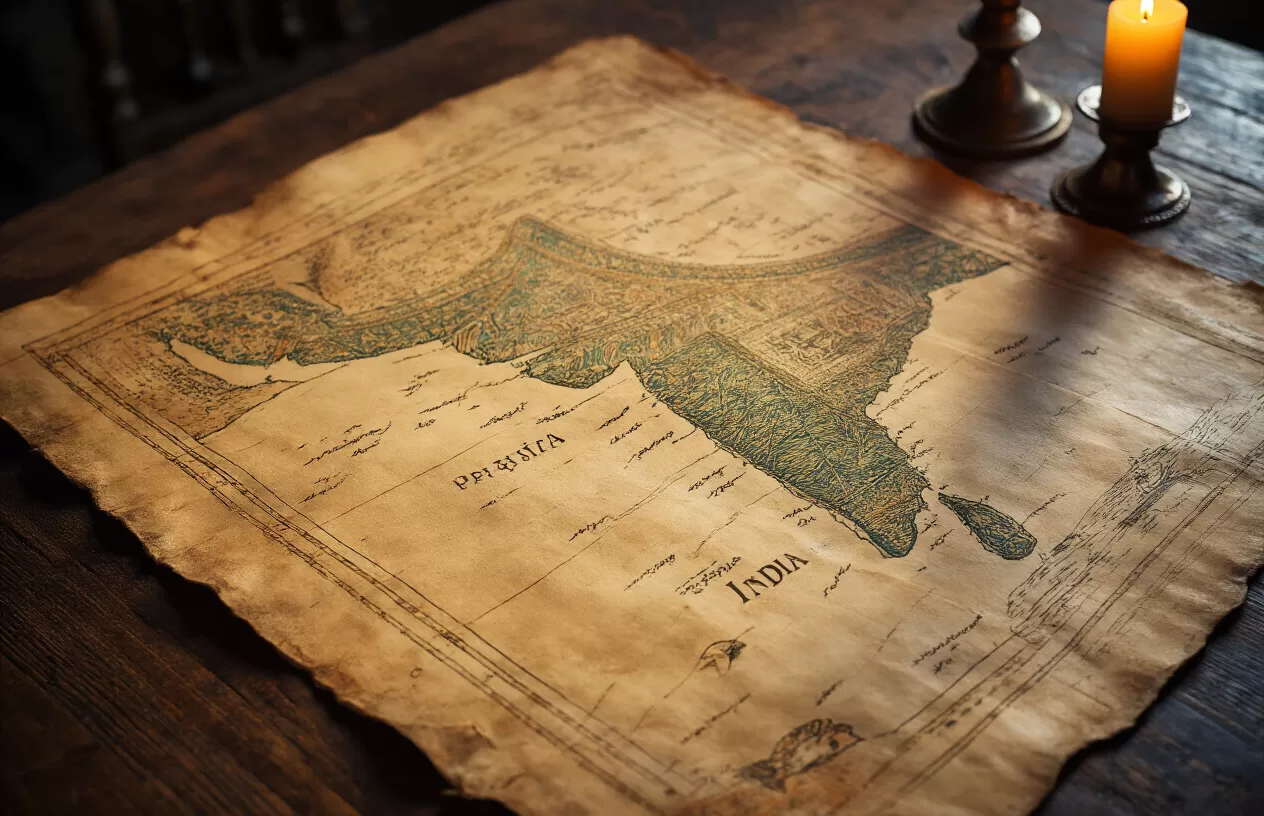
The trail of the Peacock Throne reads like a detective novel with unreliable witnesses. After Nadir Shah hauled it to Persia in 1739, reports of its whereabouts become tantalizingly vague.
In 1760, a European traveler claimed to have seen the throne in Isfahan, describing its jewel-encrusted glory in vivid detail. But was it the original or a copy? Nobody knows for sure.
When the Qajar dynasty took power in the late 18th century, rumors swirled that they had the throne stashed in their royal treasury. Several diplomatic accounts from the 1800s mention visitors being shown “the famous Peacock Throne,” though descriptions often differed from the original Mughal masterpiece.
The most curious sighting came from a British diplomat in 1818 who wrote about seeing the throne in Tehran—but his description sounds more like a different royal seat altogether.
B. The Persian Chapter: Its Place in Iranian History
The Peacock Throne wasn’t just a piece of furniture in Persia—it became a powerful symbol. Persian rulers used it to legitimize their claims to power. They were basically saying, “See this insanely valuable throne I took from India? That’s how mighty I am.”
The Peacock Throne became so iconic in Persian culture that the monarchy itself became known as “the Peacock Throne.” Talk about branding!
Persian poetry and literature from the 18th and 19th centuries frequently reference the throne as the ultimate symbol of royal power. It represented Persia’s brief return to imperial glory under Nadir Shah.
Ironically, while the throne originally symbolized Mughal magnificence, its theft transformed it into a Persian national treasure—one that would eventually vanish.
C. Possible Dismantling: Theories of Its Deconstruction
The most plausible explanation for the throne’s disappearance? Someone broke it apart for the gems.
When the Qajar dynasty faced financial troubles in the early 19th century, they likely started picking off pieces of the throne to sell. Why keep a giant jeweled chair when you need cash?
Another theory suggests the throne was completely dismantled during Afghanistan’s invasion of Persia in 1747, right after Nadir Shah’s assassination. The chaos of that period would’ve provided the perfect cover for such a heist.
Some historians believe certain gems from the throne have reappeared in other royal collections. That enormous 186-carat Darya-i-Noor diamond in the Iranian Crown Jewels? It might have once adorned the Peacock Throne.
The dismantling theory explains why no single treasury or museum today can produce the throne—it likely exists only as scattered gems and gold bits across multiple collections or private hands.
Modern Hunts and Claims
Archaeological Expeditions Seeking Evidence
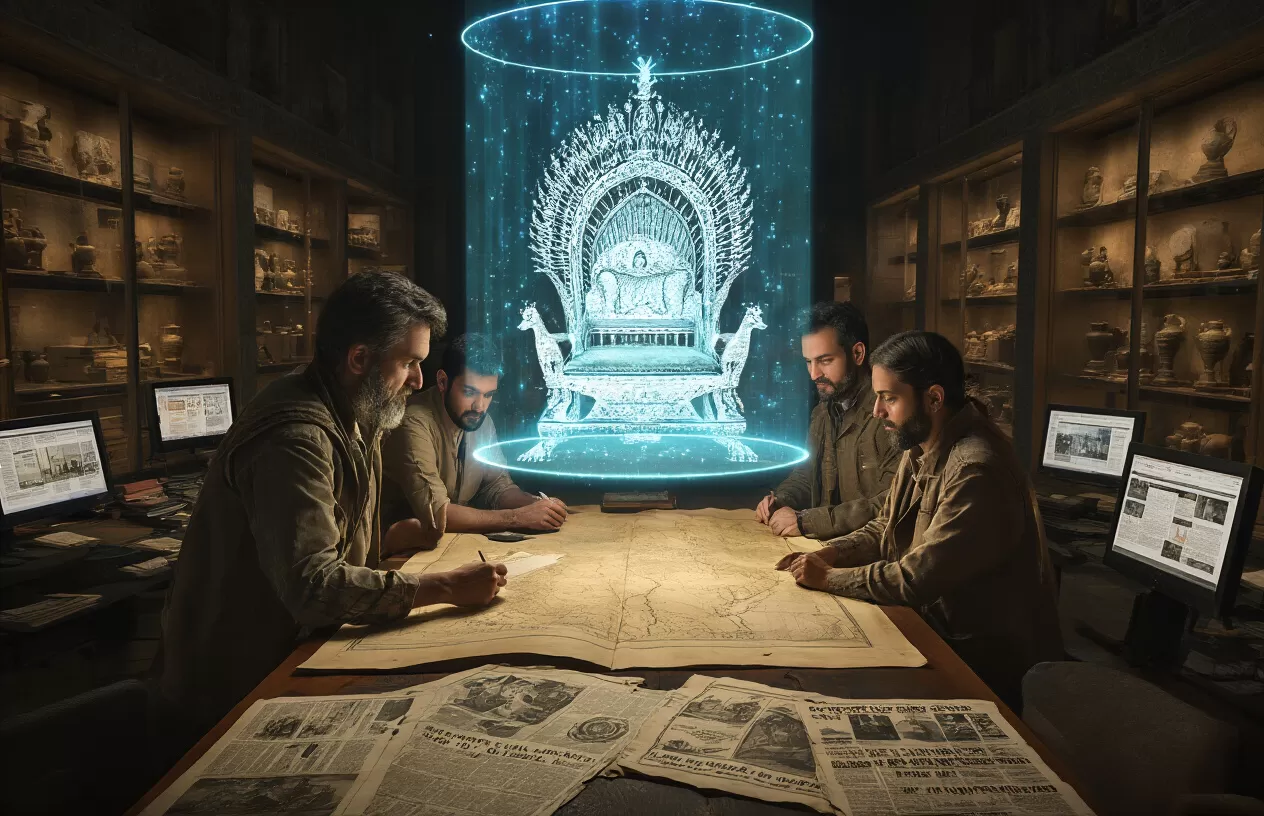
The hunt for the Peacock Throne never really stopped. Since its disappearance in 1747, countless expeditions have combed through Iran, Afghanistan, and parts of India.
In 1992, a Russian-Iranian team excavated sites in Tehran where Nadir Shah’s palace once stood. They found nothing but a few gold ornaments that matched Mughal craftsmanship – tantalizing, but inconclusive.
Then there was Professor Hamid Kazemzadeh’s 2008 expedition. His team used ground-penetrating radar in northern Afghanistan, following accounts that parts of the throne were buried when Nadir Shah’s caravan was attacked. They discovered a buried cache of jewels but no definitive throne components.
Museum Collections: Potential Fragments and Remnants
Walk through certain museums today and you might be inches from pieces of the legendary throne without knowing it.
The Victoria and Albert Museum houses several Mughal gems that some experts believe were once part of the Peacock Throne. A particular emerald weighing 78 carats bears markings consistent with Shah Jahan’s royal insignia.
The Topkapi Palace Museum in Istanbul displays jewels reportedly purchased from Persian merchants in the late 18th century – the timing suspiciously aligned with the throne’s disappearance.
The National Museum of Iran exhibits what they call “ornamental elements of royal furniture” from the Afsharid period. Museum curator Fatima Rezai notes, “We cannot confirm nor deny these might have adorned the Peacock Throne.”
Private Collectors and Secret Holdings
The underground art world buzzes with whispers about the throne.
A Saudi billionaire allegedly owns one of the peacock figurines, purchased through a series of intermediaries for $18 million in 1987. When asked about it, his representatives simply say, “The collection is private.”
The Rothschild family’s collection supposedly contains gems from the throne, acquired during the 19th century when European aristocrats began collecting Oriental treasures.
In 2015, an anonymous collector contacted Christie’s auction house about “significant Mughal artifacts of royal provenance” but mysteriously withdrew before authentication could be completed.
Government Investigations Across Borders
This isn’t just about history – it’s about national pride and immense value.
India’s Archaeological Survey established a special division in 2003 dedicated to tracking lost national treasures, with the Peacock Throne at the top of their list. They’ve formally requested information from 17 countries.
Iran’s Cultural Heritage Organization conducts its own parallel investigation, maintaining that the throne never left Persian territory.
In a rare moment of cooperation, Pakistani and Indian authorities jointly interviewed descendants of frontier tribes in 2019, following a lead that pieces of the throne were traded among tribal leaders after Nadir Shah’s assassination.
A WikiLeaks document revealed American diplomatic cables discussing “sensitive negotiations regarding Mughal artifacts” between India, Iran and an unnamed third country in 2010.
The truth? It’s probably scattered across continents, sitting in plain sight in some places, hidden in others. The throne that took seven years to build has spent centuries slipping through everyone’s fingers.
Cultural Impact of the Missing Throne
A. Artistic Representations Through the Centuries
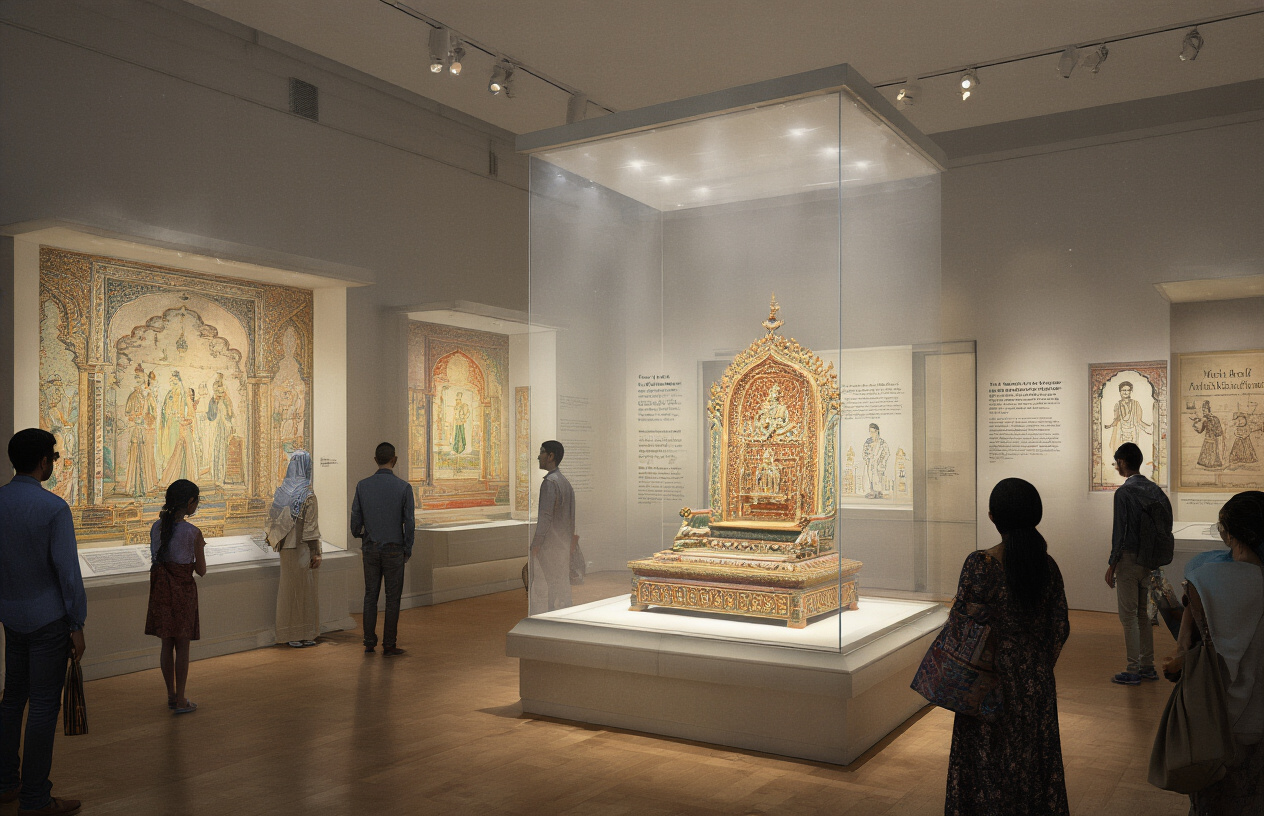
Ever wonder how a throne nobody’s seen in centuries remains so vivid in our imagination? Artists have been obsessed with the Peacock Throne since it vanished. In the 18th and 19th centuries, European painters created romantic interpretations based on travelers’ accounts, often exaggerating its splendor beyond reality. Persian miniatures from the period show the throne as a symbol of imperial might, while Indian artists depicted it as the lost soul of Mughal grandeur.
The throne appears in countless paintings, with each artist adding their own flair to what they believed it looked like. Some show it towering with peacocks, others focus on the dazzling jewels. What’s fascinating is how these artistic guesses have shaped what we all “know” the throne looked like today.
B. Literary References and Popular Myths
The Peacock Throne has starred in more stories than most Hollywood actors. Persian poetry immortalized it as the “seat of heaven’s glory,” while Indian folk tales painted it as cursed—claiming anyone who stole it would lose their empire.
Travel writers couldn’t resist mentioning it:
“No treasure in any royal court of Europe could match a single jewel from this magnificent seat of power,” wrote one French traveler in 1750.
The myths get wild. Some say the throne was cursed by Shah Jahan himself. Others claim it contains secret compartments with maps to even greater treasures. My favorite? The story that the throne occasionally “comes alive” at night, its peacocks crying out for their homeland.
C. Symbolic Meaning in Indo-Persian Relations
The missing throne isn’t just a missing object—it’s a sore spot between nations.
For India, the Peacock Throne represents the peak of their artistic achievement and the painful memory of invasion. Its loss symbolizes the beginning of Mughal decline. In Iran, it’s remembered as Nadir Shah’s greatest prize, proof of Persian military might.
Whenever diplomatic relations heat up between these countries, someone inevitably brings up the throne. It’s become shorthand for centuries of complicated history. Politicians reference it in speeches about national pride. Historians use it to discuss cultural ownership.
The throne’s absence creates more tension than its presence ever did.
D. Modern Replicas and Recreations
Nobody knows exactly what the original looked like, but that hasn’t stopped people from trying to rebuild it.
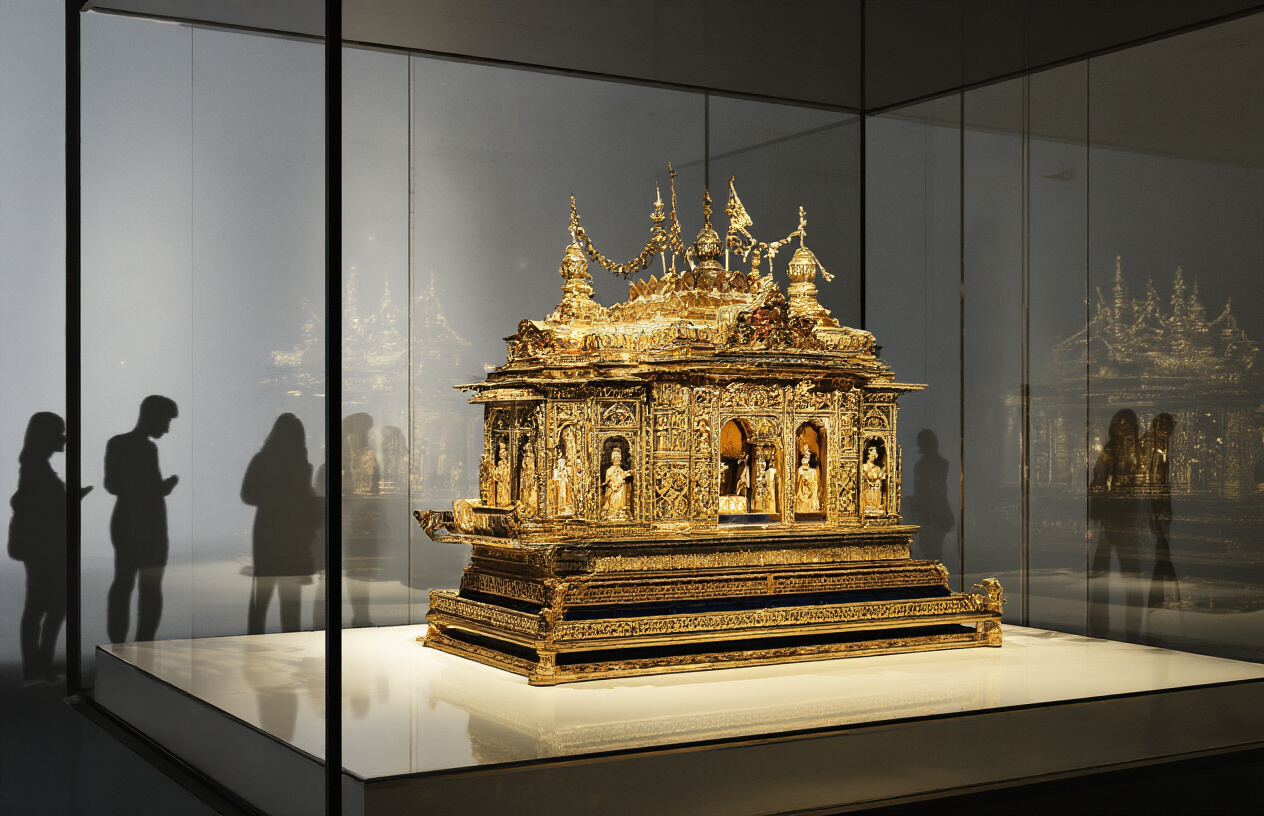
Several museums house attempted recreations. The most famous sits in Tehran’s National Jewelry Treasury—though experts argue it’s nothing like the original. In 2016, a jewelry collective in Jaipur spent three years crafting a replica using old descriptions, employing 30 master craftsmen and 2,000+ gemstones.
Film studios have created their own versions for historical epics, each more elaborate than the last. A 2019 Bollywood production reportedly spent $2 million on their throne replica alone.
What drives this obsession with recreating something nobody alive has seen? It’s simple: we’re all drawn to the impossible dream of touching history’s most untouchable treasure.
The search for the legendary Peacock Throne remains one of history’s most captivating treasure hunts. From its breathtaking origins as the jewel-encrusted seat of Mughal emperors to its mysterious vanishing during Nadir Shah’s invasion, the throne’s journey through time has fascinated historians and adventurers alike. Despite numerous expeditions and claims of sightings throughout the centuries, this priceless artifact continues to elude discovery, leaving us with nothing but fragmented accounts and artistic renditions.
Beyond its material value, the missing Peacock Throne has embedded itself deeply in our cultural consciousness, inspiring countless stories, artworks, and even modern treasure hunts. As we continue to piece together historical clues and separate fact from fiction, the throne stands as a powerful symbol of lost heritage and the transient nature of even the greatest imperial powers. Perhaps the true value of the Peacock Throne lies not in its gold and jewels, but in the enduring mystery that continues to capture our imagination across generations.
Another Indian mystery is the Kohinoor diamond. It has witnessed more backstabbing than a Shakespeare tragedy. Read on about the curse of the Kohinoor.
Leave a Reply