
If you have read Kalki’s Ponniyin Selvan or watched Mani Ratnam’s extraordinary film adaptation, this Ponniyin Selvan temple tour guide is for you. The Chola Empire that inspired the greatest Tamil historical novel ever written was not a legend. It was real. And the three UNESCO World Heritage temples it left behind are not ruins. They are living, breathing, actively worshipped sacred sites that you can visit from Chennai in two extraordinary days with 5 Senses Tours.
This is your complete guide to the Great Living Chola Temples, the most extraordinary architectural legacy of the most powerful maritime empire ancient India ever produced.
A thousand years ago that empire ruled from a river delta in Tamil Nadu. It was not a story. It was the Chola dynasty. And the three temples it left behind are waiting for you.
If you have read Kalki’s novel you already know the characters. Raja Raja Chola. Rajendra Chola. Kundavai. Arulmozhi Varman. The political intrigue, the naval ambition, the extraordinary human stories behind the most powerful dynasty in South India’s history. If you have watched Mani Ratnam’s two-part film you have seen the world they inhabited brought to vivid cinematic life.
What this guide will show you is that the world of Ponniyin Selvan is still there. In stone. In sculpture. In frescoes ten centuries old whose colours still blaze on temple walls. In a 66-metre tower that was the tallest building in India when it was completed in 1010 AD and still commands the horizon across the flat Kaveri delta.
The Chola Empire That Ponniyin Selvan Brought Back to Life
The Chola dynasty was not a minor regional kingdom. At its height under Raja Raja Chola I and his son Rajendra Chola I it was the dominant power of an entire ocean. The titular character of Ponniyin Selvan went on to become Rajaraja I of the illustrious Chola dynasty, which at its height ruled much of southern India, Sri Lanka and the Maldives.
Rajendra Chola went further still. In 1025 AD he launched the most audacious naval campaign in Asian history, sailing his fleet across the Bay of Bengal to defeat the Srivijaya Empire in what is now Malaysia and Indonesia. He returned not just with plunder and prestige but with Ganges water carried from his northern conquests, which he poured into a well at the new capital city he built to celebrate his victory.
That capital city was Gangaikonda Cholapuram. The City of the King Who Took the Ganges.
It still stands.
Why Ponniyin Selvan Created a New Generation of Chola Heritage Travellers
When Mani Ratnam’s Ponniyin Selvan Part 1 and Part 2 released in 2022 and 2023 they did something extraordinary. They introduced the Chola story to an entirely new global audience. Tamil diaspora communities in the USA, UK, Canada, Australia and Singapore who had grown up with the novel finally saw it brought to life on screen. International audiences discovered an empire and a civilisation they had never previously encountered. And hundreds of thousands of people around the world began searching for ways to visit the places where this story unfolded.
New heritage trails sprouted up thanks to the national popularity of the film. The Tamil Nadu Tourism Development Corporation developed a dedicated Ponniyin Selvan trail. National Geographic ran a full feature on the Chola temples. Singapore Airlines in-flight magazine published a complete Ponniyin Selvan travel guide.
The world has rediscovered the Cholas. And the temples they built are waiting for you.
What the Chola Dynasty Built That Has Outlasted Every Empire That Came After It
Three UNESCO World Heritage temples. Thousands of bronze sculptures now displayed in the world’s greatest museums. The Nataraja, the dancing Shiva that is one of the most recognisable images in world art, was perfected by Chola bronze casters a thousand years ago. You are bound to find Chola bronzes in prominent museums of the world including New York City’s Metropolitan Museum of Art and the Ashmolean Museum in Oxford.
The Chola legacy is global. But its heart is in three temples in Tamil Nadu. And the best way to experience all three is with 5 Senses Tours on our expert guided Chola temples tour from Chennai.
Brihadeeswara Temple Thanjavur: The Greatest Achievement of Raja Raja Chola
There is a moment when you first see the Brihadeeswara Temple at Thanjavur that stops most visitors completely.
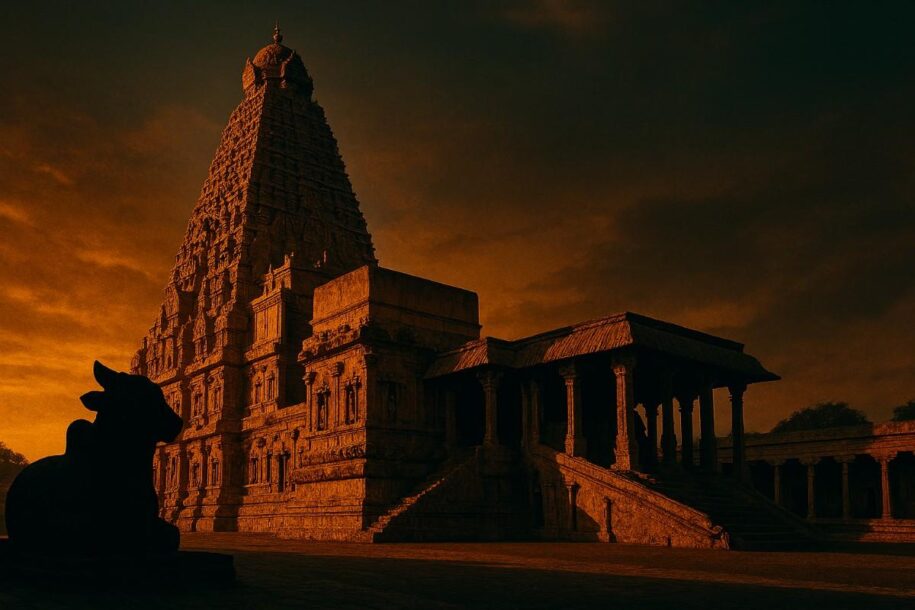
The 66-metre vimana tower rises above the flat Kaveri delta with a verticality and a confidence that feels almost impossible for a building completed in 1010 AD. Built by Raja Raja Chola I between 1003 and 1010 AD, it is one of the tallest temples in the world, topped by a massive stone dome weighing 80 tons. The entire structure is built entirely of granite. And in one of the most extraordinary astronomical achievements in ancient Indian architecture, the temple’s shadow never falls on the ground at noon during any part of the year.
This is the Big Temple. This is the heart of the Ponniyin Selvan temple tour. This is where the story begins.
The Engineering Marvel That Modern Architects Still Cannot Fully Explain
The Brihadeeswara Temple was the tallest building in India when it was completed. It was built in seven years. It was constructed without cranes, without modern surveying equipment, without any of the tools that modern engineers would consider essential for a project of this scale and precision.
The 80-ton capstone at the top of the vimana was raised to a height of 66 metres using an inclined plane ramp that archaeological evidence suggests may have stretched for several kilometres across the flat delta landscape. The astronomical calculations required to ensure the shadow never touches the ground at any point in the year required a precise understanding of Earth’s axial tilt, the sun’s seasonal path and the geometry of the structure that rivals anything in the modern architectural canon.
Every surface of the temple is alive with sculptural detail. Every measurement follows mathematical relationships encoded in the Agamic tradition of temple design. Every dimension expresses the theological vision of a king who was simultaneously the most powerful military commander and the most devout Shaivite in Asia.
The Chola Frescoes: Ten Centuries of Colour Intact on Temple Walls
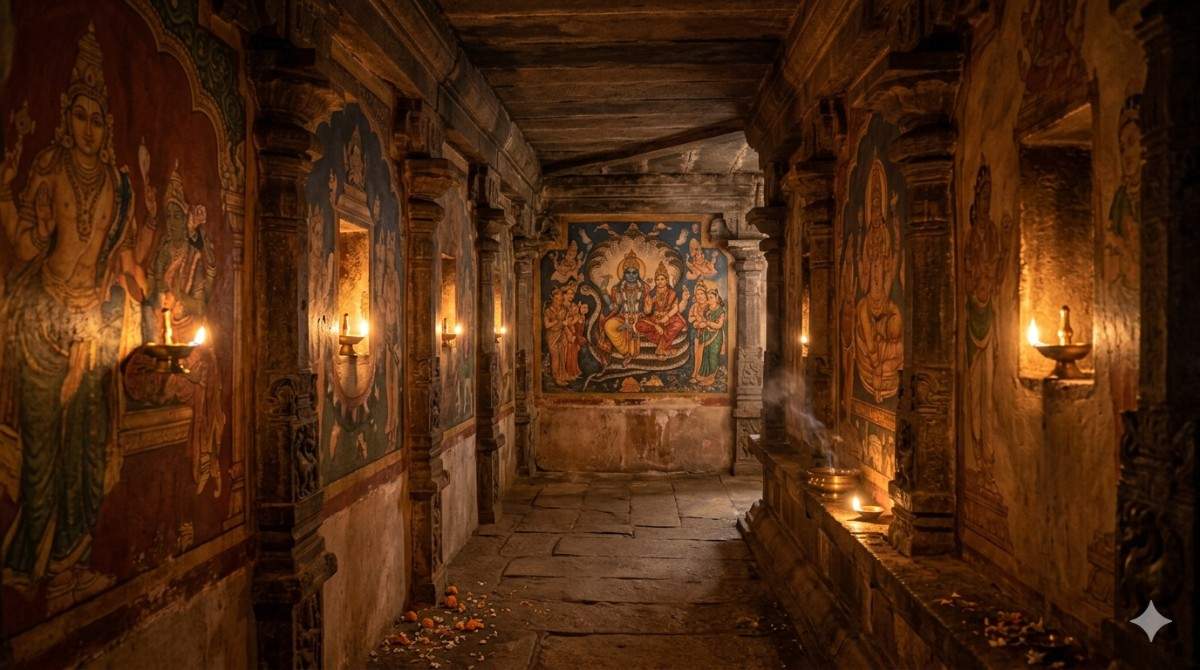
Hidden within the circumambulatory passage of the Brihadeeswara Temple, accessible only with a knowledgeable guide, are frescoes painted during the Chola period itself. Ten centuries old. Their colours still vivid. Their compositions still breathtaking.
These paintings depict Shiva in poses of extraordinary grace and power, rendered by artists whose names have been lost to history but whose mastery of form, colour and narrative remains completely intact. They provide a direct physical connection to the visual world of Ponniyin Selvan, to the aesthetic sensibility of the court that commissioned the Big Temple and the artists who decorated it. Scholars believe these paintings provide a direct artistic link between the 4th to 6th century Ajanta paintings and the Chola paintings of the 11th century, making them one of the most significant collections of ancient Indian art in existence.
Your expert cultural guide with 5 Senses Tours will take you to these frescoes and explain everything you are seeing. This is not an experience that a self-guided visit can replicate.
This is the heart of any Ponniyin Selvan temple tour from Chennai. And it is available only with a guide who knows where to look and what to say.
Tanjore Palace and Saraswati Mahal Library: The Complete Thanjavur Experience
The Chola temples tour from Chennai with 5 Senses Tours begins with a visit to the Tanjore Palace, built during the Nayak period and later repaired by the Marathas. Within the palace complex lies the Saraswati Mahal Library, one of the oldest libraries in Asia. Its collection includes rare palm leaf manuscripts, illustrated texts on medicine, astronomy and music and a remarkable set of illustrated scrolls depicting scenes from Indian mythology.
The Durbar Hall has walls painted with scenes of divine narrative in a style that combines Nayak and Maratha artistic traditions. Your guide will show you the queen’s courtyard and explain the underground passage that runs beneath the palace, one of the most atmospheric and least known features of the entire complex.
Our expert guided Chola temples tour from Chennai covers the Tanjore Palace and Brihadeeswara Temple on Day 1, giving you the full context of Thanjavur’s extraordinary heritage before Day 2 takes you deeper into the Chola story.
Gangaikonda Cholapuram: The Lost Capital of the Empire That Conquered the Ganges
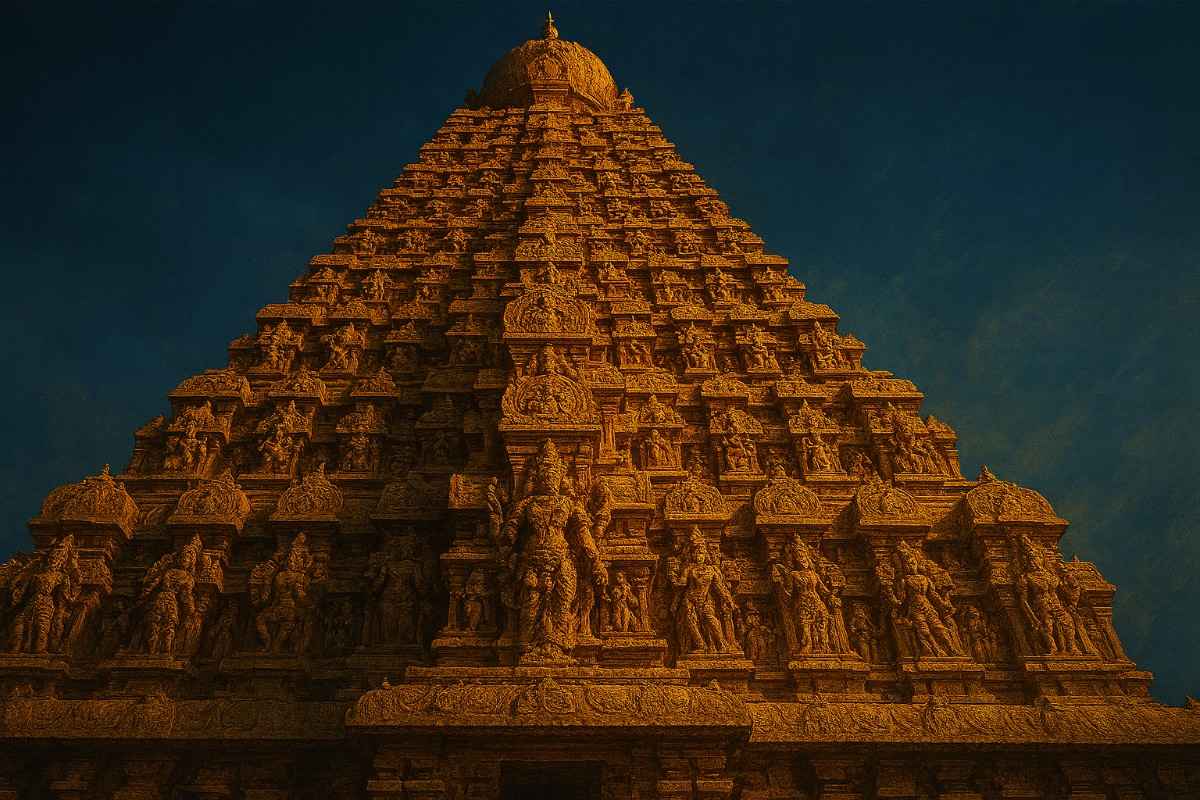
Of the three Great Living Chola Temples, Gangaikonda Cholapuram is the one that most powerfully captures the imagination.
Not because it is the largest. Not because it is the most famous. But because of what surrounds it.
Almost nothing.
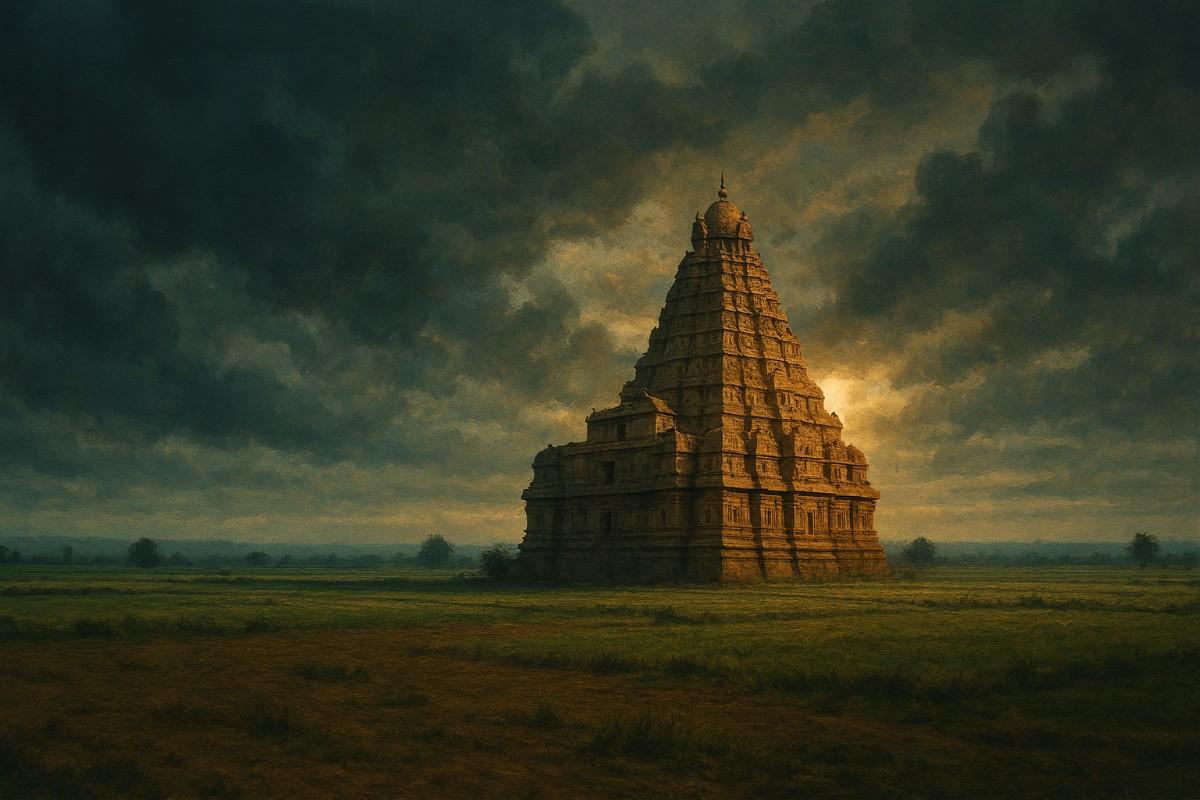
Gangaikonda Cholapuram may be a small village today, but it is from here that the Cholas once ruled almost the whole of Southeast Asia. The capital city that Rajendra Chola built to celebrate his conquest of the Ganges, a city that served as the heart of the Chola Empire for 250 years, has been almost completely absorbed back into the Tamil Nadu countryside. The temple stands essentially alone, surrounded by the buried foundations of the palace and the city that once surrounded it, rising from flat agricultural land with a power and a solitude that is absolutely unlike anything else in India.
No Ponniyin Selvan temple tour is complete without standing here.
Rajendra Chola’s Monument to the Most Audacious Naval Campaign in Asian History
In 1025 AD Rajendra Chola launched his fleet across the Bay of Bengal. He defeated the Srivijaya Empire. He brought back their kings in chains and their treasury in ships. And to commemorate an achievement that had no precedent in Asian history, he built a new capital and a new temple.
The temple at Gangaikonda Cholapuram is deliberately designed as a conversation with its predecessor at Thanjavur. The vimana here has a slightly concave curvilinear contour towards the top, while the temple in Thanjavur has straight contours. The height was deliberately kept slightly lower than the one in Thanjavur by Rajendra as a mark of respect for his father’s achievement.
A son building a great temple in deliberate deference to his father’s greater achievement. This is the human story behind the architecture. This is what a knowledgeable guide reveals and what makes this experience genuinely transformative rather than simply impressive.
The Sculptures of Gangaikonda Cholapuram: The Finest Chola Art in Existence
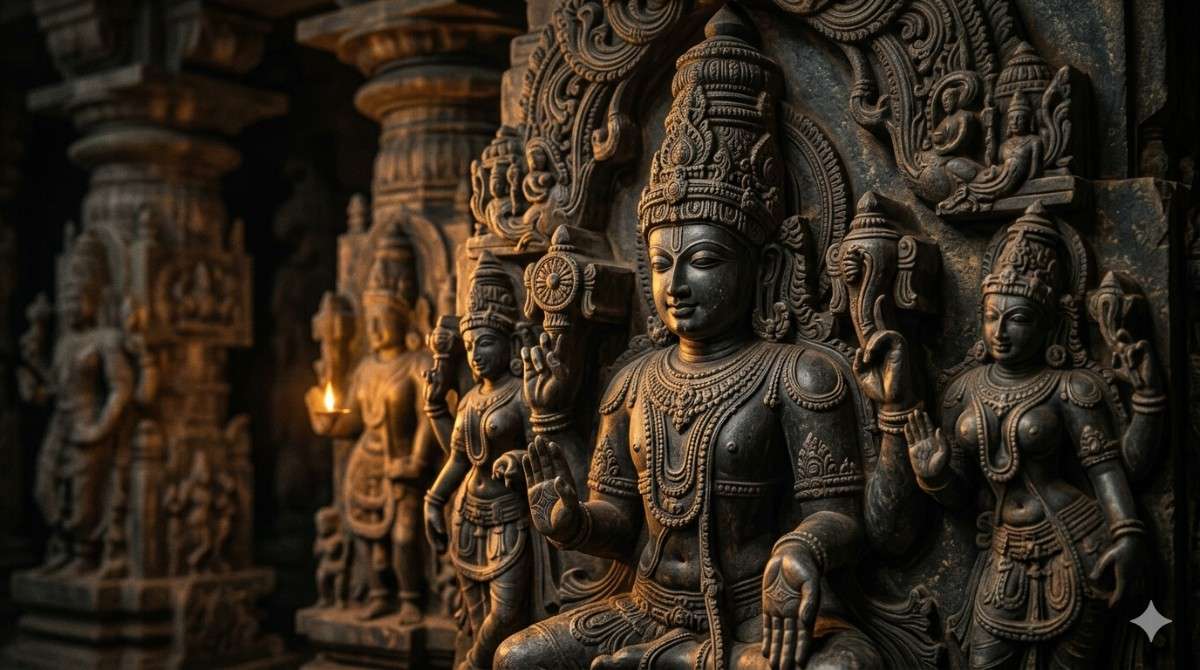
The sculptures at Gangaikonda Cholapuram are widely considered the greatest achievement of Chola sculptural art. A rich repository of intricately carved sculptures of Hindu deities decorates the walls of the temple, including an extraordinary image of Shiva placing a crown of flowers on King Rajendra I’s head.
The image of a god crowning a king is extraordinarily rare in Indian temple iconography. It represents Rajendra’s claim to divine legitimacy at the height of his imperial power. It is one of the most politically and artistically significant sculptures in the entire corpus of South Indian temple art.
The piety on the face of the standing Nandi here, and the grace of the goddess Ganga, represent what art historians consider the pinnacle of Chola sculptural achievement. Your expert guide with 5 Senses Tours will explain the iconographic programme of every major sculpture, connecting the artistic choices to the political ambitions and personal devotion of the emperor who commissioned them.
Book our Chola temples tour from Chennai and stand before these extraordinary works of art with the full context of their creation.
Airavateswar Temple Darasuram: The Most Refined Temple the Cholas Ever Built
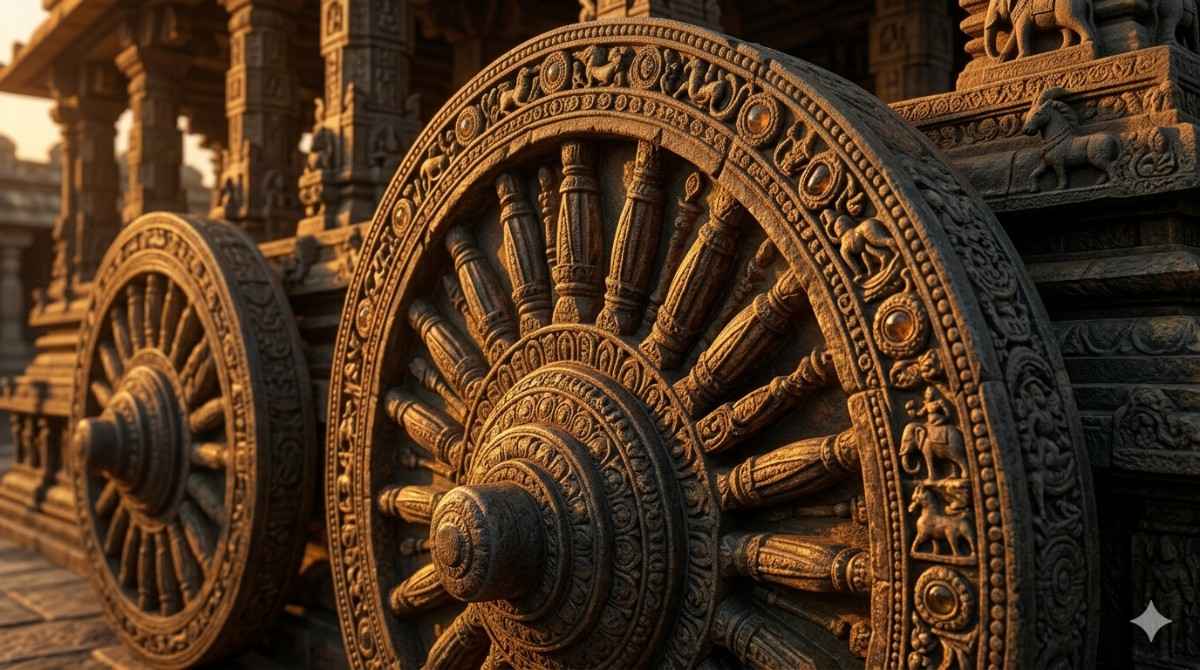
If Brihadeeswara Thanjavur is the most powerful of the three Great Living Chola Temples and Gangaikonda Cholapuram the most evocative, the Airavateswar Temple at Darasuram near Kumbakonam is the most exquisite.
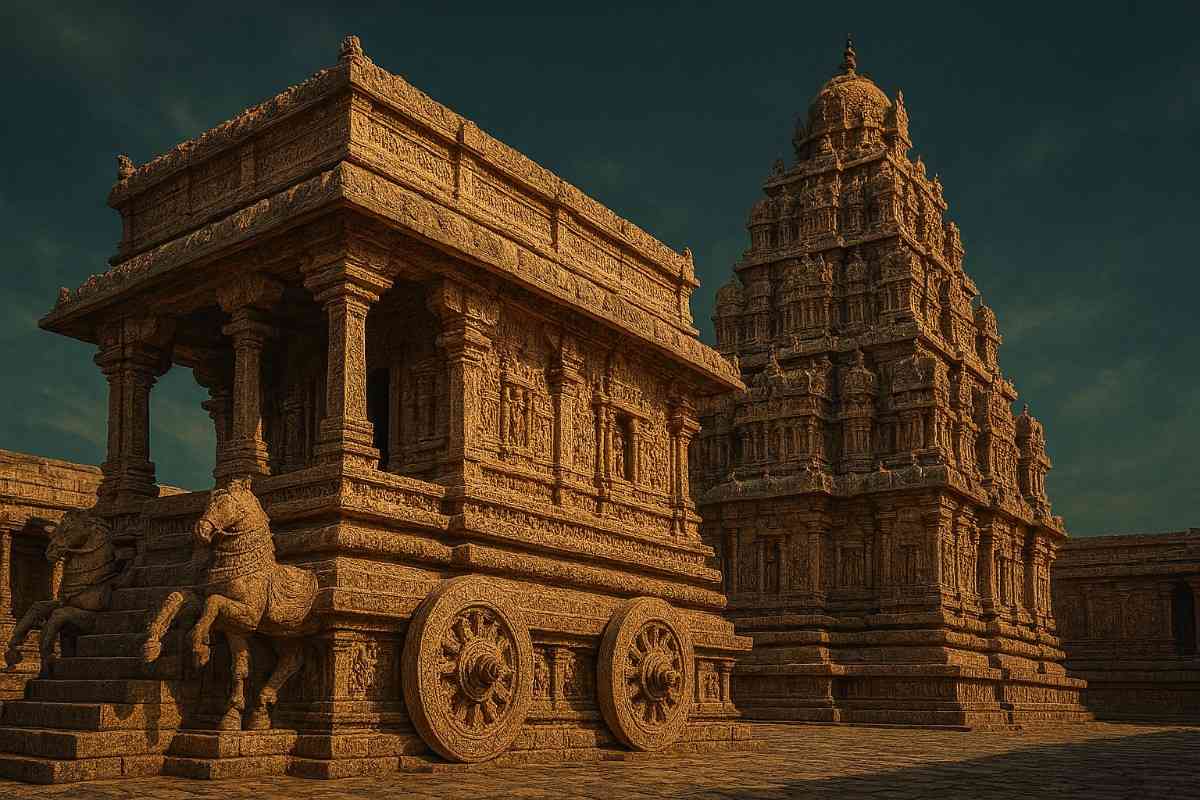
Built in the 12th century by Raja Raja Chola II, Darasuram represents the Chola tradition at its most refined, its most delicate and its most technically perfect. Where the Big Temple at Thanjavur commands through sheer scale and vertical ambition, Darasuram seduces through detail, through the extraordinary precision of its carvings and through the chariot-shaped mandapa at its entrance that appears to float rather than rest on the ground.
The Stone Chariot That Appears to Float: The Engineering Genius of Darasuram
The entrance mandapa of the Airavateswar Temple is designed in the form of a great stone chariot, complete with carved wheels and horses frozen in motion, as though the entire structure is about to roll forward across the Tamil Nadu plain.
The carving here reaches a level of delicacy that is genuinely difficult to believe in stone. Individual jewels in sculpted necklaces are rendered with the precision of a jeweller. The folds of a goddess’s garment flow with the freedom of actual fabric. Every surface is covered in imagery of such density and quality that scholars have spent careers cataloguing and interpreting it.
The temple takes its name from Airavata, the white elephant of Lord Indra, who according to legend bathed in the sacred tank here and was cured of a curse. The chariot mandapa expresses the celestial nature of the site, the idea that this temple is not just a building but a divine vehicle, the chariot of the gods brought to earth in stone.
Why Darasuram Is the Chola Temple That Most Rewards a Knowledgeable Guide
Of the three UNESCO Chola temples, Darasuram is the one where the difference between visiting with and without an expert guide is most dramatically felt. The sculptural programme here is extraordinarily dense, extraordinarily allusive and extraordinarily beautiful. Without context most visitors admire it as beautiful decoration. With context it becomes a complete theological and narrative statement about the nature of divine power, royal authority and devotional practice in 12th century South India.
Our expert cultural guides with 5 Senses Tours have spent years studying the iconographic tradition of Chola temple sculpture. They will show you details at Darasuram that most visitors walk past completely. They will connect the sculptures to the stories of Ponniyin Selvan, to the history of the dynasty and to the living tradition of Shaivite worship that these temples embody to this day.
This is the difference between sightseeing and genuine understanding. This is what 5 Senses Tours is built to provide.
Plan Your Chola Temples Tour From Chennai With 5 Senses Tours
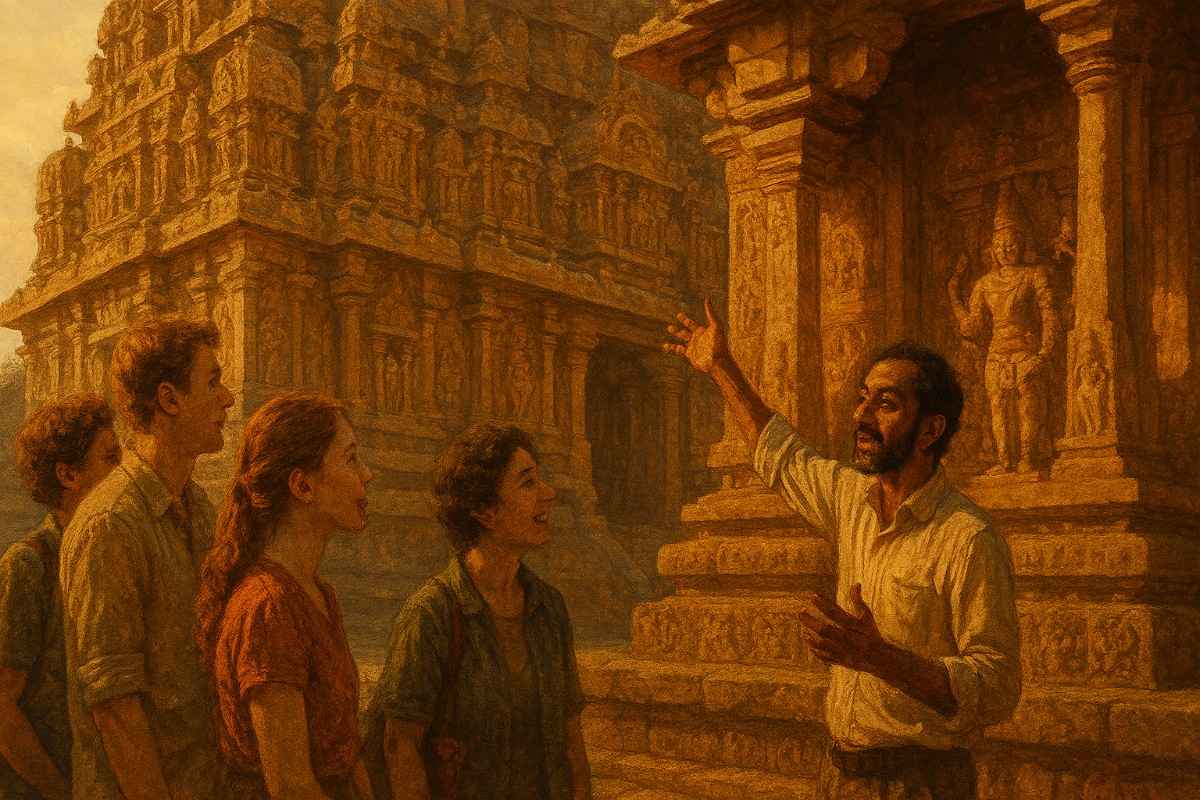
Our private Ponniyin Selvan temple tour from Chennai covers all three UNESCO Great Living Chola Temples across two extraordinary days with an expert cultural guide throughout, a private air-conditioned vehicle, one night in Thanjavur with breakfast included and all entry fees covered.
The three Great Living Chola Temples are located across Tamil Nadu in a circuit that is ideally explored over two days from Chennai. Attempting all three in a single day is possible but exhausting and does not allow the depth of engagement that these extraordinary sites deserve.
The Complete Two-Day Chola Temples Itinerary
Day 1: Chennai to Thanjavur
Hotel pickup at 6.30am in a private air-conditioned vehicle. The drive south to Thanjavur covers 350 kilometres and takes approximately six hours via the well-maintained NH83 highway.
Afternoon arrival in Thanjavur with visits to the Tanjore Palace and Saraswati Mahal Library, one of the oldest libraries in Asia. Late afternoon visit to the Brihadeeswara Temple, where the light on the 66-metre vimana at golden hour is unlike anything else in India. Your guide covers the complete story of Raja Raja Chola, the engineering of the temple, the Chola frescoes inside the circumambulatory passage and the connection to Ponniyin Selvan in full and inspiring detail. Overnight stay in Thanjavur.
Day 2: Darasuram and Gangaikonda Cholapuram
Morning departure for the Airavateswar Temple at Darasuram near Kumbakonam, considered the most technically refined of the three UNESCO Chola temples. Your guide explains the extraordinary sculptural programme and the chariot-shaped mandapa in depth. Afternoon drive to Gangaikonda Cholapuram, the lost capital of Rajendra Chola, for the most evocative and emotionally powerful stop on the entire tour. Drive back to Chennai arriving by approximately 8pm.
Chola Temples Tour Pricing and What Is Included
The Chola temples tour from Chennai is a fully private tour in your own vehicle with your own dedicated expert cultural guide throughout both days. Everything is included. Hotel pickup and drop in Chennai, private air-conditioned vehicle, expert cultural guide, all entry fees, one night stay in Thanjavur on single occupancy with breakfast and all road transfers between sites.
Pricing starts from Rs 16,500 per person for groups of four or more, Rs 21,250 per person for two to three guests and Rs 32,000 for a solo traveller. All taxes included.
5 Senses Tours is recognised by India’s Ministry of Tourism, winner of the Outlook Responsible Tourism Award and the Tripadvisor Travellers Choice Award.
Book your Chola temples tour from Chennai today
The Best Time to Visit the Great Living Chola Temples
October to March is the ideal season for the Chola temples tour from Chennai. Tamil Nadu summers from April to June bring temperatures above 40 degrees Celsius and walking around temple exteriors in midday heat is genuinely exhausting. October to March offers comfortable temperatures, clear skies and the beautiful quality of light that makes these temples most photogenic.
Early morning visits to the Brihadeeswara Temple offer the best light for photography. The temple is most beautiful in the hour after sunrise when the granite takes on a warm gold colour and the shadows cast by the sculptures at low angles reveal their full three-dimensional depth. Our 6.30am departure from Chennai is specifically designed to ensure you arrive in Thanjavur with enough afternoon light to experience the Big Temple at its most magnificent.
Extend Your South India Journey With 5 Senses Tours
The Chola temples are the beginning of an extraordinary journey through South India’s most astonishing heritage. Beyond Tamil Nadu, 5 Senses Tours offers expert guided experiences across the country designed for international travellers who want to go deeper than the usual tourist trail.
The Meenakshi Temple in Madurai, a living Dravidian temple complex in continuous operation for over two thousand years, is an extraordinary complement to the Chola temples experience. Our Madurai tours connect the ancient heritage of the Chola tradition to the living temple culture of Tamil Nadu today.
The extraordinary rock-cut temples of Ajanta and Ellora near Aurangabad represent ancient India’s greatest achievement in painting and sculpture and provide a breathtaking wider context for the Chola artistic tradition. Our Aurangabad tours include both UNESCO sites with expert guides who bring the full story to life.
The musical pillars of Hampi’s Vittala Temple, the ruined capital of the Vijayanagara Empire that succeeded the Cholas as South India’s dominant power, are accessible on our Hampi tours from Bangalore.
And for those who want to experience the full breadth of Tamil Nadu’s extraordinary cultural heritage, our Chennai tours offer expert guided access to the city’s remarkable museums, temples and cultural institutions.
Explore all India heritage tours with 5 Senses Tours
Leave a Reply