
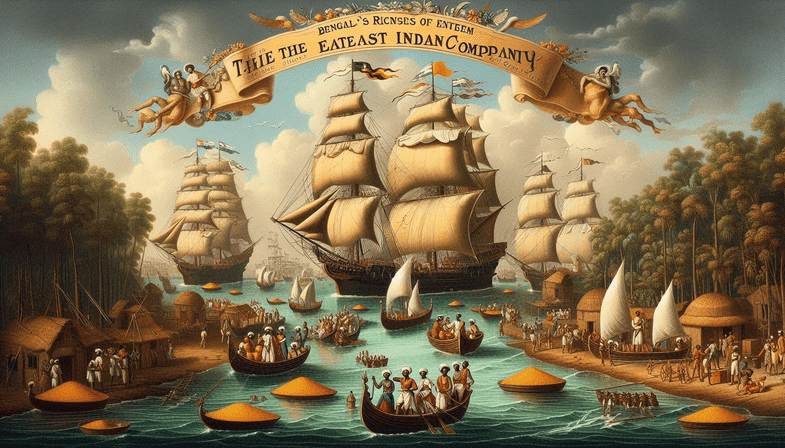
When we think of the British Empire in India, one name often stands out — Robert Clive, later titled Clive of India. He was not just a soldier or administrator, but the man who turned the East India Company from a trading enterprise into a political and military powerhouse. His daring strategies, boldness, and political cunning transformed the destiny of the subcontinent.
For a private guided tour of Murshidabad to learn about Robert Clive vs the Nawab of Bengal, visit The Great Betrayal at Murshidabad.
From Troubled Youth to Adventurer in India
Robert Clive’s early life gave little hint of greatness. Born in 1725 in Shropshire, England, he was restless, rebellious, and often in trouble. As a boy, he once climbed onto a church roof and refused to come down until bribed with food. His hot temper and daring nature earned him the nickname “Mad Clive.”
In 1744, at just 19, Clive was sent to India as a clerk for the East India Company. Bored of paperwork and trapped in poverty, he sought adventure in the Company’s private army. This decision would change not just his life, but the history of India.
The Carnatic Wars: Clive’s Rise to Fame
The mid-18th century was a time of intense rivalry in India. The British and French fought for influence while Indian rulers tried to assert their power. Clive first made his mark in the Siege of Arcot (1751).
With just 200 men, Clive defended Arcot Fort against an army of 10,000. His boldness and unshakable nerves astonished even his enemies. This victory made him a hero in both India and Britain, setting the stage for his meteoric rise.
The Turning Point: The Battle of Plassey (1757
Clive’s defining moment came in Bengal. At the time, Bengal was the wealthiest province of India, its fertile lands producing immense revenues. The Nawab of Bengal, Siraj-ud-Daulah, clashed with the Company over fortifications and trade privileges.
Clive used diplomacy, bribery, and intrigue to turn the Nawab’s own men against him. The most crucial was Mir Jafar, who secretly agreed to betray Siraj during the battle.
On 23 June 1757, at Plassey, Clive’s 3,000 men faced Siraj’s 50,000. Thanks to treachery within the Nawab’s camp, the battle was a quick British victory. Mir Jafar was installed as the new Nawab, and the East India Company became the true master of Bengal.
The Loot of Bengal
Plassey was not just a military triumph — it was an economic windfall. The Company received enormous sums of money and trade privileges. Bengal’s revenues financed the Company’s armies, funded Britain’s wars in Europe, and boosted its global trade network.
Clive himself returned home with immense personal wealth, sparking both admiration and criticism. His riches earned him a seat in Parliament and the title Baron Clive of Plassey.
Clive the Reformer
Clive’s contribution was not limited to battles. He reorganized the East India Company’s army, introducing strict discipline and European-style training that made it far superior to Indian forces.
He also established the dual system of government in Bengal: Indian rulers remained as figureheads, while the Company controlled the revenue and administration. This clever arrangement gave an illusion of continuity while ensuring real power stayed with the Company.
A Controversial Figure
Despite his brilliance, Clive was not without controversy. Many accused him of corruption and plunder. In Britain, he was summoned before Parliament to answer charges of excessive enrichment. His famous defense was:
“By God, Mr. Chairman, at this moment I stand astonished at my own moderation.”
This mix of arrogance and confidence defined Clive’s character. He was both admired as a genius and despised as an opportunist who laid the foundations of colonial exploitation.
Legacy: The Maker of Empire
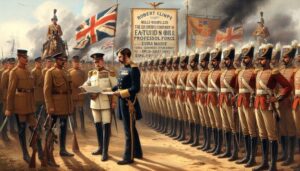
By the time Clive left India for the last time in 1767, the East India Company had transformed from a merchant venture into a sovereign power. His victories in Bengal opened the door for nearly 200 years of British dominance in India.
For Indians, his legacy is bittersweet: he was the mastermind of colonization, whose actions led to economic drain and political subjugation. For the British, he was the empire-builder who secured their place in the East.
Why His Story Still Matters
Walking through Bengal today — the battlefield of Plassey, the ruins of Murshidabad, or the colonial structures in Kolkata — one can still feel Clive’s shadow. His story is not just about one man’s ambition but about how trade, greed, and strategy rewrote the history of nations.
Clive’s life reminds us of a powerful truth: empires are built not only on battles but on intrigue, opportunism, and the ability to exploit moments of weakness.
In short: Robert Clive was a troubled youth who became a daring soldier, a cunning politician, and ultimately the man who ensured the East India Company’s supremacy in India — for better or worse.
For a private guided tour of Murshidabad to learn about Robert Clive vs the Nawab of Bengal, visit The Great Betrayal at Murshidabad.
Leave a Reply